Denver homeowners face unique landscaping challenges: water restrictions, clay soil, intense sun, freeze-thaw cycles, and semi-arid climate (zones 5b-6a). Traditional lawns require constant watering and maintenance, while rock gardens thrive in these conditions.
Rock gardens provide four-season beauty with minimal water, work with clay soil instead of fighting it, and require far less maintenance than traditional landscapes. This guide covers 14 landscape rock garden ideas tailored to Denver with appropriate rock selections.
What is a landscape rock garden?
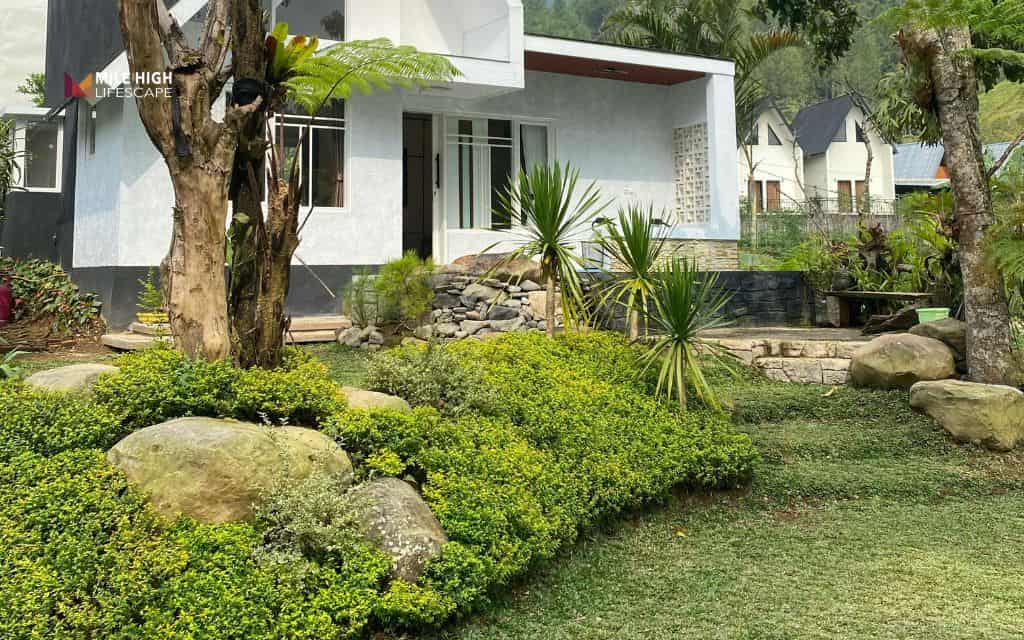
A landscape rock garden uses stone as the primary structure. Rocks, boulders, and gravel form the framework. Plants serve as accents, not the main feature.
4 main styles work in Denver:
- Alpine/rocky mountain: Clustered boulders with dwarf conifers and tough perennials
- Desert/xeric: Warm-toned rocks with agaves and ornamental grasses
- Zen-inspired: Raked gravel with minimal plantings
- Natural stone terraces: Stacked walls with planted pockets
Rock gardens excel here because they drain quickly through clay soil, handle temperature swings, and require minimal water after establishment.
14 stunning landscape rock garden ideas for Denver yards
Front yard rock garden lawn replacement
Replace your bluegrass lawn with flowing mounds of decorative rock and drought-tolerant perennials. This design eliminates weekly mowing, reduces water use by 70%, and creates year-round curb appeal that doesn’t depend on green grass.
Plant selection determines success in this design:
- Blue grama grass provides a low, fine texture that moves in the wind.
- Penstemon species deliver spring and summer color with zero supplemental water.
- Russian sage offers silver foliage and late-season purple blooms.
- Apache plume creates structure with its branching form and feathery seed heads.
Space plants 18-24 inches apart in clusters rather than rows for a naturalized look.
This approach works particularly well in Highlands, Wash Park, and Stapleton neighborhoods where modern aesthetics align with water conservation goals.
The design maintains visual interest through Denver’s harsh winters when deciduous perennials go dormant but grasses and rocks continue to provide form.
Rocky mountain slope garden with boulders
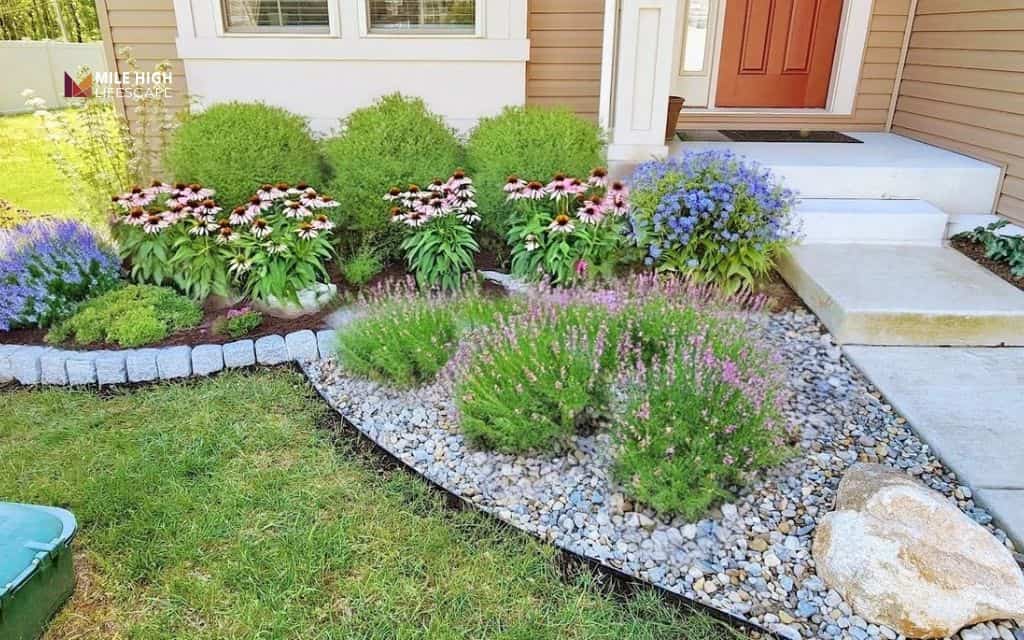
Emulate the natural outcrops of the Front Range foothills by clustering boulders down a slope and tucking tough, low-growing plants between them. This rock garden landscape design turns a challenging slope into your yard’s most dramatic feature while controlling erosion naturally.
Position your largest boulders first, partially burying them (about one-third underground) so they look like natural outcrops rather than placed stones. Arrange them in staggered groupings that create level planting pockets and natural terraces.
These pockets hold soil and moisture, giving plants a foothold while the rocks slow water movement down the slope.
Dry creek bed rock garden for drainage
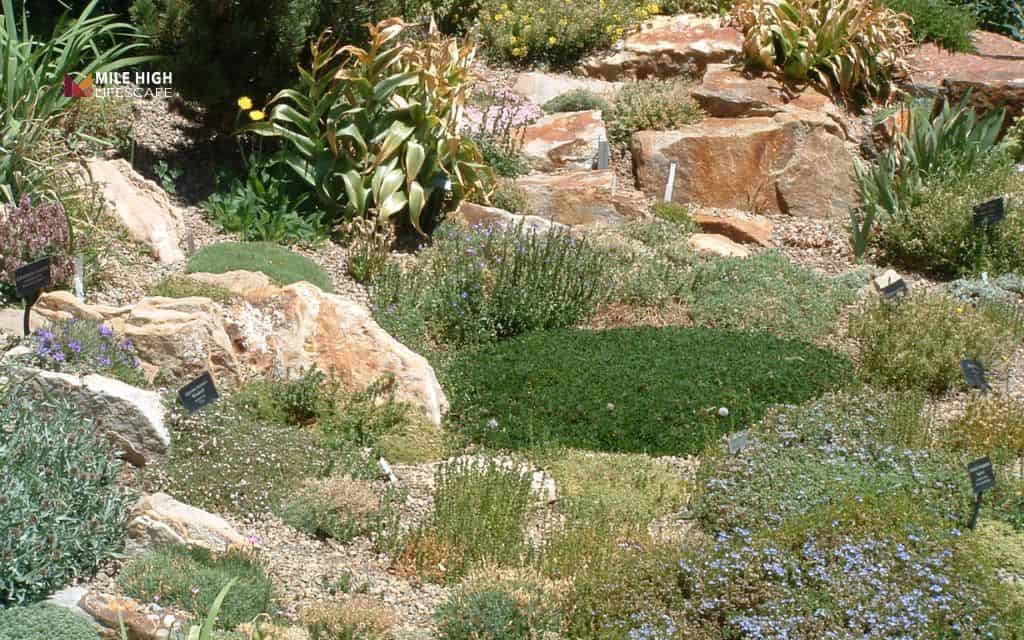
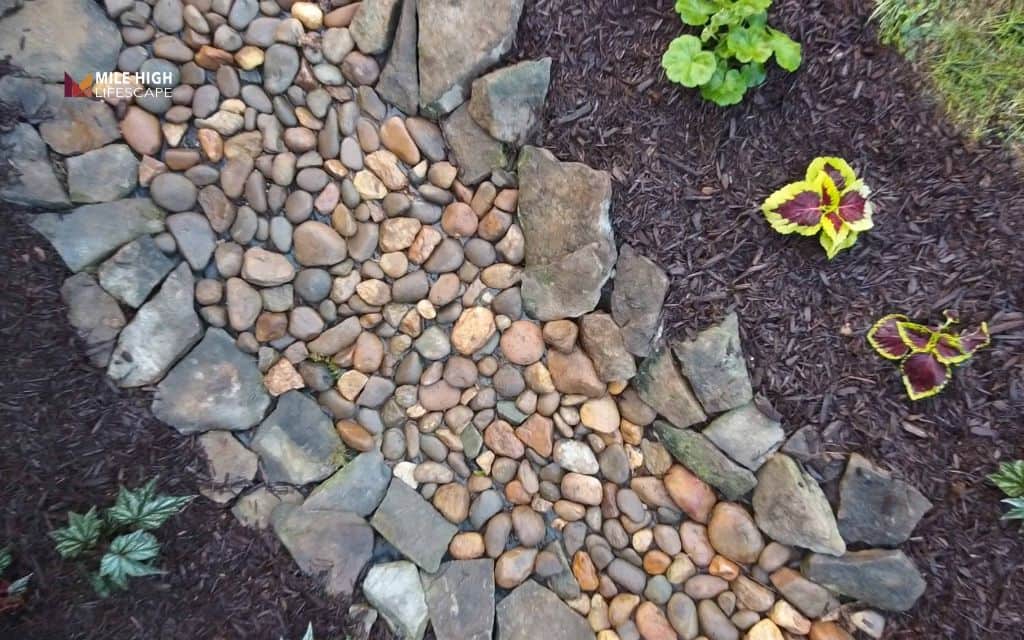
Carve a sinuous “stream” of river rock through your yard to redirect downspout water, snowmelt runoff, or address drainage issues while creating one of the most popular landscape rock garden ideas in Denver.
Start by mapping your drainage pattern and digging a gently sloping channel that follows the natural water flow. Line with landscape fabric , then edge with larger boulders and cobbles to define the banks. Fill the “stream” bed with river rock in mixed sizes, creating a natural progression.
Plant along the edges with species that tolerate both dry periods and occasional inundation: Russian sage, native sedges, penstemon, leadplant, and switchgrass.
These plantings blur the edges and create that natural riparian look that makes the creek bed feel like it’s always been part of your landscape.
Boulder wall and rock garden terraces
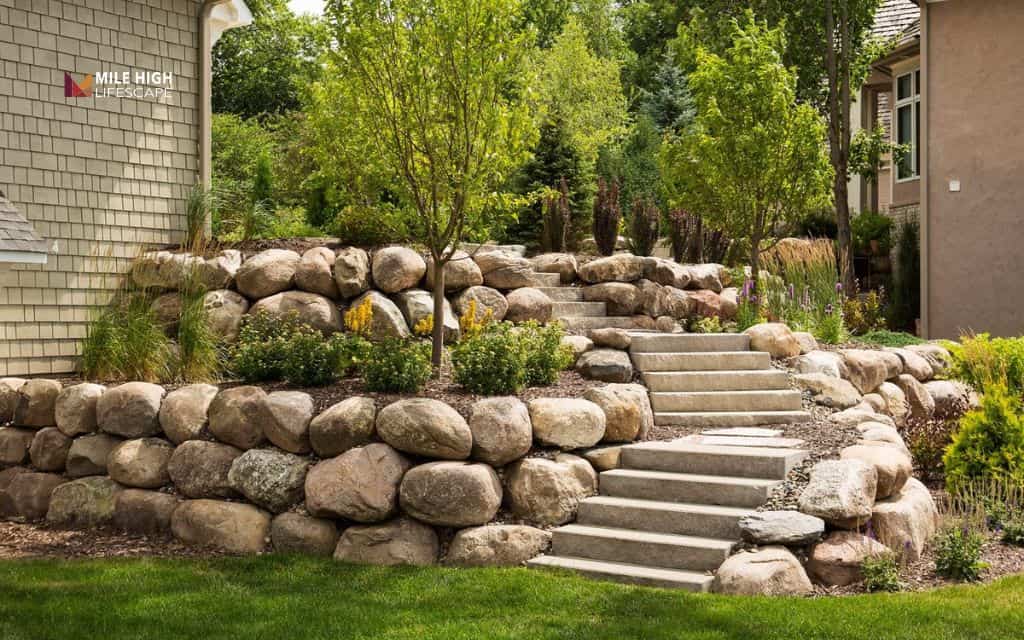
This functional landscape rock garden idea turns unusable slopes into productive, beautiful garden spaces with improved accessibility and dramatically expanded planting opportunities.
Dry-stack walls (built without mortar) work best for heights under 3 feet and allow excellent drainage. Use local moss rock, fieldstone, or granite for authentic Front Range character. Each terrace created by a wall provides a level planting pocket with improved soil depth.
- Upper terraces in full sun accommodate heat-lovers like beardtongue, desert four o’clock, and wine cups
- Middle terraces with partial shade suit columbine, creeping thyme, and coral bells
- Lower terraces can handle more moisture-tolerant species if they receive runoff from above.
This design suits properties with significant elevation change, common in neighborhoods near mountain edges like Golden, Morrison, and parts of Lakewood.
River rock accent garden around foundations
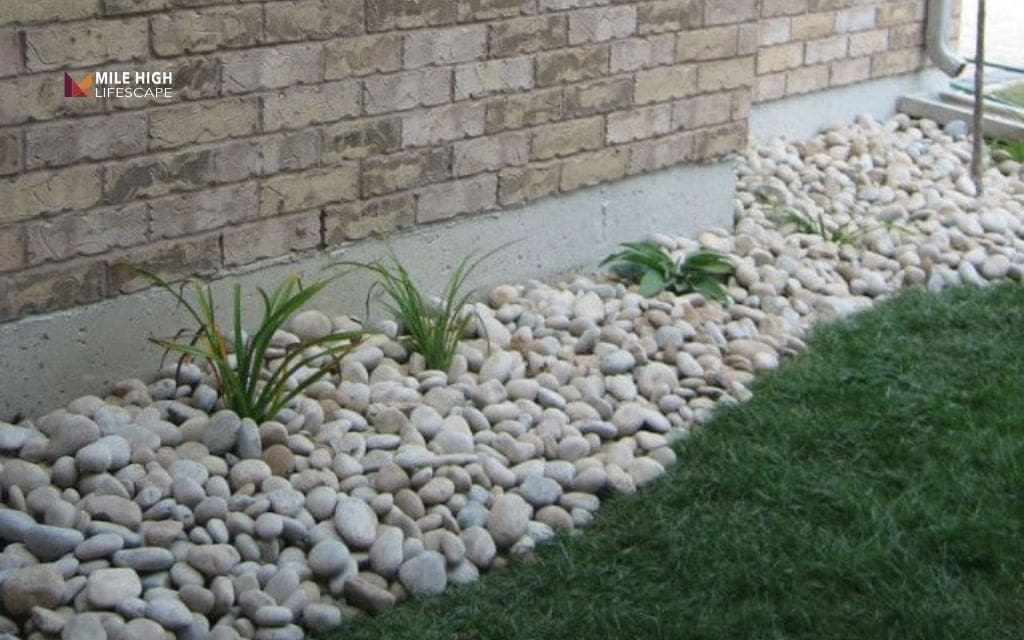
Replace messy foundation shrubs with clean ribbons of river rock and select structural plants for a polished, low-maintenance perimeter that improves drainage. This simple landscape rock garden idea delivers immediate impact with minimal investment.
This approach keeps soil and mulch away from your foundation (reducing moisture and insect issues), eliminates the need for constant pruning and shaping of overgrown foundation shrubs, and creates clean, geometric lines that complement modern and traditional architecture alike.
Zen-inspired rock garden retreat
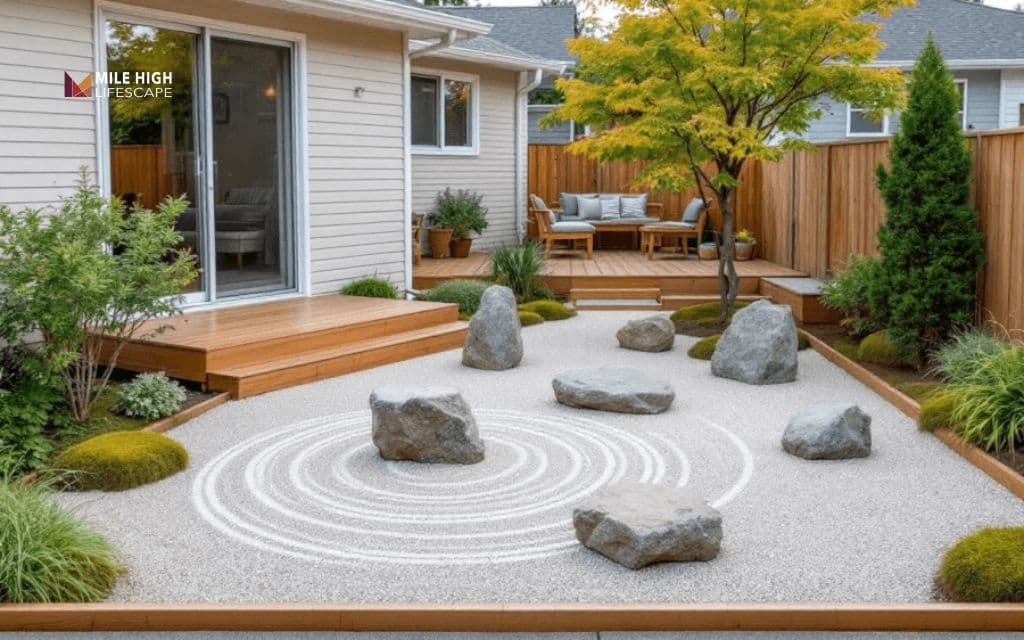
Create a contemplative space using raked gravel, carefully positioned boulders, and a restrained plant palette that celebrates simplicity and balance. This minimalist rock garden landscape brings meditative calm to side yards, courtyards, or quiet corners of your property.
Select a quiet area away from main traffic flow, ideally visible from a window or adjacent patio. Use decomposed granite or crushed granite in tan or gray tones as your base material. Rake it smooth with a steel garden rake, then create patterns of concentric circles around key stones or parallel lines that suggest flowing water.
Add a simple stone bench, a bamboo fence section, or a water bowl for enhanced tranquility.
Native pollinator rock garden
Combine decorative rocks with native wildflowers and grasses that thrive in lean, well-drained soils, creating a rock garden landscape that mimics Front Range meadows while supporting local pollinators and beneficial insects.
Use local Colorado granite or sandstone as your primary rock, mixing boulder sizes from basketball to refrigerator scale. Cluster rocks in groups of 3 to 5, leaving generous planting pockets between clusters. Fill these pockets with native soil improved with compost but avoid rich mixes that encourage excessive growth and reduce drought tolerance.
Native plant selections might include blanket flower, blue flax, prairie coneflower, yarrow (native varieties), milkweed species, penstemon varieties, and native grasses like blue grama, little bluestem, and prairie dropseed.
This rock garden idea attracts butterflies, native bees, and beneficial insects throughout the growing season.
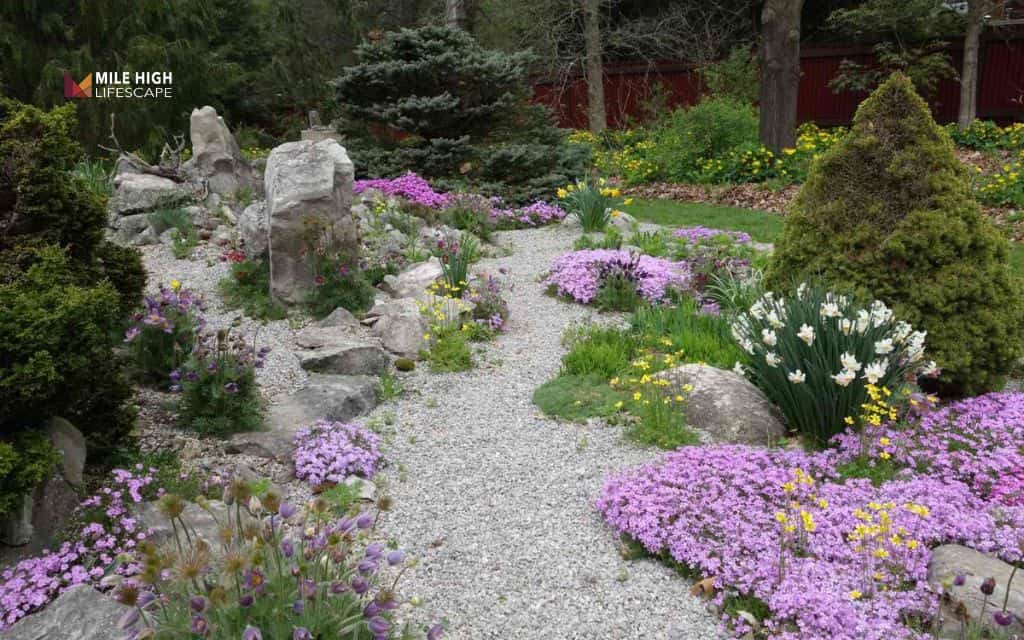
Modern minimalist black rock garden
For contemporary Denver homes, embrace bold contrast with dark lava rock or black polished stone, sharp geometric lines, and masses of ornamental grasses.
Black or dark charcoal rock provides stunning contrast against light stucco, warm cedar siding, or painted brick common in Denver’s modern builds. Keep lines clean and geometric. Plant in bold masses rather than mixed cottage-garden style: large swaths of a single grass variety like ‘Morning Light’ miscanthus, ‘Northwind’ switchgrass, or ‘Karl Foerster’ reed grass.
Lighting becomes crucial in this design style – uplighting on key grasses and boulders creates dramatic nighttime silhouettes.
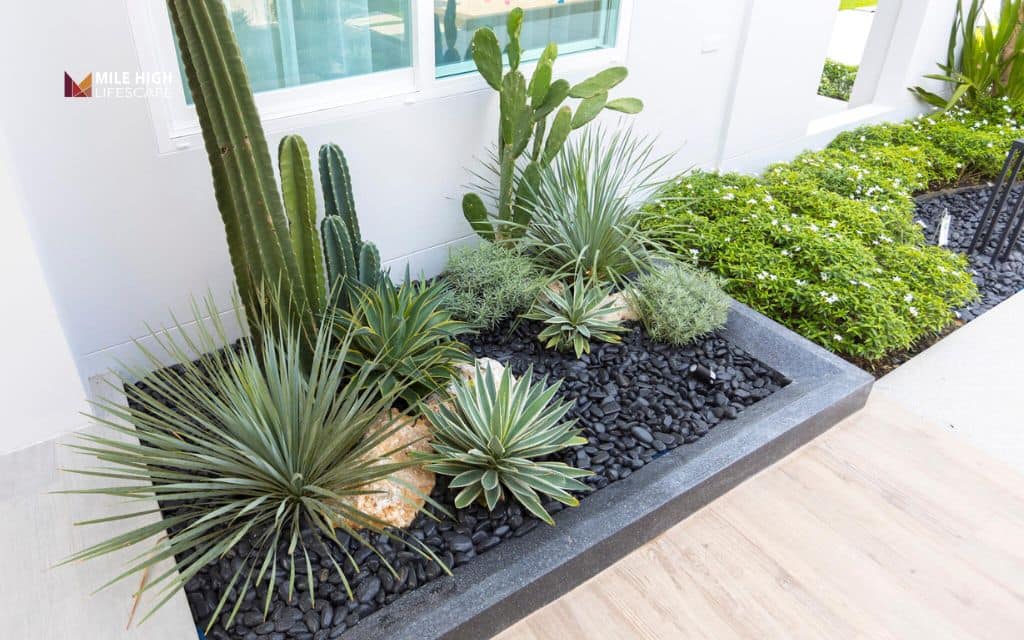
Patio-edge rock garden with seating boulders
Frame your patio or deck with boulders that double as casual seating and create planting pockets, blending hardscape and landscape seamlessly. This rock garden landscape design extends your outdoor living space while softening hard edges.
Select flat-topped boulders in seating height (roughly 18-24 inches) and position them at conversation distance around your patio perimeter.
Between and behind these seating stones, create planting pockets filled with herbs (thyme, oregano, lavender), low evergreens, and ornamental grasses. Fill gaps between stones and patio with smaller decorative rock or creeping groundcovers like woolly thyme or blue star creeper for a naturalistic transition.
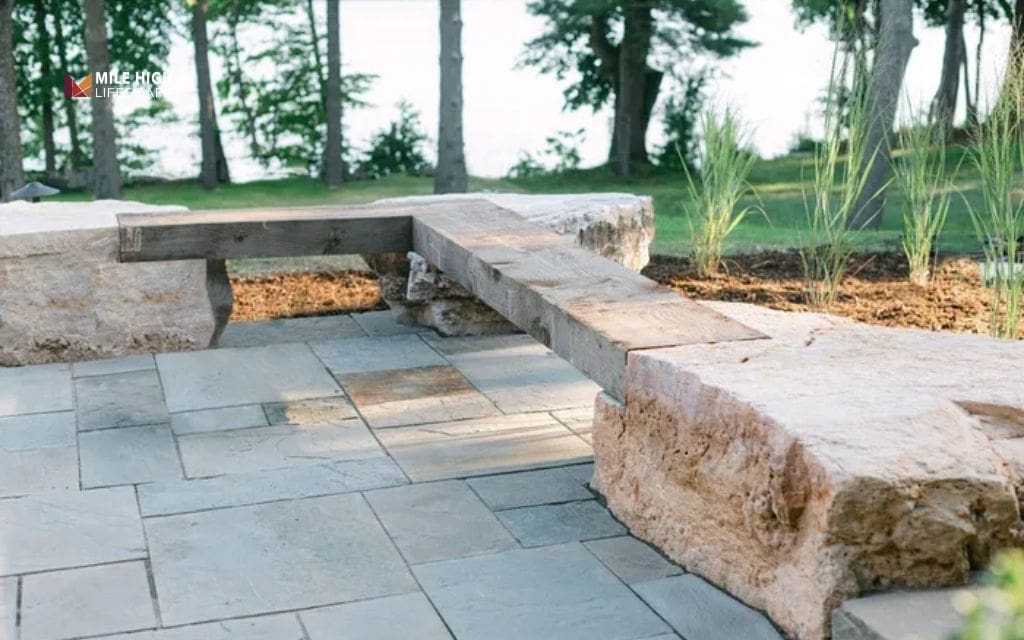
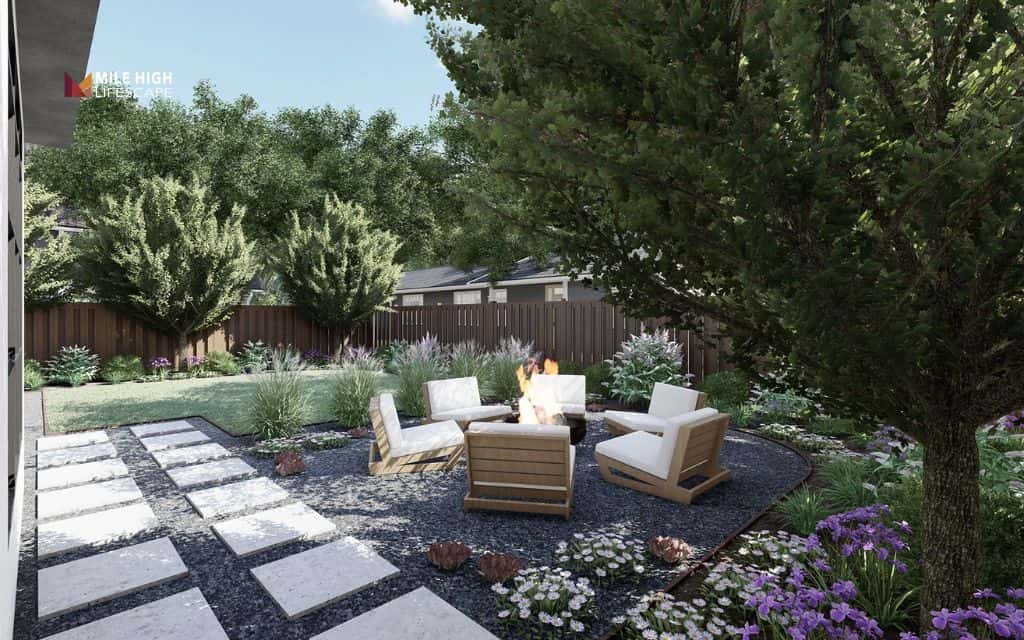
Rock garden fire pit circle
Create a gravel pad encircled by boulders or stone seats around a fire pit, combining one of Denver’s favorite outdoor features with low-maintenance rock garden landscaping.
Start with your fire pit location (following local code requirements and clearances), then establish a level gravel pad using crusher fines topped with decorative gravel.
Arrange large boulders or natural stone blocks in a circle at conversation distance – roughly 6-8 feet from the fire pit center. These stones can be augmented with actual stone or concrete benches for additional comfortable seating.
Plant the outer perimeter beyond the seating circle with fire-wise plants that tolerate heat and occasional smoke: ornamental grasses, penstemon, and other drought-adapted perennials.
Keep flammable materials and low-hanging branches well away from the fire pit itself. Install low-voltage uplighting aimed at the largest boulders and plant specimens for after-dark drama.
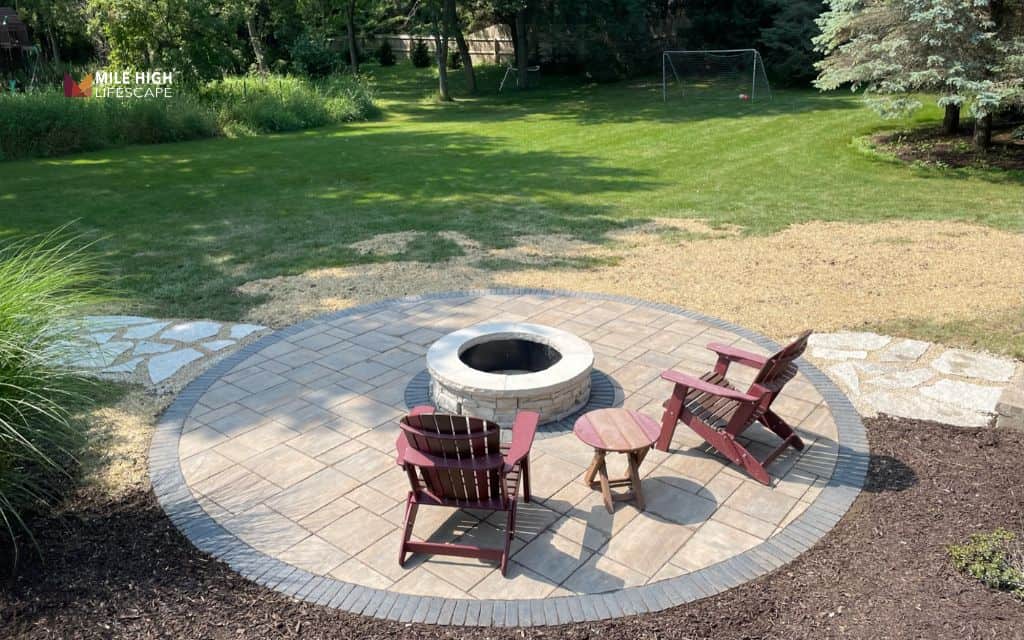
Hillside flagstone steps through a rock garden
Transform a difficult slope into a showpiece walkway using irregular flagstone steps with rock garden plantings tucked between risers and along the path edges.
Set flagstone steps directly on compacted crusher fines rather than concrete for better freeze-thaw performance and natural appearance.
Leave irregular spacing and fill gaps with small, tough groundcovers like creeping thyme, woolly thyme, or hens and chicks that tolerate foot traffic. Edge the pathway with mixed-size boulders that create planting pockets and define the route.
Plant pockets along the path with low-growing species that soften edges without overgrowing the walkway: compact sedums, creeping phlox, basket-of-gold, and dwarf columbine.

Small courtyard or side yard gravel garden
Perfect for narrow urban lots and unused side yards, this landscape rock garden idea uses gravel as the “floor,” a few bold boulders as sculptures, and container plantings for flexibility and seasonal color
Level and compact the area, then lay landscape fabric and top with gravel – pea gravel, crushed granite, or buff-colored stone. Position 1 – 3 substantial boulders as focal points, partially burying them for stability.
Add container plantings that can be refreshed seasonally: tough grasses, sedums, and drought-adapted perennials in summer, evergreens or cold-hardy ornamentals for winter interest.
Complete the space with a simple stone bench, a decorative water bowl, or wall-mounted artwork for an intimate, gallery-like feel.
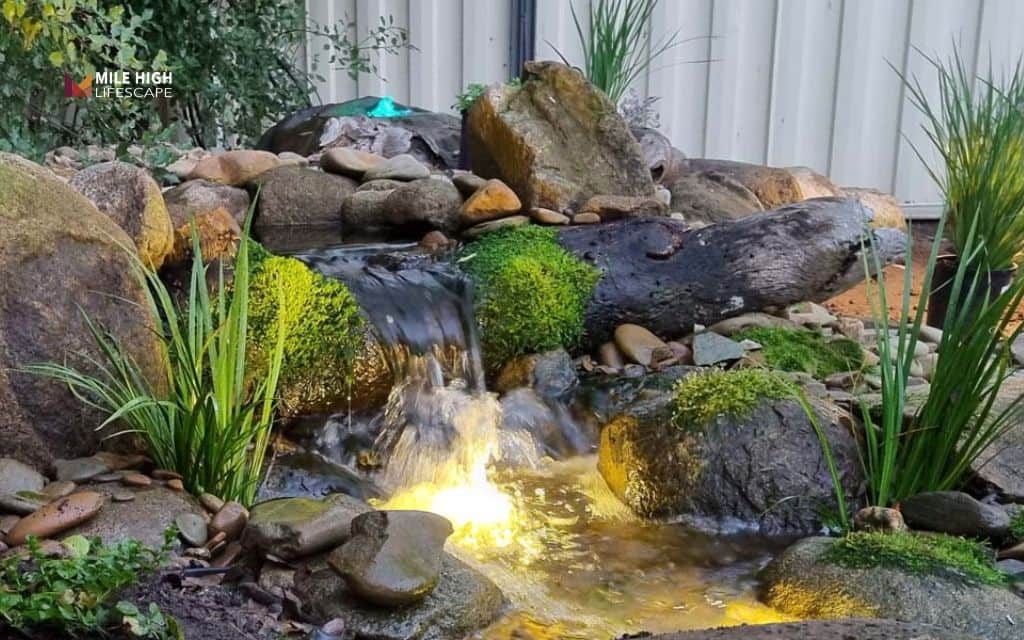
Rock water feature garden (pondless waterfall)
Build a recirculating water feature using stacked natural stone that creates the sight and sound of moving water without the maintenance demands of a pond. This design combines the tranquility of water with the structure of rock garden design.
A pondless waterfall uses an underground basin that catches and recirculates water, eliminating standing water concerns. Start by digging a basin area and installing a waterproof liner with a pump and water reservoir. Stack natural stone above the basin to create a waterfall spillway, using large, flat stones for water to sheet over and smaller stones to fill gaps.
Plant the immediate area with species that tolerate occasional splash and increased moisture: cardinal flower for red blooms, monkey flower for magenta color, or Western columbine.
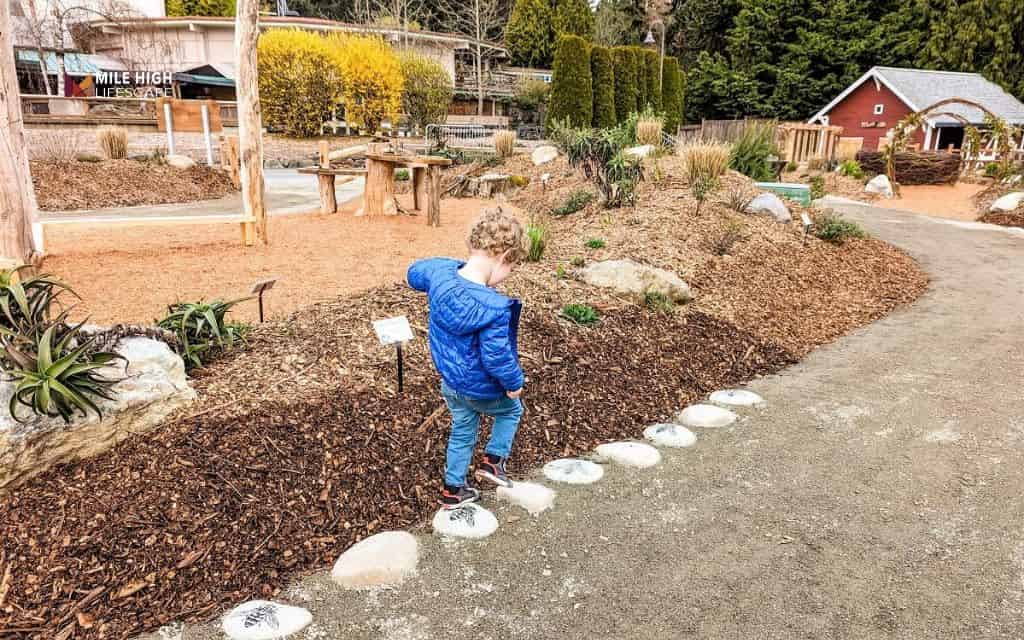
Kid and dog friendly rock exploration zone
Select large, stable boulders with relatively flat surfaces and gentle slopes. Position them to create natural climbing routes and hideaway spots that kids find irresistible. Surround boulders with larger, stable rock and fill pathways with firmly compacted pea gravel or decomposed granite that doesn’t get tracked indoors like mud.
Plant with tough, pet-safe species that tolerate traffic and recover quickly: blue grama grass, buffalo grass (for small lawn areas), creeping thyme, snow-in-summer, and resilient perennials like Russian sage. Avoid toxic plants such as certain sedums and create clear pathways that naturally direct traffic away from plantings you want to protect.
This practical design acknowledges that Denver families need yards that work hard while looking good.
Best rocks and materials for denver rock gardens
Recommended rock types
Choosing the right stone makes the difference between a rock garden that looks naturally at home in Denver:
- Colorado granite offers classic mountain character with its speckled gray, pink, and tan tones. It’s extremely durable, handles freeze-thaw cycles without issue, and comes in sizes from small cobbles to massive boulders.
- Sandstone provides warm buff, red, and tan tones that coordinate beautifully with Denver’s common brick and stucco architecture. Colorado sandstone is sedimentary, meaning it often features interesting layers and textures. While slightly more porous than granite, quality sandstone holds up well in our climate and develops attractive weathering patterns over time.
- Moss rock is a generic term for lichen-covered stone that looks established and natural. In Colorado, this typically means granite or other stone that’s been harvested from areas where lichens have already colonized surfaces.
- Colorado fieldstone encompasses various rounded stones naturally weathered by water and time. These are ideal for dry creek beds and naturalistic arrangements where sharp quarried edges would look out of place. Fieldstone typically comes in neutral grays, tans, and browns.
- River rock and pea gravel work for pathways, dry creek beds, and as mulch alternatives in rock gardens. Sizes range from tiny pea gravel (roughly 1/4 inch) to large river rock (4-6 inches).
Sizing: from boulders to gravel
Understanding boulder sizing helps you plan realistic projects and communicate effectively with suppliers. The landscaping industry commonly refers to boulders by how many people it takes to move them:
- One-man boulders (100-200 pounds) can be positioned by a single person with proper technique and tools like a hand truck or pry bar.
- Two-man boulders (200-700 pounds) require two people or mechanical assistance. These mid-size boulders make excellent focal points and are large enough to look substantial while remaining manageable.
- Three-man boulders (700+ pounds) require equipment (skid steers, small excavators, or trucks) with lifting capacity. These massive statement pieces anchor rock garden designs and create dramatic impact.
For small rock gardens (under 500 square feet), you might use 3 to 5 statement boulders supplemented with smaller accent stones.
Supporting materials
- Landscape fabric is controversial among landscapers, and for good reason – it’s frequently misused. In rock gardens, fabric works well under pathways, patios, and dry creek beds where you want to prevent weed growth while maintaining drainage. However, avoid fabric in planting beds where plant roots need to interact with underlying soil. Instead, use adequate gravel depth (4-6 inches) as natural weed suppression, and accept that some hand-weeding is part of rock garden maintenance.
- Crusher fines (also called decomposed granite) are the powdery byproduct of stone crushing. When compacted, crusher fines create firm, stable surfaces perfect for pathways and as base layers under rocks. They also work as topdressing in native plant beds because many Colorado natives prefer the thermal properties and drainage of mineral soil over organic mulches.
- Decorative gravel serves as both mulch and design element in rock gardens. Unlike organic mulches that decompose and require annual refreshing, gravel lasts indefinitely and improves drainage. Choose gravel colors that complement your stone selections and architecture.
Maintenance and seasonal care
Routine tasks
- Weeding: Hand-pull when small, especially spring and early summer. Focus first two years before plants establish.
- Checking rock layers: Top off thin spots after rain or snowmelt. Keep extra rock for color matching.
- Perennial care: Cut back grasses in late winter. Divide crowded clumps every 3-4 years.
- Watering: First-year plants need consistent moisture. By the third season, it survives on natural precipitation except extreme drought.
Winter and freeze – thaw
- Frost heaving: Check new plantings after freeze-thaw cycles. Replant any lifted plants.
- Rock shifting: Walk garden after major thaws. Reposition moved stones.
- Snow management: Don’t pile snow on plantings. Avoid salt near plants.
Refreshing over time
Add new boulders as the budget allows. Top-dress gravel every few years. Replace underperforming plants. Add lighting for evening enjoyment.
Rock garden landscapes improve with age as plants mature, stones weather naturally, and the entire composition settles into place. However, tastes evolve and opportunities arise. The beauty of rock garden design is that you can easily refresh and update elements without starting over from scratch.
________________
For nearly two decades, Mile High Lifescape has designed, installed, and maintained rock landscapes across the Denver Metro area. Our team provides consultation on plant selection, professional boulder placement, and ongoing maintenance support.
Contact us at (303) 877-9091 or hello@milehighlifescape.com to discuss your project and get your free quote today.
Conclusion
Rock gardens transform Denver’s challenging landscape conditions into design opportunities.
These 14 ideas reduce water use, eliminate weekly lawn maintenance, and create year-round visual interest that survives clay soil, intense UV exposure, and freeze-thaw cycles.
Choose designs that match your site conditions, select locally quarried Colorado stone, and plant tough natives that thrive in Colorado’s climate.
Frequently asked questions (FAQs)
Can I create a rock garden landscape in a small Denver yard?
Yes. Small spaces work well with one statement boulder, gravel base, and select container plantings.
Best low-maintenance plants for Denver rock gardens?
Blue grama grass, little bluestem, penstemon, blanket flower, hens and chicks, sedum, Russian sage, Apache plume, prairie coneflower. These tolerate drought and lean soil.
How do I prevent washout on slopes?
Bury large boulders one-third underground, use landscape fabric under gravel, plant groundcovers with extensive roots, direct water into dry creek beds.
What rocks work best in Denver?
Local Colorado granite, sandstone, moss rock, river rock, and fieldstone. Match your home’s existing masonry.
Can rock gardens support pollinators?
Yes. Plant native wildflowers (blanket flower, penstemon, prairie coneflower, milkweed) and native grasses for nectar, pollen, and habitat.