
When designed correctly, river rock drainage ideas can move water safely away from structures while doubling as attractive, low-maintenance landscape features.
For Denver homeowners battling the aftermath of afternoon thunderstorms or spring snowmelt, rock-based drainage solutions offer something traditional underground systems can’t: they’re visible, adjustable, and blend beautifully with xeriscape gardens.
This guide will walk you through:
- How rock-based drainage actually works (and when it doesn’t)
- When river rock is the right choice and when you need more than decorative stone
- 7 proven river rock drainage ideas for common Denver problems
- Common mistakes that turn “decorative rock” into a drainage failure
Whether you’re redirecting downspout runoff, managing a soggy side yard, or creating a dry creek bed that looks natural along the Front Range, the right river rock drainage ideas start with matching the solution to your specific water challenge.
Why drainage problems are common along the front range
Denver’s drainage headaches stem from a perfect storm of geography and soil:
Clay-heavy soils reject water rather than absorb it
The clay common throughout the metro area swells when wet, creating an impermeable layer that forces runoff across the surface instead of letting it soak in gradually. After a 20-minute July downpour, you’ll see water streaming across your yard rather than disappearing into the ground.
Concentrated roof runoff overwhelms small areas
A typical 2,000-square-foot roof can dump 1,200 gallons during a one-inch rain event – all of it funneling through a few downspouts. Without proper dispersion, that volume erodes soil, floods foundation zones, and creates mud pits at every gutter outlet.
Slopes and narrow side yards accelerate water flow
Many Denver neighborhoods feature sloped lots where water races between houses or cuts channels across lawns. These natural pathways need controlled drainage before erosion creates permanent gullies or water migrates toward basements.
When river rock is a good drainage solution
Good uses for river rock drainage
River rock excels at managing surface runoff – water that flows across the ground rather than underground. The visible stone layer slows water velocity, prevents soil erosion, and creates attractive channels that guide flow where you want it to go.
- Shallow swales lined with river rock handle light to moderate runoff. The rock stabilizes the channel, prevents the swale from washing out, and allows water to infiltrate gradually while excess continues downstream.
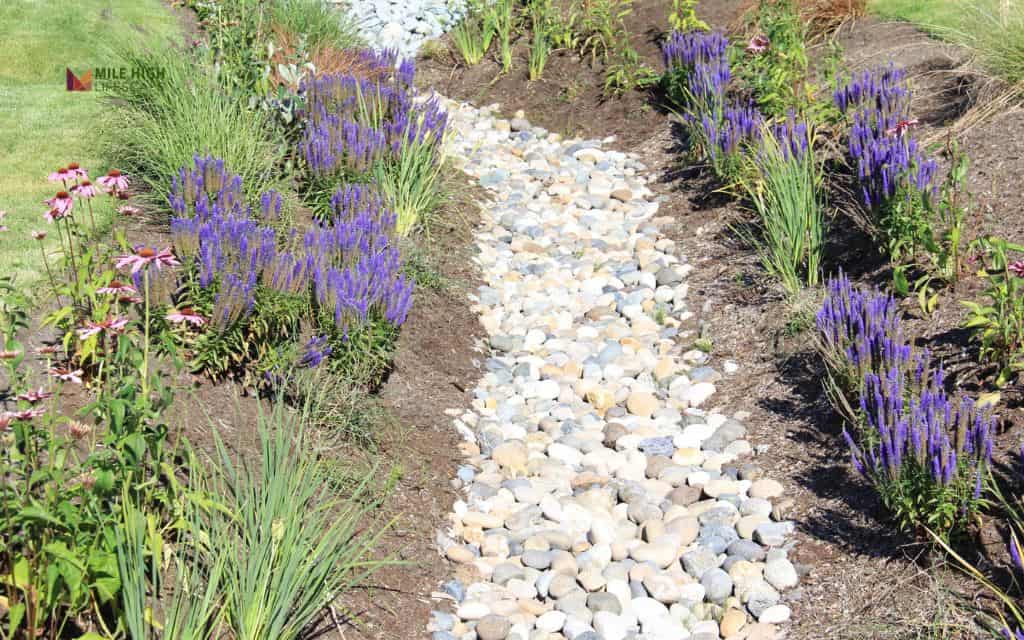
- Decorative dry creek beds serve double duty: They move water during storms and look like intentional xeriscape features the rest of the time. Curved, naturalistic rock channels mimic Colorado’s seasonal waterways and integrate seamlessly with drought-tolerant plantings.
- Downspout dispersion zones need river rock to prevent the concentrated erosion that happens when roof runoff hits bare soil. A rock-lined basin or channel spreads that energy across a wider area, protecting your landscape and foundation.
When you need more than river rock
River rock alone won’t solve every drainage problem.
- Persistent flooding near foundations requires subsurface drainage (perforated pipe and drain rock) to intercept water before it reaches the house. Surface river rock can finish the look, but it’s not the functional layer.
- Subsurface water pressure – the kind that creates soggy spots even days after rain – needs underground solutions. This is groundwater percolation, not surface runoff, and pretty rocks on top won’t fix it.
In these cases, river rock may be part of a solution (finishing a French drain, capping a gravel trench), but not the entire fix. Combining materials and methods creates drainage systems that work year-round, through Denver’s summer monsoons and spring melt cycles alike.
7 river rock drainage ideas denver gardens love
River rock downspout splash basin
Create a shallow basin (3 – 4 inches deep, 2 – 3 feet wide) at the downspout outlet. Line it with 1½”–3″ river rock extending at least 3 feet from the house. The rock absorbs the water’s impact energy and spreads flow across a wider surface area.
If your downspout drains a large roof section (500+ square feet), connect the splash basin to a swale or dry creek bed that carries overflow away from the foundation. This prevents the basin from overflowing and creating new erosion points during heavy storms.
Position the basin to direct water toward your drainage pathway, not toward the house or into low-lying areas where it can pool.
Decorative dry creek bed for surface runoff
Design your dry creek bed with gentle curves. Vary the width (18–36 inches typically) and use a mix of river rock sizes: 1½”–3″ for the main channel, larger 4″–8″ boulders as accent pieces along edges. Line the excavated channel with landscape fabric to prevent weed growth and soil mixing, then fill with rock to create a naturalistic waterway.
Plant native grasses and xeriscape perennials along the edges (blue grama, rabbitbrush, penstemon) to anchor the feature visually and help absorb overflow during extreme events. The rock bed should sit slightly below the surrounding grade so water flows into it naturally.
During Denver’s intense summer downpours, a well-designed dry creek bed channels water safely while looking like an intentional design element the rest of the year.
Rock-lined swale along a side yard
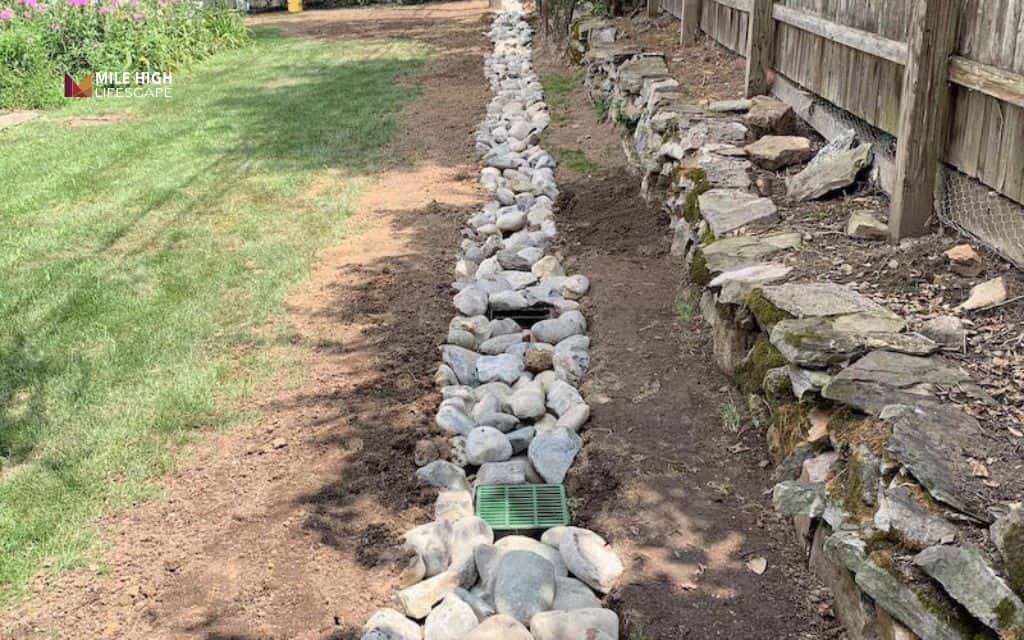
Create a shallow depression (4–6 inches at center) running the length of your drainage path. The swale should slope gently (2–4% grade) toward your drainage outlet. Line the lowest section with river rock to stabilize the channel and slow water velocity. Unlike dry creek beds, swales can have grass or low plants on the outer edges with rock only in the central trough.
Side yard swales often handle runoff from multiple properties in Denver’s tightly-packed neighborhoods. Make yours wide enough (24–36 inches minimum) to handle combined flow without overtopping.
The rock core prevents the swale from washing out during spring snowmelt when frozen ground creates maximum runoff. If your side yard stays shaded, the rock also prevents the mud-and-moss conditions that plague these tight spaces.
River rock drainage strip beside patios or walkways
Install a narrow channel (6 – 12 inches wide) immediately adjacent to your hardscape. Excavate 4 – 6 inches deep, line with landscape fabric, and fill with river rock. The strip should slope away from the hardscape toward a drainage outlet (lawn, swale, or dry creek bed).
This simple fix prevents one of Denver’s most common patio problems: water trapped between the hardscape and the house, leading to foundation issues or ice dams in winter.
The rock strip intercepts runoff before it reaches the patio and directs it safely around the space. Make sure the strip ties into another drainage feature – don’t just create a linear rock channel that dead-ends. Water needs somewhere to go, especially during our intense afternoon thunderstorms.
Rock drain landscaping for low spots in the yard
Convert the low spot into a gravel/rock infiltration zone. Excavate 12 – 18 inches deep, fill the bottom half with ¾” drain rock (angular, not river rock), then top with 1½” – 3″ river rock for aesthetics. The two-layer system provides both infiltration capacity and visual appeal.
This approach works best for light to moderate water volumes – don’t use it where water ponds more than 2 inches deep or stays more than 24 hours.
For persistent low-spot flooding, you need subsurface drainage with perforated pipe. The rock infiltration zone excels at managing seasonal moisture from sprinkler overspray, minor slope runoff, or the gradual melt that happens when snow piles finally release their water in March and April. Plant the perimeter with moisture-tolerant natives like prairie cordgrass to create a rain garden effect.
French drain look with river rock finish
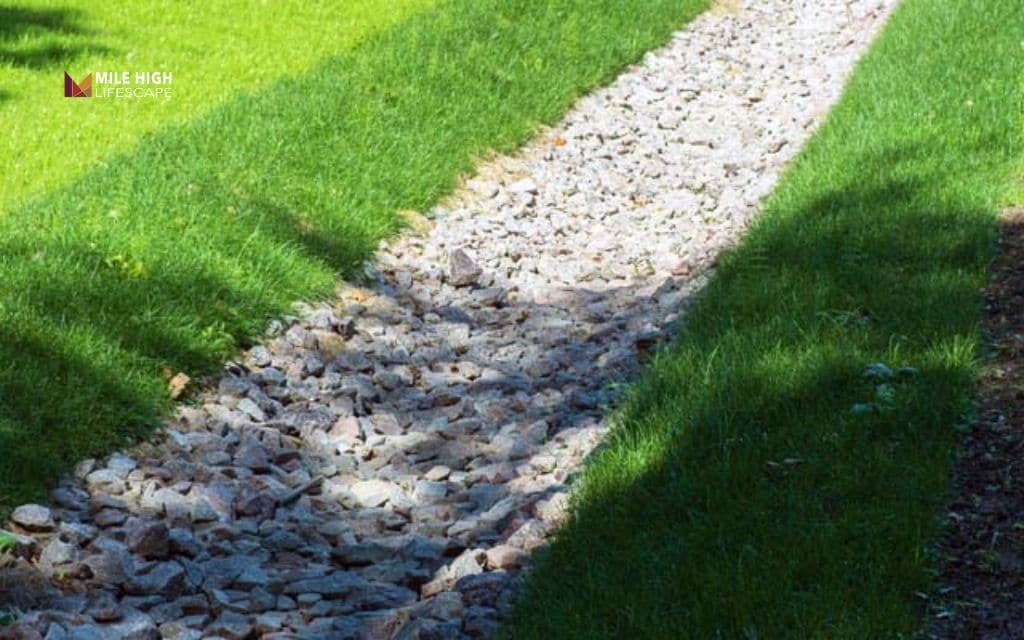
This combines functional drain rock landscaping with aesthetic river rock. Install your French drain properly – perforated pipe surrounded by ¾” angular drain rock, all wrapped in landscape fabric – then finish the surface 2 – 3 inches with river rock that matches your landscape aesthetic. The top layer is decorative; the buried system does the actual work.
This is where understanding rock drains versus decorative rock matters most. The subsurface drain rock (angular, crushed stone) provides the pore space that carries water to your pipe. River rock on top makes the feature look intentional and natural.
Many Denver properties need French drains along north-facing foundation walls where snowmelt saturates soil, or below retaining walls where uphill water creates pressure. The river rock finish transforms a purely functional feature into a landscape element that complements xeriscape beds or decorative boulders.
River rock transition zones between lawn and xeriscape
Create a buffer strip 12 – 18 inches wide filled with river rock. This catches lawn runoff, allows it to infiltrate or flow along the bed edge, and protects your xeriscape plants from excess moisture. The rock strip also prevents grass from creeping into beds and stops sprinkler overspray from washing away mulch.
This transition zone solves a common Denver landscape challenge: mixing water-wise plantings with the small turf areas many homeowners keep for kids or pets. The rock buffer prevents the turf area’s irrigation from undermining your drought-tolerant garden.
Use 1½”–3″ river rock that coordinates with your xeriscape design – tan or buff tones blend naturally with Denver’s native landscapes, while darker stones create stronger definition.
The strip doubles as a mowing edge, eliminating the need for plastic edging and creating a polished look that’s purely functional.
Choosing the right rock for drainage projects
Best river rock sizes for drainage
1½”–3″ river rock is the most versatile size for Denver drainage projects. It’s heavy enough to stay in place during storms, provides adequate pore space for water flow, and looks proportional in residential landscapes. This size works for splash basins, dry creek beds, swales, and transition zones.
3″+ river rock and cobble suit high-flow entry points and accent areas. Use larger stones where downspouts empty into dry creek beds, at the head of swales, or as border accents. The added weight prevents displacement during intense runoff, and the visual presence signals “this is where water flows.”
Avoid pea gravel (½”–¾”) for drainage applications. It looks appealing but migrates easily, washes into lawn areas, and provides less effective energy dissipation. Pea gravel works for decorative pathways and ground cover, but it’s too light and mobile for functional drainage features in Colorado’s storm conditions.
Rounded vs angular rock
Rounded river rock provides the visual appeal most Denver homeowners want. The smooth, tumbled stones look natural in creek beds and xeriscape settings, catching light and creating the organic feel of waterways found in the foothills.
Angular crushed stone (drain rock) offers better interlock and stability for high-energy flow zones. While less attractive, crushed stone’s irregular edges lock together, creating a more stable matrix that won’t shift during heavy runoff. Use it for subsurface layers, beneath French drains, or in buried infiltration zones where appearance doesn’t matter.
Best practice: Combine both. Use angular drain rock for functional, hidden layers and top with rounded river rock for aesthetics.
Maintenance expectations for rock drainage features
Seasonal checkups
Spring (March – April)
After winter freeze-thaw cycles, walk your rock features and reset any displaced stones. Spring snowmelt can shift river rock, especially if ice formed and expanded within the channels. Check that fabric barriers haven’t torn and that drainage paths still slope correctly.
Summer (June – August)
After significant afternoon thunderstorms, clear debris (leaves, soil, organic matter) accumulates in rock channels. Denver’s intense but brief downpours can deposit surprising amounts of material. A quick five-minute cleanup prevents blockages from reducing drainage capacity.
Fall (October – November)
Remove fallen leaves before they mat down and block water flow. Even decorative dry creek beds need clearing – a thick leaf layer prevents water from reaching the rock surface and can create overflow patterns during spring melt.
Long-term care
- Occasional top-ups: Every 3–5 years, you may need to add river rock to features that have settled or where stones have migrated. This is normal maintenance, not a sign of failure. Splash basins and high-flow areas typically need replenishment first.
- Upgrade rock size if flow increases: If your drainage patterns change (new roof sections, removed trees, changed grading), your existing rock size might prove inadequate. Upgrading from 1½” to 3″ river rock costs less than repeatedly replacing displaced stones.
- Monitor for soil contamination: Over time, silt and organic matter work down into rock layers, reducing drainage effectiveness. If water starts pooling where it used to flow freely, you may need to remove rock, clean out accumulated sediment, and reinstall with fresh landscape fabric beneath.
DIY vs professional help – How to decide
Good DIY drainage projects
Splash pads at downspouts: You’re working in a small area, digging is shallow, and mistakes are easy to correct. Basic tools (shovel, wheelbarrow, landscape fabric) handle the job.
Short dry creek beds: This works well for DIY if your terrain is relatively flat and your water volume is moderate. You can experiment with rock placement, adjust curves as you go, and modify the design as you observe how water actually flows.
Small swales in side yards: This suits DIY ambitions when slopes are gentle and you’re managing runoff from your property only, not multiple neighbors’ drainage. The key is keeping the project scale manageable.
When to call a pro
Persistent flooding despite your efforts indicates you’re treating symptoms rather than addressing root causes. Professional drainage contractors understand subsurface flow, soil conditions, and system integration that goes beyond surface rock placement.
Steep slopes (over 15% grade) require engineering knowledge to prevent erosion and rock displacement. What looks stable during installation can fail spectacularly during the first heavy rain if angles, rock sizes, and anchoring aren’t calculated correctly.
Drainage near foundations involves serious risk. Mistakes can direct water toward your house instead of away, creating expensive foundation or basement problems. The cost of professional drainage design is minor compared to foundation repair.
Large-scale projects benefit from professional experience. Contractors have equipment to move rock and soil efficiently, understand local grading codes, and can tie your surface features into larger stormwater management systems if needed.
Conclusion
Well-designed river rock drainage ideas can transform Denver’s common water management headaches into attractive landscape features. When matched correctly to your specific problems, these systems:
- Move water safely away from structures and vulnerable plantings
- Reduce erosion and mud by slowing runoff and providing stable surfaces
- Enhance xeriscape aesthetics with natural-looking rock features that complement drought-tolerant gardens
- Stay low-maintenance year-round, surviving freeze-thaw cycles and requiring minimal intervention
If drainage problems keep returning, professional landscape rock service can prevent repeated failures and protect your landscape investment.
Mile High Lifescape specializes in rock-based drainage solutions that work with Denver’s climate challenges while creating the low-maintenance, water-wise landscapes Colorado homeowners value.
Our team can evaluate your property’s specific drainage patterns and design integrated systems that keep your foundation dry and your garden thriving.
Frequently asked questions (FAQs)
Are river rock drainage ideas effective in Denver?
Yes. River rock excels at managing surface runoff, preventing erosion, and creating visible drainage paths you can maintain and adjust. The key is matching rock size and system design to your water volume and choosing subsurface solutions when needed.
What size river rock is best for drainage?
1½”–3″ river rock works best for most Denver drainage applications, providing good pore space for water flow while staying in place during storms. Use 3″+ sizes for high-flow entry points and accent areas, but avoid pea gravel (½”–¾”) for functional drainage – it migrates too easily during Colorado’s intense weather events.
Can river rock replace a French drain?
No. River rock handles surface runoff but can’t replace the subsurface drainage a French drain provides. For groundwater issues, persistent wet spots, or foundation protection, you need a perforated pipe surrounded by angular drain rock. River rock can finish the surface for aesthetics, but it’s decorative rather than functional in these applications.
How deep should river rock be for drainage?
Surface applications need 3 – 4 inches of river rock for splash basins and dry creek beds, 4 – 6 inches for swales and drainage channels. For infiltration zones managing standing water, excavate 12 – 18 inches total: 6 – 12 inches of angular drain rock at the base, topped with 3 – 4 inches of decorative river rock.
Do rock drains work in winter?
Yes, rock-based drainage features function through Denver’s winters, often performing better than grass channels that freeze solid. River rock allows snowmelt to infiltrate or flow even when surrounding soil is frozen. The thermal mass of larger stones can create micro-thaw zones during sunny winter days, maintaining drainage capacity when it’s needed most for rapid temperature swings and melt cycles.