For many homeowners, a sloped yard creates constant challenges: Erosion, runoff, difficult planting conditions, and high water use. Every rainstorm washes away soil. Every winter freeze cracks the ground. Watering means watching half of it rush downhill instead of soaking in.
A well-designed hillside rock garden turns those problems into advantages.
With the right rock placement, drainage strategy, and drought-tolerant plants, you can stabilize a slope, reduce water waste, and create a landscape that looks great year-round in Colorado’s climate. Instead of fighting gravity and erosion, you work with them using boulders to anchor soil, rocks to slow water movement, and tough native plants that thrive in well-drained, rocky conditions.
This guide covers 12 proven hillside rock garden designs that work in Denver’s unique conditions, plus the planning steps, plant choices, and installation basics you need to build a slope that lasts.
Why hillside rock landscaping makes sense in Denver, CO
Front range challenges to plan for
Denver’s semi-arid climate and high-altitude conditions create specific challenges for hillside landscaping:
Clay-heavy soils that increase runoff: Most Front Range properties sit on expansive clay soil. On flat ground, clay drains slowly. On a slope, water runs off before it can soak in. This makes erosion worse and starves plant roots of moisture.
Strong sun, wind, and freeze–thaw cycles: South-facing slopes bake in intense sun and dry wind, especially in winter when snow cover is minimal. North-facing slopes stay cooler but experience more freeze-thaw cycles that shift soil and crack hardscaping. Temperature swings of 40°F in a single day aren’t unusual.
Water restrictions and xeriscape goals: Denver Water encourages property owners to reduce outdoor water use, especially for slopes where runoff wastes most of the irrigation anyway. Hillside rock landscaping fits perfectly into xeriscape principles: less turf, more mulch, better water infiltration, and plants adapted to dry conditions.
How rocks help control erosion and water loss
Properly placed rocks solve multiple hillside problems at once:
Slow down water flow on slopes: Large boulders and terraced stone break up the downhill rush of water during storms. Instead of sheet erosion carrying away topsoil, water pools temporarily behind rocks, giving it time to soak into the ground.
Hold soil and mulch in place: Angular rocks and boulders act as anchors. They physically block soil movement and create pockets where planting mix and mulch can accumulate instead of washing away. Over time, plant roots further stabilize these zones.
Improve infiltration instead of runoff: Gravel layers beneath rocks and between planting pockets increase porosity in clay soil. Water percolates down through gravel instead of running off the surface, recharging soil moisture and reducing the load on drainage systems.
Before you build: How to plan a hillside rock garden
Read your slope
Before you buy a single rock, spend time observing your slope across different conditions. Take notes during rainstorms, snowmelt, and dry spells.
Slope steepness:
- Gentle slopes (under 15%): Can support groundcovers, mulch, and smaller rocks without major terracing
- Moderate slopes (15-30%): Benefit from rock anchors, low terraces, or boulder placement to slow water
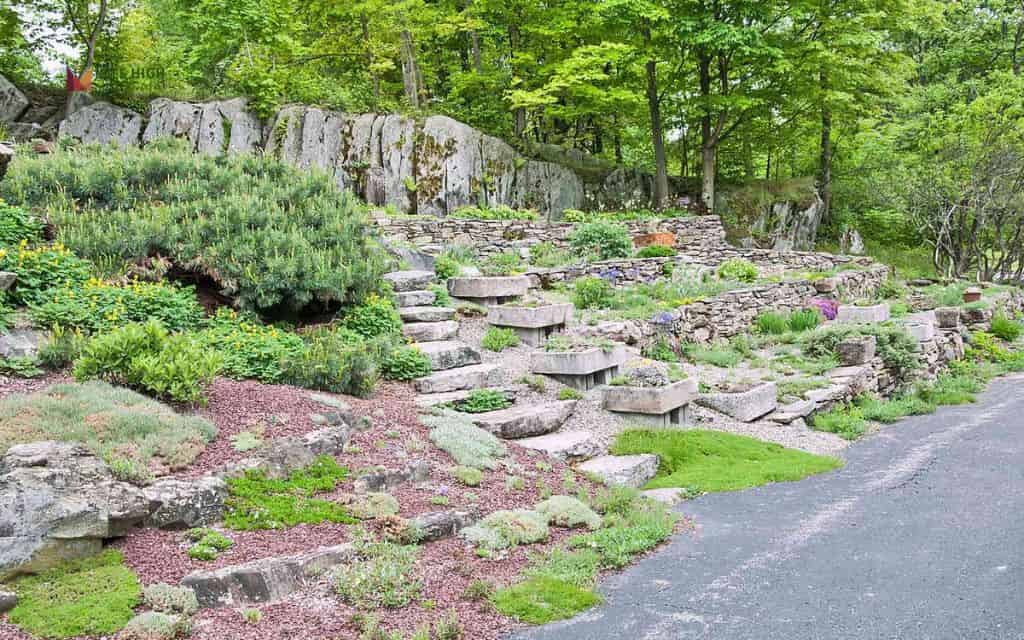
- Steep slopes (over 30%): Usually require large boulders, crevice gardens, or engineered retaining walls to prevent sliding
Sun exposure:
- South-facing slopes = hot, dry, intense UV exposure, minimal snow retention, best for heat-loving xeric plants
- North-facing slopes = cooler, more moisture retention, more freeze-thaw cycles, suited for shade-tolerant natives
Natural drainage paths: Walk your slope during a storm or turn on a hose to see where water naturally flows. These channels are where you’ll need the strongest erosion control.
Choose a stabilization strategy
Different slopes need different approaches. Pick the one that matches your conditions:
Rock-only slope
Best for very steep or extremely dry slopes where plants struggle. Use large boulders set deep, with gravel or decomposed granite fill. Low maintenance, permanent erosion control, but no seasonal color or pollinator benefit.
Terraced slope
Low stone terraces (12-18 inches tall) step down the hillside, creating flat planting pockets. Terraces reduce the effective slope angle, make watering easier, and allow a wider range of plants. Works well on moderate to steep slopes.
Boulders with planting pockets
Large boulders anchor the slope at key points. Soil and plants fill the gaps between boulders. This creates a natural, varied look with good erosion control. Ideal for gentle to moderate slopes where you want a mix of rock structure and plant color.
When a retaining wall is necessary
If your slope exceeds 3:1 (33%), sits next to a structure, or shows signs of active sliding, consult a structural engineer or landscape professional. Retaining walls over 3 feet tall usually require permits in Denver and need proper drainage, footings, and rebar reinforcement.
12 hillside rock garden ideas that work in Denver
Boulder-anchored hillside
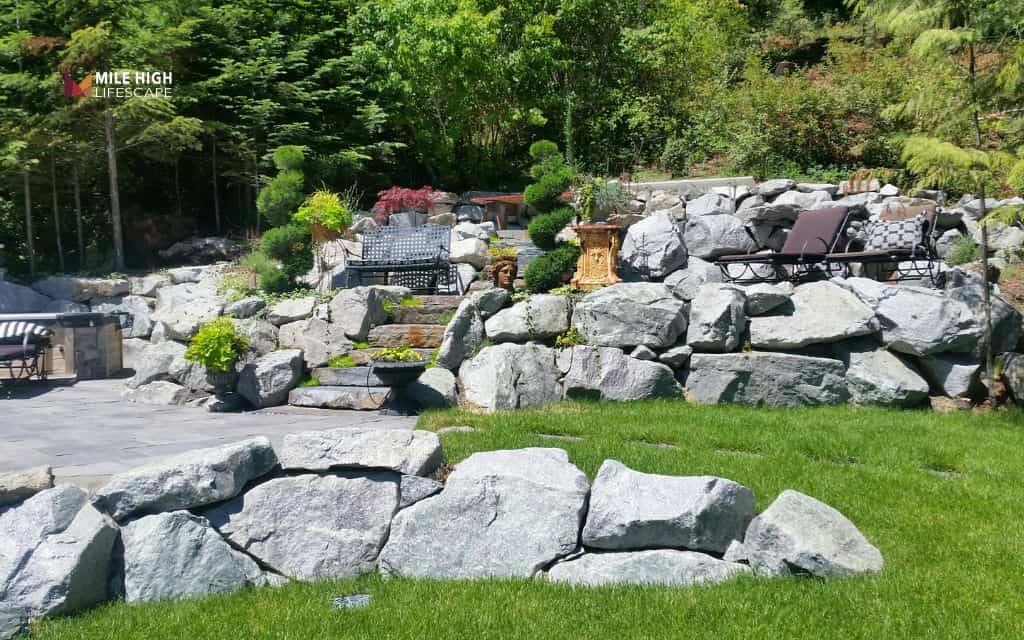
Large boulders (500-2,000+ lbs) act as permanent anchors on the slope. They prevent soil movement, create visual focal points, and generate planting microclimates.
Place boulders irregularly across the slope, burying at least one-third of each rock for stability. The buried portion locks into the hillside and won’t shift during freeze-thaw. The uphill side of each boulder traps soil and moisture, creating a protected planting pocket. The downhill side offers afternoon shade for heat-sensitive plants.
Best for: Moderate to steep slopes.
Terraced hillside with rocks and native plants
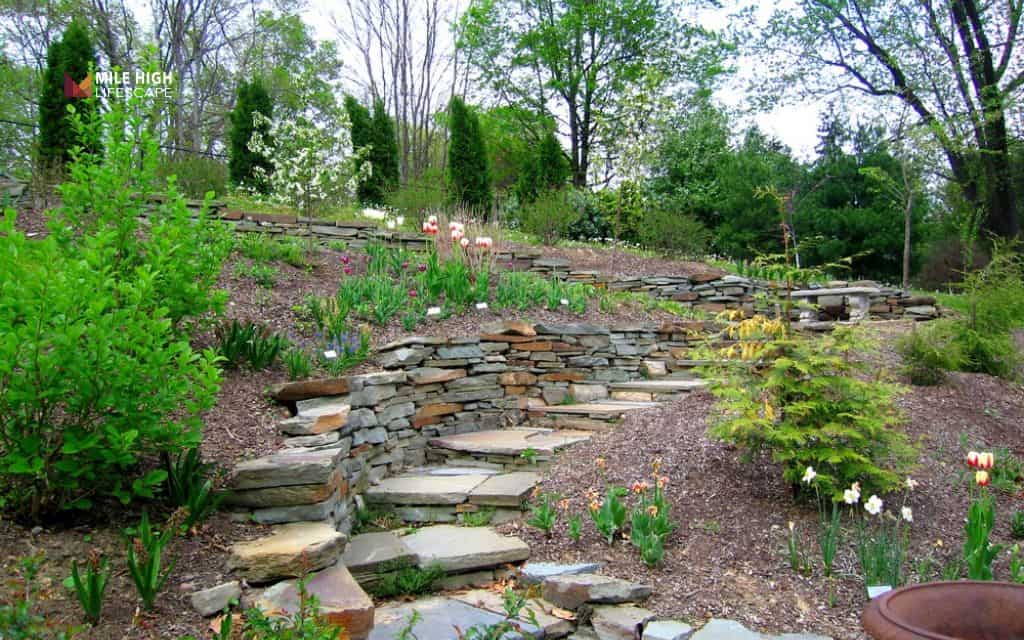
Low stone terraces step down the slope, reducing the grade and creating level planting beds. Build 12-18 inch tall stone walls across the slope at intervals (usually 4-8 feet apart vertically, depending on steepness). Backfill each terrace with amended soil and mulch. Plant each level with native perennials and grasses suited to the exposure.
Best for: Moderate slopes (15-30%).
Xeriscape hillside rock garden
Gravel mulch, rocks, and drought-tolerant plants reduce water use and maintenance to near zero. Strip existing turf (if present) and amend clay soil with compost in planting pockets only.
Place boulders and rocks across the slope. Spread 3-4 inches of ¾-inch crushed gravel as mulch. Plant drought-adapted perennials, grasses, and shrubs in strategic clusters.
Use drip irrigation on a timer only during establishment (first 1-2 years), then reduce or eliminate supplemental water.
Best for: Full-sun south-facing slopes.
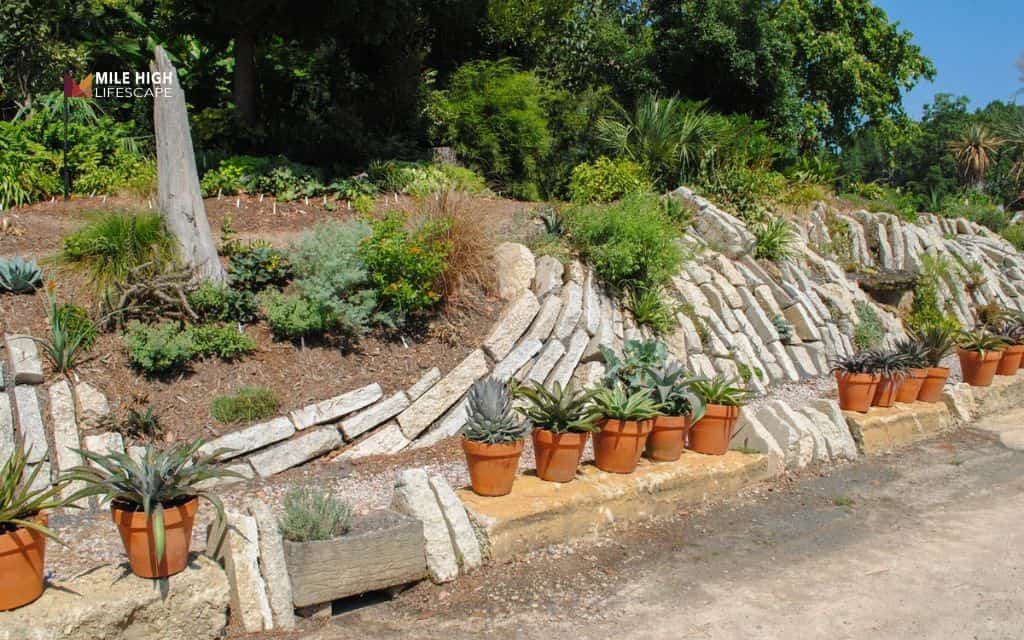
Crevice rock garden on a slope
Tightly placed stones create vertical crevices that plants grow into. This style mimics alpine scree slopes and handles freeze–thaw movement exceptionally well. Set flat stones on edge (not horizontally) at angles that follow the slope.
Pack sandy, fast-draining soil into the narrow gaps. Plant alpine and rock garden species that naturally grow in crevices: hens-and-chicks, creeping phlox, lewisia, dwarf columbine.
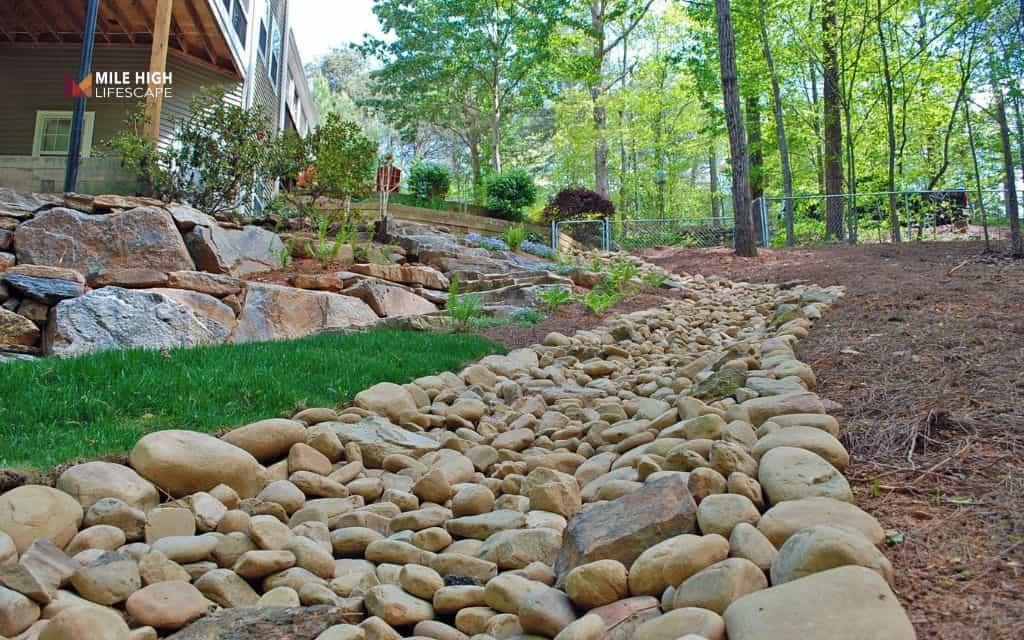
Hillside with dry creek and rock channels
Direct stormwater safely downhill while adding a natural design feature. Identify the natural drainage path down your slope. Excavate a shallow channel (6-12 inches deep, 2-4 feet wide). Line it with landscape fabric, then fill with 3-6 inch river rock or rounded cobbles. During storms, water flows through the rock channel instead of eroding bare soil. During dry periods, it looks like a natural dry creek bed.
Best for: Slopes with heavy runoff, properties that collect water from roofs or driveways.
Sloped front yard rock garden
Replace turf on sloped front yards with a combination of boulders, gravel mulch, and compact, colorful perennials. Use rocks to define planting beds and guide the eye from the street to the entry. Add path lighting and a stone step path if needed.
Best for: Front-facing slopes visible from the street.
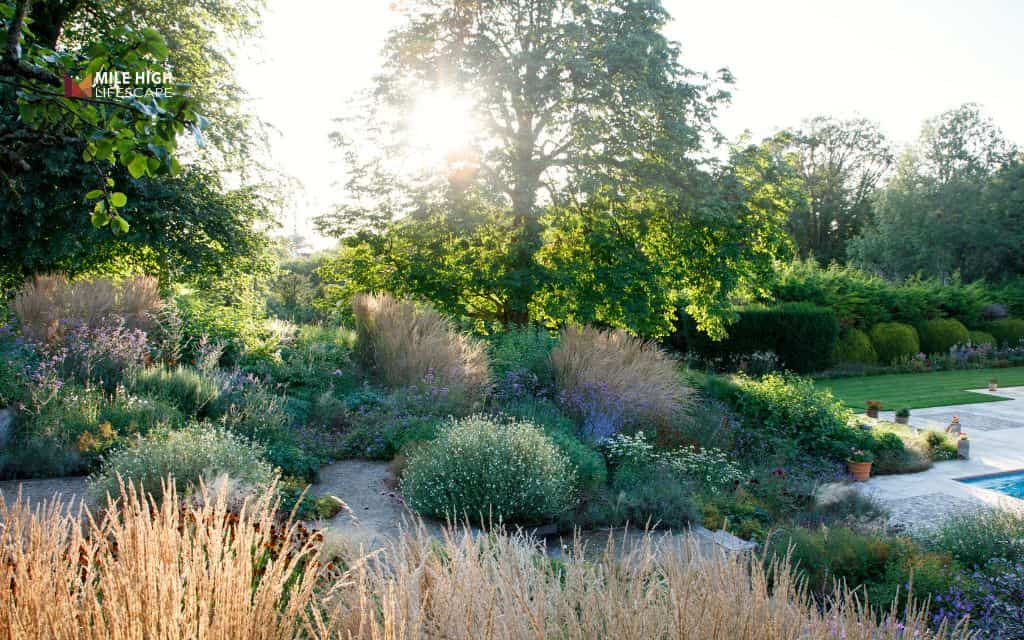
Rock and groundcover slope
Replace grass with spreading groundcovers and rock mulch for low maintenance. Prep the slope by removing turf and amending soil with compost. Plant spreading groundcovers (kinnikinnick, creeping thyme, ice plant, sedum) in staggered rows or clusters. Fill gaps with 2-3 inches of gravel mulch. Add accent boulders at key points for visual interest.
Best for: Gentle to moderate slopes.
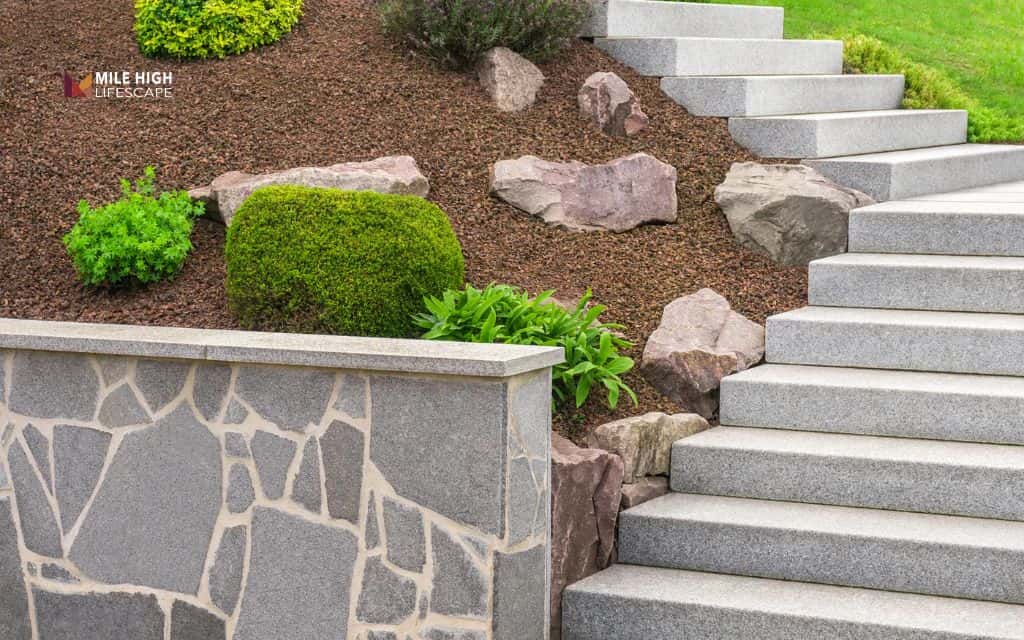
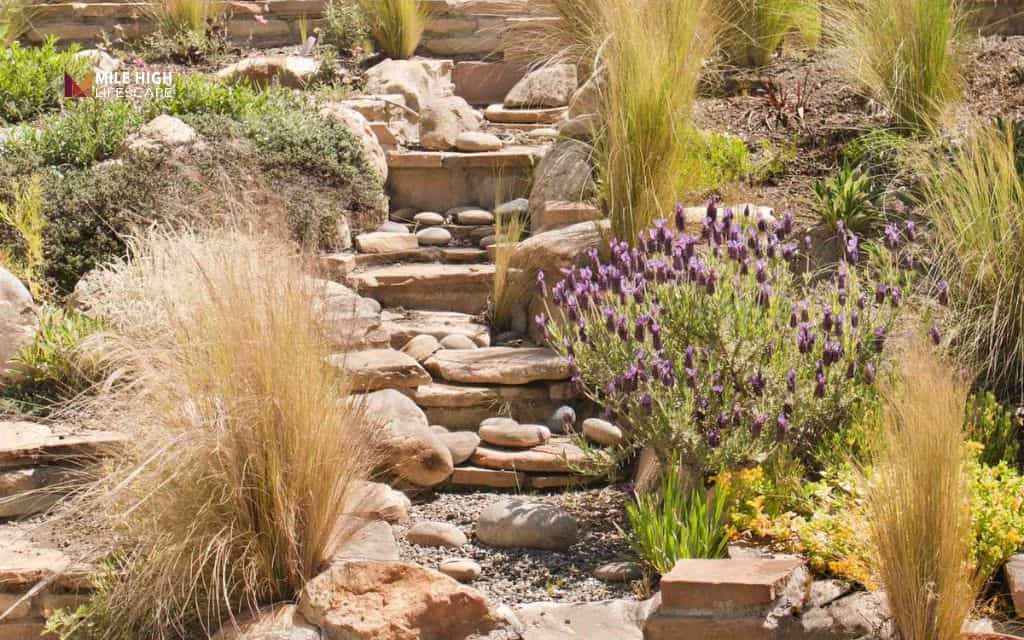
Hillside rock garden with stone steps
Adds safe access while preventing foot traffic erosion. Build a stone step path up the slope using large flagstones or landscape blocks. Set each step into the hillside (not just on top of it) for stability. Flank the steps with boulders and plant pockets. This formalizes the path, prevents shortcutting, and reduces the trampled, eroded trails that naturally form on unmaintained slopes.
Best for: Slopes with regular foot traffic (backyard access, garden paths), steep slopes that need safe navigation, properties where erosion is already a problem.
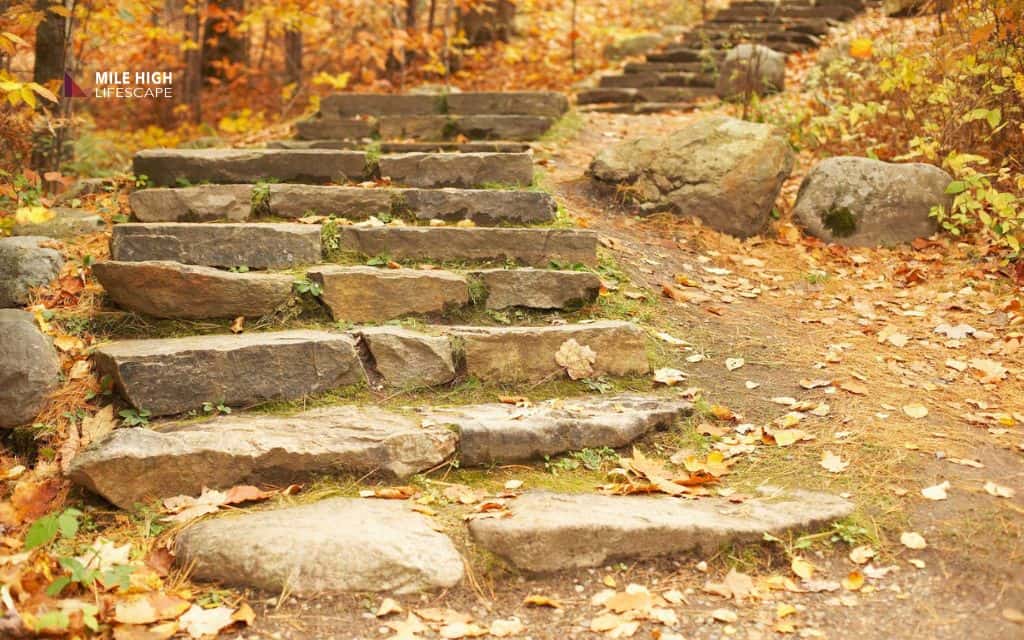
Rocky slope with decomposed granite paths
Use decomposed granite (DG) as a path surface and mulch layer across the slope. DG compacts firmly when wet, creating a stable walking surface, but remains permeable so water can infiltrate. Edge paths with rocks or steel edging to prevent spreading. Plant drought-tolerant clusters along path edges.
Best for: Properties with multiple paths, xeriscape gardens.
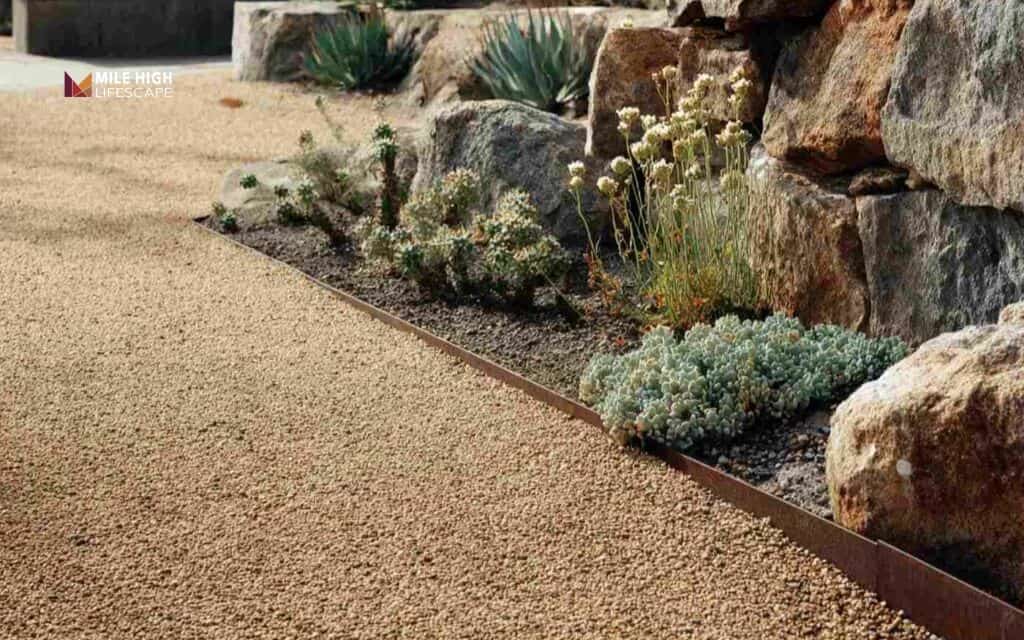
Pollinator-friendly hillside rock garden
Supports bees and butterflies using native, water-wise plants. Focus plant selection on native perennials and grasses that provide nectar, pollen, and habitat for Front Range pollinators. Examples: penstemon, blanket flower, Rocky Mountain bee plant, aster, goldenrod, little bluestem. Place rocks to create sunny basking spots for butterflies and bees. Avoid pesticides and leave some bare soil for ground-nesting bees.
Best for: Gardeners who value biodiversity.
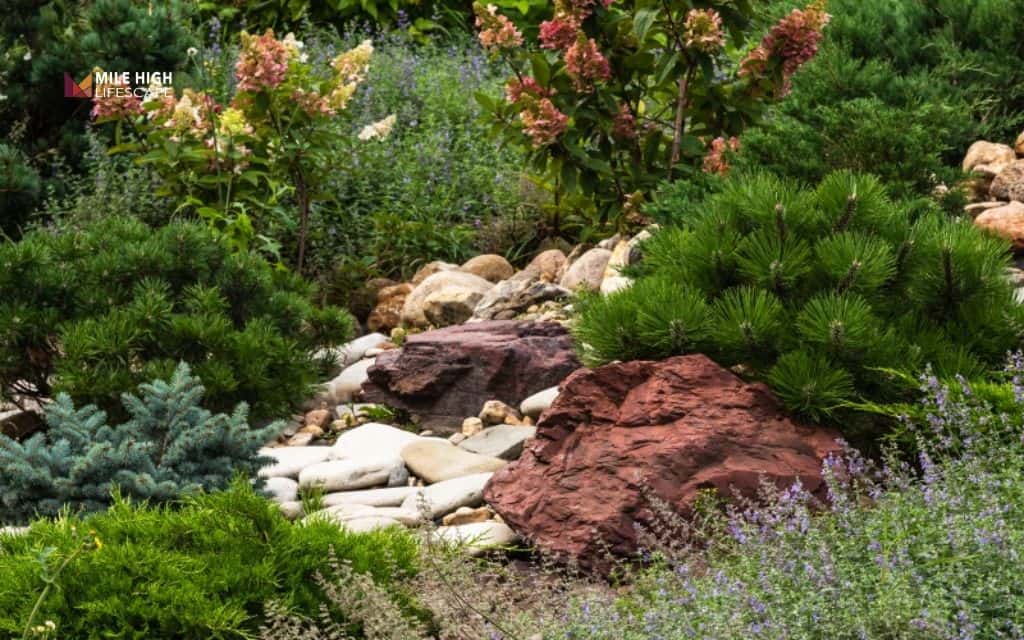
Minimalist all-rock hillside
Perfect for extremely steep or dry slopes where plants struggle. Cover the slope entirely with rocks and gravel – no plants. Use a mix of boulder sizes for visual interest. This approach requires the least water, no weeding, no replanting, and provides permanent erosion control.
Best for: West or south-facing slopes with extreme heat and wind, slopes too steep for planting.
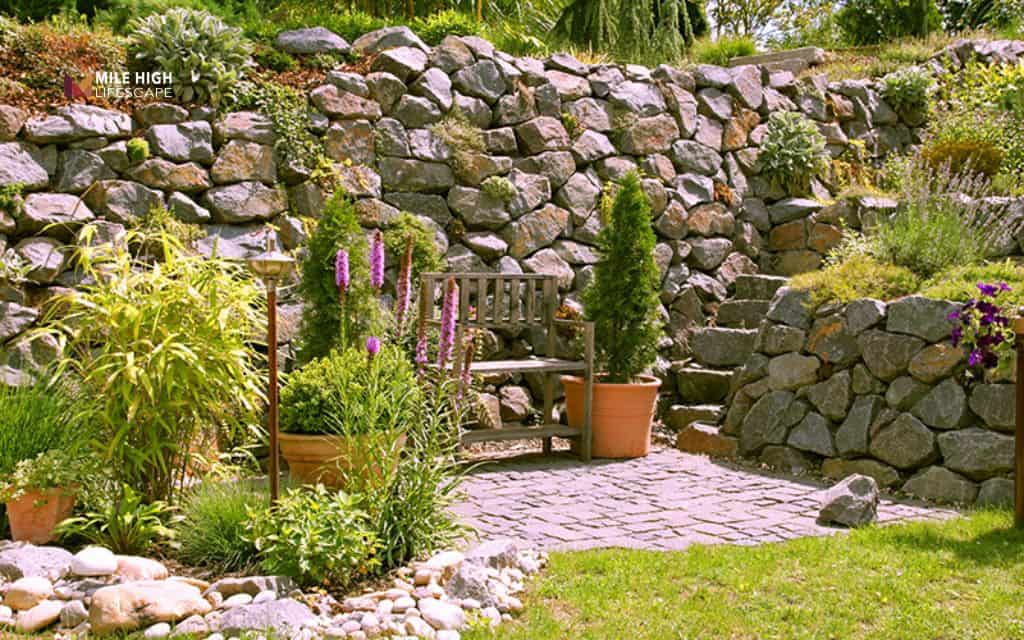
Large hillside with mixed rock and plant zones
Divide big slopes into functional sections for phased installation. Break a large slope into zones based on sun exposure, access, and visibility. Install high-impact zones first (front yard, near patio) with detailed planting and rock work. Treat less visible zones with simpler designs (groundcover and gravel mulch). Phase the project over 1-3 years to spread cost and labor.
Best for: Properties with large sloped areas (¼ acre or more).
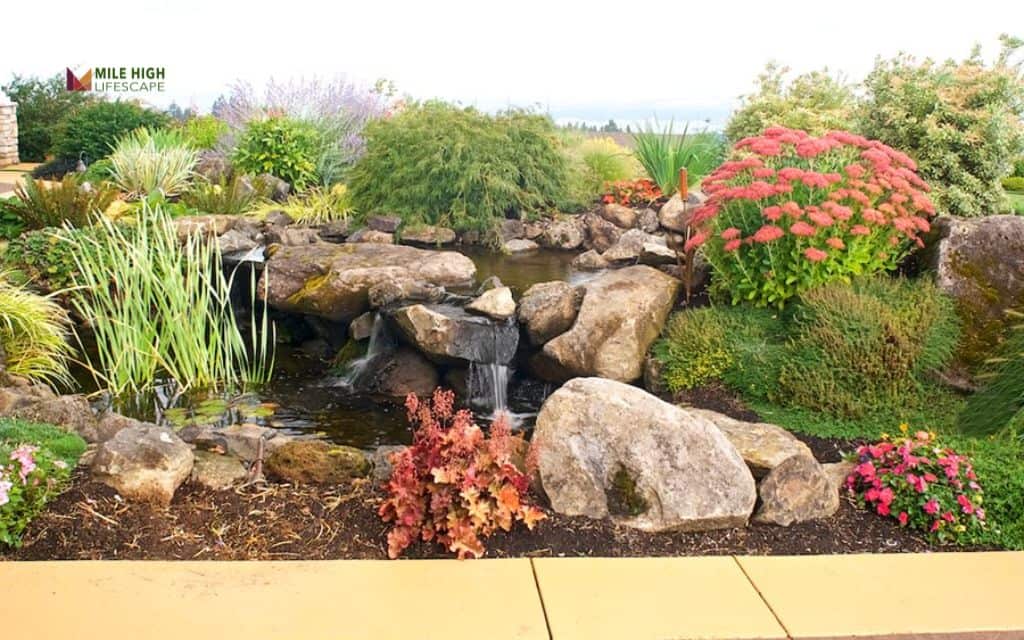
How to build a hillside rock garden
Rock placement rules
Place large rocks first and bury at least one-third
The largest boulders anchor your design. Dig out soil and set each boulder so at least one-third of its mass sits below grade. This prevents shifting and makes rocks look naturally settled into the hillside rather than just dumped on top.
Build from the bottom up
Start placing rocks at the base of the slope and work uphill. This prevents rocks from rolling down onto finished work and gives you a stable foundation to build on. If building terraces, construct the lowest wall first.
Avoid loose rock spread on bare slopes
Never spread gravel or loose rock directly on bare clay or compacted soil. It will slide downhill, especially during heavy rain or snowmelt. Always use landscape fabric or amend soil first, and ensure rocks have something to grip into.
Drainage for clay soils
Where to use gravel layers
Behind retaining walls and terrace walls, dig back 12 inches and backfill with ¾-inch drain rock before adding planting soil. This prevents water from building up behind the wall and causing failure. At the base of steep slopes, consider a gravel-filled French drain to intercept runoff.
When geotextile fabric helps
Use heavy-duty landscape fabric (4-6 oz per square yard, not the thin stuff) under gravel mulch and behind rock walls. Fabric prevents clay soil from mixing with gravel and clogging drainage, but it should never block water flow, it needs to be water-permeable, not plastic sheeting.
How to guide water safely downhill
Create intentional drainage paths using dry creek beds, gravel swales, or perforated drain pipe wrapped in fabric. Never let water flow toward structures, pool on flat terraces, or erode unprotected soil. Water should exit at a safe point: a rain garden, street drainage, or natural drainage area.
Best plants for hillside rock gardens in Denver
Sunny / south-facing slopes
These plants thrive in full sun (6+ hours), tolerate heat and drought, and handle well-drained rocky soil:
Penstemon: Native perennials with tubular flowers in red, pink, purple, or white. Bloom May-July. Attract hummingbirds and bees. Varieties like Rocky Mountain penstemon and firecracker penstemon are especially tough.
Blue grama grass: Native short-grass prairie species. Grows 8-12 inches tall. Produces distinctive “eyelash” seed heads in summer. Excellent for erosion control and low water use. Colorado’s state grass.
Yucca: Evergreen rosettes with spiky foliage and tall flower stalks. Extremely drought-tolerant. Handles poor soil, heat, and cold. Provides winter structure in the landscape.
Ice plant: Low, spreading succulent groundcover. Bright magenta or yellow flowers in summer. Evergreen foliage. Excellent for cascading over rocks on sunny slopes.
Blanket flower: Native perennial with red-and-yellow daisy-like blooms. Flowers June-September. Drought-tolerant once established. Attracts pollinators.
Russian sage: Aromatic gray foliage and lavender-blue flower spikes in late summer. Grows 3-4 feet tall. Handles heat, drought, and poor soil.
Shady / north-facing slopes
These plants tolerate part shade to full shade, cooler conditions, and moisture retention common on north-facing slopes:
Creeping mahonia: Native evergreen groundcover. Yellow spring flowers, blue berries in summer, burgundy foliage in winter. Spreads slowly by rhizomes. Tolerates dry shade.
Kinnikinnick: Low-growing evergreen groundcover. Small pink flowers in spring, red berries in fall. Tolerates acidic soil and part shade. Excellent erosion control.
Columbine: Colorado’s state flower. Delicate blue-and-white blooms in late spring. Prefers part shade and consistent moisture. Self-seeds readily in favorable conditions.
Creeping phlox: Semi-evergreen groundcover with pink, purple, or white spring blooms. Spreads across rocks. Tolerates morning sun but benefits from afternoon shade on north slopes.
Coral bells: Native perennial with colorful foliage (green, purple, burgundy) and delicate flower stalks. Prefers part shade and well-drained soil. Evergreen in mild winters.
Western virgin’s bower: Native climbing vine. Fragrant white flowers in summer, feathery seed heads in fall. Can cascade down slopes or climb over boulders. Tolerates part shade.
Conclusion
A sloped yard doesn’t have to be a problem. With smart design, proper rock placement, and the right plants, a hillside rock garden can become one of the most durable and beautiful features of a Denver landscape.
Whether you’re stabilizing a steep slope with boulders, terracing a moderate hillside for planting, or creating a xeriscape rock garden that uses almost no water, the principles remain the same: work with your slope’s natural drainage, use rocks to anchor soil and slow water, and choose plants adapted to Colorado’s intense sun, wind, and freeze-thaw cycles.
Start with careful observation, understand your slope’s steepness, sun exposure, and water movement patterns. Pick a stabilization strategy that fits your conditions and goals. And build from the bottom up, setting rocks deep and guiding water safely downhill.
Done right, a hillside rock garden requires far less maintenance than turf, uses a fraction of the water, and looks better year-round. It turns your sloped yard from a challenge into an asset.
Frequently asked questions (FAQs)
What is a hillside rock garden, and why is it ideal for Denver yards?
A hillside rock garden uses rocks, boulders, and drought-tolerant plants to stabilize sloped yards. In Denver, this approach works especially well because it reduces erosion, improves drainage in clay soil, and supports low-water xeriscape landscaping. Once established, hillside rock gardens require minimal irrigation and handle Colorado’s freeze-thaw cycles better than traditional lawns or annual beds.
Can hillside rock landscaping help prevent erosion and runoff?
Yes. Properly placed rocks and boulders slow water movement on slopes, hold soil in place, and guide runoff safely downhill. Large boulders buried one-third below grade act as permanent anchors. Gravel layers increase infiltration in clay soil. Terraces reduce slope angle and create stable planting zones. This makes hillside rock landscaping one of the most effective ways to control erosion on sloped properties in the Front Range.
What types of rocks are best for hillside landscaping in Colorado?
Large boulders (500-2,000 lbs), angular flagstone, and mixed-size gravel work best on slopes. Heavier rocks are less likely to shift during freeze–thaw cycles and storms. Angular rocks interlock better than rounded river rock, providing more stability. Popular Colorado choices include moss rock, red sandstone, Lyons sandstone, and granite.
Is hillside rock landscaping suitable for xeriscape and water-wise gardens?
Absolutely. Hillside rock gardens pair perfectly with xeriscape principles by reducing turf, improving soil infiltration, and supporting drought-tolerant native plants. Gravel mulch conserves moisture, reflects heat, and eliminates the need for organic mulch replacement. Once established (typically 1-2 years), xeriscape rock gardens on slopes require far less water than traditional sloped lawns, often surviving on natural precipitation alone.
Can I build a hillside rock garden myself, or should I hire a professional?
DIY hillside rock projects are possible on gentle slopes with smaller stones and simple designs. You can install groundcovers, spread gravel mulch, and place accent boulders yourself. However, for steep slopes (over 30%), drainage problems, large boulders (over 500 lbs), or retaining walls over 3 feet tall, hiring a professional landscaper ensures long-term stability, safety, and proper erosion control. Heavy equipment and engineering expertise become necessary for complex hillside projects.