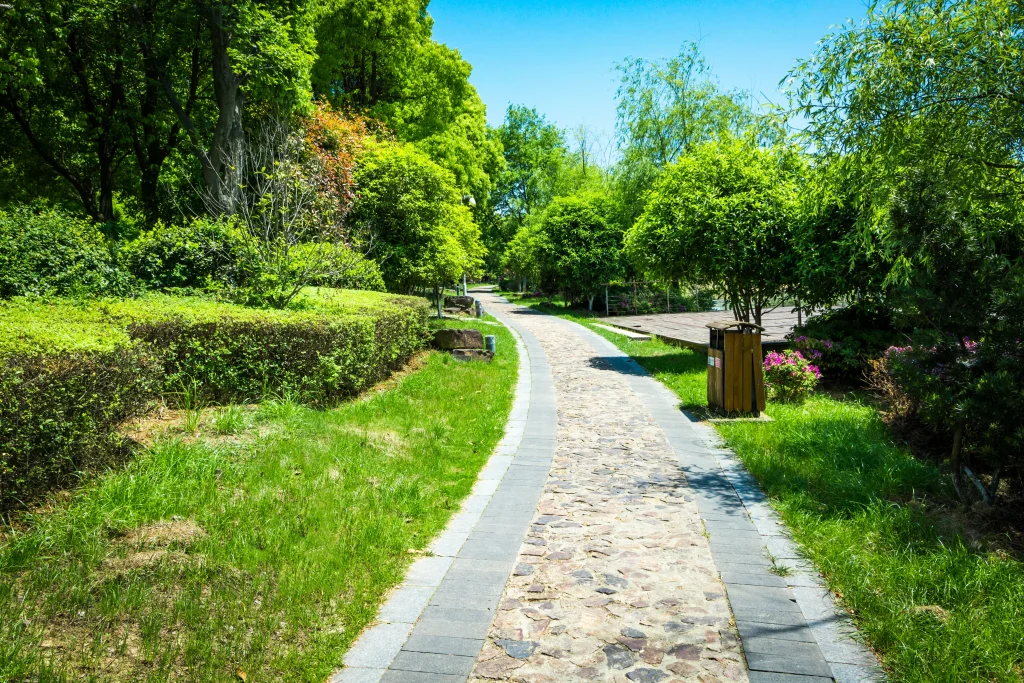
If you’ve ever walked through a garden and felt that satisfying crunch of stone underfoot, chances are flat rocks were behind that magic. Landscaping with flat rocks is one of the most rewarding, accessible, and budget-friendly ways to transform your outdoor space.
Whether you’re a weekend warrior tackling your first stepping stone path or a seasoned DIYer ready to build a full dry-laid patio, flat rocks deliver something most other materials simply can’t: timeless, natural character that only gets better with age.
At Mile High Lifescape, we’ve helped Denver homeowners work with flat rocks across every type of project imaginable – from cottage-style garden beds to sleek, modern patios. This guide covers everything you need: inspiring ideas, beginner-friendly installation steps, cost signals, and maintenance tips so your project lasts for years without headaches.
Why flat rocks are a garden game-changer
Before diving into ideas, it’s worth understanding why flat rocks work so well in landscaping. The answer comes down to four core strengths.
- Natural structure: Flat rocks define spaces without looking forced. They guide foot traffic, separate garden zones, and give your yard a sense of intentional design – without the rigid, manufactured look of poured concrete.
- Better walkability: Unlike loose gravel or stepping stones sunk unevenly into soil, properly installed flat landscape rock gives you a stable, level surface that’s comfortable and safe to walk on year-round.
- Drainage solutions: In Denver and the broader Front Range, drainage is a real concern. Flat rocks used in dry creek beds or gravel-based pathways help redirect runoff away from foundations and planting beds, eliminating those frustrating muddy patches that appear every spring.
- Visual contrast: Stone breaks up the monotony of turf and mulch, adding texture and depth. Whether you prefer the warm, earthy tones of sandstone or the cool grays of slate, flat rock for landscaping brings visual interest that plants alone can’t provide.
What are flat landscape rocks?
Flat landscape rocks are naturally split or quarried stones with relatively smooth, even surfaces that make them walkable, stackable, and visually appealing. Unlike rounded river rock or chunky boulders, they lay close to the ground and integrate seamlessly into garden designs.
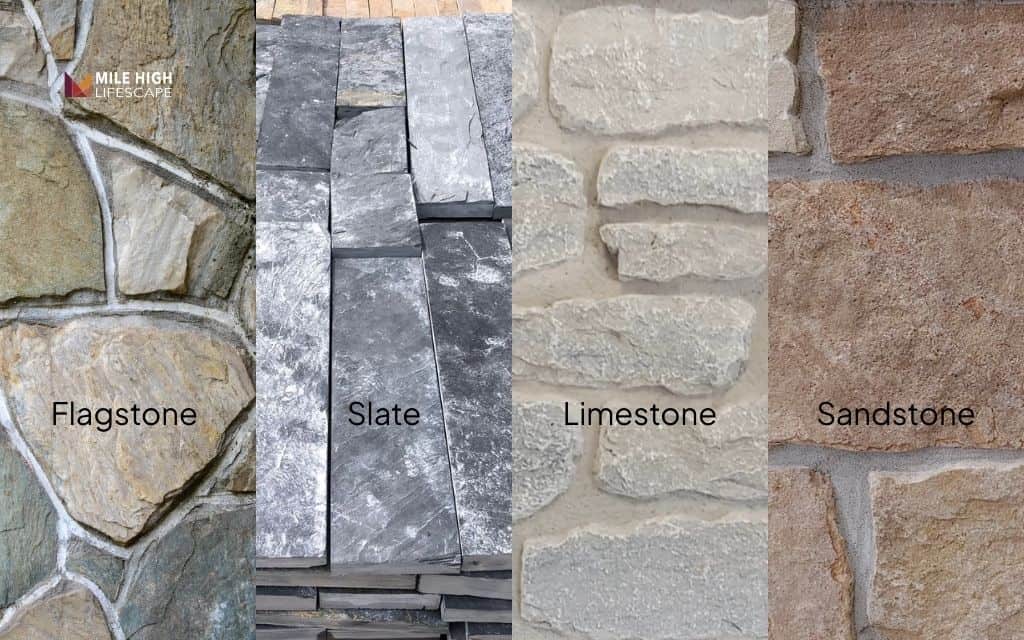
The 4 most common types used in residential landscaping include:
Flagstone is the go-to choice for walkways and patios. It’s a flat sedimentary stone – typically sandstone, limestone, or quartzite – cut or naturally split into irregular or rectangular slabs. The term “flagstone” technically refers to the application (flat, paving-grade stone) rather than one specific rock type. It’s durable, slip-resistant, and ideal for dry-laid installations.
Slate is a fine-grained metamorphic rock that splits cleanly into thin, smooth layers. It has a sophisticated appearance and works in modern or minimalist garden designs. It can be slippery when wet, so texture matters.
Limestone is widely available, relatively affordable, and weathers to a soft, natural look over time. It’s popular in cottage-style gardens and works well for both walkways and edging.
Sandstone offers warm tones – tans, reds, and oranges – and a slightly rougher surface that improves traction. It’s one of the most popular flat rocks for landscaping choices.
11 easy & stunning landscaping with flat rock ideas
These ideas are organized to help you match inspiration to your specific yard goals, from the simplest weekend project to more involved transformations.
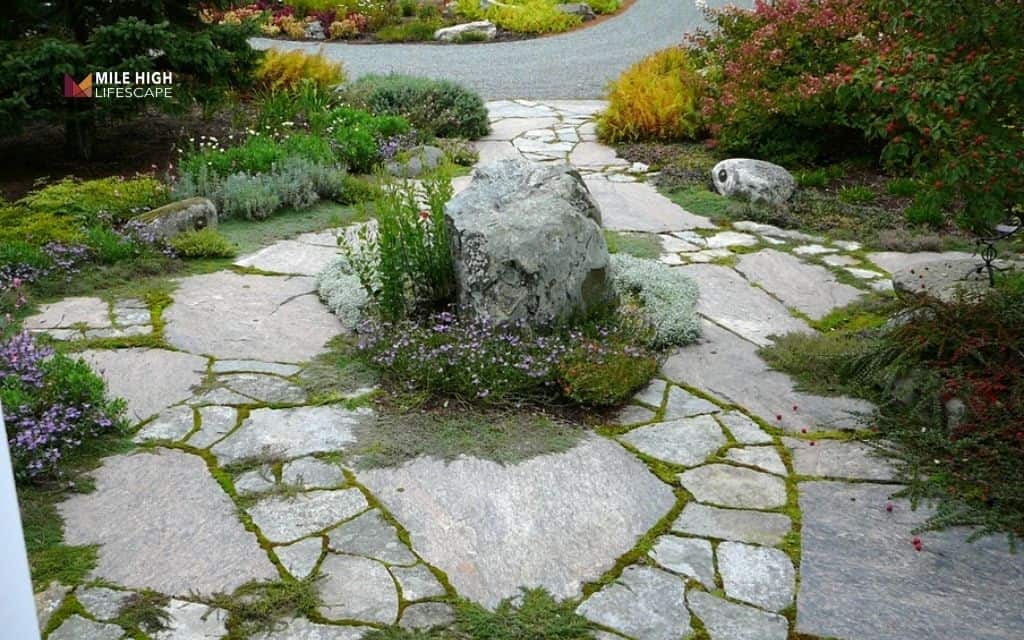
Classic flagstone walkway
A flagstone walkway is the most iconic use of flat rocks in landscaping and for good reason. Irregular flat stones set over a gravel and sand base create a winding, cottage-feel path that looks like it’s always been there.
It’s beginner-friendly, drainage-conscious, and one of the most satisfying weekend projects you can tackle. The irregular shapes mean no two paths look the same, which adds to the handcrafted charm.
Stepping stone path in grass
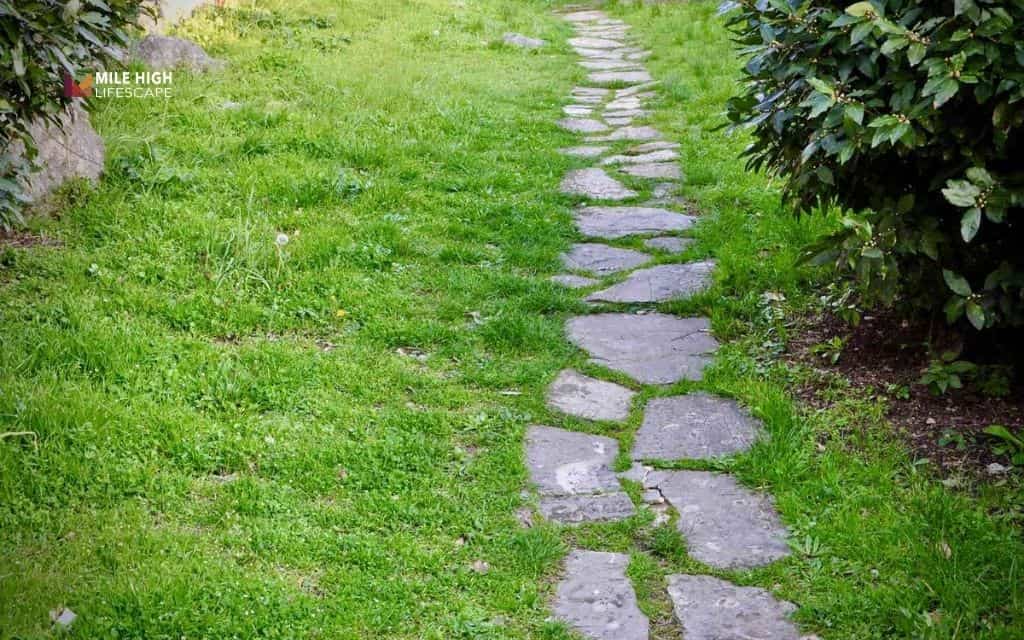
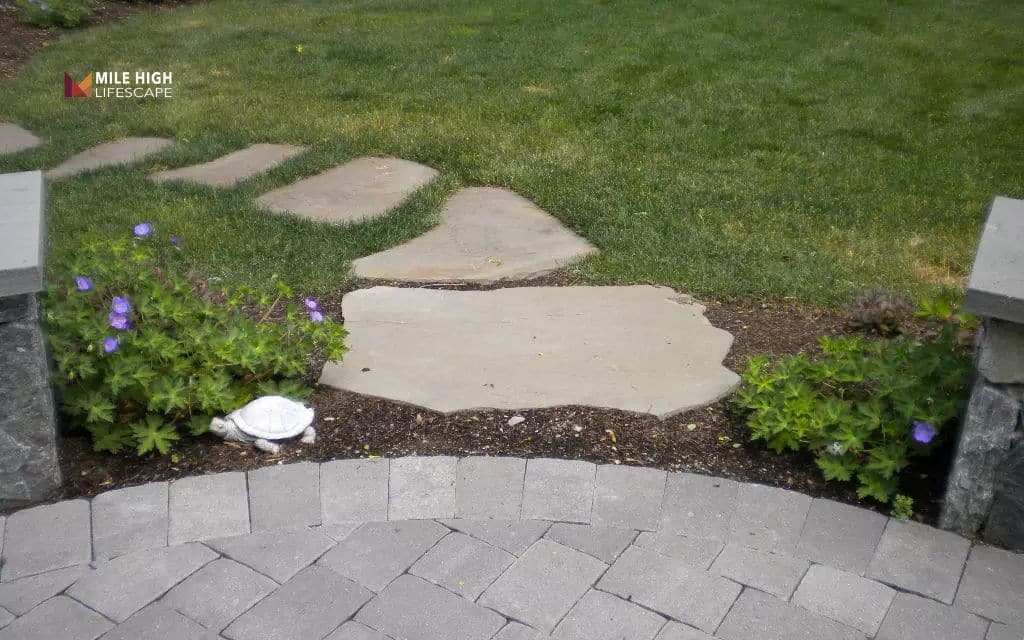
If a full walkway feels like too much commitment, individual stepping stones spaced across your lawn offer a low-effort alternative. You simply lay stones in position, trace their outline, remove the sod, add a thin sand base, and set each stone flush with the grass.
The result is a clean, navigable path that mows right over without any fuss. This is one of the most budget-friendly flat rocks landscaping approaches you’ll find.
Flat rock patio (dry-laid)
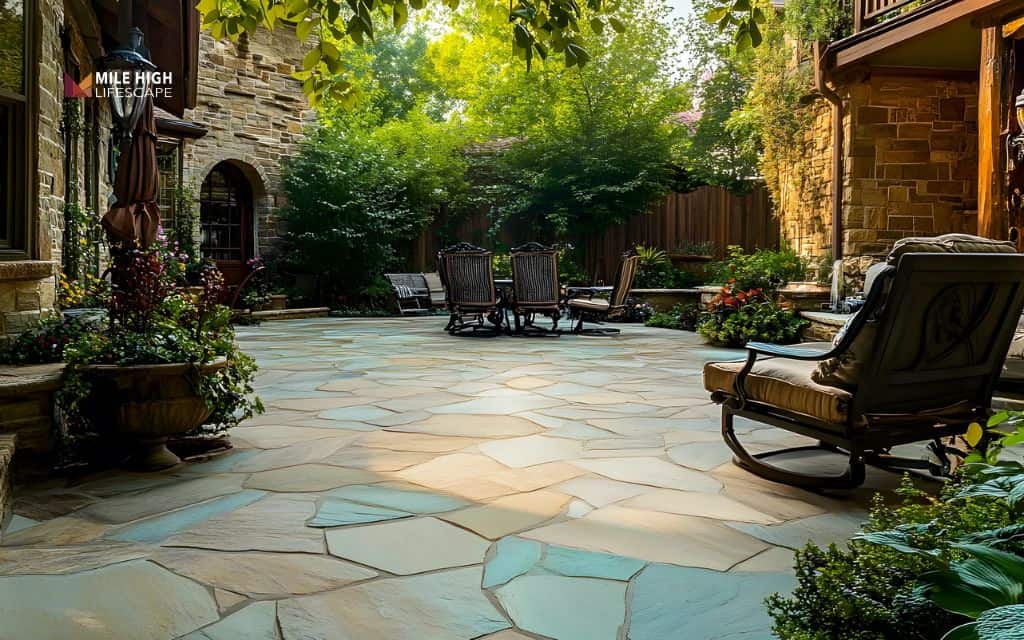
For outdoor living without the permanence of concrete, a dry-laid flat rock patio is the answer. Large pieces of flat landscape rock are arranged over a compacted gravel base and leveling sand, creating a sturdy surface for outdoor furniture, fire pits, or dining areas. Unlike mortared patios, dry-laid systems can be repaired easily – just lift a stone, re-level the base, and reset.
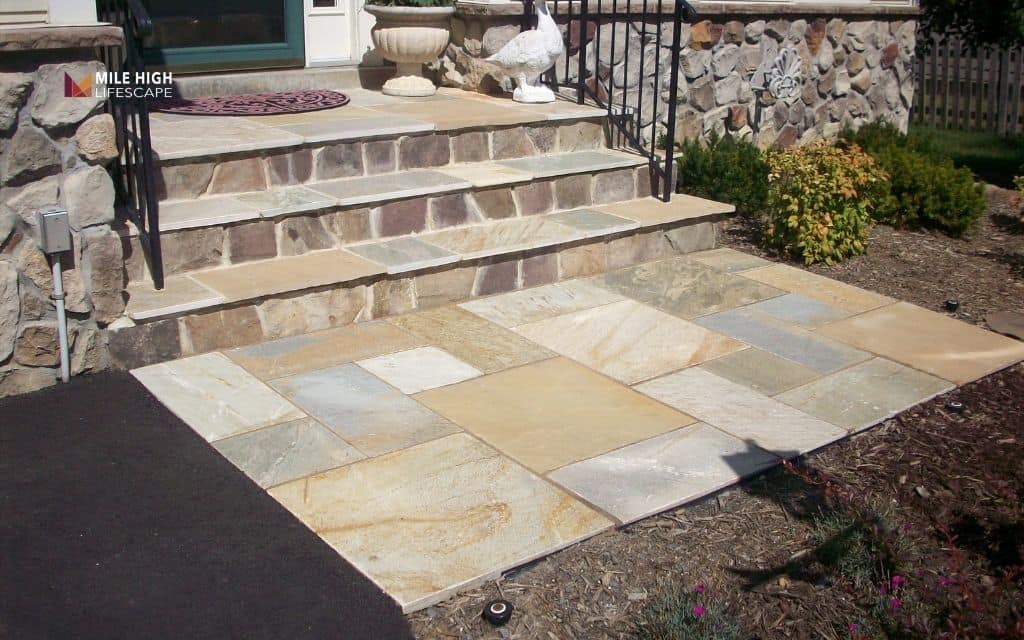
Modern grid layout
Not all flat rock landscaping has to feel rustic. Rectangular flagstone or slate cut into uniform pieces, arranged in a clean grid pattern with gravel or polymeric sand joints, creates a sleek, contemporary look that pairs well with modern homes, minimalist plantings, and clean architectural lines.
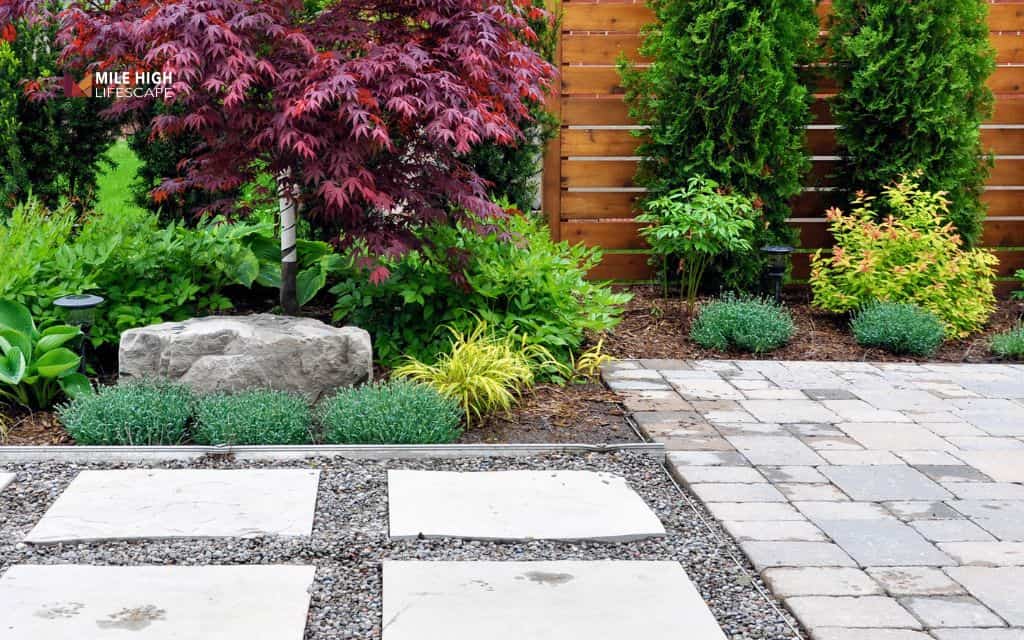
Garden bed edging with flat rocks
One of the simplest, most impactful uses of flat rocks is as low border edging around planting beds. A single row of flat stones set slightly into the soil defines your garden zones, keeps mulch from spilling onto the lawn, and adds a polished, finished look with minimal effort or expense.
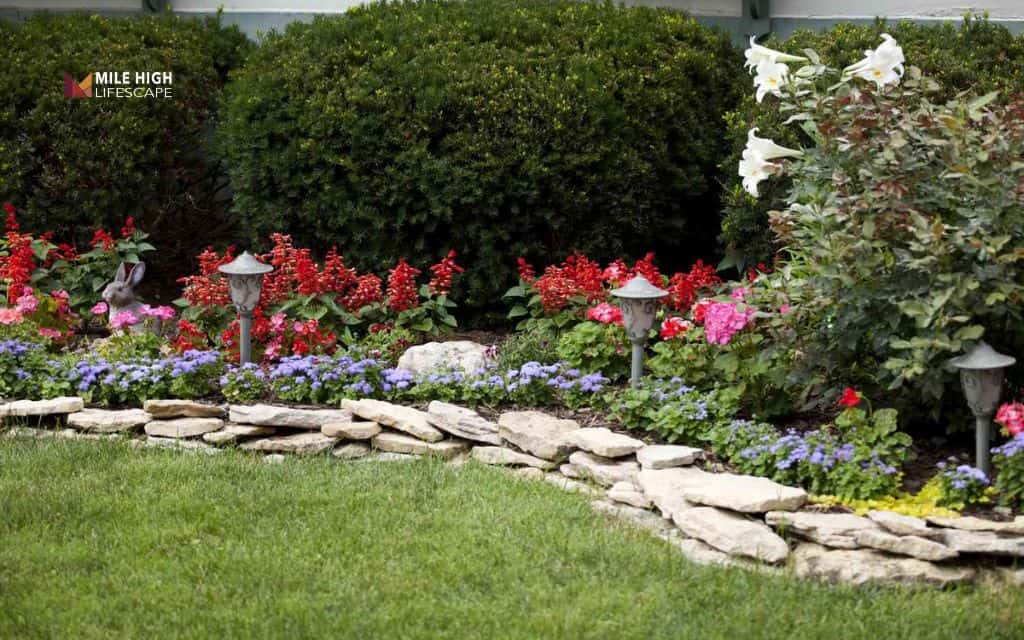
Dry creek bed with flat stones
If you have a drainage problem, a dry creek bed is your best friend. Combine flat rocks with river rock and small boulders to create a naturalistic channel that redirects water where you want it. When dry, it reads as a beautiful landscape feature. During rain, it does exactly the functional work you need.
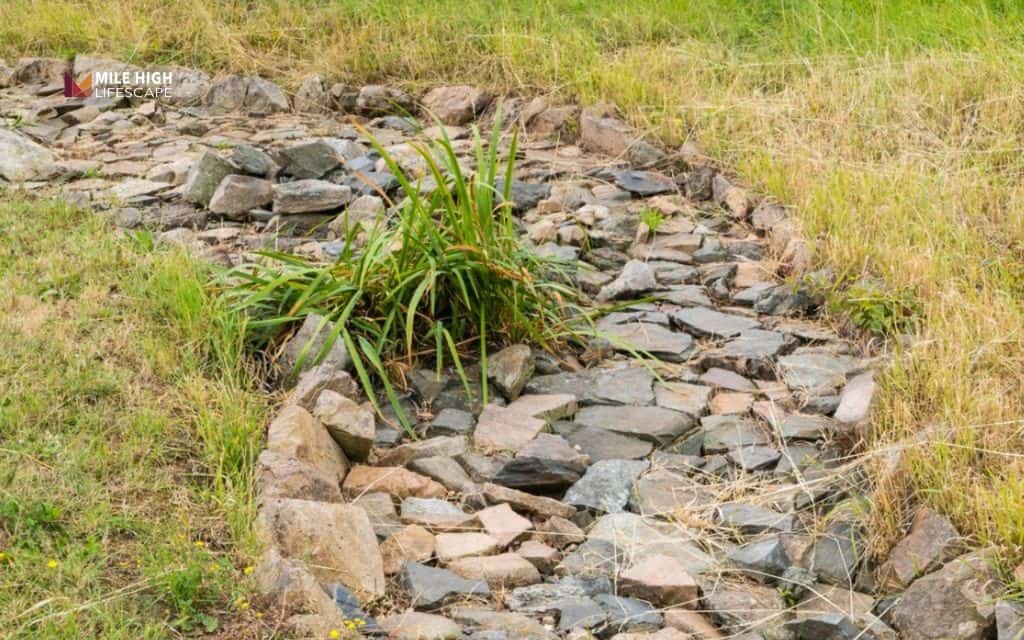
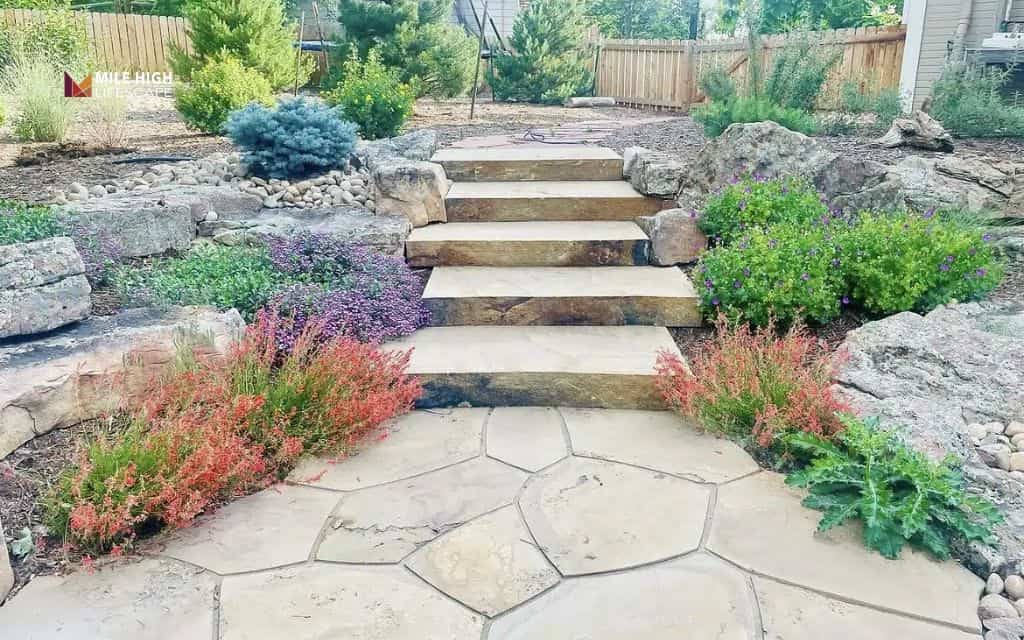
Flat rock garden steps
Sloped yards present a real challenge for both aesthetics and accessibility. Layered flat landscape rocks installed as garden steps solve both problems. Set into a hillside with a slight backward pitch for drainage, they create a sturdy, natural staircase that integrates beautifully with surrounding plantings. This is one of the most practical uses of flat rock for landscaping on uneven terrain.
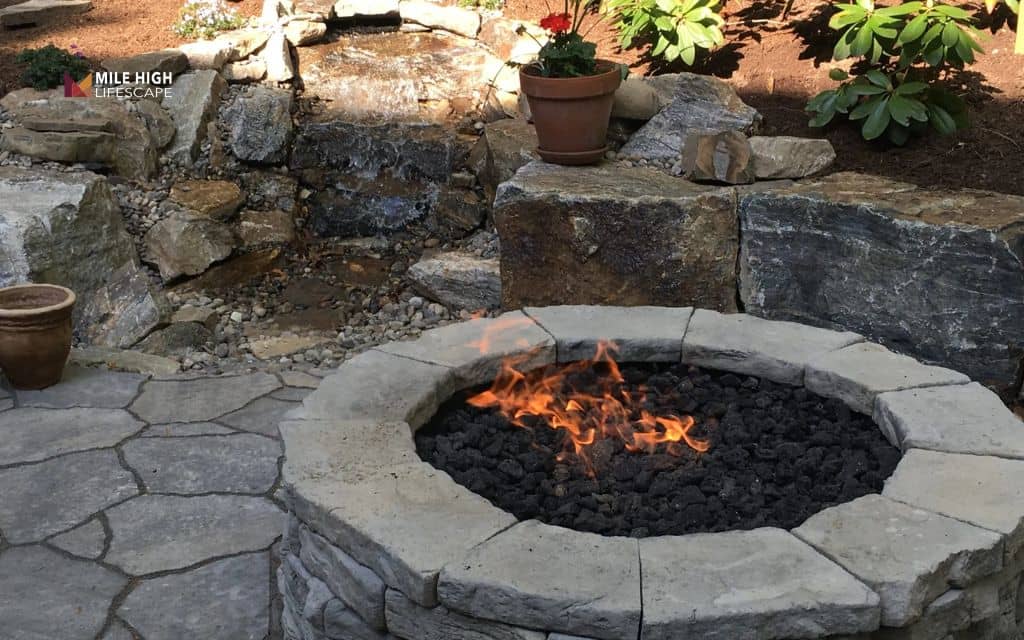
Flat rock around a fire pit
Creating a stable, heat-resistant ground surface around a fire pit protects your lawn and gives your gathering space a defined, intentional feel. Flat rocks handle heat well and provide a non-combustible base. Arrange them in a circular pattern around your fire pit for a rustic outdoor room that’s both safe and visually grounding.
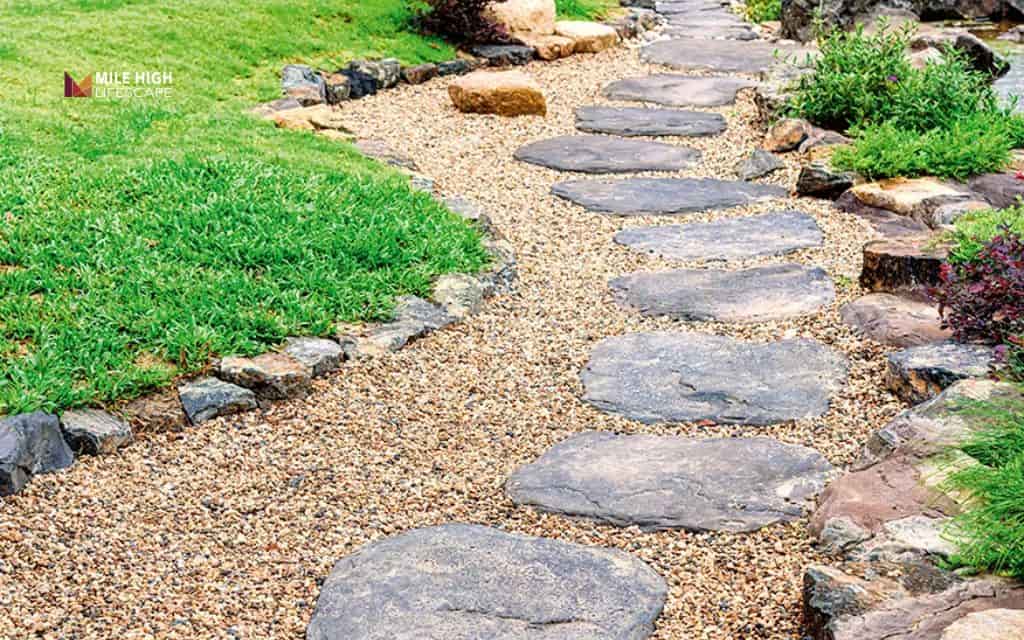
Pathway through gravel
A hybrid approach – flat stones laid within a bed of pea gravel – gives you the stability of a solid walking surface alongside the clean, low-maintenance aesthetic of a gravel garden. The flat rocks handle foot traffic while the gravel fills in gaps, suppresses weeds, and aids drainage. It’s a budget-friendly solution that looks intentional and polished.
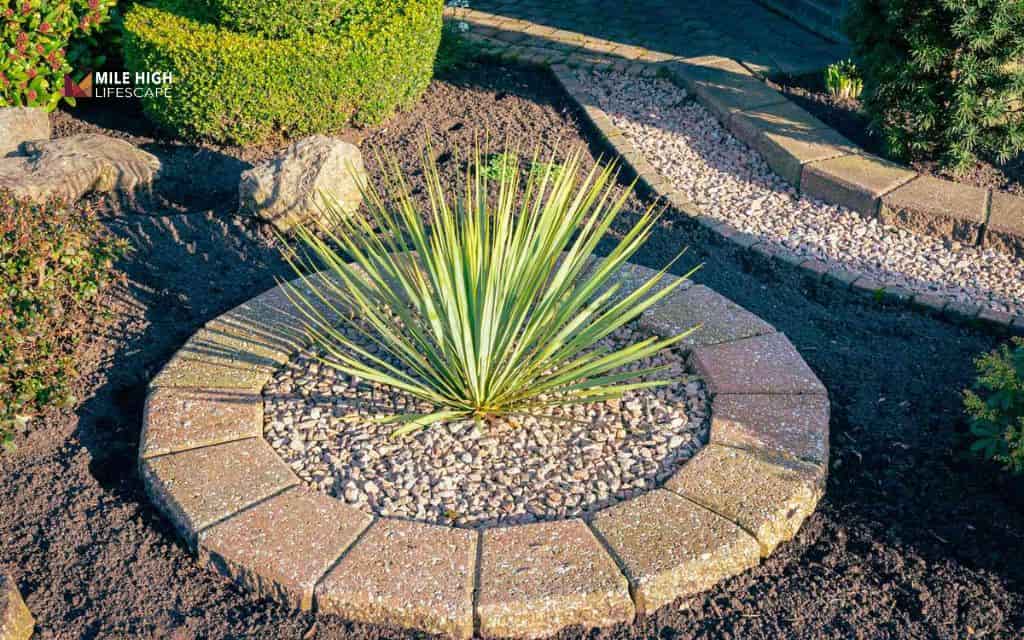
Flat rock accents in mulch beds
Large individual flat stones placed within mulch beds as focal points break up visual monotony and add sculptural interest to an otherwise uniform planting area. Think of them as natural art installations – they catch the eye, anchor the design, and require zero maintenance once placed.
Flat rock patio-to-garden transition
One often-overlooked use of flat rocks is the transitional stepping path that connects a patio to a lawn or garden bed. Without a defined transition, foot traffic wears a muddy groove that’s both ugly and hard to manage. A short series of flat stepping stones creates a logical, attractive connection that protects the lawn and improves the overall flow of your outdoor space.
How to install flat rocks for landscaping
The difference between a flat rock project that lasts 20 years and one that starts rocking and sinking within a season almost always comes down to base preparation.
Here’s how to get it right for two of the most common beginner projects.
Option 1: Dry-laid walkway (no mortar)
Tools you’ll need: shovel, level, hand tamper or plate compactor, garden hose, rubber mallet
Materials: crushed stone gravel (road base), coarse sand, flat flagstone
Steps:
- Mark your path with stakes and string or a garden hose to define the edges.
- Next, excavate the path area to a depth of 4 to 6 inches – this is where most beginners cut corners, and it’s the most important step.
- Add 3 to 4 inches of crushed stone gravel and compact it firmly with a tamper.
- Add about 1 inch of coarse sand on top and screw it level. Lay your flat rocks one at a time, checking each with a level and adjusting the sand beneath as needed.
- Use a rubber mallet to seat each stone firmly. Fill the joints between stones with gravel, coarse sand, or polymeric sand (which hardens and resists weeds).
- Finally, compact the entire surface lightly once more.
Time: One weekend for a typical garden path
Skill level: Beginner-friendly
Option 2: Simple stepping stone path (weekend project)
This is the easiest flat rock project you can tackle. Lay your stones in position first and walk the path to confirm spacing feels natural – typically 18 to 24 inches center to center works well for most people’s stride.
Once you’re happy with the layout, trace each stone’s outline with a trowel or spray paint. Remove the sod inside each outline to a depth matching your stone’s thickness plus about an inch for sand.
Add a thin sand base, set the stone, and check that it sits flush with or very slightly above the surrounding lawn. A rubber mallet helps seat stubborn stones.
Done right, you can mow right over the tops without any blade damage.
Time: 4 to 6 hours for most yards
Budget: Low to moderate, depending on stone size and quantity
How much does flat rock landscaping cost?
Costs for landscaping with flat rocks vary based on the stone type you choose, its thickness, how far it needs to be delivered, and whether you’re doing the work yourself or hiring a crew.
Here’s a general framework to help you plan:
- Stepping stone path sits at the low end of the cost range. If you’re buying individual stones from a local supplier and doing the work yourself over a weekend, the materials investment is modest. Sandstone and limestone tend to be the most affordable options.
- Dry-laid walkway sits in the moderate range. You’ll need more stone, gravel base material, sand, and potentially a rental plate compactor – but it’s still very manageable for a DIY project.
- Full flat rock patio installation represents the higher end of the DIY cost range, particularly if you’re working with premium flagstone, covering a large area, or factoring in delivery fees for heavy stone. Hiring a professional crew in Denver will add labor costs but ensures a properly graded, long-lasting result.
As a general rule: getting accurate material quotes from a local Denver landscape supplier before you start is the smartest move. Stone prices vary by region, and local suppliers can often deliver exactly the quantity you need without over-purchasing.
Maintenance tips for flat rock landscaping
One of the biggest advantages of flat rock for landscaping is that it requires very little ongoing maintenance but a small amount of attention goes a long way toward keeping it looking great.
- Re-level shifted stones at least once a year. Refill joints with sand or gravel as material settles over time.
- Address weeds early – a quick pull or application of natural weed deterrent before roots establish prevents the headache of weeds splitting joint material or lifting stones.
- Sweep debris regularly to prevent organic matter from accumulating in joints, which creates a welcoming environment for weed seeds.
- If you have a dry-laid system, individual repairs are straightforward: lift the affected stone, re-level the base, and reset.
Conclusion
Landscaping with flat rocks is one of the most versatile, durable, and visually rewarding investments you can make in your yard.
Whether you go with a simple stepping stone path you can finish in an afternoon, a flagstone walkway that anchors your entire front garden, or a dry creek bed that finally solves a drainage nightmare – the results are beautiful, functional, and long-lasting when the base work is done right.
The most common failures – rocking stones, sinking surfaces, weed-choked joints – all trace back to skipping base preparation and drainage planning. Nail those fundamentals, choose a stone type that matches your climate and aesthetic, and your flat rock project will reward you for decades.
If you’d rather skip the DIY learning curve and get it done right the first time, Mile High Lifescape’s rock landscape service is here to help Denver homeowners design and install flat rock landscapes that look stunning and hold up beautifully through Colorado’s demanding seasons.
Frequently asked questions (FAQs)
What are the best flat rocks for landscaping?
The most popular flat rocks for landscaping include flagstone, limestone, sandstone, and slate. Flagstone is especially common for walkways and patios because it’s durable, naturally slip-resistant, and easy to install using a dry-laid method.
Do you need a base under flat rocks for a walkway?
Yes, install 3 to 4 inches of compacted crushed stone topped with about 1 inch of leveling sand before laying any flat landscape rock. Skipping this base is the most common cause of rocking and sinking stones over time.
Can you lay flat rocks directly on soil?
You can place stepping stones temporarily on soil, but it’s not recommended for long-term installations. Soil shifts through freeze-thaw cycles, leading to uneven surfaces, poor drainage, and rapid weed growth.
How much does flat rock landscaping cost?
Costs vary based on stone type, area covered, delivery, and whether you DIY or hire a contractor. Stepping stone paths are the most budget-friendly option, while full flat rock patio installations sit at the higher end of the cost range.
Is dry-laid or mortared installation better for flat rocks?
Dry-laid installation is the better choice for most homeowners – it’s more flexible, beginner-friendly, and easier to repair when stones shift. Mortared patios are more permanent but require greater skill and are harder to fix if drainage issues arise.