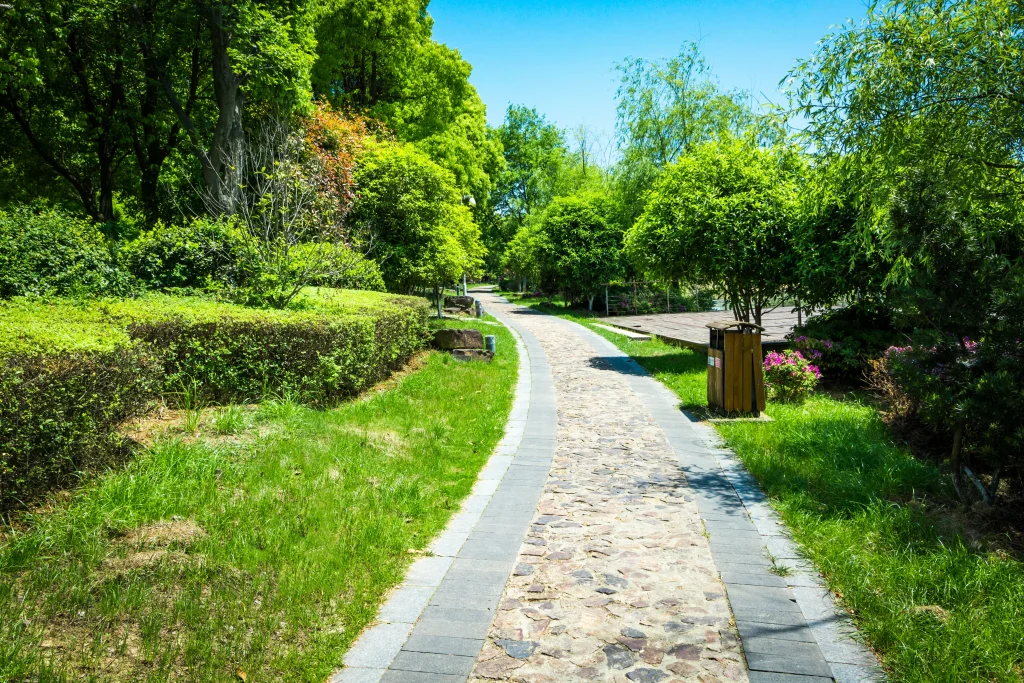
Peonies are one of the most rewarding plants you can add to any yard, but knowing where and how to use them makes all the difference.
In this guide, we cover the best peony landscape uses, from mixed flower borders and foundation beds to walkway edging and specimen plantings. You will also find practical tips on choosing the right type, planting correctly, and caring for your peonies long-term.
Read on to find the approach that works best for your space.
Why peonies are a landscape favorite
Few plants earn a permanent spot in the garden the way peonies do. When it comes to peony landscape uses, these long-lived perennials deliver far more than a brief burst of spring color.
Peonies are loved for:
- Large, show-stopping blooms that draw attention from across the yard
- An extraordinary lifespan – established plants can thrive and bloom for 50 years or more
- Lush, glossy foliage that holds its structure and color all the way through summer and fall
- Classic cottage-garden charm that works equally well in formal and relaxed landscapes
They are one of the best plants for creating high-impact seasonal color with minimal long-term effort. Once established, peonies largely take care of themselves, making them a smart investment for any homeowner who wants lasting curb appeal without constant replanting.
Choosing the right type of peony
Before you decide on placement, you need to choose the right peony type for your landscape goals. Each type brings a different size, structure, and seasonal behavior to the garden.
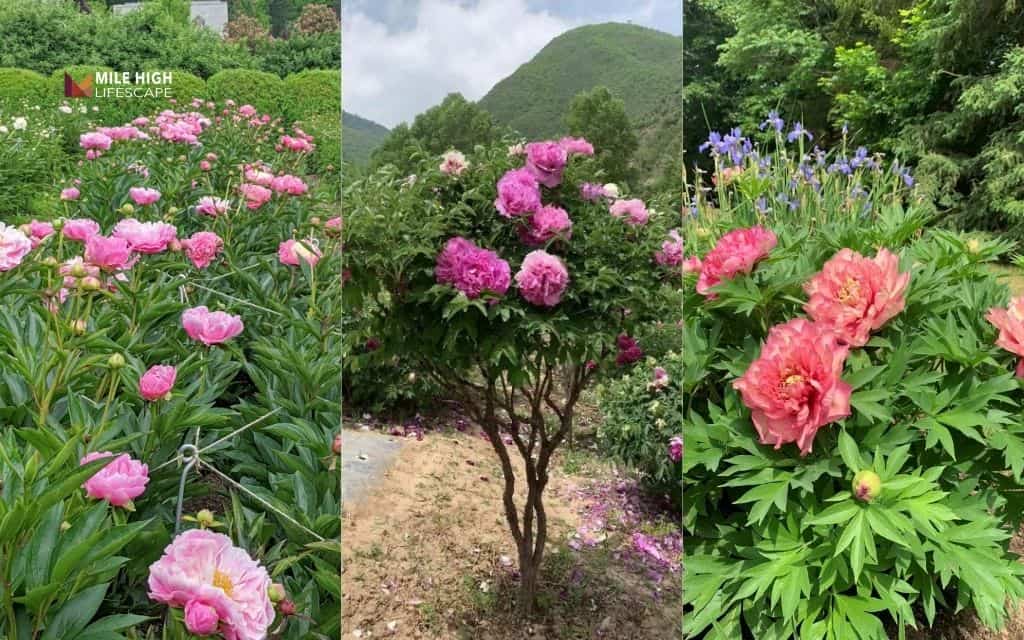
Herbaceous peonies
These are the traditional garden peonies most people picture. They die back to the ground each winter and re-emerge in spring, making them the most widely adapted variety for most landscapes.
Tree peonies
Tree peonies are woody-stemmed shrubs that do not die back in winter. They are slower to establish but reward patience with spectacular large blooms and a commanding architectural presence.
Itoh (intersectional) peonies
Itoh peonies are a hybrid cross between herbaceous and tree peonies, combining the best traits of both. They have become increasingly popular for good reason.
- Hybrid combining the vigor of herbaceous peonies with the large blooms of tree peonies
- Stronger stems that require less staking than traditional herbaceous varieties
- Longer bloom period – often producing flowers for three to four weeks
For most homeowners weighing their peony landscape options, Itoh peonies are the best choice – delivering superior performance across a wide range of design settings.
Where to plant peonies for best results
Placement is everything with peonies. Getting the growing conditions right from the start is the single most important factor in achieving healthy plants and abundant blooms.
Sunlight
- Full sun is ideal: Peonies need at least 6 hours of direct sunlight per day for the best bloom production
- Light afternoon shade is tolerated in hot climates and can actually help extend bloom life in peak summer heat.
- Avoid dense shade: Fewer than 4 hours of sun per day will significantly reduce flowering
Soil conditions
- Well-draining, loamy soil is ideal for landscape peonies
- Avoid planting in soggy, low-lying areas where water pools
- Amend heavy clay soils with compost to improve drainage before planting
Spacing guidelines
- Space plants 2 to 4 feet apart, depending on mature size of the variety
- Good airflow between plants reduces the risk of fungal diseases
7 beautiful peony landscape uses
Whether you are redesigning a front border or adding depth to a backyard garden, there is a peony landscape idea to fit almost every setting.
Here are 7 of the most effective and inspiring ways to use peonies in your landscape.
1. Peonies in mixed flower borders
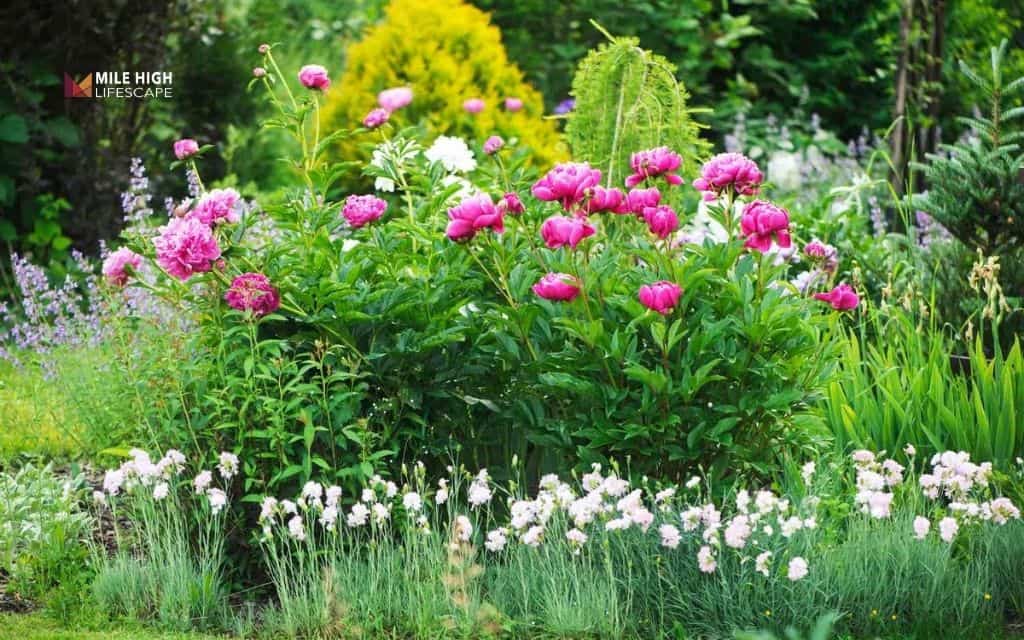
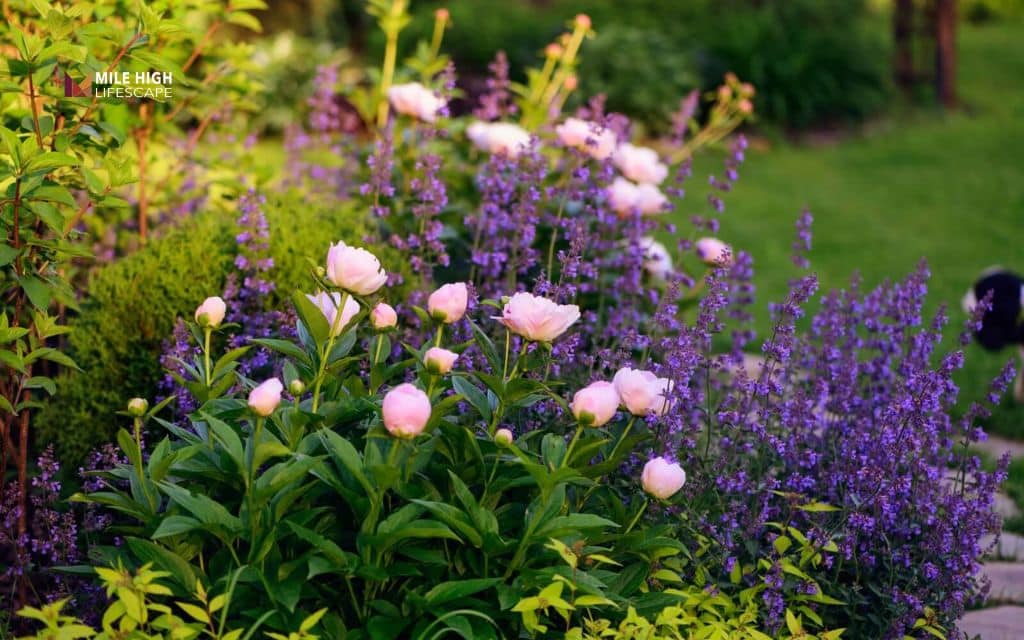
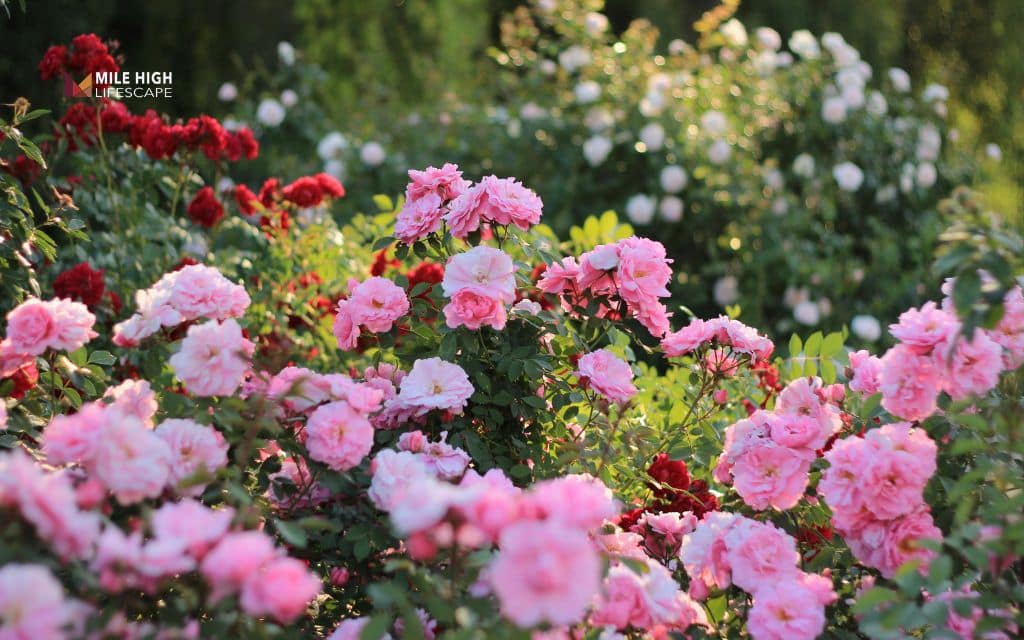
Planting peonies in landscape borders alongside roses, salvia, and lavender is one of the most classic and rewarding design moves in gardening.
Positioned in the middle of the border, peonies provide the mid-level height that ties taller background plants to shorter edging plants together seamlessly. Their large blooms create bold color anchors, while their deep-green foliage fills in beautifully after the flowers fade.
The result is a soft, romantic look that feels lush without requiring constant intervention – a hallmark of landscape peonies done right.
2. Foundation planting around homes
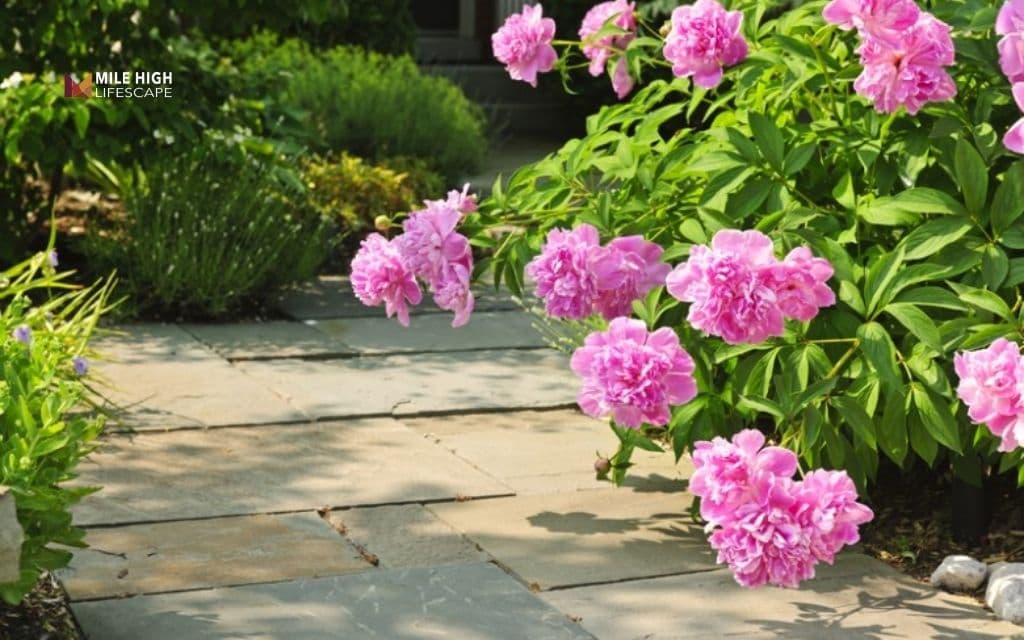
One of the most underutilized peony landscape ideas is placing peonies along house walls, entryways, and front facades.
Unlike large shrubs that can quickly overtake windows or block sightlines, peonies stay proportionate and manageable throughout the growing season. They deliver a bold seasonal statement in spring, then settle into a tidy, foliage-rich presence through summer.
- Choose compact or medium-height varieties to avoid blocking windows
- Pair with evergreens or boxwoods for year-round structure
This combination of seasonal color and architectural restraint makes peonies an excellent choice for front yard foundation beds.
3. Peony walkway edging
Lining a garden path or front walkway with evenly spaced peonies creates one of the most dramatic spring statements a landscape can offer.
When blooms are at their peak, walking between 2 rows of peonies in full flower feels like stepping through a living floral corridor. This is a peony landscape that impresses neighbors and visitors alike.
4. Peony hedge or low border
While peonies are not evergreen, they can function beautifully as an informal hedge or low border during the growing season. A row of landscape peonies planted along a property line, patio edge, or garden zone creates a soft, living boundary that feels welcoming rather than rigid.
Keep in mind: peonies are not dense year-round, so this approach works best in informal or naturalistic landscape styles rather than formal hedging applications.
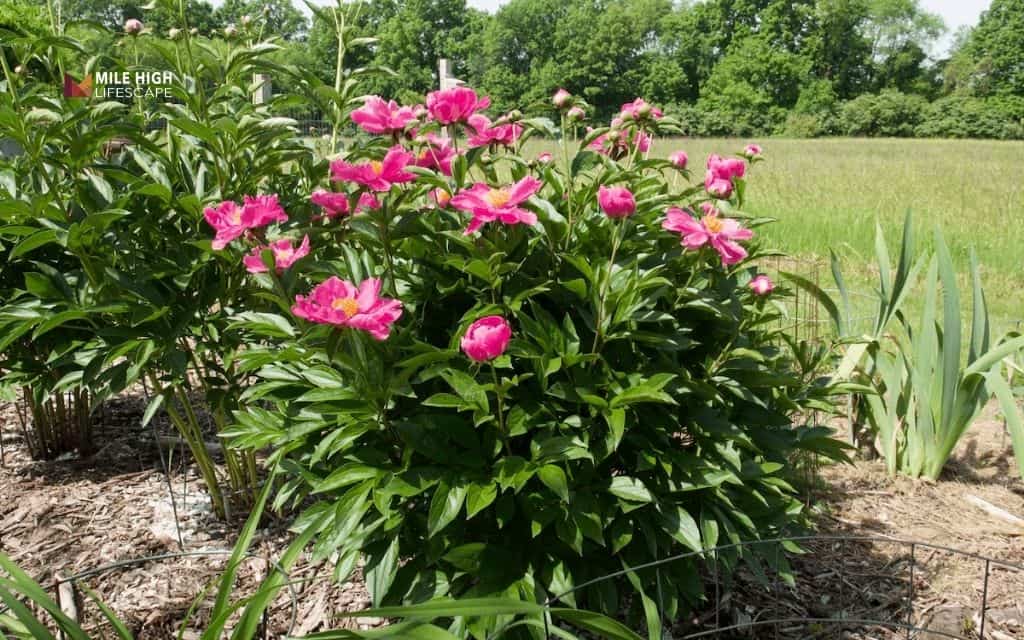
5. Standalone peony feature (specimen plant)
Tree peonies, in particular, are exceptional specimen plants. With their woody stems, large architectural blooms, and striking presence even out of season, they earn the spotlight when planted in the center of a garden bed or as a lawn island focal point. A well-placed specimen peony can become a garden’s signature feature – the plant visitors always remember and ask about.
- Plant in the center of a circular bed or lawn island for maximum visual impact
- Allow blooms to take full visual focus without competition from nearby tall plants
6. Backyard garden beds with peonies
Backyard garden beds are an ideal setting for landscape with peonies, offering a more private and immersive experience than front yard plantings. Combining peonies with other perennials in a layered bed creates a sense of abundance and relaxed elegance that makes outdoor living spaces feel like true retreats.
- Combine with perennials like coneflowers, astilbe, or daylilies for a layered, long-blooming bed
- Position seating nearby to enjoy the fragrance and visual drama of peak bloom
- Include peonies at different heights within the bed to add dimension
7. Peonies with companion plants
Because peonies bloom for a relatively short window, typically 2 – 3 weeks, thoughtful companion planting is the key to keeping your landscape looking great all season long. The right partners will fill the visual gaps before and after peony bloom without competing for nutrients or space.
Top companion plants for peonies:
- Hostas provide bold shade contrast and lush texture after peony bloom fades
- Catmint offers long-season bloom in soft purple that bridges the gap between spring and summer
- Ornamental grasses add vertical structure, movement, and fall-winter interest when peonies have died back
Pairing peonies with thoughtful companions ensures your landscape remains attractive and purposeful through every season, not just during the brief window of peony bloom.
See more: 25 landscape border ideas that make every garden look neater
How to plant peonies
Planting peonies is straightforward, but one detail – planting depth – is critically important. Follow these steps for success.
- Dig the hole: Make your planting hole wide and relatively shallow about 12 to 18 inches across and 12 inches deep. A wide hole encourages roots to spread outward rather than down.
- Position the root: Place the bare root in the hole so that the eyes (pinkish-red buds) sit no more than 1 to 2 inches below the soil surface in cold climates. In warm climates, plants are even shallower, just at the soil surface.
- Backfill and water: Fill the hole with soil, firming it gently around the root to eliminate air pockets. Water thoroughly after planting to settle the soil.
Warning: Planting too deep is the number one reason peonies fail to bloom. If your eyes are buried more than 2 inches down, your plant will produce plenty of foliage but very few or no flowers.
Maintenance tips for long-term success
One of the best things about landscape peonies is how little they demand once established. Here is what you need to know for long-term success:
- Water deeply but infrequently – about once a week during dry periods; peonies dislike consistently wet roots
- Deadhead spent blooms promptly to keep the plant tidy and redirect energy to root development
- Cut back herbaceous types to the ground in fall after foliage dies back naturally. Do not compost the clippings if botrytis has been an issue
- Add peony support rings or grow-through cages in early spring before stems get too tall. This prevents those heavy blooms from flopping over in rain or wind
Peonies are genuinely low-maintenance once established. Beyond annual cutback and occasional staking, they ask very little in return for decades of beautiful performance.
When to plant peonies
- Best time: Fall (September through October in most regions)
- Alternative: Early spring, before new growth emerges, if fall planting is not possible
Fall planting is strongly preferred because it gives bare-root peonies the entire cool season to establish their root systems before the demands of spring growth begin. Plants installed in fall typically bloom one season sooner than those planted in spring.
Conclusion
The best peony landscape uses are not complicated, they are simply thoughtful. When you combine proper placement, intentional spacing, smart companion planting, and seasonal timing, peonies reward you with a garden that looks better every year.
A successful peony landscape plan combines:
- Proper placement for sunlight and drainage
- Thoughtful spacing to support plant health and airflow
- Companion planting to maintain visual interest beyond the bloom window
- Seasonal planning that makes the most of fall planting and spring bloom timing
With the right design, peonies can transform your garden into a timeless, elegant space that returns year after year. They are not just a flower, they are a landscape investment that pays dividends in beauty for generations.
________________________
At Mile High Lifescape, we help Denver-area homeowners make the most of every inch of their landscape. With over 20 years of professional experience serving Denver, Aurora, Lakewood, Littleton, Boulder, and surrounding communities, our team knows exactly how to select, place, and care for peonies so they thrive for decades.
Ready to add peonies to your yard? Contact Mile High Lifescape today at (303) 877-9091 for a free estimate today.
Frequently asked questions (FAQs)
How to use peonies in landscaping?
Peonies work well in mixed flower borders, foundation beds, walkway edging, informal hedges, and as standalone specimen plants. Choose the right type for your goal – herbaceous for borders, tree peonies for focal points, and Itoh peonies for the most versatile all-around performance.
Where should I put peonies in my yard?
Place peonies where they will receive at least 6 hours of direct sunlight daily and where the soil drains well. Avoid low spots that stay wet, dense shade under trees, or locations too close to competing root systems.
Are peonies good for the front yard?
Yes, peonies are an excellent choice for front yard foundation plantings, walkway edging, and border beds because they stay proportionate, require minimal maintenance, and deliver outstanding curb appeal during their bloom period. Pair them with evergreens for year-round structure.
Where to put a peony in a border?
Position peonies in the middle of a mixed border. They are tall enough to rise above low edging plants but not so large that they block taller background shrubs or ornamental grasses. Mid-border placement also allows their lush foliage to serve as a backdrop for earlier and later blooming companions.