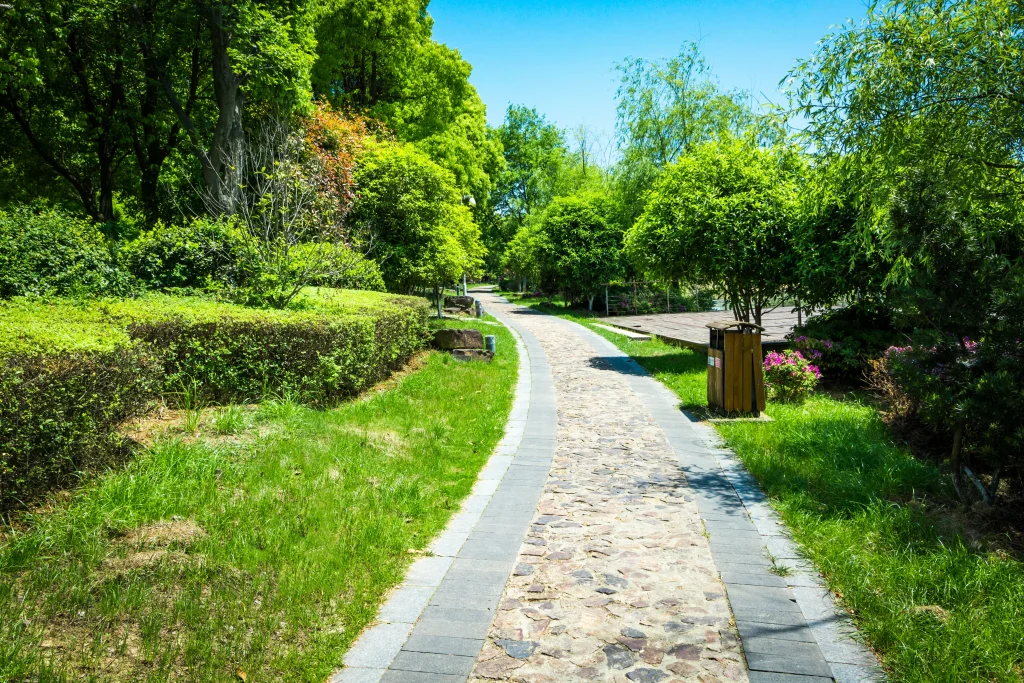
Few plants earn their place in the yard quite like the crepe myrtle. Among the most versatile crepe myrtle landscape uses, these flowering trees and shrubs deliver summer blooms, striking exfoliating bark, vivid fall foliage, and little fuss once they’re established.
Whether you’re working with a sprawling suburban lot or a tight urban patio, crepe myrtles come in sizes ranging from compact 3-foot dwarfs to towering 30-foot tree forms, making them adaptable to almost every landscape challenge.
Read on for 9 practical, inspiring ways to put them to work in your own crepe myrtle landscape.
How to choose the right crepe myrtle variety
Choosing the right variety is the single most important decision in any crape myrtle landscape plan. Selecting a cultivar that outgrows its space is the root cause of the most common maintenance mistake in crepe myrtle cultivation: severe topping (widely known as ‘crape murder’) that leaves plants permanently disfigured.
Start with mature size and work backward from your available space.
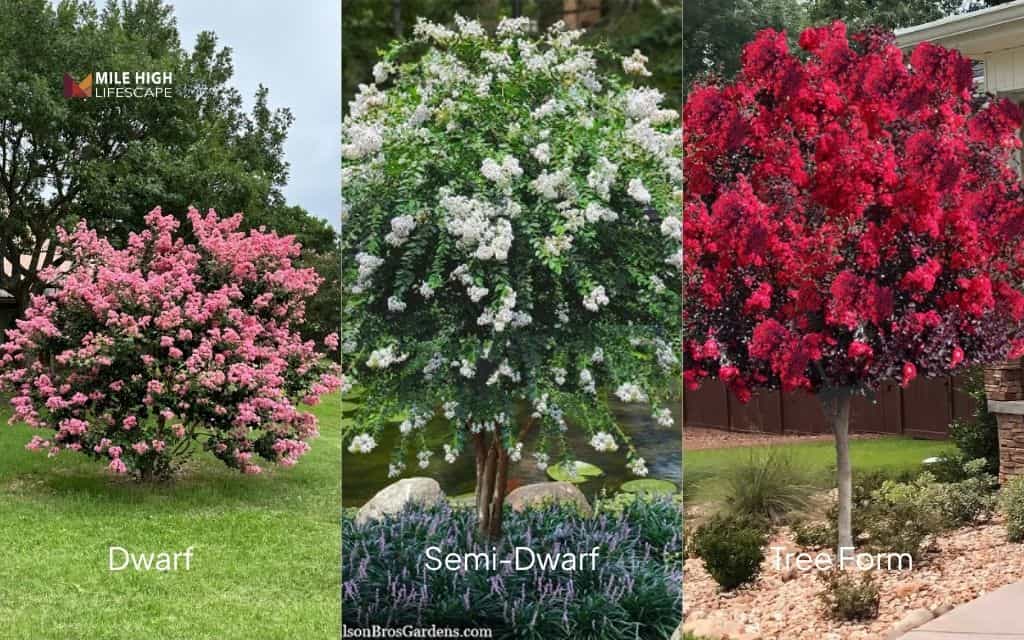
Size class overview
| Size Class | Mature Height | Best Uses |
| Dwarf | 3 – 6 ft | Containers, borders, small gardens, foundation planting |
| Semi-Dwarf | 6 – 15 ft | Foundation beds, mixed plantings, hedges, walkway edging |
| Tree Form | 15 – 30 ft+ | Shade trees, specimen features, driveway allées, tall screens |
Popular variety quick reference
| Variety | Size | Bloom Color | Best Use |
| Natchez | 20 – 30 ft | White | Specimen, shade, driveway |
| Tuscarora | 15 – 20 ft | Coral-Pink | Specimen, privacy screen |
| Muskogee | 20 – 25 ft | Lavender | Screen, shade tree |
| Dynamite | 15 – 20 ft | Red | Specimen, focal point |
| Acoma | 5 – 6 ft | White | Foundation, hedge, walkway |
| Hopi | 5 – 7 ft | Pink | Foundation, mixed beds |
| Tonto | 3 – 4 ft | Red | Containers, borders |
| Pocomoke | 3 – 4 ft | Deep Rose | Containers, small gardens |
| Sioux | 10 – 12 ft | Pink | Driveway/walkway edging, hedge |
| Zuni | 8 – 10 ft | Mauve | Mixed beds, layered borders |
| Chickasaw | 3 – 5 ft | Lavender-Pink | Containers, small yards, patios |
When shopping, always read the plant tag for the specific cultivar’s mature height and spread. A Natchez and a Tonto are both crepe myrtles; one tops out at 4 feet and one reaches 30.
Getting this decision right means you’ll never need to reach for pruning shears except for light, cosmetic maintenance.
9 beautiful crepe myrtle landscape uses
1. Crepe myrtle as a specimen tree
A single, well-placed crepe myrtle can anchor the entire look of a front yard.
Planted as a standalone feature in a lawn or garden bed, a multi-trunk tree form commands attention from the street with its sculptural silhouette, papery peeling bark, and a summer canopy dripping with blooms.
This approach is one of the most impactful uses of crepe myrtle in landscape design because it transforms one plant into the defining element of the yard’s composition.
Top picks include Natchez, Tuscarora, and Dynamite – all reliable performers with showstopping visual presence.
2. Foundation planting around the home
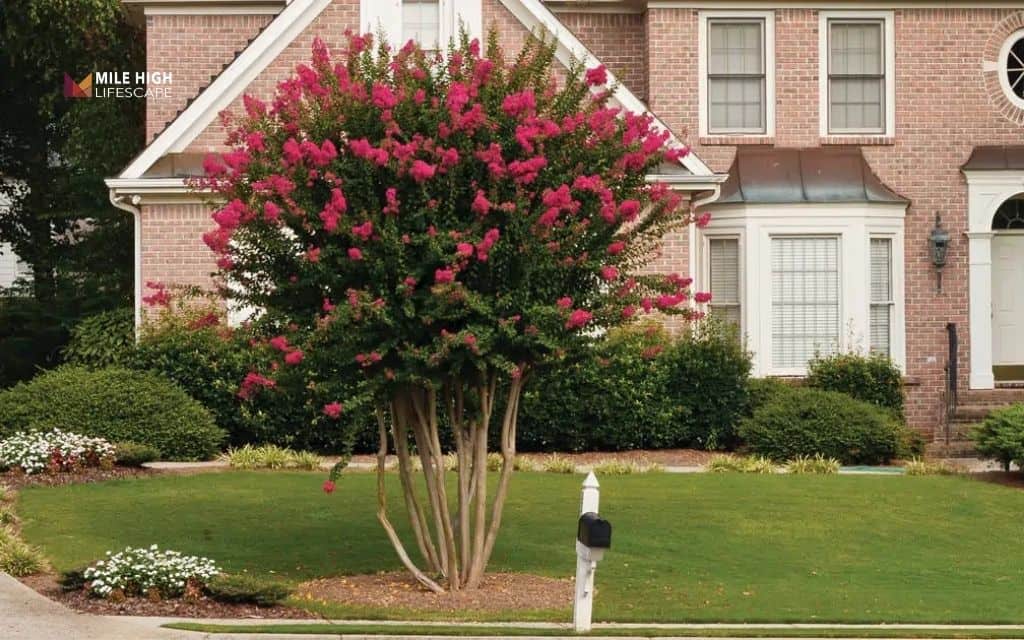
Crepe myrtles work as foundation plants when you choose the right size for the space.
Dwarf and semi-dwarf varieties stay in scale with your home’s architecture, softening hard edges at entryways and adding season-long color to front beds. Their upright form and clean branch structure keep them looking tidy against a home’s façade throughout the growing season.
Keep plants at least 3 – 5 feet from the foundation wall to allow for mature spread and adequate air circulation. Reliable choices for this use include Pocomoke, Acoma, and Hopi – tidy growers that stay where you put them and deliver bold color right at the entrance to your home.
3. Crepe myrtle hedge or privacy screen
For a lush, seasonal privacy screen, few plants match crepe myrtle landscape ideas built around a hedge line. Plant taller varieties at even 6 – 8 foot intervals along a property border or fence line, and they’ll fill in over time to create a dense, leafy barrier through summer and fall.
The bonus: when the blooms are on, your privacy screen doubles as a flowering focal wall that can stop neighbors in their tracks.
Varieties like Tuscarora, Muskogee, and Natchez are ideal for taller screens. Acoma and Hopi work well for mid-height hedgerows. Keep in mind that crepe myrtles are deciduous, so the screen will thin in winter.
4. Lining driveways or walkways
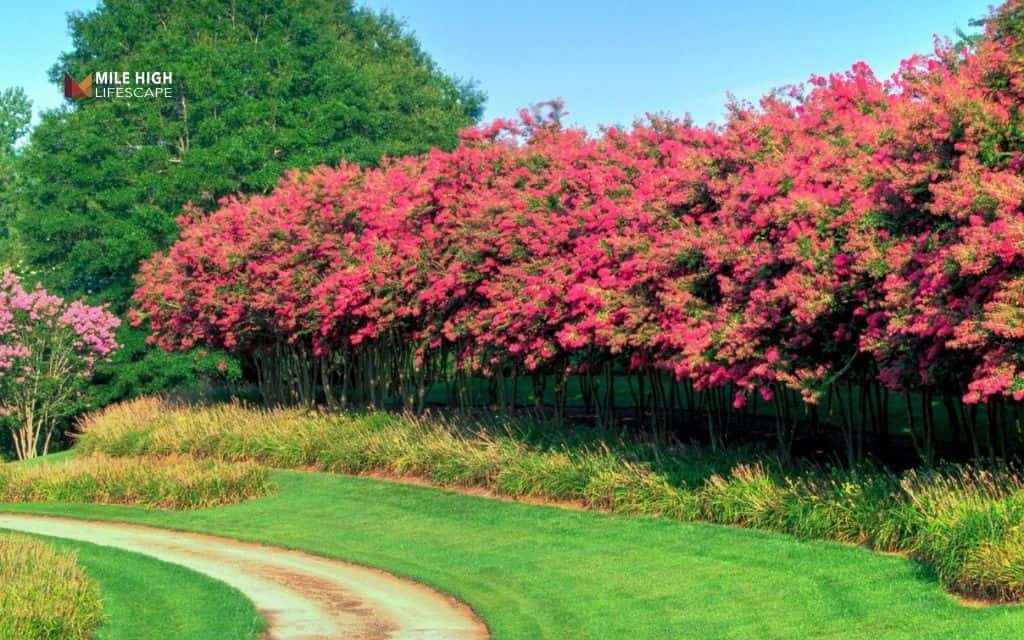
One of the most elegant crape myrtle landscape design choices is a matched row of trees flanking a driveway or garden path.
Planted at uniform spacing – typically 8 – 12 feet apart – they create a formal allée effect: arching canopies overhead, peeling bark adding texture at eye level, and a long corridor of color in summer. It’s a timeless look that works equally well with a traditional brick home or a modern minimalist driveway.
Natchez and Tuscarora are popular picks for driveway lines, given their upright, vase-shaped forms and impressive bloom display. For narrower garden paths, semi-dwarf varieties like Acoma or Sioux stay in proportion without crowding the walkway.
5. Small yard or patio accent (dwarf varieties)
Tight on space? Dwarf crepe myrtles are purpose-built for compact landscape design with crepe myrtle in mind.
Varieties like Tonto, Pocomoke, Chickasaw deliver all the color and four-season texture of their full-sized relatives in a fraction of the footprint. They fit naturally in narrow side yards, small foundation beds, or as accent accents flanking a front gate or mailbox.
They also translate into containers on patios and decks. In a container, use a pot at least 15 – 18 inches wide with good drainage holes, and expect to water more frequently during the heat of summer.
6. Mixed garden beds with crepe myrtle
When it comes to landscape design with crepe myrtle, layered mixed beds are a natural fit.
Use semi-dwarf crepe myrtles as the mid or back layer in a perennial border, pairing them with lower-growing companions like black-eyed Susans, ornamental grasses, and salvia for a continuous season of color from spring through fall. The crepe myrtle contributes vertical height, summer flower mass, and fall foliage; the surrounding perennials extend interest into the shoulder seasons.
Varieties like Acoma, Hopi, or Zuni pair especially well in these layered designs without overwhelming smaller neighbors. Space plants according to their mature width, crowding leads to poor air circulation and a higher risk of powdery mildew.
7. Backyard shade tree
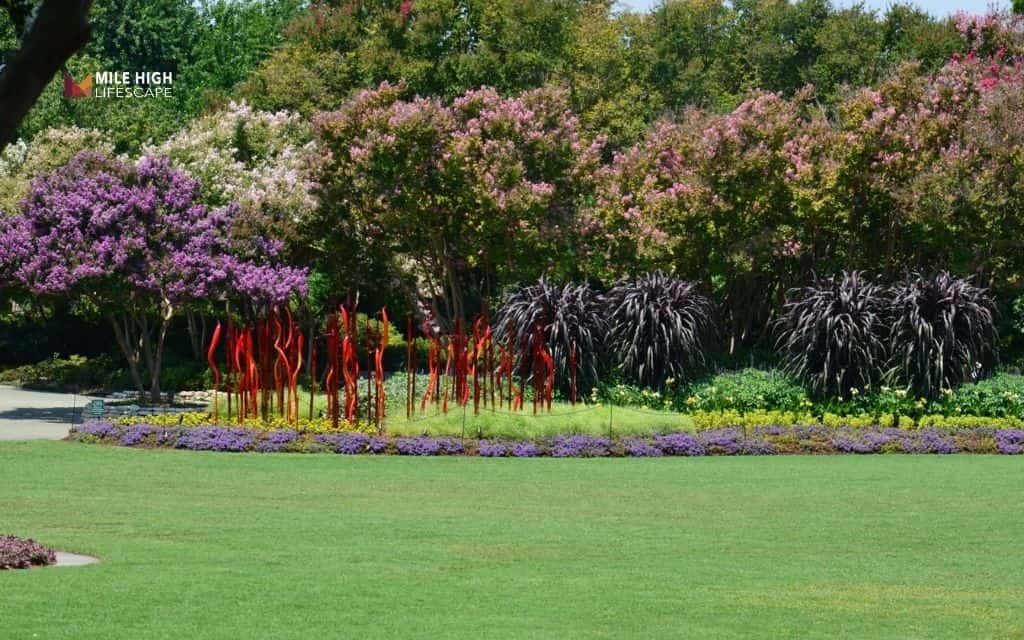
Tree-form crepe myrtles cast a pleasant, dappled shade to cool a patio or garden bench on a hot summer afternoon.
Their high canopy and open branch structure let filtered light through, making them ideal for shading a sitting area without darkening an entire corner of the yard.
For homeowners who want a flowering tree that earns its keep as a functional shade provider, a crepe myrtle is an outstanding choice.
Natchez and Muskogee are the top picks for backyard shade, reaching 20 – 30 feet with graceful, arching crowns that spread wide over time. Position them 10 – 15 feet from the seating area so their canopy naturally reaches overhead as the tree matures.
8. Crepe myrtle in containers
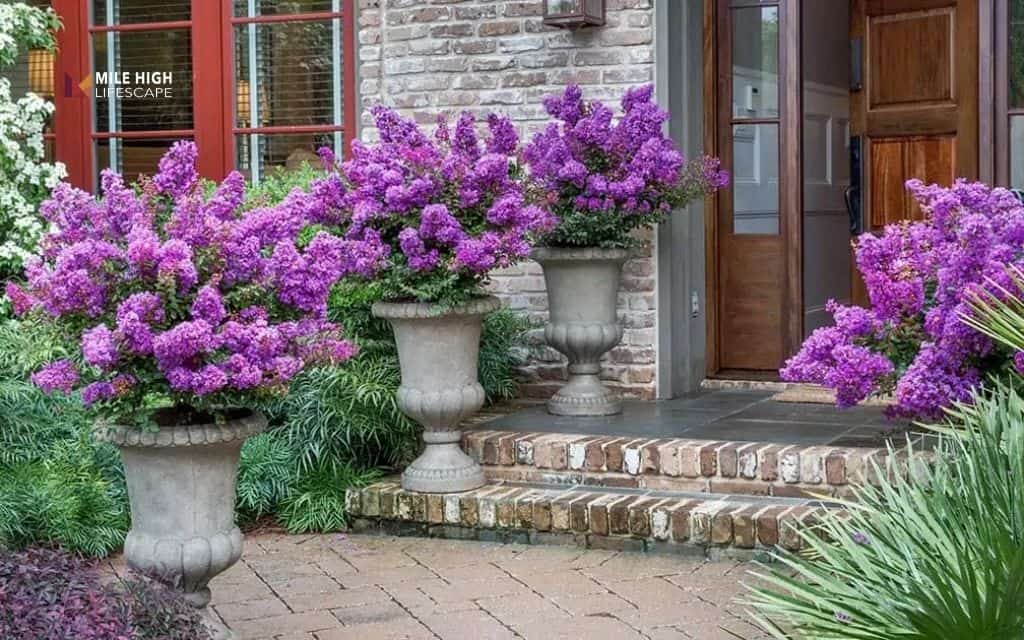
Container planting is one of the most versatile crepe myrtle landscape ideas for homeowners who want maximum flexibility in their outdoor spaces.
Whether you’re working with a patio, a rooftop deck, or a rental property where in-ground planting isn’t an option, dwarf crepe myrtles in large containers bring the same bold summer color and ornamental bark to any surface.
Varieties like Pocomoke, Tonto, or Chickasaw thrive in containers. Use a high-quality potting mix, water consistently during hot weather, and apply a light balanced fertilizer in early spring.
In climates below USDA Zone 6, move containers into a protected garage or shed for winter to prevent root damage.
9. Multi-season landscape feature
One of the most underrated crepe myrtle landscape uses is the plant’s ability to deliver genuine four-season visual interest from a single planting.
- In summer, the long bloom period floods the yard with color ranging from pure white to deep crimson.
- When blooms fade, fall brings a second act: foliage turns gold, orange, or burgundy before dropping in late autumn.
- Through winter, the exfoliating cinnamon-colored bark becomes an architectural focal point, peeling back to reveal smooth, multi-toned layers that catch light beautifully in the bare-branched season.
- Then in late spring, the emerging new leaves arrive in a bronzy-red tint before maturing to green.
One plant, four seasons of visual reward. That’s an exceptional return on a single landscape investment.
See more: 13 easy drought resistant landscape ideas that save water
Where to plant crepe myrtles for best results
Sun requirements
Crepe myrtles demand full sun – a minimum of 6 hours of direct sunlight daily, with 8+ hours being ideal. The more sun they receive, the more prolific and vibrant the bloom. Plants grown in partial shade will produce noticeably fewer flowers, develop a weaker, more leggy form, and tend to be more vulnerable to powdery mildew.
Soil conditions
Crepe myrtles are highly adaptable to most well-draining soils and tolerate a wide pH range. The one true soil non-negotiable is drainage: they will not thrive in waterlogged or wet conditions. If your site holds water, raise the planting bed by 6 – 8 inches or choose a better-draining location.
Spacing matters
Always plan for the plant’s mature width, not just its height. A tree-form variety that spreads 15 – 20 feet at maturity needs center-to-center spacing of at least 15 feet to avoid crowding and competition. When planting near structures, walls, driveways, or utility lines, consult the label for mature spread and add a generous buffer. When in doubt, give it more space than you think it needs, crepe myrtles grow into their full spread over 5 – 10 years.
Maintenance tips for healthy growth
Crepe myrtles are genuinely low-maintenance plants once established, but a few seasonal habits keep them looking their best year after year:
- Prune lightly in late winter: Remove only dead wood, crossing branches, and suckers at the base. Never cut all main trunks back to stubs; this weakens structure and permanently deforms the plant’s natural form.
- Water during establishment: Newly planted crepe myrtles need consistent moisture for the first full growing season. After that, they’re drought-tolerant once the root system is fully established.
- Mulch around the base: Apply a 2–3 inch layer to hold moisture, moderate soil temperature, and suppress weeds. Keep mulch a few inches back from the trunk to prevent rot at the base.
- Remove suckers promptly: If your plant produces suckers from the base or roots, remove them as they appear to keep energy directed into the main plant structure and maintain a clean form.
Low maintenance, high reward, that’s the crepe myrtle’s promise. A few good habits in the first year and a light touch each spring is all it takes to keep these plants thriving for decades.
Conclusion
The best crepe myrtle landscape uses always come down to one fundamental decision: matching the right size variety to the right space.
Whether you’re framing a front door with compact dwarfs, lining a driveway with graceful tree forms, building a summer privacy screen along a property border, or tucking a container planting onto a patio corner, crepe myrtles deliver reliable color, structure, and four-season visual interest with minimal fuss.
Take the time to sketch your space, measure the planting area, and compare mature sizes before you shop and you’ll have a plant that earns its spot in your yard for decades to come.
Ready to bring your crepe myrtle landscape ideas to life? Mile High Lifescape‘s Denver landscaping professionals are here to help you plan, plant, and design a yard that looks stunning every season of the year.
Frequently asked questions (FAQs)
What is the hidden downside of growing a crepe myrtle tree in your yard?
The biggest hidden downside is selecting a variety that outgrows its space, which pressures homeowners into severe topping – a damaging practice known as ‘crape murder’ that permanently ruins the plant’s natural form and produces ugly, knobby stubs. Crepe myrtles are also deciduous, meaning they drop their leaves in winter and offer no year-round privacy screening on their own.
What is the magical use of myrtle?
In folklore and herbal tradition, myrtle has long been associated with love, luck, and healing. It featured in ancient Greek and Roman ceremonies and was woven into bridal garlands for centuries as a symbol of fidelity. In modern landscaping, crepe myrtle’s real ‘magic’ is its extraordinary four-season ornamental value: long summer blooms, vivid fall color, and sculptural winter bark.
Why do people cut crepe myrtles back so far?
Many homeowners top their crepe myrtles out of habit, neighborhood imitation, or the mistaken belief that cutting them back hard produces more blooms. In reality, heavy topping weakens structure, creates permanent disfigurement at the cut points, and does nothing to improve flowering. The permanent solution is choosing the right-sized variety for the space from the start, so no severe corrective pruning is ever necessary.
Is crepe myrtle good for the backyard?
Yes, crepe myrtles are excellent backyard plants that provide light dappled shade for seating areas, bold seasonal color from midsummer through fall, and striking bark detail in winter. For shade over a patio, choose a tree-form variety like Natchez or Muskogee; for accent planting near beds or borders, compact semi-dwarf varieties are the ideal fit.
Do hummingbirds like crepe myrtles?
Hummingbirds occasionally visit crepe myrtle blooms, though the flowers are not among their top nectar sources compared to tubular-shaped plants. For stronger hummingbird appeal, plant crepe myrtles alongside dedicated hummingbird favorites like salvia, trumpet vine, or bee balm to create a yard that delivers both visual impact and wildlife value.