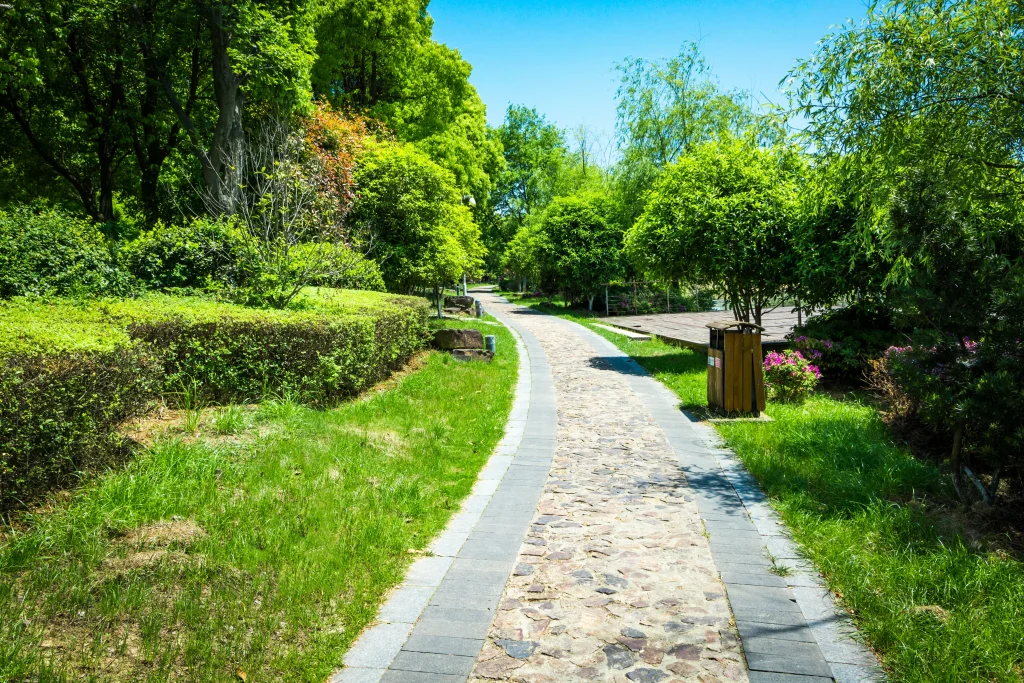
A hillside garden can feel like one of the trickiest landscaping challenges. Slopes invite erosion, drain water unevenly, and make planting feel like an uphill battle. But here is the truth: with the right hill landscape ideas, a sloped yard can become the most dramatic, layered, and eye-catching feature of your entire property.
Whether you are dealing with a gentle incline in the backyard or a steep hill that dominates your front yard, this guide gives you 15 creative and practical landscape hill ideas to work with. From groundcovers and native plants to retaining walls, rock gardens, and terraced beds, these landscaping ideas for hillside spaces cover every style, budget, and skill level.
Let’s turn that challenging slope into a space worth showing off.
Why a hill can be your garden’s best feature
Before diving into the design ideas, it helps to reframe how you think about your slope. Instead of viewing it as a problem to fix, consider it a natural opportunity to create something most flat gardens simply cannot offer.
With thoughtful hill landscape planning, you can:
- Create visual depth and layers that flat yards cannot replicate
- Improve natural drainage by directing water flow strategically
- Add architectural design features like terraces, walls, and steps
- Turn unusable or awkward space into a true garden focal point
Slopes naturally draw the eye upward, create a sense of scale, and give you the ability to showcase plants and structures at multiple levels.
Common challenges of landscaping a hill
Understanding the obstacles is the first step to overcoming them. Hillside landscaping comes with a unique set of challenges that flat-yard gardening simply does not encounter:
- Soil erosion and runoff: Rain and wind strip exposed topsoil from slopes, especially those without established plant coverage
- Water drainage issues: Water flows too fast down steep grades, bypassing plants and causing pooling at the base
- Difficult planting conditions: Dry soil at the top, waterlogged soil at the bottom, and uneven nutrients throughout
- Hard-to-access areas: Mowing, pruning, and watering on steep inclines can be physically demanding and even unsafe
- Uneven sunlight exposure: South-facing slopes receive intense sun; north-facing slopes can stay damp and shaded
15 hill landscape ideas for inspiration
1. Groundcover for erosion control
Difficulty: Beginner-friendly
One of the most effective and low-cost landscape hill solutions is dense groundcover planting. Low-growing, spreading plants like creeping thyme, sedum, and creeping juniper form a root network that holds the soil in place. Their mats also intercept rainfall, slowing surface runoff before it erodes valuable topsoil.
Unlike grass, which can be difficult to mow safely on steep inclines, groundcovers spread naturally with minimal intervention. Once established, they are highly drought-tolerant and require little to no regular maintenance. This makes them one of the most beginner-friendly landscaping ideas for slopes of all gradients.
2. Native plant hillside garden
Difficulty: Beginner-friendly
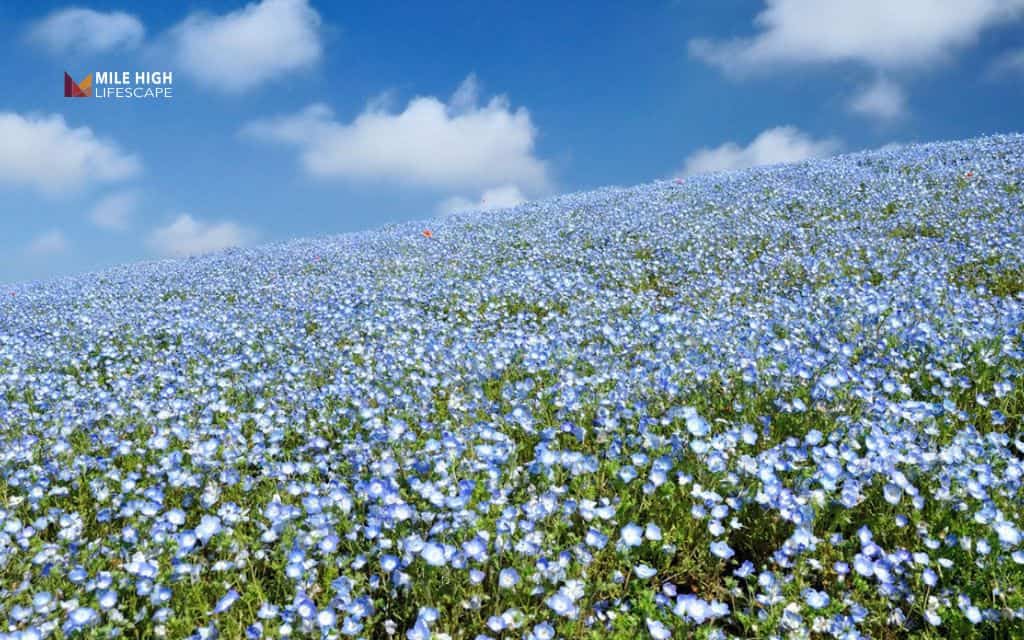
Landscaping yards with hills becomes easier when you plant species native to your region.
Native plants are evolutionarily adapted to local rainfall, soil conditions, temperature swings, and even the angle of sun exposure on slopes. They require less water, fertilizer, and pest management than non-native ornamentals.
For Colorado hillside gardens, excellent native options include native grasses like buffalo grass and blue grama, flowering perennials like Rocky Mountain penstemon and black-eyed Susan, and drought-hardy shrubs like Apache plume and rabbitbrush. These plants fill in a slope naturally over time, creating a wildland aesthetic that is both authentic and functional.
3. Ornamental grass slopes
Difficulty: Easy to moderate
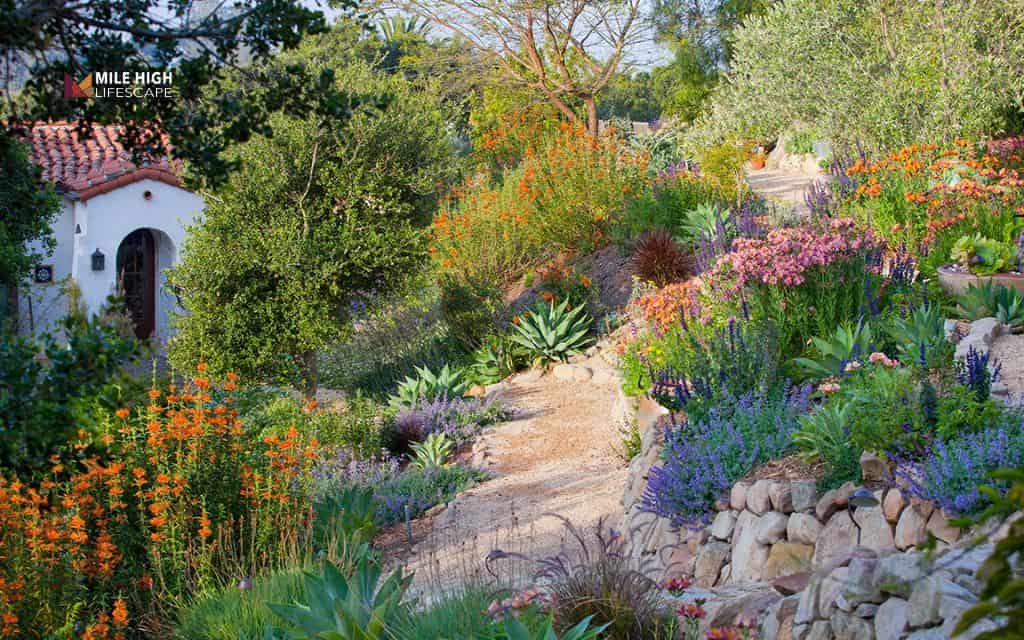
Few planting strategies transform a hillside more dramatically than mass-planted ornamental grasses. Varieties like Karl Foerster feather reed grass, blue oat grass, and fountain grass bring texture, movement, and seasonal color change to an otherwise bare slope. They sway gracefully in the wind, creating a dynamic visual that no static plant can match.
Ornamental grasses are also powerfully functional. Their deep, fibrous root systems anchor soil effectively, making them a strong erosion control choice for hill landscape designs.
Most varieties are drought-tolerant once established, require only an annual cutback, and look attractive across all four seasons – including winter, when their dried seed heads add structure to a cold garden.
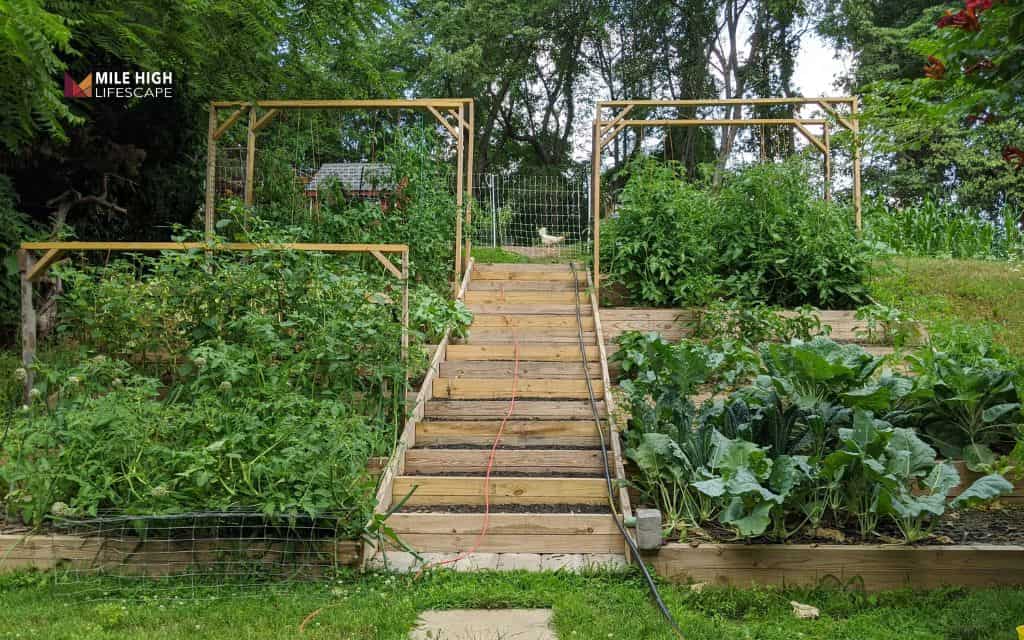
4. Terraced garden beds
Difficulty: Moderate to advanced
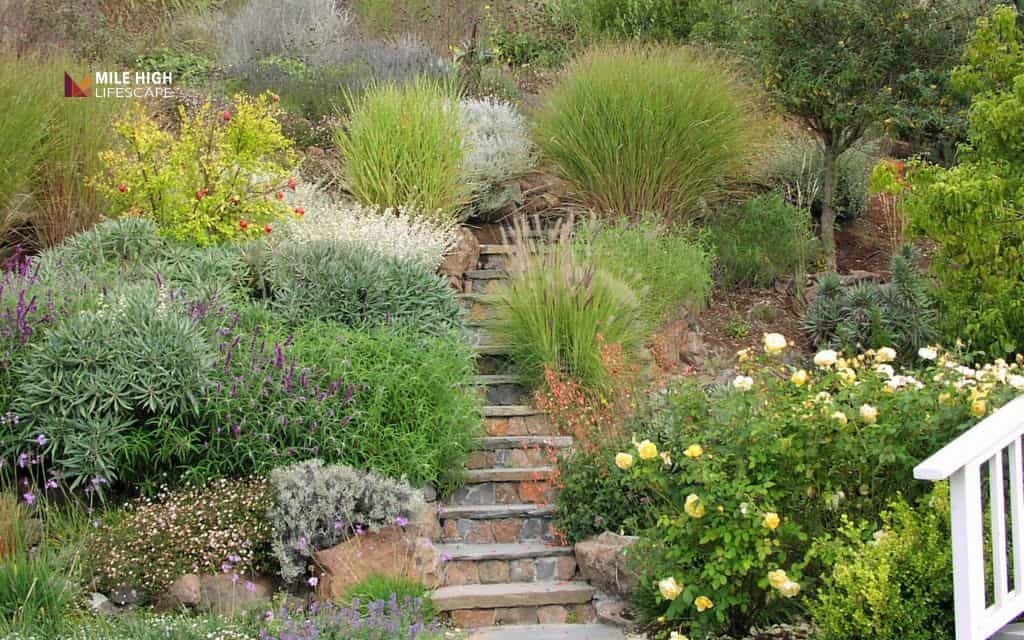
Terracing is one of the most time-honored and effective steep hill backyard ideas used around the world, from the rice paddies of Southeast Asia to the vineyards of Tuscany. The concept is simple: cut the slope into a series of flat, horizontal platforms separated by low retaining walls or raised edges. Each terrace becomes a workable, flat garden bed.
Terracing dramatically reduces erosion by breaking the slope’s vertical drop into manageable segments. Water slows down as it flows from terrace to terrace rather than racing straight down the hill. Each flat bed is easy to plant, water, weed, and harvest. Terraced designs also create a beautiful, structured aesthetic that adds formal elegance to hillside rock landscaping and planting schemes.
Materials for terrace walls include natural stone, timber sleepers, concrete blocks, or brick. For a cohesive look, match the terrace wall material to other hardscape elements on your property.
5. Retaining wall design
Difficulty: Advanced (professional recommended for tall walls)
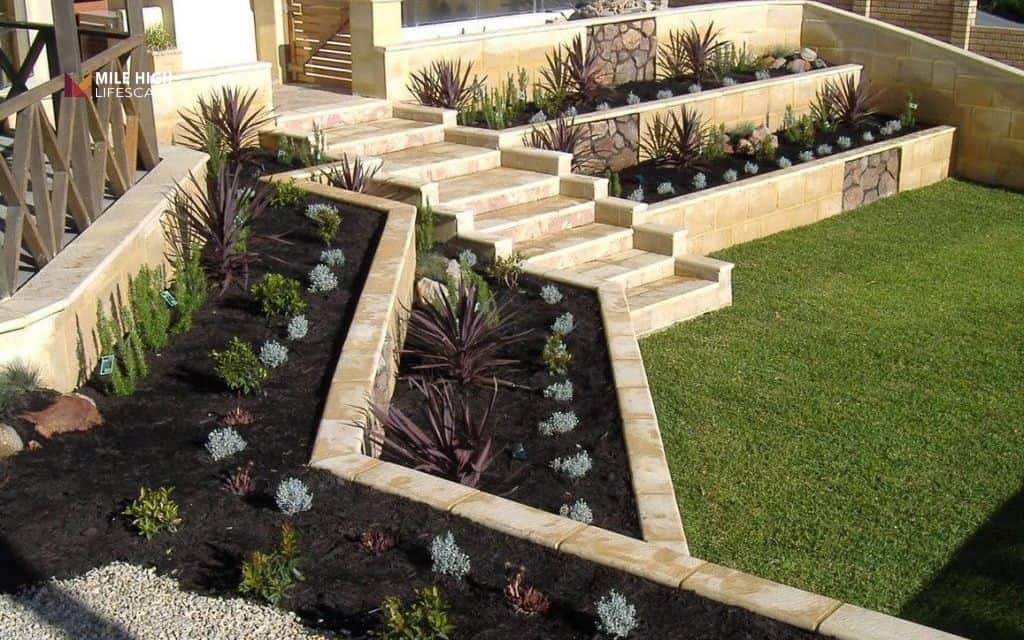
A well-designed retaining wall is both a practical engineering solution and a striking landscape feature. Retaining walls hold back soil on steep grades, prevent slippage, and create structured zones that make planting and maintenance far more manageable. As a hill landscape investment, they add lasting structural and aesthetic value to your property.
Retaining walls can be built from a wide variety of materials to suit different design styles.
Dry-stacked natural stone creates a rustic, organic look that blends into naturalistic garden settings. Concrete block walls offer a clean, contemporary appearance. Timber walls are affordable and easy to install but have a shorter lifespan.
For sloped front yards where curb appeal matters, a decorative stone retaining wall combined with cascading plants creates an impressive, polished look.
6. Stone steps on a slope
Difficulty: Moderate
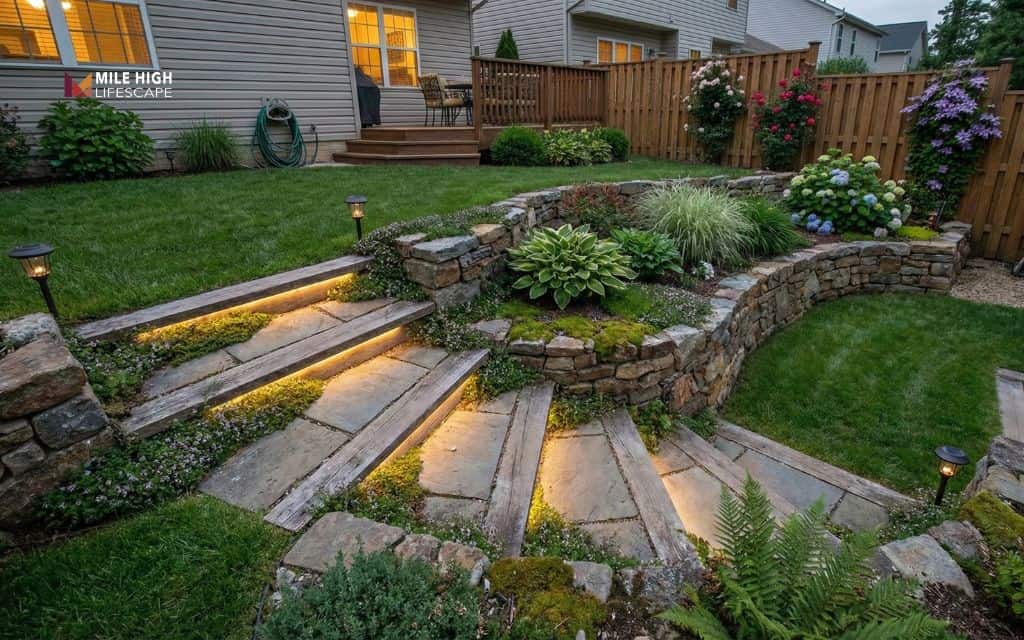
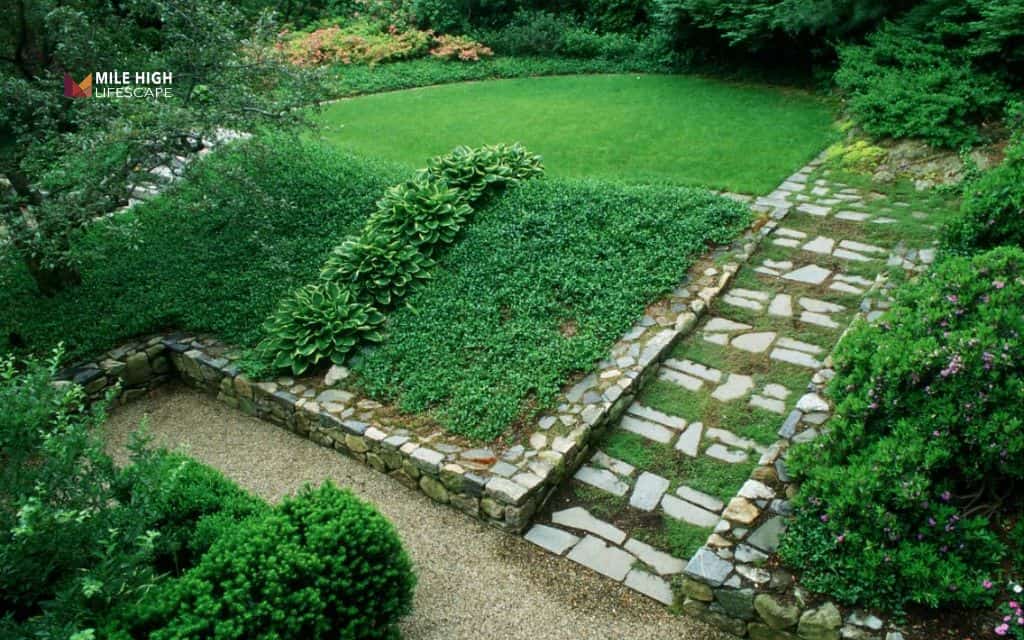
Access is one of the most overlooked elements of hillside landscaping, yet it defines how usable and enjoyable the space truly is. Installing stone steps directly into a slope solves the practical challenge of getting up and down safely while adding a beautiful, natural-feeling pathway that integrates seamlessly into the landscape hill design.
Large flat stones, flagstone, or cut stone pavers make ideal step materials. For a more informal garden aesthetic, stepping stones embedded in the slope surrounded by groundcover work beautifully. Flanking stone steps with low ornamental grasses or creeping plants softens the hardscape and makes the transition feel organic rather than constructed.
7. Hillside rock landscaping
Difficulty: Beginner-friendly
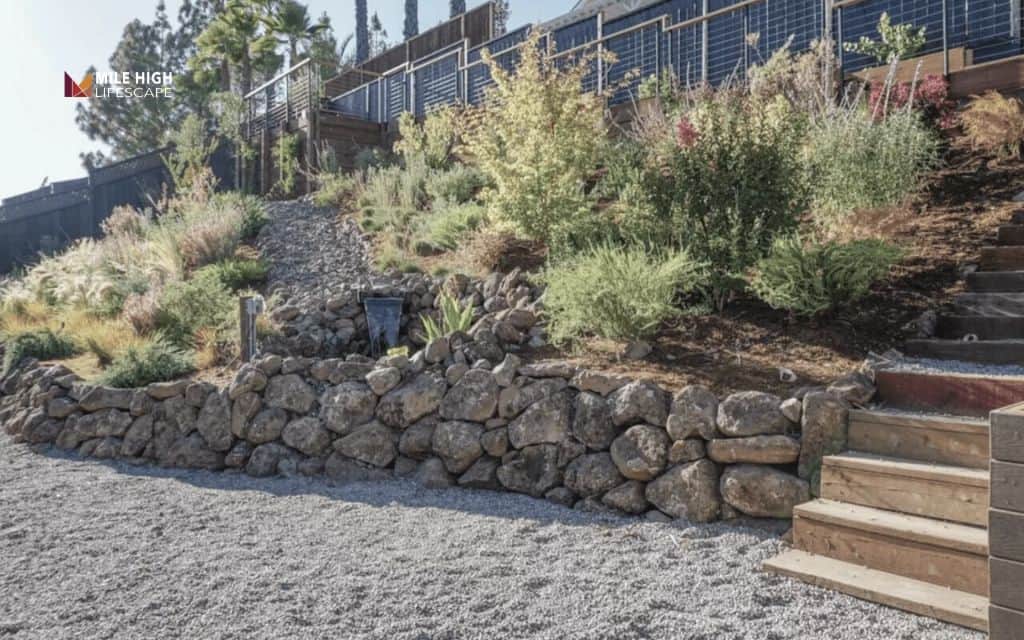
Hillside rock landscaping is one of the most popular and effective landscaping ideas for hills, especially in dry climates.
Strategically placed boulders and rock formations do far more than look attractive. They anchor soil, slow water flow, create microclimates for plants, and provide structural definition on a slope that might otherwise look formless.
The key to great hillside rock landscaping is naturalistic placement. Rather than lining up rocks in rows, partially bury larger boulders as they would appear in a natural hillside setting.
Group rocks in clusters of varying sizes and fill the spaces between with drought-tolerant alpine plants, sedums, or ornamental grasses.
This creates a rock garden that looks like it has always belonged on the slope.
8. Dry creek bed feature
Difficulty: Moderate
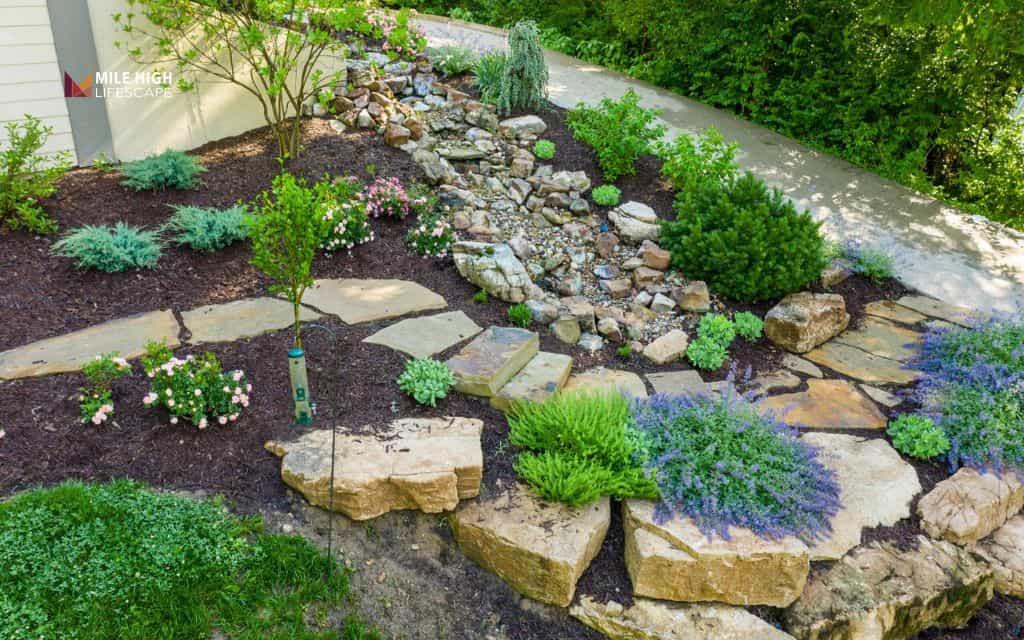
A dry creek bed is one of the most versatile and visually appealing landscaping ideas for slopes that experience significant water runoff.
Designed to look like a natural streambed, a dry creek bed channels rainfall and stormwater down the hill in a controlled path, preventing erosion and pooling while adding a distinctive design element to the landscape.
9. Layered planting design
Difficulty: Intermediate
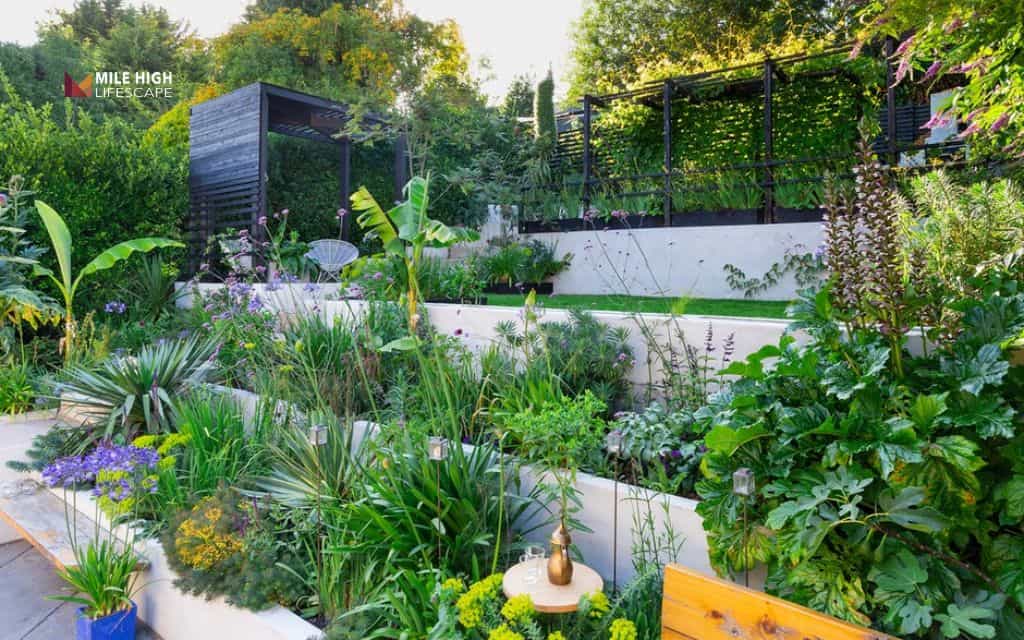
Layered planting is a design principle borrowed from natural forest ecology, and it works exceptionally well on hillside landscapes.
The idea is to arrange plants in distinct height tiers: low groundcovers at the front of the slope, medium-height perennials and shrubs in the middle zone, and taller specimen plants or small trees at the top or back.
This low-to-medium-to-tall progression creates a planting design that looks intentional, full, and rich at every viewing angle. It also maximizes plant coverage across the slope, which improves soil stability and reduces the amount of bare ground exposed to erosion.
10. Curved pathway through a hill
Difficulty: Moderate
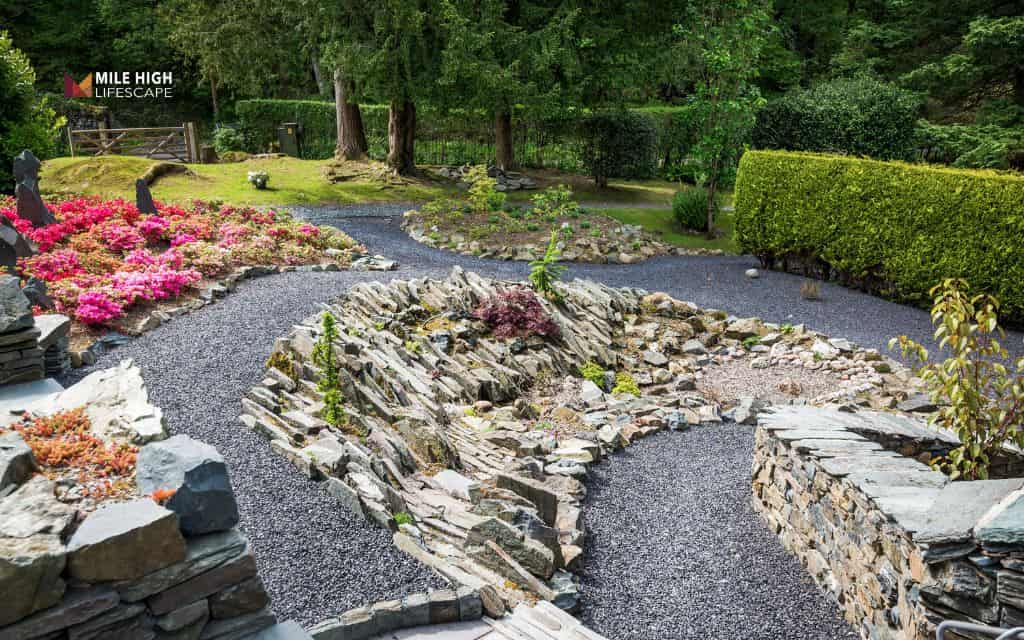
Rather than fighting the grade with a steep straight path, a gently curving walkway traverses the slope at a comfortable gradient, making the hill feel inviting rather than daunting.
Pathways can be constructed with flagstone, gravel, decomposed granite, or brick pavers. A curved path also creates distinct planting beds on either side, giving you natural zones to fill with flowers, shrubs, or ornamental grasses.
The curve slows down visual movement, encouraging visitors to pause and appreciate the plants and features along the route.
11. Multi-level garden zones
Difficulty: Advanced
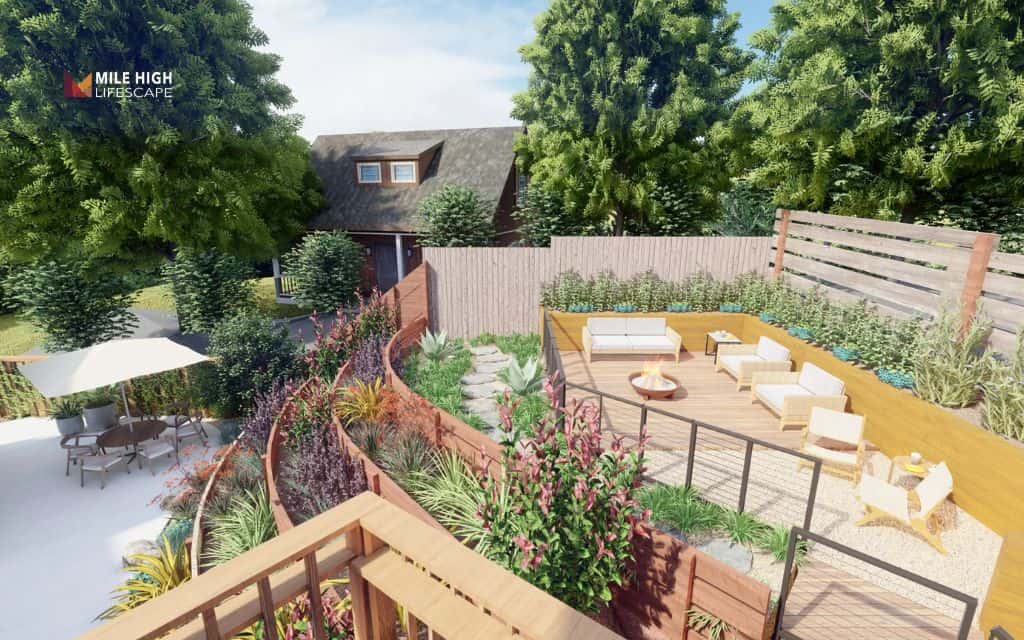
A hillside is the perfect canvas for a multi-level garden design that divides the slope into distinct functional zones. Consider a seating terrace at the top with views over the garden, a planted ornamental zone in the middle, and a practical area at the base for herbs or a vegetable garden. Each zone connects via steps or ramps, creating a layered outdoor living experience.
This landscape hill approach is especially valuable for homeowners who want to maximize the usability of their sloped yard. Instead of looking at a steep grade and seeing wasted space, you see a natural structure for multiple rooms of an outdoor living environment, each with its own purpose and character.
12. Focal tree on a slope
Difficulty: Moderate (planting technique matters on slopes)
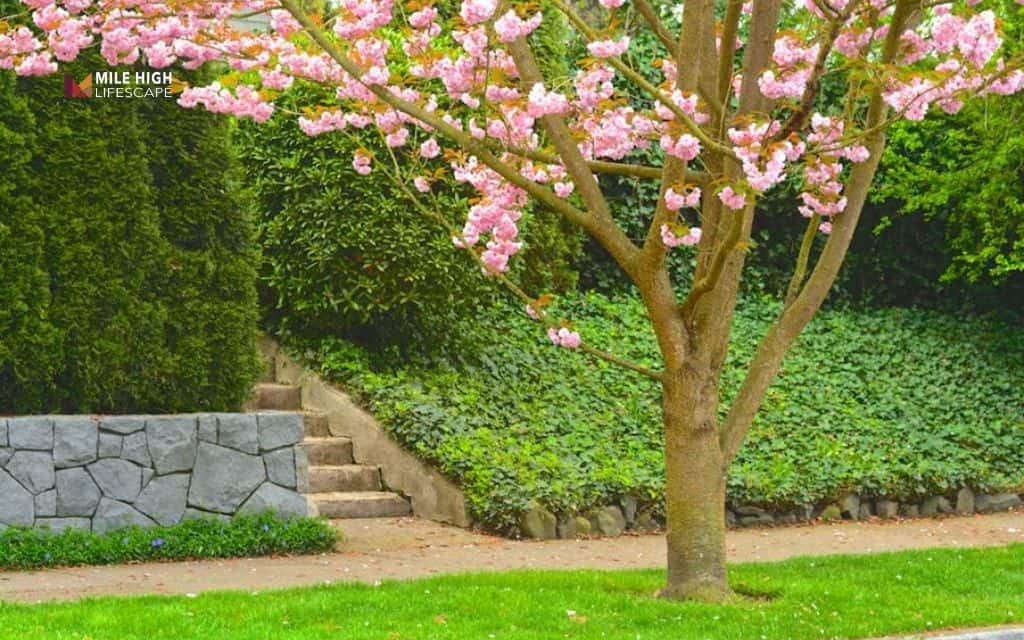
A focal tree placed at a prominent point on the slope draws the eye immediately, provides a sense of scale, and gives the whole design a backbone around which other elements can be arranged.
For hillside planting, choose trees with deep, spreading root systems that will help stabilize the soil over time. Excellent options include Japanese maple for ornamental interest, serviceberry for seasonal blooms and berries, redbud for early spring color, or ornamental cherry for dramatic flowering.
Surround the base of the focal tree with a ring of groundcover or mulch to protect the root zone and frame the specimen.
13. Wildflower hill garden
Difficulty: Beginner-friendly
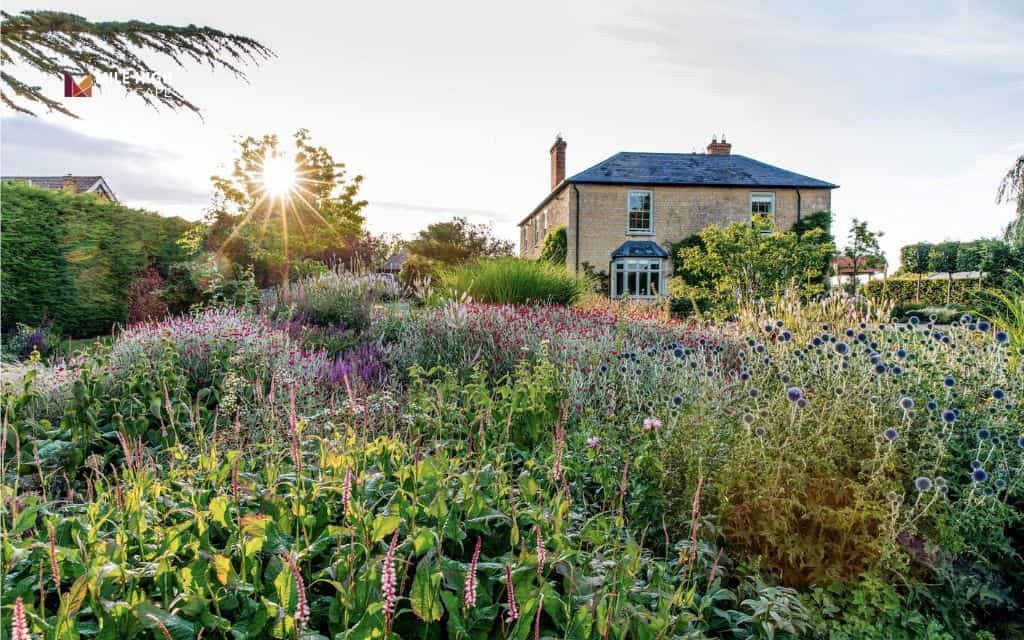
A wildflower hillside garden is one of the most romantic and stunning landscape ideas for hilly yards, and it is also one of the most forgiving.
Sow a diverse native wildflower seed mix across the slope and allow the plants to naturalize over two to three seasons. The result is a meadow-like tapestry of color that shifts and evolves with the seasons.
Wildflower gardens are not completely maintenance-free, but they require far less work than traditional planted beds once established. Annual mowing or cutting back in late winter removes spent material and prepares the ground for the next season’s growth.
14. Modern minimalist hill landscape
Difficulty: Intermediate
For homeowners who prefer a sleek, contemporary aesthetic, a minimalist hill landscape offers striking visual impact with a simple, pared-back plant palette.
The approach combines decomposed granite or fine gravel as a ground cover base with bold specimen plants chosen for their form rather than floral color: architectural ornamental grasses, agave or yucca, and structural boulders.
This landscape hillside approach is effective in water-wise gardens and xeriscaping contexts. It is also extremely low maintenance once established.
The combination of gravel mulch and drought-tolerant plants means virtually no irrigation, no mowing, and minimal weeding. Clean geometric lines in the hardscape complement the simple plant palette for a cohesive modern look.
15. Mixed rock and plant design
Difficulty: Intermediate
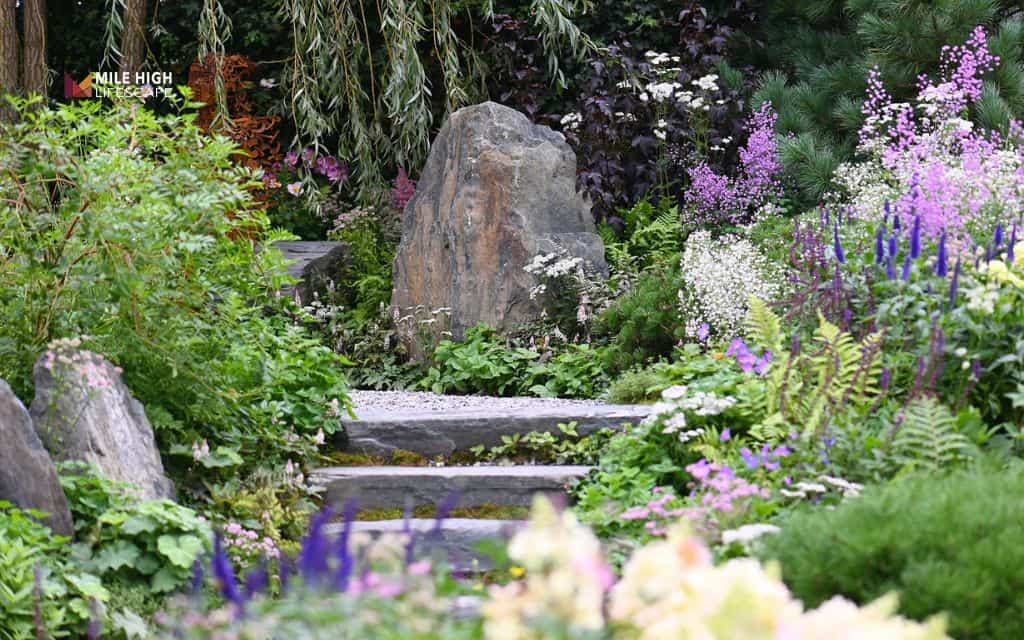
The mixed rock and plant design is perhaps the most versatile of all hillside landscaping ideas, because it combines the structural benefits of stone with the softness and life of planted beds.
Large boulders and rock outcrops anchor the slope, slow water movement, and define the design structure, while plants fill the pockets, crevices, and flat areas between them.
This approach works in naturalistic, cottage, and contemporary garden styles alike. Choose plants that complement the rock – cascading groundcovers that spill over stone edges, upright ornamental grasses that contrast with the horizontal rock planes, and drought-tolerant flowering perennials that nestle naturally into the crevices.
The result is a hill landscape that looks like a curated piece of natural scenery.
Best plants for hillside landscaping
Choosing the right plants is the single most impactful decision in any hill landscape project. The right species do the heavy lifting of erosion control while delivering the visual beauty the design calls for. Here is a curated selection organized by plant type and function:
Groundcovers
- Creeping thyme: Fragrant, low-growing, and extremely tough. It hugs the soil surface tightly, tolerates foot traffic, and blooms with tiny pink-purple flowers in summer.
- Sedum (Stonecrop): A diverse family of succulent groundcovers that thrive in poor, dry, rocky soils on exposed slopes. Many varieties offer attractive fall foliage color.
- Creeping juniper: A spreading evergreen shrub that provides dense, year-round coverage and deep root anchorage on hillsides. Extremely drought-tolerant and cold-hardy.
- Crown vetch: A vigorous spreader ideal for large, difficult slopes where rapid coverage is the priority. Use with care, as it can spread beyond the intended area.
Shrubs
- Lavender: Fragrant, drought-tolerant, and beloved by pollinators. Lavender thrives on dry, sunny slopes and provides a long season of attractive silver foliage and purple blooms.
- Spirea: A reliable, easy-to-grow flowering shrub available in many sizes and bloom colors. It establishes on hillsides and provides reliable spring or summer flowering.
- Boxwood: An evergreen shrub that provides structure, year-round greenery, and a formal look. Works well as a defining element in terraced hill landscape designs.
- Forsythia: One of the earliest flowering shrubs of spring, forsythia establishes, tolerates a range of conditions, and sends up brilliant yellow blooms before the leaves emerge.
Deep-rooted plants for soil stability
- Native Grasses (Buffalo Grass, Blue Grama): Deep fibrous roots that reach far into the soil profile, anchoring it against both wind and water erosion.
- Echinacea (Coneflower): A deep-rooted native perennial with a tap root that penetrates compacted hillside soil, adding long-term stability and beautiful summer blooms.
- Karl Foerster Feather Reed Grass: One of the most architectural ornamental grasses, with deep roots, tall vertical form, and excellent tolerance of wet or dry conditions.
How to prevent erosion on a hill
Erosion control is the foundation of any successful hill landscape project. Without it, even the most beautiful planting scheme will gradually be undermined as rain washes away the soil in which your plants are rooted.
Here are the most effective methods, and why using a combination of several approaches produces the best results:
- Groundcover plants: The most natural and long-term erosion solution. Plant roots physically bind soil particles together while the foliage canopy intercepts rainfall, reducing the impact energy of raindrops on bare soil.
- Mulch or rock: A 2 to 3-inch layer of organic mulch or gravel applied across a slope reduces surface erosion between plants. Mulch also retains soil moisture, reducing drought stress on hillside plantings.
- Terraces and retaining walls: These structural solutions physically interrupt the slope’s vertical drop, reducing the speed of water runoff and creating flat planting zones where soil is stable.
- Drainage improvements: Redirecting water away from the most vulnerable areas of the slope reduces the volume of water actively moving across the surface.
- Erosion control fabric: For newly planted slopes, biodegradable erosion control blankets or jute netting hold soil in place while plants establish their root systems.
Drainage solutions for sloped yards
Drainage management is the unsung hero of hillside landscaping. When water moves correctly through and across the slope, plants thrive, soil stays in place, and you avoid the costly damage that comes from unchecked runoff.
Here are the primary drainage solutions used by professional landscapers on sloped yards:
- French drains: A perforated pipe buried in a gravel-filled trench that intercepts subsurface water and redirects it to a safe outlet. Particularly effective for waterlogged slopes and hillsides adjacent to structures.
- Dry creek beds: As described in idea #8, a dry creek bed provides a surface channel that guides stormwater runoff down the slope in a decorative, naturalistic way.
- Gravel channels: Narrow channels filled with coarse gravel that direct surface water flow away from vulnerable planting areas and foundations.
- Proper grading: Re-grading the base of a slope so water drains away from structures and into designated collection areas like rain gardens or bioswales.
- Rain gardens: A shallow planted depression at the foot of the slope designed to capture and absorb runoff. Planted with moisture-tolerant native plants, rain gardens are both functional and beautiful.
[Drainage solutions for sloped yards]
Pro tips for a successful hill landscape
Drawing from years of professional landscaping experience, here are the most important principles that separate successful hill landscape projects from ones that fail to deliver on their potential:
- Start with structure, then add plants: Hardscape elements like retaining walls, terraces, and steps should always be installed before planting begins. Building walls or steps around established plants damages roots and creates uneven settling.
- Use repetition for cohesion: Repeating the same plants or materials across the slope creates visual unity and a sense of deliberate design. Random one-of-a-kind planting tends to look chaotic on hillsides.
- Keep maintenance in mind from day one: The steeper the slope, the harder it is to maintain. Choose plants and designs that require minimal regular intervention. Low-maintenance plants do not mean low-quality designs.
- Combine hardscape and softscape: The most successful hill landscape designs weave together structural elements and planted areas in a balanced way. An all-plant slope can feel monotonous; an all-hardscape slope feels cold and industrial. The combination is where the magic happens.
- Plan for irrigation: Slopes dry out faster at the top than the bottom. Consider drip irrigation or soaker hoses installed before planting to ensure even moisture across the entire slope.
- Phase the project if needed: A complete hill landscape transformation does not have to happen all at once. Prioritize the most erosion-prone areas first, stabilize them, and then move to aesthetic improvements over time.
Conclusion
A hill does not have to be a landscaping headache. With the right knowledge, the right plants, and the right structural approach, it can become your garden’s most impressive and memorable feature.
Whether you choose a native plant hillside garden, a hillside rock landscaping design, a series of terraced beds, or a wildflower slope, every idea in this guide is built on three core principles: stabilize the soil, manage the water, and create beauty that lasts.
If you are ready to transform your hillside but are not sure where to start, the team at Mile High Lifescape is here to help. Our experienced landscape designers have worked on hillside properties across Denver and the surrounding Colorado Front Range, and we know exactly what works in our unique climate.
Contact us today to schedule a consultation and take the first step toward a hillside landscape you will love.
Frequently asked questions (FAQs)
What is the best way to landscape a steep hill?
The best way to landscape a steep hill is by combining terraces, retaining walls, and deep-rooted plants. These elements work together to stabilize soil, control erosion, and create usable planting areas across the slope. For very steep grades, professional landscaping services are recommended to ensure structural safety and long-term performance.
What plants are best for hillside landscaping?
Groundcovers like creeping thyme, sedum, and creeping juniper are ideal for slopes because of their low growth habit and dense root systems. Deep-rooted shrubs like lavender, forsythia, and native grasses also help stabilize soil and reduce maintenance. Always prioritize plants adapted to your local climate and soil conditions for the best long-term results.
How do you stop erosion on a hillside garden?
To prevent erosion, use a combination of groundcover plants, mulch or rock, and structural elements such as retaining walls or terraces. Improving drainage paths with French drains, gravel channels, or dry creek beds is also essential. Combining multiple erosion control methods produces far more reliable results than relying on any single approach.
Can I landscape a hill myself, or should I hire a professional?
You can DIY gentle slopes using simple planting, groundcovers, and light hardscaping. However, steep hills, significant drainage challenges, or projects involving retaining walls taller than 2 feet typically require professional landscaping services. A professional ensures structural safety, proper drainage design, and a finished result that will hold up over time.
What are some low-maintenance hill landscape ideas?
Low-maintenance options include rock gardens with drought-tolerant plants, native plant hillside gardens, ornamental grass slopes, wildflower meadow plantings, and xeriscape designs that use gravel mulch with a minimal plant palette. The key is to choose plants suited to the slope’s conditions so they thrive with minimal intervention once established.