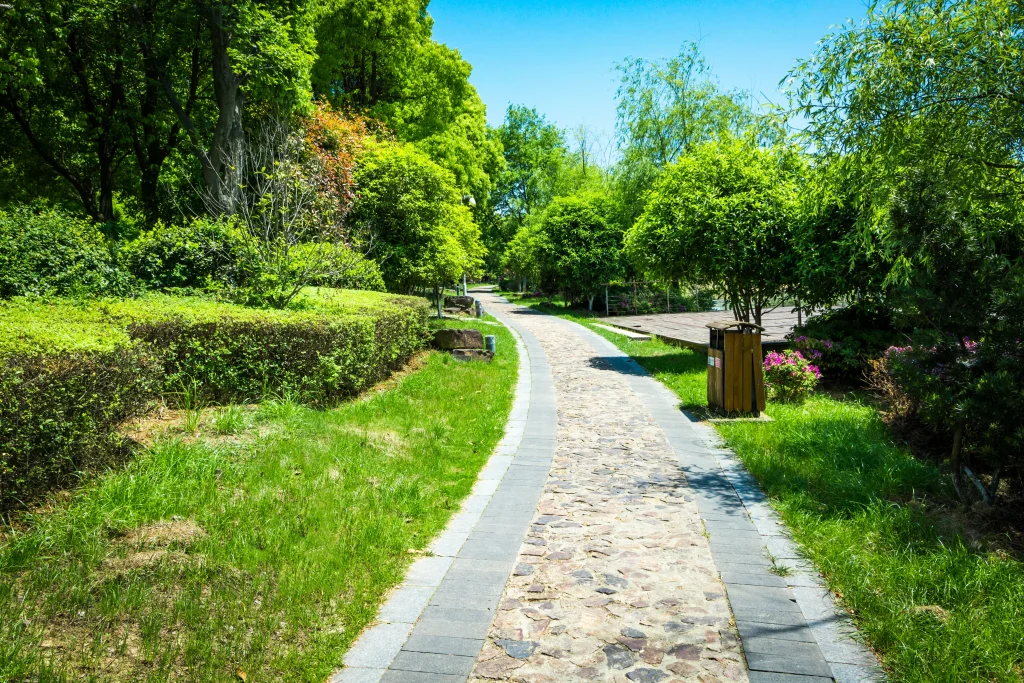
Imagine stepping into your backyard on a cool evening, settling into a cozy chair, and watching flames flicker in a beautifully designed fire pit. That vision is more achievable than you might think. A low cost fire pit landscape design does not require a contractor, expensive stone, or a big renovation budget. It requires a little planning, the right materials, and the inspiration to get started.
At Mile High Lifescape, we have helped Denver-area homeowners turn ordinary backyards into warm, welcoming outdoor retreats. Whether you are working with a sprawling suburban lot or a compact urban yard, there is a fire pit layout that fits your space, your style, and your budget.
Let’s explore 12 practical fire pit landscape design ideas that work beautifully in real backyards.
12 low-cost fire pit landscape ideas
1. Gravel fire pit area
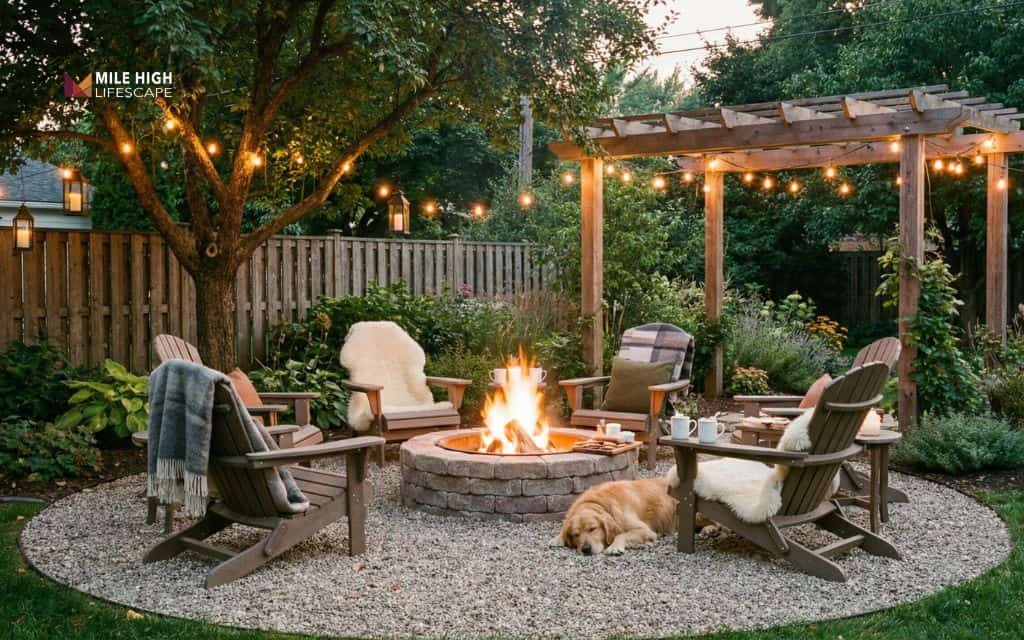
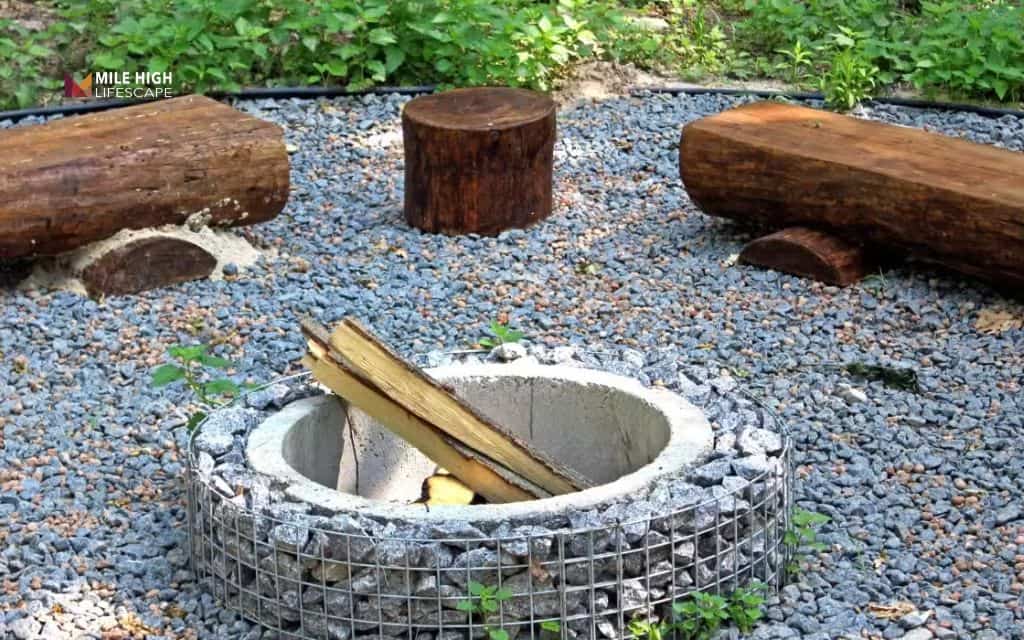
A gravel fire pit area is one of the most popular and affordable backyard fire pit ideas landscaping enthusiasts rely on for good reason. Pea gravel and crushed stone are inexpensive, require no mortar, and can be installed in a single afternoon.
Simply define a circular or square zone, lay landscape fabric underneath to suppress weeds, and pour your gravel 2–3 inches deep.
Why it works:
- Excellent drainage keeps the area dry after rain
- Non-flammable surface is naturally fire-safe
- Easy to expand or reshape as your needs change
Add a metal fire ring from any hardware store and you have a complete, functional fire pit setup for under $100.
2. DIY fire pit with retaining wall blocks
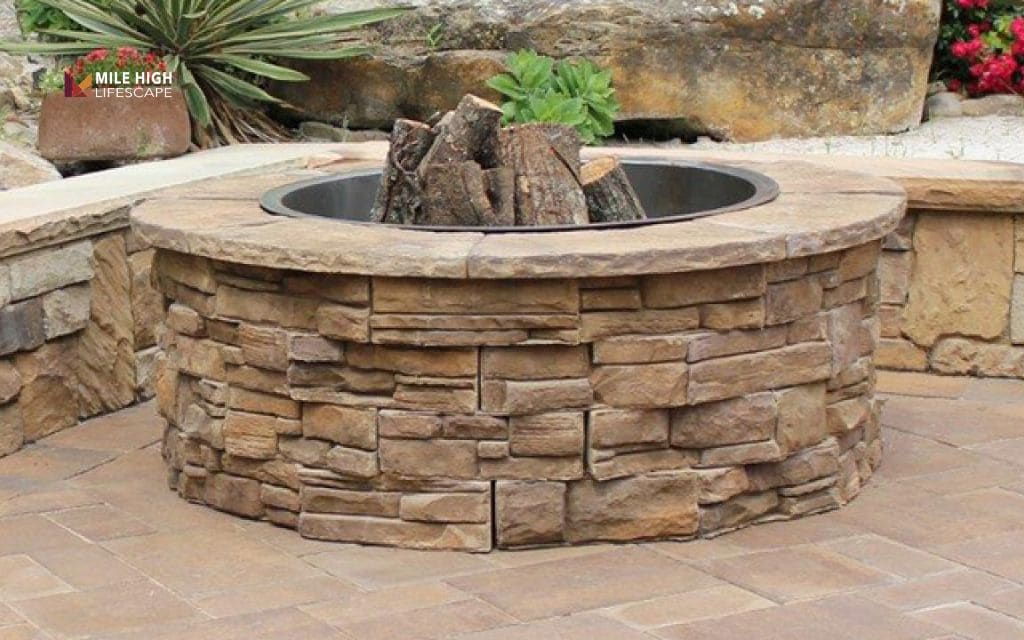
Retaining wall blocks are one of the most widely available and affordable fire pit materials on the market. You can find them at home improvement stores in a range of natural tones that blend beautifully with backyard landscaping fire pit ideas.
Stack 2 – 3 courses in a circle, leave gaps between blocks for airflow, and you have a handsome, durable fire pit ring that can last for years.
3. Portable fire pit setup
Not ready to commit to a permanent structure? A portable fire pit is a brilliant solution for outdoor fire pit ideas that require nothing more than an open, safe surface. Modern portable units range from simple steel bowls to sleek smokeless designs, and they can be moved, stored, or taken camping whenever you like.
Great pairing ideas:
- Set on existing patio pavers for instant use
- Place on a gravel pad you can always expand later
- Use in-ground fire pit liners if you decide to upgrade to permanent later
4. In-ground fire pit
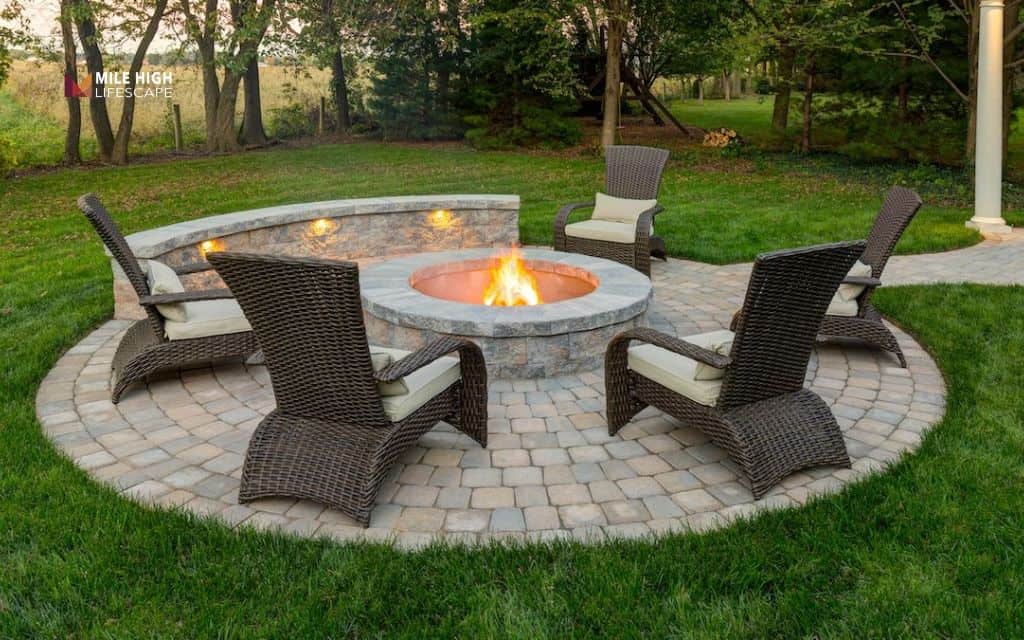
An in-ground fire pit is dug directly into the earth, lined with non-combustible brick or stone, and finished flush with the surrounding ground level.
This fire pit design is one of the most budget-friendly options available because it uses minimal materials and requires no elevated structure.
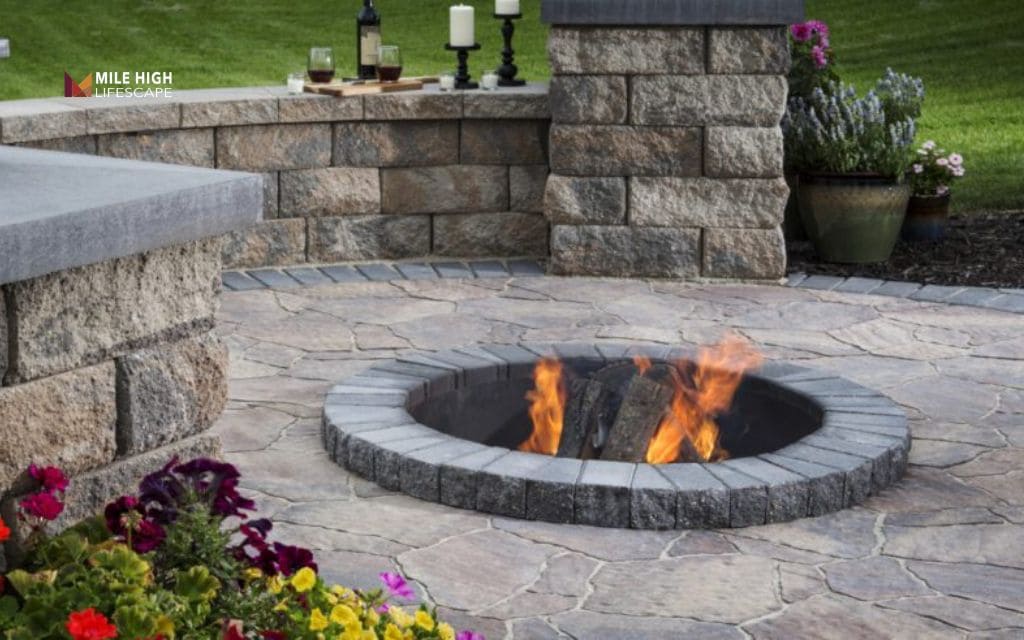
It also creates a sleek, modern aesthetic that fits naturally into open backyard landscape ideas with fire pit installations. Dig to approximately 12 inches deep, line with firebrick or concrete blocks, and surround the lip with flagstone or pavers for a clean finish.
5. Small paver patio with fire pit
Fire pit and patio ideas do not get much more satisfying than a clean paver layout anchored by a central fire pit. Even a modest 10×10-foot paver patio gives you enough room for four chairs and a fire pit ring, creating a defined outdoor room that feels purposeful and polished.
Choose basic concrete pavers in earthy tones, they are widely available and among the most affordable hardscape materials on the market.
Set the pavers in a compacted sand base for stability, position your fire pit at the center, and you have a fire pit backyard idea that looks professionally designed on a DIY budget.
See more: 22 driveway landscape ideas worth doing
6. Fire pit on existing patio
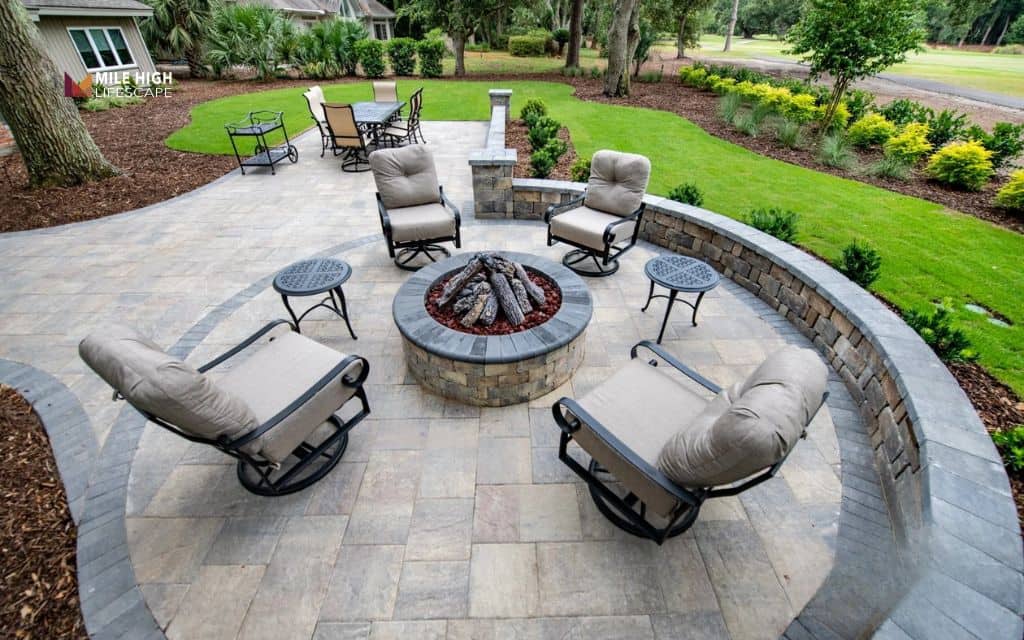
If you already have a concrete or paver patio, you are already halfway to a great patio and firepit setup. A portable or prefab fire pit unit placed on an existing surface requires no major build, no excavation, and no permit in most cases.
Simply arrange your seating around it and you instantly have a functional fire pit area. This is one of the fastest and cheapest fire pit ideas for patio upgrades available, with some quality portable units starting under $150.
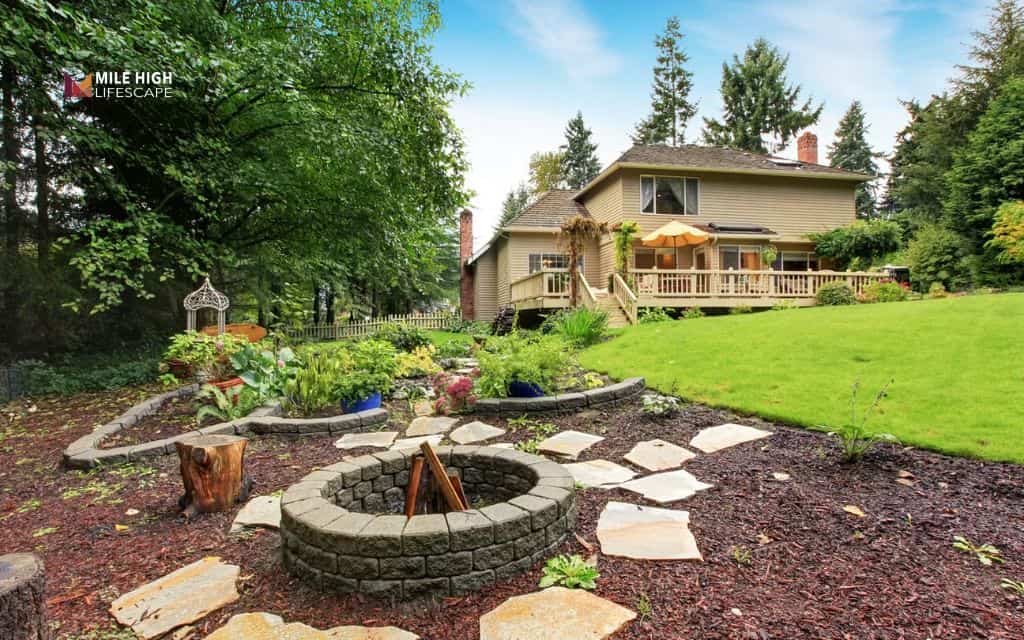
7. Fire pit with stepping stone seating area
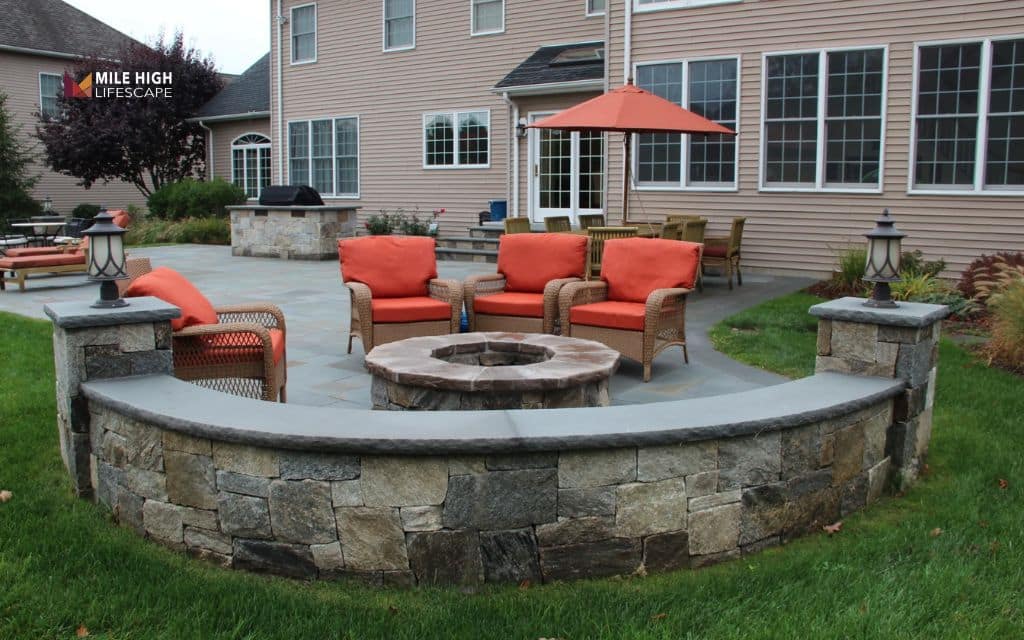
Stepping stones laid in a gentle arc around a fire pit create a natural path that draws people in and gives the space a casual, organic feel. Use large flat stones or basic concrete stepping pavers set directly into the lawn.
This approach works well as a firepit and patio idea for informal, cottage-style yards where a more structured hardscape would feel out of place. Ground cover plants tucked between stones add color and softness at minimal cost.
8. Fire pit with mulch surround
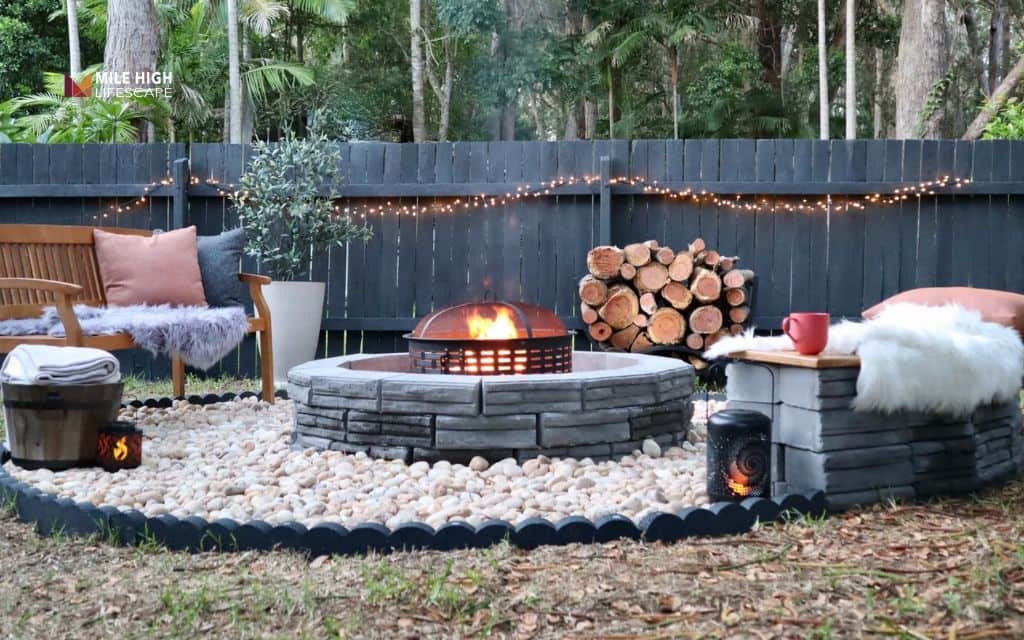
Shredded hardwood or rubber mulch creates a defined, tidy surface around a fire pit at a fraction of the cost of pavers. It is soft underfoot, suppresses weeds, and gives your backyard landscaping ideas with fire pit installations a finished garden look. Install a metal or plastic landscape edging ring around the fire pit zone to keep mulch in place and create a clean boundary.
9. Fire pit with rock border
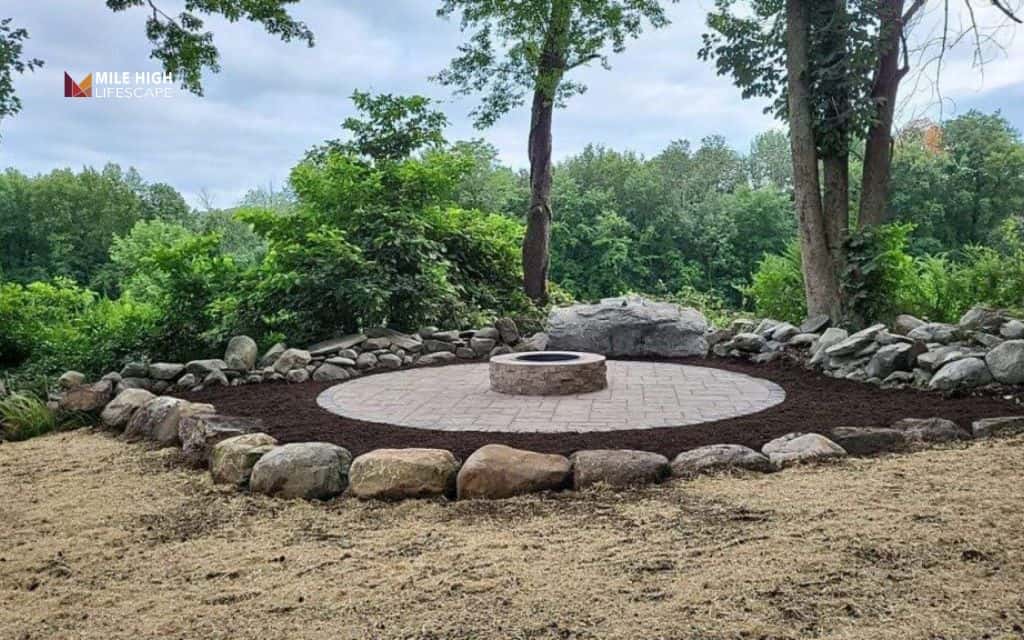
Surrounding a fire pit with a ring of larger decorative rocks or boulders is one of the most durable and low-maintenance backyard landscape ideas with fire pits you can execute.
River rock, fieldstone, or basic landscape boulders from a local stone yard are surprisingly affordable, especially when you buy in bulk.
This fire pit design idea creates a rugged, natural feel that pairs beautifully with native plants, ornamental grasses, and the kind of informal planting style that thrives in Colorado’s climate.
10. Fire pit with simple plant border
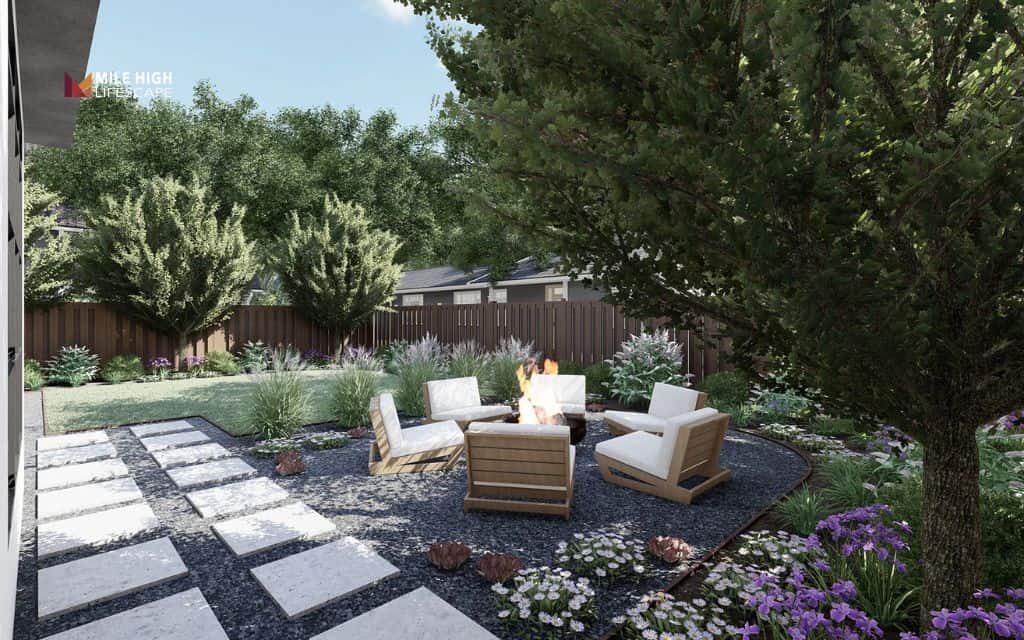
A simple border of ornamental grasses, lavender, or low-growing shrubs planted at a safe distance around the seating area softens the edges of the space and adds texture and seasonal color.
Choose fire-resistant plants and keep them at least 10 feet from the open flame. This is one of the most cost-effective fire pit design ideas for homeowners who want their outdoor space to look lush and thoughtfully planted without a large plant budget.
11. DIY seating with gravel base
For the ultimate low-cost outdoor fire pit area, combine a simple metal or DIY block fire pit with a gravel base and a set of weatherproof camp chairs or basic Adirondack chairs.
The gravel gives the space a defined footprint, keeps mud at bay, and provides a stable, level surface for furniture.
This casual backyard fire pit layout requires no carpentry skills and can be assembled in a single weekend for well under $300 in total, making it one of the most achievable fire pit backyard ideas on this list.
12. Bench or log seating around fire pit
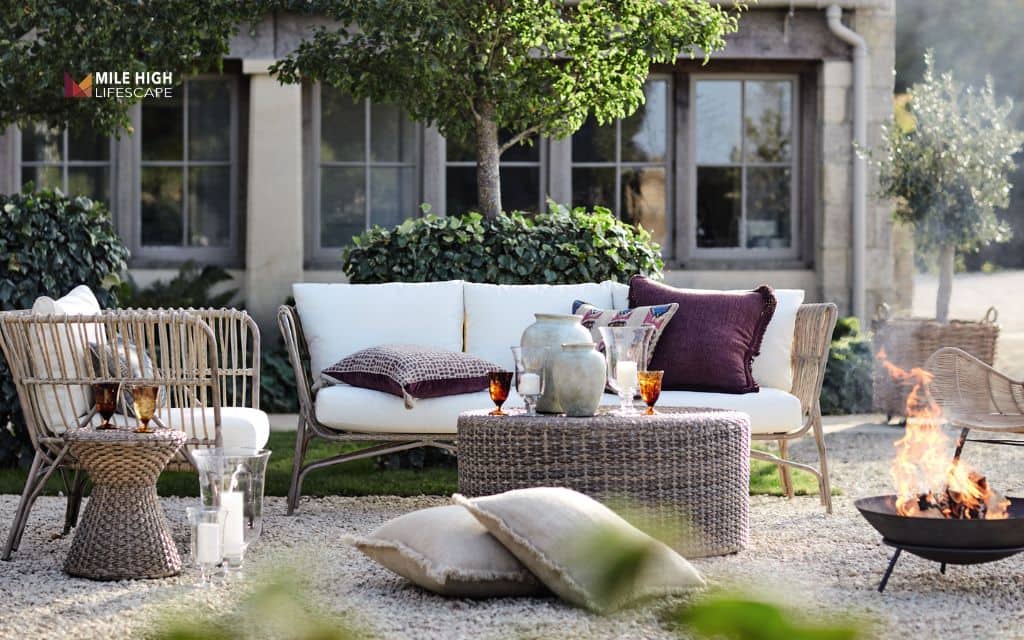
There is something charming about a circle of simple wooden benches or log rounds surrounding a glowing fire pit. Split log rounds used as seats, rough-hewn timber benches, or even repurposed railroad tie sections cost very little and add a warm, rustic character that expensive furniture cannot replicate.
Arrange 3 – 5 seats in a loose circle, stagger heights for visual interest, and finish the ground beneath with gravel or stepping stones. This is a timeless fire pit seating layout that works in any size backyard.
Read more: 25 pond landscape ideas to transform your garden
Small backyard fire pit ideas
Limited square footage should never stop you from enjoying the warmth and atmosphere of a backyard fire pit. Small backyard fire pit ideas landscaping professionals recommend focusing on maximizing the perceived space while keeping the design proportionate and safe.
Here are the key strategies that work best in tight spaces:
- Use a compact circular layout: A round fire pit with a tight seating radius (6 – 8 feet in total diameter) feels intimate rather than cramped. Position chairs closer together to encourage conversation.
- Leverage vertical space: Raised planter walls, tall ornamental grasses, or a simple trellis with climbing vines around the perimeter create the illusion of a larger, more defined outdoor room.
- Choose a smaller fire pit size: A fire pit with a 24 – 30-inch diameter is perfectly functional for 2 – 4 people and fits into a compact yard without overwhelming the space.
- Use built-in or bench seating: Built-in concrete block benches or a continuous low wall around the fire pit perimeter save floor space versus individual chairs. They also serve double duty as a low retaining wall or decorative border.
How to design a low-cost fire pit area
Great backyard with fire pit designs do not happen by accident. A little upfront planning goes a long way toward creating a space that looks good, functions well, and stays safe.
Follow these 3 steps before you start digging or shopping for materials.
Step 1: Choose the right location
Location is the single most important decision in any fire pit design. Get it right and everything else falls into place naturally.
- Distance from structures: Position your fire pit at least 10 feet from the house, fence, shed, or any overhanging trees or branches. Most local codes require a minimum clearance of 10 – 25 feet.
- Level ground: A flat, stable surface ensures your fire pit sits securely and seating stays comfortable. Avoid slopes that cause water to pool toward the fire pit.
- Wind direction: Take note of your yard’s prevailing wind direction. Avoid placing the fire pit where smoke will consistently blow toward the house or primary seating area.
- Proximity to utilities: Check for underground gas, electric, or water lines before digging. Call 811 (the national dig-safe hotline) if you plan any excavation.
Step 2: Plan your layout
Once you have chosen a location, sketch a simple layout before breaking ground. This prevents costly mistakes and helps you visualize the finished space.
- Circular seating arrangement: A circular layout around the fire pit is the most functional and visually balanced option for nearly all patio and fire pit ideas. It ensures everyone faces the fire and has equal access to warmth.
- Allow for movement: Leave at least 3 feet of clearance between the edge of the fire pit and the nearest seating, and another 2 feet between seating and the outer edge of the defined area.
- Maintain safe clearance around the pit: Keep a minimum 3 – 5 foot perimeter of non-flammable material immediately surrounding the fire pit on all sides.
- Plan for accessories: Factor in where you will store firewood, place a fire tool kit, or hang string lights before finalizing your layout.
Step 3: Keep materials simple
The most affordable fire pit areas use a small selection of honest, durable materials used consistently. Mixing too many different materials inflates costs and creates a chaotic aesthetic.
Best low-cost material combinations:
- Gravel base + metal fire ring + camp chairs (simplest, lowest cost)
- Pea gravel + retaining wall block pit + timber bench seating
- Basic pavers + prefab steel fire bowl + Adirondack chairs
Avoid the temptation to overcomplicate your fire pit design with too many different stone types, decorative accents, or structural features. Restraint is the hallmark of a well-designed budget landscape.
Fire pit safety basics
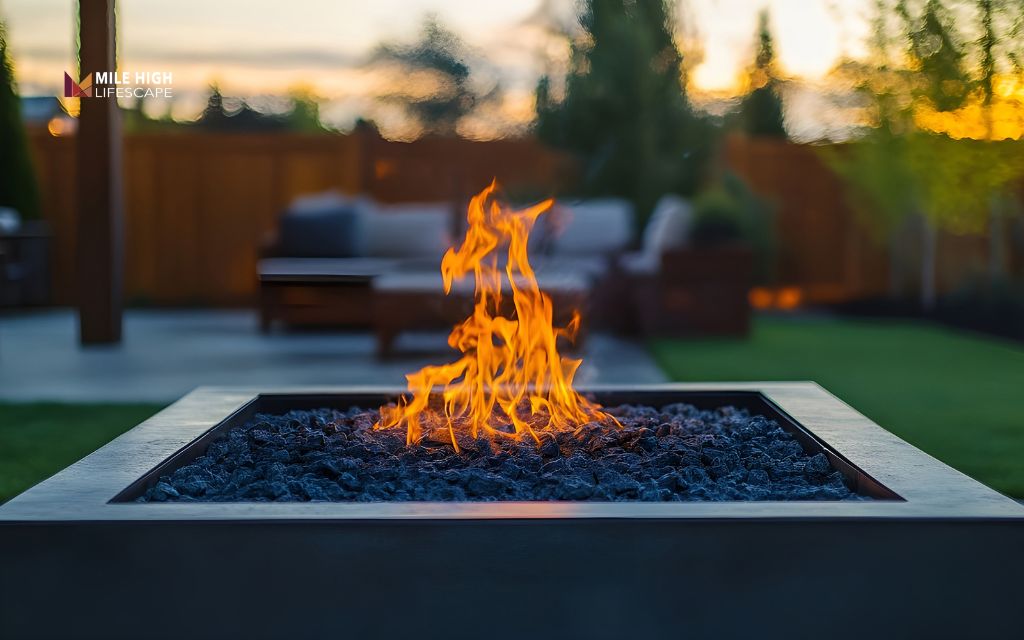
No fire pit landscaping project is complete without a clear safety plan. These guidelines apply regardless of the fire pit design you choose, the size of your yard, or whether you built it yourself or purchased a kit.
- Maintain safe distance from all structures: As noted above, 10 feet is the standard minimum clearance from any structure, tree, or overhead hazard. When in doubt, go farther.
- Use fire-safe materials only: Every surface within 3 feet of the fire pit should be non-combustible – gravel, concrete, stone, or pavers. Never place a fire pit directly on a wood deck without a proper fireproof mat rated for the purpose.
- Never place on combustible wood surfaces without protection: If using on a deck, use a heat-resistant fire pit mat and confirm the mat is rated for the BTU output of your specific fire pit.
- Use a spark screen: A fitted mesh spark screen reduces the risk of embers escaping the fire pit, particularly important in dry conditions.
- Keep a fire extinguisher or water supply nearby: A garden hose or bucket of sand should always be within reach when the fire pit is in use.
- Check local fire regulations: Denver and many surrounding municipalities have specific rules about open flames, burn bans, and required clearances. Check with your local fire department or municipality before building. Permit requirements vary by location and project scope.
- Never leave a fire unattended: Always fully extinguish the fire before leaving the area, and ensure children and pets are supervised around any open flame.
Safety is not an afterthought, it is the foundation of every good fire pit and patio design. Build it in from the start and you will enjoy your fire pit with confidence for years to come.
Pro tips for a cozy backyard fire pit
Once your fire pit area is built, a few simple finishing touches transform a functional space into a truly cozy and inviting outdoor retreat. These small additions cost very little but make a difference in atmosphere.
- Add string lights for ambiance: Overhead string lights draped between fence posts, a nearby tree, or simple wooden poles create warm, intimate lighting that makes evening gatherings around your fire pit feel magical. Solar-powered options eliminate the need for electrical wiring.
- Use simple outdoor cushions for comfort: Weatherproof cushions on Adirondack chairs or bench seating elevate the comfort of your fire pit area without a big investment. Look for cushions made from solution-dyed acrylic fabric that resists fading and moisture.
- Keep the layout open and inviting: Avoid cluttering the seating area with too many accessories, potted plants, or side tables. An open, uncluttered layout feels more relaxing and makes it easier for guests to move around the fire.
- Mix textures for visual richness: Combining hard materials like stone or gravel with soft landscape elements like ornamental grasses, low shrubs, or ground cover plants creates a fire pit area that feels designed and cohesive rather than purely functional.
- Create a defined entry: A simple path of stepping stones leading from your back door to the fire pit area makes the space feel intentional and gives guests a clear, welcoming route from the house.
Maintenance tips
A well-maintained fire pit area looks great season after season and requires far less costly repair down the road. These simple upkeep habits take only minutes but make a significant difference.
- Clean ash regularly: Allow ash to cool completely before removing it. Dispose of ash in a metal container, never in plastic bags or near combustible materials. Excess ash buildup reduces airflow and fire quality.
- Check stone or block stability: After each season or after heavy freeze-thaw cycles common in Colorado winters, inspect the blocks or stones that form your fire pit ring. Re-level or re-set any that have shifted to maintain structural integrity.
- Maintain the surrounding landscape: Rake gravel smooth, top up mulch annually, trim any encroaching plants, and reseed or patch any bare lawn areas around the perimeter of your fire pit seating zone.
- Keep the area weed-free: Weeds growing through gravel or between pavers are unsightly and can create a fire hazard. Use landscape fabric under gravel as a preventive measure, and spot-treat with a safe weed killer as needed.
- Cover portable fire pits when not in use: A fitted weatherproof cover protects metal surfaces from moisture and UV damage, extending the life of your investment significantly.
Conclusion
A beautiful, welcoming backyard fire pit area is within reach for almost any homeowner. The 12 low cost fire pit landscape design ideas in this guide prove that smart planning, honest materials, and a little creativity deliver results that look and feel far more expensive than they actually are.
Whether you start with a simple gravel pad and a metal fire ring, build a DIY block fire pit for under $200, or upgrade an existing patio with a sleek portable unit, you are creating something that adds genuine value to your daily life and to your home.
Your next step is simple: pick the one idea from this list that fits your yard size, your style, and your budget and take one concrete action toward it this week. Measure your backyard. Price out materials at your local home improvement store. Or call the team at Mile High Lifescape for a free consultation on transforming your outdoor space into the cozy backyard retreat you have been imagining.
Frequently asked questions (FAQs)
What is the cheapest way to build a fire pit in your backyard?
The cheapest way to build a fire pit is to use a basic metal fire ring set into a gravel pad, optionally surrounded by a single course of retaining wall blocks. These materials are widely available at home improvement stores and can bring your total project cost to under $100. If you already have usable stone or blocks on hand, the cost can be even lower.
How much does a low cost fire pit landscape design cost?
A low-cost fire pit landscape setup ranges from approximately $50 to $800, depending on the materials you choose, the size of the area, and whether you DIY or purchase a prefab kit.
Can I build a fire pit directly on grass?
Placing a fire pit directly on grass is not recommended. Grass is combustible, provides poor drainage, and will quickly scorch or die from heat radiation. Fire pits should always be placed on non-flammable surfaces such as gravel, pavers, stone, or concrete. If a permanent base is not currently in place, a portable fire pit placed on a rated fire-resistant mat is a practical interim option.
What is the best material for a budget fire pit area?
Gravel, crushed stone, and concrete retaining wall blocks are the best value materials for a budget fire pit area. They are heat-tolerant, widely available, easy to install without professional help, and provide excellent drainage.
Do I need a permit to build a fire pit in my backyard?
Permit requirements vary by location. In the Denver metro area and many Colorado municipalities, permanent in-ground fire pits may require a permit, while portable or prefab above-ground units typically do not. Some areas also have seasonal burn bans or restrictions on solid fuel fires. It is always best to check with your local fire department, building department, or municipality before starting any fire pit construction project.