Your patio has the potential to be one of the most enjoyable spaces on your property, for example, a quiet corner for morning coffee, a lively spot for weekend gatherings, or a private garden retreat that feels miles away from the everyday. The key is knowing which patio landscape ideas will actually work for your space, your lifestyle, and your local climate.
This guide covers 25 practical and inspiring ideas from plantings around patio edges and privacy hedges to gravel borders, fire pits, and ambient lighting. Each idea is designed to help you build a patio that feels intentional, comfortable, and uniquely yours.
Why patio landscaping makes a big difference
A patio without landscaping is just a hard surface. Add greenery, structured borders, shade elements, and suddenly it becomes an outdoor living room you’ll never want to leave.
Good patio and landscaping design does several important things at once:
- Makes your backyard feel larger and more layered
- Adds comfort, shade, and privacy from neighbors
- Improves the overall curb appeal of your home
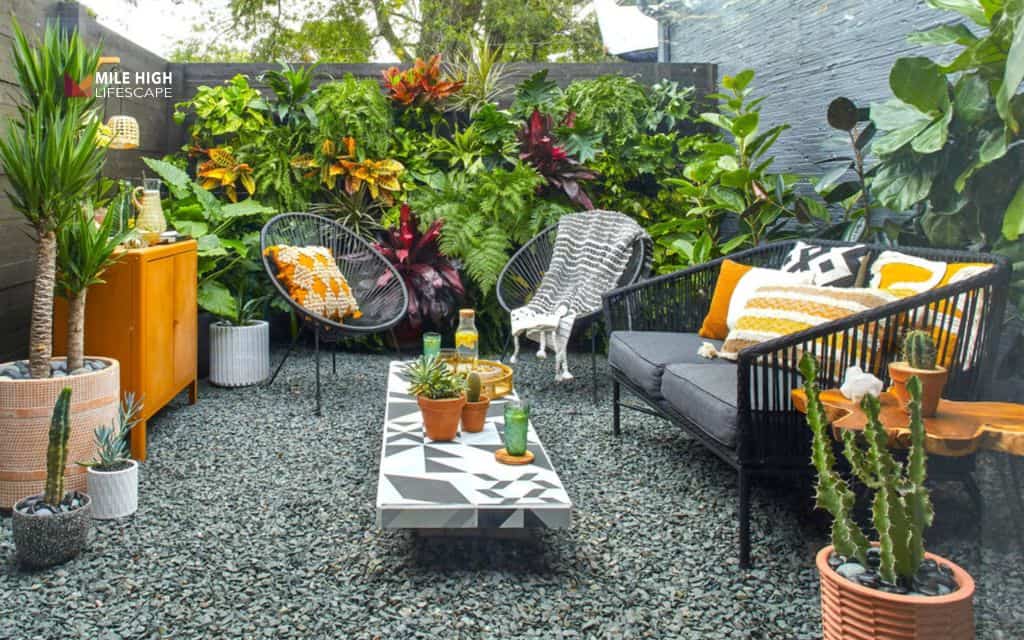
- Creates a relaxing atmosphere that invites daily use
- Increases your property’s perceived value
Even small, budget-friendly changes, like a planter here, a gravel border there, can completely transform the look and feel of a patio space. The goal is to make the transition between your home’s interior and the outdoors feel seamless, natural, and welcoming.
How to design the perfect patio landscape
Before jumping into ideas, it helps to think through a few foundational questions. These will guide every decision you make, from which plants to choose to whether you need a shade structure.
Define your patio style
Your patio landscape should feel like a natural extension of your home’s aesthetic:
- A modern home pairs well with clean geometric lines, minimal plantings, and materials like concrete, steel, and gravel.
- A cottage-style home calls for colorful, layered planting beds, roses, and soft edges.
- A natural or organic patio design leans on native plants, irregular stone pathways, and earthy textures that blend into the surrounding yard.
Take cues from your existing architecture – the materials, colors, and shapes already present will tell you a lot about which direction to go.
Plan your space
Sketch out your patio area and identify where you’ll place seating, walking paths, and planting zones. One of the most common mistakes in patio landscaping is overcrowding (too many plants or too much furniture). Leave breathing room between elements, and make sure traffic flows naturally from one zone to the next.
Consider sun and shade
Observe how sunlight moves across your patio throughout the day. South-facing or full-sun patios benefit from drought-tolerant plants like lavender, ornamental grasses, and succulents. Partially shaded spaces work beautifully with ferns, hostas, and astilbes.
Knowing your sun exposure will save you from planting mistakes and help you choose materials that hold up well in your specific conditions.
Choose low-maintenance options when possible
Not everyone has hours to spend weeding and pruning each week. Prioritize perennials over annuals, evergreen shrubs over flowering hedges that need constant deadheading, and mulch or gravel ground covers over bare soil that invites weeds. A well-chosen low-maintenance palette will keep your patio looking polished all season with minimal effort.
25 Best patio landscape ideas you’ll want to copy
Whether you’re starting from scratch or simply looking to refresh what you already have, these 25 patio landscape ideas will give you everything you need to create an outdoor space that’s beautiful, functional, and uniquely yours.
1. Surround the patio with plants
One of the most effective patio landscape ideas is to frame the entire perimeter with plants. A lush border of mixed shrubs, ornamental grasses, and perennial flowers creates a natural enclosure that makes the seating area feel more intimate and private.
This layered planting approach also softens the transition between the hardscape and the surrounding lawn or garden beds.
2. Create a plant border around the patio
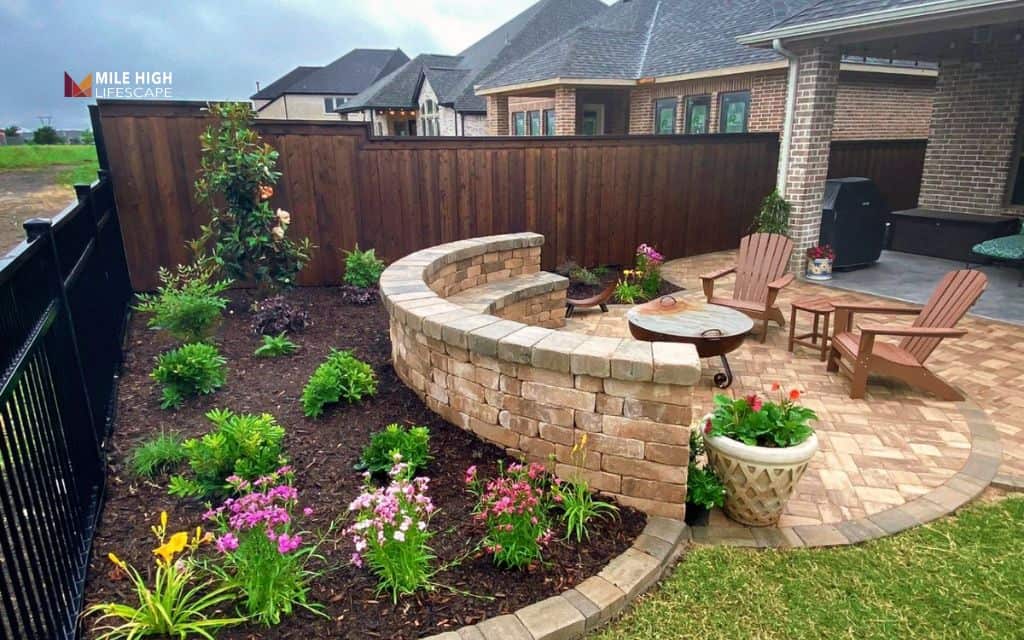
A defined plant border does double duty: it marks the edge of the patio clearly and creates a sense of structure that makes the entire yard feel more intentional. For landscaping around a paver patio or concrete patio, a border of compact boxwood, dwarf ornamental grass, or creeping thyme is both visually appealing and easy to maintain.
Keep the border width between 18 and 36 inches so it frames the space without overwhelming it. A consistent plant species or color palette along the border creates cohesion, while occasional accent plants add visual interest.
3. Use perennials to add year-round color
Perennials are a smart long-term investment in any patio and landscaping plan. Unlike annuals that need to be replanted each spring, perennials return year after year, getting larger and more established with time.
For sunny patios, consider coneflowers, black-eyed Susans, salvia, and daylilies. For shadier spots, astilbe, bleeding heart, and coral bells are excellent choices.
The key is to select varieties with staggered bloom times so something is always in flower from early spring through fall. This keeps your patio landscape looking vibrant and well-tended throughout the entire growing season.
4. Mix raised beds and containers
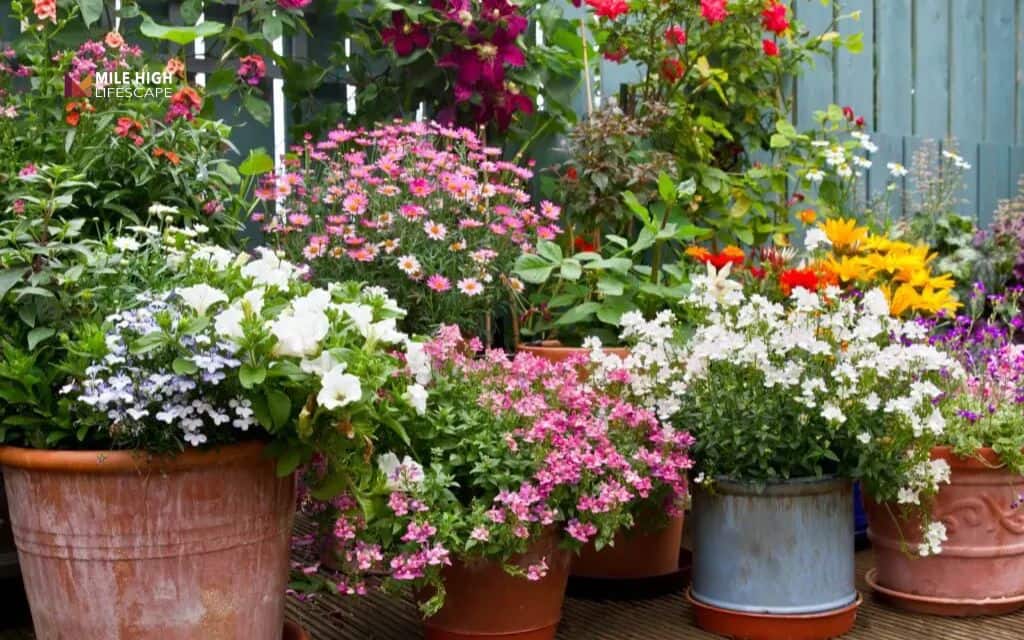
Combining raised planting beds with container gardens gives you maximum design flexibility. Raised beds anchor the patio with permanent greenery and create structural definition, while containers allow you to experiment with seasonal plants, herbs, or annuals that can be easily swapped out or moved around.
This combination works well in small patio spaces or in situations where in-ground planting isn’t possible. Use matching container materials (terracotta, glazed ceramic, or corten steel) to tie the look together and give the space a polished, intentional feel.
5. Plant a pollinator-friendly garden
A pollinator garden around your patio brings the space to life in the best possible way. Planting nectar-rich flowers like lavender, catmint, coneflower, and milkweed attracts bees, butterflies, and hummingbirds, turning your patio into a front-row seat for nature’s most delightful visitors.
Beyond aesthetics, supporting pollinators contributes to the health of your broader garden ecosystem. Many pollinator-friendly plants are also low-maintenance and drought-tolerant, making this one of the easiest and most rewarding upgrades you can make to your patio landscaping.
6. Layer the plants from low to tall
Professional landscape designers consistently rely on the principle of layered planting to create borders and beds that look lush and dynamic. The idea is simple: place low ground covers or edging plants at the front, medium-height perennials or ornamental grasses in the middle, and taller shrubs or small trees at the back.
This layered approach adds depth and visual dimension to your patio landscape and ensures that every plant gets the light it needs to thrive. It also makes the planting beds look fuller and more intentional, even if you’re working with a relatively modest number of plants.
7. Add large statement plants in planters
A single oversized planter with a bold specimen plant (a Japanese maple, a columnar evergreen, a large ornamental grass, or a tropical banana plant) can serve as an instant focal point and anchor for your patio design.
Statement planters work well flanking an entrance, framing a seating area, or filling an awkward corner that’s too small for a full planting bed.
Because the plants are in containers, this approach gives you flexibility to bring tender plants indoors during cold months. It’s a smart patio landscape idea for homeowners who want high visual impact with minimal long-term commitment.
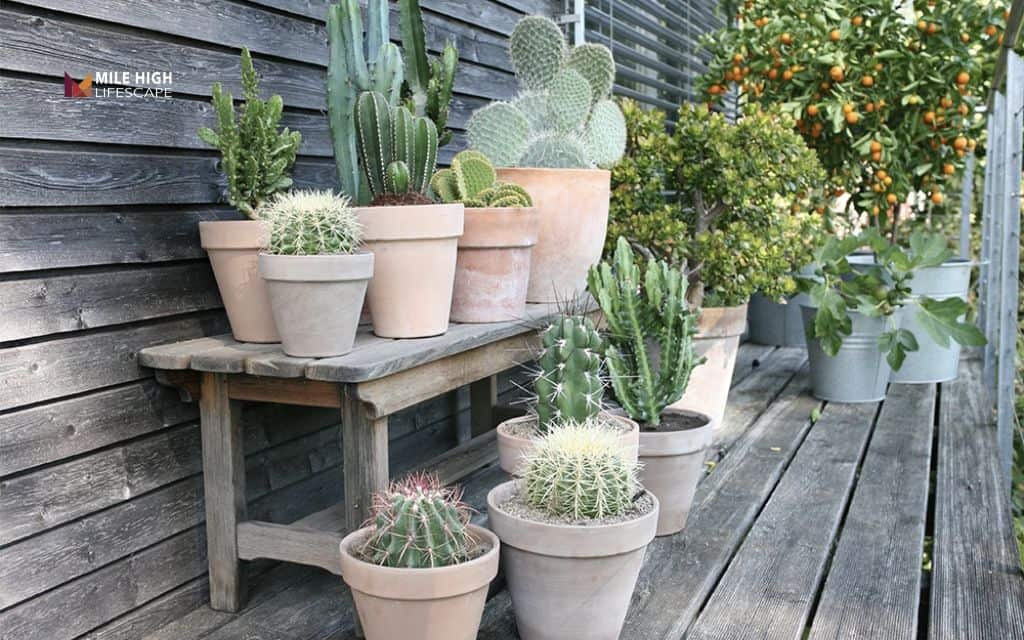
8. Try potted cacti or succulents
For sun-drenched patios that stay warm and dry, a collection of potted cacti and succulents offers a clean, modern aesthetic with almost zero maintenance. Arrange a mix of sizes and textures (tall columnar cacti, spreading agaves, and compact echeverias) in matching pots for a cohesive look.
Read more: https://milehighlifescape.com/landscaping-ideas/
9. Plant a fast-growing privacy hedge
Fast-growing species like Emerald Green arborvitae, privet, or Holly can create a full green screen within two to three growing seasons. Unlike a solid fence, a living hedge softens sound, filters dust and wind, and adds natural beauty that improves with age.
For landscaping around a deck or raised patio, plant the hedge a few feet from the structure’s edge to allow air circulation and avoid moisture issues. Space individual plants according to the mature width of the species you choose for a hedge that fills in evenly.
10. Use bamboo or tall ornamental grasses
Clumping bamboo varieties and tall ornamental grasses like Miscanthus or Karl Foerster feather reed grass offer a lightweight, modern screening alternative to traditional hedges. They grow quickly, require minimal maintenance, and add beautiful movement and texture to patio and deck landscaping ideas.
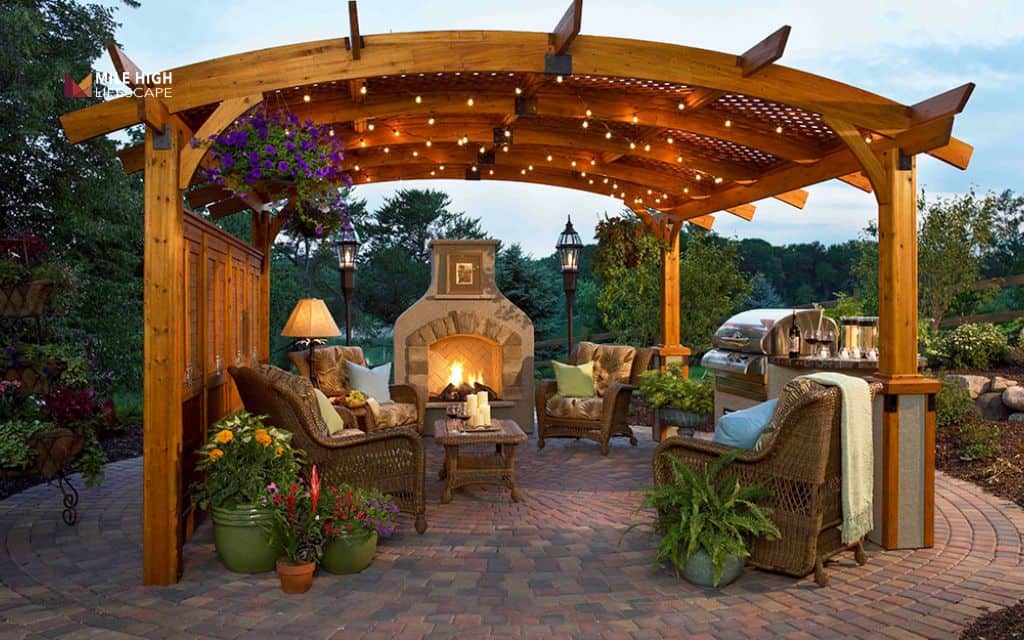
11. Install a pergola or covered structure
A pergola is one of the most impactful investments you can make in patio and landscaping design. It adds architectural structure, provides partial shade, and creates a defined outdoor room that feels more enclosed and intentional than an open patio. Pergolas pair beautifully with climbing plants, string lights, and outdoor curtains for a resort-style feel.
12. Add outdoor drapery
Outdoor curtains hung from a pergola or shade structure offer a surprisingly effective way to add flexible privacy and sun control. When pulled closed, they block sightlines and filter afternoon glare; when open, they billow gently in the breeze, adding a soft, elegant texture to the outdoor space.
Choose fade-resistant, weather-treated fabrics in neutral tones or colors that complement your home exterior. This is one of the most affordable patio landscape upgrades you can make, yet it delivers a dramatic visual transformation.
13. Train vines on a trellis or pergola
Climbing plants like clematis, wisteria, trumpet vine, or climbing hydrangea can transform a bare pergola or trellis into a lush green canopy within a few seasons. They add a romantic, garden-party feel to outdoor spaces and help cool the patio naturally by filtering direct sunlight. For a fast-growing option with bold color, try a hardy climbing rose or honeysuckle, both of which are relatively easy to establish in most temperate climates.
14. Put gravel around the patio
A gravel border is one of the most practical landscaping around patio ideas. It improves drainage at the patio edge, reduces muddy splash-back on the hardscape during rain, and suppresses weeds in areas where planting isn’t desired. Decomposed granite, pea gravel, and crushed limestone are all popular options with distinct looks.
15. Alternate pavers and gravel
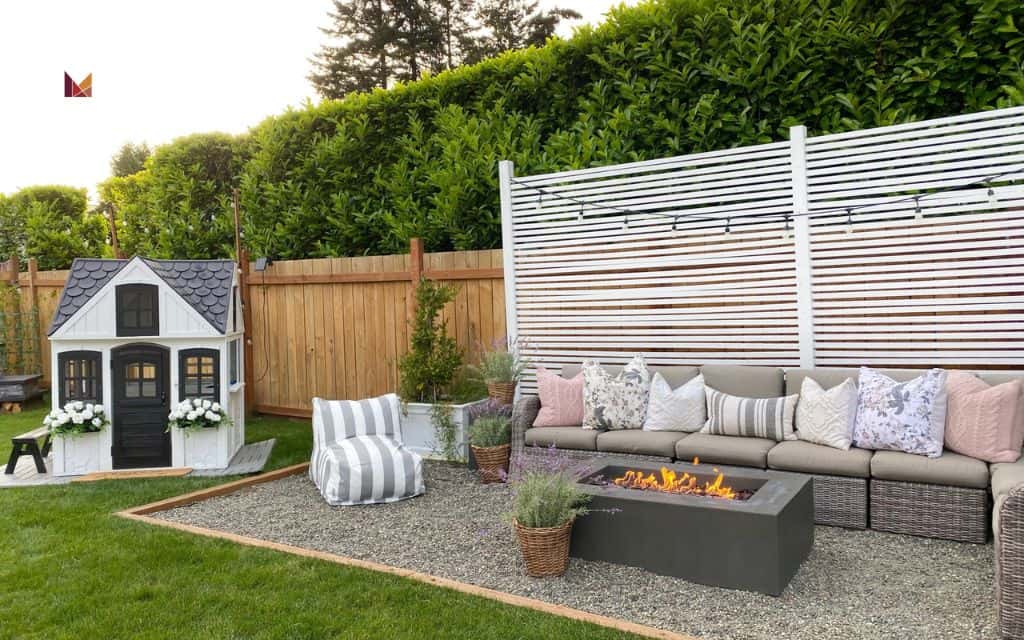
For a stylish, contemporary patio or deck landscape idea, try alternating concrete or stone pavers with gravel or low-growing ground covers like creeping thyme or moss. This creates visual rhythm and texture, breaks up the monotony of a solid hardscape, and can reduce the overall cost of the project compared to paving the entire surface.
16. Use natural stone or slate
Natural stone (flagstone, bluestone, slate, or limestone) brings a sense of permanence and elegance to any patio landscape design. Each piece is unique in color and texture, which gives natural stone patios a handcrafted, organic quality that manufactured pavers rarely achieve.
Natural stone is weather-resistant and durable when properly installed, making it a worthwhile long-term investment. It pairs with plantings around a patio, especially when low-growing plants like thyme or sedums are allowed to creep into the joints between stones.
17. Lay a brick or concrete paver patio
Brick and concrete pavers remain among the most popular hardscape materials for good reason: they’re durable, easy to repair, and available in a wide range of colors and patterns. A herringbone brick pattern gives a classic, traditional feel, while large-format concrete pavers in a running bond pattern create a more modern aesthetic.
Landscaping around a concrete patio or paver surface is one of the most satisfying outdoor projects you can undertake. The combination of a clean, stable hardscape with planting beds or gravel borders creates a professional result that improves the appeal and usability of the yard.
18. Add decorative rocks around the patio
Decorative rock gardens are an excellent low-maintenance landscaping option for patios in dry or semi-arid climates. River rock, lava rock, and boulders can be used to fill planting beds, frame the patio perimeter, or create xeriscape features that require no irrigation. Paired with drought-tolerant perennials or ornamental grasses, a decorative rock border creates a striking and virtually maintenance-free landscape around a patio.
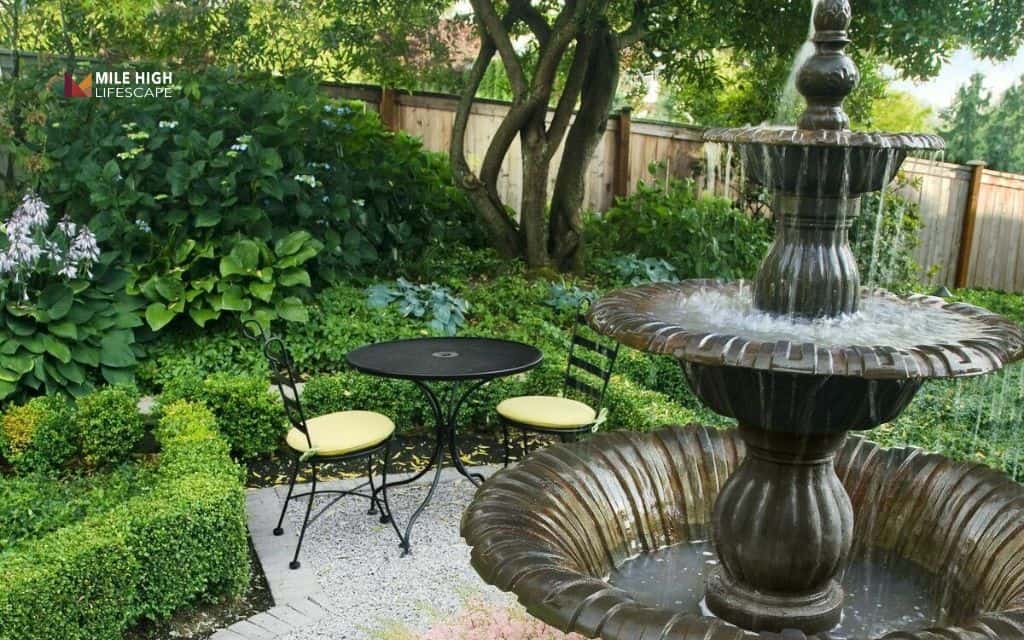
19. Add a simple fountain
The sound of moving water has a measurable calming effect, which is why fountains are such a popular addition to patio and landscaping designs. A self-contained fountain requires only a standard outdoor electrical outlet and minimal ongoing maintenance.
In warm climates, a fountain can also help the surrounding area feel slightly cooler through evaporative cooling. Placed near seating, it provides a gentle ambient sound that masks street noise and makes the patio feel like a true retreat.
Read more: Building a flagstone patio
20. Install a built-in fire pit
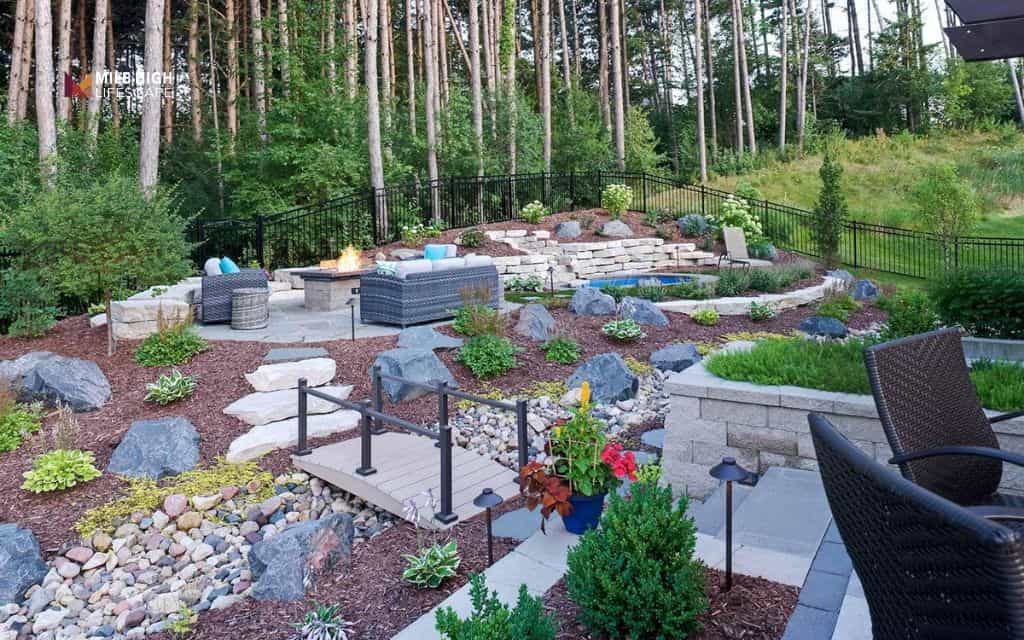
A fire pit may be the single most impactful upgrade in any list of patio landscape ideas. It extends the usable season of your outdoor space well into fall and even winter, creates an irresistible gathering point for friends and family, and adds architectural drama to the patio.
Built-in fire pits made from natural stone, brick, or poured concrete feel like permanent features that increase the perceived value of your property. If a built-in isn’t in the budget, a high-quality freestanding fire bowl or gas fire table offers similar ambiance at a fraction of the cost.
21. Add outdoor rugs over pavers
An outdoor rug is one of the quickest and most affordable ways to define a seating area and make a hard patio surface feel more like an indoor living space. It grounds furniture groupings, adds color and pattern, and softens the look of plain concrete or pavers. Choose rugs made from polypropylene or recycled plastic materials, which resist moisture, mold, and UV fading far better than natural fiber options.
22. Use benches or built-in seating
Built-in seating makes excellent use of space while giving the patio a clean, uncluttered look. It eliminates the need for bulky standalone furniture pieces and creates a cohesive design that feels intentional.
For low-maintenance deck and landscaping ideas that maximize function, combine built-in seating with storage underneath – a practical upgrade that keeps cushions, tools, and accessories organized and out of sight.
23. Add lighting for evening ambiance
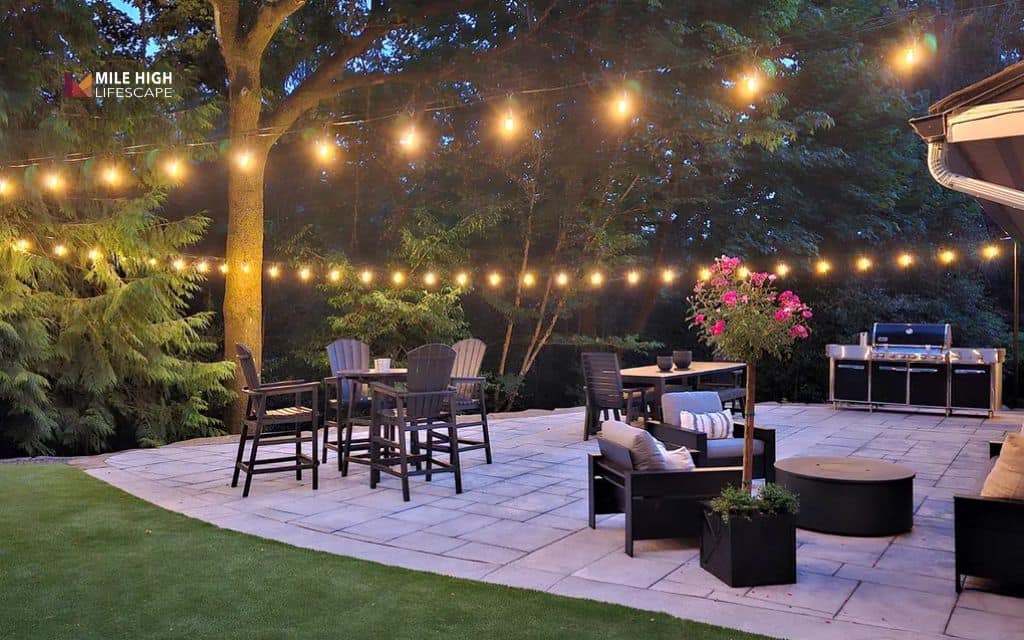
Outdoor lighting is what separates a patio that gets used until sundown from one that becomes the center of activity on warm evenings. String lights draped across a pergola or overhead wire create a warm, festive atmosphere that’s hard to replicate with any other element. Pathway lights around planting borders illuminate the landscape design around the deck or patio while improving safety and navigation at night.
24. Create a multifunctional patio space
The most successful patio landscapes serve multiple purposes without feeling chaotic. A multifunctional patio might include a dining area for meals, a lounge zone for relaxing, a small herb garden for cooking, and a fire pit for evening gatherings.
The key is deliberate spatial planning. Use furniture scale, rugs, planters, and lighting to define each zone clearly. Deck landscape ideas often follow this same principle, especially when working with an elevated deck that connects to a lower patio level.
25. Designate zones for seating, dining, and plants
Zoning is the final and perhaps most important organizational principle in any patio landscape design. Clearly defined zones make even a modestly sized patio feel larger and more functional.
Subtle divisions like a change in paving material, a low planting border, or a shift in rug orientation are all you need to signal where one zone ends and another begins.
This is valuable in landscapes around deck projects, where distinct levels naturally lend themselves to different uses.
Conclusion
The best patio landscapes don’t happen by accident, they’re the result of thoughtful planning, smart plant and material choices, and a clear sense of how the space will be used.
Whether you’re working with a small concrete slab and a tight budget, or a generous outdoor area with room for a pergola, a fire pit, and layered planting beds, there’s a combination of ideas on this list that will work for you.
If you’re looking for professional guidance on landscaping around a patio or deck, Mile High Lifescape‘s experienced team in Denver is here to help. From initial design through full installation, we’ll create a patio landscape that fits your space, your style, and the unique conditions of Colorado’s climate.
Frequently asked questions (FAQs)
What are the best plants for landscaping around a patio?
Low-maintenance plants like lavender, ornamental grasses, boxwood, and hydrangeas are popular choices for plantings around a patio. They provide structure, seasonal color, and require relatively little upkeep once established.
How can I make my patio look more attractive on a budget?
Some of the most impactful patio landscape ideas are also among the most affordable. Adding container plants, spreading a fresh layer of mulch, installing a gravel border, or hanging string lights can transform the look of your outdoor space without a major investment. Focus on one area at a time and build gradually – small, consistent improvements compound into dramatic results.
What is the easiest patio landscaping to maintain?
The lowest-maintenance patio landscaping options combine rock or gravel ground covers with drought-tolerant perennials and evergreen shrubs. Xeriscape-style designs are well-suited to semi-arid climate and require minimal watering once plants are established. Reducing the amount of lawn area around the patio and replacing it with mulched planting beds or decorative stone also significantly cuts down on mowing and weeding time.
How do you landscape around a concrete patio?
Adding planting beds or raised borders along the edges, introducing container gardens on the surface, and placing gravel or mulch between the patio and the surrounding lawn all help create a more natural, integrated look. Climbing plants on a nearby trellis or fence can also draw the eye upward and make the concrete feel like part of a more complete garden design.
How do you landscape around a deck?
Landscaping around a deck follows many of the same principles as patio landscaping but requires a few additional considerations. For raised decks, the space underneath the structure is an opportunity to create a shaded garden bed with shade-tolerant plants like hostas, ferns, or astilbe. Foundation plantings along the deck perimeter help tie the structure visually into the surrounding yard.
Should I hire a professional for patio landscaping?
Simple projects like planting container gardens, spreading mulch, and installing edging are well within reach for most DIY-oriented homeowners. However, for more complex projects, working with a professional landscaping company ensures better long-term results. A professional can also help navigate local regulations, soil conditions, and climate-specific challenges that can significantly affect the success of your project.