Rhododendron landscape uses go far beyond simply filling a shady corner. These plants are true workhorses in the garden. They are evergreen, meaning they hold their leaves all year long and provide structure, depth, and a lush green backdrop through every season.
When spring arrives, they erupt in large, showy blooms ranging from soft blush pink to deep purple and vivid red. Once the blooms fade, they return to their role as reliable, year-round structure plants.
Landscaping with rhododendrons gives homeowners the best of both worlds: a shrub that earns its place every single month of the year, not just during its flowering window.
Whether you are designing a foundation planting, defining a border, or creating a layered woodland garden, rhododendrons bring the kind of structure and seasonal color that elevates an ordinary yard into something genuinely beautiful.
Best types of rhododendrons for landscaping
Before diving into design ideas, it helps to understand that not all rhododendrons are the same. The genus is enormous, with thousands of species and cultivars, and choosing the right type for your specific landscape goal makes a significant difference in long-term results.
Evergreen rhododendrons are the most popular choice for landscaping because they provide year-round structure and a consistent, polished appearance in the garden. These are what most homeowners picture when they think of rhododendron landscaping: broad, glossy leaves and dramatic spring blooms.
Compact varieties are a smart pick for smaller yards, front-of-house plantings, and border edges. Cultivars such as ‘PJM Elite,’ ‘Ramapo,’ and ‘Nova Zembla’ stay manageable in size while still delivering excellent bloom color. Larger, free-growing types like ‘Catawbiense Album’ or ‘Roseum Elegans’ work better as privacy screens or large focal point shrubs where you have room to let them fill out naturally.
When selecting a variety, always check the mature height and spread. A shrub that looks perfect as a three-gallon nursery plant can eventually reach six feet wide. Matching plant size to your available space saves a lot of pruning effort down the road and keeps your landscape looking intentional rather than overcrowded.
Where do rhododendrons grow best?
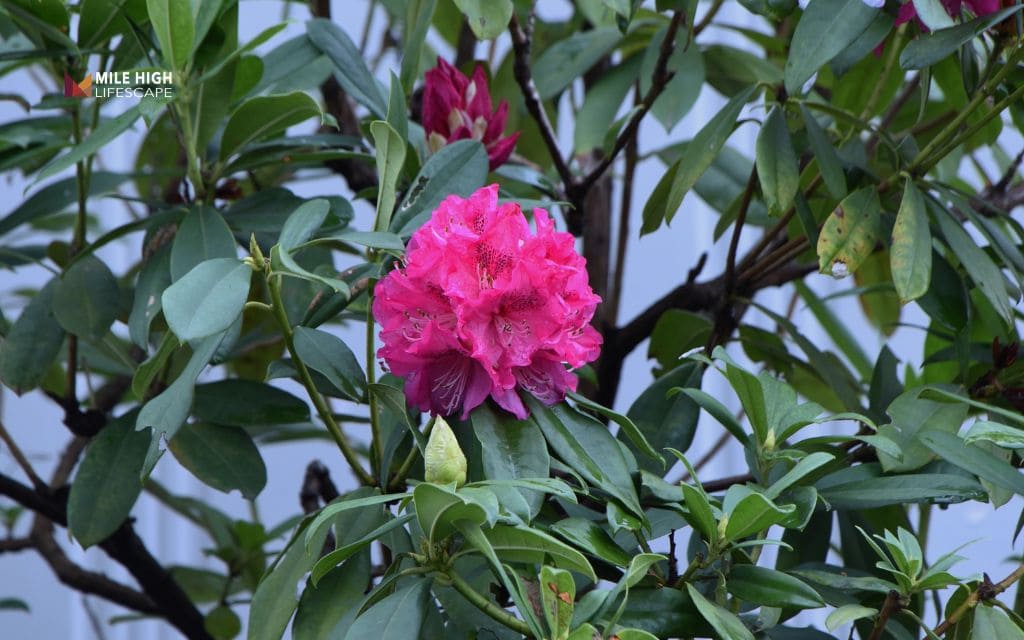
Rhododendrons are happiest in partial shade. A location that receives morning sun and afternoon shade is close to ideal. The morning light encourages healthy growth and abundant blooming, while protection from harsh afternoon sun prevents leaf scorch and keeps the foliage looking its best.
Soil conditions are equally important. Rhododendrons need well-drained, acidic soil with a pH between 4.5 and 6.0. They are shallow-rooted plants, so compacted, waterlogged, or alkaline soil will quickly cause problems. If your native soil does not meet these requirements, amending with peat moss, composted pine bark, or a soil acidifier before planting will set your rhododendrons up for long-term success.
Wind protection is another factor worth considering. Strong, drying winds can cause winter burn on the large evergreen leaves, leaving them brown and ragged by spring. A location sheltered by a fence, building, or dense hedge makes a noticeable difference in how well your plants look through the cold months.
7 rhododendron landscape uses
Here are the 7 best rhododendron landscape uses to consider for your yard. Each one plays a distinct design role, and you may find that more than one applies to your space.
Use rhododendrons as a foundation plant
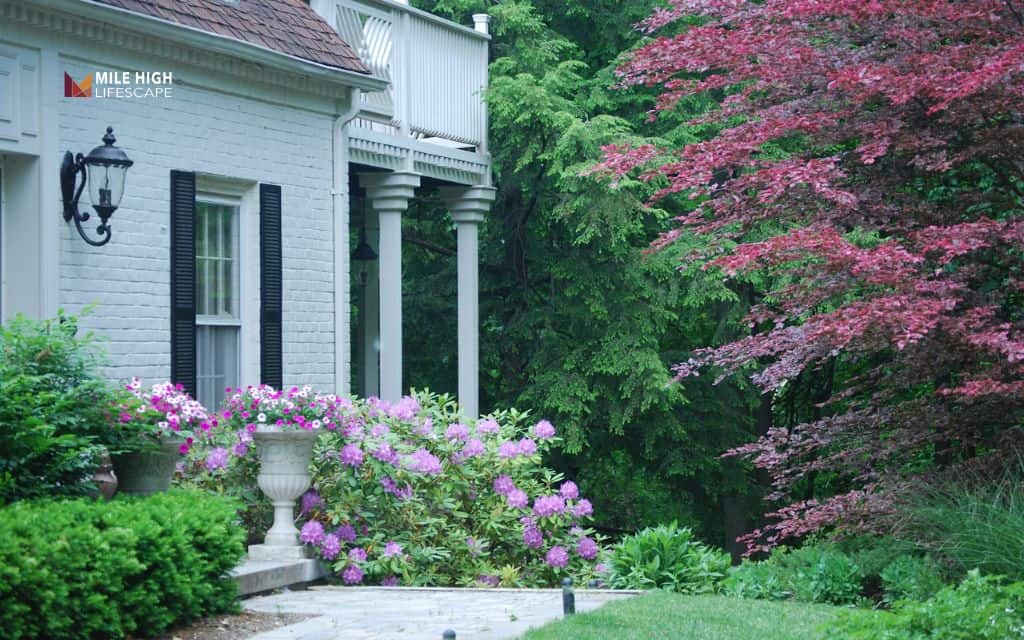
One of the most classic rhododendron landscape uses is as a foundation planting along the front of the house. Rhododendron in front of house designs work so well because these shrubs naturally soften the hard edges of walls, siding, and concrete foundations while adding genuine visual weight to the entryway.
A well-placed rhododendron near the front door creates instant curb appeal, especially in spring when the blooms are at their peak. Because they are evergreen, they also carry the landscape through winter without leaving bare sticks where structure used to be. This is a significant advantage over deciduous flowering shrubs that go dormant and disappear for half the year.
Create a rhododendron privacy hedge
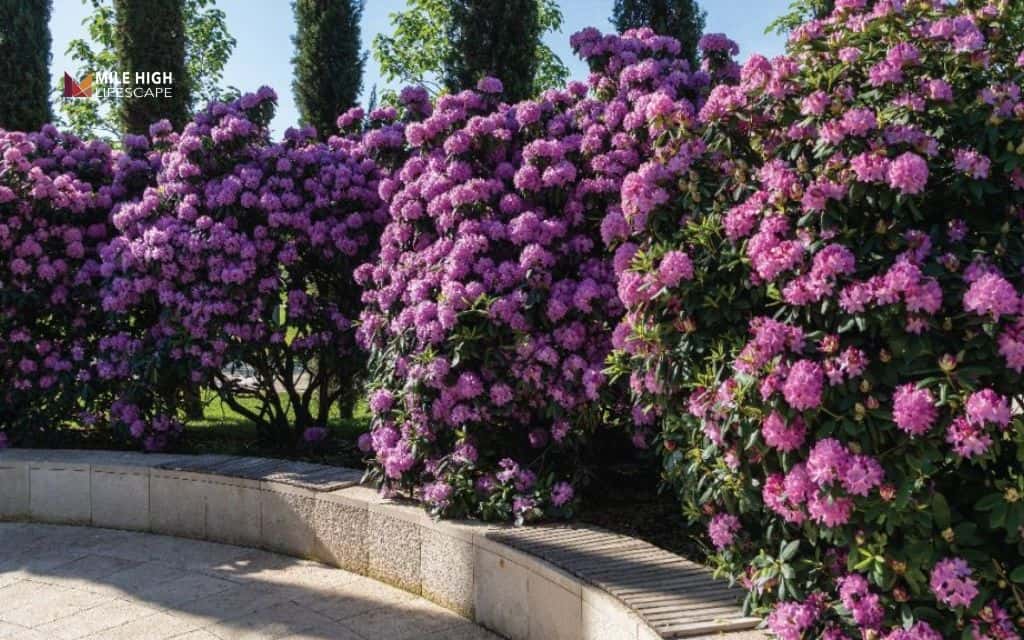
If privacy is a priority in your landscape, a rhododendron privacy hedge is one of the most attractive solutions available. Unlike a wooden fence, a living hedge softens the boundary between your yard and the outside world, adds biodiversity to the garden, and improves with age as the plants fill in and mature.
Because evergreen rhododendrons hold their foliage year-round, a properly established hedge provides screening in every season, not just during the summer months when other plants are leafed out. This makes them useful for blocking street views, neighboring windows, or unsightly utility areas that you want to tuck out of sight permanently.
Design a woodland garden with rhododendrons
Rhododendrons are native to forested, mountainous regions, which means they thrive in woodland-style garden settings. If you have a shaded yard, mature trees casting dappled light, or a slope with loose, humus-rich soil, you have the ideal conditions for a woodland garden where rhododendrons will truly shine.
Pairing rhododendrons with compatible plants is key to making this design style work. Ferns, hostas, astilbes, and hellebores are all excellent companions because they share a preference for shade and acidic, well-drained soil.
Adding a meandering mulch path through the planting and perhaps a simple bench creates a space that truly feels like a retreat within your own backyard.
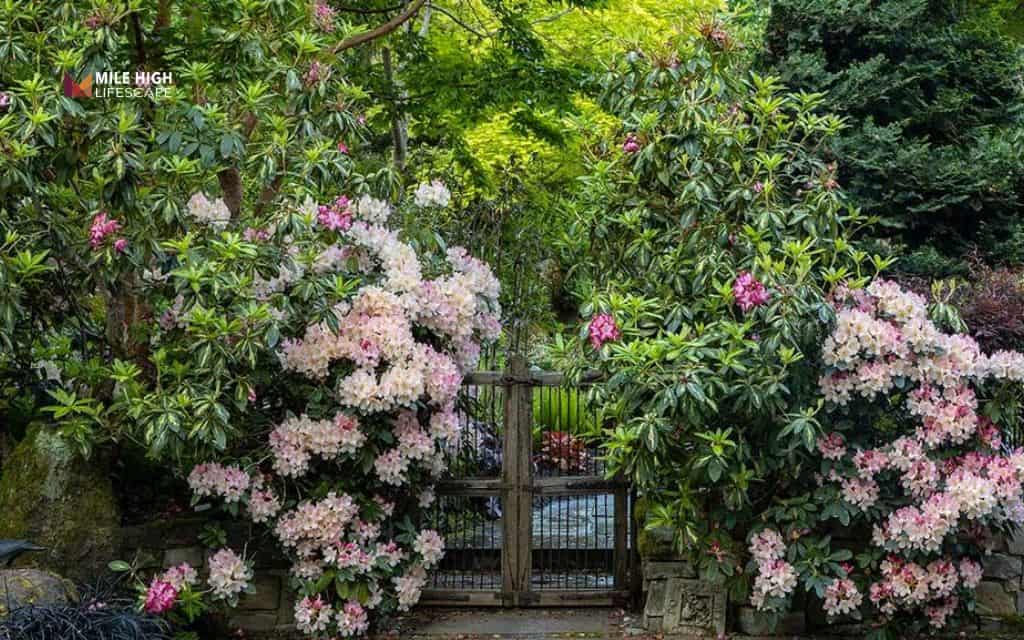
Use rhododendrons as a focal point shrub
Sometimes a landscape calls for a single showstopper, one plant that draws the eye and anchors the entire design. A large, well-grown rhododendron is perfectly suited to this role.
When in bloom, the clusters of flowers are large enough and vibrant enough to stop people in their tracks, and the bold, dark green foliage provides a strong presence even outside of the flowering season.
Using a rhododendron as a focal point works well at the end of a garden path, at a corner of the yard where 2 fence lines meet, or as the centerpiece of a curved planting bed. Choose a large-flowering variety in a bold color for maximum impact, and give the plant enough space to develop its natural, rounded shape without crowding from neighboring plants.
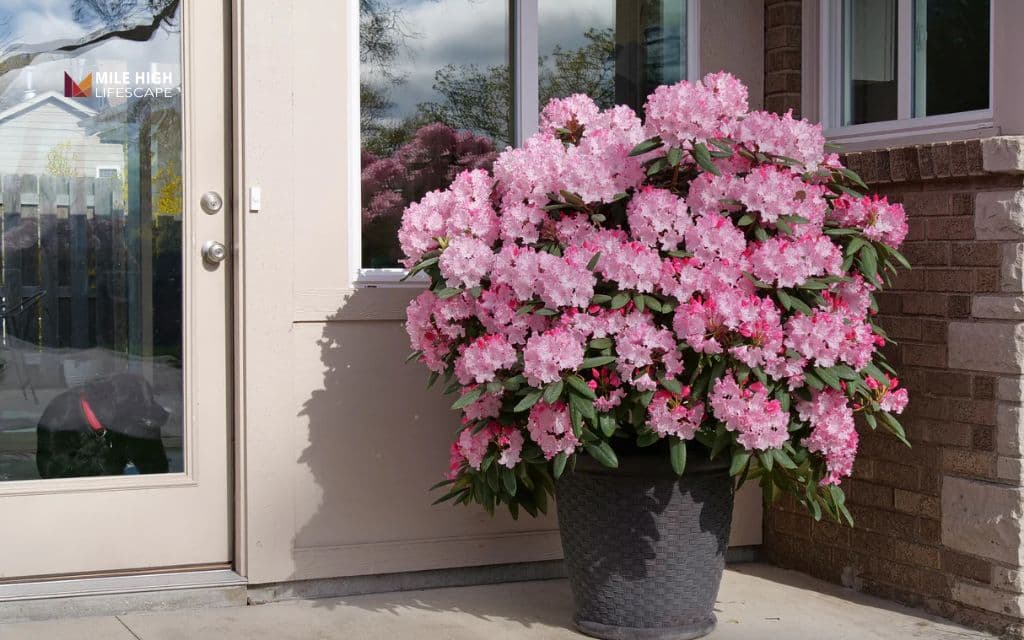
Plant rhododendrons along garden borders
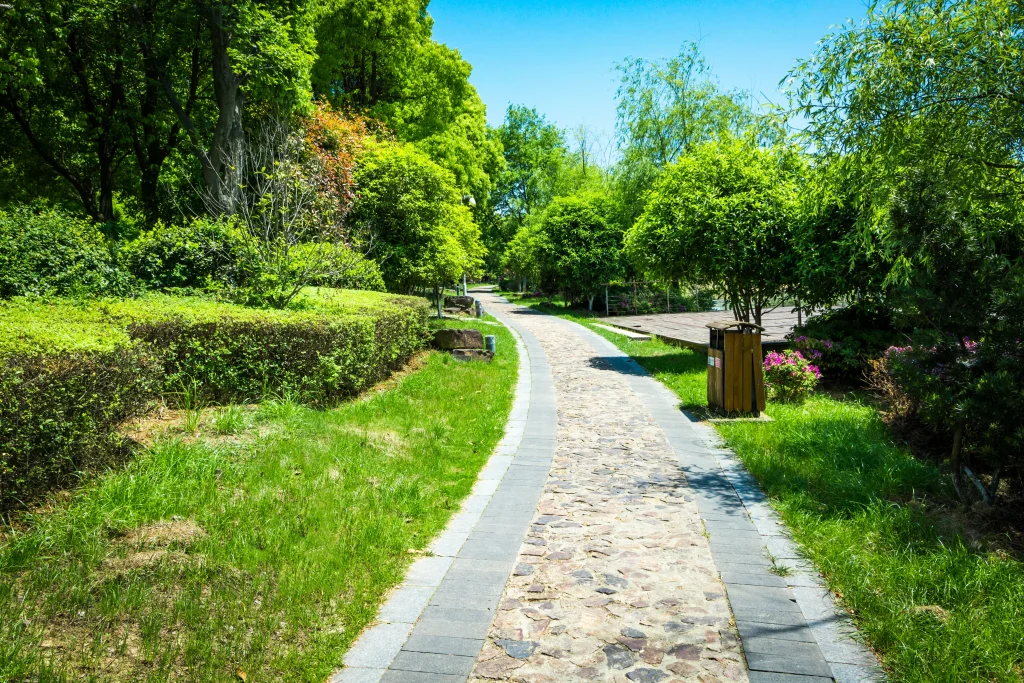
Rhododendron landscaping works along borders, whether you are defining the edge of a lawn, lining a walkway, or creating a transition between a patio and a planted bed. The evergreen structure keeps the border looking defined and purposeful year-round, while the spring blooms add a seasonal highlight that refreshes the entire outdoor space.
When planting along a walkway or path, consider the mature width of your chosen variety carefully. You want the border to feel lush and full without the plants eventually encroaching on the walking surface. Leaving adequate space from the start prevents the need for heavy cutting later and keeps the pathway comfortable and accessible.
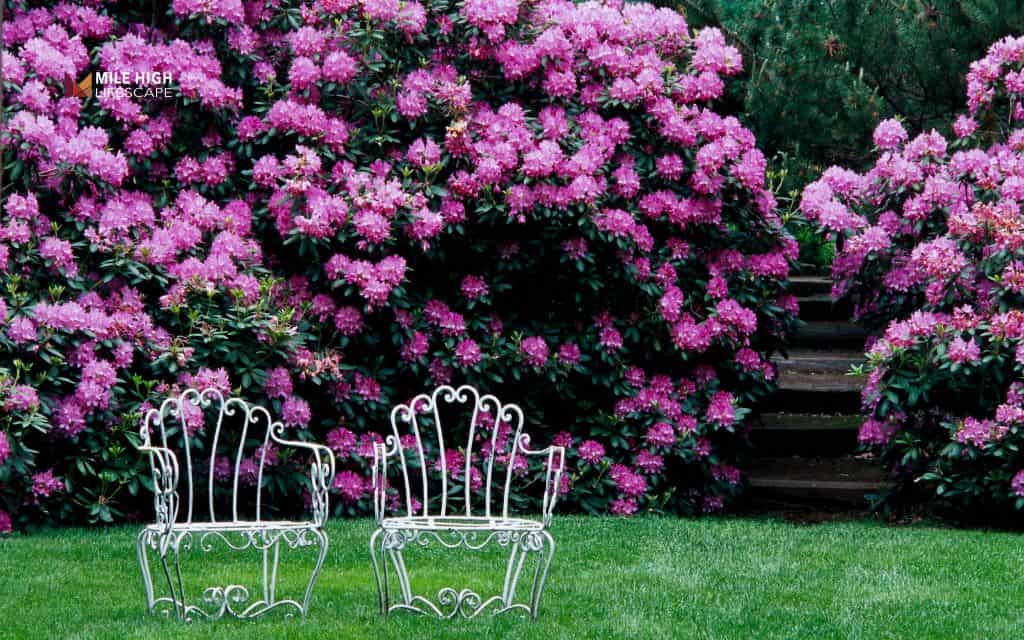
Combine rhododendrons with evergreen plantings
One of the most underrated rhododendron landscape uses is pairing them with other evergreen shrubs and trees to create a landscape that holds its structure and appeal through all four seasons. Many home gardens suffer from a feast-or-famine effect: gorgeous in summer, but bleak and bare through winter. An evergreen-forward planting strategy solves that problem.
Evergreen rhododendrons pair naturally with boxwood, American holly, leucothoe, mountain laurel, and compact conifers like dwarf spruce or arborvitae. Each plant brings its own leaf texture, color variation, and growth habit to the combination, resulting in a layered, full planting that looks intentional and professional regardless of the season.
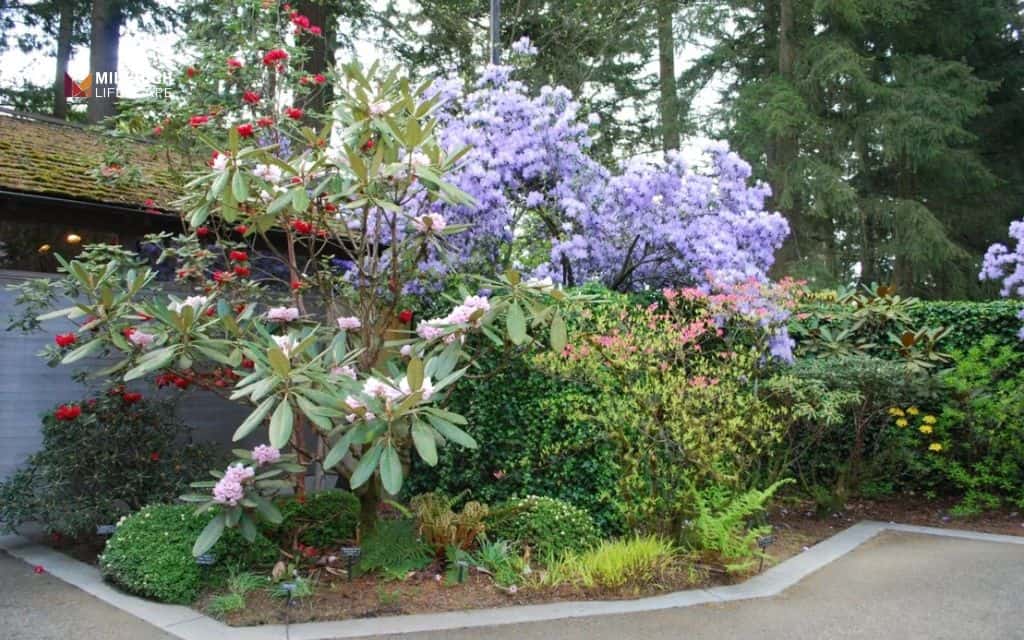
Use rhododendrons in layered landscape design
Professional landscape designers rely on the concept of layering, arranging plants at multiple heights to create depth, visual interest, and a natural, garden-like quality that flat, single-layer plantings cannot achieve.
Rhododendrons are a natural fit for this approach because their mid-sized growth habit places them perfectly between tall canopy trees and low groundcovers.
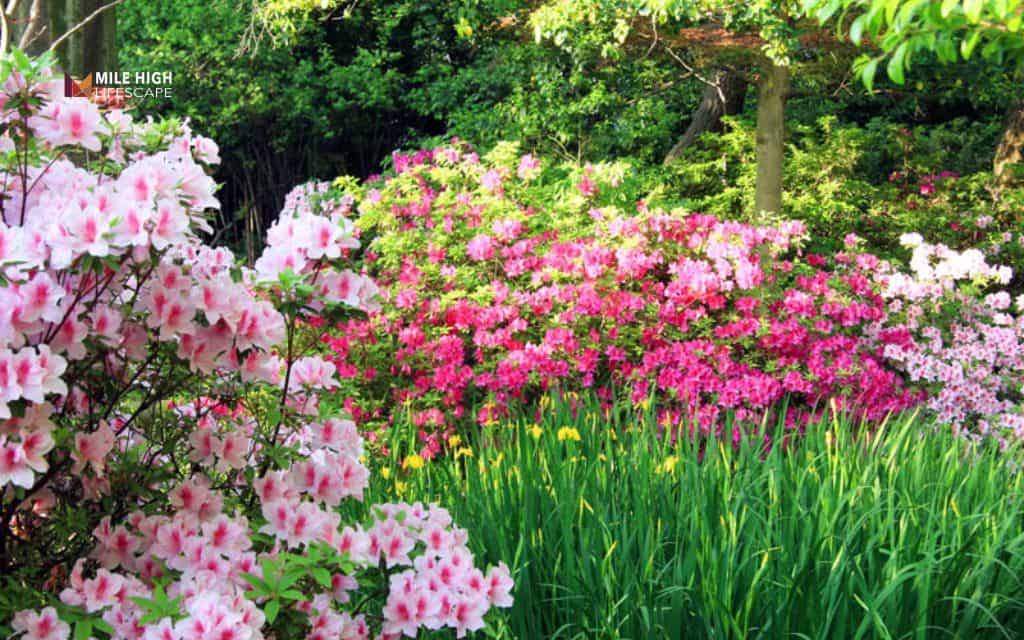
In a layered landscape design, tall trees provide the upper canopy and create the shade that rhododendrons love. Rhododendrons fill the middle layer, adding evergreen mass, structure, and seasonal bloom color.
Low-growing perennials, ornamental grasses, and groundcovers like pachysandra or creeping phlox complete the lower layer, covering the soil, suppressing weeds, and adding seasonal texture at ground level.
Things to consider when planting rhododendron
Getting the most from your rhododendron landscaping means thinking through a few key factors before you plant. Here is what to keep in mind as you plan your design.
Color palette
Rhododendrons come in an impressively wide color range: soft pink, lavender, purple, deep red, white, orange, and nearly every shade in between. Before selecting a variety, take a look at your home’s exterior color and the tones already present in your landscape.
| Exterior color | Rhododendron color suggestion |
| Red brick | White, pale pink, or lavender varieties |
| Gray or blue siding | Pink, purple, or magenta varieties |
| Tan or beige | Deep red or coral varieties |
| Dark charcoal or black | White, blush pink, or any bright color |
| Natural wood tones | Soft pink, white, or lavender varieties |
Sticking to 1 or 2 complementary colors in your rhododendron planting creates a cohesive, designed look. Repeating those colors in nearby annuals or perennials ties the planting together and gives the entire bed a polished, intentional feel.
Bloom period
The majority of rhododendrons bloom in spring, but the timing varies quite a bit across different varieties. Early-season bloomers can open their flowers as soon as late February or March, mid-season types peak in April and May, and late-season varieties carry color into June.
By selecting varieties from each bloom window, you can extend the flowering season significantly and keep your landscape looking vibrant for two months or more.
Height and mature size
Always research the mature size of a rhododendron variety before planting. These shrubs can range from dwarf cultivars under 2 feet tall to large, multi-stemmed specimens reaching 12 feet or more.
Compact types work well for borders, container-like groupings, and front-of-house plantings where scale and proportion matter most. Larger varieties belong in open spaces where they have room to develop their natural form without constant cutting to keep them in bounds.
Pairing with other plants
Since rhododendrons prefer shade and acidic soil, they pair most with plants that share those same preferences:
- Ferns add a soft, textural contrast to the bold rhododendron leaves
- Hostas provide dense foliage at the ground level and come in an almost endless range of leaf colors
- Hydrangeas, especially oakleaf hydrangeas, bring additional summer bloom color once the rhododendrons have finished
- Mountain laurel and pieris are especially compatible because they are acid-lovers too and bring their own interesting foliage and bloom cycles to the planting
Caring for rhododendron
Rhododendrons reward proper planting with relatively low maintenance once they are established. Here is a straightforward care guide to keep your plants healthy and blooming year after year.
Watering
Water deeply and consistently during the first two growing seasons while roots establish. After that, supplement rainfall during extended dry spells. Avoid keeping the soil constantly wet, as rhododendrons are susceptible to root rot in waterlogged conditions.
Mulching
Apply a 2- to 3-inch layer of shredded bark, pine needles, or wood chip mulch around the base of each plant. Mulch conserves soil moisture, moderates root temperature, and gradually acidifies the soil as it decomposes. Keep mulch a few inches away from the main stem.
Pruning
Prune immediately after flowering is complete, before the plant begins setting next year’s flower buds. Remove any dead, damaged, or crossing branches and lightly shape the plant if needed. Avoid heavy pruning, which can reduce next season’s bloom.
Fertilizing
Feed with a fertilizer formulated for acid-loving plants such as azalea and rhododendron fertilizer in early spring, just as new growth begins. Avoid over-fertilizing, which encourages excessive leafy growth at the expense of flowers.
Winter protection
In exposed locations, wrap young plants or newly planted specimens in burlap to protect against winter wind and sun. Anti-desiccant sprays applied in late fall can also help reduce moisture loss from evergreen leaves during cold, dry winters.
Conclusion
Rhododendron landscape uses are as varied as the plants themselves, and that versatility is a big part of what makes them such a rewarding choice for home gardeners.
The key to success is pairing the right variety with the right location: partial shade, acidic and well-drained soil, and shelter from harsh wind. Get those basics right, choose companion plants that share similar growing conditions, and your rhododendrons will reward you with decades of beauty that gets better with every passing year.
If you are ready to incorporate rhododendrons into your landscape and want expert guidance on design, plant selection, and installation, the team at Mile High Lifescape is here to help. Our experienced landscaping professionals serve Denver and the surrounding area with personalized design solutions that bring your outdoor vision to life.
Frequently asked questions (FAQs)
Where should rhododendrons be planted in a landscape?
Rhododendrons grow best in locations with partial shade, well-drained acidic soil, and protection from strong wind. North- or east-facing beds, woodland garden edges, and areas beneath the canopy of tall deciduous trees are all excellent choices for rhododendron landscaping. Avoid spots with heavy afternoon sun or poorly draining clay soil.
Can rhododendrons be used as a hedge?
Yes, rhododendrons are an excellent choice for a natural privacy hedge. Evergreen varieties provide screening year-round, and when they bloom in spring, they turn a functional hedge into a stunning garden feature. Choose upright, dense-growing cultivars and space them according to their mature spread for the best results.
Are rhododendrons good for front yard landscaping?
Rhododendrons are one of the best shrubs for front yard landscaping. As evergreen plants, they provide structure and visual appeal every month of the year, and their bold spring blooms create impressive curb appeal. Compact varieties work especially well as foundation plantings near entryways and along the front of the house.
What plants grow well with rhododendrons?
Plants that share rhododendrons’ preference for shade and acidic soil make the best companions. Ferns, hostas, astilbes, hellebores, hydrangeas, mountain laurel, and pieris all pair beautifully with rhododendrons in a garden bed. Evergreen shrubs like boxwood and compact conifers work well for year-round structure in mixed plantings.
Do rhododendrons require a lot of maintenance?
When planted in the right conditions, rhododendrons are relatively low-maintenance plants. Their basic needs include deep but infrequent watering during dry periods, a consistent layer of mulch, light pruning after flowering, and an annual application of acid fertilizer in early spring. Once established, they are far less demanding than many other flowering shrubs.