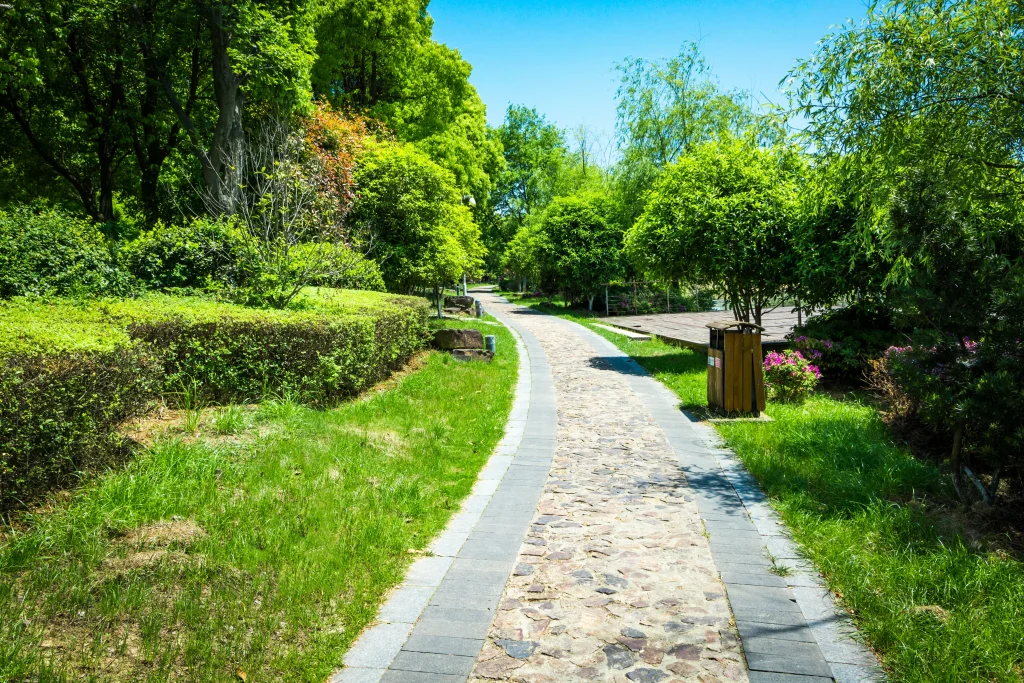
If you have ever stood in your yard wondering what plant could actually survive, look good year round, and solve a real problem, juniper may be a better fit than you realize . Juniper landscape uses are more varied than most homeowners realize. From covering bare slopes to framing a front entry, this tough evergreen works across dozens of design situations.
Whether you are just getting started or planning a full yard refresh, this guide walks you through 9 practical ways to put juniper to work, along with which varieties to choose and what mistakes to avoid.
Characteristics of juniper
Junipers are evergreen, meaning they hold their foliage all year long. Depending on the variety, that foliage ranges from deep green to blue gray and silver, giving you plenty of color options to work with. The leaves themselves are either needle-like or scale-like, which creates interesting texture in the garden.
One reason juniper works so well is its range of forms. You can find junipers that creep along the ground, mound into compact shrubs, or grow tall and upright like a narrow column. This versatility makes landscaping with juniper shrubs or trees possible in nearly any setting, from a tight urban front yard to a wide open rural slope.
Its well-known drought tolerance and resistance to heat, poor soil, and neglect, and you have a plant that earns its place in almost any landscape.
Why juniper is a go-to landscaping plant
Landscaping with juniper comes with several real advantages that keep it at the top of the list for designers and homeowners alike.
First, it is genuinely low maintenance. Once established, junipers need very little from you. No weekly watering, no constant pruning, no fertilizing schedule to worry about.
Second, the range of available forms means you are not locked into one look. You can use a creeping juniper as a groundcover, a mid-size shrub variety along a foundation, or an upright juniper tree as a privacy screen or vertical accent. That flexibility is hard to match with any single plant.
Third, evergreen structure is one of the most underrated things in a home landscape. When winter arrives and everything else goes dormant or bare, your junipers keep the yard looking intentional and alive. That year round presence is exactly what makes juniper for landscaping such a smart investment.
Which juniper shrub should I choose?
Choosing the right juniper variety is where many homeowners get stuck, but the decision becomes simple once you know what problem you are trying to solve.
- For ground cover: Creeping juniper is your best option. Varieties like Blue Rug and Blue Chip spread low and wide, making them ideal for slopes, large open areas, and spots where erosion is a concern.
- For medium shrubs: Sea Green Juniper and Pfitzer Juniper both grow into mid-size, arching forms that work beautifully along foundations, borders, and garden edges. These are some of the most commonly used varieties in front yard juniper landscaping because of their manageable size and graceful shape.
- For upright accents: Blue Arrow Juniper and Skyrocket Juniper grow tall and narrow, creating a strong vertical element without taking up much horizontal space. These are the go-to choices when you need a privacy screen, a formal accent, or a plant to frame an entryway.
9 creative juniper landscape uses for your yard
1. Solve bare spots with groundcover juniper
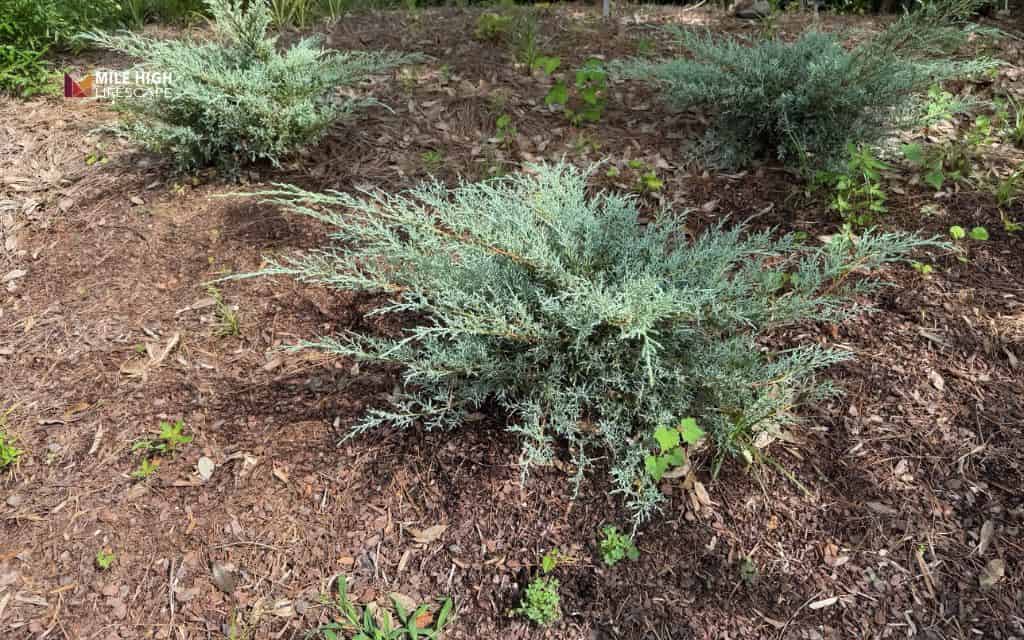
One of the most satisfying juniper landscape uses is simply filling in the places where nothing else wants to grow. Bare patches of dry, compacted, or poor soil are exactly where creeping juniper thrives.
Varieties like Blue Rug spread steadily outward, covering ground that would otherwise require constant replanting or mulch refreshes. Once it fills in, it suppresses weeds naturally and needs almost no water to keep going.
2. Control erosion on slopes
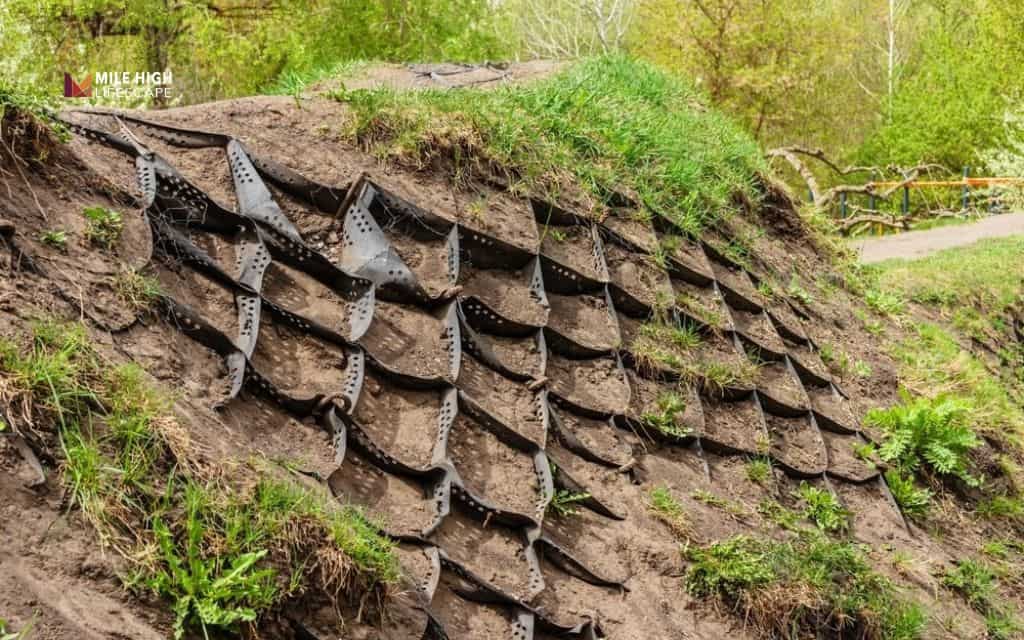
If you have a sloped yard, you already know the frustration of watching soil wash away after every rain. Landscaping with juniper on slopes is one of the most practical solutions available.
Creeping juniper develops a dense, fibrous root system that grips the soil and holds it in place. The spreading foliage adds a layer of protection that slows water runoff before it can carry soil away. Unlike retaining walls or ground fabric, juniper improves with age, growing fuller and more effective every season.
3. Create a low-maintenance front yard
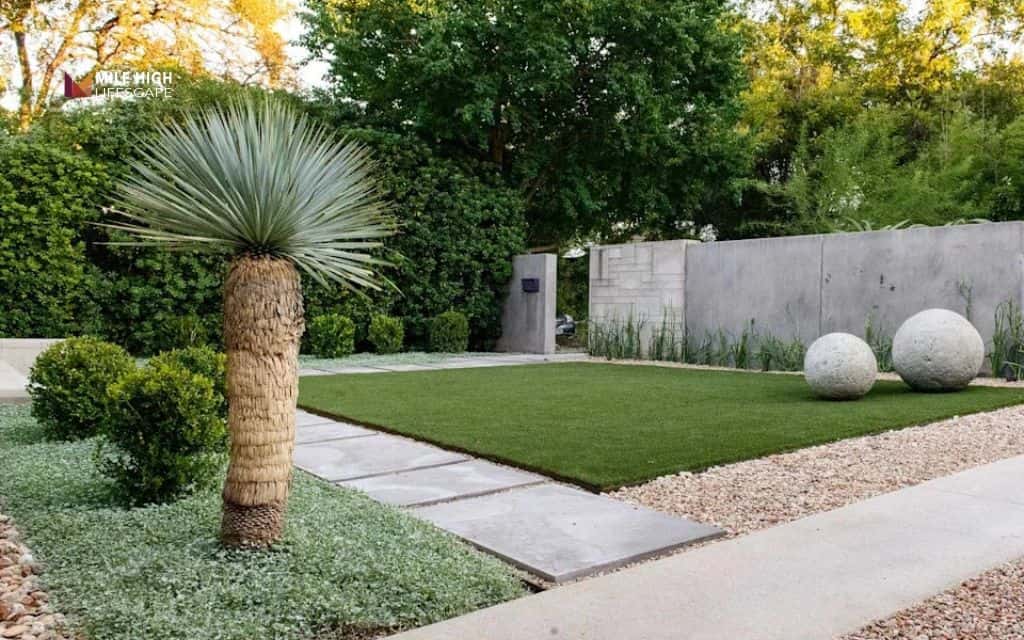
A combination of groundcover junipers and low growing shrub varieties can replace large sections of lawn with a planting that stays green, looks tidy, and survives drought without complaint. For homeowners dealing with water restrictions or simply wanting less upkeep, landscaping with junipers this way remains one of the smartest landscaping ideas with junipers you can act on today.
4. Build a natural privacy screen
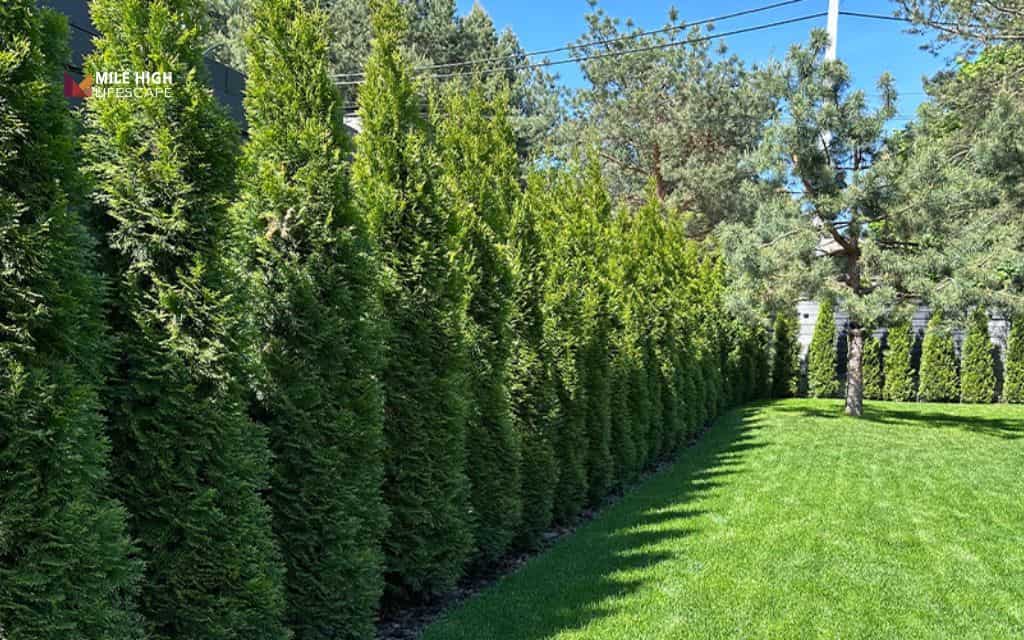
If you want to block a neighbor’s view, screen a utility area, or create a sense of enclosure in your yard, upright juniper trees are one of the best tools you have. Landscaping with juniper trees like Blue Arrow or Skyrocket gives you a tall, dense screen that stays green every month of the year.
Unlike a fence, a living screen of upright junipers adds natural beauty and softens the boundary rather than hardening it. Unlike many hedge plants, junipers need very little pruning to stay tidy, which means less work for you over the long term.
5. Add structure with upright juniper trees
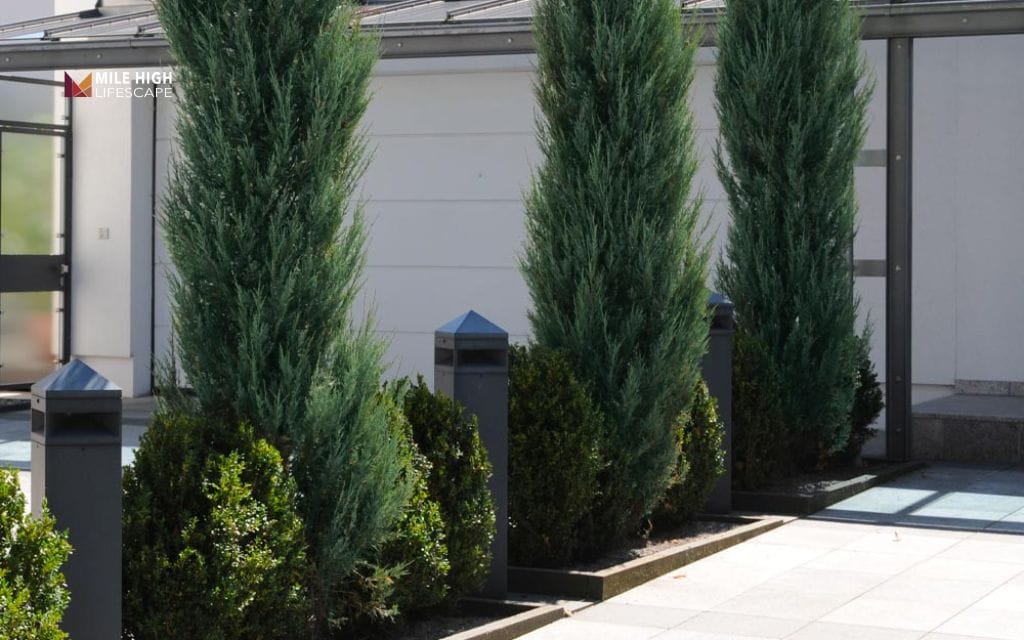
Even if privacy is not your goal, vertical elements are essential in good garden design. A flat landscape without height variation tends to feel incomplete, and that is exactly where juniper tree landscaping earns its place.
Tall, columnar junipers placed at corners, flanking a doorway, or anchoring the ends of a planting bed create what designers call a sense of structure. They pull the eye upward and give the yard a feeling of dimension that shorter plants simply cannot provide.
6. Define garden borders and edges
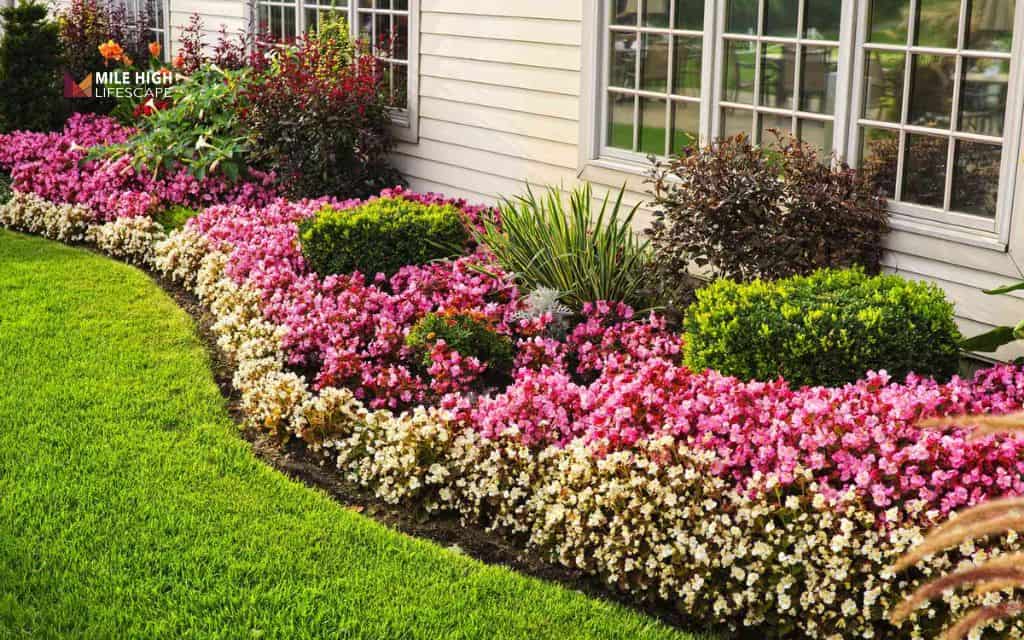
Compact juniper shrubs make excellent border plants because they hold their shape naturally and provide year round definition without a lot of intervention.
Placing a low to medium shrub variety along the edge of a walkway, driveway, or planting bed creates a clean visual line that keeps different areas of the yard organized. Unlike annual borders that require replanting each season, landscape juniper in a border position keeps working for years with only occasional light trimming.
7. Use juniper in rock gardens
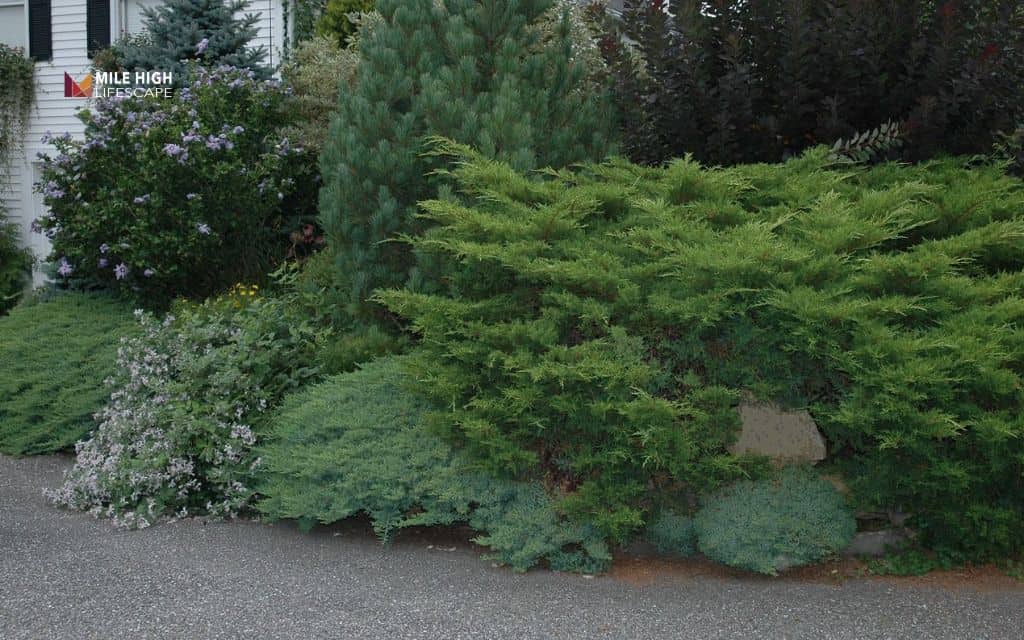
Junipers and rock gardens are a natural pairing. The plant’s preference for well-drained, lean soil makes it one of the best choices for the kind of gravelly, rocky conditions that challenge most other plants.
In a rock garden or xeriscape design, low growing and creeping junipers spread between stones and boulders in a way that looks completely natural. The blue and silver toned varieties are effective against gray or warm colored stone, creating a color contrast that enhances the overall composition.
8. Fill large spaces with evergreen mass planting
For wide open areas, sometimes the most effective landscaping with junipers involves planting a single variety in large groups. Mass planting creates a bold, cohesive look that reads well from a distance and ties a large space together visually.
The key is choosing a variety that is appropriate for the scale of the space. A large area calls for a juniper with good spread, while a tighter space may need something more compact and ties a large space together visually is exactly why mass landscaping juniper has become a go-to approach for large residential properties
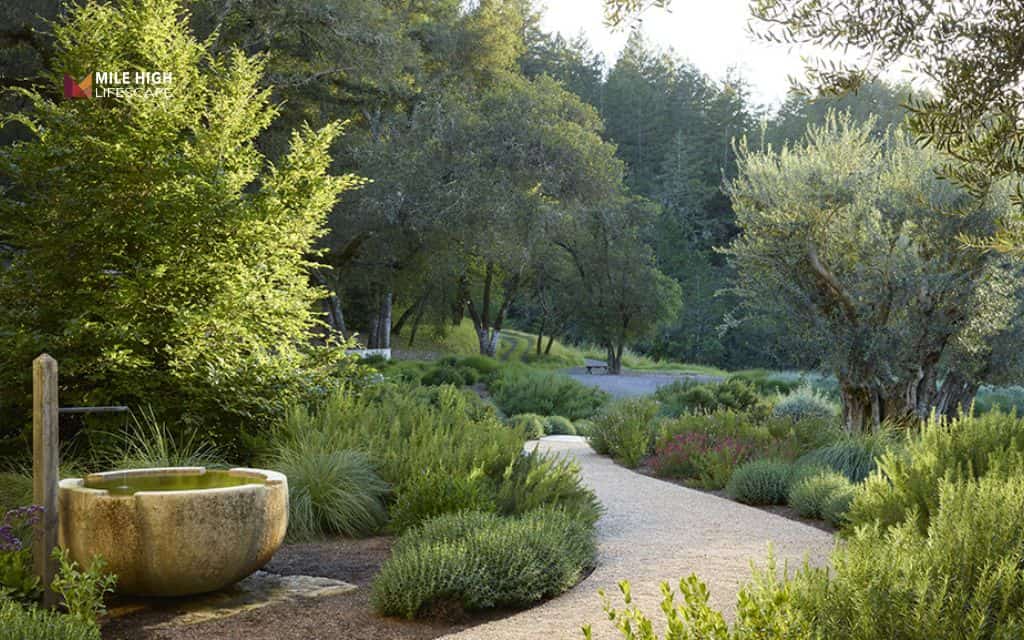
9. Pair juniper with other drought-tolerant plants
Juniper works beautifully with ornamental grasses, lavender, yarrow, salvia, and low-growing perennials that share its preference for full sun and well-drained soil.
These combinations create layered compositions with contrasting textures and colors that remain interesting through all 4 seasons. The soft, feathery look of ornamental grass plays well against juniper’s dense, structured foliage. The purple of lavender or salvia adds color that juniper’s green and blue tones cannot provide on their own.
When mixing plants, always check that the companions have similar sun and water needs. Pairing juniper with moisture-loving plants is a common mistake that leads to root rot in the juniper and underperformance across the whole planting.
How to take care of juniper
Planting tips
Juniper wants full sun. When you plant in shade, you tend to get open, leggy growth that does not perform as well in the landscape.
Soil drainage is the single most critical factor for success. Juniper will not tolerate wet feet. If your soil holds water, amend it before planting or choose a raised bed or berm situation.
Space plants based on their mature size, not their size at planting. Crowding is one of the most common beginner mistakes.
Watering
Water new plantings regularly for the first season to help roots establish. After that, established junipers are remarkably self-sufficient. Overwatering is actually the most common mistake homeowners make with junipers.
If you are watering on a schedule regardless of conditions, you are likely watering too much. Let the plant tell you when it needs water rather than following a rigid routine.
Soil and mulch
Junipers prefer sandy or well-drained soil and do not need rich, heavily amended beds. A light layer of mulch around new plantings helps retain moisture during establishment, but avoid piling mulch against the stems. Thick mulch at the base encourages the moisture and warmth that leads to rot and disease.
Pruning
Junipers require minimal pruning, which is part of their appeal. Light trimming to maintain shape is fine, but avoid cutting back into old wood. Juniper does not regenerate from bare wood the way some shrubs do, so cutting too far back creates permanent bare spots that never recover. Less is always more when it comes to pruning juniper.
Common juniper pests and diseases
Junipers are tough, but they are not completely immune to problems. Knowing what to watch for helps you catch issues early before they become serious.
- Spider mites are the most common pest concern, especially in hot, dry conditions. They cause foliage to look bronze or dusty. A strong spray of water can knock them back, and miticides are available for heavier infestations.
- Bagworms feed on juniper foliage and can cause significant damage if left unchecked. Hand-pick bags in late fall or winter before eggs hatch, and treat with appropriate insecticides in early summer when larvae are young.
- Juniper blight causes tip dieback and browning, typically in humid conditions with poor airflow. Remove affected branches promptly and avoid overhead watering.
- Root rot is almost always caused by poor drainage or overwatering. Prevention is far easier than treatment. Plant in well-drained soil and avoid the urge to overwater, and root rot will rarely be a problem.
Simple design tips for using juniper
- Use repetition for a cohesive look. Repeating the same juniper variety throughout a planting bed or across a front yard creates visual rhythm and makes the space feel intentional.
- Combine different heights for depth. A groundcover juniper at the front, a mid-size shrub in the middle, and an upright variety at the back creates the layered look that characterizes professional landscape design.
- Pair with gravel or rock for drainage and contrast. The combination of stone and juniper looks natural and ensures the soil drainage that juniper needs to thrive.
- Avoid overcrowding. Give each plant the space it needs to reach its mature size. Crowded junipers develop poor airflow, which invites disease and creates a dense, unhealthy mess that is difficult to fix later.
Conclusion
Junipers are one of the most versatile and problem-solving plants available for home landscapes. They cover bare ground, stabilize slopes, frame entries, create privacy, anchor borders, and thrive in rock gardens and water-wise designs. They do all of this while requiring remarkably little from the homeowner once established.
The key to success is choosing the right variety for the right problem and planting it correctly from the start. Get those two things right, and juniper will reward you with year round structure, color, and low-maintenance beauty for many years to come.
Ready to transform your yard with juniper? Contact Mile High Lifescape today for a personalized design consultation, or explore our guide to drought-tolerant landscaping ideas for more inspiration.
Frequently asked questions (FAQs)
Are junipers easy to care for?
Yes, junipers are among the easiest landscape plants to maintain. Once established, they require minimal watering, little to no fertilizing, and only occasional light pruning. The main thing they need is a location with full sun and well-drained soil.
Which juniper is best for ground cover?
Creeping juniper varieties like Blue Rug and Blue Chip are the top choices for ground cover. They spread low and wide, cover bare soil quickly, suppress weeds, and handle slopes and erosion very well.
How do you prevent juniper diseases?
The best prevention is good planting practices. Ensure proper drainage, provide good airflow by not overcrowding plants, avoid overwatering, and do not pile mulch against the base of stems. Remove any affected branches promptly when you notice browning or dieback.
What not to plant near juniper?
Avoid planting moisture-loving plants near juniper, as their watering needs will conflict. Plants that prefer consistently moist or wet soil, such as hostas, astilbes, or many ferns, are poor companions for juniper. Also avoid planting near apple and crabapple trees, as these can host cedar-apple rust, a fungal disease that affects junipers.
What are common problems with junipers?
The most common problems are overwatering and poor drainage, which lead to root rot. Spider mites and bagworms are the most frequent pest issues. Juniper blight can cause tip dieback in humid conditions with poor airflow. Most of these problems are avoidable with proper site selection and planting practices.