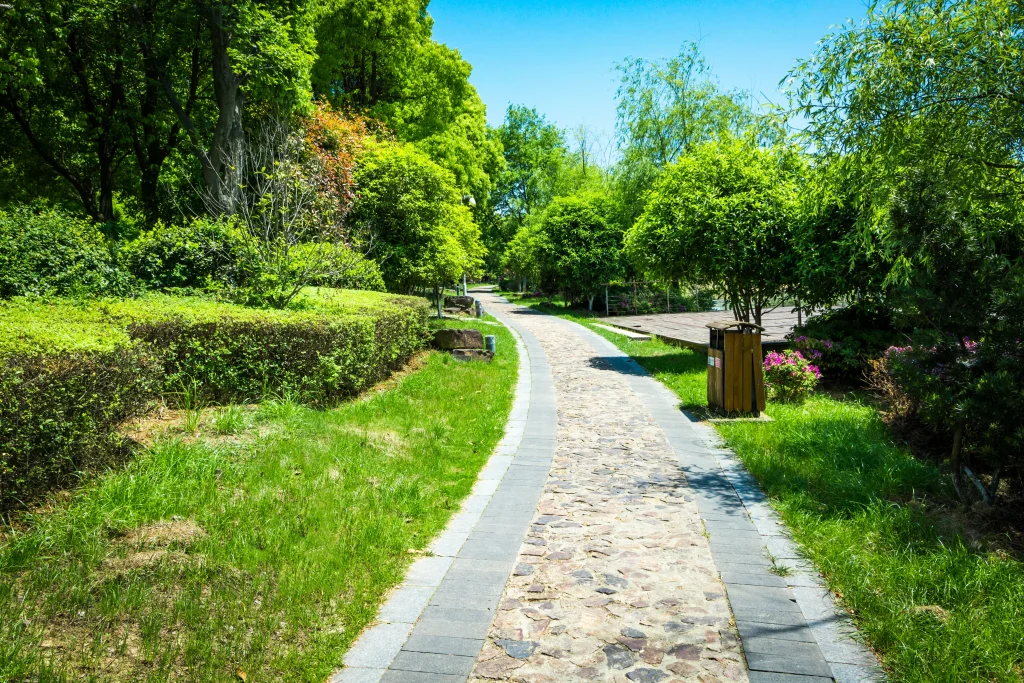
A well-designed landscaped patio can completely transform the way you enjoy your outdoor space. Whether you have a compact urban backyard or a sprawling suburban yard, the right combination of plants, paving and patio ideas, and thoughtful layout can turn a plain concrete slab into a lush garden retreat you actually want to spend time in.
This guide walks you through 15 inspiring landscaped patio ideas, practical planning tips, and plant suggestions to help you create the outdoor space you have always dreamed of.
How to plan a landscaped patio
Before you start shopping for pavers or plants, a little planning goes a long way. The most beautiful patio designs are built on smart decisions made early in the process.
Sun and shade conditions
The amount of sunlight your patio receives each day shapes every design choice that follows. Full sun patios call for heat-tolerant plants like lavender, rosemary, and ornamental grasses that thrive without extra water. Shady patios open the door to lush ferns, hostas, and rich green foliage plants that prefer cooler, filtered light.
If your patio gets too much afternoon sun, consider adding a pergola or planting a small tree nearby. Even a simple shade structure can make an uncomfortable patio feel like a cool garden escape.
Patio size and layout
The size of your space determines how you divide and use it. Small patios benefit from vertical planting, raised planters, and clean paver patios ideas that create order without overcrowding. Larger patios work beautifully with defined zones for dining, lounging, and entertaining, with layered landscaping that creates depth and interest throughout.
Curved edges are a design trick worth borrowing from professional landscapers. They soften the sharp lines of hardscape and make the transition between pavers and planting beds feel natural and intentional.
Maintenance preferences
Be honest about the time you have for upkeep. Gravel combined with drought-tolerant plants creates a low-maintenance landscaped patio that stays attractive with minimal effort. If you love flowers and lush seasonal color, plan for a little more regular attention. Matching your planting style to your actual lifestyle means you will enjoy your patio instead of feeling overwhelmed by it.
15 landscaped patio ideas for a dream garden retreat
1. Create a cozy fire pit retreat
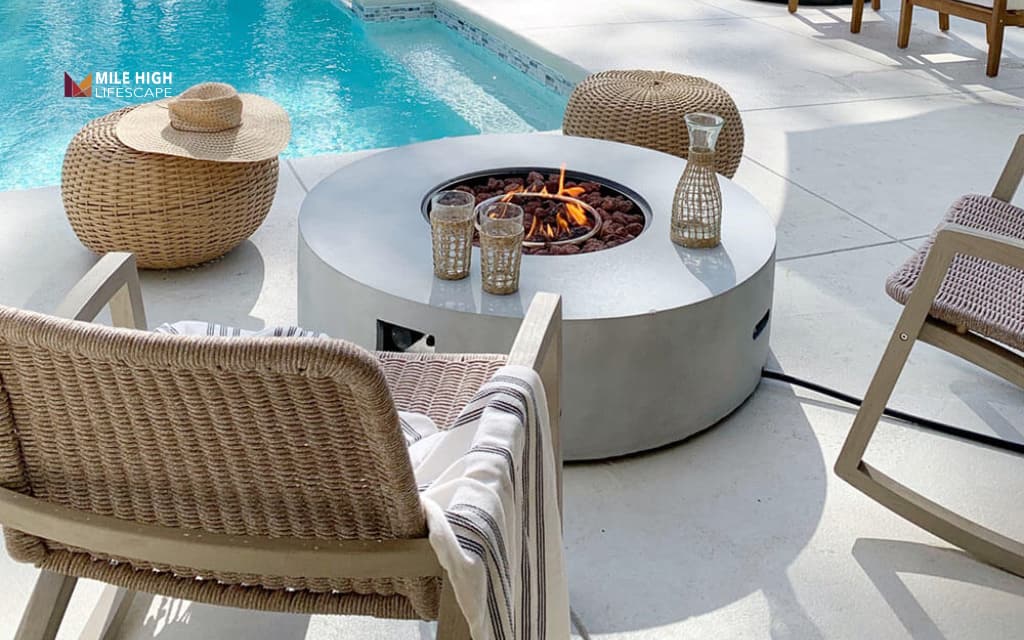
A fire pit is one of the most popular additions to any backyard patio design, and for good reason. It creates a warm, welcoming focal point that draws people together and makes the space usable well into the cooler months of the year.
Surround your fire pit with comfortable seating arranged in a relaxed circle. Use flagstone or natural stone pavers design ideas to define the area underfoot, and soften the edges with low-growing ornamental grasses or creeping thyme. This simple setup turns an ordinary backyard into an evening gathering spot the whole household will love.
2. Design a serene garden oasis
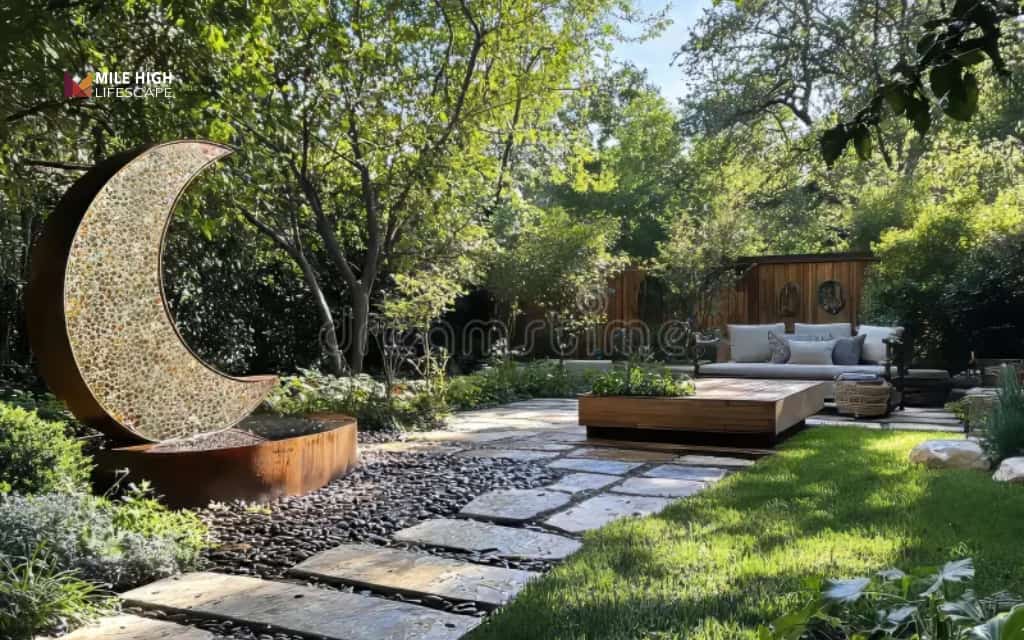
If peace and privacy are your priorities, this approach is for you. A garden oasis patio surrounds the seating area with dense, layered planting that creates a sense of enclosure without feeling closed in.
Think tall ornamental grasses at the back, mid-height flowering shrubs in the middle, and low groundcovers spilling over the edges of your patio pavers ideas. Add a small water feature for gentle background sound, and the result feels genuinely spa-like. This style works especially well in yards with pavers that need a little softening around the edges.
3. Build an inviting poolside patio retreat
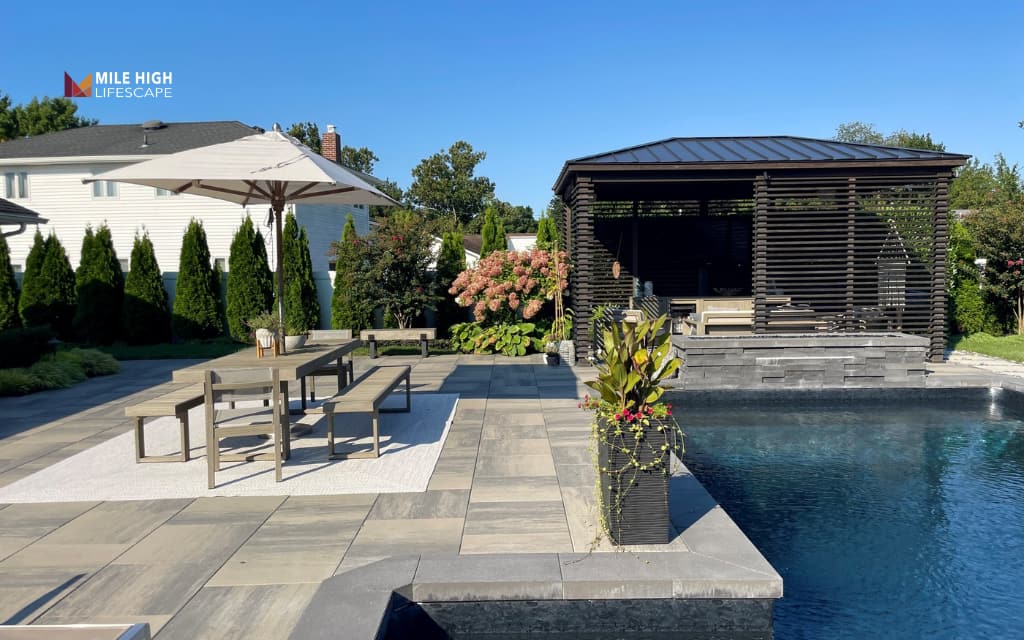
A poolside patio deserves thoughtful landscaping that bridges the gap between water and land. The goal is to make the space feel like a private resort rather than just a concrete surround.
Use heat-tolerant tropical plants like agave, ornamental banana, or tall ornamental grasses to frame the pool area. Incorporate backyard pavers design ideas using slip-resistant natural stone or textured concrete pavers to define the deck area safely. Add shade with a pergola or large market umbrella, and your poolside patio becomes a destination all summer long.
4. Create defined outdoor living rooms
One of the most effective landscaping patio ideas for larger spaces is to treat the patio like a series of outdoor rooms. Just as you would divide the inside of your home into a living room, dining room, and kitchen, you can create intentional zones outside.
Use different paving materials or patterns to visually separate each area. A gravel section might serve as a casual lounge zone, while a structured stone patio area becomes your dining space. Low hedges, raised planters, or a change in ground level can also act as natural dividers between zones without closing the space off completely.
5. Add dynamic entertainment zones
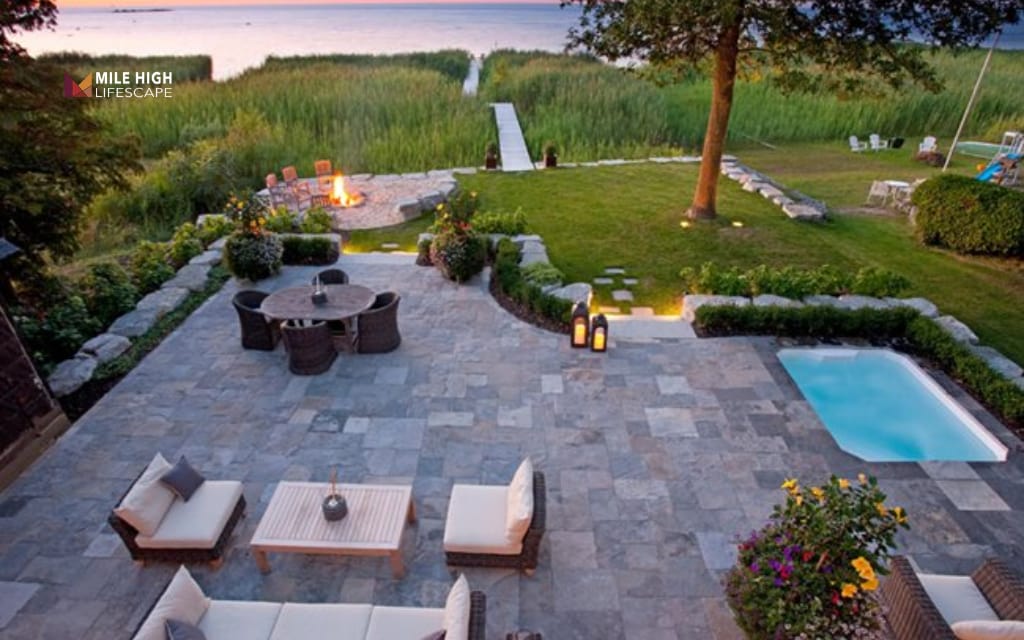
If you love to host, your landscaped patio should be built around that lifestyle. An entertainment-focused patio combines a dedicated cooking or grilling area, comfortable seating for groups, and enough open space for guests to move around freely.
Ideas for patios with pavers work particularly well here. Use large-format pavers for the main entertaining floor and smaller accent stones to frame the cooking area. Add low-maintenance perimeter planting like boxwood borders or ornamental grasses to give the space a finished, polished look without demanding too much of your time between gatherings.
6. Use elevated or tiered patio spaces
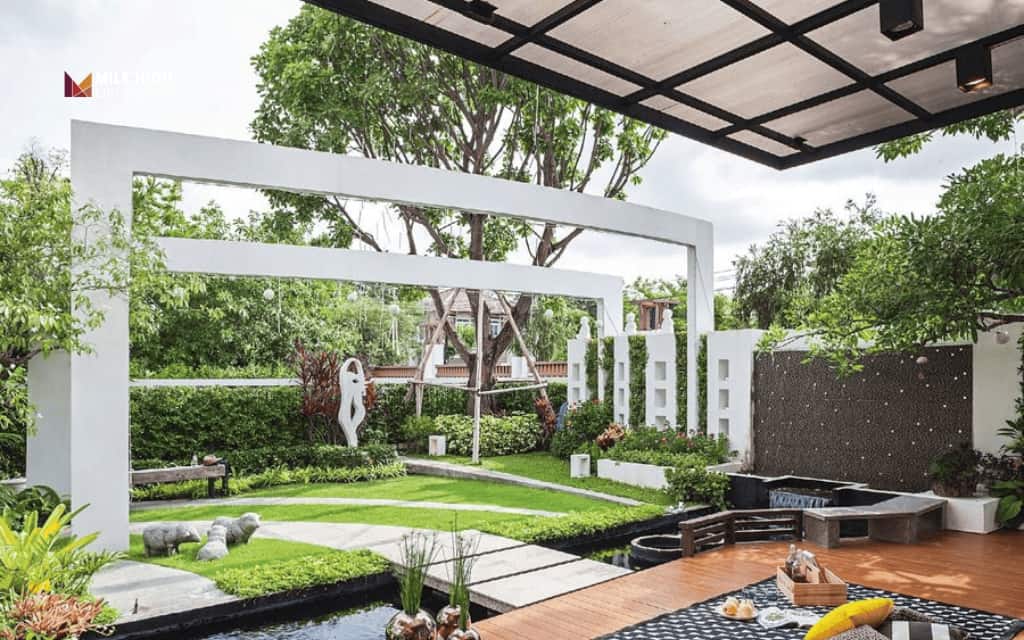
Tiered patios are a smart solution for sloped yards and a stunning design choice for flat ones. By building two or more levels connected by steps or retaining walls, you naturally separate different patio functions while adding architectural interest.
Yard paver ideas shine on tiered designs because the transition from one level to the next creates an opportunity to use contrasting materials, colors, or patterns. Plant the retaining walls with trailing groundcovers or flowering perennials to soften the hardscape edges and make each tier feel intentionally landscaped.
7. Incorporate integrated water features
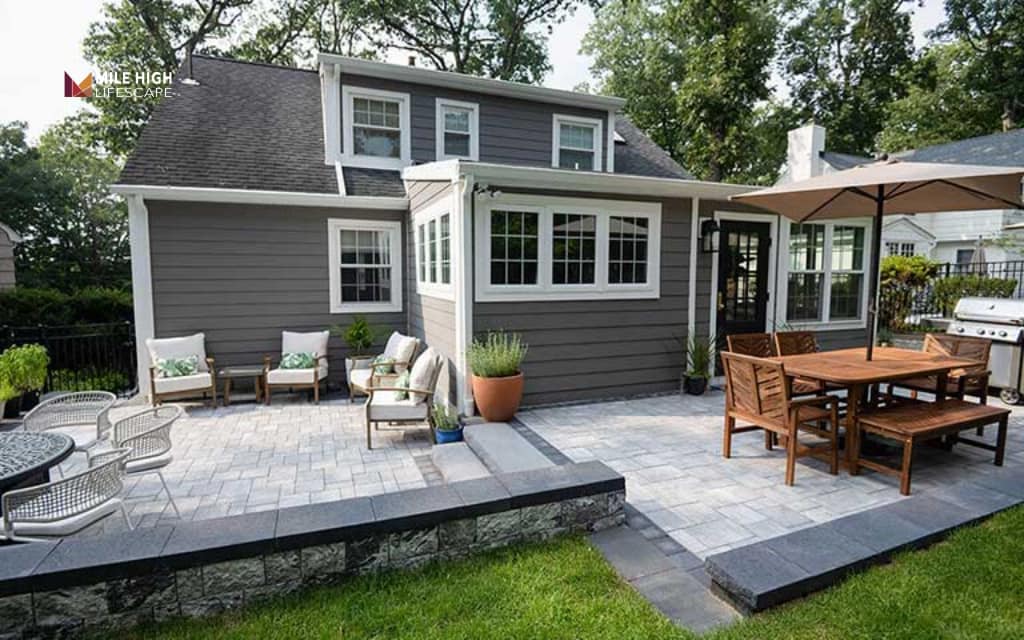
Water features add a sensory dimension to any landscaped patio that plants and pavers alone cannot replicate. The sound of gently moving water creates an immediate sense of calm and masks unwanted background noise from streets or neighbors.
A small fountain, pondless waterfall, or even a simple bubbling stone feature can transform a patio from attractive to genuinely tranquil. Position the water feature where you can enjoy it from the main seating area, and surround it with moisture-loving plants like Japanese iris, horsetail, or creeping Jenny for a naturalistic feel.
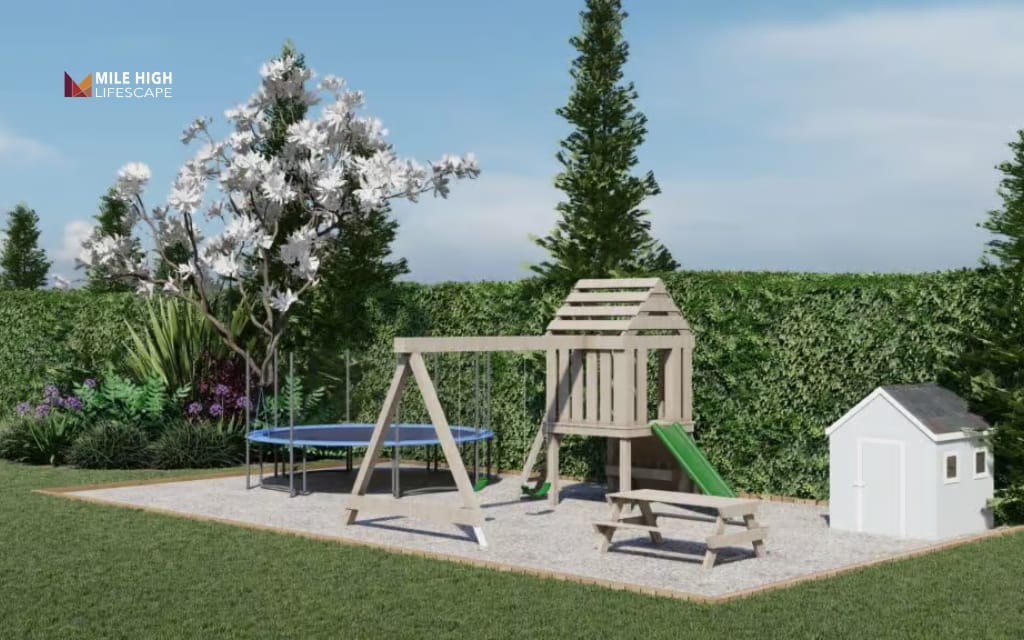
8. Design a patio with dedicated play areas
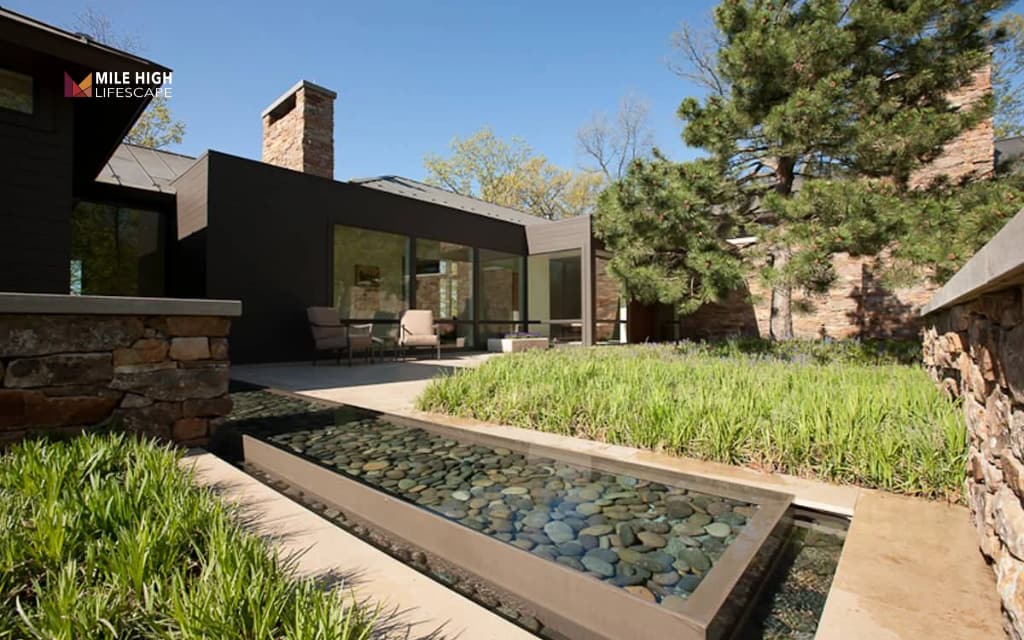
Family-friendly landscaped patios work best when adult entertaining and children’s play spaces are clearly defined but still connected. This approach means adults can relax and keep an eye on children at the same time.
Use backyard simple paver patio ideas to create a stable, easy-to-clean surface for the main seating area, and transition to soft turf or rubber mulch in the play zone. Keep planting to the borders and background rather than within reach of active children, choosing tough, non-toxic species like ornamental grasses, lavender, or native shrubs.
9. Add elegant walkways and garden paths
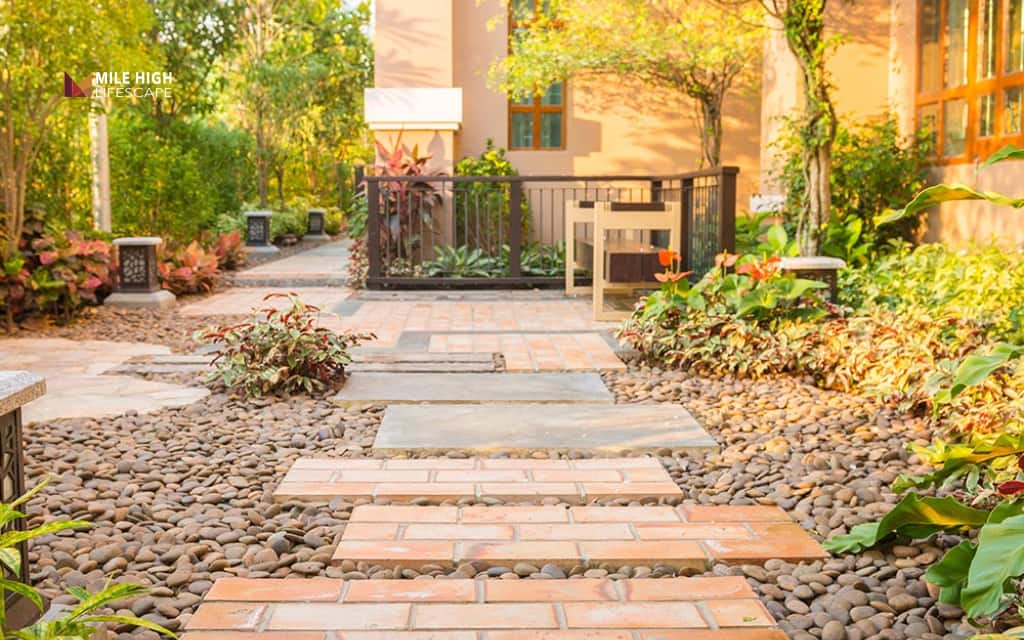
A landscaped patio feels more intentional and inviting when it connects naturally to the rest of the yard through well-designed walkways and garden paths. Paths guide the eye, encourage exploration, and make the overall landscape feel larger and more cohesive.
Consider extending your paving and patio ideas outward from the main patio in the form of stepping stone paths through garden beds, gravel walkways lined with low border plants, or formal stone paths edged with boxwood. The transition from structured patio to wandering garden path is one of the most satisfying design moments in outdoor living.
10. Upgrade the patio with stylish flooring
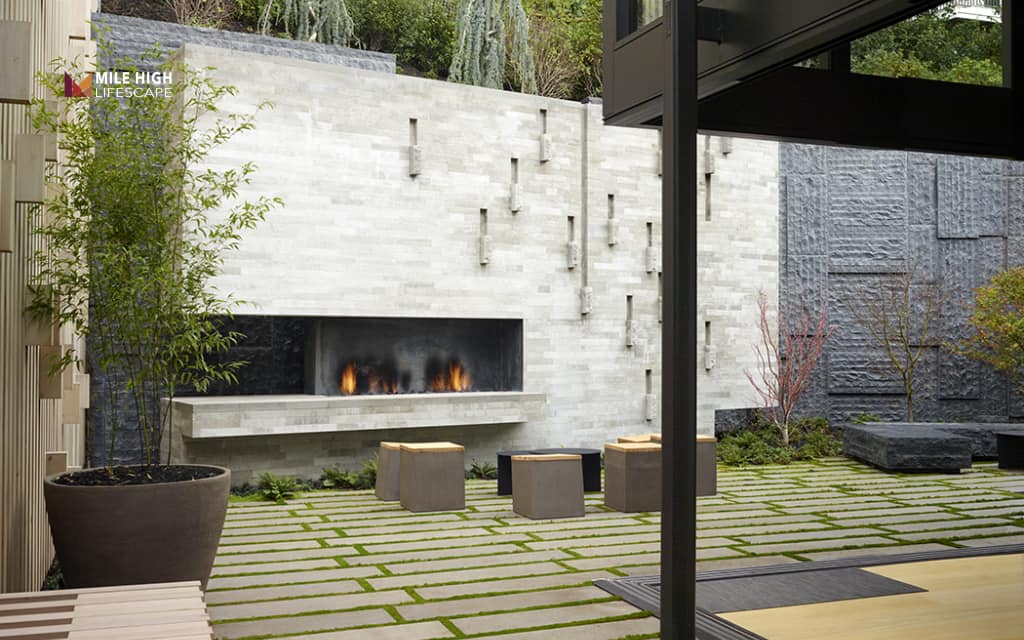
The flooring you choose sets the tone for the entire patio design. Paver patios ideas offer enormous variety, from classic brick and natural slate to modern large-format concrete and rustic flagstone, each creating a very different aesthetic.
For a warm, timeless look, consider irregular natural flagstone with groundcover plants like thyme or moss filling the gaps. For a clean, contemporary feel, large square concrete pavers laid in a grid pattern with tight joints deliver a sleek result. The flooring does not just define the look; it also sets the maintenance expectation, so choose a material you are genuinely happy to live with for years.
11. Customize with multi-material spaces
Combining multiple materials in one patio design creates a richer, more layered result than using a single surface throughout. This approach is popular in landscape design because it allows you to define different areas while keeping the overall space visually connected.
Try pairing wood decking with stone pavers for a mix of warmth and structure. Use gravel as a transitional material between the paved patio and the garden beds. Concrete, brick, decomposed granite, and timber each bring their own texture and character, and combining two or three thoughtfully creates a designer-quality outdoor space without an overwhelming budget.
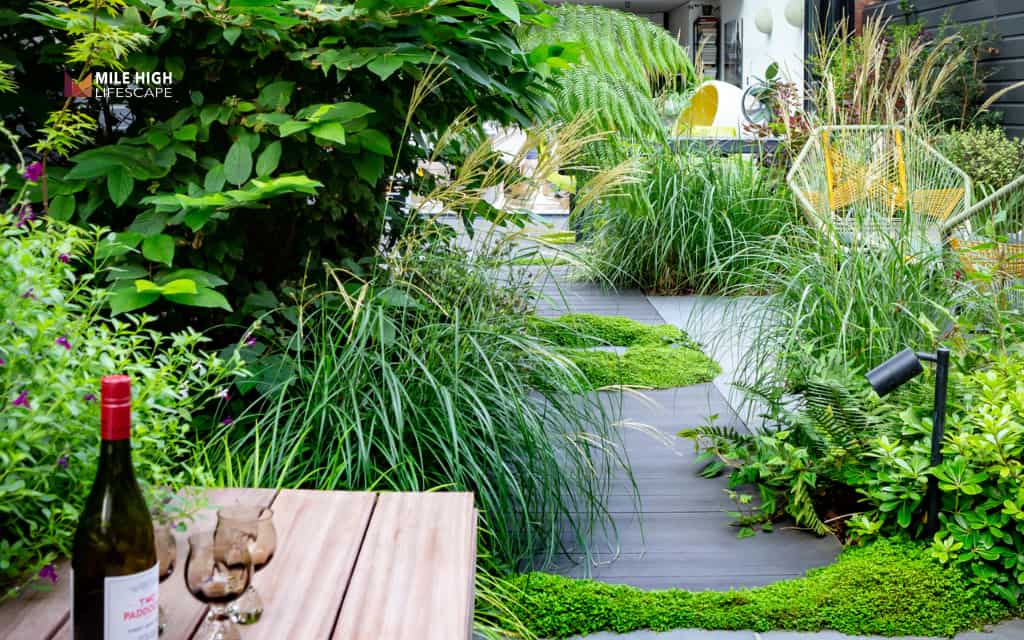
12. Surround the patio with layered planting
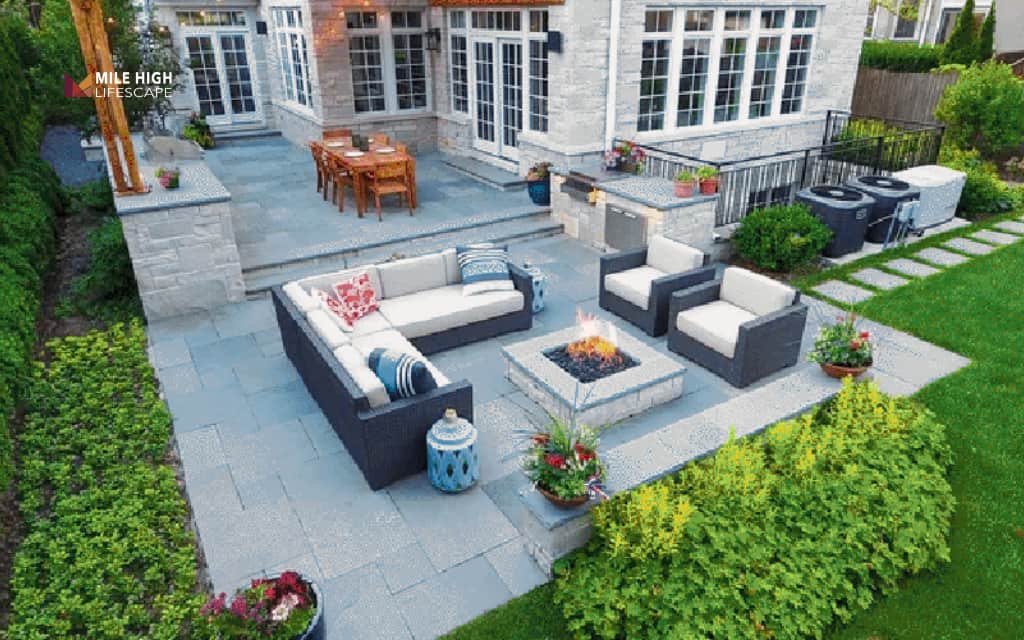
Layered planting around the perimeter of your patio is one of the most effective ways to make a landscaped patio feel complete. Rather than placing a single row of plants along the edge, think in layers: tall plants at the back, medium shrubs in the middle, and low groundcovers or border perennials at the front.
This approach softens hard paving edges, adds seasonal color and fragrance, and creates the sensation of sitting inside a garden rather than next to one. Great plant choices for patio borders include hydrangea, lavender, ornamental grasses, rosemary, and climbing roses trained up trellises or pergola posts.
13. Add pergolas and shade structures
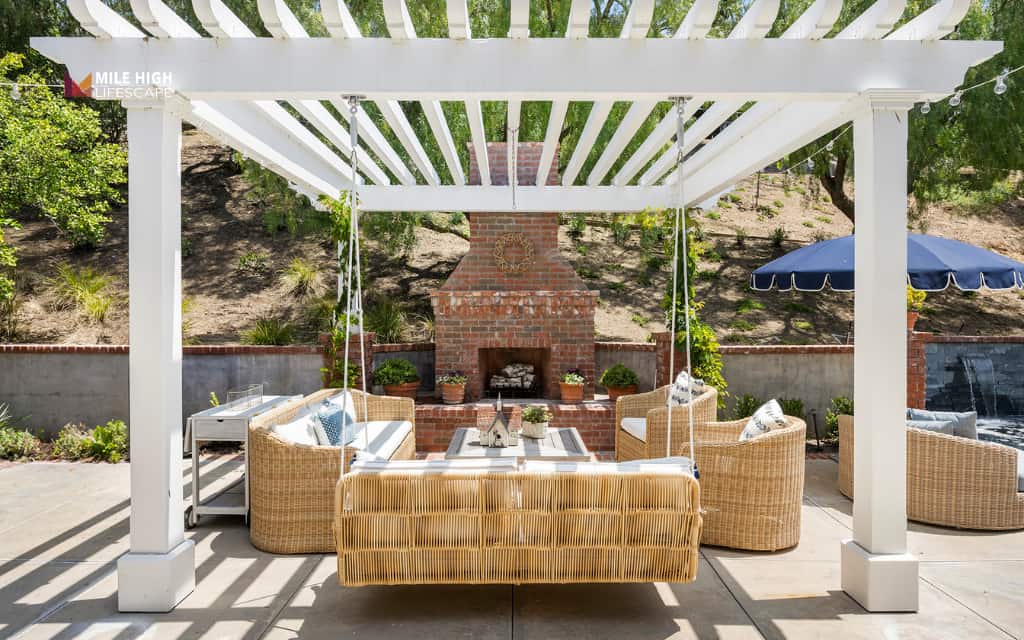
A pergola is one of the most transformative additions you can make to a landscaped patio. It provides practical shade during hot summer afternoons, adds height and architectural character to the overall design, and gives climbing plants a beautiful structure to grow across.
Wisteria, climbing roses, jasmine, and clematis are all excellent choices for pergola coverage. Over a few seasons, a pergola planted with climbing vines becomes a stunning overhead garden canopy that makes the patio feel sheltered, private, and deeply romantic. For year-round usability, consider adding a retractable shade sail or waterproof canopy to the pergola structure.
14. Use lighting to create evening atmosphere
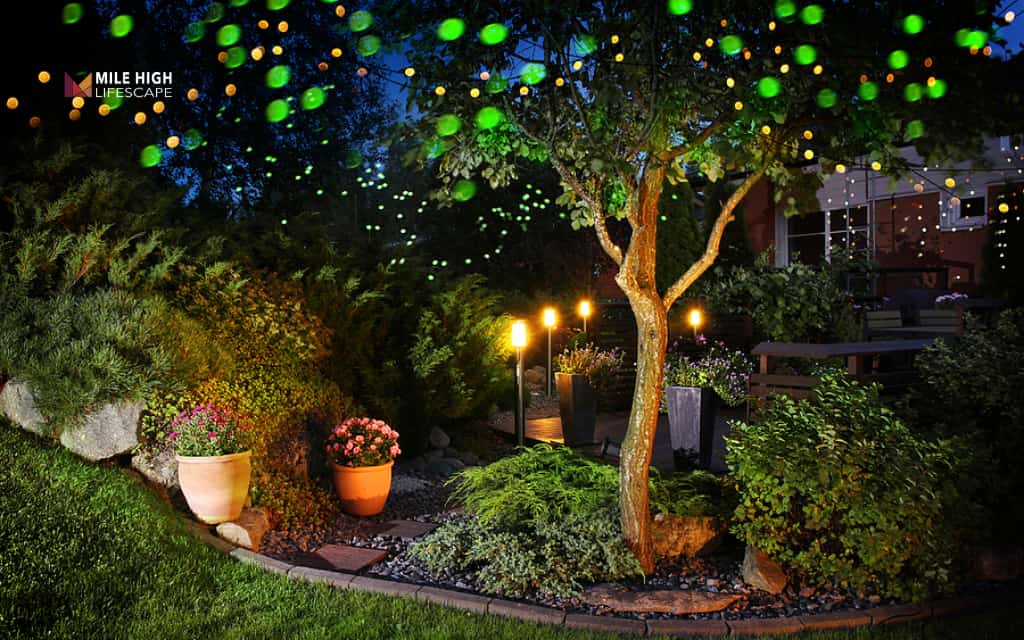
Good lighting extends the usable hours of your landscaped patio and transforms the mood of the space after dark. Strategic outdoor lighting highlights your favorite plants, defines pathways safely, and creates a warm, intimate atmosphere that no amount of daytime design can fully replicate.
String lights draped across a pergola, low-voltage path lighting along pavers, and uplighting aimed at specimen trees or architectural plants are all relatively simple and affordable additions. Solar-powered options have improved significantly in recent years and offer a low-effort solution for most residential patio lighting needs.
15. Create a low-maintenance garden patio
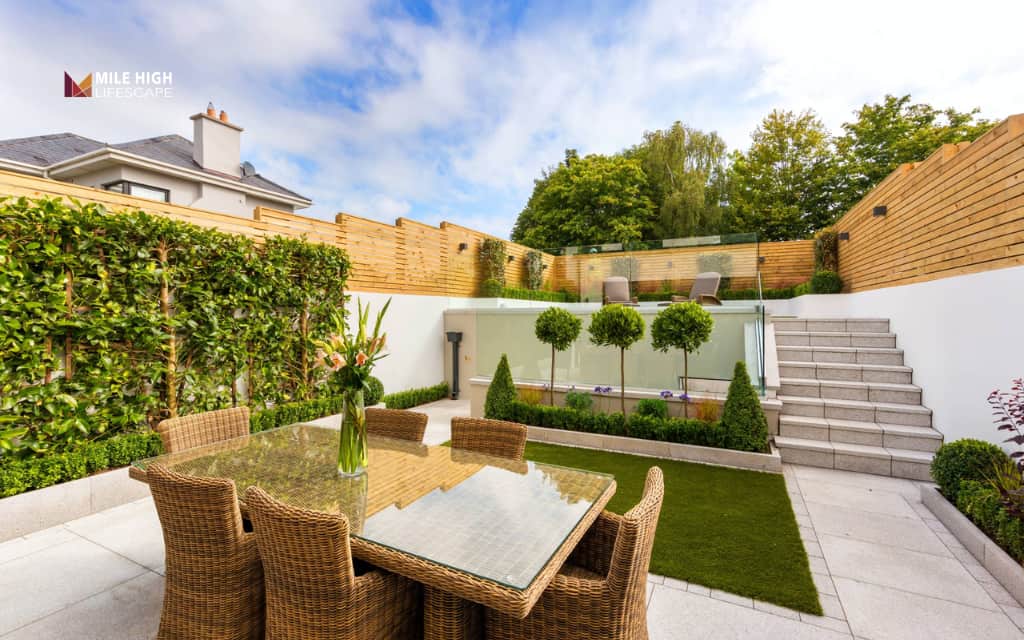
Not every homeowner wants to spend their weekends watering, weeding, and pruning. A low-maintenance landscaped patio is a completely valid design goal, and it is entirely possible to achieve a beautiful result without heavy ongoing effort.
The key is choosing the right materials and plants from the start. Gravel or decomposed granite requires almost no upkeep and looks great year-round. Drought-tolerant plants like lavender, ornamental grasses, agave, and native perennials thrive with minimal watering and seasonal care. A simple, clean backyard simple paver patio design with low-maintenance border planting delivers lasting beauty without the burden.
Read more: 25 patio landscape ideas that turn any backyard into a relaxing retreat
Best plants for landscaped patios
Choosing the right plants is what separates a landscaped patio from a plain outdoor floor. The plants you select should match your sun exposure, your maintenance comfort level, and the overall style of your design.
- Lavender
- Boxwood
- Hydrangea
- Ornamental grasses
- Ferns
- Rosemary
- Climbing vines such as wisteria, jasmine, and clematis
When selecting plants, always consider sun exposure first. A plant that thrives in full sun will struggle and look poor in deep shade, and vice versa. Combine plants with overlapping bloom times so your patio stays colorful from early spring through late fall.
Simple patio design tips
Even the most beautifully selected plants and materials can fall flat without a thoughtful overall composition. Keep these principles in mind as you plan:
- Repeat plants and materials throughout the design to create visual cohesion and rhythm
- Mix soft landscaping with structured hardscape so neither element dominates the other
- Include at least one clear focal point, whether a specimen plant, water feature, or fire pit
- Balance your design goal with your actual maintenance level and choose accordingly
- Start small and expand the planting gradually as you get to know your space
Conclusion
The best landscaped patios succeed because they bring together lush planting, beautiful hardscape, and a genuine understanding of how the space will be used day to day. Whether your style leans toward a formal Mediterranean courtyard, a relaxed cottage garden, a sleek modern terrace, or an effortlessly low-maintenance retreat, the same principles apply: plan the layout thoughtfully, choose plants suited to your conditions, and build around how you actually want to live outdoors.
If you are ready to take your patio from plain to extraordinary, Mile High Lifescape is here to help. Our team specializes in creating beautiful, functional outdoor spaces tailored to your yard, your lifestyle, and your vision. Reach out today to start planning your dream landscaped patio.
Frequently asked questions (FAQs)
What is the best material for a landscaped patio?
The best material depends on your style, budget, and maintenance preference. Natural flagstone and slate offer timeless beauty and good durability. Concrete pavers are versatile, affordable, and available in many styles. Brick is warm and classic. For a low-maintenance option with a natural feel, decomposed granite or gravel works well when paired with drought-tolerant planting.
How can I landscape a small patio?
Small patios benefit most from vertical planting, raised planters, and a single defined focal point. Use wall-mounted planters or tall container plants to add greenery without taking up floor space. Keep the paving clean and simple, and choose a limited palette of 2 or 3 plant species repeated throughout for a cohesive look. Mirrors and lighting can also make a small patio feel larger and more inviting.
How much does it cost to build a 20×20 patio?
A 20×20 patio covers 400 square feet and typically costs between $3,500 and $15,000 or more depending on materials, labor rates in your area, and site preparation requirements. Basic concrete or gravel installations fall at the lower end, while natural stone, custom pavers, and professional landscaping push costs higher. Adding features like lighting, water elements, or a pergola will increase the total investment but significantly improve the result.
What are the latest patio design trends?
Current landscaped patio trends favor large-format pavers, mixed materials combining stone with wood or gravel, integrated outdoor kitchens, native and drought-tolerant planting, and multifunctional zones that allow for dining, lounging, and entertaining in the same space. Sustainability is also increasingly important, with many homeowners choosing permeable paving, rainwater-friendly gravel surfaces, and low-water planting.
How do I make my patio look nicer?
The most impactful improvements are often the simplest. Add layered planting around the edges to soften the hardscape. Install outdoor lighting to extend usability into the evening. Introduce a single strong focal point like a fire pit, water feature, or specimen plant. Replace worn or dated flooring with updated pavers. And finally, keep the space tidy and well-maintained because a clean, well-cared-for patio always looks better than an elaborate one that has been neglected.