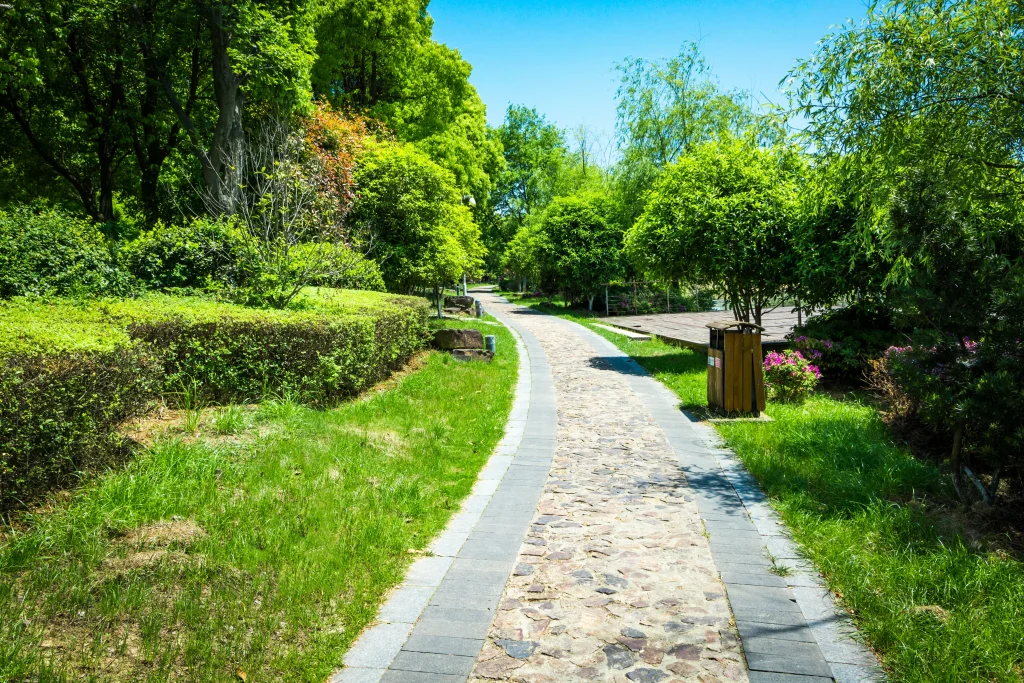
Pond landscape ideas can make your backyard feel calm and inviting from the moment you step in. The gentle sound of water, sunlight reflecting on the surface, and small details like dragonflies all help create a relaxing space.
No matter the size of your yard or your budget, there is a pond landscape idea that can work for you. This guide shares 25 simple and popular options to help you choose what fits best and get started with confidence.
What is a pond landscape?
A pond landscape is a water feature that has been intentionally designed and integrated into the surrounding garden. The pond, its edging, the planting around it, nearby seating, lighting, and any paths or bridges all work together as one cohesive outdoor space. A standalone pond sits in a garden, but a pond landscape feels like it grew out of the garden entirely.
Types of pond landscapes
Pond landscapes fall into several broad categories.
- By style, the main options are natural and informal, formal and geometric, contemporary, Japanese Zen, and cottage garden.
- By purpose, the primary types are wildlife ponds, koi ponds, water gardens, ecosystem ponds, swimming ponds, and decorative feature ponds.
- By size, the range runs from mini container ponds through small backyard ponds to large recreational ponds.
- By feature, possibilities include waterfalls, stream channels, fountains, ambient lighting, and reflecting pools.
What to consider before building a pond landscape
A few practical decisions made before breaking ground will shape everything that follows.
- Sloping sides: At least one side of the pond should have a long, shallow slope. This allows easy access for wildlife and, when water levels fluctuate, creates a damp marginal habitat for smaller creatures.
- Liner options: Butyl liners are the most flexible choice for natural, informal shapes. Pre-formed plastic or fiberglass ponds suit smaller formal designs. For larger, more naturalistic ponds, puddled clay or sodium bentonite liners are worth considering.
- Size and depth: The larger the pond, the more wildlife it will attract and the more stable the water chemistry will be. Aim for a depth that varies between 8 inches and 2 feet across the pond to suit the broadest range of aquatic plants and animals.
- Location: At least part of the pond should receive full sun to warm the water in spring and encourage aquatic plant growth. Some shade over part of the surface helps suppress algae, so a mix of sun and dappled shade is ideal.
- Timing: Autumn and winter are the best seasons to build a new pond. The ground is easier to work, and the pond has time to settle before the busy spring season begins.
25 pond landscape ideas to transform your backyard into a peaceful oasis
The following ideas span the full range of styles, sizes, and budgets. Each entry describes what the pond looks like, who it suits best, the maintenance level to expect, and one concrete design insight to help you make it your own.
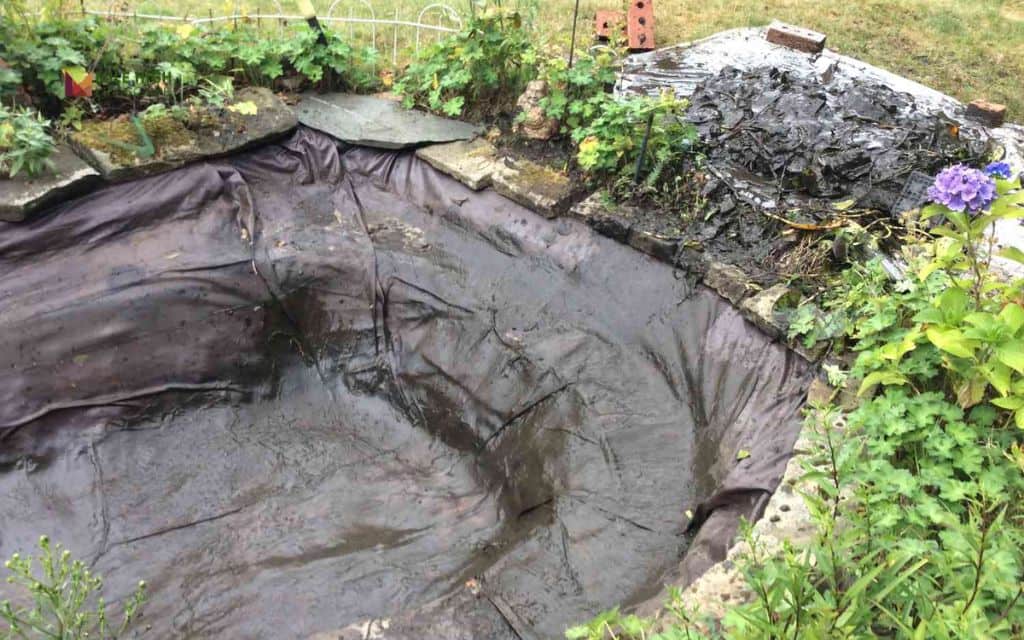
1. The natural DIY pond
A dug-in-ground pond lined with heavy-duty butyl rubber and edged with rocks is the most beginner-friendly and budget-conscious pond you can build. No precision engineering is required, and most homeowners can complete it over a weekend.
There is no need for a pump or filter when the pond is well planted with native aquatic species. The edging is what makes it look intentional: rocks of varying sizes placed naturally around the lip of the liner, with some partially buried, conceal the plastic edge entirely.
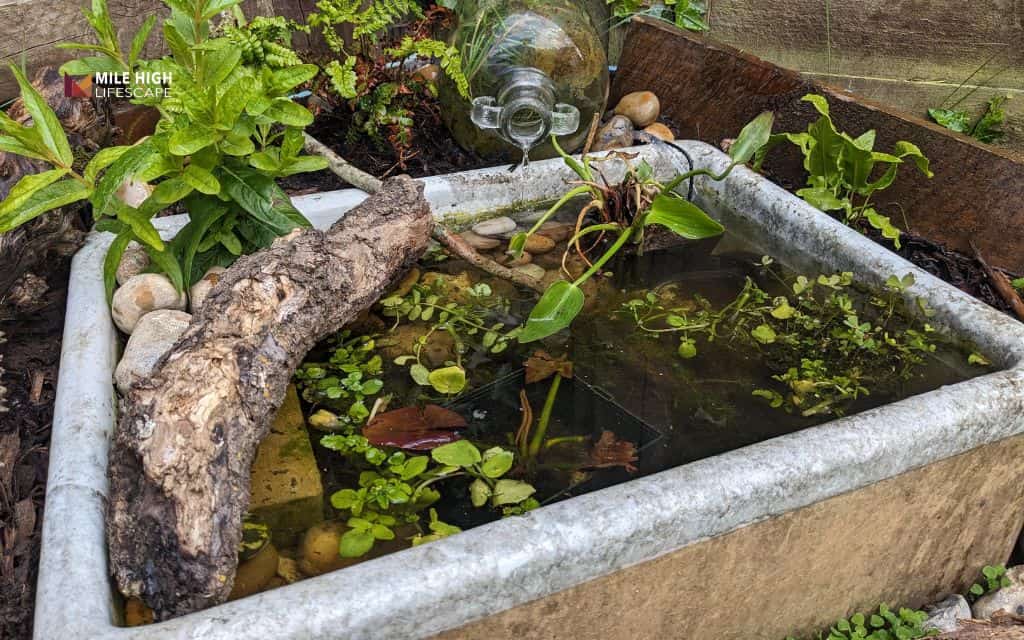
2. The mini container pond
A large ceramic pot, half wine barrel, or galvanized trough filled with water and a few compact aquatic plants is a surprisingly impactful water feature for the smallest of spaces. No digging is required, no liner is needed, and the footprint is entirely portable.
Placed on a patio corner, beside a garden bench, or on a balcony edge, even a small container pond will attract pond skaters, small insects, and visiting birds within weeks of being filled.
To keep the water naturally clear, add one oxygenating plant submerged below the water surface and one floating plant on top. Together they create a micro-ecosystem that largely manages itself.
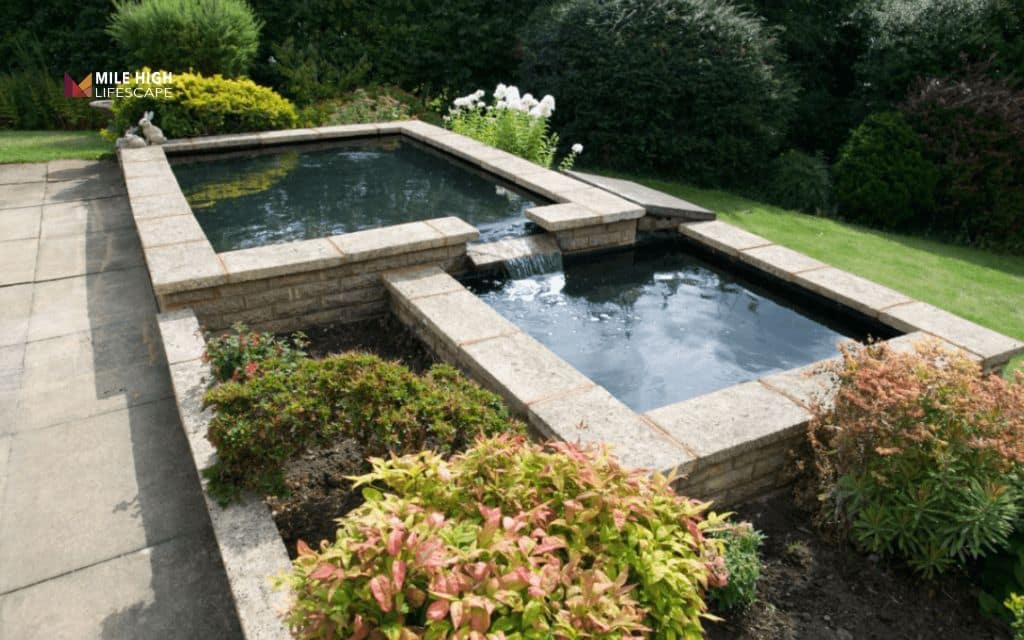
3. The raised pond
Built above ground using brick, stone, or timber walls, a raised pond brings the water surface up to a visible, accessible height without any excavation. This makes it a practical option for homeowners who want to avoid digging or for those with mobility limitations.
A raised pond suits both formal and contemporary garden styles and can be built to match existing patio or wall materials for a fully integrated look. The construction process is also more straightforward than a dug pond for gardens with hard, rocky, or root-bound soil.
4. The corner pond
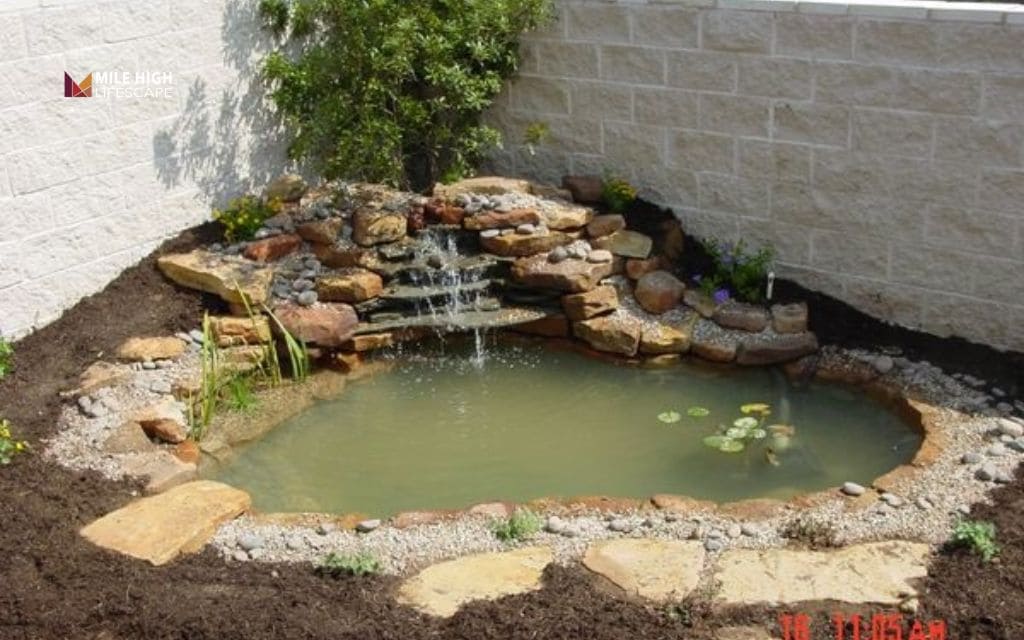
Unused garden corners are one of the most overlooked opportunities in backyard design. A shaped pond fitted snugly into a corner, framed with ornamental grasses and large rocks, transforms dead space into a genuine garden destination.
The right planting choices can make even a relatively small corner pond look like a considered, professional design rather than a space-filling afterthought.
5. The decorative patio pond
A pond built flush with or directly beside a patio brings water into the heart of the outdoor living and entertaining space. The sound of water near a seating area makes a patio feel more like a resort than a backyard and gives the whole outdoor room a sense of intention.
Adding solar-powered underwater lighting extends the feature seamlessly into evening hours, providing gentle illumination and reflection long after the sun has gone down.
6. The shallow children’s pond
A pond no deeper than 12 inches, with a flat bottom, colorful smooth pebbles, and a gentle bubbler, gives families with young children a safe and engaging water feature. Children love watching pond skaters move across the surface, listening to the water, and discovering small insects and creatures.
A rigid metal grate placed just beneath the water surface adds an extra layer of safety without making the pond feel restricted. The shallow depth makes access comfortable and keeps worry levels lower for caregivers. However, supervision near any water feature remains important regardless of how small or shallow it is.
7. The classic wildlife pond
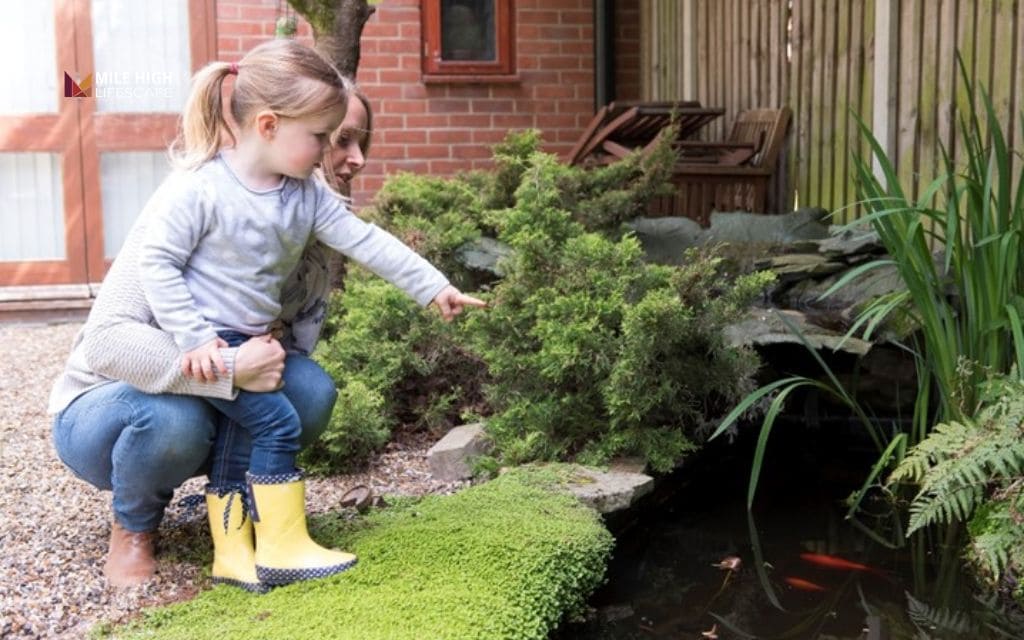
A well-placed wildlife pond is one of the single highest-impact things a gardener can do for local biodiversity. An informal, irregularly shaped pond with gently sloping sides, native marginal plants at the water’s edge, and no pump or fish provides a water source, a breeding habitat, and a food supply for a remarkable range of species. Frogs, newts, dragonflies, damselflies, birds, hedgehogs, and a host of aquatic invertebrates typically discover a new wildlife pond within a single season.
8. The bog garden pond
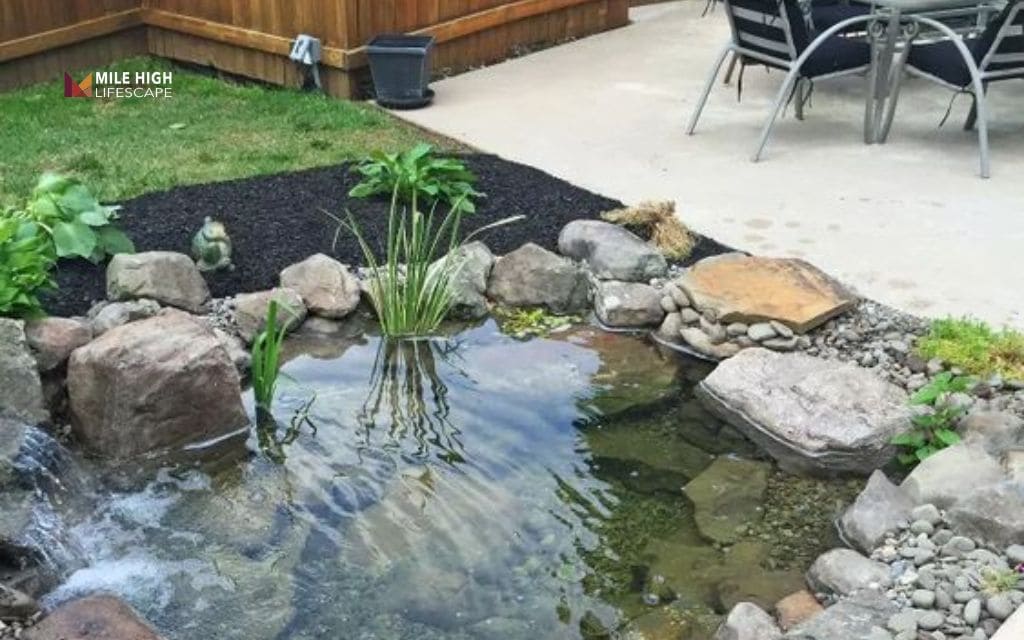
A permanently moist planting zone that rings the pond creates a seamless transition between open water and the dry garden. Irises, hostas, astilbes, ferns, primulas, and other moisture-loving perennials fill the bog zone with layered, textured planting that looks beautiful through every season.
The bog garden also provides additional wildlife habitat, making it one of the most ecologically generous additions to a pond landscape. Many insects that use the open water for part of their lifecycle rely on the damp marginal zone for shelter and food.
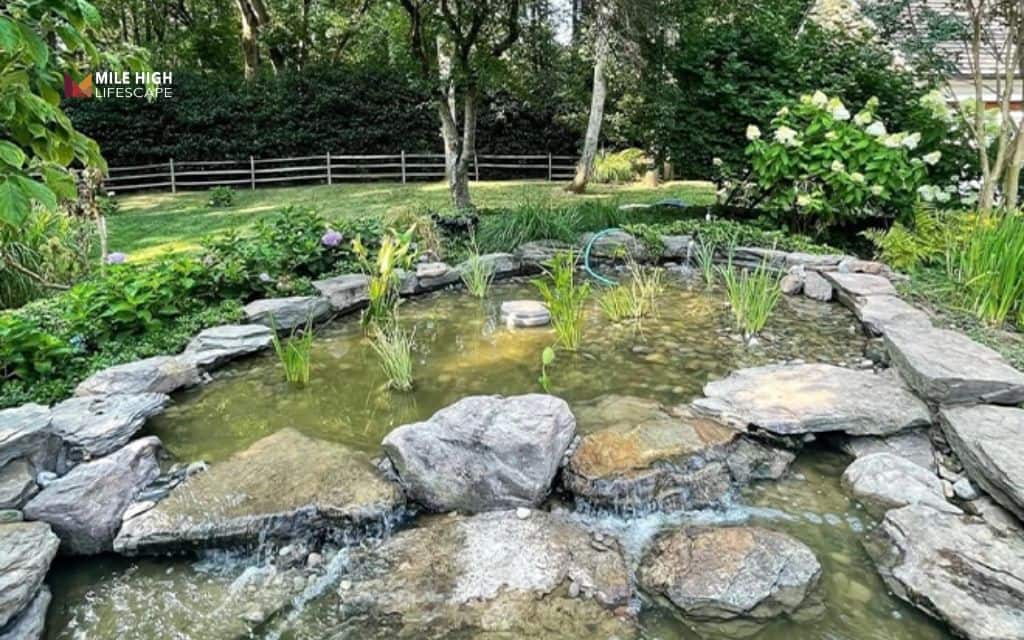
9. The native planting pond
A pond planted with native aquatic species supports local wildlife far more effectively than ornamental varieties and requires almost no ongoing intervention once it is established. Water lilies cover much of the surface, reducing light penetration and suppressing algae.
Oxygenating plants work below the surface to keep the water chemistry balanced, while reeds and rushes rising from the shallow margins provide shelter and a place for emerging insects to rest. No fish are needed because the plants do all the water-balancing work.
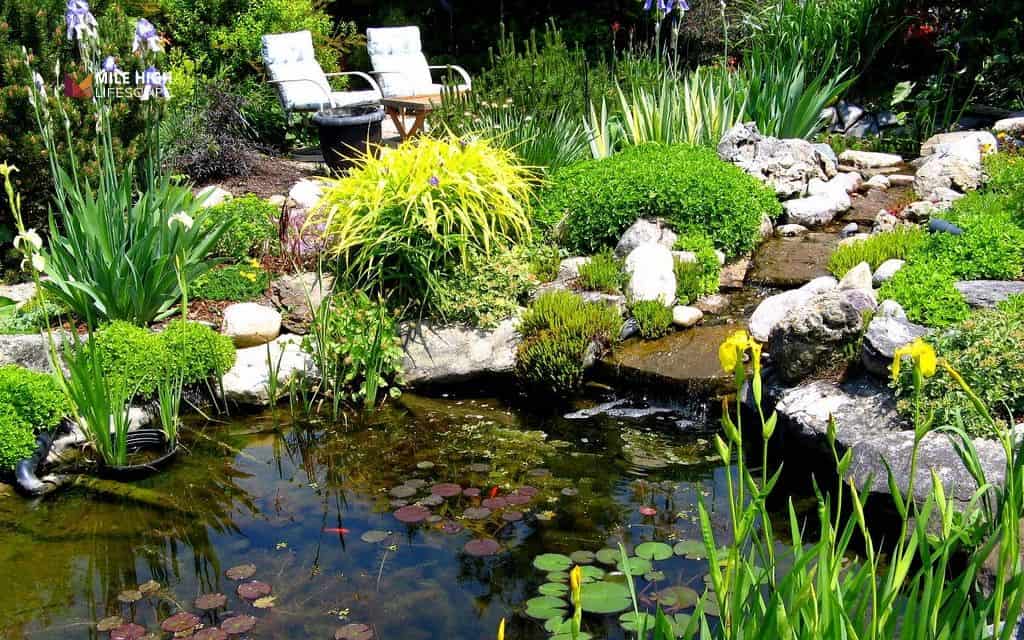
10. The pollinator-friendly pond
Surrounding a pond with nectar-rich flowering plants turns it into a magnet for bees, butterflies, and beneficial insects as well as the birds and aquatic wildlife using the water itself. Lavender, salvia, echinacea, and native wildflowers planted right at the water’s edge create a layered habitat that hums with activity from spring through to late autumn.
The one rule that matters most here is never using pesticides or fertilizers within several feet of the water. Chemical runoff from even nearby beds can harm aquatic insects and disrupt the pond’s natural balance.
Read more: https://milehighlifescape.com/patio-landscape-ideas/
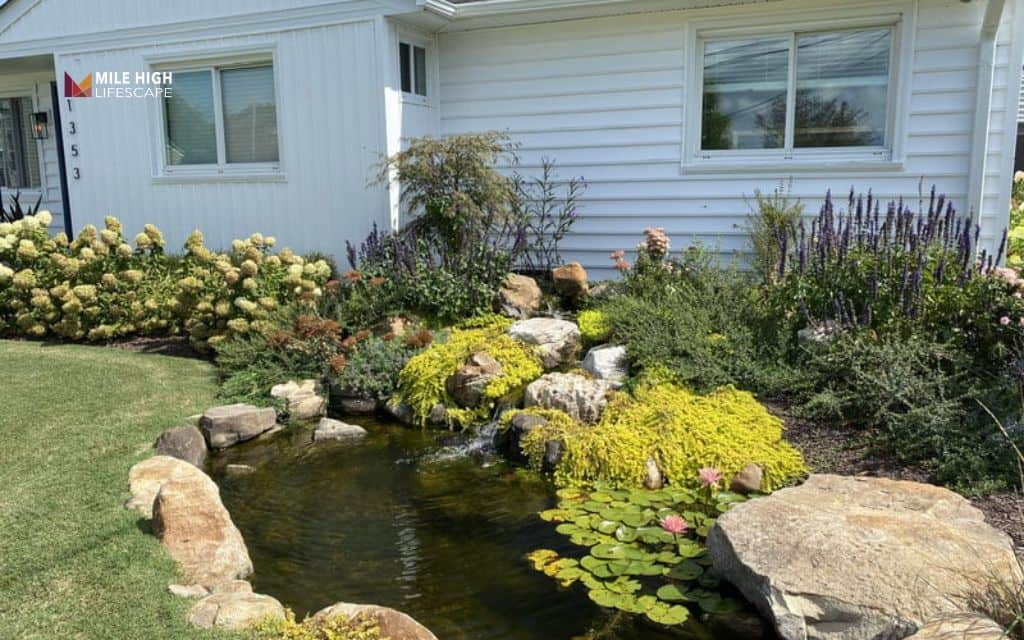
11. The koi pond
A koi pond is a more engineered water feature designed around the specific needs of the fish. At a minimum depth of 3 to 4 feet and equipped with both a biological and mechanical filtration system running, it provides the stable, clean water environment that koi require.
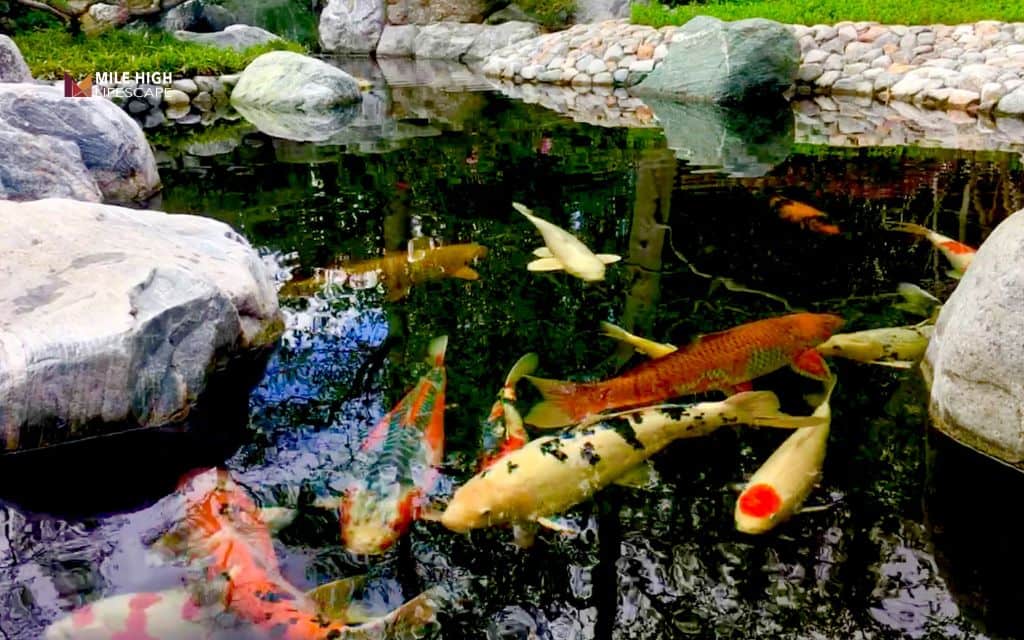
12. The ecosystem pond
An ecosystem pond is designed to function as a self-sustaining mini-environment where fish, aquatic plants, rocks, gravel, and an integrated filtration system work together to maintain water quality naturally. When the balance is right, the pond largely manages itself and requires only seasonal maintenance.
The single most important rule is never overstocking with fish. Too many fish relative to the plant mass and filtration capacity throws the biological balance off quickly and triggers the water quality problems that this design is specifically built to avoid.
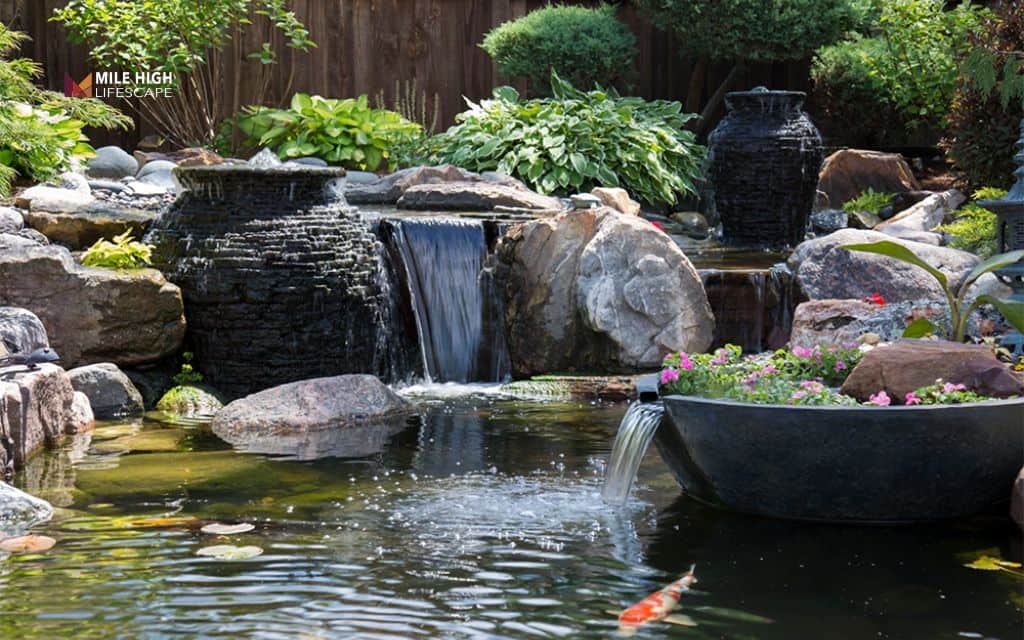
13. The water garden pond
A water garden puts aquatic planting at the center of the design, treating the pond as a canvas for floating water lilies, upright rushes and irises, and submerged oxygenators. Fish, if present, play a secondary role and benefit from the dense planting cover.
Adding a small waterfall or gentle bubbler helps keep water circulating and prevents stagnation in warmer months without compromising the planting-first aesthetic.
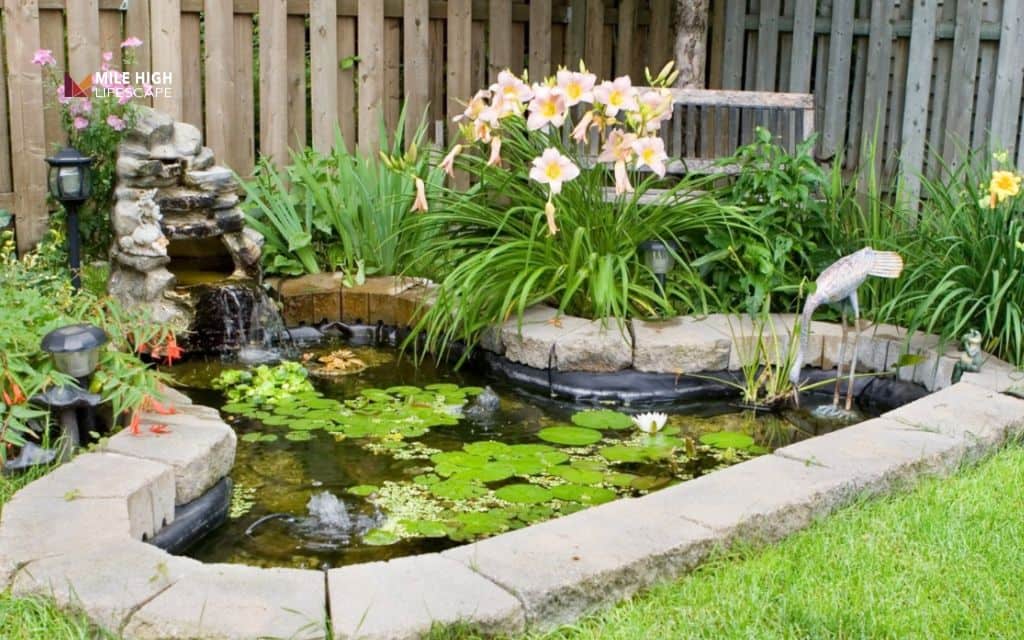
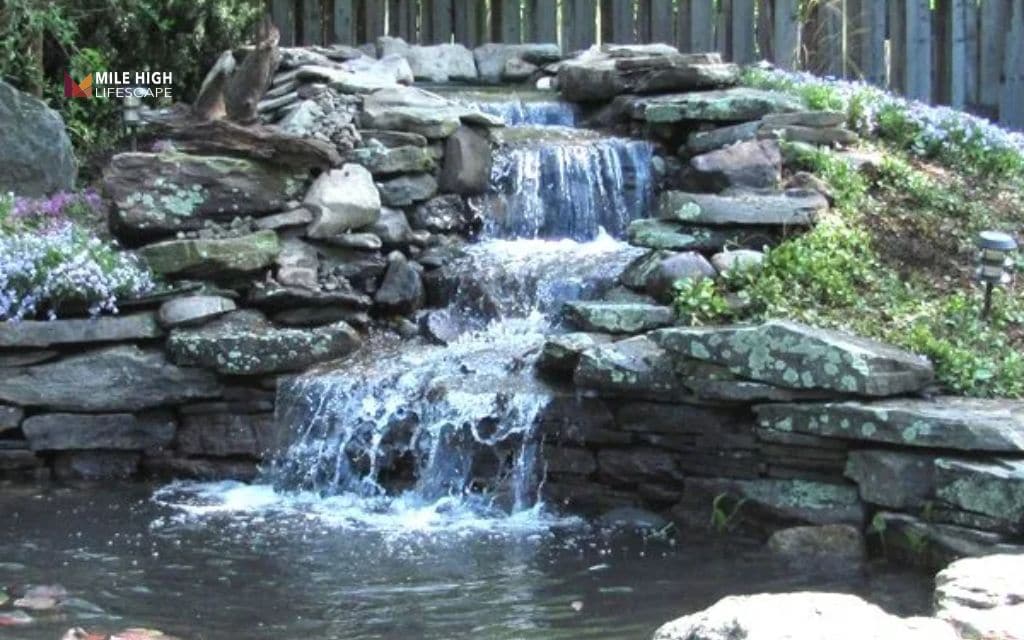
14. The cascading waterfall pond
A waterfall running over stacked natural stone or shaped rock into the main pond below adds sound, movement, and visual drama that a still-water pond simply cannot match.
Building the waterfall drop at least 12 to 18 inches above the pond surface is the detail that creates the audible, satisfying waterfall sound most people picture. A low trickle over flat stones produces very little noise; height and flow rate together are what generate the sound.
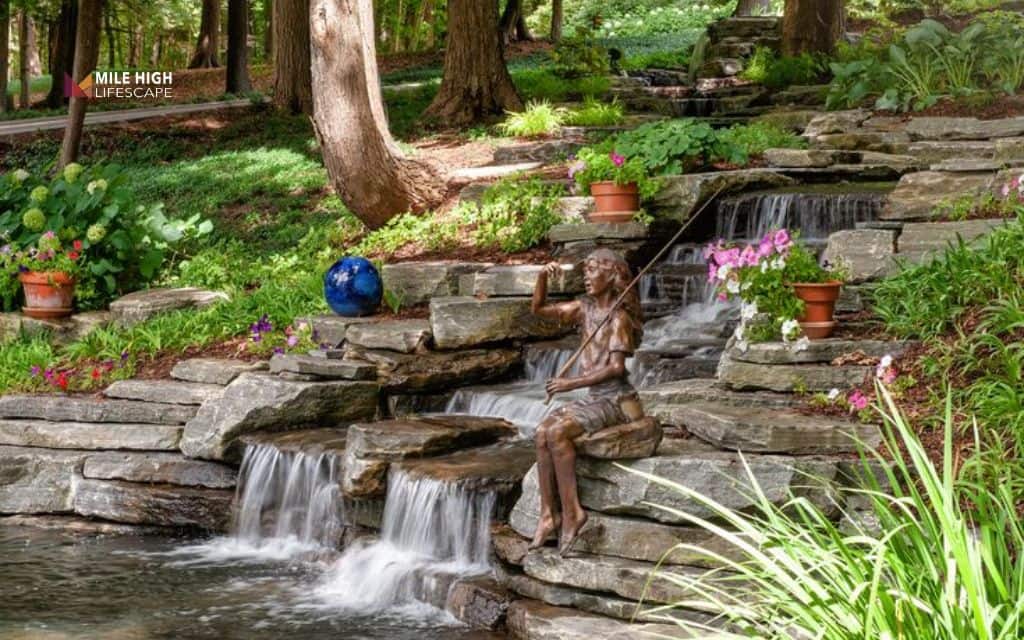
15. The stream-fed pond
This idea suits any garden with a natural slope or level change that can be used to generate the necessary gradient. The stream adds interest and movement to parts of the garden that would otherwise be purely planted.
Gentle curves rather than straight runs are the key design choice. Curves slow the water’s flow and give it more contact time with the filtering rocks and gravel on the stream bed, improving water quality before it enters the pond.
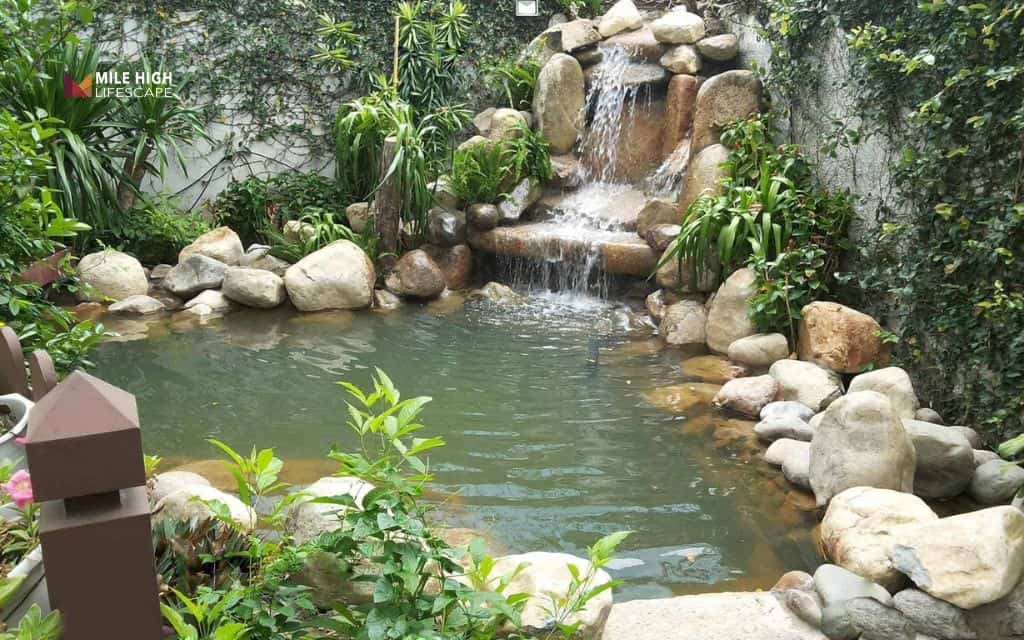
16. The corner pond with stream and waterfall
Combining a corner pond with both an incoming stream channel and a cascading waterfall creates a complete, multi-sensory water garden
The layering of water at different heights and speeds gives the feature an organic, living quality that a single-element pond cannot replicate. This is one of the most impressive backyard pond ideas for a medium-sized yard.
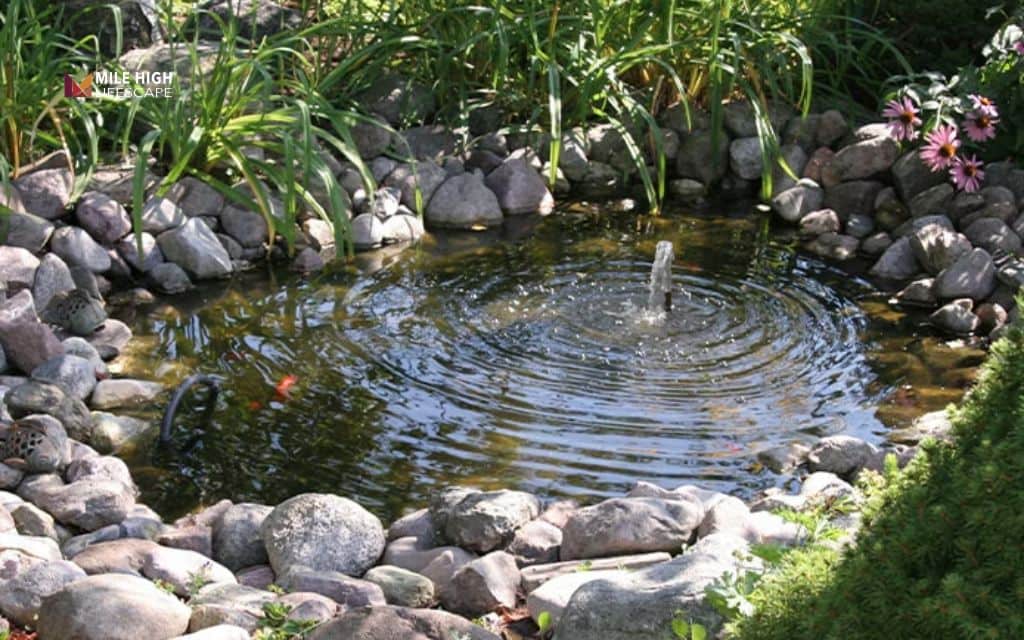
17. The fountain pond
The fountain adds movement and sound to what would otherwise be a restrained, architectural feature and keeps the water aerated without requiring a separate setup. Solar-powered fountain heads eliminate the need for electrical wiring entirely and reduce running costs to near zero.
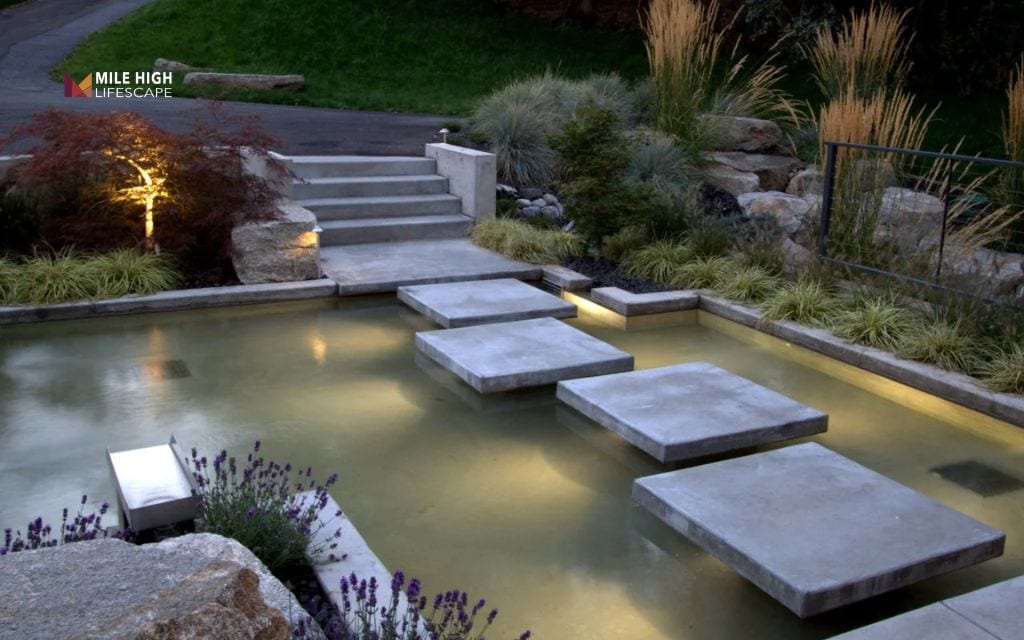
18. The pond with stepping stones
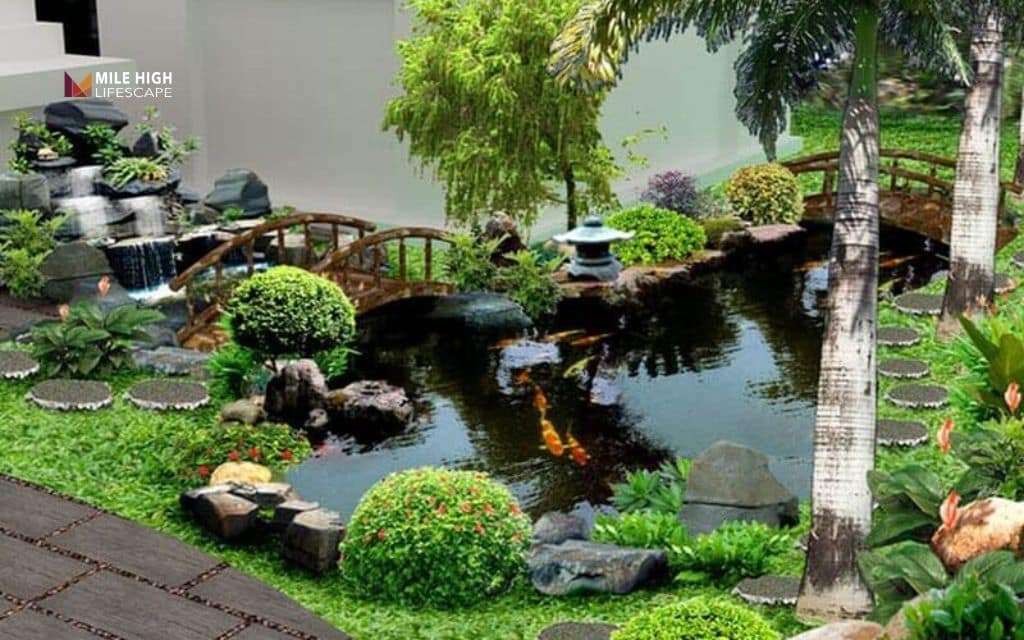
Flat stepping stones placed at intervals across a pond surface create a walkway over water that has an almost universal appeal. Guests of all ages are drawn to it immediately, and it gives even a modest pond a sense of scale and interactivity.
Beyond the visual interest, stepping stones also serve a practical purpose by providing access to the center of larger ponds for planting, maintenance, and observation without the need to work from the edge.
Each stone should be set at least 18 inches wide on stable underwater supports. The surface finish should be textured and non-slip to prevent accidents when the stones are wet.
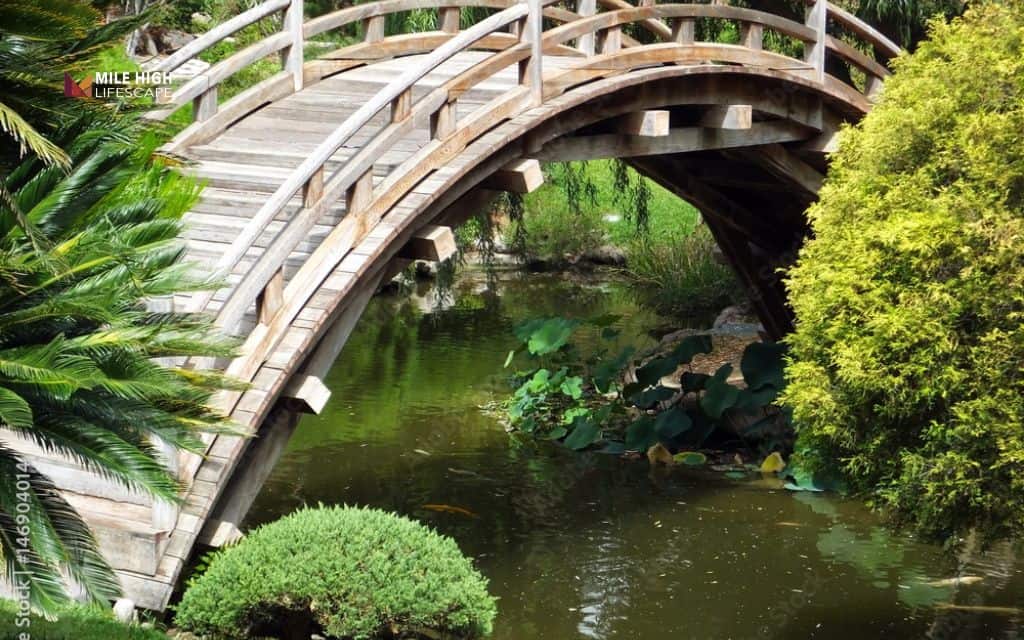
19. The bridge pond
A small arched or flat wooden bridge crossing the pond creates an immediate, strong focal point. It is one of the most visually memorable outdoor pond ideas available for a medium to large yard.
Standing on the bridge offers the pleasurable experience of being above and surrounded by water, with sky and planting reflected in the surface below. Water irises, ornamental grasses, and marginal plants clustered at the pond edge beneath the bridge complete the scene.
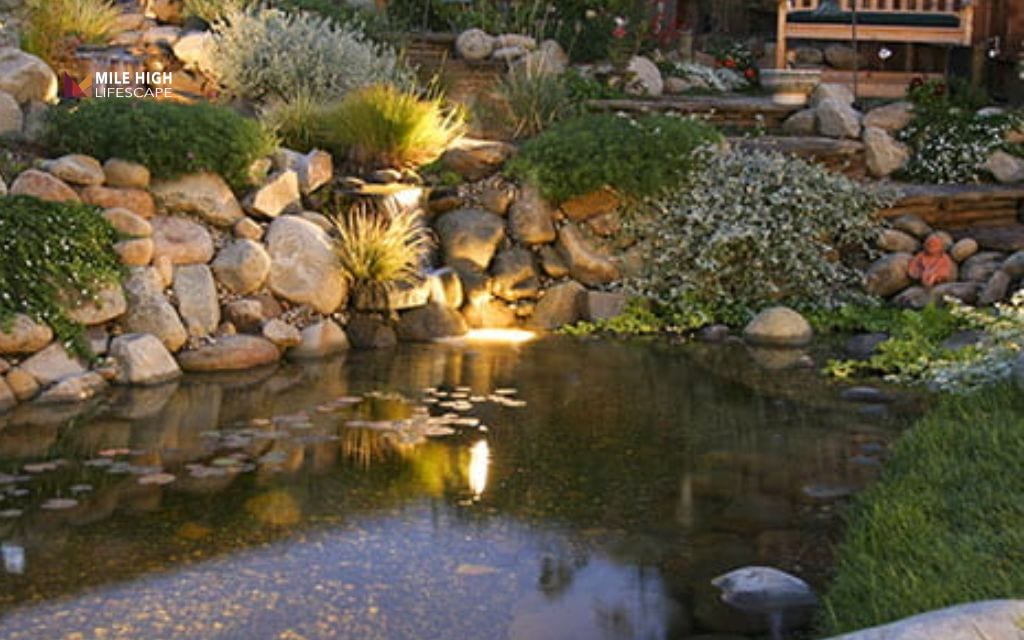
20. The pond with ambient lighting
It is one of the most cost-effective upgrades available for an existing pond and one of the most immediately impactful. The feature requires no structural changes and can be added to almost any pond design. Warm-white underwater lights produce the most natural and inviting glow. Cool-white and colored LEDs tend to look artificial rather than atmospheric and can undermine an otherwise beautiful pond setting.
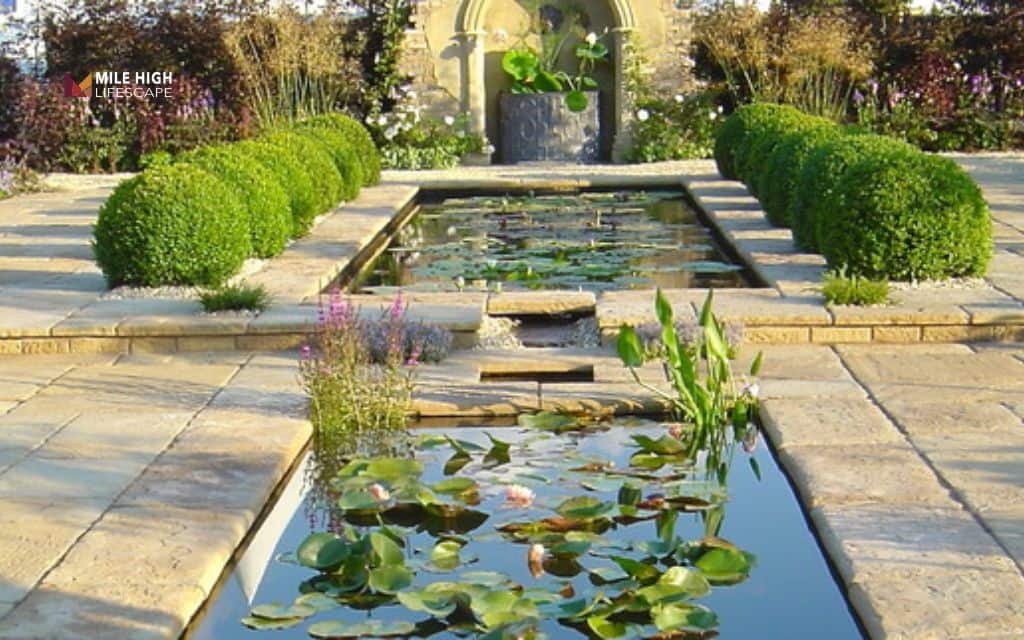
21. The classical formal pond
This style uses simple shapes like a rectangle, square, or circle with clean stone edges. Planting is kept minimal, and you might add one focal point such as a sculpture or a single water lily to create a refined look.
The design focuses on balance and simplicity. Everything around the pond should feel organized and consistent, because one mismatched detail can disrupt the overall look.
To keep the water clear without using chemicals, you can add a UV clarifier to the pump system. This works well since the pond does not rely on many plants for natural filtration.
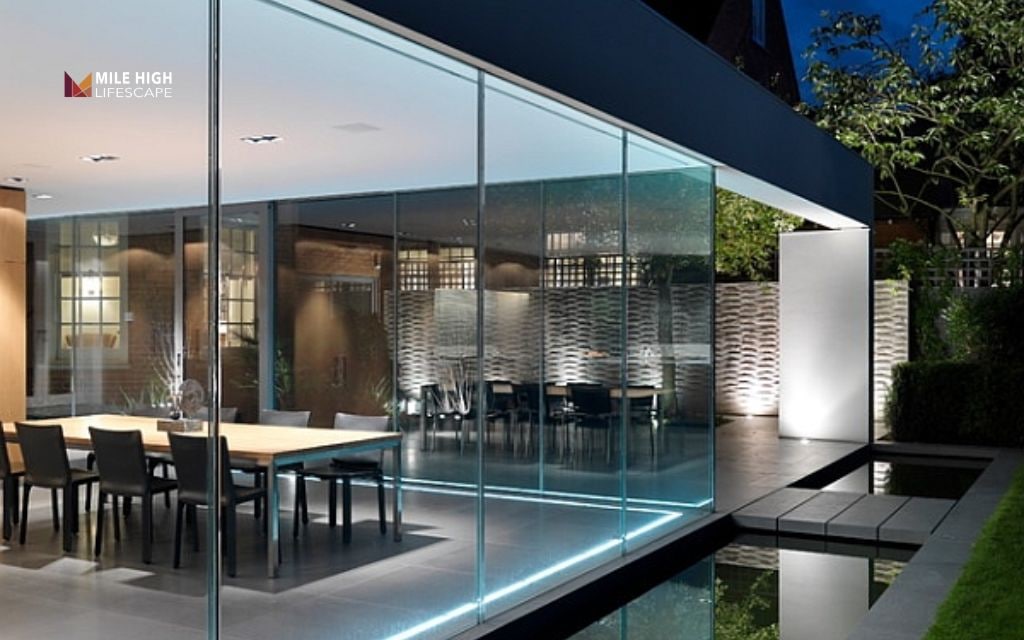
22. The contemporary reflecting pool
There are no fish, no fountains, and no plants. Just still, perfectly clear water that functions as an outdoor mirror and brings a sense of calm sophistication to a modern garden. It is one of the most striking design backyard pond approaches for a contemporary home.
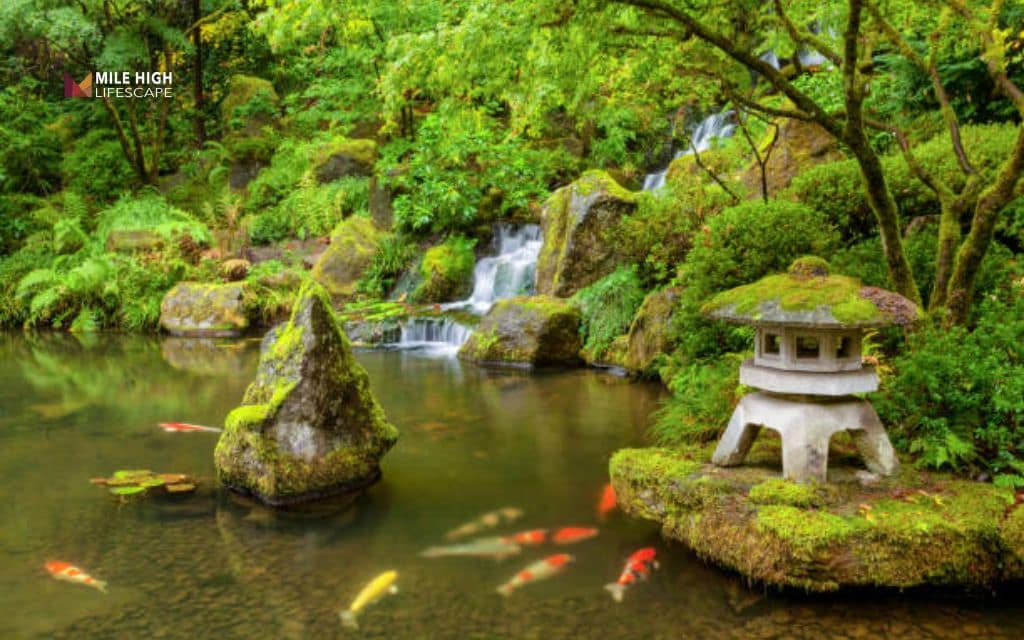
23. The Japanese Zen pond
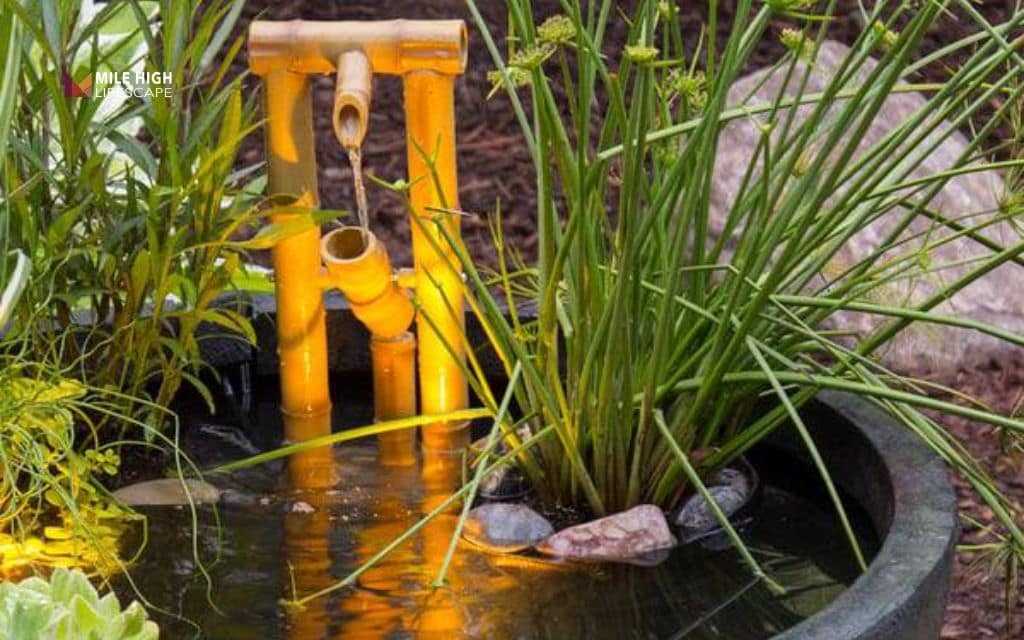
A still, shallow pond with gravel surrounds, moss-covered stepping stones, a bamboo water spout, and carefully placed boulders creates a deeply calming outdoor space rooted in the principles of Japanese garden design.
Every element is chosen and positioned with deliberate purpose. Restraint, balance, and intentional negative space are as important to the composition as what is actually planted or placed.
24. The cottage garden pond
An informal, gently curving pond ringed with foxgloves, astilbes, primulas, ferns, and climbing roses on a nearby arch brings a abundant quality to a relaxed garden style. The soft, layered planting blurs the line between the water and the surrounding garden.
Allowing a few of the surrounding plants to self-seed naturally around the pond edge each year reinforces this established, effortless feeling without any additional planting effort.
25. The swimming and recreational pond
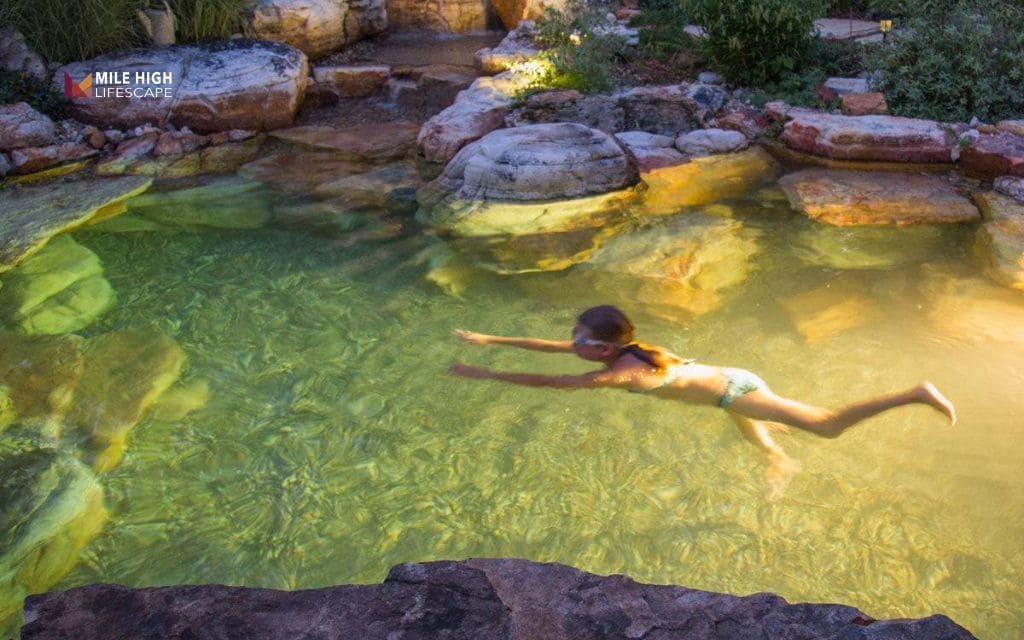
A natural swimming pond is divided into 2 distinct zones: a swimming area and a planted filtration zone. This eliminates the need for chlorine or other chemicals entirely.
Surrounded by timber decking, loungers, and lush planting, it looks more like a natural lagoon than a swimming pool and creates an extraordinary outdoor living space that draws the whole family outdoors throughout the warmer months.
Because the planted filtration zone must be precisely sized relative to the swimming area to keep the water genuinely clean and safe, this is one pond landscape idea where professional installation is not just recommended but essential.
Quick tips for landscaping around a pond
The area surrounding a pond is as important as the pond itself. A few thoughtful choices in how you landscape around the water can elevate the whole feature from a simple water hole to a beautiful garden destination.
- Edging: The pond edge sets the tone for the entire design. Natural rocks and boulders suit wildlife and cottage styles, while timber decking works well beside contemporary or Japanese ponds. Smooth pebbles create a clean beach effect, and marginal planting spilling over the edge gives the most naturalistic result of all.
- Layered planting heights: The most successful pond surrounds use varied plant heights: tall emergent plants at or in the water’s margin, medium shrubs and ornamental grasses behind them, and low groundcovers to soften any hard transitions between planting and paving.
- Nearby seating: Position a bench or a pair of chairs near enough to hear the water and observe whatever wildlife is using the pond. This small decision transforms a pond from a feature you occasionally notice into one you actively seek out and spend time beside.
- Lighting: Even the simplest pond becomes a striking feature after dark with a few well-placed lights. Submersible lights inside the pond, pathway lighting along the edge, and uplighting on a nearby statement tree or rock are all low-effort ways to extend the pond’s visual appeal into evening hours.
- Avoid chemicals nearby: Never apply pesticides, herbicides, or fertilizers to any bed immediately adjacent to the pond. Even small amounts of runoff can harm aquatic insects, fish, and the microorganisms that keep pond water healthy.
Conclusion
There is no single right answer when it comes to pond landscape ideas. The right pond is the one that fits your garden, your lifestyle, and your budget, whether that is a simple container pond on a patio or a full ecosystem pond with a waterfall and a bridge.
The most important step is simply starting. A small, simple pond built this season can grow into something larger and more complex over time as your confidence and enthusiasm develop.
If you are in Denver and looking for expert guidance on designing and installing a pond landscape that works beautifully in your specific outdoor space, the team at Mile High Lifescape would love to help.
Reach out today to start planning a backyard water feature you will enjoy for years to come.
Frequently asked questions (FAQs)
How deep should a backyard pond be?
For a general wildlife or ornamental pond, a depth that varies between 8 inches and 2 feet across the pond suits the broadest range of aquatic plants and animals. If you plan to keep koi, aim for at least 3 to 4 feet at the deepest point to give the fish sufficient space to thrive and to buffer against temperature extremes.
Do I need a pump or filter for my backyard pond?
Not always. A small wildlife pond with the right balance of oxygenating plants and no fish can stay healthy and clear without a pump or filter. A pond with koi or other fish will need both a biological and mechanical filtration system to manage waste and maintain water quality.
What plants should I put around a pond?
The best plants for landscaping around ponds include moisture-loving species at the immediate water’s edge such as water iris, sedge, and rush, followed by medium-height ornamental grasses and shrubs a step back, and low groundcovers to soften any hard transitions. Varying plant heights creates the most naturalistic and visually appealing result.
How much does it cost to build a backyard pond?
A simple DIY liner pond can cost a few hundred dollars in materials, making it one of the most affordable backyard pond ideas available. A professionally installed ecosystem pond with a waterfall typically runs into several thousand dollars, while a koi pond or swimming pond with complex filtration can cost significantly more. Getting a site-specific quote is the best way to plan your budget accurately.
Are backyard ponds hard to maintain?
Most pond landscape ideas are lower maintenance than people expect. A well-planted wildlife pond may need only seasonal tidying, while an ecosystem pond with the right balance of plants and filtration largely takes care of itself. The key is choosing a pond style that honestly matches your available time from the start.