
That stubborn tree trunk sitting in your yard is more than an eyesore. It is a tripping hazard, a magnet for termites and carpenter ants, and a problem that quietly gets harder to fix the longer you put it off. Certain species will even keep sending up new shoots from the roots, so the tree you thought was gone keeps coming back.
This guide covers everything you need to know about how to get rid of tree trunks, from the quickest professional fixes to the most budget-friendly DIY options, so you can make the right call for your yard.
Why you should get rid of tree trunks
Leaving a stump in place feels easier than dealing with it, but the case for learning how to get rid of tree trunks usually wins out fast:
- Pest invitation: Decaying wood draws termites, carpenter ants, and beetles, and the colonies do not stay put once they grow.
- Tripping and mowing hazard: A trunk hidden in tall grass is an ankle injury waiting to happen, and it forces you to mow around it forever.
- Re-sprouting: Willow, cottonwood, locust, oak, and some maples send up new shoots from a live stump, giving you a fresh thicket to deal with.
- Lost curb appeal and usable space: A stump in the middle of the yard caps how nice your space can look and eats ground you could replant, sod, or pave.
4 things to check before you start
Stump size & age
Size is the single biggest factor when deciding how to get rid of tree trunks. As a rough guide:
- Under 6 inches: hand digging is realistic, and most DIY methods work.
- 6 to 12 inches: still DIY-friendly but harder. Chemical or grinder methods become more attractive than digging.
- Over 12 inches: you are almost always better off renting a grinder or hiring a pro.
How fast you need it gone
Every method trades speed for cost or effort, so be honest about your deadline:
- This week: stump grinding (DIY rental or pro), or hand digging for small stumps.
- A few weeks to months: chemical removers or Epsom salt.
- No deadline: natural decay is the cheapest option, though it takes years.
Your budget
Your spending range filters the choices fast:
- $10–$30: Epsom salt or basic chemical stump remover. Cheapest, but slow.
- $100–$400 per day: renting a stump grinder. Best for multiple stumps or a one-day project.
- $75–$500 per stump: hiring a professional, with a national average around $340.
Skill & safety honesty check
Most homeowners skip this question and it is the one that sends people to the ER. Ask yourself:
- Do you have real experience with a chainsaw or grinder, plus the safety gear?
- Is the stump near a foundation, gas line, water line, or other buried utility?
- Is the ground sloped, saturated, or surrounded by plants you do not want to damage?
If any of those answers gave you pause, calling a pro for that one job is often safer and cheaper than risking an injury or a buried-line repair bill.
How to get rid of tree trunks in 7 ways
Stump grinding
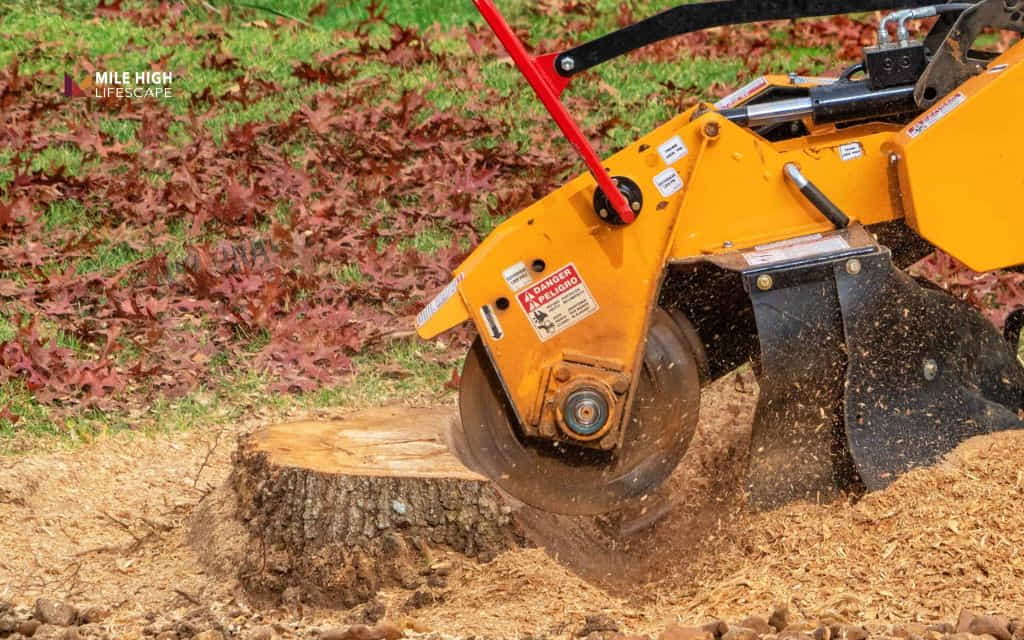
Stump grinding is the fastest way to get rid of tree trunks, because the machine chews the wood down to chips well below ground level, leaving you a clean fill area. Here is how to grind a stump yourself:
- Cut the stump low: Use a chainsaw to bring the trunk down to about 4 inches above the soil, removing any rocks or debris around the base.
- Set up safety screens: Place plywood or commercial screens around the work area to block flying chips from hitting windows, siding, or nearby cars.
- Position the grinder: Park the wheel just above the stump, start the engine, then lower the cutting head slowly until it bites into the wood.
- Work in passes: Sweep the wheel side to side, lowering it a few inches at a time. Continue until the stump is ground 8 to 12 inches below grade.
- Clear the chips: Shovel out the wood shavings before adding new topsoil, since chips left behind tie up nitrogen and stunt new grass or plants.
Learn more: How to get rid of tree stumps
Chemical stump removers
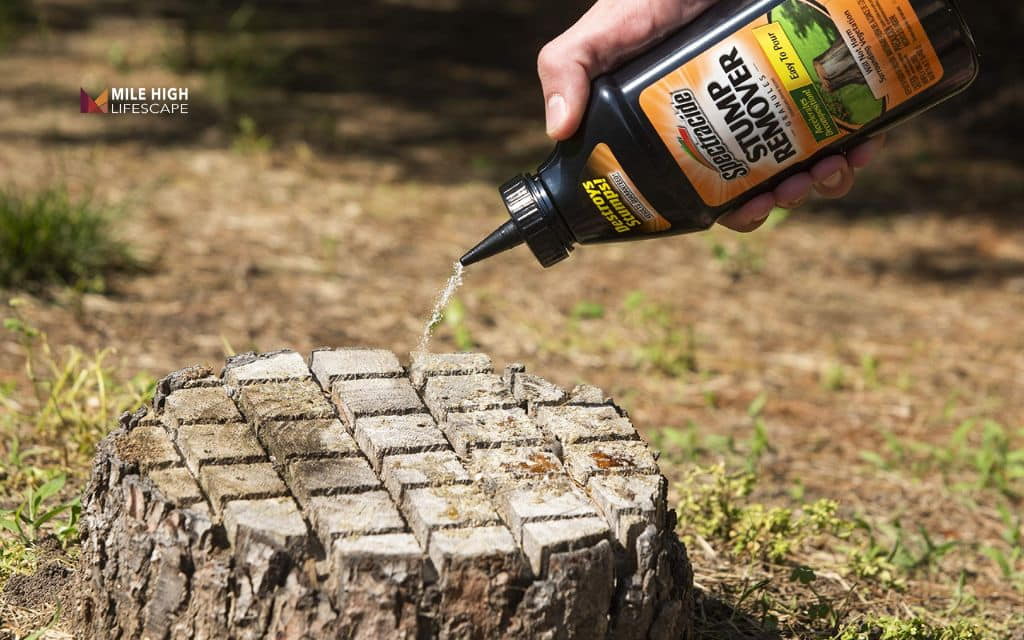
Chemical stump removers, sold as Spectracide Stump Remover or Bonide Stump-Out, are usually based on potassium nitrate. They speed up decay by drawing moisture out of the wood and feeding bacteria that break it down. Done right, the trunk softens enough in a few weeks to break apart with an axe or pry bar.
To apply, cut the stump as low as possible, drill 1-inch holes about 10 inches deep across the top no more than 12 inches apart, pour in the granules, add water, and cover with a tarp to trap moisture. Re-soak every couple of weeks and keep pets and small children away, as the chemicals can leach into surrounding soil and damage nearby plants.
Epsom salt method
For a low-cost, low-toxicity option, Epsom salt (magnesium sulfate) is a DIY favorite. The salts pull moisture out of the trunk, drying the wood and speeding decay.
- Drill deep holes: Use a 1-inch bit to drill 8 to 12 holes across the top of the stump, going as deep as your bit allows. Add holes around the sides too if the stump is large.
- Pack with Epsom salt: Fill each hole completely with dry Epsom salt right to the top.
- Add just enough water: Slowly pour water into each hole to dissolve the salt without washing it out. The mix should be a thick slurry, not a flood.
- Cover the stump: Lay a tarp over the top, weighted down at the edges, to seal in moisture and keep rain from diluting the treatment.
- Refresh every few weeks: Re-apply Epsom salt and water every 3 to 4 weeks. After 6 to 12 months, the wood should be soft enough to chip out with a hand tool.
Natural decay
Doing nothing is a legitimate strategy, since wood-decay fungi and microbes will break the trunk down on their own. A typical hardwood stump takes 3 to 7 years to disappear, but you can cut that down to roughly a year by giving the microbes more surface area, oxygen, moisture, and nitrogen:
- Open up the wood: Cut the stump low, drill plenty of large holes across the top and sides, and peel off as much bark as you can.
- Aerate the soil: Loosen the dirt a foot or so out from the stump with a digging fork to feed the microbes oxygen.
- Keep moisture steady: Water the stump occasionally and cover it with coarse mulch to lock moisture in without drowning it.
- Add nitrogen: A handful of slow-release, low-salt fertilizer each season feeds the microbes that do the breakdown work.
- Disturb it every few months: A quick session with a pry bar or axe to crack open new surfaces keeps decay moving.
Digging by hand
Hand digging is realistic for stumps under 12 inches (ideally under 6 inches). It takes no chemicals, no waiting, and no rental fees if you already own the tools. Here is how to do it:
- Leave the trunk tall. Before you start, cut the trunk to about 3 to 4 feet tall for leverage when you pry the stump out later.
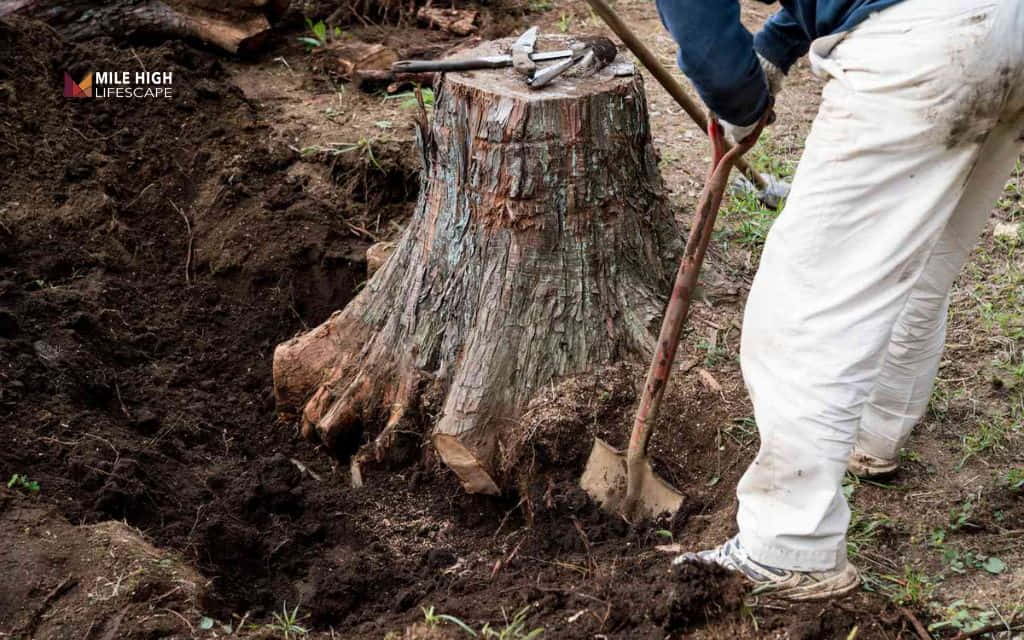
- Dig a trench and cut the roots. Using a shovel, dig 1 to 2 feet deep around the stump and sever each lateral root you expose with a pruning saw, mattock, axe, or chainsaw.
- Loosen the stump with a pry bar. Slide a long pry bar under one side and rock the stump back and forth to break any remaining roots underneath.
- Pry it out and fill the hole. Lever the stump free, then fill the hole with topsoil and pack it firmly.
Pulling with truck/tractor/winch
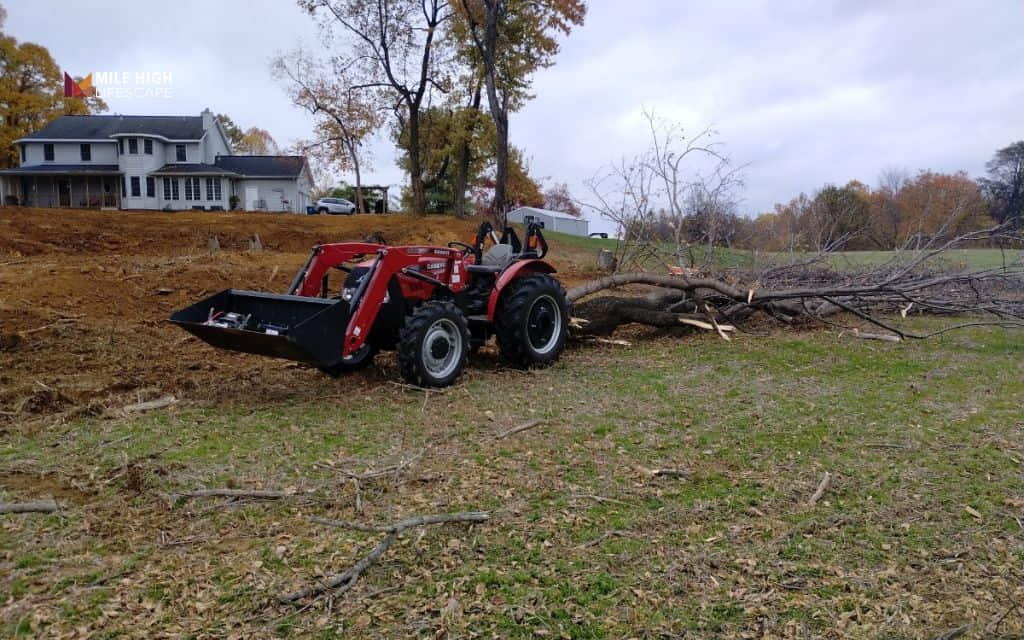
If you have a tractor, skid steer, or heavy-duty winch, pulling the trunk out can be quick once ground prep is done. Dig a trench around the stump, cut the largest lateral roots, attach a chain or strap, and apply steady pulling force until the stump lifts free.
For most homeowners, this method is risky. Chains and straps can snap under load at dangerous speeds, and vehicles not built for heavy pulling often end up with damaged frames or torn bumpers before the stump moves an inch. Use only rated towing equipment and keep bystanders well clear.
Hire a professional tree service
When the stump is large, sits near a foundation or utility, or you simply do not have the weekend to spare, hiring a professional tree service is almost always the smartest move. A trained crew arrives with a commercial-grade grinder and takes care of the stump in well under an hour.
Before the appointment, get two or three quotes and confirm what is included so there are no surprises. Look for ISA-certified arborists with current liability insurance, and call 811 to mark any underground utilities. If the tree is still standing, ask the crew to handle both the tree and the stump together.
Learn more:
Methods to avoid (and why)
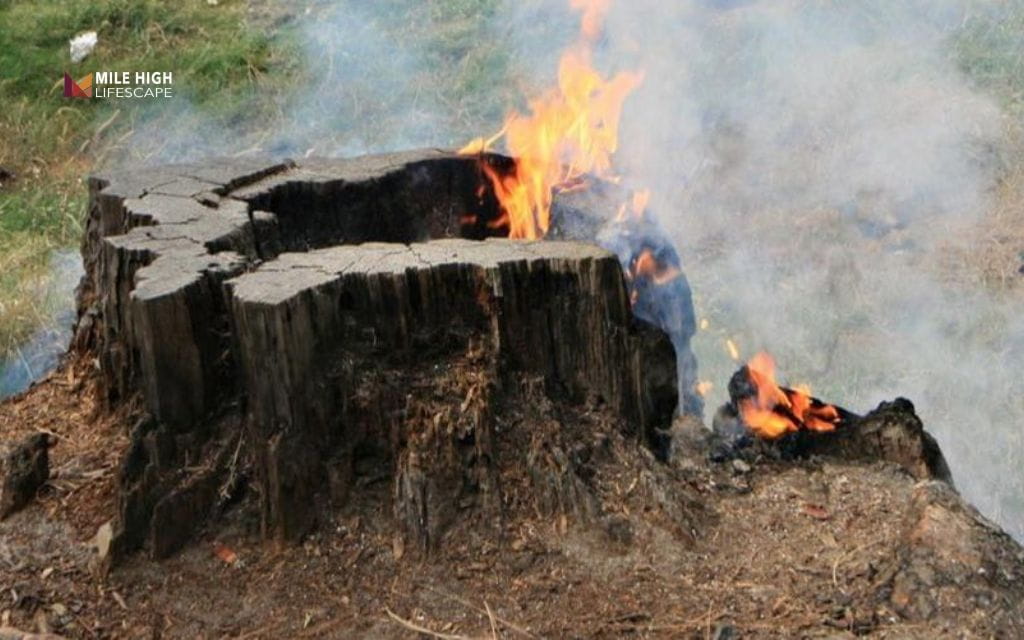
Burning
Setting a stump on fire feels satisfying in theory and goes wrong in practice. Stumps are partly buried in moist soil, so they rarely burn cleanly, and the fires that do catch can smolder for days. Many cities and counties ban open burning of this kind, and a stump fire can spread to fences, mulch, dry grass, or buildings far more easily than people expect.
Unnecessary Herbicide Applications
Pouring weed killer into drilled holes weeks or months after a tree is cut down accomplishes very little, since the wood is no longer pulling chemicals through living tissue. Most of the product leaches into the surrounding soil and damages nearby plants. Avoid products containing picloram (sold as Tordon), which is unusually persistent and can keep harming the landscape for years.
Diesel, gasoline, and other fuels
Pouring diesel or gasoline on a stump to help it burn is dangerous on every front. Fuel contaminates the soil for years, kills nearby plants, creates serious fire risk, and is illegal in many jurisdictions. There is no situation where this is the right approach for a residential yard.
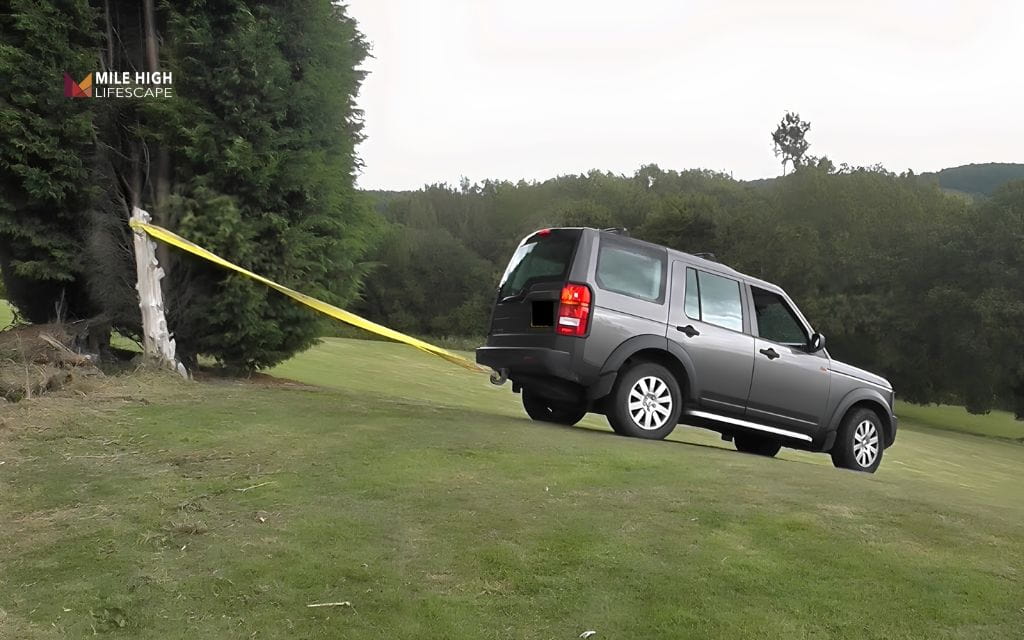
Pulling with a consumer vehicle
Pickup trucks and SUVs were not engineered to yank stumps out of the ground. The forces involved can twist frames, snap axles, rip out bumpers and tow hitches, and send chains flying back through windshields. Unless you have purpose-built equipment like a tractor with a draw bar, leave this method off the table entirely.
How to stop tree stumps from re-sprouting
Some species keep trying even after the tree is cut. Willow, cottonwood, locust, oak, silver maple, and elm all send up new shoots from a live stump or its roots, sometimes within weeks.
The most reliable fix is to treat the stump with a systemic herbicide right when the tree is cut, while the wood is still living:
- Use the right active ingredient: Look for glyphosate or triclopyr. Skip products with picloram, which stays active in soil for years.
- Apply within an hour of cutting: The fresher the cut, the more chemical the roots will absorb.
- Target the cambium layer: Brush a small amount onto the outer ring of the cut surface, just under the bark. That layer carries nutrients to the roots.
- Treat any new shoots that appear: Cut them flush and brush herbicide on each cut surface, repeating until the roots give up.
What to do after the stump is gone
Knowing how to get rid of tree trunks is only half the job. A little cleanup at this stage prevents headaches later.
First, clear out the wood chips if the spot was ground rather than dug, since decaying wood ties up nitrogen and leaves new grass yellow and stunted. Haul the chips to a compost pile, use them as mulch elsewhere, or send them off with a junk-removal service.
Next, fill the hole with quality topsoil, packing it firmly and mounding it slightly above grade since fresh fill always settles. Most arborists recommend waiting at least a year before replanting a new tree in the same spot, or shifting it a few feet to the side so the old root system can fully break down.
Learn more: Tree removal after ice storm
How to get rid of large fallen tree trunks & logs
A whole fallen trunk after a storm is a different problem. The first step is to cut it down to manageable pieces with a chainsaw. Cut from the top down, watch for tension in pinned wood, and never cut a trunk that is propped up under load without bracing it first.
Once the trunk is in logs, you have several disposal options:
- Municipal yard waste pickup: Many cities and counties run seasonal collections. Check your local schedule and bundling rules.
- Local transfer station or composting facility: Most accept tree wood and turn it into mulch or biomass.
- Roll-off dumpster rental: A solid choice when you have a full tree’s worth of debris or multiple trunks.
Conclusion
There is no single best answer for how to get rid of tree trunks, only the right answer for your stump. Walk through the 4 checks one more time, match your situation to a method, and commit. Most homeowners overthink this step and end up doing nothing for years. Whichever path you choose, your yard will breathe a little easier the moment that trunk is finally gone.
Get rid of that tree trunk for good with Mile High Lifescape
Mile High Lifescape is a Denver-based landscaping company specializing in custom outdoor care for residential properties throughout the Front Range. From tree branch removal and stump cleanup to the flower beds, landscape rock, and xeriscape landscaping that fill the space afterward, our experienced team brings creative vision and the right equipment to every job.
Contact us today for a free consultation and let us handle the heavy work for you!
Frequently asked questions (FAQs)
What’s the best way to get rid of tree trunks?
The best way to get rid of tree trunks depends on 3 things: the size of the stump, how fast you want it gone, and your budget. For a single medium or large stump, professional stump grinding offers the best balance of speed, safety, and cost, usually $150 to $500. For small stumps, hand digging or chemical removers are cheaper paths that work well.
How much does it cost to remove a tree stump?
Tree stump removal costs typically range from $75 to $500 per stump, with a national average around $340. DIY options are far cheaper, from about $10 to $30 for Epsom salt or chemical removers, to $100 to $400 per day for a rental grinder. Larger stumps, harder wood, and difficult access all push the price toward the high end.
How long does it take a tree trunk to rot naturally?
Left alone, a tree trunk usually takes 3 to 7 years to fully decay, sometimes longer for dense hardwoods like oak. If you would rather not wait that long, the accelerated approach to how to get rid of tree trunks (drilling holes, adding nitrogen, keeping the wood moist, covering with mulch, and disturbing it periodically) can speed natural decay to roughly 12 months.
What kills a tree trunk naturally?
Tree trunks are broken down by wood-decay fungi and bacteria that need oxygen, moisture, and nitrogen to do their work. You can encourage natural decay by cutting the trunk low, drilling large holes across the top, adding slow-release nitrogen fertilizer, keeping the wood damp, and covering it with permeable mulch.
Will the stump re-sprout if I just leave it?
It might. Species like willow, cottonwood, locust, oak, silver maple, and elm often send up new shoots from a live stump or its roots, sometimes within a few weeks of cutting. The most reliable way to prevent that is to apply a systemic herbicide containing glyphosate or triclopyr to the outer ring of the cut surface within an hour of cutting, while the cambium layer is still living.
Why shouldn’t you leave a tree stump in the ground?
Stumps attract wood-boring pests like termites and carpenter ants that can spread to your home, host fungal diseases that travel to nearby healthy trees, sprout new shoots from the roots, and create tripping and mowing hazards. They also cap your yard’s curb appeal and limit what you can do with the space.