
Cypress trees look built for low maintenance. They grow fast, stay green year-round, and hold their shape with minimal fuss. But when it comes to trimming, they punish mistakes in ways that most trees do not. Cut into the wrong place and the damage is permanent, leaving bare brown patches that no amount of new growth will ever fill in.
Whether you have a row of Leyland cypress standing guard along your property line, a pair of Italian cypress framing your front entrance, or a standalone specimen in the backyard, the rules for trimming are the same. This guide will show you exactly how to trim cypress trees correctly, what to avoid, and when the job is better left to a professional.
Why cypress trees are easy to ruin?
Most homeowners assume that if a plant grows fast, it must recover fast. With cypress, that assumption can cost you the tree’s shape permanently. The core problem is that cypress trees, like other narrow-leaf evergreens, do not generate new buds on old, bare wood. Cut back far enough to expose the brown interior and that section stays brown. There is no dormant growth hiding underneath waiting to push through.
This sets cypress apart from many common landscape shrubs. A boxwood or forsythia can take a hard cutback and flush out with new growth. A cypress cannot. Every cut you make needs to stay within the living, green foliage zone. The moment you cross into the brown zone, you have made a permanent change to the tree’s appearance.
The other issue is structural. Cypress trees are designed to grow in a specific form: columnar, pyramidal, or conical, depending on the species. When you trim incorrectly, especially by topping the tree or shearing it flat, you disrupt the natural growth habit in ways that are difficult or impossible to correct.

When is the best time to trim cypress trees?
Timing matters as much as technique when it comes to cypress pruning. Getting both right protects the tree, promotes healthy regrowth, and reduces the risk of disease taking hold in fresh cuts.
- The ideal pruning window: Late spring to early summer works best for light shaping once the spring growth flush has finished. For significant size reduction, prune in late winter just before new growth begins, choosing a mild, frost-free, overcast day. Avoid mid-summer heat and late fall, both of which leave fresh cuts vulnerable.
- When to prune dead, damaged, or diseased branches: Remove dead, broken, or diseased branches as soon as you spot them, regardless of the time of year. Sterilize blades with 70% isopropyl alcohol between cuts to avoid spreading pathogens to healthy wood.
- Watch for nesting birds: Before any spring or early summer pruning session, check the tree for active nests. Dense cypress foliage is a common nesting spot. In many U.S. states, disturbing active migratory bird nests is prohibited, so postpone trimming until the nest is vacated.
Tools you need to trim a cypress tree safely
Using the right tool for each cut protects both you and the tree. Oversized or dull tools cause tearing, crush tissue, and make it far too easy to remove more than you intend.
- Bypass hand pruners: For small twigs and light shaping cuts up to about half an inch in diameter. Bypass pruners make clean, precise cuts that heal faster than the crushing action of anvil-style pruners.
- Loppers: For branches up to about one and a half inches in diameter. Loppers give you the reach and leverage to cut cleanly without straining.
- Pruning saw: For anything thicker than loppers can handle. A pruning saw gives you control on larger branches where a chainsaw would be far too aggressive for selective work.
- Hedge shears (manual or powered): Reserved for hedge-style cypress only, such as Leyland. Do not use shears on specimen trees. Shears force uniform outer-only cuts that create a layered shell of foliage and starve the interior.
- Disinfecting supplies: Wipe blades with 70% isopropyl alcohol between trees, especially when removing diseased material.
- Safety gear: Gloves, long sleeves, and eye protection are non-negotiable. Cypress foliage contains oils that can irritate skin on contact, and clippings fly during hedge trimming.
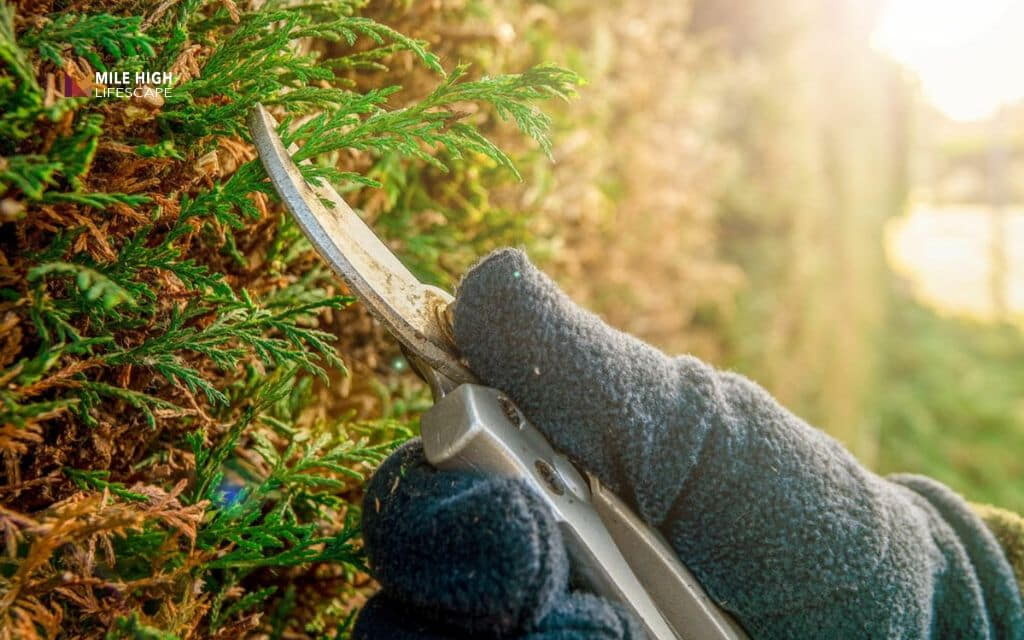
How to trim cypress trees: A step-by-step guide
Following a consistent process keeps you from over-cutting. With cypress, the most common regrets come from moving too fast and removing too much before stepping back to assess. Work slowly, move branch by branch, and remember that you can always take more off but cannot put it back.
Step 1: Walk around the tree before you cut anything
Spend two or three minutes circling the tree before you pick up a single tool. Look at the overall silhouette and identify branches that are dead, broken, crossing, or growing in a direction that disrupts the natural form.
Decide on the final shape you want before you start. Cypress should hold their natural growth habit, whether that is a narrow column, a broad pyramid, or a full hedge wall. Trying to reshape the tree as you go is how over-cutting happens.
Step 2: Remove dead, damaged, and diseased branches first
Always start with the obvious removals before doing any shaping work. Cut dead branches back to healthy wood or to the branch collar, which is the slightly swollen area where the branch meets the trunk or a larger limb.
Removing problem branches first also lets you see the tree’s true structure more clearly, which makes shaping cuts easier and more accurate. Sterilize your blades after any cut on diseased wood before moving on.
Step 3: Make light shaping cuts on the outer green foliage only
Stay in the green zone at all times. If the foliage you are reaching for is brown, stop. Any cut that goes into the brown, woody interior will leave a permanent bare patch. This rule is not flexible.
Use bypass pruners or loppers for most shaping work on specimen trees. The goal is a natural-looking result, not a flat, sheared surface. Vary the depth of your cuts slightly so some branches are trimmed closer than others. This creates texture and keeps the tree from looking like it was shaped with a ruler.
Step 4: Cut back to a side branch or green shoot
Every cut should terminate at a fork where a green shoot is still attached. This is the most important technical rule for trimming cypress. The green shoot that remains is what continues to grow and eventually covers the cut end. Without a live shoot at the cut point, you leave a stub that will die back and turn brown.
Work branch by branch from the outer edges inward. Do not try to remove entire sections at once. Selective cuts made at the right fork points keep the tree looking natural and give it the best chance of recovering quickly.
Step 5: Step back often and reassess
Every few cuts, put your tools down and walk back far enough to see the full tree. Pruning mistakes compound. What looks like a minor adjustment up close can look drastically uneven from ten feet away.
If the tree looks balanced and close to the shape you wanted, stop. It is better to under-trim and revisit the following season than to over-trim and live with bare patches for years. With cypress, patience is not just a virtue. It is the correct technique.
Step 6: Clean up and protect the tree
Rake up all fallen needles and clippings from around the base of the tree. Matted debris holds moisture against the root zone and can harbor fungal spores and insects. Dispose of any diseased material in the trash rather than composting it.
Water the tree deeply within 24 hours of pruning if conditions are dry. A freshly pruned cypress is under mild stress and needs consistent soil moisture to support recovery and new growth. Avoid fertilizing immediately after pruning. Wait until the following spring to feed, and use a slow-release evergreen fertilizer at that point.
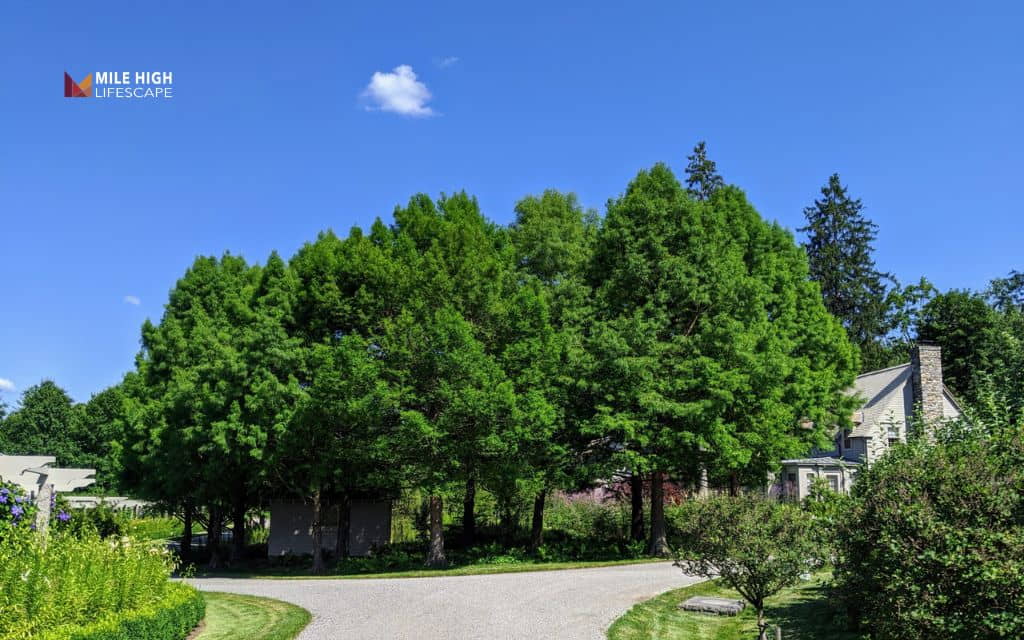
How to trim a cypress hedge?
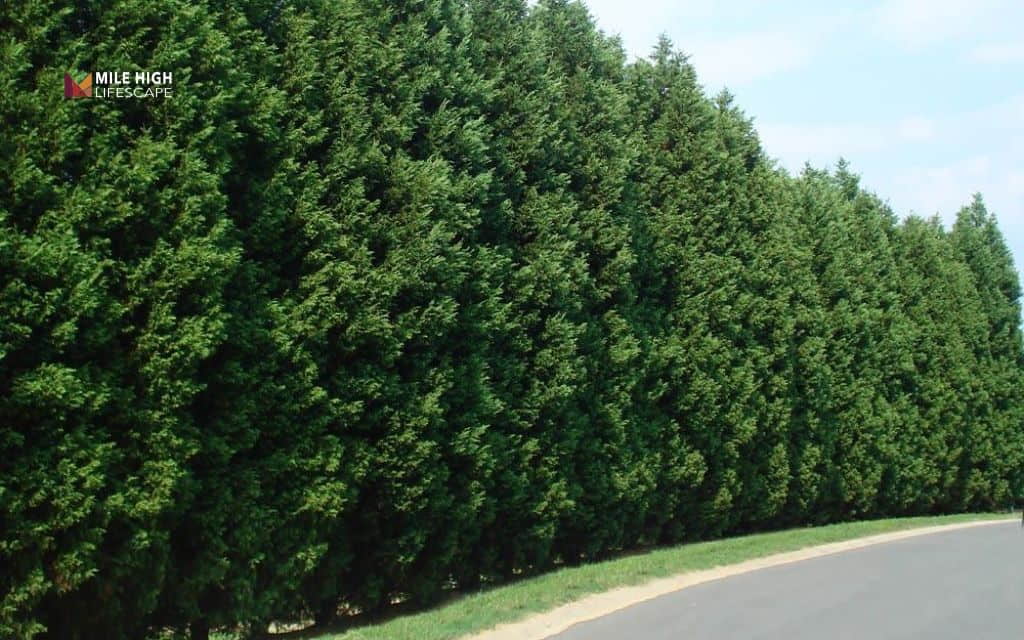
Cypress hedges, especially Leyland, tolerate more frequent trimming than standalone specimens. Shape them once or twice a year to maintain a dense, clean privacy screen. Always trim with a slight trapezoid profile, wider at the base and narrower at the top. This lets sunlight reach the lower branches and prevents the bottom of the hedge from thinning and browning over time.
Run hedge shears from top to bottom so flexible branches stay in place against the blade for a cleaner, more even cut. Step back between passes to check your lines. Most importantly, never let a hedge outgrow your safe reach. Once trimming requires an extension ladder and a powered hedge trimmer at the same time, the job belongs to a professional.
Common mistakes that ruin cypress trees
Most cypress damage is not caused by neglect. It is caused by well-intentioned pruning that crosses one of a handful of critical lines. These are the mistakes that produce permanent results:
- Cutting into old, brown wood: The single most common error. Once you cut into the brown interior, that section will not regrow. Check your depth before every cut.
- Removing too much at once: No more than 10 to 20 percent of the canopy should be removed in any single pruning session. Removing more than that stresses the tree and can trigger widespread browning.
- Topping a healthy tree: Topping removes the apical growth tip, permanently changing how the tree grows. The tree stops growing upward and pushes outward instead. The flat, stubby top is usually visible for the life of the tree.
- Pruning in extreme weather: Hot, direct sun scorches freshly cut foliage. Hard frost damages exposed tissue before it can begin to harden. Rain opens cuts to fungal infection. Always choose a mild, dry, overcast day.
- Using dull or dirty tools: Dull blades crush and tear rather than cut cleanly, which slows healing and creates ragged wounds that are easier for pathogens to penetrate. Dirty tools spread disease between cuts.
- Shearing a specimen tree: Hedge shears force outer-only cuts that create a dense shell of foliage with thinning interior growth. Over time, the inner canopy dies back and cannot recover.
- Pruning without diagnosing first: If large sections are browning, thinning, or showing bark abnormalities before you touch a pruner, the tree may be diseased or pest-infested. Pruning an already stressed tree without addressing the underlying cause spreads the problem.
Aftercare: Helping your cypress recover
A freshly pruned cypress benefits from a few weeks of attentive care. The tree is under mild stress after any pruning session, and the steps you take in the days and weeks that follow have a direct impact on how quickly and cleanly it recovers.
- Water deeply within 24 hours of pruning if the soil is dry. Keep the root zone consistently moist but not waterlogged for the following four to six weeks. Cypress cannot tolerate drought stress during recovery.
- Apply a two to three inch layer of mulch around the base of the tree, keeping it a few inches away from the trunk. Mulch holds soil moisture, moderates root temperature, and reduces competition from surrounding grass and weeds.
- Hold off on fertilizing immediately after pruning. Wait until early spring to apply a slow-release, evergreen-appropriate fertilizer. Pushing new growth too quickly after pruning stresses the tree rather than helping it.
- Monitor the tree over the following weeks for signs of trouble: browning beyond the cut areas, new dieback, oozing bark, unusual discoloration, or increased pest activity. Catching problems early gives you the best window to address them before they become serious.
Conclusion
Cypress trees are not forgiving of aggressive pruning, but they reward a patient, disciplined approach with decades of dense, attractive growth. The rules are straightforward: stay in the green zone, cut back to a live shoot, never remove more than a fifth of the canopy at once, and time your cuts to mild weather. Follow those principles and your cypress will stay healthy and shapely with minimal intervention year after year.
The honest test before any cypress pruning job is whether you can complete the work safely from the ground with hand tools and stay comfortably within the green foliage the entire time. If either answer is no, the job has grown beyond what should be handled as a DIY project. Bringing in a licensed arborist is not an admission of defeat. For tall, overgrown, storm-damaged, or diseased cypress, professional trimming is simply the right call, and the difference between a tree that recovers well and one that never looks the same again.
If your cypress trees have grown too large to trim safely, show signs of disease or storm damage, or need significant reshaping, the tree care team at Mile High Lifescape can assess them on-site and restore them correctly. For shrubs and hedges that have become overgrown or lost their shape, our Bush Trimming service provides precise, professional care to keep your landscape neat and healthy. We carefully shape and trim bushes while encouraging healthy growth and maintaining the overall appearance of your property. Reach out to schedule a consultation and keep your Front Range landscape looking its best.
Frequently asked questions (FAQs)
Can cypress trees be cut back hard?
No. Cypress do not regenerate from old, bare wood. A hard cutback leaves permanent brown patches that will not fill in with new growth. If significant size reduction is necessary, spread it across multiple pruning seasons, removing no more than 10 to 20 percent of the canopy per year.
What time of year should you trim cypress trees?
Late spring to early summer is best for light shaping after the spring growth flush. Late winter, just before bud break, is the right window for any size reduction cuts. Dead or damaged branches can be removed any time of year. Avoid pruning in extreme heat, frost, or rain.
Why is my cypress tree turning brown after trimming?
The most likely cause is that cuts went into old, interior wood that has no live buds. Brown areas from this type of cut will not fill back in. Other causes include pruning in direct sun, drought stress, or a fungal infection that entered through fresh cuts. Water the tree deeply, avoid further pruning, and monitor closely to identify any progression.
How much does cypress tree trimming cost?
Most U.S. homeowners pay between $200 and $800 for a single cypress, depending on tree height, accessibility, and the amount of work involved. Tall Leyland hedges, trees near power lines, or trees requiring disease assessment will typically fall at the higher end of that range. Always get a written quote from a licensed and insured tree service.
Can I trim a cypress tree myself?
Yes, if the tree is short enough to reach from the ground or a short, stable ladder, is healthy, and you are only performing light shaping within the green foliage zone. Tall trees, trees near power lines, storm-damaged specimens, and anything requiring a chainsaw at height should be handled by a certified arborist.
How often should cypress trees be trimmed?
Most cypress species need light trimming once a year to maintain their shape. Leyland cypress used as hedges can handle two light shaping sessions per year, typically in late spring and again in early fall, to stay dense and well-defined.