Brown needles, dead branch tips, and sticky resin often signal trouble for a pine tree. Not every brown patch means disease. Drought, winter injury, and normal needle shedding can look similar. This guide explains the pine tree diseases homeowners see most often, how their symptoms differ, and when a tree needs professional treatment.
Most cases start small. A cluster of yellow needles or a single canker rarely threatens the whole tree. Left untreated, though, several pine tree infections spread through the canopy and into neighboring trees. Catching symptoms early gives you more treatment options and a better chance of saving the tree.
How to identify pine tree diseases
Start by identifying the pine species in your yard. Austrian, ponderosa, Scots, and white pine each carry different disease risks, and treatment recommendations shift by species. Once you know the tree, compare what you see against common warning signs.
Many homeowners search for pine tree diseases pictures to match symptoms visually. Photos help, but pine diseases often look alike in early stages, and lighting or camera angle can hide the details that separate one disease from another. The table below breaks symptoms down by what they look like on the tree, which works better than a single reference photo.
| Symptom | What it looks like |
| Needle discoloration | Needles turn yellow, reddish-brown, or gray, often starting at branch tips or on new growth |
| Premature needle drop | Needles fall outside the normal fall shedding window, leaving branches sparse |
| Cankers | Sunken or discolored patches on bark, sometimes with raised or cracked edges |
| Resin flow | Sap oozes from wounds, cankers, or the trunk base without an obvious injury |
| Wilting or dieback | Branch tips droop, dry out, or die while the rest of the tree looks healthy |
Common pine tree diseases
Dothistroma needle blight
Dothistroma needle blight targets needles more than any other tissue, and it hits Austrian and ponderosa pine hardest. A single season of infection rarely does lasting harm, but repeated years wear a tree down.
Causes: A fungus spreads through rain splash during wet spring weather. Splashing water carries spores from infected needles to healthy ones nearby.
Symptoms: Reddish-brown bands circle the needle, each bordered by a thin yellow ring. The tip beyond the band dies while the base stays green, and affected needles drop early.
Treatment: Water at the soil line instead of overhead, since dry needles slow the fungus down. Remove and dispose of fallen needles each season to cut off the infection cycle.
Brown spot needle blight
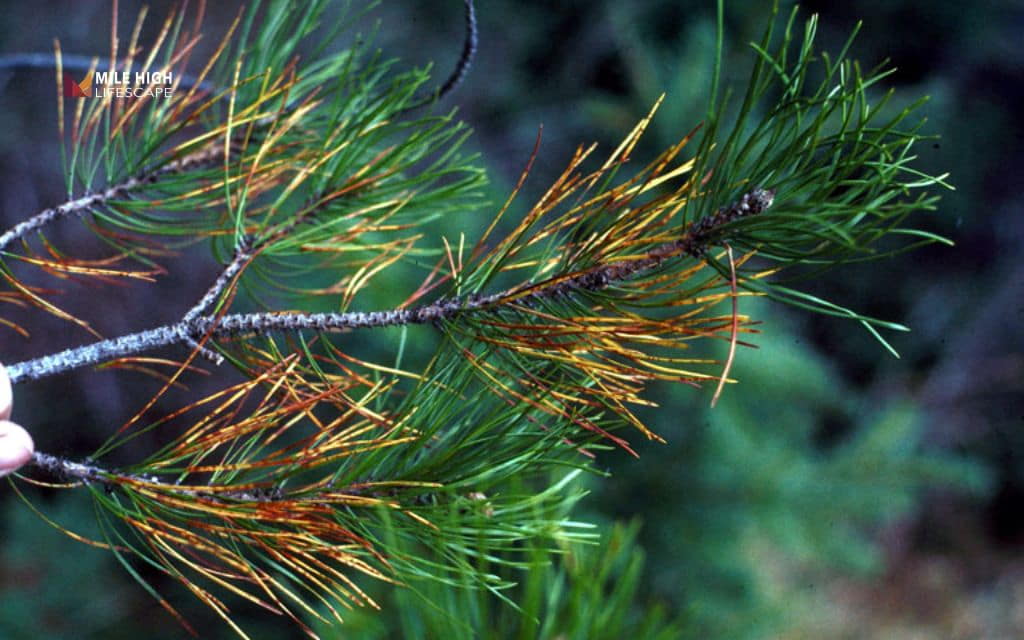
Brown spot needle blight favors young trees and lower branches. Austrian, eastern white, ponderosa, and Scots pine carry the highest risk.
Causes: A fungus overwinters in fallen needles and releases spores during wet weather in late summer, reinfecting the tree from the ground up.
Symptoms: Small gray-green spots appear on needles first. The spots widen into bands that girdle the needle, killing the tissue beyond the band and triggering needle loss by autumn.
Treatment: Clear fallen needles and debris from around the base of the tree each season. Space trees for airflow, since crowded plantings hold moisture longer after rain.
Diplodia tip blight
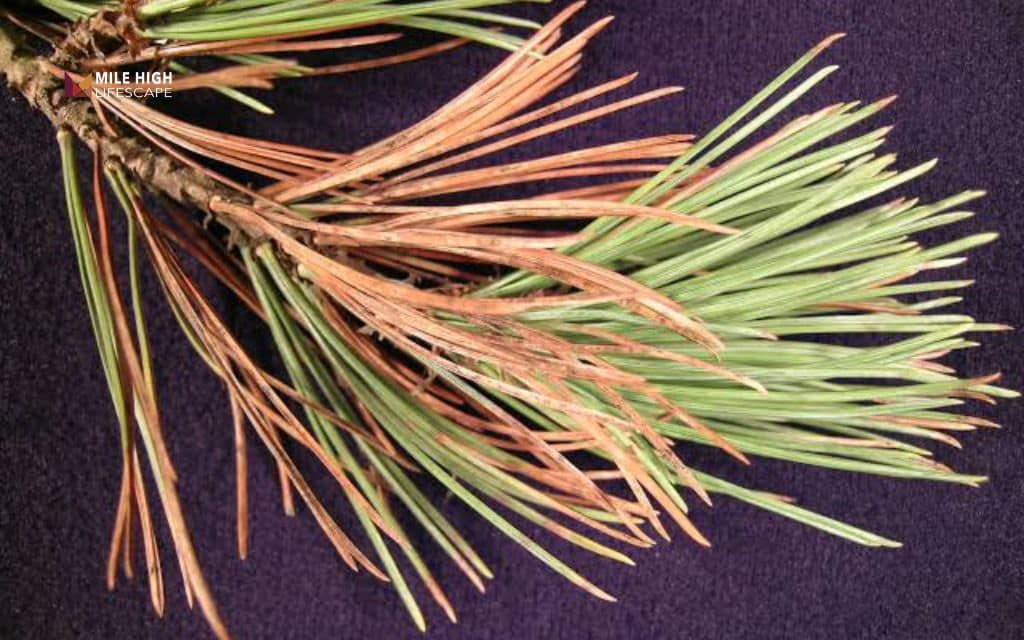
Diplodia tip blight strikes new growth first, then works into branches. Mature trees over 30 years old and drought-stressed trees take the hardest hit.
Causes: A fungus enters through pruning wounds, storm damage, or insect injury during wet weather from spring through early fall.
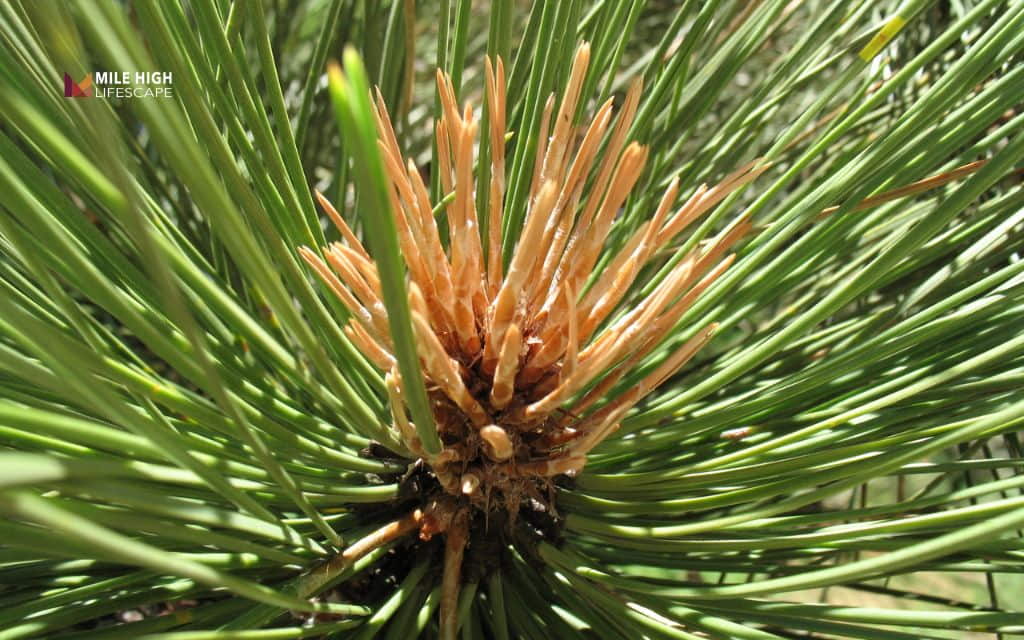
Symptoms: New shoots turn brown and brittle, and resin often pools at the point of infection. Cankers can girdle and kill entire branches if the infection spreads.
Treatment: Prune infected tips in dry weather only, and disinfect tools between cuts to avoid spreading the fungus to healthy wood.
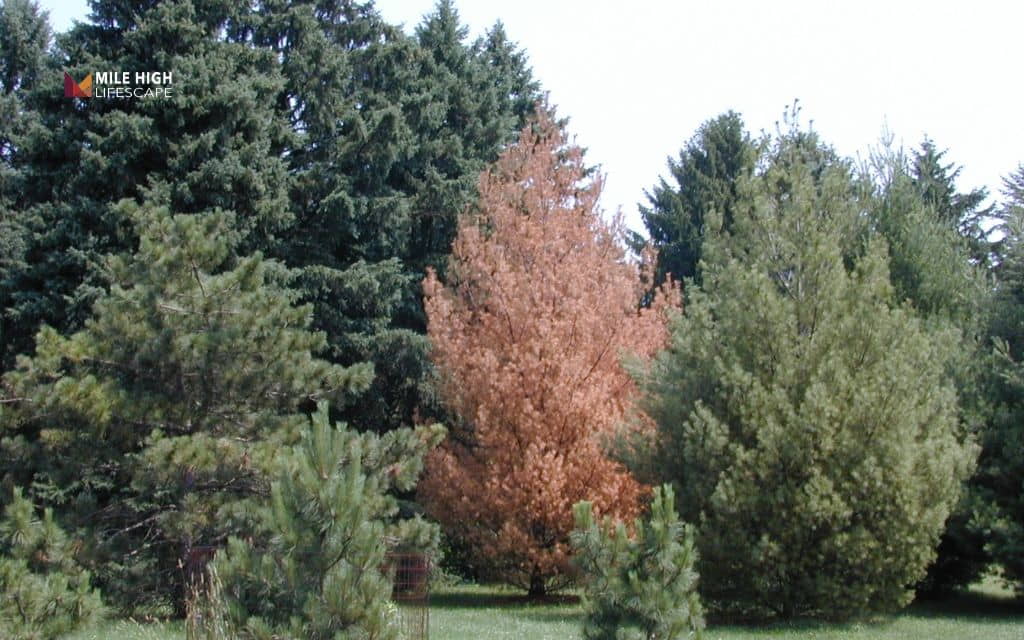
Pine wilt disease
Pine wilt causes one of the fastest declines of any pine tree disease. Scots and Austrian pine show the highest susceptibility in landscape settings.
Causes: A microscopic nematode, carried by wood-boring beetles, clogs the tree’s water-conducting tissue and cuts off its water supply.
Symptoms: Resin flow drops off before other signs appear. Needles lose their green color, turning gray-green, then yellow, then reddish-brown, and the whole tree wilts within weeks.
Treatment: Confirm the nematode under a microscope before treating, since other diseases produce similar symptoms. Remove and destroy an infected tree quickly to protect trees nearby.
Pitch canker
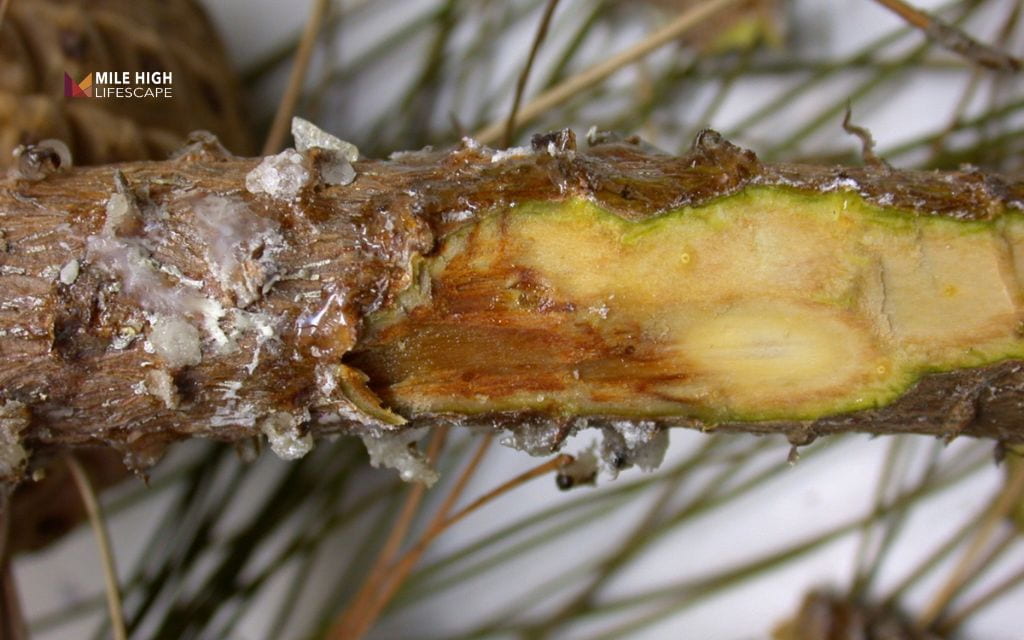
Pitch canker damages branches, trunks, and exposed roots, and bark beetles often spread it from tree to tree.
Causes: A fungus enters through beetle wounds and other injuries, then spreads through the tissue it infects.
Symptoms: Sunken, resin-soaked cankers form at the infection site, and heavy resin flow is often the first sign an owner notices. The lesions girdle and kill tissue beyond that point.
Treatment: Remove infected branches during dry weather to limit spread. Trunk infections are harder to manage and sometimes call for full tree removal.
Fusiform rust
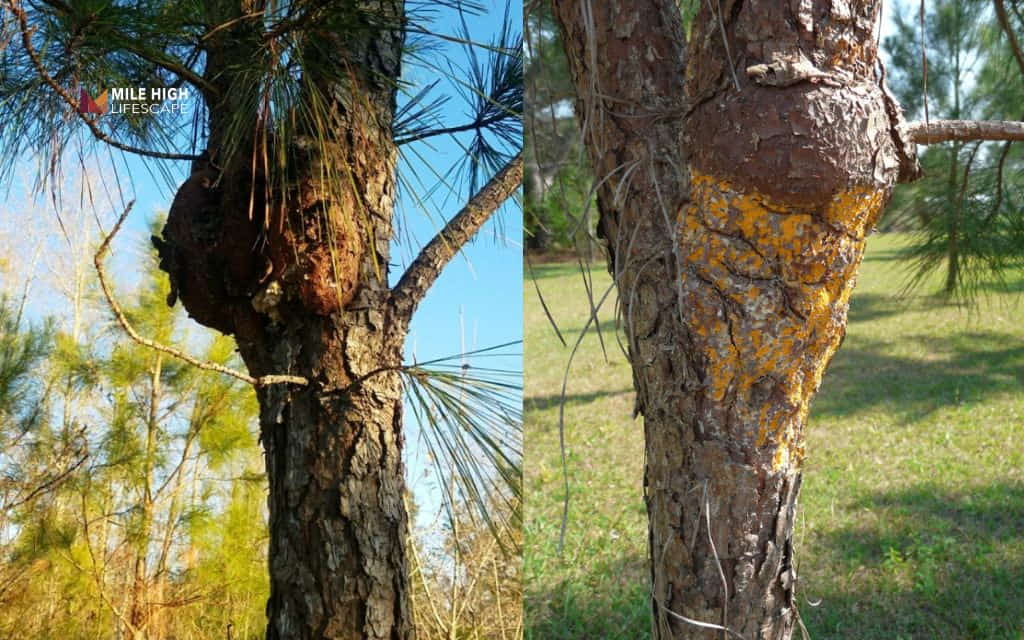
Fusiform rust affects southern pines most often, including loblolly and slash pine, and it needs oak trees nearby to complete its cycle.
Causes: Spores alternate between pine and oak each year, spreading on the wind between the two hosts.
Symptoms: Spindle-shaped, swollen galls form on branches and trunks. The galls disrupt sap flow and can girdle the section of tree they surround, weakening it against wind and storm damage.
Treatment: Prune galled branches while they are still small. Treatment on the trunk is rarely practical once a gall forms there.
Annosus root rot
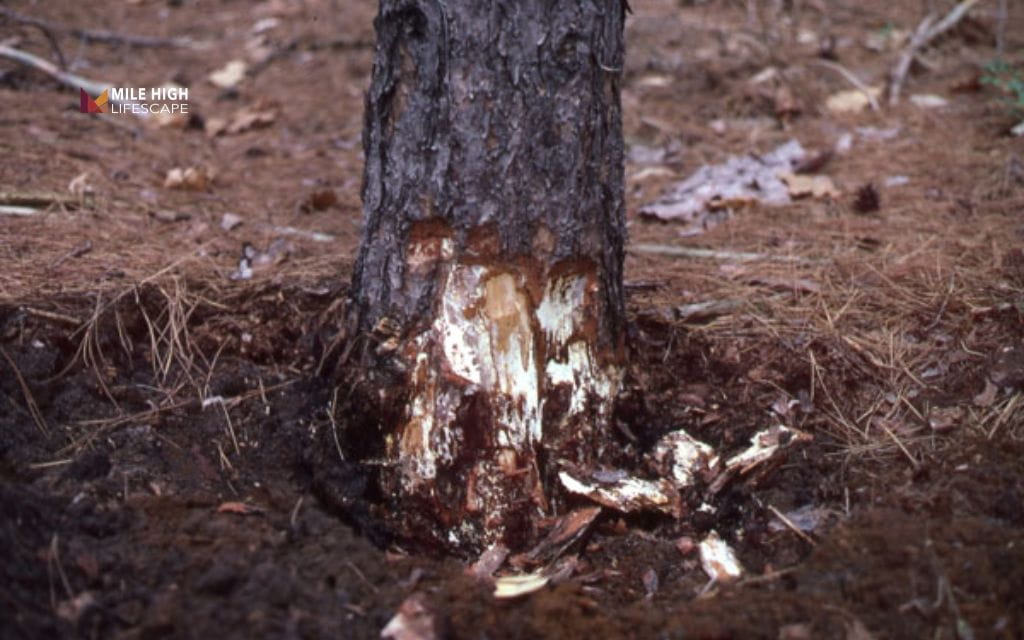
Annosus root rot is one of the more serious pine tree bark diseases, since it compromises a tree’s structural stability from below ground.
Causes: A fungus spreads through root contact between trees and through spores that land on freshly cut stumps.
Symptoms: Above ground, infected trees show slowed growth, thinning needles, and gradual decline. Below ground, roots and the trunk base develop soft, stringy white rot, sometimes with shelf-like fruiting bodies near the soil line.
Treatment: Treat fresh stump surfaces right after any tree removal to block the fungus from reaching neighboring pines.
Several of these, including diplodia tip blight, pitch canker, and annosus root rot, show up first as bark or trunk symptoms rather than needle discoloration. Watching for resin flow, sunken cankers, and bark discoloration catches these pine tree bark diseases earlier than waiting for needle symptoms to appear.
Preventing pine tree diseases
Prevention works better than treatment for most cases, and it starts with the basics:
- Water deeply and infrequently: Avoid wetting the needles, since standing moisture on foliage helps fungal spores germinate.
- Space trees for airflow: Crowded plantings trap humidity and slow drying after rain, so give new pines room between canopies.
- Mulch the base: A layer of mulch conserves soil moisture and moderates temperature, but keep it a few inches back from the trunk.
- Protect the bark: Avoid wounding the trunk with mowers or trimmers, since open wounds give fungi and beetles an easy entry point.
- Practice good sanitation: Prune during dry weather, disinfect tools between cuts, and remove fallen needles, cones, and dead branches promptly.
- Choose the right species: Pine varieties suited to your climate and soil resist stress, and a less stressed tree fights off pine tree infections more effectively than one already struggling.
Disease vs. stress: how to tell the difference
Pine trees drop their oldest, innermost needles every fall. This natural shedding worries many owners, but it rarely signals disease. Needles nearest the trunk turn yellow or brown while newer growth at the branch tips stays green.
Drought stress and winter burn produce similar symptoms without a pathogen involved. Drought-stressed pines show scattered yellowing across the whole tree, and the needles usually recover once watering resumes. Winter burn shows up as reddish-brown needles on the side of the tree exposed to wind and sun, appearing in late winter or early spring.
True disease behaves differently. Symptoms concentrate in one section of the canopy and keep spreading even after care improves. Insect damage adds another layer of confusion, since bark beetles and sawflies cause needle loss that can mimic infection. If symptoms don’t fit drought, winter injury, or normal shedding, and they keep progressing, you are likely looking at disease.
Conclusion
Pine tree diseases range from cosmetic needle issues to fast-moving infections that threaten the whole tree. Identifying the pine species, distinguishing disease from stress, and watching for patterns instead of isolated symptoms puts homeowners in a much better position to respond early.
For nearly two decades, Mile High Lifescape has served the Denver Metro area with dependable landscape care. Our Tree and Shrub Care team diagnoses pine tree diseases, prunes infected branches, and helps restore healthy growth before small problems become bigger ones. Call us at (303) 877-9091 to schedule a consultation!
Frequently asked questions (FAQs)
What does a diseased pine tree look like?
Symptoms vary by disease, but common signs include discolored or dying needles, dead branch tips, cankers on the bark, and unusual resin flow. Comparing pine tree diseases pictures against your tree’s specific pattern of symptoms narrows down the likely cause faster than looking at needle color alone.
Can a pine tree recover from disease?
Many needle diseases, including Dothistroma and brown spot needle blight, allow the tree to recover once the fungus is managed and new growth replaces damaged needles. Canker diseases and pine wilt carry a lower recovery rate, especially once symptoms spread through a large section of the canopy.
What is the fastest-spreading pine tree disease?
Pine wilt disease causes the quickest decline, sometimes killing a tree within weeks of visible symptoms. Needle diseases progress more gradually, often over multiple growing seasons.
Are there minor pine tree fungus problems that don’t need treatment?
Needle rust causes yellow spots and white or orange blisters on needles, but it rarely threatens tree health and often needs no chemical treatment. Needle cast, caused by several different fungi, thins the canopy in humid regions but responds well to sanitation and improved airflow without more aggressive intervention.
Do all pine diseases pictures show the same symptoms?
No. Pine diseases pictures can look similar across different pathogens, especially in early stages, which is why matching symptoms to a species-specific pattern, and consulting a professional when unsure, works better than relying on photos alone