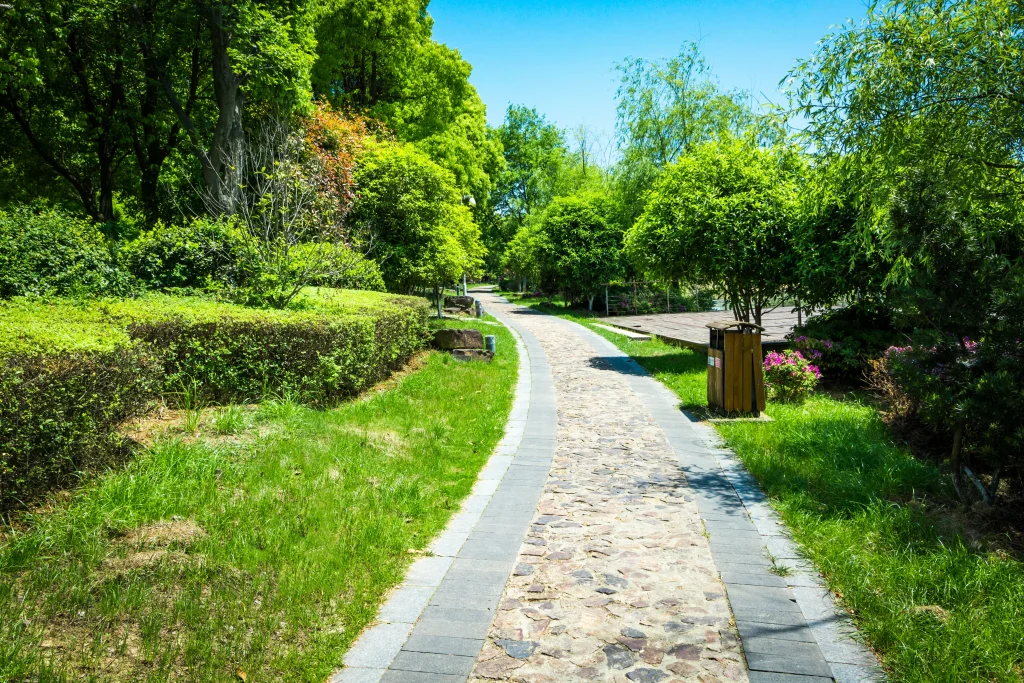
Florida rewards the right turfgrass and punishes the wrong one quickly. Heat, humidity, sandy soil, and long dry stretches wear down species built for cooler regions within a single season, while grasses bred for subtropical climates settle in and hold their color through summer storms and winter dry spells alike.
This guide breaks down the main types of florida grass, how each performs under real yard conditions, and which one fits a given lawn based on sun, soil, salt exposure, and how much upkeep an owner is willing to put in.
What makes Florida grass selection different
Florida’s growing season runs nearly year round, so lawns need turfgrass built for constant activity rather than a few warm months. That same heat brings high humidity, which favors fungal disease in species without natural resistance, and sandy soil that drains fast and holds few nutrients, so fertility and disease resistance matter more here than in most states.
Rainfall arrives in heavy bursts followed by dry spells, and coastal properties add salt spray or brackish irrigation water into the mix. Grass that handles Florida’s sun but folds under salt, or tolerates drought but can’t shake fungal disease in wet months, will underperform no matter how it’s maintained. Matching species to these conditions, not general popularity, decides how a lawn holds up.
Types of Florida grass at a glance
St. Augustinegrass
St. Augustinegrass carries the best shade tolerance among Florida’s common turfgrasses, which makes it the default choice for yards broken up by tree canopy or building shadow. Its broad, blue-green blades form a dense, carpet-like lawn in Central, South, and coastal Florida, where humidity and heat run high for most of the year.
That shade tolerance comes with upkeep. St. Augustine needs mowing around three to four inches, steady fertilization, and watching for chinch bugs and fungal issues like gray leaf spot and large patch. It establishes only from sod, plugs, or sprigs, since commercial seed for this species isn’t viable for home lawns.

Zoysiagrass
Zoysiagrass builds a dense, fine-bladed mat that holds up under foot traffic better than most warm-season options, which is why it shows up on active family lawns as well as golf courses. It tolerates light shade better than Bermuda and handles occasional drought once its roots are established, making it a reasonable fit for Central and North Florida.
The tradeoff is establishment speed. Zoysia spreads slowly compared to St. Augustine or Bermuda, so weed pressure during the first season needs attention, and mowing height stays low, around one to two and a half inches. Most Florida zoysia lawns start from sod or plugs rather than seed, since seeded varieties available for home use are limited and slower still.

Bermudagrass
Bermudagrass grows fast and dense in full sun, recovering quickly from foot traffic, pets, and heavy use, which makes it a common pick for sports fields and active yards across Central and North Florida. Its deep root system gives it the best drought tolerance among the widely planted species, and it holds up reasonably well against salt exposure too.
Full sun is non-negotiable. Bermuda declines fast in shade and needs frequent mowing, kept low at one to two inches, to avoid thatch buildup. Common Bermuda establishes readily from seed, one of the more reliable picks among the best grass seed for Florida sandy soil, while hybrid, higher-density types are sterile and require sod or sprigs instead.

Bahiagrass
Bahiagrass is the low-input option for Florida’s sandy, nutrient-poor soils, asking for less water and fertilizer than nearly any other species on this list. Its coarse texture and open growth habit won’t match the density of St. Augustine or Zoysia, but for homeowners prioritizing durability over polish, particularly in North and Central Florida, that tradeoff is often worth it.
Bahia is also the species most searched for when homeowners look up the best grass seed for Florida, since it’s the state’s most widely seeded turfgrass and performs reliably from seed rather than sod. Its main limitation is salt tolerance, which runs low, making it a weaker fit for coastal yards, and it tends to struggle in the alkaline soils common near South Florida’s coast.

Centipedegrass
Centipedegrass earned the nickname “lazy man’s grass” for a reason: it grows slowly, needs minimal fertilizer, and rarely requires more than occasional mowing, kept short at one to two inches. It favors acidic, sandy soils typical of North and Central Florida and tolerates light shade better than Bermuda.
Its low input comes at the cost of wear resistance and salt tolerance, both of which run low, so it’s a poor match for high-traffic yards or properties near saltwater. Centipede establishes from seed, sod, or plugs, with seed offering the most budget-friendly route for homeowners covering larger, low-traffic areas.

Seashore paspalum
Seashore paspalum handles salt better than any other turfgrass grown in Florida, tolerating ocean spray, brackish irrigation, and the salty groundwater common along the coast. Its fine texture and dark green color give it a manicured look that rivals Zoysia, which is why it shows up on waterfront properties and coastal golf courses from Tampa to Naples.
That performance requires attention. Seashore paspalum grows aggressively, builds thatch fast if overwatered or overfed, and needs mowing on a tight schedule to stay presentable. It’s also sensitive to many common herbicides, so weed control often calls for professional input. Most lawns start from sod or sprigs rather than seed.

Choosing a planting method for Florida grass
How a lawn gets established depends on the species chosen as much as the budget available. Bahiagrass and centipedegrass are the two realistic candidates for seeding a Florida lawn from scratch, and searches for the best grass seed for south Florida lawns or best grass seed for sandy soil in Florida usually point back to one of these two.
St. Augustinegrass and seashore paspalum skip seed entirely and establish only from sod, plugs, or sprigs, since commercial seed isn’t available or reliable for home use. Bermudagrass splits the difference: common varieties grow well from seed, while denser hybrid types require sod or sprigs because they don’t produce viable seed of their own. Zoysia falls closer to St. Augustine, with sod and plugs producing far more consistent results than the limited seed varieties on the market.
Conclusion
The types of Florida grass covered here share one trait: none of them work everywhere. Sun exposure, soil type, salt risk, and how much upkeep a household wants to take on should drive the choice, not which species looks best in a neighbor’s yard.
Colorado’s climate calls for a different playbook entirely, with high altitude, clay soil, and freeze-thaw cycles replacing Florida’s heat and humidity as the main challenges. Homeowners in that situation can reach Mile High Lifescape‘s lawn care service at (303) 877-9091.com to match a grass variety to Denver’s semi-arid conditions.
Frequently asked questions (FAQs)
What is the easiest Florida grass to maintain?
Bahiagrass and centipedegrass need the least water, fertilizer, and mowing of the common Florida turfgrasses, making them the top picks for homeowners who want a lawn without a heavy maintenance schedule.
What is the best grass seed for Florida sandy soil?
Bahiagrass seed performs best in Florida’s sandy soils, since the species evolved to handle low-fertility, fast-draining ground with minimal fertilizer input.
Which Florida grass tolerates salt best?
Seashore paspalum outperforms every other common Florida turfgrass under salt exposure, which is why it’s the standard choice for coastal and waterfront lawns.
Should a Florida lawn be seeded or sodded?
It depends on the species. Bahiagrass and centipedegrass establish reliably from seed, while St. Augustinegrass, seashore paspalum, and most Zoysia and hybrid Bermuda varieties need sod, plugs, or sprigs instead.
When is the best time to plant grass in Florida?
Late spring through early summer gives new grass, whether seeded or sodded, a full growing season to root before temperatures drop, and lines up with the summer rains that reduce how much supplemental watering is needed.