Mulching vs side discharge comes down to grass height, moisture, mowing frequency, and the finish you want. Mulching suits dry, regularly maintained lawns because it cuts clippings into finer pieces. Side discharge handles taller or heavier growth more efficiently. The better choice depends on current lawn conditions rather than one method being best in every situation.
Mulching Vs Side Discharge: What Is The Difference?
The main difference between mulching vs side discharge is how the mower handles grass clippings. A mulching mower keeps clippings under the deck longer, cuts them into smaller pieces, and drops them back into the turf. A side-discharge mower releases clippings through an opening on the side soon after they are cut.
| Feature | Mulching | Side Discharge |
| Clipping size | Finer | Longer |
| Mowing speed | Moderate | Usually faster |
| Best conditions | Dry, regularly cut turf | Taller or heavier grass |
| Finish | Cleaner when conditions suit | More visible clippings |
| Deck load | Higher | Lower |
Mulching Vs Side Discharge: Pros And Cons
A fair mulching vs side discharge comparison should consider more than appearance. Clipping volume, mower load, weather, and mowing frequency all affect the result.
Benefits – Drawbacks Of Mulching
Mulching can produce a tidy finish while returning finely cut material to the lawn. Grass clippings contain useful nutrients and break down quickly when they remain small and evenly distributed. Research-based lawn guidance also confirms that properly managed clippings do not create thatch.
The main advantages include:
- Fine clippings settle into the turf quickly.
- Nutrients return to the soil as clippings decompose.
- Less cleanup is usually required.
- No collection bag needs frequent emptying.
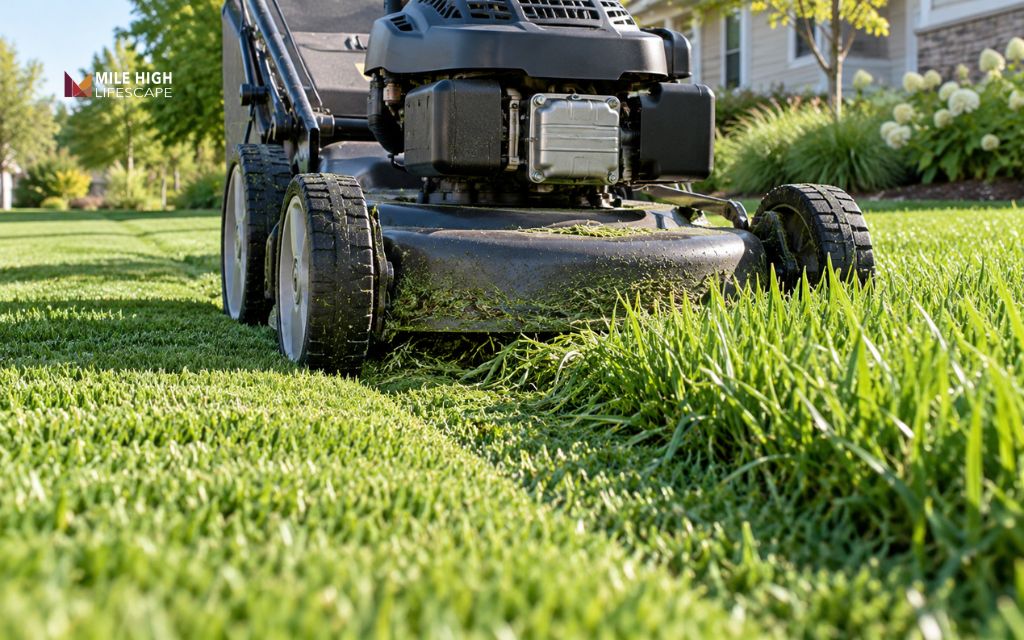
The drawbacks become more noticeable when grass is wet, very tall, or cut infrequently. A mulching deck can clog or leave visible clumps when too much material stays under the mower at once.
For broader guidance on mowing height and frequency, Mile High Lifescape explains the fundamentals of how to mow the lawn.
Benefits – Drawbacks Of Side Discharge
Side discharge moves clippings out of the deck quickly, which helps the mower handle greater grass volume with less recirculation. This makes side discharge or mulch an important choice when turf has grown rapidly between cuts.
The main benefits include:
- Tall grass passes through the mower more easily.
- Larger lawns can often be cut faster.
- Heavy clipping volumes place less load on the deck.
- Damp conditions are easier to manage than with mulching.
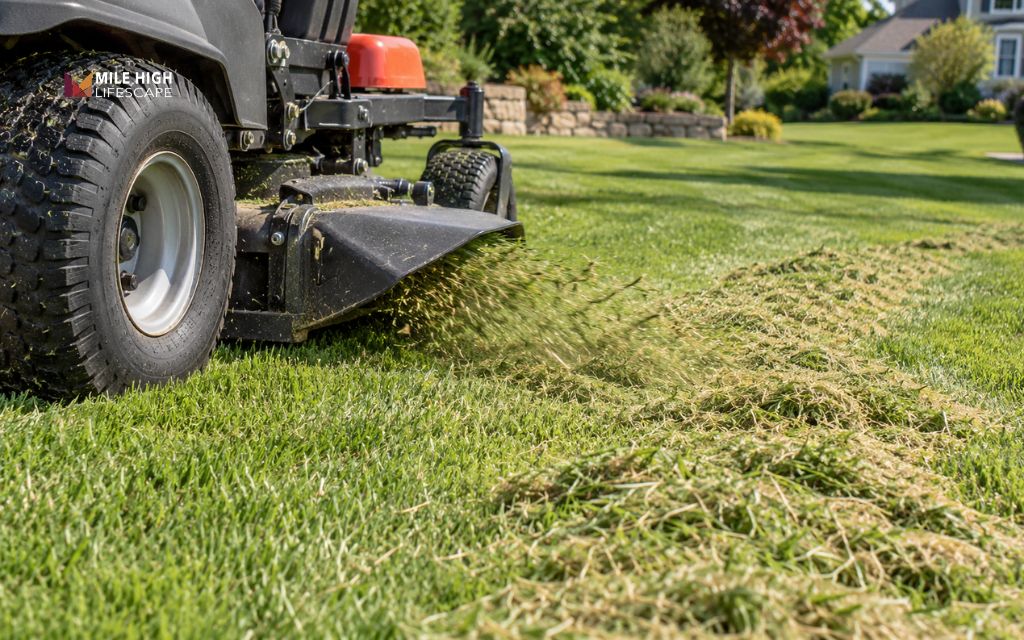
The trade-off is appearance. Longer clippings may remain visible or form rows across the lawn. Discharge direction also matters near driveways, pavements, flower beds, and streets, where clippings should not be left on hard surfaces.
When To Mulch And When To Side Discharge
Whether you choose mulch or side discharge should depend on what the lawn needs at the time. Short, dry grass usually suits mulching, while heavier or faster growth often calls for side discharge.
When Mulching Works Best
Mulching performs best on a dry lawn that receives regular cuts. Mowing often enough to remove no more than about one-third of the grass blade keeps clippings short enough to disappear into the canopy and decompose quickly.
Choose mulching when:
- Grass is dry and relatively short.
- Mowing takes place on a regular schedule.
- A cleaner finish is important.
- Clippings can spread evenly.
- Nutrient recycling is a priority.
When Side Discharge Works Better
Side discharge generally performs better when the mower has to process a large amount of grass in one pass. Taller turf, dense spring growth, or an extended gap between cuts can overwhelm a mulching setup.
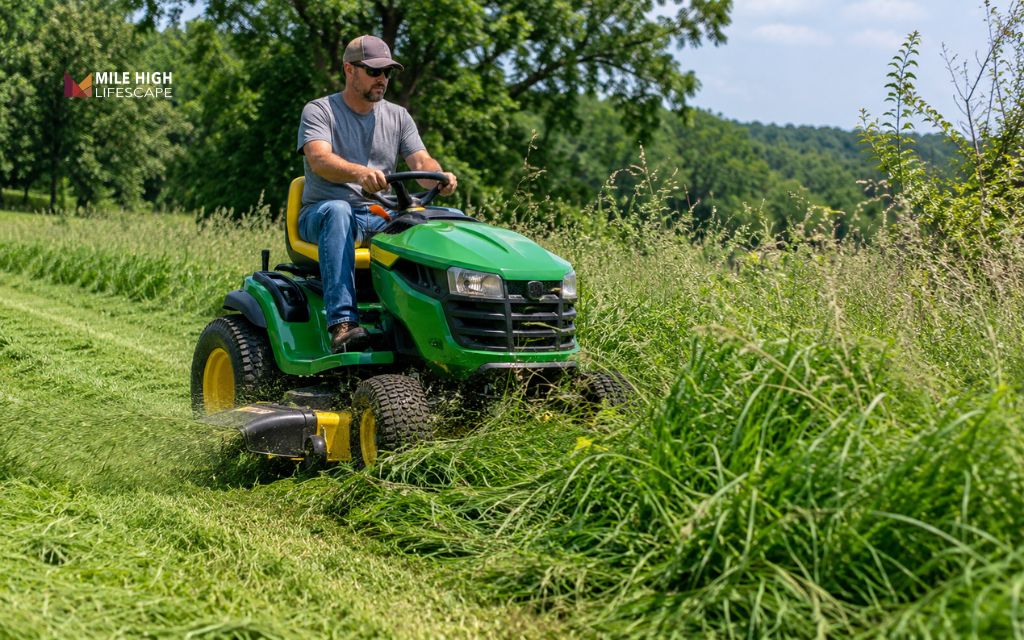
Side discharge is usually the better option when:
- Growth is too heavy for fine recutting.
- A large property needs efficient mowing.
- Clippings would otherwise collect beneath the deck.
- Lawn conditions change rapidly during the season.
Mulch Or Side Discharge For Wet Grass?
Whenever possible, allow wet turf to dry before mowing. Wet grass tends to bend rather than cut cleanly, while damp clippings can stick beneath the deck and form heavy clumps.
If mowing cannot wait, side discharge or mulch becomes a practical comparison. Side discharge normally handles damp material better because the clippings leave the deck sooner. Mulching keeps them circulating longer, which increases the chance of clogging.
The best result still comes from mowing when the grass surface is reasonably dry.
Mulch Or Side Discharge For Tall And Overgrown Grass?
Side discharge is generally the safer choice for tall or overgrown grass. A high volume of long clippings can overwhelm a mulching mower and leave thick piles on the turf.
Raise the cutting height for the first pass rather than cutting the lawn directly back to its normal level. Turf specialists commonly recommend removing no more than one-third of the leaf height at a time.
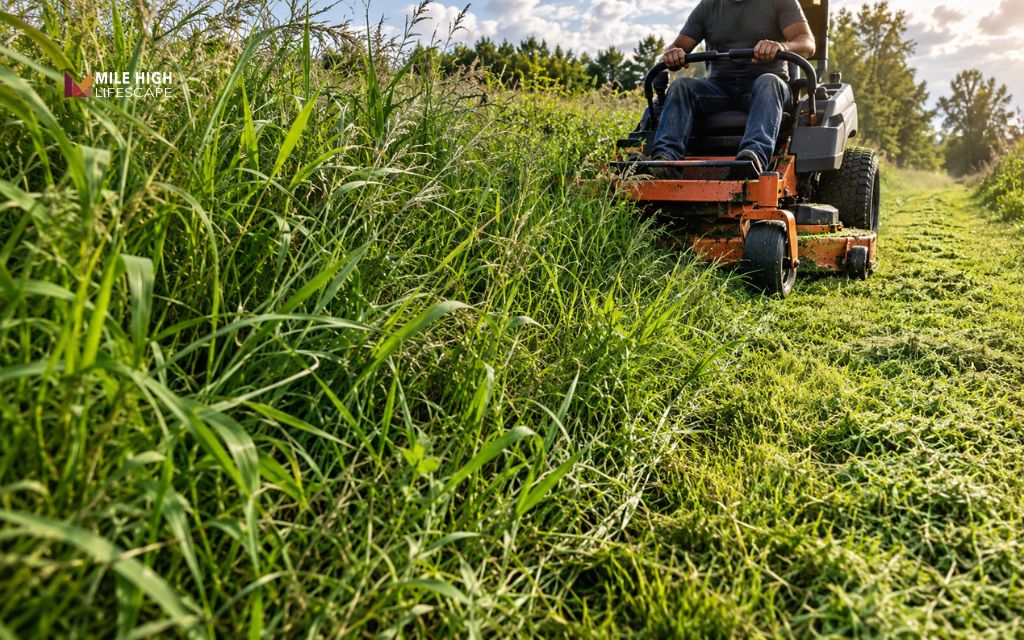
After several days, a second cut can bring the lawn closer to the desired height. If the lawn has become thin or uneven after prolonged neglect, lawn aeration may also form part of a wider recovery plan.
Mulching Vs Side Discharge For Cut Quality And Lawn Health
Both methods can support a healthy lawn, but they handle clippings differently. In a mulching vs side discharge comparison, mulching usually gives a cleaner finish on short, dry grass, while side discharge performs better when growth is heavier.
| Factor | Mulching | Side Discharge |
| Cut appearance | Cleaner when grass is short and dry | More visible clippings may remain |
| Clipping size | Fine and evenly distributed | Longer and less finely cut |
| Nutrient return | Clippings decompose quickly | Clippings still return nutrients if left |
| Heavy growth | Can clog or leave clumps | Handles higher clipping volume better |
| Lawn health | Good with regular mowing | Equally suitable with proper mowing |
| Best use | Routine lawn maintenance | Tall, thick, or fast-growing grass |
Mulch Or Side Discharge: Which Should You Choose?
The best choice in a mulching vs side discharge comparison depends on current lawn conditions rather than one method being better all the time.
| Choose Mulching When | Choose Side Discharge When |
| Grass is short and dry | Grass is tall or thick |
| You mow regularly | Growth has become heavy |
| You want finer clippings | You need faster mowing |
| A cleaner finish matters | Clipping volume is high |
If you are deciding between mulch or side discharge, use mulching for routine maintenance and side discharge when the lawn has become too heavy for efficient recutting.
Bring A Finished Look To Your Landscape With Mulch Installation
At Mile High Lifescape, we see mulch as more than a finishing touch. The right material and placement can help planting beds hold moisture, limit weed growth, and create a cleaner transition between lawns, trees, and garden areas. Our Mulch Installation service is tailored to the condition and layout of each Denver-area property.
Rather than simply spreading a new layer over what is already there, we look at bed depth, existing material, drainage, and plant spacing before we begin. That approach helps us deliver a more balanced result that looks polished, supports the surrounding landscape, and is easier to maintain over time.
Final Thoughts
The best approach to mulching vs side discharge depends on the condition of the lawn at the time of mowing. Mulching suits dry, regularly maintained grass and gives a cleaner finish, while side discharge handles taller or heavier growth more efficiently. Rather than relying on one method for every cut, adjust your mowing setup as grass height, moisture, and seasonal growth change.
Is It Better To Mulch Or Side Discharge Grass?
Mulching works best for short, dry grass, while side discharge is better for tall, thick, or heavy growth.
Does Side Discharge Cause Thatch?
No. Grass clippings usually decompose quickly and are not a major cause of thatch when mowing is done regularly.
Is Mulching Better For Lawn Health?
Mulching can benefit the lawn by returning nutrients and organic matter through finely cut clippings.
Can You Side Discharge Wet Grass?
Yes, but mowing wet grass is best avoided. Side discharge generally handles damp clippings better than mulching.