Mulch protects soil, roots, and beds, but only at the right thickness. Too little lets weeds through and dries the soil, and too much holds water against roots and bark. Most landscapes need 2 to 4 inches, and 3 inches suits the widest range of plants.
This guide explains how deep mulch should be for flower beds, trees, shrubs, and vegetable gardens. It shows how soil, mulch material, and weed pressure change the number, how to keep mulch clear of stems and trunks, and how to measure and order the right amount for your bed.
The short answer on mulch depth
How thick should mulch be? The working range runs from 2 to 4 inches. Use 2 to 3 inches in most beds, and go up to 4 inches around trees, shrubs, and ground with heavy weed pressure. The simplest answer to how deep mulch should be is 3 inches, adjusted for the factors below.
Knowing how deep mulch should be before you spread it saves material and protects roots. The same 3 inches that guards a shrub border can smother a row of seedlings, so plant type, soil, material, and weed pressure each shift the number.
How deep mulch should be for each planting
Every flower bed holds moisture and blocks weeds best under 2 to 3 inches of mulch, while trees and shrubs take a little more. Vegetable gardens and small perennials need less. The table shows how deep mulch should be for each planting and how much clear space each one needs.
| Planting | Depth | Keep clear of | Reason |
| Trees | 2 to 4 inches | 3 to 6 inches from the trunk | Insulates roots without trapping moisture on bark |
| Shrubs | 2 to 4 inches | 2 to 3 inches from the base | Holds moisture and suppresses weeds |
| Flower beds | 2 to 3 inches | Stems and crowns | Protects soil without smothering stems |
| Small perennials | 1 to 2 inches | Crowns | Lets spring sun warm the soil |
| Vegetable gardens | 1 to 2 inches | Stems | Keeps moisture in while soil warms |
| Slopes | 1 to 2 inches | Plant bases | Keeps mulch from sliding in heavy rain |
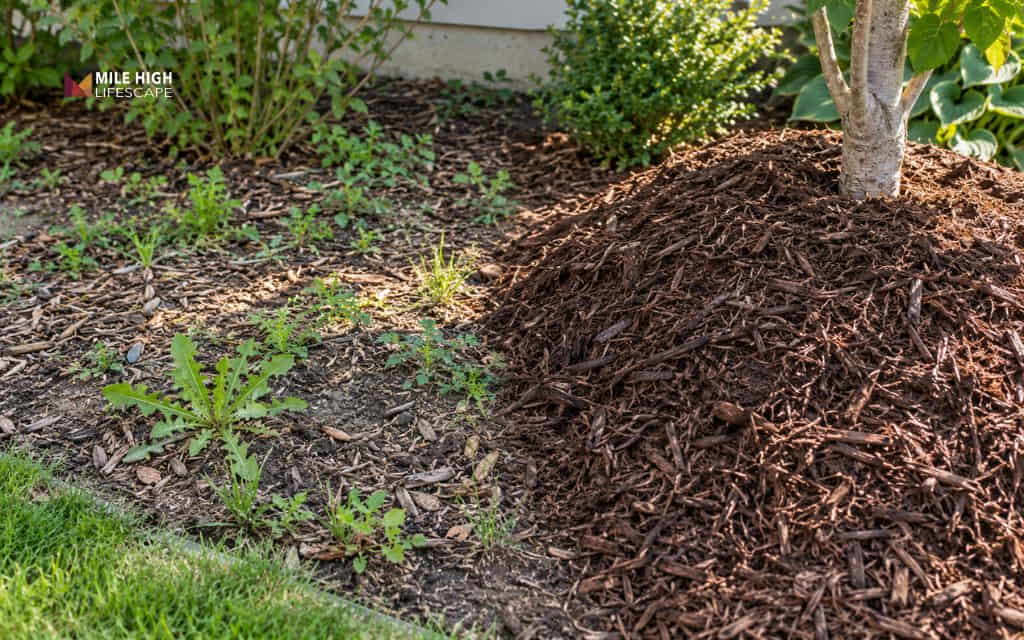
Trees need a flat, wide ring that reaches toward the drip line, with the root flare visible at the soil surface. Mulch piled against a trunk, called a mulch volcano, traps moisture against the bark and invites decay. Shape the ring like a donut, never like a cone.
How soil, drainage, and season change the depth
Soil decides how thick to mulch. Sandy soil loses water fast and takes 3 to 4 inches, heavy clay takes 2 to 3 inches, and beds that stay waterlogged take less. Check drainage first, because how deep mulch should be depends on whether water can leave the bed.
Season changes how deep mulch should be as well. New plantings establish roots more easily under 3 to 4 inches, which keeps soil moisture steady, and spring perennials wake sooner under 1 to 2 inches, which lets sun warm the soil. Where mulch already covers the bed, add about 1 inch instead of a full layer.

How mulch type changes the depth
Particle size sets how deep mulch should be. Fine mulch, such as sawdust, packs into a crust that repels water and limits airflow, so keep it to 2 inches or less. Coarse mulch, such as wood chips, lets air and water pass and tolerates 3 to 4 inches. Loose materials settle, so measure again after the first heavy rain.
| Material | Depth |
| Wood chips | 2 to 4 inches |
| Compost or leaf mold | 1 to 3 inches |
| Dry grass clippings | Up to 3 inches |
| Fresh grass clippings | Up to 1 inch |
| Sawdust | 1 to 2 inches |
Organic mulch breaks down and feeds the soil, so its layer thins each season, while rock stays in place and adds nothing to the soil. Match the depth to the material, because how deep mulch should be changes from one material to the next.
What goes wrong when mulch is too thin or too deep
Thin mulch fails on three fronts: weeds push through, soil dries fast, and the layer looks patchy within weeks. Plants then need more water, and the bed needs more weeding. Reaching at least 2 inches prevents most of these problems.
Deep mulch causes the opposite problems. It holds excess moisture in the root zone, which stresses plants and can lead to root rot. Thick fine mulch mats into a layer that blocks water and air, and mulch piled against a trunk invites insects, disease, and rodents. Knowing how deep mulch should be helps you avoid all of these.
How deep should mulch be to prevent weeds
Weed control moves how deep mulch should be to the upper half of the range. Three to four inches blocks light from reaching weed seeds while still letting plants breathe. No layer stops every weed, though, because roots left in the soil regrow beneath the mulch, and tough weeds push through the layer unless you remove them first.
Pull weeds by the root, then spread 3 to 4 inches and stop there. For weed control, how deep mulch should be tops out at 4 inches, since a deeper layer blocks oxygen from reaching roots and encourages fungal growth.
How to measure, apply, and order mulch
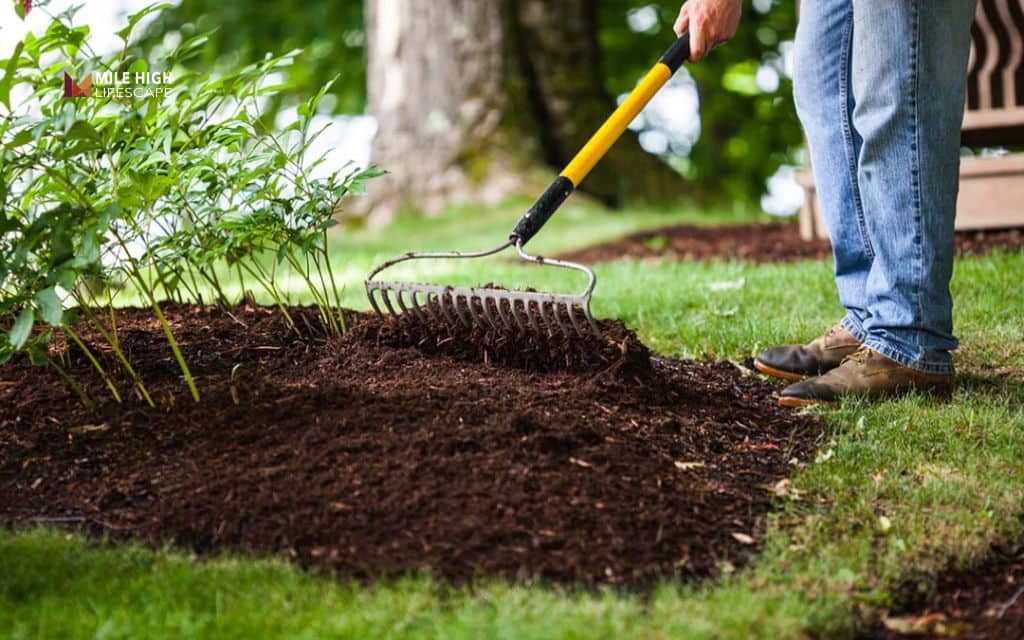
Measure the existing layer with a ruler at several points, because old mulch counts toward the total. If the layer already matches how deep mulch should be, add nothing and rake it to break up mats. Add new mulch only after about 1/2 inch has broken down, and pull it back from stems and trunks before you smooth the surface.
| Step | Calculation | Example: 10 by 20 foot bed at 3 inches |
| Cubic feet | Square feet × depth in inches ÷ 12 | 200 × 3 ÷ 12 = 50 cubic feet |
| Cubic yards | Cubic feet ÷ 27 | 50 ÷ 27 = about 1.9 cubic yards |
| 2-cubic-foot bags | Cubic feet ÷ 2 | 50 ÷ 2 = 25 bags |
Before you order, confirm how deep mulch should be for each bed, then run the numbers above. One cubic yard covers about 108 square feet at 3 inches. Bagged mulch comes in set sizes, and this guide on how many bags of mulch in a yard turns your cubic yard figure into a bag count.
Conclusion
Mulch works when depth fits the plant. Knowing how deep mulch should be comes down to a few rules: 2 to 3 inches for beds, 2 to 4 inches for trees and shrubs, 3 to 4 inches against heavy weeds, less on poorly drained soil and around small plants, and clear space around every stem and trunk.
If you want the work done to spec, Mile High Lifescape sets how deep mulch should be for every bed and handles prep and cleanup through its mulch installation service in Denver, Colorado. Call (303) 877-9091 to request a free estimate.
Frequently asked questions (FAQs)
How deep should my mulch be?
How deep mulch should be depends on the plant, so start at 3 inches and adjust. Most beds take 2 to 3 inches, and trees and shrubs take 2 to 4 inches. Keep mulch clear of stems and trunks, and use less on poorly drained soil.
How thick should mulch be in a flower bed?
In a flower bed, how deep mulch should be is 2 to 3 inches, and 1 to 2 inches around small perennials in spring. Leave stems and crowns uncovered so air reaches the plant base. Top up only after about 1/2 inch has broken down.
Is 3 inches of mulch too much?
No. Three inches is a safe answer to how deep mulch should be for most beds, trees, and shrubs. Vegetable gardens and small perennials do better with 1 to 2 inches, so reduce the layer there.
Can I add new mulch over old mulch?
Yes, once you confirm how deep mulch should be and how much remains. Measure the old layer, rake out mats, and add only enough to reach the target. If the old layer already meets the target depth, add nothing, because extra depth holds moisture against roots.
How often should I refresh mulch?
Refreshing keeps how deep mulch should be steady, and most beds need a top-up about once a year. Check in spring, and add mulch once about 1/2 inch has broken down. Remove the old layer every three to five years, or sooner if fungal or pest problems appear.