Sod turning brown soon after installation usually means the turf is under stress, not necessarily that it has died. Uneven watering, poor contact with the soil, heat, weak root development, or early maintenance mistakes can all affect a new lawn. The first step is to check the soil moisture and see whether the roots have started to anchor. If the cause is identified early, many brown areas can still recover without replacing the sod.
Why Is My Sod Turning Brown? 7 Common Reasons
New turf depends heavily on the conditions around its shallow root system. When sod turning brown appears during the first few weeks, start with moisture and soil contact before looking for less common problems. The pattern of the discoloration can also tell you a lot about what is happening below the surface.
Not Enough Water
New turf cannot draw much water from deeper soil until roots begin to establish. If the surface dries too quickly, new sod browning often appears first along seams, corners, slopes, or areas exposed to strong sun.
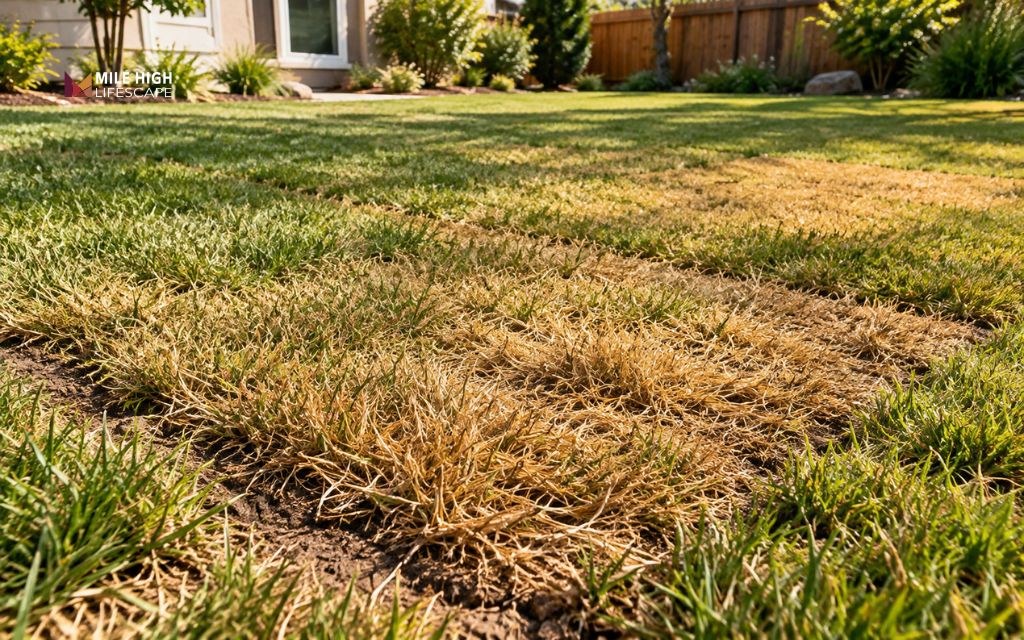
Lift one edge gently and feel the soil underneath. If both the sod and soil feel dry, increase moisture rather than simply wetting the grass blades. Proper watering for new sod should keep the root zone consistently moist without leaving it saturated.
Too Much Water And Poor Drainage
More water does not always solve browning sod. When soil stays soaked for long periods, roots receive less oxygen and may struggle to develop. The grass can become yellow, dull, or brown even though the ground feels wet.
Look for soft soil, standing water, or areas that remain soggy long after irrigation stops. If these signs appear, reduce unnecessary watering and allow excess moisture to drain before adding more.
Poor Sod-To-Soil Contact
When sod turning brown appears in clear rectangular sections, poor contact with the soil is often worth checking first. New roots need to sit firmly against the prepared ground, so raised seams or small air pockets can leave parts of the turf too dry.
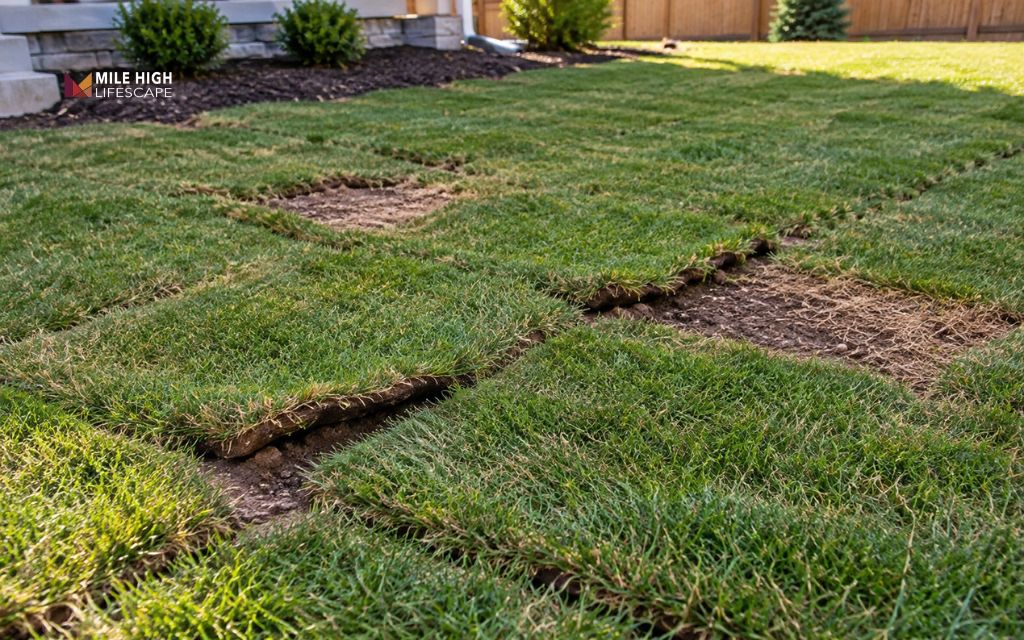
This type of new sod browning often follows the shape of individual pieces. Proper sod installation helps prevent that problem by keeping each section level and closely connected to the soil below.
Heat And Drought Stress
Hot weather can make sod turning brown much more noticeable, especially before the roots have grown deeply enough to reach reliable moisture. Turf near driveways, paving, walls, or stone may dry even faster because those surfaces hold extra heat.
If the colour changes during a hot spell, check the soil beneath the grass rather than judging moisture from the surface alone. Dry edges and seams may need extra attention while the rest of the lawn remains adequately watered.
Soil Compaction Or Poor Soil Preparation
Even fresh turf will struggle when the ground underneath is too hard. Compacted soil restricts root growth and can leave moisture unevenly distributed across the lawn.
Over time, that weak foundation may show up as sod turning brown during hot or dry periods. If the area needs to be rebuilt, sod removal gives you a chance to loosen the ground, correct uneven areas, and create better conditions before fresh turf goes down.
Mowing Or Fertilizing Too Soon
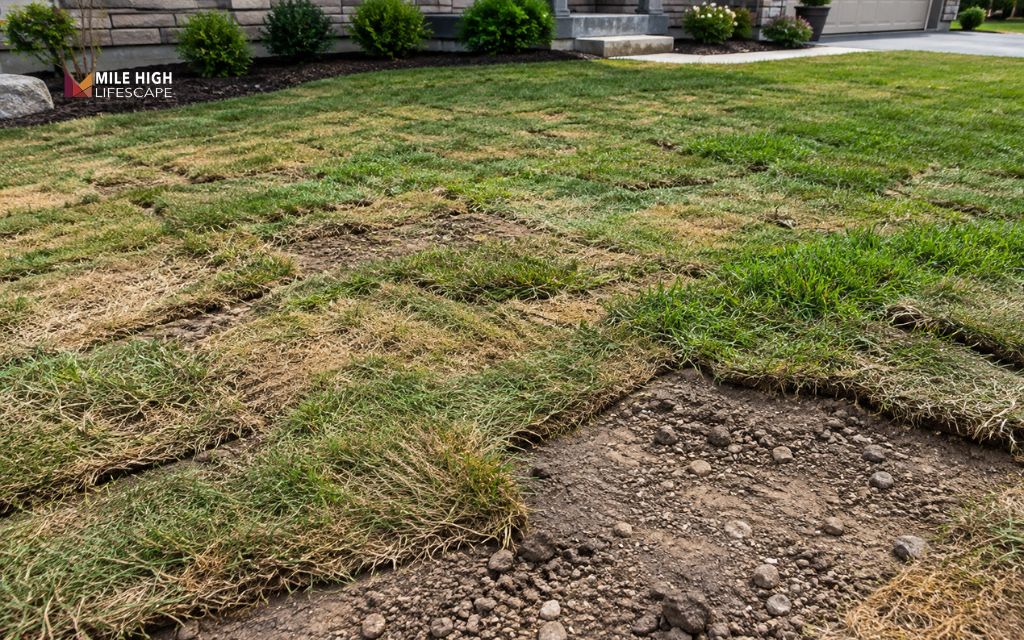
The first few weeks are not the time to push a new lawn too hard. Mowing before the roots have anchored can shift loose pieces, while an aggressive cut removes more leaf area than the turf is ready to lose.
When sod turning brown appears after early mowing, test whether the grass still lifts easily from the soil. Mowing new sod should wait until the turf has started to hold firmly. Extra fertilizer will not correct dying sod when moisture, heat, or weak roots are the real cause.
Disease Or Pest Damage
Irrigation and root contact are not the only reasons for new sod browning. Disease and insects can also cause decline, especially when affected areas spread in irregular shapes rather than following sod seams.
Look more closely when moisture and rooting seem normal but the colour continues to worsen. Spots on the blades, damaged crowns, insect activity, or patches that keep expanding may point to a biological problem rather than a simple establishment issue.
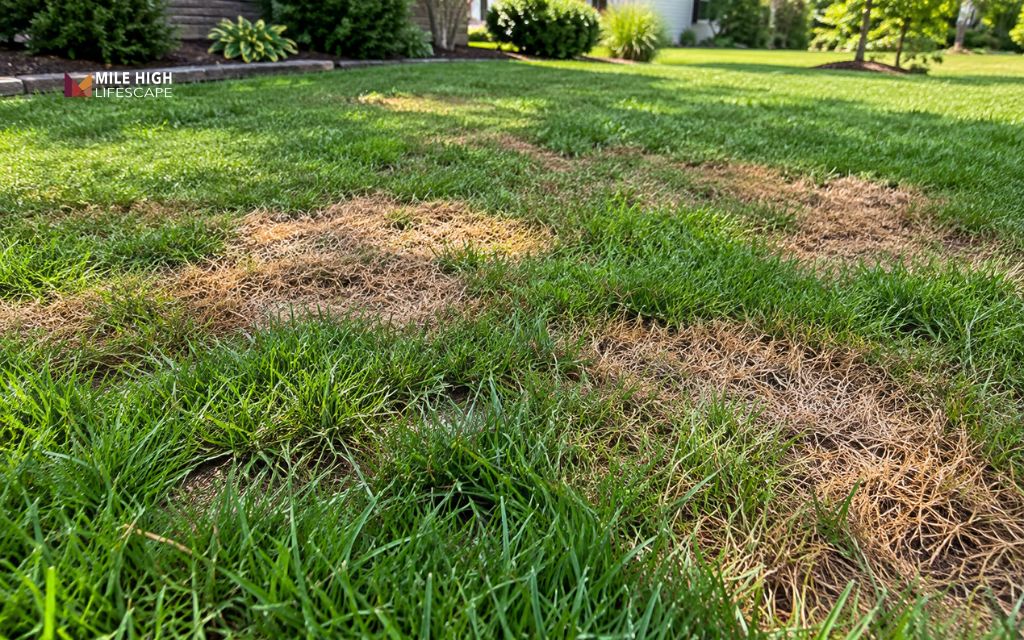
How To Tell If Brown Sod Is Dead Or Just Stressed
Sod turning brown does not always mean the turf has died. A lawn can lose colour temporarily when it is short of water, struggling to root, or recovering from heat stress. Before replacing anything, look at the plant itself, check the soil underneath, and see whether new roots are beginning to form. Those signs usually give a clearer answer than colour alone.
Check The Grass Blades And Crown
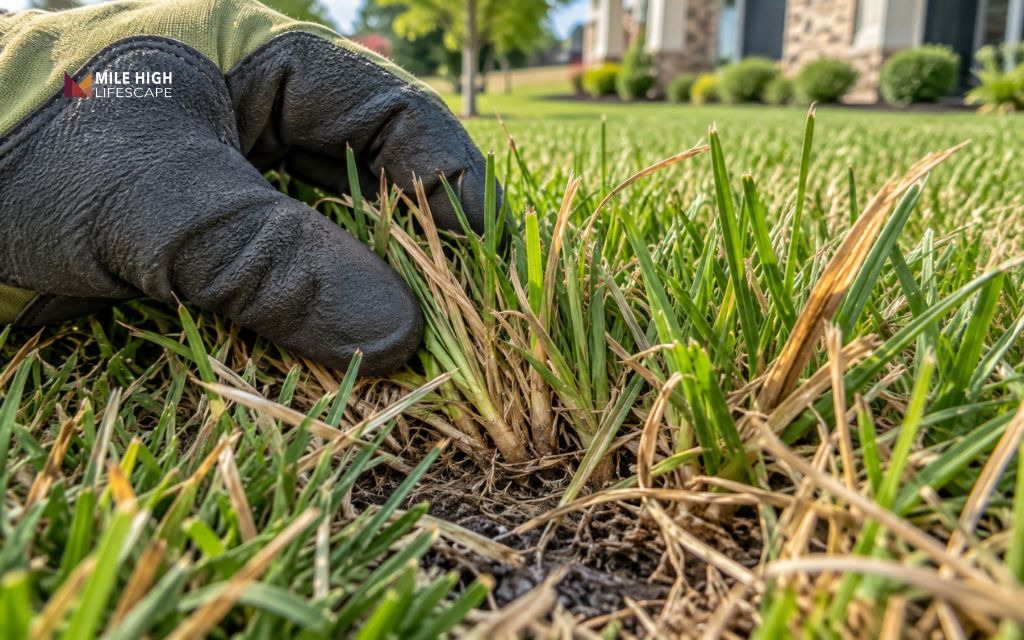
Start close to the base of the plant rather than judging the lawn from above. When sod turning brown still has a firm crown with some green tissue, recovery may still be possible. Dry, brittle blades combined with a lifeless crown are more concerning.
If the sod is brown only at the tips while the lower growth remains flexible, stress is more likely than complete failure. By contrast, dying sod often feels dry from the blades down to the crown.
Check Moisture Beneath The Sod
Lift one corner gently and feel both the underside of the turf and the soil below. Sod turning brown over dry soil usually points to insufficient moisture, while soggy ground may indicate overwatering or poor drainage.
Compare the affected area with a healthy section nearby. When new sod is turning brown in only a few places, the difference in soil moisture can reveal whether sprinkler coverage or local drainage is causing the problem.
Check For New Root Growth
Roots offer one of the clearest signs of whether the lawn is establishing. Give the turf a gentle tug. If sod turning brown still resists being lifted, new roots have probably started to anchor into the soil.
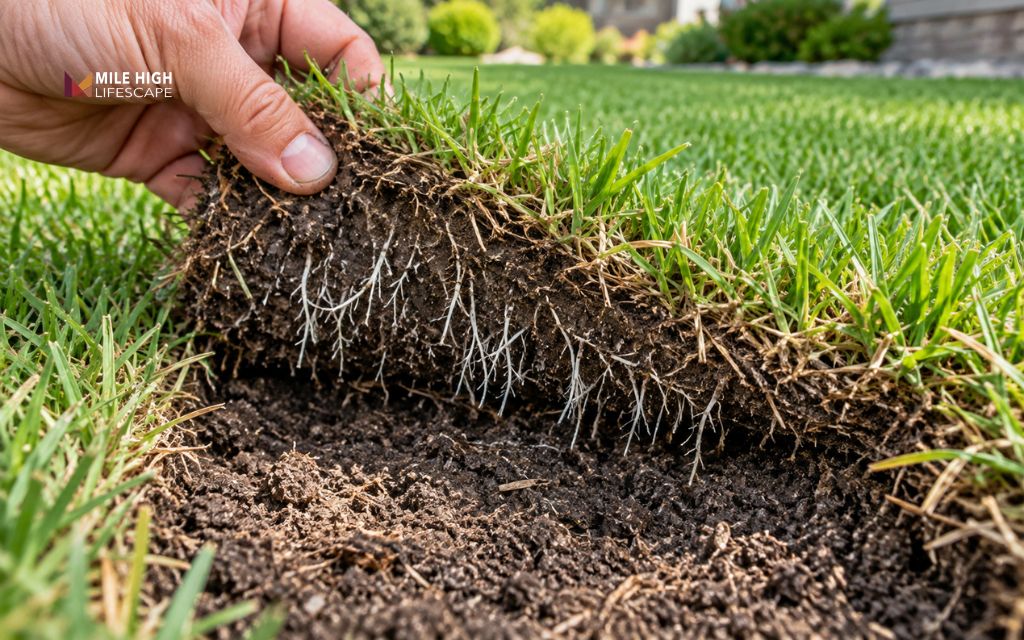
White or pale new roots are a positive sign, even when the surface looks stressed. If the turf remains loose, shows no fresh root growth, and continues to decline, the new sod died or is moving closer to permanent failure.
Taken together, these checks make sod turning brown much easier to diagnose before you decide whether the lawn needs more time, better care, or replacement.
What Do Brown Spots On New Sod Mean?
Brown spots on new sod usually point to uneven stress rather than a problem affecting the whole lawn. The shape and location of the damage can help narrow down the cause. Dry seams and edges often suggest moisture loss, while soft or yellow-brown patches may come from too much water. When sod turning brown appears in clear rectangles, poor contact with the soil is also worth checking.
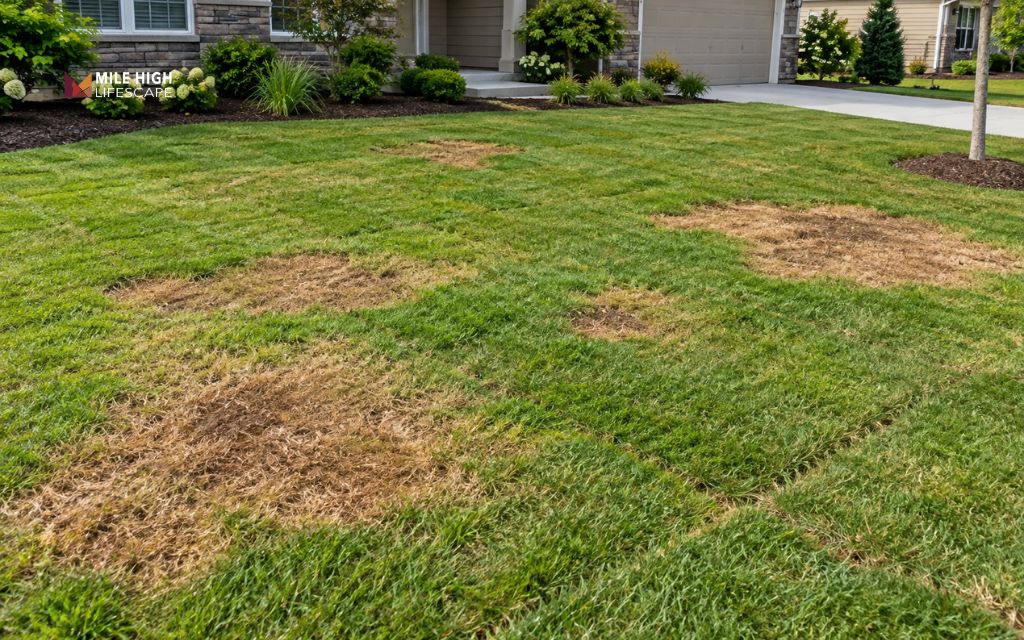
Use the pattern as a first clue:
- Brown edges: Often dry faster than the centre of each piece.
- Rectangular patches: May indicate weak sod-to-soil contact.
- Soggy brown areas: Can point to overwatering or drainage problems.
- Brown spots near paving: Heat may be increasing moisture loss.
- Irregular spreading patches: Could suggest disease or pest activity.
How To Save Sod That Is Turning Brown
The right fix depends on why the sod is struggling. Adding more water without checking the soil can make things worse, especially if the ground is already saturated. Start with the root zone, then correct the problem you actually find.
If sod turning brown is dry underneath, water deeply enough to moisten the soil below the turf rather than just wetting the blades. When the ground feels soggy, reduce irrigation and allow the area to drain. Loose sections should be pressed back into contact with the soil so new roots have a better chance to establish.
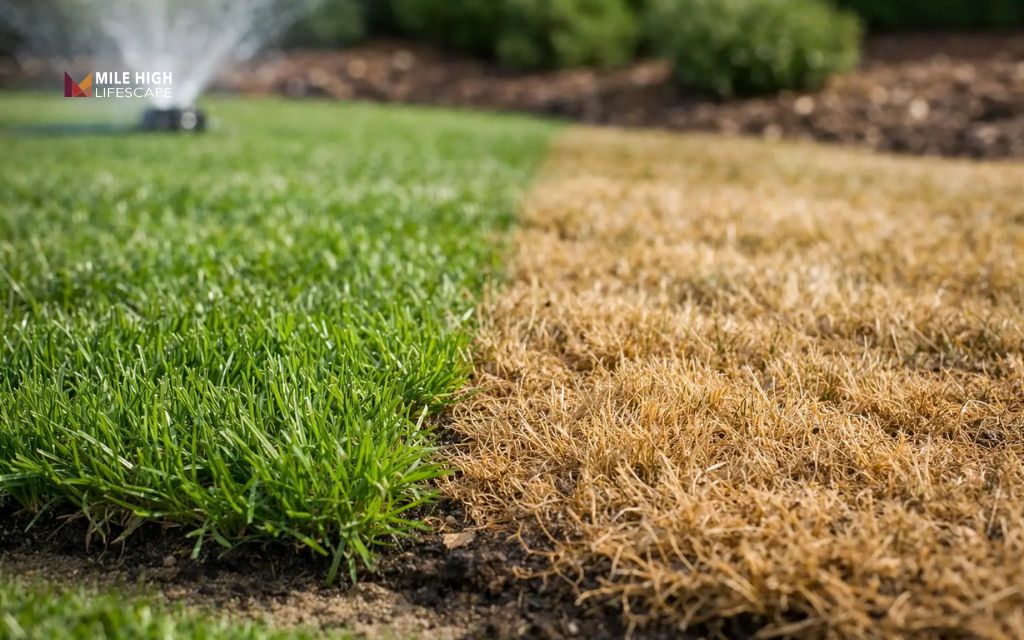
These steps can help stressed turf recover:
- Check soil moisture beneath both green and brown areas.
- Adjust sprinklers where coverage is uneven.
- Water dry seams and edges separately if needed.
- Reduce irrigation where soil stays wet.
- Press loose sod gently back against the soil.
- Keep foot traffic away from weak areas.
- Delay mowing until the turf feels firmly rooted.
- Watch new sod browning for signs of improvement over several days.
If the new sod is dying despite balanced moisture and good root contact, inspect it for disease, insects, or deeper soil problems.
When Does Brown Sod Need To Be Replaced?
Not every case of sod turning brown calls for replacement. If the grass still has a firm crown, flexible blades near the base, or fresh roots underneath, give it time to recover after correcting the cause.
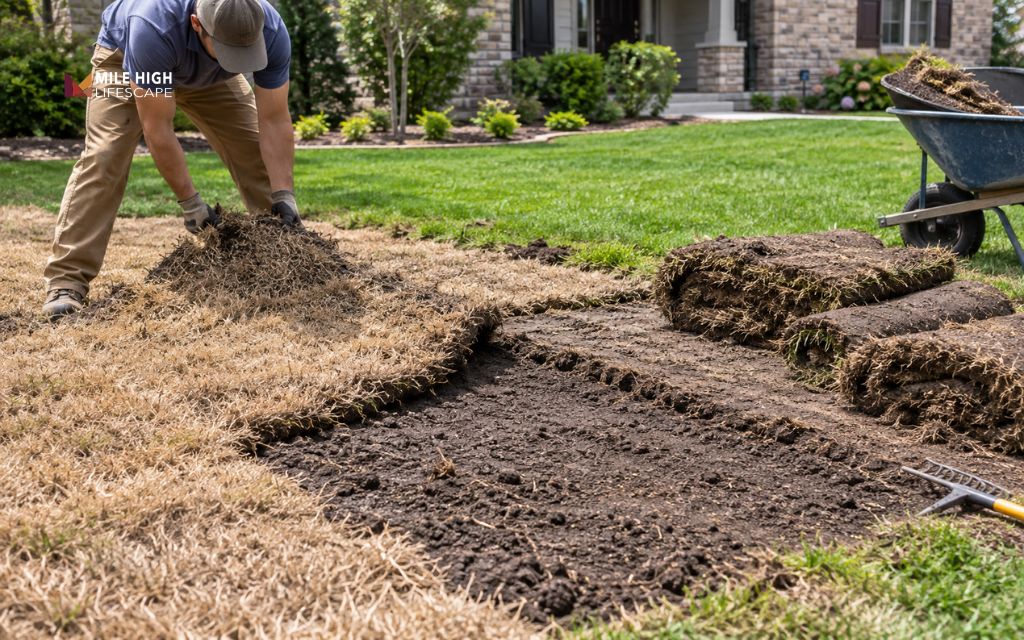
Replacement makes more sense when several signs appear together:
- The grass is dry and brittle from top to base.
- The crown has no green or firm tissue left.
- No fresh roots are developing underneath.
- Large sections lift easily from the soil.
- Brown areas keep spreading after moisture problems are corrected.
- The turf develops a sour smell or clear signs of decay.
Before laying new sod, find out why the original section failed. If poor drainage, compacted soil, uneven watering, or weak soil contact caused the damage, correct that problem first. Otherwise, the replacement turf may end up in the same condition.
Mile High Lifescape: Sod Installation Built For Long-Term Results
The difference between a lawn that settles in well and one that struggles often comes down to what happens before installation. Mile High Lifescape treats sod as part of the wider landscape rather than a surface-level finish, which means soil condition, grading, irrigation, and site exposure are considered before the turf is placed.
Our Sod Installation service is designed around that approach. With over 20 years of experience, we know where new lawns commonly fail and how to reduce those risks from the outset. The goal is not simply to cover the ground quickly, but to create the conditions that allow roots to establish evenly and the lawn to remain easier to manage.

For homeowners, that means clearer planning, careful installation, and practical guidance once the sod is down. Thinking about new sod? Call (303) 877-9091 and we’ll help you plan the next step.
Final Thoughts
Sod turning brown is usually a sign that something in the establishment process needs attention, not an automatic sign that the lawn has failed. Check the soil moisture, root contact, and condition of the crown before deciding what to do next. Once the cause is clear, many stressed areas can recover with a few timely adjustments, while badly damaged sections may need replacement.
Frequently Asked Questions
Can Brown Sod Turn Green Again?
Yes. If the crown and roots are still alive, brown sod can recover once moisture, heat, or soil-contact problems are corrected.
How Do I Know If My New Sod Is Dying?
Check the crown and roots. Dry, brittle turf with no green tissue or new root growth is more likely to be dying.
Why Is My New Sod Brown Around The Edges?
Edges dry faster than the centre. Uneven watering, heat, or exposed seams are common causes.
How To Prevent New Sod From Browning
Keep the root zone evenly moist, maintain good soil contact, avoid early mowing, and correct dry or soggy areas quickly.