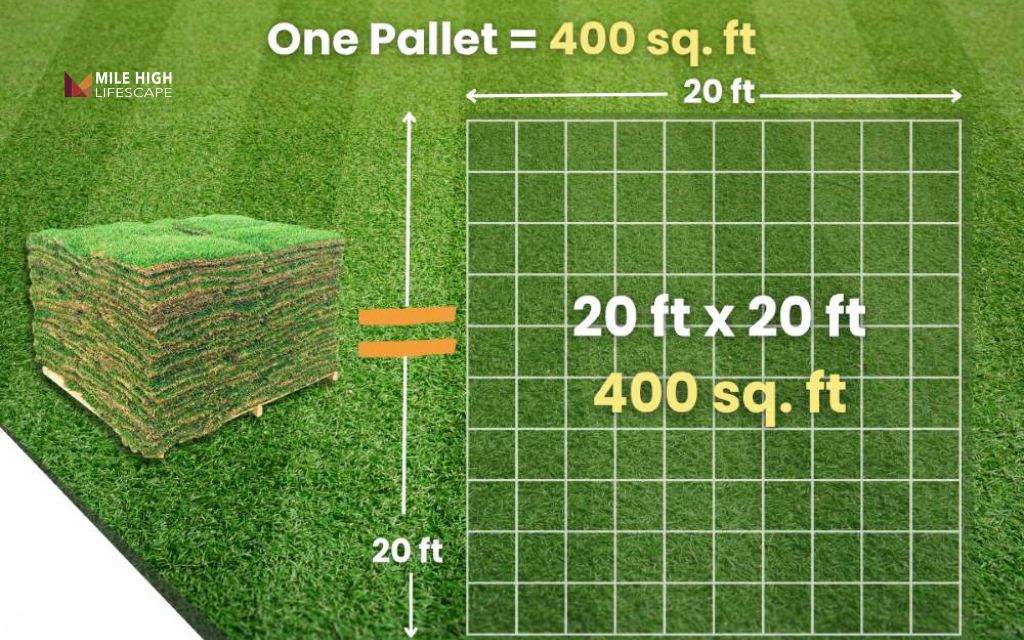
If you are asking how many square feet does a pallet of sod cover, a typical pallet holds about 450–500 square feet, although some suppliers offer pallets closer to 400 or as large as 600–700 square feet. The exact amount depends on the grass type, cut size and supplier. Mile High Lifescape recommends measuring the lawn first and confirming pallet coverage before ordering so you do not end up short or pay for far more sod than the property needs.
How Many Square Feet Does A Pallet Of Sod Cover?
For most residential projects, 450–500 square feet is a useful planning range. That does not mean every pallet is identical. If you are calculating how many square feet in a pallet of sod, always use the figure supplied with the actual product rather than relying on a universal number.
| Pallet Size | Approximate Coverage |
| Small pallet | 400 sq ft |
| Common pallet | 450 sq ft |
| Larger common pallet | 500 sq ft |
| Large-format pallet | 600–700 sq ft |
So, when someone asks how much area does a pallet of sod cover, the safest answer is usually around 450–500 sq ft, with wider variation possible.
Why Does Sod Pallet Coverage Vary?
The answer to how many square feet does a pallet of sod cover changes because sod is not produced in one universal format. The grass itself, the way each piece is cut, and the supplier’s packing standard all affect how much turf ends up on one pallet.
Grass Type
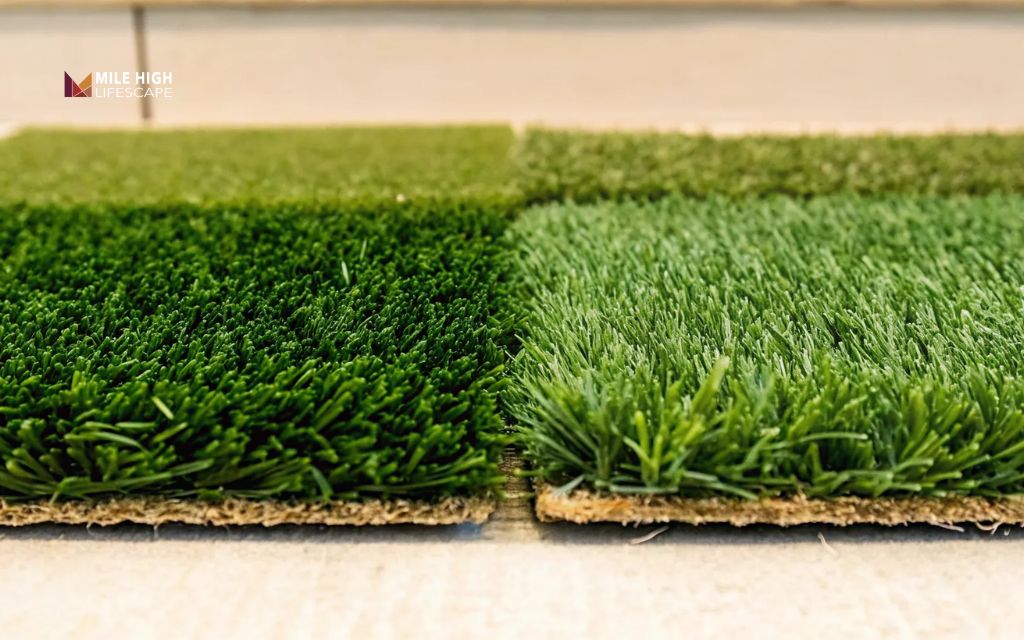
Different grasses form different root structures, so they are not always harvested in the same shape or thickness. Some cool-season grasses are commonly sold in longer rolls, while warm-season varieties may arrive as smaller slabs. That difference in format changes pallet of sod coverage even when two pallets look similar from the outside.
Sod Cut And Roll Size
Coverage can vary simply because sod is cut and packaged in different formats. Longer rolls may cover around 10 square feet each, while smaller slabs can cover closer to 2.5–3 square feet. That difference changes how much sod fits on a pallet and how many pieces are needed for a project. The thickness of sod can also affect grading and how smoothly each section meets nearby surfaces.
Sod Farm And Supplier Standards
Not every supplier builds pallets to the same specification. One pallet may contain around 450 square feet, while another can hold 500 square feet or more. So, when working out how many square ft does a pallet of sod cover, use the supplier’s stated coverage rather than assuming every pallet follows the same standard.
What Is The Standard Size Of A Piece Of Sod?
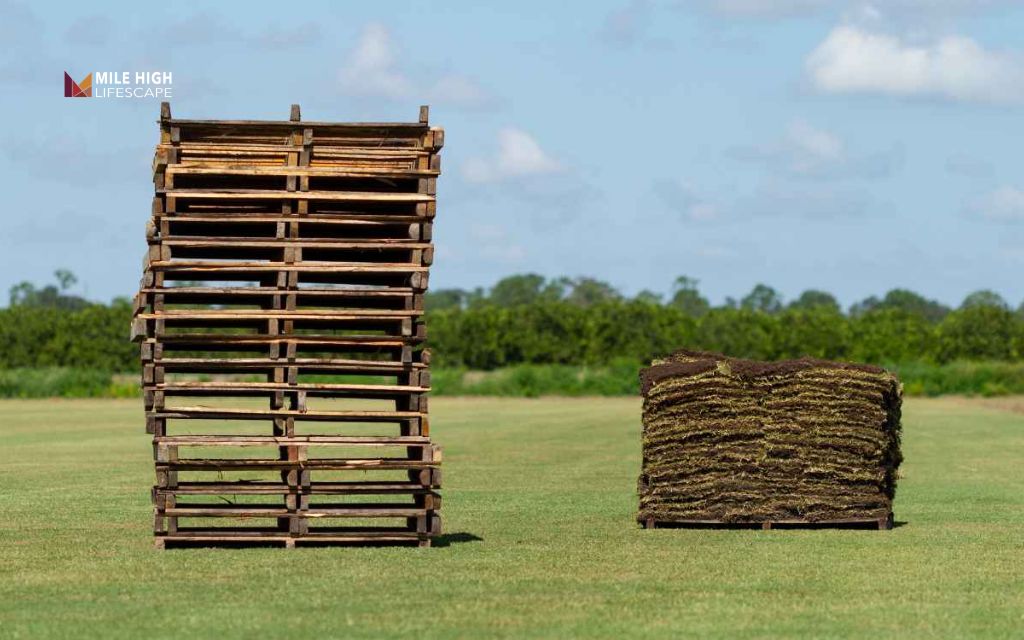
There is no single standard size of a piece of sod because farms and suppliers use different cutting formats. Smaller slabs may measure around 16 × 24 inches, while larger rolls can reach roughly 2 × 5 feet. As a result, sod size directly affects how many pieces fit on a pallet and how quickly an area can be covered.
For planning purposes, it is better to confirm the dimensions of the actual sod being delivered rather than rely on one universal size. That also makes it easier to estimate pallet coverage, labour and the amount of trimming needed around edges and landscape features.
How Many Pieces Of Sod Are On A Pallet?
The number of pieces depends on both the pallet coverage and the area of each piece. To calculate it, divide the total square footage on the pallet by the square footage of one piece.
| Pallet Coverage | Piece Coverage | Approx. Pieces |
| 450 sq ft | 2.7 sq ft | 167 |
| 450 sq ft | 5 sq ft | 90 |
| 450 sq ft | 10 sq ft | 45 |
| 500 sq ft | 10 sq ft | 50 |
How To Calculate How Many Pallets Of Sod You Need
Once you know how many square feet does a pallet of sod cover, the calculation is straightforward:
Total lawn area ÷ pallet coverage = number of pallets needed
For a 1,800-square-foot lawn with 450-square-foot pallets:
1,800 ÷ 450 = 4 pallets
However, the exact order should also account for cuts and waste. If you are still measuring the property, how to lay sod explains why accurate square footage matters before the delivery arrives. If the yard has curves or several obstacles, round up rather than trying to order to the exact square foot.
How Much Extra Sod Should You Order?
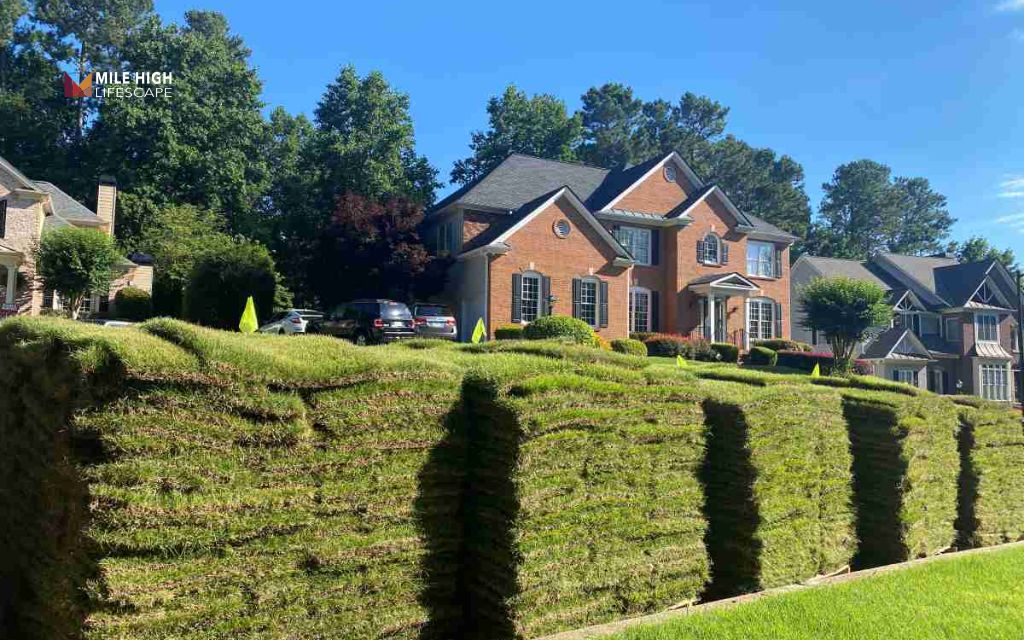
Ordering a little more sod than the measured area helps account for trimming, fitting, and small measurement differences. For a simple lawn with straight edges, about 5% extra is usually enough. More complex layouts often benefit from a larger allowance, closer to 10%, because more material is lost during cutting.
For example:
- 1,000 sq ft lawn + 5% = 1,050 sq ft
- 1,500 sq ft lawn + 5% = 1,575 sq ft
- 2,000 sq ft lawn + 10% = 2,200 sq ft
If the lawn includes several curves, tight corners, or narrow sections, plan for the higher end of that range to avoid running short during installation.
Sod Pallet Coverage Examples
To see how many square feet does a pallet of sod cover in practical terms, compare the lawn size with a few common pallet coverage figures. The table below gives a quick estimate before any extra allowance for cuts or waste is added.
| Lawn Size | 400 Sq Ft Pallet | 450 Sq Ft Pallet | 500 Sq Ft Pallet |
| 1,000 sq ft | 3 | 3 | 2 |
| 1,500 sq ft | 4 | 4 | 3 |
| 2,000 sq ft | 5 | 5 | 4 |
| 2,500 sq ft | 7 | 6 | 5 |
| 5,000 sq ft | 13 | 12 | 10 |
How To Measure Your Lawn Before Ordering Sod
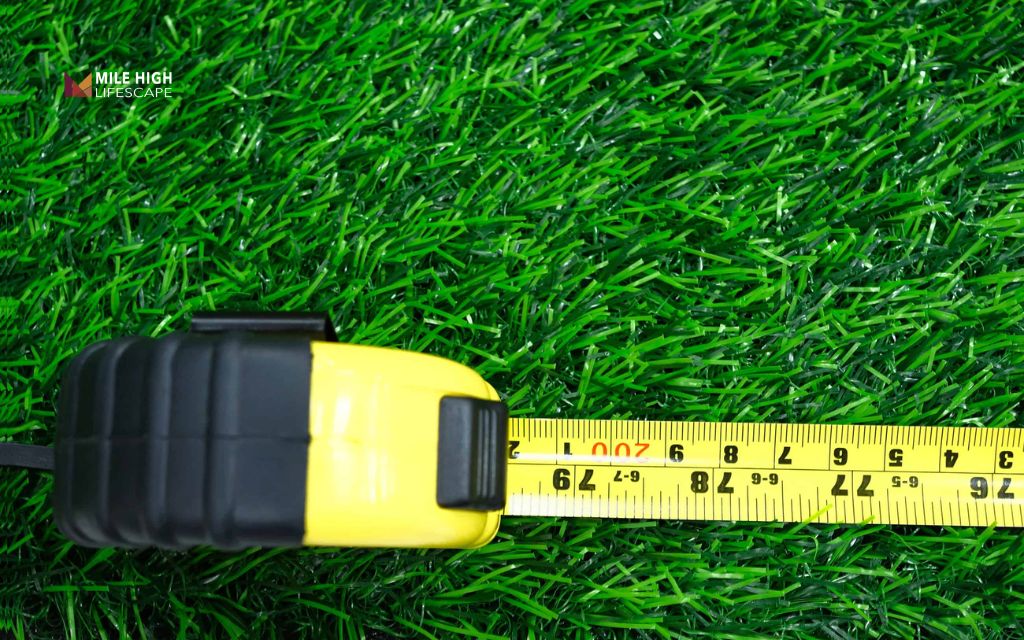
Before calculating how many square feet does a pallet of sod cover for your project, measure only the areas that will actually receive grass. Work section by section rather than trying to estimate the entire property at once.
Rectangular Areas
For a rectangular section, measure the length and width, then multiply them together.
Formula: Length × Width = Square Feet
Irregular Areas
For an irregular lawn, divide the space into smaller shapes that are easier to measure. Calculate each section first, then combine the results.
Useful formulas:
- Rectangle: Length × Width
- Triangle: Base × Height ÷ 2
- Circle: 3.14 × Radius²
Subtract Areas That Will Not Receive Sod
Do not include areas where sod will not be installed. Measure those spaces separately, then subtract them from the total property area.
Formula: Total Lawn Area − Non-Sod Areas = Sod Area Needed
What Else Should You Know Before Ordering A Pallet Of Sod?
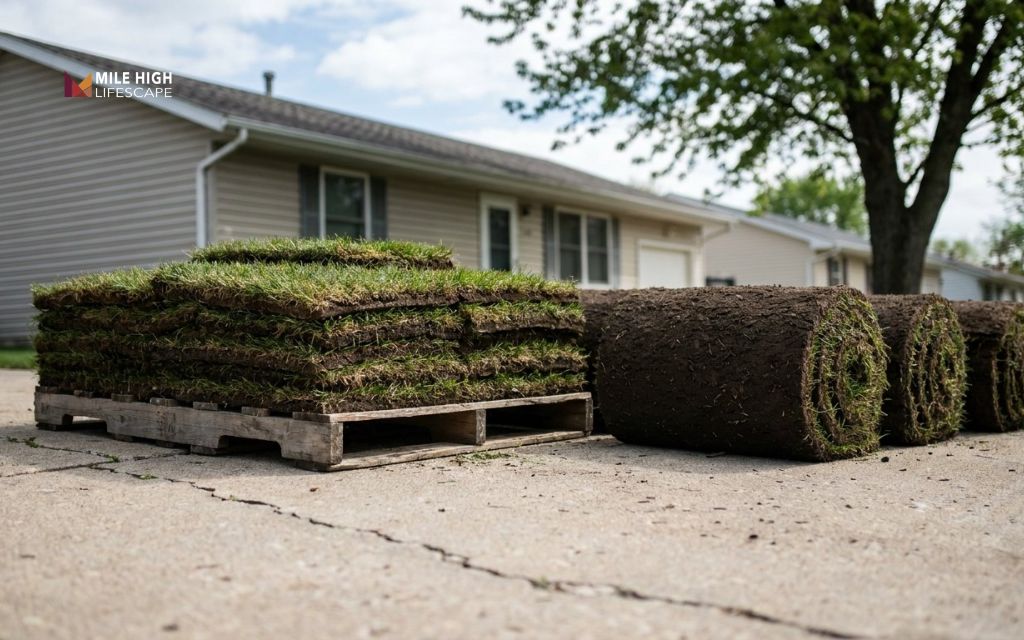
Before placing an order, it helps to look beyond how many square feet does a pallet of sod cover. Check the exact pallet coverage, confirm the sod variety, and make sure the site is ready before delivery. Fresh turf should be installed as soon as possible, so access, labour, and irrigation all need to be arranged in advance.
A few practical points can prevent delays:
- Confirm how much sod is on a pallet before ordering.
- Check that delivery access is clear and suitable.
- Finish grading and soil preparation before the sod arrives.
- Make sure irrigation is ready for immediate use.
- Plan enough labour to install the turf without long delays.
- Keep sod shaded and cool if installation cannot begin straight away.
If the site still needs preparation, reviewing the full sod installation process beforehand can help you organise the work in the right order.
Mile High Lifescape: Smarter Sod Installation For Your Lawns
Getting the quantity right is only one part of a sod project. At Mile High Lifescape, we also handle the preparation, layout, and installation details that determine how well the new lawn settles in. With over 20 years of experience, we measure the area, estimate the amount of turf needed, prepare the site, and complete each Sod Installation with the conditions of the property in mind.
- Accurate planning: Careful measurements help avoid over-ordering, shortages, and unnecessary material waste.
- Better ground preparation: A well-prepared base gives fresh sod stronger contact with the soil from day one.
- Cleaner installation: Tight seams and even placement create a more finished look and support smoother establishment.
- Smarter irrigation setup: Coverage is considered early so moisture reaches the lawn more evenly after installation.
- Clear aftercare guidance: Practical advice on watering, mowing, and early maintenance makes the first few weeks easier to manage.

Final Thoughts
There is no single pallet size that applies to every sod order, so accurate planning matters more than relying on a standard figure. By checking how many square feet does a pallet of sod cover and matching that number to the actual lawn area, you can order more precisely and give the installation a cleaner, more efficient start.
Frequently Asked Questions
How Many Pallets Of Sod Do I Need For 1,000 Square Feet?
If one pallet covers 450 square feet, you will need about 2.2 pallets, so ordering 3 pallets is usually safest. With 500-square-foot pallets, 2 pallets may be enough before adding any waste allowance.
How Much Does A Pallet Of Sod Weigh?
A full pallet can weigh well over 1,000 pounds and may approach 2,000 pounds when the sod is wet. The exact weight depends on pallet size, soil moisture, and turf thickness.
How Soon Should Sod Be Installed After Delivery?
Ideally, sod should be installed the same day it arrives. If that is not possible, keep it shaded and cool, then complete installation as soon as conditions allow.
How Do I Avoid Ordering Too Much Sod?
Measure the lawn carefully, subtract areas that will not receive turf, confirm the supplier’s pallet coverage, and add only a reasonable 5–10% allowance for cuts and waste.