What is hydromulch, and when does it fit your property? Hydromulch is a sprayed blend of water, fiber mulch, and binder that shields bare soil from erosion. It holds moisture, covers rough ground, and protects any seed in the mix.
This guide answers what is hydromulch, how crews apply it, and what it costs. You will also learn how hydromulch differs from hydroseeding and traditional mulch, where it works best, and when another method suits your yard better.
What is hydromulch and how does it work?
What is hydromulch in practical terms? It is a slurry of water, fiber mulch, and binder, sprayed through a hydraulic rig onto bare soil. The fibers bond into a thin layer over the surface. Seed and fertilizer are optional additions, not requirements.
The layer works in three ways. It blocks raindrop impact that detaches soil particles, slows moisture loss at the surface, and holds loose soil in place while vegetation takes hold. Some people write the term as hydro mulching, but the process is the same.
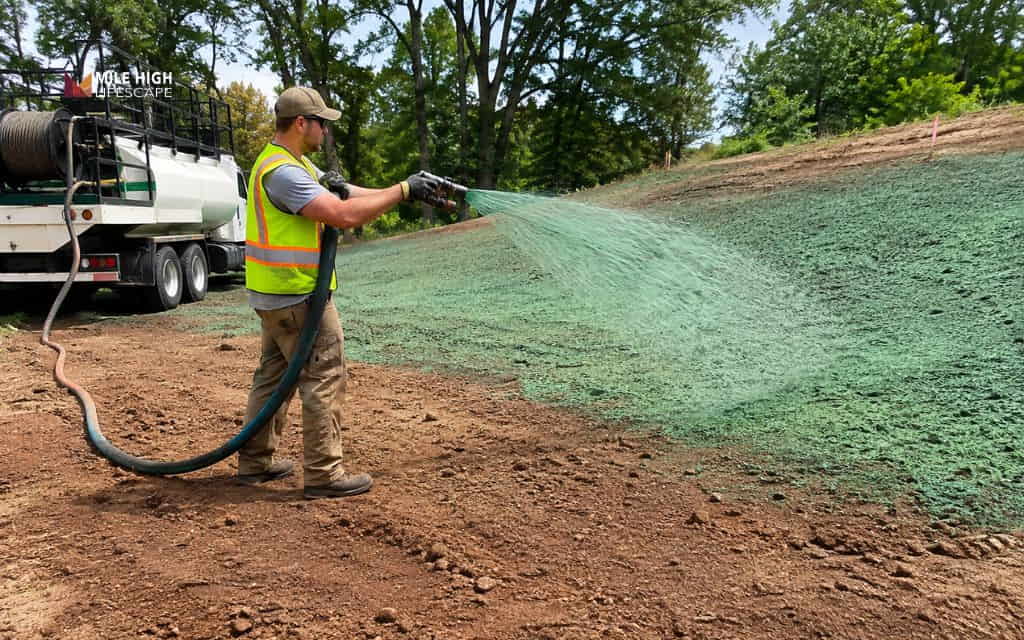
Materials in a hydromulch mix
Knowing what is hydromulch starts with the tank contents. Each component has a job, and installers adjust the mix to site conditions and budget.
| Component | Role | Included? |
| Water | Carries and suspends the other materials | Always |
| Fiber mulch | Covers soil, holds moisture, shields from rain | Always |
| Tackifier or binder | Bonds fibers to each other and to the soil | Common |
| Tracking dye | Shows where the spray has landed | Common |
| Fertilizer | Feeds seed or new plants | Optional |
| Seed | Establishes grass or other vegetation | Optional |
Fiber comes from wood, paper, or a blend of both. Some products add synthetic fibers or other materials to improve performance, and each option carries a different price.
Hydromulch vs hydroseeding
Many sources use the two terms as if they mean the same thing. Readers who ask what is hydromulching or what is hydromulch often mean one of these two methods. The difference is seed: hydromulch protects soil, and hydroseeding adds seed to the slurry so grass can grow.
| Method | Includes seed | Main purpose | Best fit |
| Hydromulch | Not necessarily | Soil protection and erosion control | Bare or disturbed soil that needs cover |
| Hydroseeding | Yes | Grass establishment with soil cover | New lawns and large seeded areas |
Homeowners who want turf without waiting on germination can choose sod installation, which places grown grass on prepared soil.
How hydromulch is applied
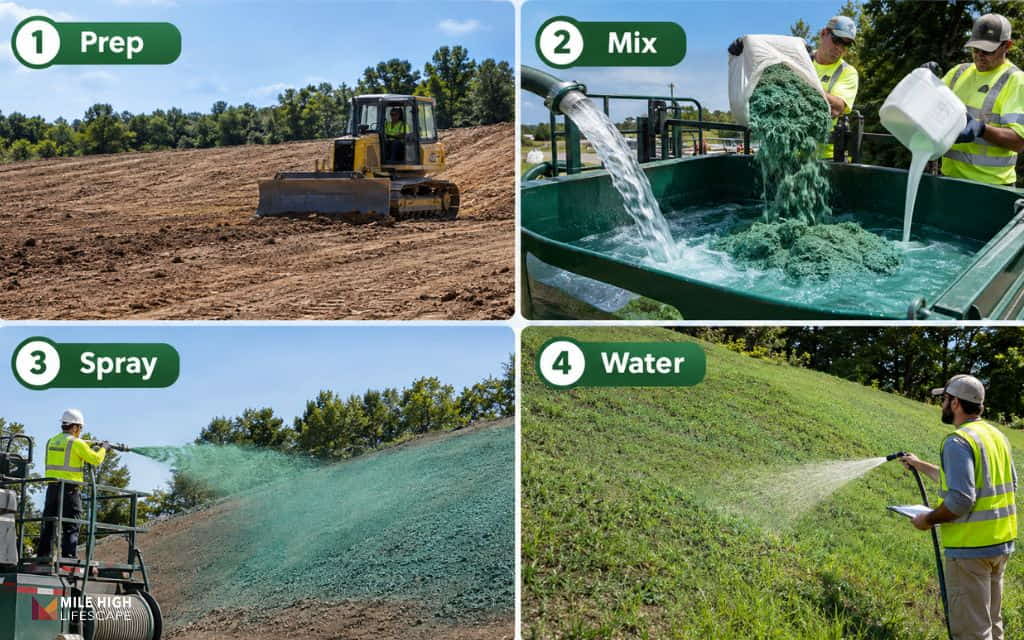
Once you know what is hydromulch, the next question is how crews apply it. The process follows four steps, and each one affects the result.
- Prepare the site: Crews rough grade the soil, clear debris, and loosen the surface so the layer bonds to it.
- Mix the slurry: Installers load water, fiber, binder, and any seed or fertilizer into a tank that keeps the mix agitated and even.
- Spray the surface: Crews spray from a truck-mounted rig, and a boom or cannon reaches ground that trucks cannot approach.
- Water and monitor: Seeded areas need steady moisture until grass establishes, and the installer sets the schedule for the product and season.
What is hydromulch without good prep? It is a surface layer, so the quality of step one sets the limit for the rest.
Benefits of hydromulch
So what is hydromulch good at? It protects bare soil, holds moisture at the surface, and covers uneven ground, which makes it a practical choice for slopes and disturbed areas. Five strengths stand out:
- Soil protection: The fiber layer blocks raindrop impact that detaches soil particles.
- Moisture retention: The layer slows moisture loss at the soil surface.
- Rough ground coverage: Spray reaches uneven terrain where erosion control blankets lose contact with the soil.
- Safer slope work: Crews spray from a truck, so they do not climb steep slopes to unroll and pin netting.
- Lower upfront cost: Industry sources describe the initial cost as low compared with other erosion treatments.
Limitations of hydromulch
So what is hydromulch missing? It treats the surface only, so it cannot fix poor soil, and results depend on slope, application rate, and site preparation. Four limits matter most, and knowing them helps you decide when another method fits better:
- Surface treatment only: Hydromulch does not repair soil structure, restore nutrients, or fix compaction.
- Steep slope rates: Heavy application rates on steep slopes can hinder seed germination.
- Uneven cover: The layer does not always produce enough vegetative cover on its own.
- Common fixes: Netting, turf reinforcement mat, compost, or a roughened surface help the layer and seed stay in place.
Where hydromulch works best
So what is hydromulch best suited for? It fits slopes of 2:1 (horizontal to vertical) or flatter, large disturbed areas, and bare soil left after grading. Spraying areas under half an acre is less efficient, so small yards often suit other methods.
| Property situation | Suggested approach | Reason |
| Sloped yard with bare soil, 2:1 or flatter | Hydromulch or hydroseeding | The spray covers uneven ground |
| Steeper slope | Hydromulch with netting or reinforcement mat | Steep grades need added hold |
| Large disturbed site after grading | Hydromulch or hydroseeding | The rig covers wide areas fast |
| New lawn on flat ground | Hydroseeding or sod | The lawn needs seed or turf, not mulch alone |
| Existing planting bed | Traditional mulch | A hand-spread layer protects roots |
Hydromulch vs traditional mulch
What is hydromulch next to traditional mulch? Traditional mulch is a hand-spread layer of bark, wood chips, or shredded wood that sits on planting beds. Hydromulch is a thin, sprayed fiber layer bonded to bare soil. The first protects established plants, and the second protects exposed ground.
| Feature | Hydromulch | Traditional mulch |
| Form | Sprayed slurry of fiber and binder | Loose bark, chips, or shredded wood |
| Application | Hydraulic rig | Shovel, rake, or wheelbarrow |
| Typical use | Bare soil, slopes, seeded areas | Planting beds, trees, shrubs |
| Seed | Can carry seed in the mix | Does not carry seed |
| Best area | Larger areas | Beds and small areas |
Thickness matters with hand-spread mulch, and how deep mulch should be depends on the plant type and the material.
Hydromulch cost factors
What is hydromulch worth on your site? Cost depends on area size, slope, access, mix type, seed or fertilizer, site preparation, equipment travel, and the number of applications. Larger areas need more material, and difficult access adds labor and equipment time.
Request written quotes that list the mix, the application rate, and the site preparation included, so you can compare bids on equal terms. Differences between bids usually trace back to mix, rate, or preparation, so compare those three items first.
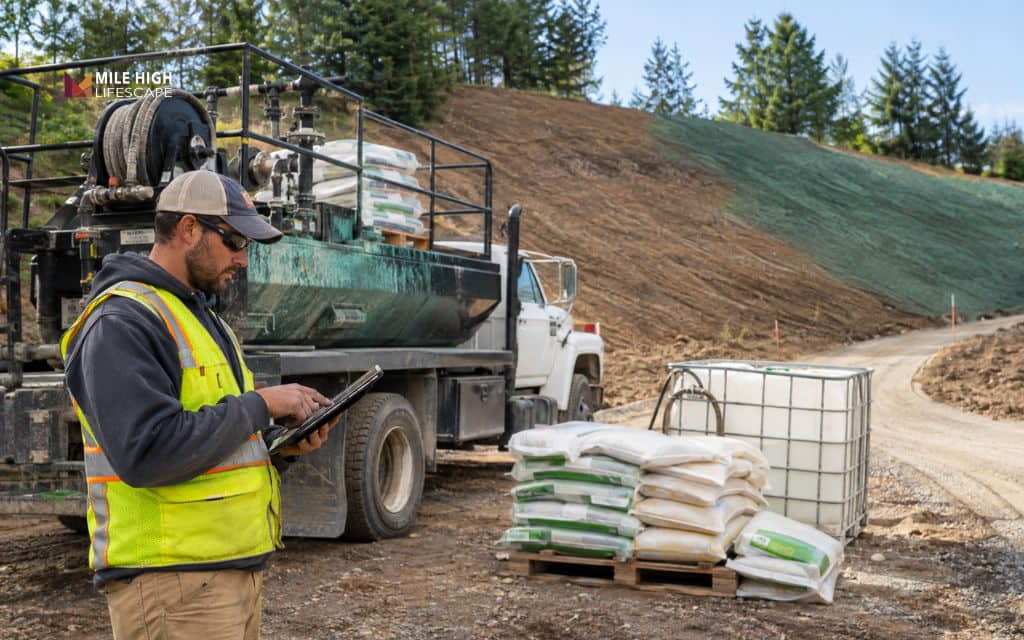
Professional hydromulch installation
What is hydromulch like as a DIY project? It needs equipment that keeps the mix agitated and applies it at a steady rate. Professional crews bring that equipment and experience with application rates, which matter most on slopes and large disturbed areas. Small, flat areas often suit hand-spread seed and mulch instead.
Mile High Lifescape brings over 20 years of landscaping experience in Denver, assesses your slope and soil on site, and sends a written proposal with scope and cost. Its mulch installation services cover planting beds with bark or shredded wood to protect roots and suppress weeds. Call (303) 877-9091 or email hello@milehighlifescape.com for a free estimate.
Conclusion
What is hydromulch? It is a sprayed blend of water, fiber mulch, and binder that shields bare soil from erosion, and it becomes hydroseeding when seed joins the mix. It works best on slopes of 2:1 or flatter and on large disturbed areas. Planting beds, small yards, and steep grades call for other methods. Match the method to the ground, ask for written quotes, and confirm the mix and application rate before work starts.
Frequently asked questions (FAQs)
What is hydromulch used for?
Hydromulch protects bare soil from erosion, holds moisture at the surface, and covers disturbed ground after grading or construction. With seed added, it also helps establish grass.
What is hydromulch made of?
It is made of water, fiber mulch from wood, paper, or a blend, and a binder. Dye, fertilizer, and seed are common additions.
Is hydromulch the same as hydroseeding?
No. Hydroseeding includes seed in the slurry, while hydromulch is mulch-based and may not include seed. Many people use the terms interchangeably, so confirm the mix before you hire a crew.
Can hydromulch help grass grow?
Hydromulch contains no seed unless the installer adds it. With seed in the mix, the fiber layer holds moisture around the seed and keeps it from washing away, which supports germination.
What is hydromulch’s role in erosion control?
It shields soil from raindrops and holds the surface in place on suitable ground. Long-term protection comes from the vegetation that grows through it, and slopes steeper than 2:1 need added reinforcement.
What is hydromulch’s biggest benefit?
Hydromulch covers bare and uneven ground, protects it from rain, and holds moisture at the surface.
What is hydromulch’s cost based on?
Cost follows area size, slope, access, mix type, and site preparation. Written quotes that list the mix and application rate make bids easy to compare.