Puddles that linger in your lawn can leave grass muddy, damage plant roots, and make parts of your yard difficult to use. If your first question is “how to get rid of standing water in my yard,” start by finding out where the water comes from and why it cannot drain.
Common solutions include adjusting irrigation, redirecting downspouts, aerating compacted soil, correcting low spots, and installing drains where necessary. The right approach depends on whether water is collecting on the surface, moving downhill, or rising through saturated soil.
Why is water standing in my yard?
Standing water develops when rainfall or irrigation reaches an area faster than the soil can absorb it or the landscape can carry it away. Several conditions can contribute, sometimes in the same yard.
Poor grading and low spots
Ground should direct runoff away from buildings and toward a suitable drainage area. When a lawn has depressions or slopes toward the house, water settles in the lowest places. Puddles repeatedly appearing in the same locations often point to uneven grading.
Compacted soil and heavy clay
Foot traffic, vehicles, and construction work can squeeze soil particles together, reducing the spaces that hold air and allow water to move. Clay-rich soils naturally absorb water more slowly than sandy soils. Together, compaction and slow infiltration can leave turf soggy well after rain stops.
Clogged gutters and improper downspout drainage
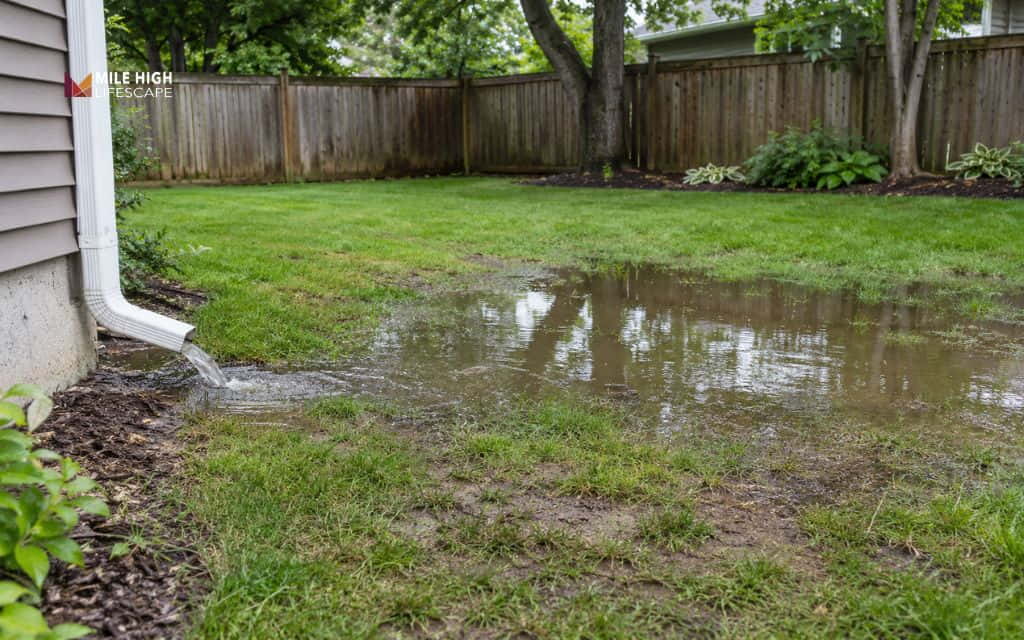
Overflowing gutters or downspouts that discharge beside a house can concentrate roof runoff in one small area. Water puddling beneath a downspout, near a walkway, or alongside a foundation is a useful clue.
Excessive watering or irrigation leaks
Frequent sprinkler cycles, broken heads, and leaking underground irrigation lines can keep the soil wet even during dry weather. Patches that remain unusually green or soggy compared with the rest of the lawn deserve a closer inspection.
High groundwater and poor subsurface drainage
Where the water table sits close to the surface, water may remain in the soil even when grading looks reasonable. Buried restrictive soil layers can produce similar symptoms. These conditions are harder to solve with routine lawn maintenance alone.
How to find the cause of standing water in your yard
Before digging or buying drainage materials, look for a pattern. The location and timing of pooled water often reveal more than the size of the puddle.
- Observe the yard during and after rain: Note where runoff enters, the direction it travels, and where it collects. Photograph recurring puddles so you can compare storms.
- Inspect gutters and downspouts: Look for overflow, disconnected sections, blocked outlets, and water discharging onto already saturated soil.
- Check the shape of the ground: Low patches, ruts, and a slope toward the house may indicate grading problems.
- Review irrigation use: Turn off scheduled watering when appropriate and check for leaks if an area remains wet without recent rain.
- Examine the soil after it dries enough to work: Hard, dense soil and shallow rooting can indicate compaction. A simple infiltration test can help assess whether the soil drains slowly, but it cannot identify every subsurface problem.
Temporary puddles after a major storm are not automatically evidence of a failed drainage system. Repeated pooling during ordinary rainfall, persistent saturation, or water close to the foundation deserves closer attention. Seek professional help promptly if water is entering a basement or creating a safety hazard.
How to remove standing water from your yard quickly
When standing water is already present, the first goal is to limit damage and remove excess water safely. These measures provide short-term relief while you investigate the cause.
- Stop unnecessary irrigation: Pause sprinkler cycles until the lawn has a chance to drain.
- Clear visible blockages: Remove leaves or debris from accessible surface drains, grates, and gutter outlets without opening buried plumbing.
- Remove small puddles manually: For a small, isolated area, a bucket or wet-rated water-removal tool may be sufficient.
- Use a suitable utility pump for larger pools: Follow the manufacturer’s electrical safety instructions and discharge only to a permitted location that will not flood structures, sidewalks, or neighboring property.
- Keep traffic off saturated soil: Walking, mowing, or moving equipment across wet turf can create ruts and increase compaction.
If water contains sewage, chemicals, or other suspicious material, avoid contact and arrange appropriate professional assistance. Pumping out water can make a yard usable sooner, but it does not correct the underlying drainage problem.
10 ways to get rid of standing water in your yard
Effective standing water in yard solutions depend on what is preventing water from moving or soaking in. Start with the simplest relevant fix and consider more extensive work when the problem continues.
1. Adjust your lawn watering schedule
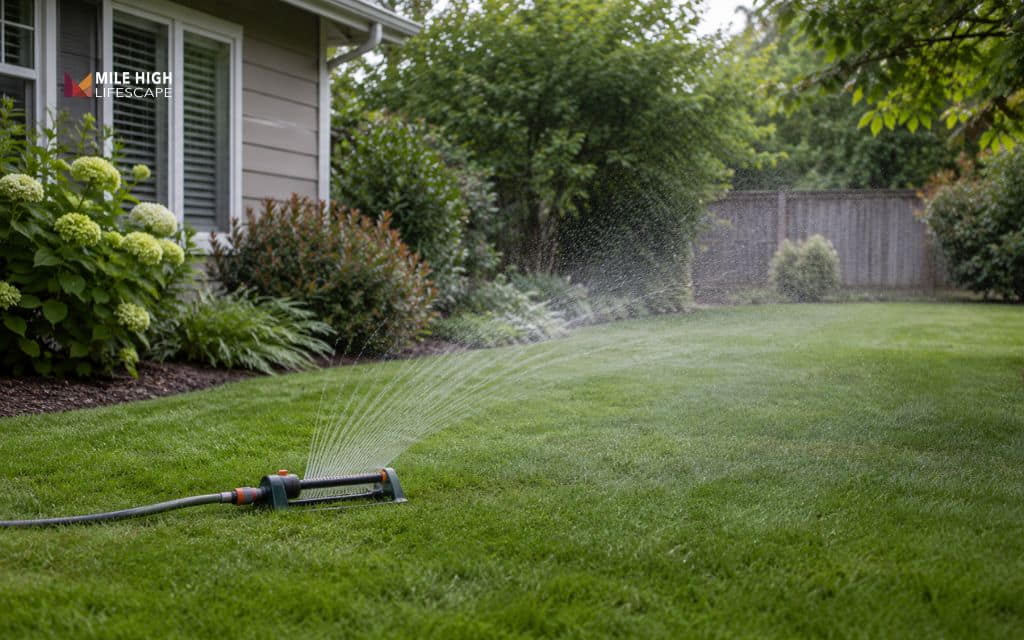
Overwatering is one of the easiest causes to address. Check whether sprinklers run during or immediately after rainy periods, and inspect each zone for excessive overlap or broken heads. Water according to soil conditions, weather, and the needs of your grass rather than relying on a fixed schedule all year.
For soil that absorbs water slowly, shorter watering cycles with breaks between them can reduce runoff. If the yard stays wet while the system is turned off, investigate other sources instead of simply reducing irrigation further.
2. Clean gutters and redirect downspouts
Roof runoff can overwhelm a small patch of lawn. Clear debris from gutters, repair leaks, and make sure downspouts discharge away from the foundation into an area that can safely receive the water.
Splash blocks or downspout extensions may help with localized pooling. Where runoff volume is high, a properly designed drain or rain garden may be more appropriate. Never redirect water toward a neighbor’s property or assume that an existing underground pipe connects to a legal discharge point.
3. Aerate compacted soil
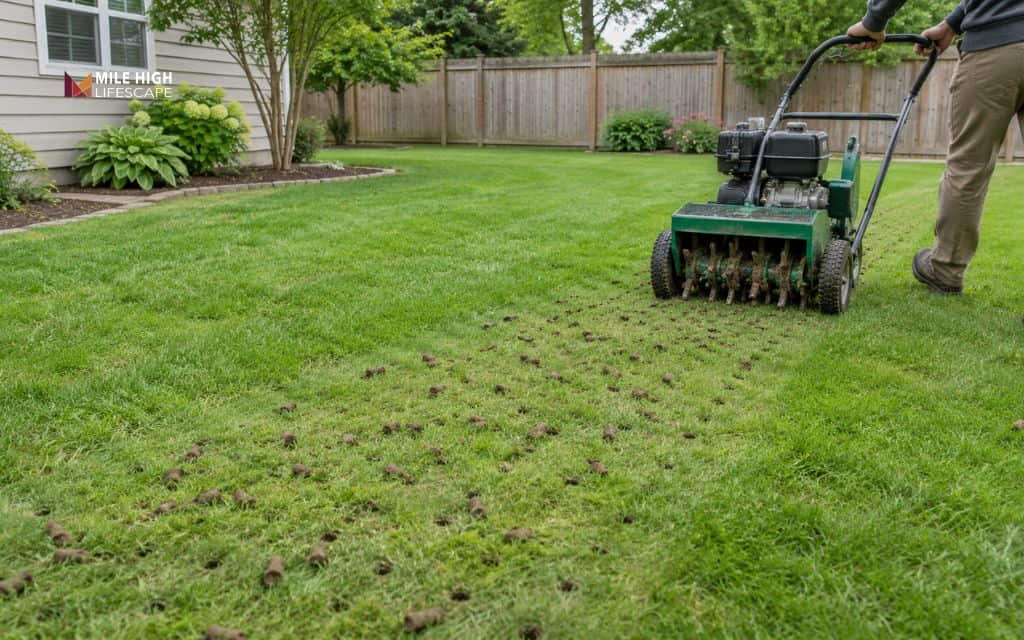
Core lawn aeration removes small plugs of soil, creating temporary channels for air and water to enter the root zone. It can improve infiltration where repeated traffic or lawn equipment has compacted the surface.
Aerate when the ground is moist enough for the tines to penetrate but not waterlogged. Extremely wet soil can smear and compact under equipment. Aeration will not resolve a large depression, a blocked drain, or a high water table, so confirm that compaction is part of the problem before relying on it.
4. Improve soil structure with organic matter
In planting beds and areas being renovated, incorporating well-finished compost can gradually improve soil structure and support water movement. Soil testing can help determine whether amendments are appropriate.
For established lawns, compost topdressing after aeration may provide gradual benefits without tearing up the turf. Avoid dumping sand onto heavy clay as a quick fix, since poorly chosen mixes can worsen soil conditions. Soil improvement takes time and cannot replace drainage improvements where water has nowhere to go.
5. Fill low spots and regrade your yard
Shallow depressions can sometimes be corrected by adding suitable soil in thin layers and restoring the grass. Work gradually so the lawn does not end up buried or uneven.
Larger problems require regrading, which changes the surface slope to move runoff away from buildings and toward a safe drainage route. Be especially careful around foundations, patios, fences, and property boundaries. Incorrect grading can move water into a more damaging location, making professional assessment worthwhile for substantial changes.
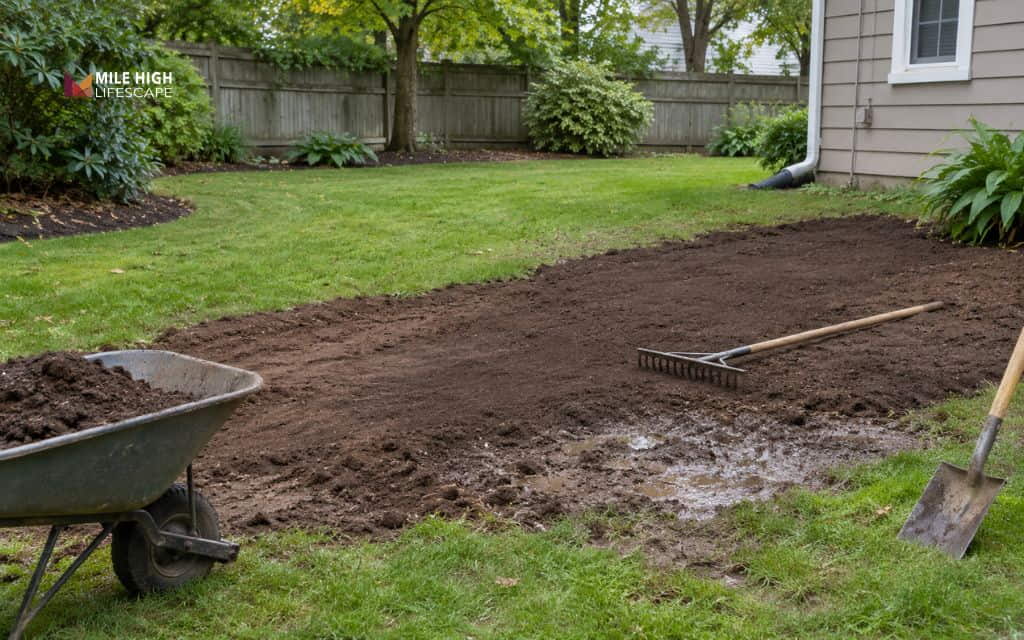
6. Create a swale to redirect surface runoff
Swales are shallow, gently sloped channels that guide surface water across a landscape. Grass or other appropriate vegetation can slow runoff and help protect the soil against erosion.
They work best when there is sufficient space and an acceptable destination for the water. Consider a swale when rain flows across the yard and settles in a predictable low area. On slopes where runoff also washes material out of planting beds, proper drainage should come first; thoughtful edging and bed preparation can then help with how to keep mulch in place.
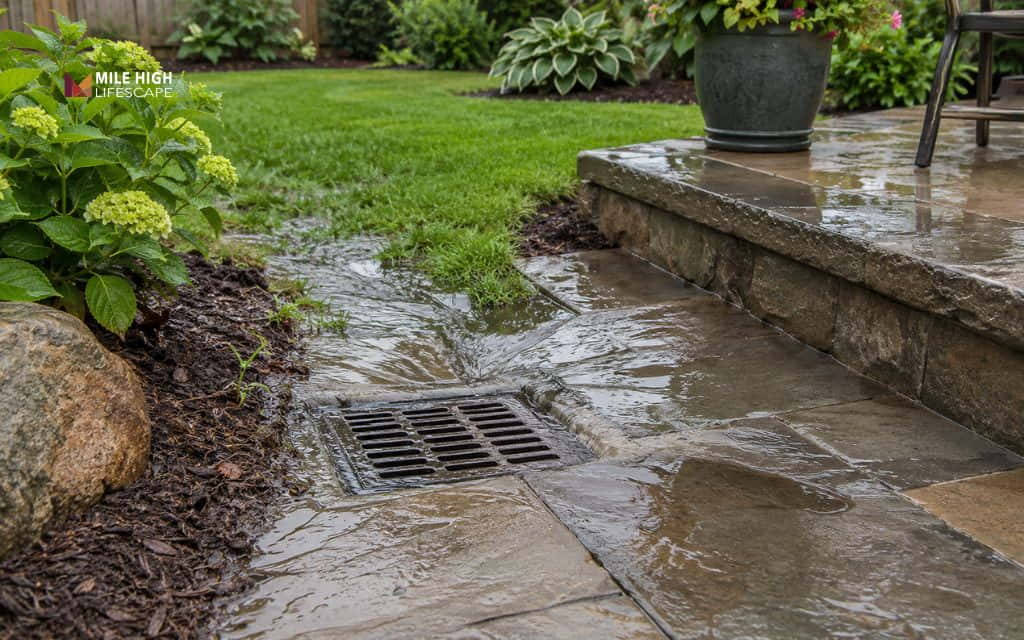
7. Install a catch basin or surface drain
Catch basins and surface drains collect water where runoff gathers, such as at the base of a slope, beside a patio, or within a hard-to-regrade depression. Buried pipes then carry it to an approved outlet.
This approach can handle concentrated surface water, but the drain must be properly sized, sloped, and maintained. Leaves and sediment can clog grates and pipes. Without a workable discharge destination, installing a basin alone will not eliminate standing water.
8. Install a french drain
French drains use gravel-filled trenches, often with perforated pipes, to intercept water moving through the soil and convey it toward suitable outlets. It may help where subsurface water keeps a portion of the lawn saturated.
Placement, depth, soil conditions, and outlet elevation determine whether the system will work. French drains are not automatically the best solution for puddles caused solely by a surface low spot. Poor installation can lead to sediment buildup, ineffective drainage, or unwanted water discharge.
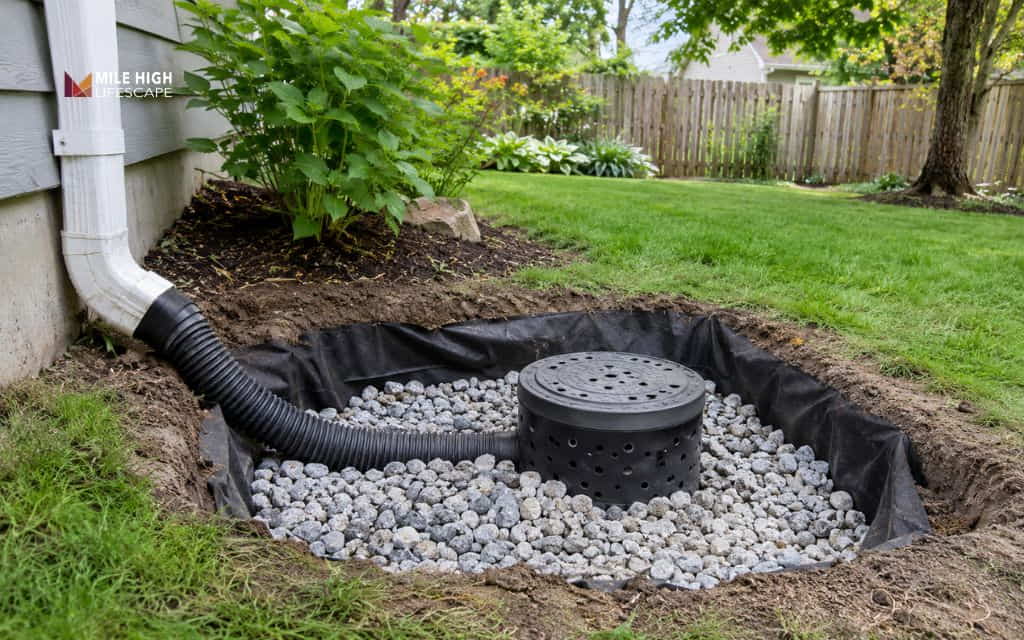
9. Use a dry well to manage excess runoff
Dry wells receive stormwater and temporarily store it underground while it soaks into surrounding soil. They may be useful for downspout runoff when the property has adequate infiltration capacity and enough separation from foundations, utilities, and groundwater.
Testing the soil and estimating the expected runoff volume are essential. Dry wells generally perform poorly where the soil cannot absorb water at a reasonable rate or the groundwater level is too high. Placement and discharge requirements also vary by jurisdiction.
10. Build a rain garden
Rain gardens are planted depressions designed to receive runoff and allow it to soak into suitable soil. They can manage water from roofs, driveways, and lawn areas while adding planting interest to the landscape.
Choose plants that tolerate both brief wet periods and drier conditions. Before construction, check soil infiltration, available space, and distance from buildings and septic systems. A rain garden should drain between storms; placing one in a permanently saturated patch without the necessary site conditions can make the problem worse.
How to choose the right yard drainage solution
If you are deciding how to fix standing water in yard areas, match the visible problem to its likely cause. The table below provides a starting point, not a substitute for evaluating the site.
| What you notice | Solutions to consider |
| Puddles below gutters or downspouts | Gutter cleaning, downspout extensions, or a properly designed runoff system |
| Water collecting in a shallow lawn depression | Careful leveling or regrading |
| Slow absorption and compacted turf | Core aeration and longer-term soil care |
| Runoff traveling downhill across the lawn | Swale, surface drain, or grading adjustments |
| Persistent soggy soil beneath the surface | Site assessment and possibly a French drain |
| Roof runoff with suitable soil for infiltration | Rain garden or appropriately sized dry well |
| Wet spots even when it has not rained | Irrigation leak inspection or subsurface drainage assessment |
How to prevent standing water from coming back
Once the yard drains properly, routine care can reduce the chance of new puddles forming.
- Check drainage paths after storms: Clear debris from grates and outlets, and watch for new erosion channels.
- Maintain gutters and downspouts: Make sure roof runoff continues to reach the intended discharge area.
- Protect soil from compaction: Avoid driving or mowing over saturated turf and vary heavily used walking routes where practical.
- Adjust irrigation seasonally: Soil moisture, rainfall, and grass growth should guide watering frequency.
- Care for planting beds: Organic mulch can reduce surface erosion and protect exposed soil, although it does not fix poor drainage underneath.
- Inspect repaired low spots: Settling soil can recreate shallow depressions, especially after landscaping or construction work.
When should you hire a professional for yard drainage?
Simple irrigation changes, gutter cleaning, and minor lawn leveling may be manageable for homeowners. Professional evaluation becomes more important when standing water repeatedly returns, large areas remain saturated, or runoff threatens a house, walkway, retaining wall, or neighboring property.
Drainage specialists can assess the grade, soil conditions, water sources, and available discharge locations before recommending major excavation. Depending on the property, the work may involve a landscape contractor, drainage specialist, licensed plumber, or other qualified professional.
Before digging, arrange utility marking through 811 where applicable, and check local requirements for stormwater discharge, grading, and permits. Water should never be routed into an unapproved sewer connection or onto neighboring land simply to clear your own yard.
Conclusion
The answer to “how to get rid of standing water in my yard” starts with identifying the cause and choosing a fix that matches it. Small problems may respond to better watering habits, gutter maintenance, or aeration. Recurring pooling may require grading changes or a properly designed drainage system. Address the source of the water before investing in a permanent repair.
For homeowners in Denver and the surrounding areas, Mile High Lifescape brings 20+ years of landscaping experience to evaluating outdoor spaces and planning practical improvements. Once drainage issues are resolved, our sod installation service can help restore lawn areas damaged by recurring standing water. If standing water keeps returning, contact the team at (303) 877-9091 to request a free estimate.
Frequently asked questions (FAQs)
How long does it take for standing water to drain from a yard?
Drainage time depends on the amount of rain, soil type, temperature, groundwater conditions, and the shape of the yard. Brief puddling after heavy rainfall can be normal. Water that remains for days after ordinary rain, repeatedly collects in the same place, or threatens structures should be investigated rather than judged by one universal time limit.
How can I get rid of standing water in my yard without digging?
Start by correcting irrigation schedules, clearing gutters, redirecting downspouts, and reducing soil compaction where appropriate. Minor surface leveling may also help. If water has no safe route out of the area or the soil remains saturated from below, a more substantial drainage project may be necessary.
What is the cheapest way to fix standing water in a yard?
The least expensive effective fix depends on the cause. Cleaning a clogged gutter or correcting an overwatering schedule may cost little. Repeatedly adding soil or gravel without understanding the drainage pattern can waste money and create new problems.
Can standing water damage my lawn?
Yes. Prolonged saturation reduces oxygen available to grass roots and can contribute to thinning turf, root stress, and muddy patches. The severity depends on how long water remains, the grass species, and soil conditions. Keep heavy traffic off saturated areas while addressing the source of excess water.
Will adding topsoil fix standing water in my yard?
Topsoil can help level a small depression when the surrounding grade provides a safe route for runoff. Simply covering a wet area may bury grass or redirect water somewhere worse. Problems involving compacted subsoil, high groundwater, or concentrated runoff usually require more than extra soil.