Does grass seed go bad? Yes. Grass seed gradually loses its ability to germinate as it gets older, especially when exposed to heat or moisture. However, finding a bag from last season does not automatically mean the seed is useless. Depending on the grass variety, storage conditions, and initial seed quality, some older seed may still produce healthy seedlings.
Before throwing it away or spreading it across your lawn, learn how long grass seed keeps, what signs to look for, and how to test whether it is still worth planting.
How long does grass seed last?
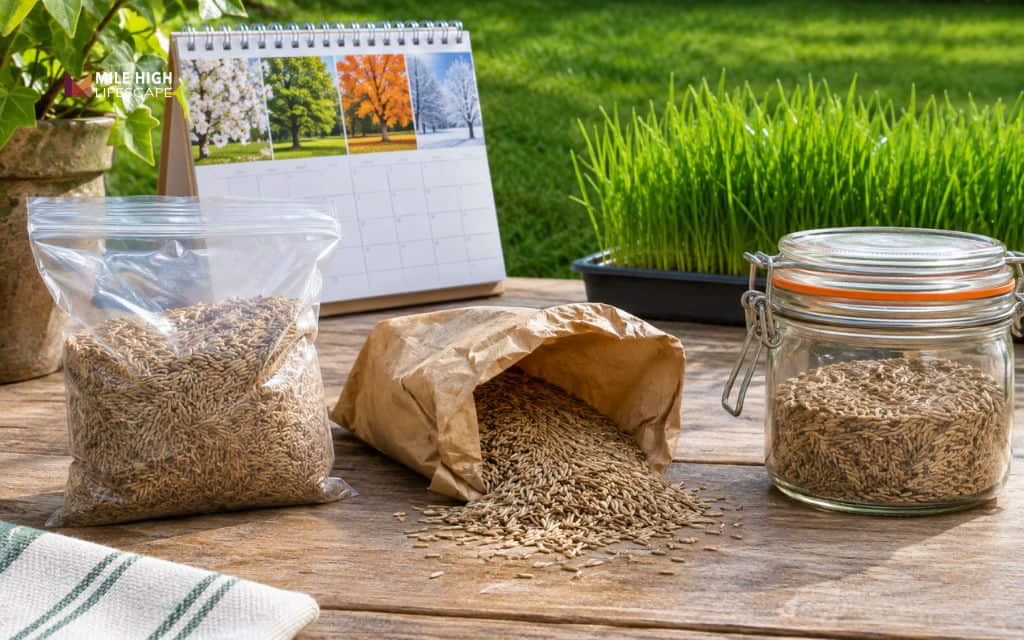
Most grass seed can remain usable for roughly one to three years when stored in a cool, dry place. That range is a practical estimate, not a guaranteed shelf life. Some well-stored seeds can germinate after several years, while seed left in a hot, damp shed may lose much of its viability in a single season.
Grass species also differ in how well their seeds tolerate storage. Common cool-season lawn grasses include tall fescue, perennial ryegrass, and Kentucky bluegrass. Warm-season grasses, such as seeded bermudagrass, have their own storage and germination requirements. Rather than relying on a fixed number of years for any species, consider the seed’s age alongside how it has been stored.
If you are seeding a lawn in spring, test any leftover seed before planning the job. Successful planting depends on both viable seed and the right growing conditions.
Does grass seed have an expiration date?
Grass seed bags commonly provide a germination percentage and a date showing when the seed was tested. The germination percentage indicates how many seeds sprouted under the conditions of that test. The test date tells you when the result was measured, rather than identifying the precise day the seed will stop growing.
Older seed may still germinate after the printed testing period, but the percentage on the label may no longer reflect its current performance. Packaging dates and labeling requirements vary by state and seed category, so a home germination test is more useful than treating any single date as an absolute cutoff.
What causes grass seed to go bad?
Seed remains alive while stored, but aging and unfavorable conditions gradually damage its ability to produce vigorous seedlings. Several factors can shorten grass seed shelf life.
- Heat and temperature swings: Long periods of high temperatures can speed up deterioration. Repeated changes between hot and cold conditions may also reduce storage quality.
- Moisture and humidity: Damp seed may begin to germinate prematurely or develop mold. Even without visible mold, prolonged exposure to humidity can reduce viability.
- Damaged or open packaging: Bags with tears or loose openings allow moisture and pests to reach the seed. An unopened bag offers little protection if the packaging itself is not moisture-resistant.
- Seed type and initial quality: Different grasses have different storage characteristics, while seed that was poorly handled before purchase may already have reduced vigor.
How to tell if grass seed is bad
Start by checking the condition of the seed and its packaging. Look for signs that storage conditions may have damaged the contents.
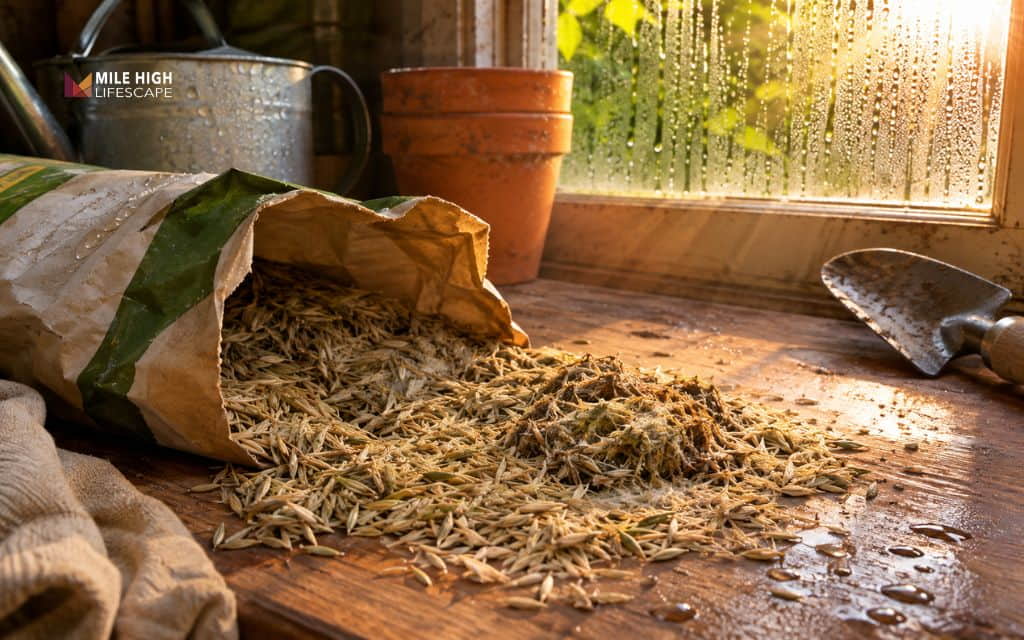
- Musty odors or visible mold: These suggest prolonged moisture exposure. Do not plant visibly moldy seed.
- Damp or heavily clumped seed: Clumps can indicate that water entered the bag, although some treated or coated products naturally have a different appearance.
- Signs of pests: Torn packaging, droppings, or insect activity may mean the stored seed has been contaminated.
- Poor germination: Seed that looks normal can still be too old or weak to establish a satisfactory lawn.
Appearance alone cannot confirm viability. Dry, clean-looking seed may have a low germination rate, while an older bag that looks ordinary might still grow well. Testing a small sample gives you a more useful answer.
How to test old grass seed for germination
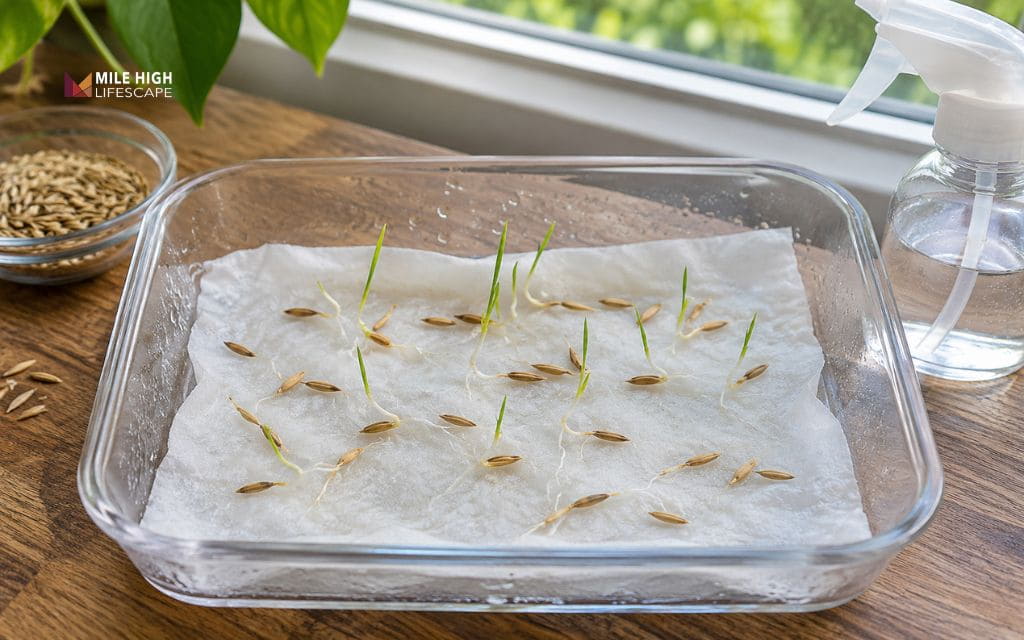
You can estimate how much of your stored grass seed is still capable of sprouting with a simple paper towel test. This is more informative than the float test, because whether a seed sinks or floats does not reliably establish whether it can germinate.
- Choose a representative sample: Mix the bag gently and count out 20 to 50 seeds from different parts of it. Fifty seeds provide a more useful estimate than just a handful.
- Prepare a damp towel: Moisten a paper towel and squeeze out excess water. Spread the seeds apart so the emerging roots are easy to see.
- Keep the seeds from drying out: Fold or roll the towel, place it in a loosely closed plastic bag or suitable covered container, and label it with the grass type and date.
- Provide appropriate conditions: Keep the sample at a temperature suitable for the grass species, out of direct sunlight. The towel should remain moist, not waterlogged.
- Check for sprouting: Look periodically for a small root emerging from the seed. Perennial ryegrass often sprouts in about 3 to 10 days, tall fescue in about 7 to 14 days, and Kentucky bluegrass may take 10 to 30 days under favorable conditions. Allow enough time for the grass in your sample before judging the result.
- Calculate the germination rate: Divide the number of germinated seeds by the number tested, then multiply by 100. If 40 out of 50 sprout, the estimated germination rate is 80%.
Compare your results with the label’s germination rate. Higher germination suggests the seed is still usable, but actual growth also depends on soil, water, and temperature. These factors are essential when trying to grow grass fast.
Can you still plant old grass seed?
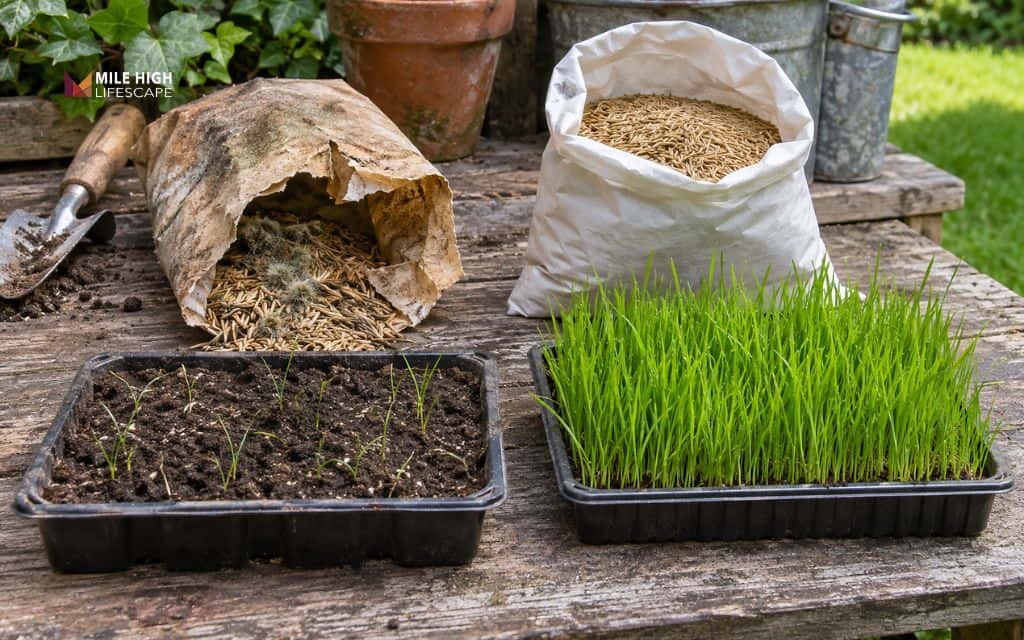
Yes, provided the seed is clean, has been stored reasonably well, and passes a germination test. Old grass seed does not become unusable simply because it has been in a bag for more than one growing season. The question is whether enough healthy seedlings will emerge to give you the coverage you need.
When old grass seed is still worth using
Leftover seed with satisfactory germination can work for small bare patches or minor overseeding projects, particularly when you can monitor the results and fill in any gaps later. Choose seed suited to your climate and existing lawn, then prepare the soil and water consistently. Even fresh seed needs good seed-to-soil contact and suitable temperatures to establish. Once seedlings emerge, a consistent lawn care routine helps them develop.
If the test result is noticeably below the original label percentage, a modest change to the seeding rate may sometimes be appropriate. Follow the product’s seeding guidance and avoid spreading excessive seed, which can create crowding and competition among seedlings.
When should you replace old grass seed?
Replace seed that is moldy, contaminated, or consistently performs poorly in germination tests. Fresh, high-quality seed is usually a better investment when establishing a new lawn or repairing a large area, because uneven germination can mean another round of preparation and planting.
For damaged lawns that need dependable, more immediate coverage, installing sod may be an alternative to starting from seed. Sod still requires appropriate soil preparation and watering, but it avoids uncertainty about whether stored grass seed will sprout.
How to store grass seed to extend its shelf life
Good storage slows deterioration, although it cannot restore germination potential that seed has already lost. Follow these practices when saving part of a bag for a future planting season.
- Choose a cool, dry location: Prefer a space with stable conditions over a shed or garage that becomes very hot or humid.
- Seal the seed properly: Close the original bag securely or transfer dry seed to a clean, moisture-resistant container with a tight-fitting lid.
- Keep it off damp floors: Place containers on a shelf, away from leaks, condensation, and areas prone to flooding.
- Protect it from sunlight and pests: Avoid windows with direct sun and locations accessible to rodents or insects.
- Keep the original label: Record the grass type, germination test date, and purchase date so you know what you are storing.
- Retest before planting: If the seed has been stored through another season, check germination again rather than assuming its performance has stayed the same.
Keep your lawn healthy with the right approach
So, does grass seed go bad? Yes, but its age alone cannot tell you whether it belongs in the trash. Check the storage conditions, inspect the seed, and run a germination test before deciding to plant it. Pair viable seed with suitable timing, careful soil preparation, and consistent watering to give new grass a better chance of establishing.
For homeowners in Denver and surrounding areas, Mile High Lifescape brings over 20 years of experience to practical lawn improvements. Our sod installation service offers an option for establishing a new lawn without relying on seed germination. Call (303) 877-9091 to discuss your yard and request a free estimate.
Frequently asked questions (FAQs)
Does unopened grass seed go bad?
Yes. Unopened grass seed can still lose viability over time. Its condition depends on how well the packaging protects against moisture and on the temperatures it experiences during storage. Check the test date and perform a germination test when the bag is old.
Does grass seed go bad in the garage?
It can. Garages that become hot in summer, damp during rainy weather, or subject to frequent temperature changes may shorten seed life. A dry, temperature-stable storage space is a better option.
Does grass seed go bad if it freezes?
Freezing does not necessarily kill thoroughly dry grass seed, and controlled cold storage can preserve some seed types. Moisture exposure and condensation during freezing or thawing can cause problems, however. Avoid assuming that a bag left in an unheated, damp shed will remain viable.
Can 5-year-old grass seed still grow?
Possibly. Some seeds remain viable for years under favorable storage conditions, but five-year-old grass seed may have a substantially reduced germination rate. Test it before planting and consider buying fresh seed for major lawn projects.
Can you mix old grass seed with new seed?
You can mix compatible grass seed varieties, but test the old seed first. A low-quality batch can make coverage less predictable, and mixing different species or blends may affect the finished lawn’s appearance and performance. For important projects, using fresh seed of the appropriate variety is simpler.
How long does grass seed last after opening the bag?
There is no fixed deadline once a bag is opened. Seed kept dry, sealed, and cool may remain usable through another planting season or longer, while seed exposed to heat and moisture can decline much sooner. Recheck germination before using it.