
Beehive removal cost typically depends on the type of bee, the size of the colony, and how difficult the hive is to reach. Homeowners who spot bees settling into a wall, roofline, or tree often want a straight answer before calling anyone out. This guide breaks down realistic price ranges, explains what pushes the number up or down, and clarifies the difference between a passing swarm and an established colony, since the two situations rarely call for the same amount of work.
How much does beehive removal cost?
Most homeowners pay somewhere between $100 and $600 for a straightforward beehive removal, though the final bill can climb past $1,500 when the colony sits deep inside a wall, ceiling, or roofline and requires structural work. A quick swarm pickup on a tree branch costs far less than an established hive built into the frame of a house.
| Removal scenario | Typical price range |
| Simple swarm removal | $100 to $200 |
| Live colony relocation | $200 to $600 |
| Pest control extermination | $150 to $800 |
| Structural extraction with repair | $600 to $2,500 or more |
These figures shift with local labor rates, the season, and how many bees are involved, so a phone quote is only a starting point. Anyone searching for how much does it cost to remove a beehive should treat these beehive removal cost figures as a planning range and confirm the specifics with an in-person inspection before agreeing to a price.
Honey bees, wasps, or hornets: How to tell them apart
Honey bees
Honey bees are fuzzy, golden brown, and build hives out of wax honeycomb that can hold thousands of workers along with stored honey. They tend to be docile unless the hive is disturbed, and because they play an important pollinator role, most professionals favor live relocation over extermination whenever the colony is healthy.
Wasps, hornets, and yellow jackets
These insects have smoother, narrower bodies and build papery nests rather than wax comb. They defend their nests more aggressively than honey bees and can sting repeatedly. Removal for this group almost always means extermination rather than relocation, since there is no honeycomb or colony worth saving.
Carpenter bees
Carpenter bees look similar to bumblebees but bore round tunnels into untreated wood such as eaves, deck rails, and fence posts. They live alone rather than in a shared hive, and while a single tunnel looks minor, repeated nesting over several seasons can weaken the wood it burrows into.
Swarm or established colony: Why it affects the price
A swarm is a temporary cluster of bees, often clinging to a tree branch, fence post, or mailbox, while scout bees search for a permanent home. Swarms usually move on within a day or two, and because there is no comb or stored honey to remove, a professional can often collect the cluster quickly and at a lower cost.
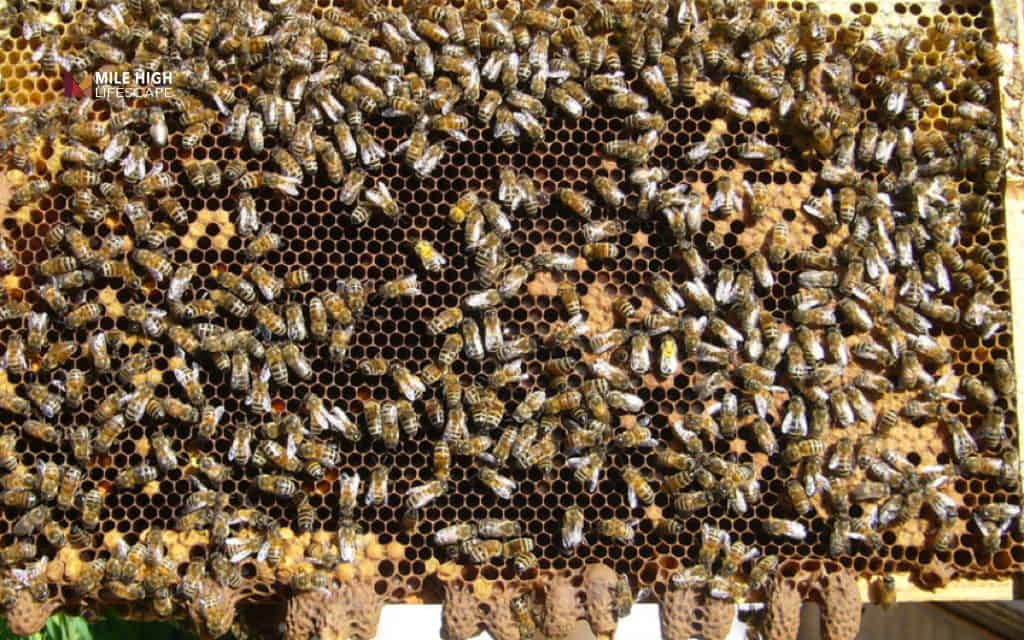
An established colony is a different job entirely. The bees have already built comb, stored honey, and started raising brood inside a cavity such as a wall void, chimney, or hollow tree. Removing an established colony takes longer, may require opening a structure to reach the comb, and usually costs more than clearing a swarm.
What drives the cost of beehive removal
Several factors combine to set the final beehive removal cost, and a professional inspection is the only reliable way to confirm which ones apply to a specific job.
| Cost factor | How it affects price |
| Hive location and accessibility | Hard to reach spots such as chimneys, high rooflines, or wall cavities raise labor time and equipment needs |
| Colony size | A small, young colony costs less to remove than a large, well established one |
| Bee species | Honey bees may qualify for lower cost relocation, while aggressive species often require extermination |
| Removal method | Live relocation, extermination, and structural extraction each carry different labor and equipment costs |
| Honeycomb and honey cleanup | Leftover comb and honey must be fully removed or it can attract a new colony |
| Structural repair | Cutting into drywall, a ceiling, or a deck adds a separate repair cost after the bees are gone |
| Emergency or same day service | Rushed scheduling, especially near an entryway or high traffic area, typically adds a premium |
Choosing the right beehive removal method
Live relocation
Live relocation moves a healthy colony to a new location instead of killing it. Many homeowners search for local beekeepers near me or an apiarist near me because a beekeeper willing to take a colony may charge less than a standard pest control visit, and some will do the job at no cost in exchange for the bees and the honey.
Extermination
Extermination is generally reserved for aggressive species, wasp and hornet nests, or colonies that are too unhealthy to relocate. Bee exterminator cost usually falls within the same range as other pest control treatments, though pricing can rise for nests in tight or elevated spaces.
Structural extraction
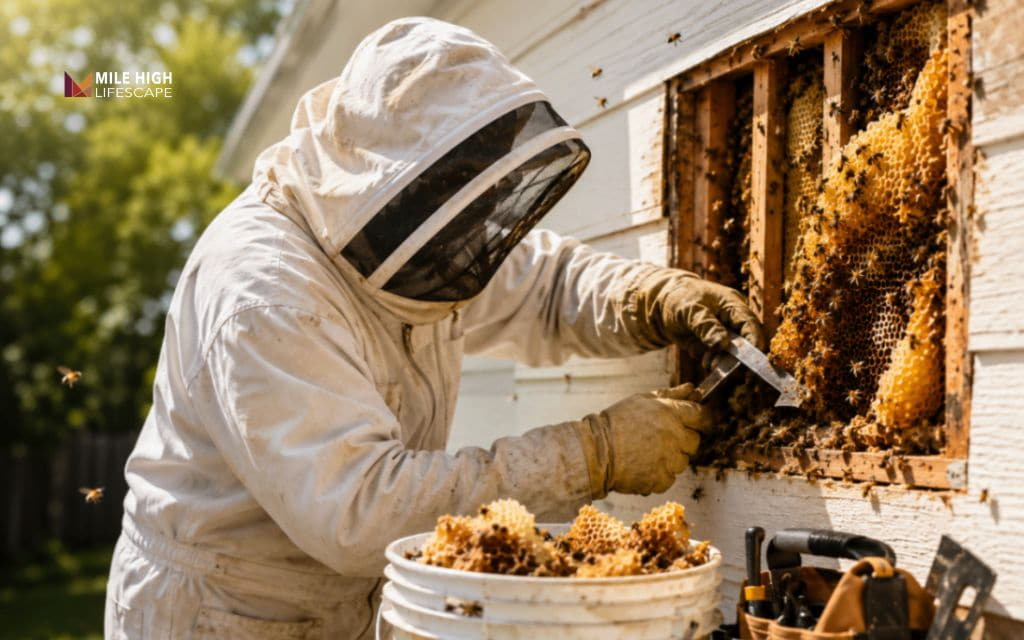
Structural extraction is required when an established colony has built comb inside a wall, ceiling, chimney, or roofline. The process involves opening the structure, removing every section of comb and honey, treating the cavity, and closing the opening back up, which is why this method sits at the top of the price range.

DIY risks and when to call a professional
Removing bees without training is risky, both for the person doing the work and for anyone nearby. Misidentifying wasps as bees, provoking a defensive colony, or reacting to stings without warning can turn a manageable situation into an emergency, especially for anyone with a bee allergy. Sealing an entry point without removing the colony first is another common mistake, since trapped bees can chew through drywall or find a new exit inside the home.
An established colony, particularly one inside a wall, ceiling, or chimney, should always go to a licensed professional. Searching for a beekeeper removal near me or a local pest control company is the safer route, and most will provide a free estimate that lays out the expected beehive removal cost before any work begins.
Conclusion
Beehive removal cost varies quite a bit, but knowing the general range helps homeowners plan ahead instead of guessing. A quick swarm pickup costs far less than an established colony hidden inside a wall or roofline, and the bee species involved shapes both the price and the method a professional will use.
Mile High Lifescape has spent nearly two decades caring for lawns and landscapes across the Denver Metro area, and a well maintained yard makes it easier to notice a new swarm or hive before it grows into a bigger problem. Call (303) 877-9091 to talk through your outdoor property needs.
Frequently asked questions (FAQs)
How much does it cost to remove bees?
The average beehive removal cost falls between $100 and $600, with prices rising toward $1,500 or more for colonies built into a wall or roofline that need structural work.
Can I remove a beehive myself?
It is not recommended. Established colonies require protective equipment, correct identification, and experience handling defensive bees, and a poor DIY attempt can lead to stings or bees relocating deeper into a structure.
Will a beekeeper remove bees for free?
Sometimes. A beekeeper may waive the fee for a healthy honey bee colony since they can relocate it to their own hives, though jobs involving structural extraction or repair usually still carry a cost.
What is the difference between swarm removal and hive removal?
Swarm removal clears a temporary cluster of bees before it settles into a permanent spot, which is usually quick and inexpensive. Hive removal deals with an established colony that has already built comb and stored honey, which takes more time and typically costs more.
Does bee removal include honeycomb cleanup?
Not always. Some services focus only on collecting the bees, so it is worth asking whether honeycomb and leftover honey removal is included, since comb left behind can attract a new colony to the same spot.