A pine tree can go from green and vigorous to brown and dying in a matter of weeks once the wrong pest moves in. The frustrating part is that needle discoloration, thinning canopy, and sticky sap can all point to very different causes, from drought stress to fungal disease to an active insect infestation. Knowing the difference early is what separates a tree that recovers from one that does not.
This guide walks through the most common pine tree pests found across the U.S., including those with a strong presence on Colorado’s Front Range, where drought and warming winters have made ponderosa, pinyon, and Austrian pines increasingly vulnerable. You will learn what each pest looks like, which warning signs to catch first, and exactly when to handle it yourself versus when to pick up the phone.
Early warning signs of a pine tree pest infestation
Catching pine tree pests early is the single most effective thing a homeowner can do. Many destructive insects, particularly bark beetles, have a narrow treatment window, and once established under the bark, the tree’s ability to fight back drops sharply. Regular visual checks from late spring through early fall give you the best chance of intercepting a problem before it escalates.
You do not need to be an arborist to spot the early signs. The signals are physical and visible. Walk around the base of your pines, look closely at the bark and needles, and check for any of the following:
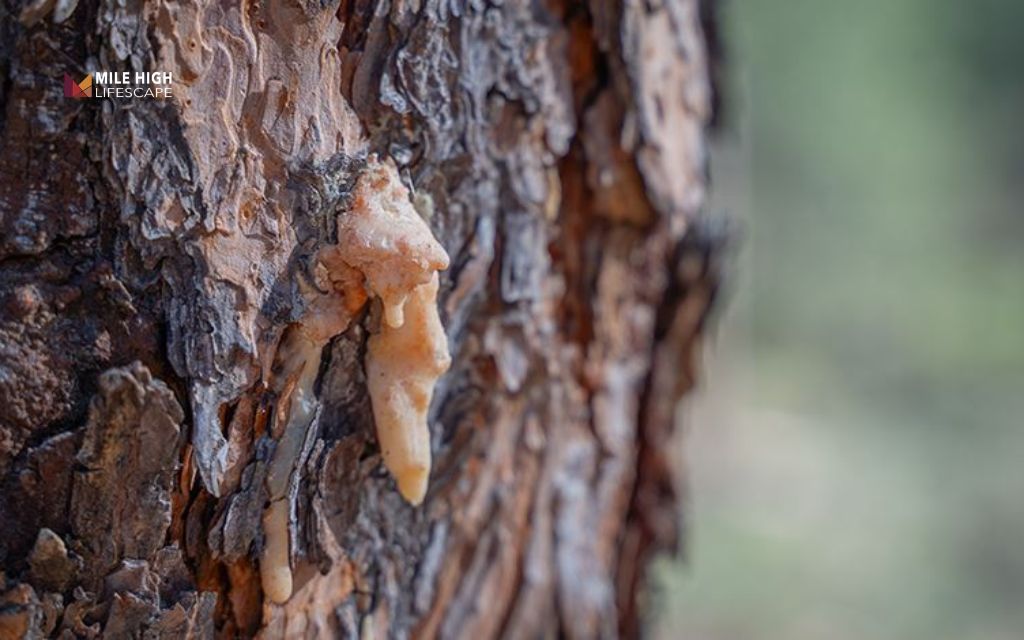
- Pitch tubes: Small, popcorn-shaped masses of resin on the trunk indicate bark beetle activity. The tree is trying to push the beetle out. Their presence alone is cause for concern.
- Boring dust: Fine, reddish-brown sawdust in bark crevices or at the base of the tree signals active beetle boring beneath the surface.
- Needle discoloration: Needles turning yellow, tan, brown, or reddish-brown, especially if the change is rapid, often signal pest pressure rather than normal seasonal shedding.
- Rapid canopy browning: If the entire canopy or large sections turn brown within a few weeks, bark beetles or borers have likely disrupted the tree’s vascular system.
- Dead branch tips: Tips that turn brown while the rest of the branch remains green are a hallmark of tip moths and weevil damage.
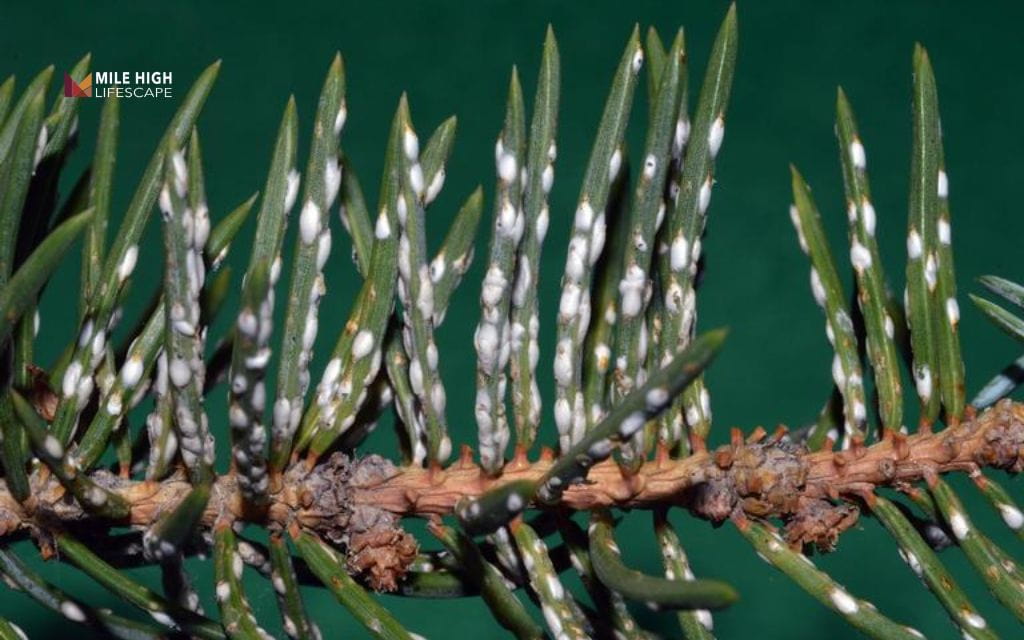
- White flecks or waxy patches on needles: These indicate scale insects feeding on needle tissue.
- Sticky residue or sooty black coating: Honeydew produced by scale insects can develop into sooty mold, leaving a dark, sticky film on needles and nearby surfaces.
- Silky cocoons or webbing: Packed with dead needles and frass, these signal pine webworm or sawfly activity on branches.
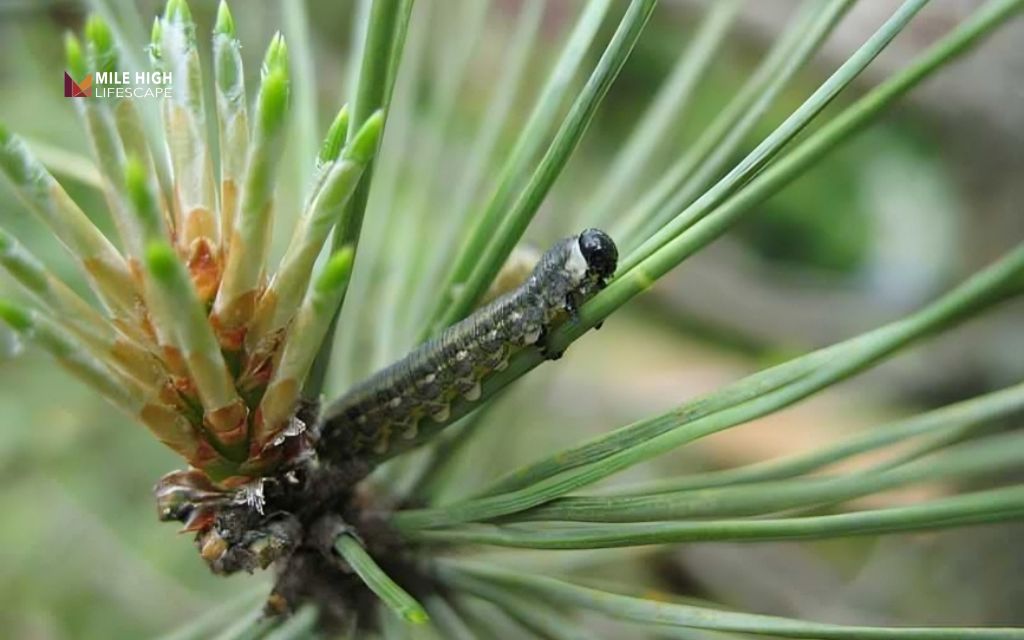
- Caterpillar-like larvae on needles: Small larvae feeding on older needles in clusters are a reliable sign of pine sawfly.
Common pine tree pests to know
Bark beetles
Bark beetles are the most destructive category of pine tree pests in the United States. The mountain pine beetle (Dendroctonus ponderosae) uses a mass-attack strategy that can overwhelm even a healthy, well-watered tree during an outbreak year, while Ips beetles (Ips spp.) primarily target stressed or drought-weakened trees and complete three or more generations per year. Both species bore beneath the bark and disrupt the phloem, the tissue responsible for moving water and nutrients through the tree.
Both beetle types also carry the blue-stain fungus, which spreads through the sapwood and accelerates decline independently of the physical boring damage. By the time needle browning is visible across the full canopy, the tree is already in severe decline. Mountain pine beetle attacks are almost always fatal once established, making early detection and professional response the only viable path forward.
Weevils and tip moths
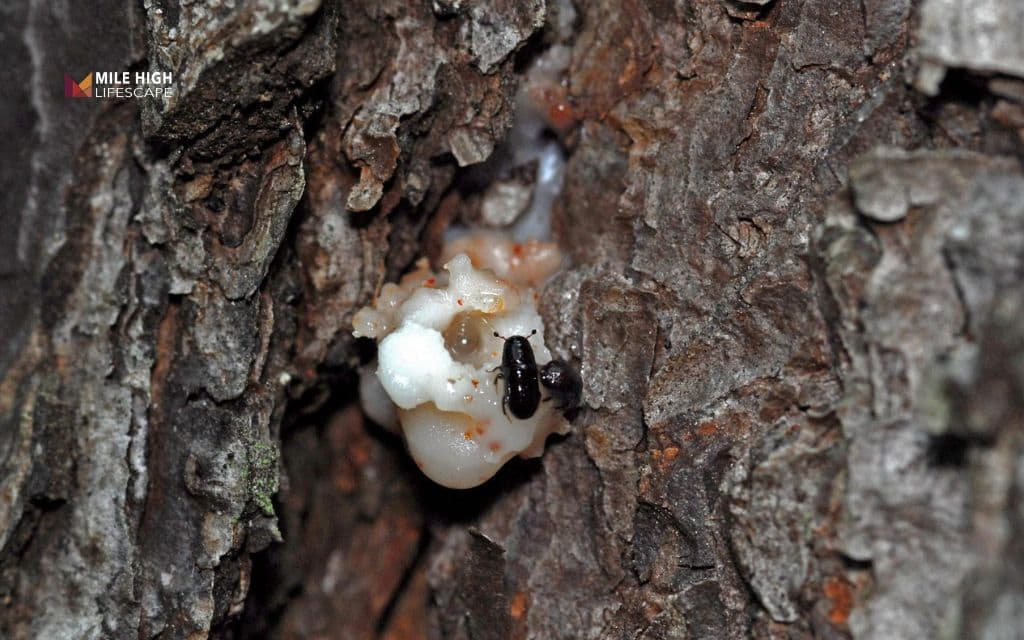
The white pine weevil (Pissodes strobi) attacks the terminal leader, the topmost vertical stem. Larvae girdle it from the inside, causing a characteristic shepherd’s crook droop before the leader dies back entirely. The Zimmerman pine moth (Dioryctria zimmermani), a common pest on Austrian and Scotch pines across Colorado’s Front Range, bores into branch junctions and leaves behind gummy resin masses mixed with sawdust and frass.
Pine tip moths (Rhyacionia spp.) target young ponderosa and Scotch pines, killing new shoot tips in late spring and leaving dead, resin-coated stubs. On established trees the damage is mostly cosmetic, but repeated annual attacks on saplings can stunt growth and distort branching over time.
Pine sawflies and webworms
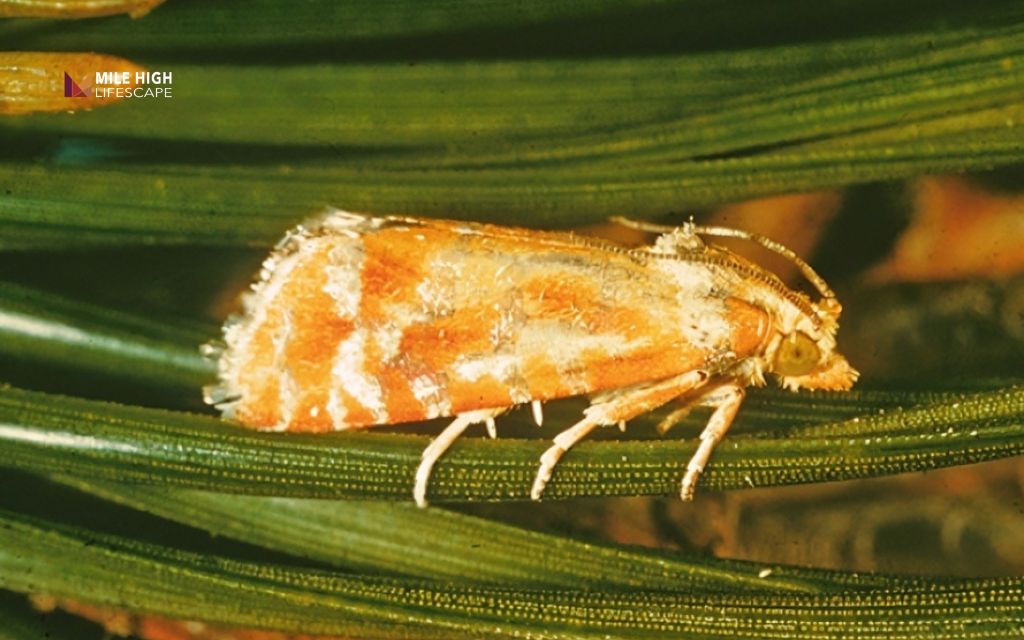
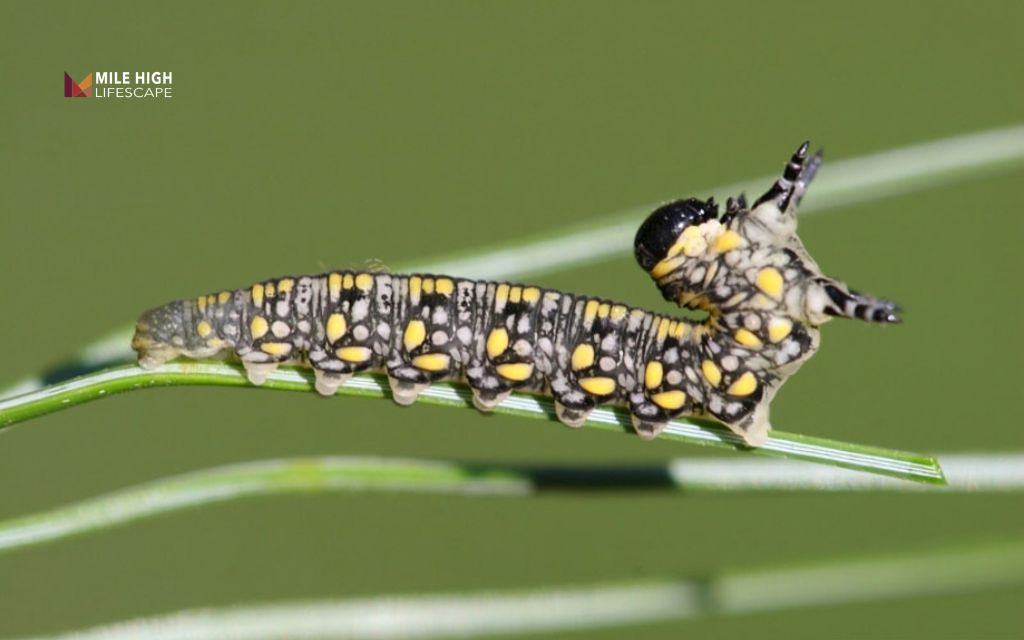
Pine sawfly larvae look nearly identical to small caterpillars and feed on older needles in clusters, leaving bare patches and short stubs on affected branches. A critical treatment note: sawflies belong to the order Hymenoptera, not Lepidoptera, so insecticides labeled for caterpillar control, including Bacillus thuringiensis (Bt), have no effect on them. Insecticidal soap applied directly to larvae, or manual removal by shaking branches, is the right approach.
Pine webworms produce reddish-brown silky cocoons packed with frass and dead needles on branches. On mature trees they are mainly a cosmetic nuisance, but heavy infestations on seedlings and young trees can cause serious setback. Natural predators including parasitic wasps and birds keep populations in check in most years, and manual cocoon removal is the first-line control.
Scale insects
Scale insects extract sap continuously from needle and stem tissue. Pine needle scale (Chionaspis pinifoliae), the most widespread species, leaves white elongated waxy coverings on needles that give affected branches a frosted appearance. Heavy infestations cause needle yellowing, premature drop, and stunted growth. On Colorado’s Front Range, pinyon needle scale (Matsucoccus acalyptus) is a particular concern on pinyon pines already weakened by drought and clay soil conditions.
Soft scale species such as pine tortoise scale (Toumeyella parvicornis) produce honeydew that promotes sooty mold growth, further reducing photosynthesis. The most effective treatment window is spring, when immature crawlers, the only mobile life stage, are active and exposed. Broad-spectrum pesticides should be avoided, as they eliminate the natural predators that otherwise help keep scale populations in check.
Learn more: Bugs on tree
How to stop pine tree pests
Prevention starts with tree health
The strongest defense against pine tree pests is a tree that is not already stressed. When a bark beetle bores into vigorous bark, the tree floods the entry point with resin, physically ejecting the beetle and sealing the wound. Trees under drought stress, growing in compacted clay soil, or weakened by root disturbance cannot produce enough resin to mount that defense. Deep, infrequent watering once or twice a week during dry periods, combined with two to three inches of mulch over the root zone, makes a measurable difference in tree resilience.
Avoid wounding the trunk with string trimmers, mowers, or careless pruning cuts, since fresh wounds release compounds that actively attract bark beetles. Pine pruning should be scheduled outside of peak beetle flight, which typically runs from late spring through midsummer in most regions. Avoid planting young pines near recently wounded or declining trees for the same reason.
DIY treatments that work
Several pine tree pest problems respond well to timely DIY management when caught early. The key is matching the treatment to the specific pest, because what works against one category can be ineffective or counterproductive against another.
- Sawfly larvae: Hand-removal or pruning of affected branches is the most reliable method. For larger infestations, insecticidal soap sprayed directly on larvae is effective. Do not use Bt, as it has no effect on sawflies.
- Webworm cocoons: Remove and destroy occupied cocoons by hand before adults emerge. No chemical treatment is needed on mature trees.
- Scale insects: Apply horticultural or dormant oil in early spring to target the crawler stage. A second application in mid-spring may be needed if hatching is staggered.
- Tip moths and weevils: Prune and destroy affected shoot tips as soon as dieback is noticed. For weevil damage to the terminal leader, select the strongest lateral branch to replace it and remove competing branches.
When DIY is not enough
There is a clear line between pest problems that a homeowner can manage and those that require professional assessment and treatment. Crossing that line and attempting DIY control in the wrong situation does not just fail, it can cost the tree the narrow window in which professional intervention might still work.
Stop DIY treatment and contact a certified arborist or tree care professional immediately if you observe any of the following:
- Pitch tubes or boring dust on the trunk, especially combined with rapid canopy browning. Bark beetle infestations move fast, and the treatment window is measured in days to weeks.
- Browning that spreads to multiple trees, which can signal an active outbreak rather than an isolated infestation.
- Symptoms you cannot identify confidently, since misidentification leads to the wrong treatment and lost time.
- Trees over 15 to 20 feet tall where pest activity is occurring in the upper canopy, creating access and safety challenges beyond DIY reach.
- Any tree near a structure, power line, or driveway where a declining tree poses a fall risk regardless of pest outcome.
Learn more: Pine tree diseases
Not every problem is a pest
One of the most common mistakes homeowners make is treating a tree for pests when the real problem is something else entirely. Drought stress, soil compaction, and fungal disease can all produce symptoms that look nearly identical to active pest damage. Interior needle drop, for example, is a natural seasonal process that requires no action, not a sign of infestation.
Before reaching for any treatment, look for physical pest signatures: pitch tubes, boring dust, frass-filled cocoons, or visible larvae. If none are present, consult a local extension office or ISA-certified arborist. An accurate diagnosis is always the most reliable starting point.

Conclusion
Pine tree pests range from minor cosmetic nuisances to canopy-killing bark beetle outbreaks that move in days. The difference between a tree that recovers and one that does not often comes down to how quickly symptoms are identified and acted on. Regular seasonal inspections, knowing what normal looks like on your specific pine species, and escalating to professional help when the signs demand it are the foundation of effective pine tree care.
At Mile High Lifescape, we help Colorado homeowners protect the trees that define their landscapes. Whether you have a pine showing early warning signs or want a professional assessment before a problem starts, reach out to Mile High Lifescape to schedule a consultation.
When damaged, diseased, or dead branches become a safety concern, our Tree Branch Removal service can help remove hazardous limbs and protect the surrounding property. Professional branch removal can also support healthier tree growth by addressing problem branches before they cause further damage.
Frequently asked questions (FAQs)
What are the common pests and diseases of pine trees?
The most common pine tree pests include bark beetles, Ips beetles, pine sawflies, webworms, scale insects, white pine weevil, and tip moths. On the disease side, Diplodia tip blight, Dothistroma needle blight, and blue-stain fungus (often introduced by bark beetles) are frequent threats. Pests and diseases frequently appear together, since insects weaken trees and open pathways for fungal infection. Accurate identification matters because insecticide treatments will not resolve a fungal problem.
What bugs infest pine trees?
The most damaging insects that infest pine trees are bark beetles (including mountain pine beetle and Ips beetles), white pine weevil, Zimmerman pine moth, pine tip moths, pine sawflies, pine webworms, and scale insects such as pine needle scale and pinyon needle scale. Each targets a different part of the tree, from bark and phloem to needles and shoot tips. In Colorado, bark beetles and weevils pose the greatest risk to residential pines.
Can I treat pine tree pests myself?
Sawfly larvae can be removed by hand or treated with insecticidal soap. Scale insects respond to horticultural oil applied in early spring. Damaged tips from tip moths or weevils should be pruned and destroyed promptly. Bark beetle infestations, however, require professional intervention as the treatment window is narrow and there is no effective DIY option once beetles are established under the bark.
When should I call an arborist for pine tree pest problems?
Contact a certified arborist if you observe pitch tubes or boring dust on the trunk, if canopy browning is spreading rapidly, if multiple trees are showing the same symptoms, or if you cannot confidently identify the pest. Trees near structures or those too tall for safe upper-canopy access also warrant a professional visit. For bark beetle situations especially, waiting even a few weeks can eliminate any realistic chance of saving the tree.
Do pine trees recover from pest infestations?
Recovery depends on the pest type, infestation severity, and how quickly it was caught. Trees damaged by defoliators like sawflies typically recover well once larvae are removed, since new needles grow back. Scale infestations often improve with consistent oil treatment and better tree care. Trees mass-attacked by bark beetles rarely survive, because the combined damage from tunneling and blue-stain fungus destroys the vascular system beyond recovery.