Crape myrtle tree diseases usually start small. A dusting of white on a leaf. A scatter of brown spots. A branch that stops blooming. Homeowners often confuse these signs with normal seasonal change. Crape myrtle bark naturally peels and flakes as the tree matures, and that alone is not a disease.
Most crape myrtle diseases fall into a short list of fungal and insect related problems. This guide covers the most common ones, explains what causes them, and shows what to do next. It also covers common crepe myrtle problems tied to pests, since insect damage and disease symptoms often look alike and get mistaken for one another. Both crape myrtle and crepe myrtle are accepted spellings, and searches for myrtle crape disease usually point to the same handful of issues covered here.
Crape myrtle disease symptoms at a glance
Crepe myrtle diseases pictures found online often show overlapping symptoms that are hard to tell apart without a side by side comparison. The table below summarizes common crape myrtle tree diseases and pest symptoms, their likely cause, and the first step to take.
| Symptom | Likely cause | What to do |
| White powder on leaves and buds | Powdery mildew | Improve airflow, apply fungicide if severe |
| Brown or tan spots on leaves | Cercospora leaf spot | Rake fallen leaves, plant resistant varieties |
| Sticky residue on leaves | Aphids | Apply insecticidal soap, reduce nitrogen fertilizer |
| Black coating on leaves or bark | Sooty mold | Treat the insect source, wash off residue |
| White or gray crust on bark | Crape myrtle bark scale | Scrub bark, apply systemic insecticide |
| Chewed or lacy leaves | Japanese beetles | Hand pick beetles, treat only if severe |
| Few or no blooms | Stress, over pruning, or mildew | Improve sun and water, avoid heavy pruning |
| Leaf drop with dead branches | Root rot or prolonged stress | Check drainage, consult a professional |
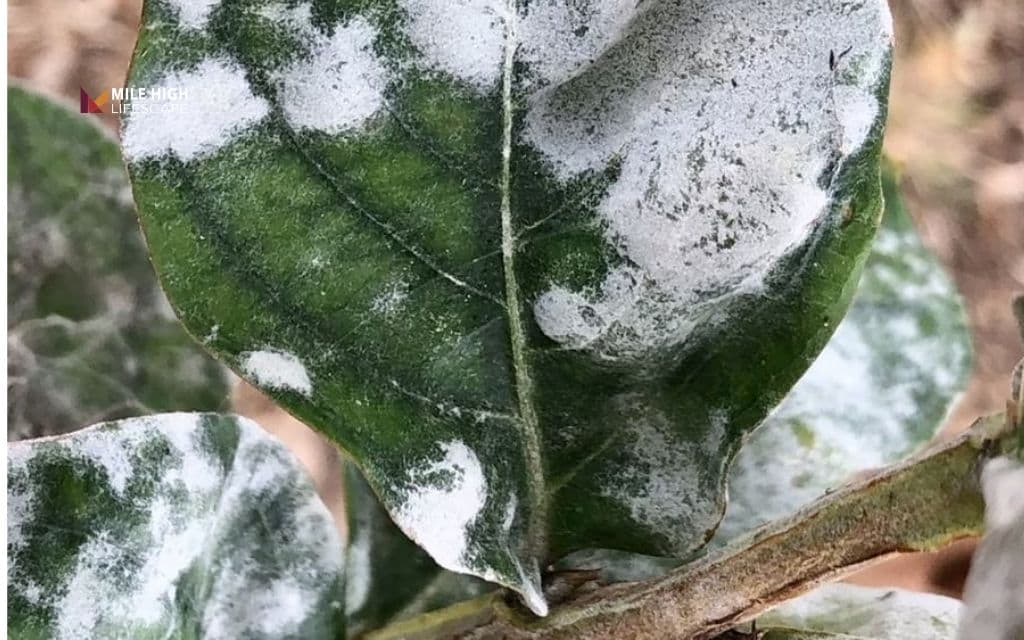
White powdery coating on leaves and buds
Among crape myrtle tree diseases, a grayish white coating on leaves, buds, and new shoots is the one most homeowners spot first. It points to powdery mildew, the most common crape myrtle fungus. The fungus favors humid days and cool nights, and it spreads fastest on trees planted in shade or crowded conditions with poor airflow. New growth often looks curled or stunted, and infected flower buds may never open.
Powdery mildew shows up most in spring and fall, when temperature swings create the humidity it needs. Prune to open up the canopy, water at the soil line instead of overhead, and choose resistant varieties when planting new trees. A fungicide containing myclobutanil or propiconazole controls severe cases, but most mild infections clear on their own once airflow improves.
Learn more: tree disease treatment
Brown or yellow spots on leaves
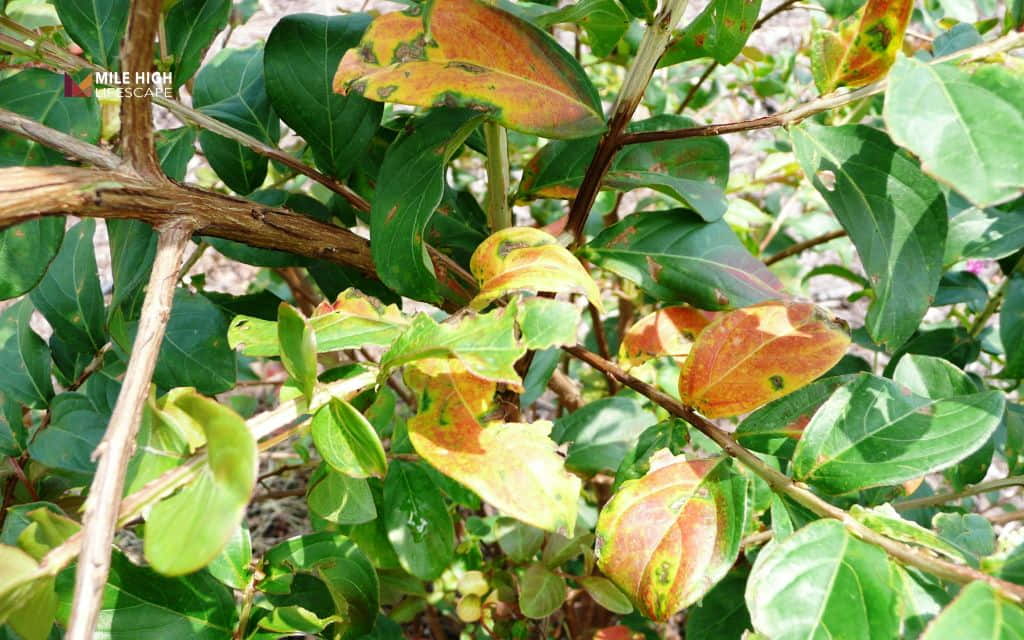
Circular brown or maroon spots surrounded by a yellow halo signal Cercospora leaf spot, one of the most common crape myrtle diseases behind powdery mildew. The spots start on lower, older leaves and spread upward through the canopy. Left untreated, infected leaves turn yellow, then drop weeks before the normal fall timeline.
Cercospora thrives in the same warm, humid weather that favors powdery mildew, and the two often appear on the same tree in a bad season. Rake and destroy fallen leaves each fall to remove the fungus before it overwinters. Resistant varieties reduce recurrence, and a fungicide application helps trees that lose leaves early year after year.
Sticky leaves and black sooty mold
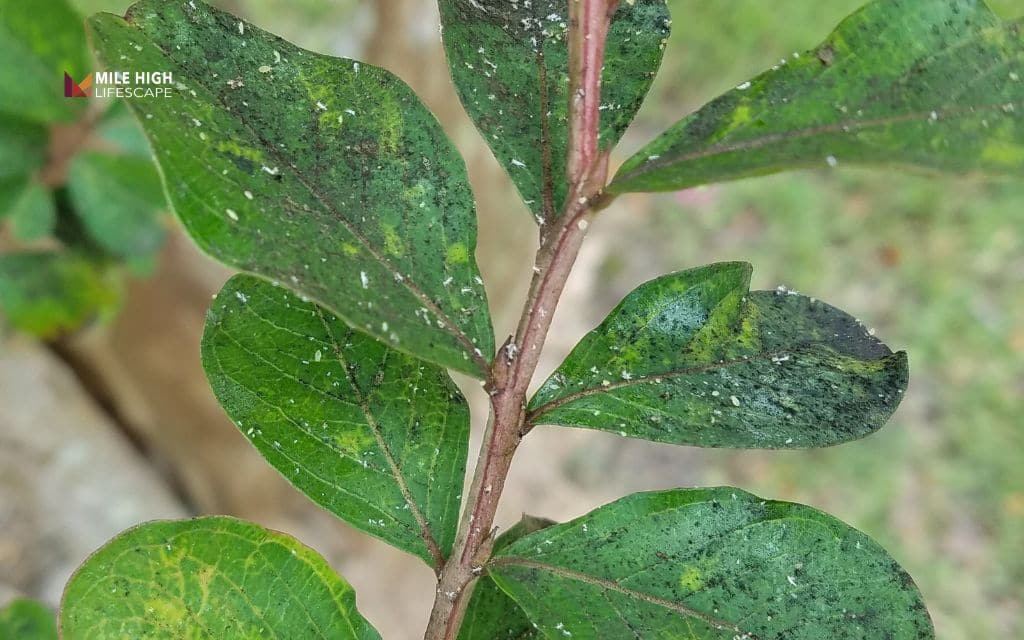
A sticky film on leaves, patio furniture, or cars parked under a crape myrtle almost always means an insect problem, not a plant disease. Aphids and scale account for most crepe myrtle pests that produce this kind of residue. Aphids are small, soft bodied insects that cluster on new growth and the undersides of leaves, feeding on sap and excreting a sugary waste called honeydew. Sooty mold is the black, powdery coating that grows on that honeydew once it settles on leaves and bark below.
Sooty mold does not infect the tree directly. It only needs to be washed off once the insects causing it are controlled. Insecticidal soap or horticultural oil manages aphids without harming beneficial insects, and avoiding heavy nitrogen fertilizer helps, since it encourages the soft new growth aphids prefer.
White or gray crust on bark
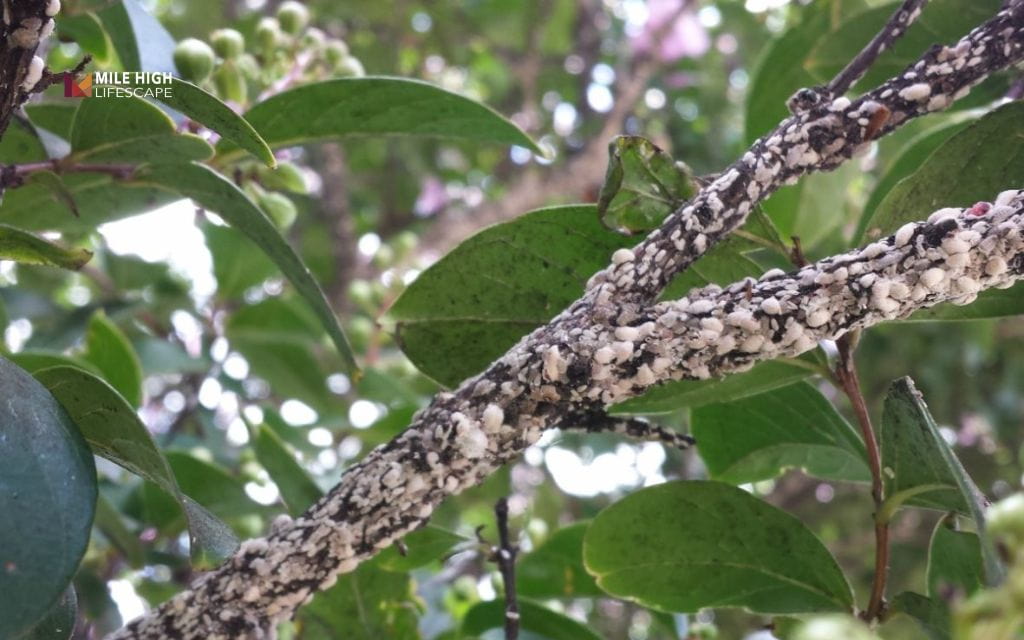
A white or gray, felt-like crust in the crevices of the bark and around branch unions signals crape myrtle bark scale, a pest that has spread through much of the country in recent years. The scale insects feed on the trunk and branches, and like aphids, they excrete honeydew that often turns the bark black with sooty mold.
Scrub the trunk and larger branches with a soft brush and a mild soap and water solution to physically remove scale and eggs. A systemic insecticide containing imidacloprid, applied as a soil drench in early spring, controls the insects from within the tree. Dormant oil applied in late winter, before new growth starts, also reduces the population going into the season.
Chewed leaves and skeletonized foliage
Leaves that look lacy, with only the veins remaining, point to Japanese beetles rather than disease. The adult beetles feed in groups during summer, skeletonizing leaves and chewing through flower petals. Their metallic green and copper coloring makes them easy to spot on the plant.
Most crape myrtle pests, including Japanese beetles, cause damage that looks worse than it is. Established trees tolerate moderate feeding without lasting harm. Hand pick beetles in the early morning, when they move slowly, and avoid pheromone traps, which tend to attract more beetles to the yard than they catch. Insecticide treatment is worth considering only for heavy, repeated infestations.
Poor blooming or blooms that won’t open
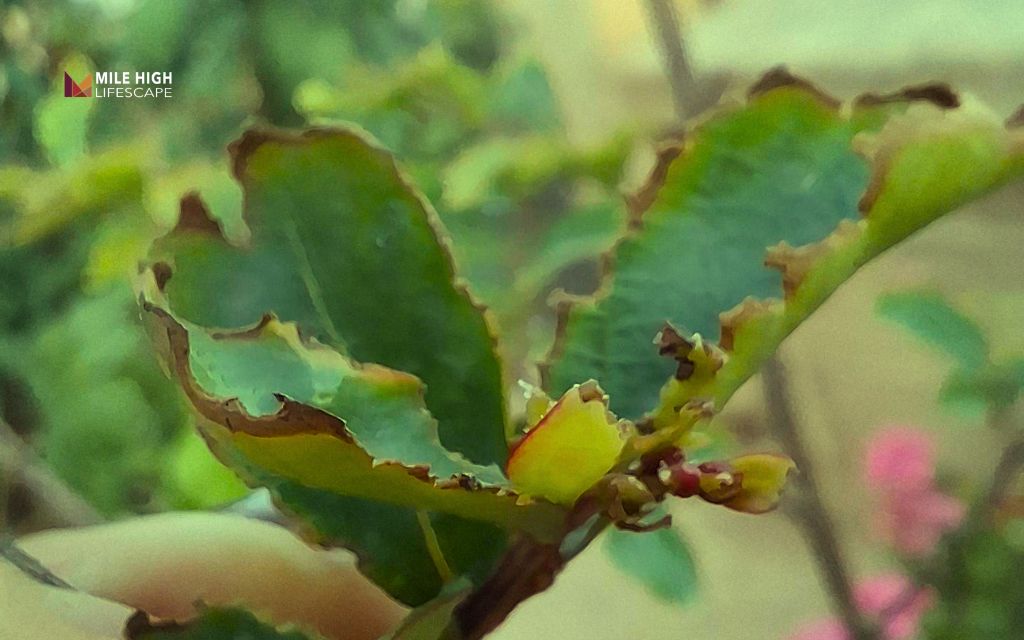
Several unrelated problems can leave a crape myrtle with few or no flowers. Powdery mildew infection can prevent buds from opening at all, even when the rest of the tree looks healthy. Heavy pruning, especially the practice of cutting mature trees back to stubs each winter, weakens the plant and delays or reduces the next season’s blooms. Insufficient sunlight cuts flowering directly, since crape myrtles need at least six hours of direct sun to bloom well. Drought or heat stress during bud formation in early summer can also cause buds to drop before opening.
Learn more: https://milehighlifescape.com/benefits-of-trimming-trees/
Leaf drop and dead branches
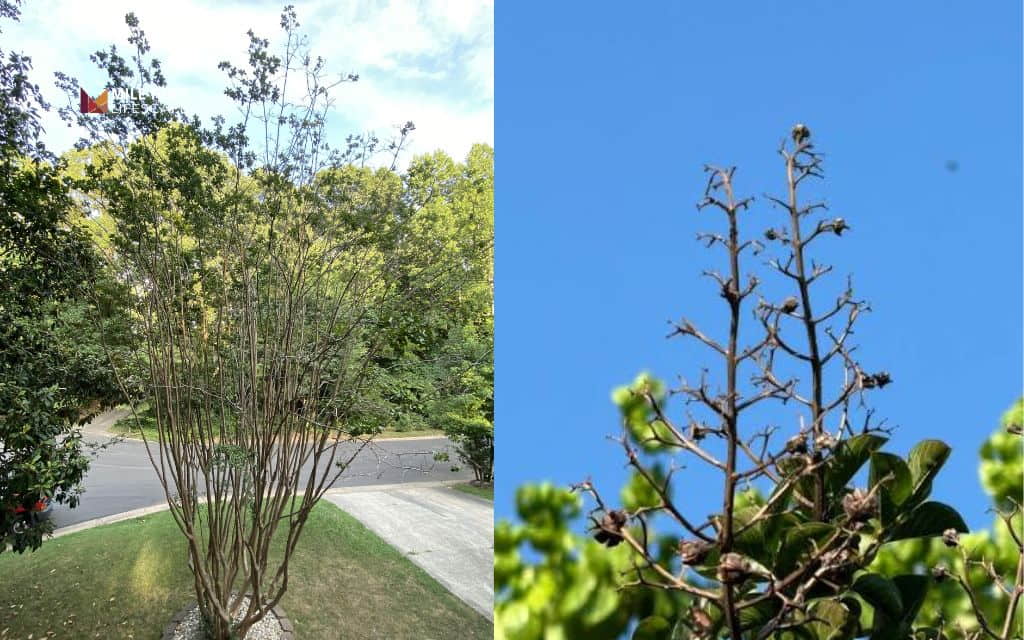
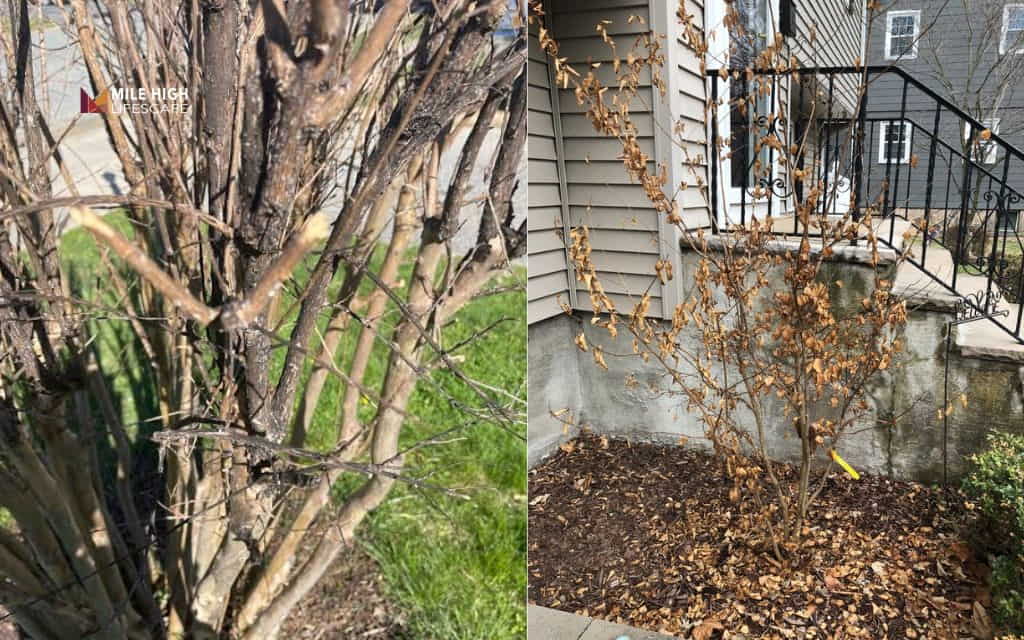
Dieback and early leaf loss usually trace back to one of three causes. Disease related dieback follows years of repeated fungal infection that gradually weakens branch structure. Root rot, caused by soil that stays wet too long, kills roots and starves the branches above them, producing wilting and dieback that is often mistaken for disease. Environmental stress, including drought, extreme heat, or transplant shock, causes leaf drop and branch death without any pathogen involved at all.
Checking soil drainage and recent watering history usually narrows down the cause faster than treating for disease first.
Preventing crape myrtle tree diseases and pests
Most crape myrtle tree diseases take hold when a tree is stressed, shaded, or crowded. A few consistent habits prevent most problems before they start.
- Full sun and airflow: Plant crape myrtles in full sun with enough space between them. Shade and crowding invite most fungal problems.
- Soil level watering: Water at the soil line instead of overhead. Wet leaves create the conditions fungi need to spread.
- Resistant varieties: Choose varieties like Natchez, Tuscarora, and Muskogee. They resist powdery mildew and Cercospora leaf spot better than older cultivars.
- Fall cleanup: Clear fallen leaves each season instead of leaving them at the base of the tree. Fungi overwinter in leaf litter.
- Light pruning: Remove only dead or crossing branches each year. Heavy pruning back to stubs, sometimes called crape murder, causes many crepe myrtle tree problems, from weak regrowth to reduced blooms.
These habits prevent most crape myrtle tree diseases. When disease spreads fast, bark scale returns, or dieback shows no clear cause, a professional service means the difference between saving the tree and losing it. Mile High Lifescape diagnoses the exact issue and treats it before it spreads further. Call us at (303) 877-9091 for a fast, accurate consultation before a small problem becomes tree removal.
Learn more: bugs on tree
Conclusion
Crape myrtle tree diseases rarely appear without warning. A close look at the leaves, bark, and blooms usually points to the cause before a tree suffers lasting damage, and correct identification saves time and keeps treatment simple.
For nearly two decades, Mile High Lifescape has served the Denver Metro area with dependable landscaping and tree care. Our service covers disease and pest identification, treatment, and the pruning that keeps ornamentals healthy year after year, alongside Landscape Design and Build and Drainage Solutions for yards that need more. Call us at (303) 877-9091 to schedule a consultation!
Frequently asked questions (FAQs)
How do you treat a diseased crape myrtle tree?
Treatment depends on the exact cause. Fungal problems like powdery mildew and Cercospora leaf spot respond to better airflow, proper watering, and fungicide in severe cases. Insect problems like aphids, scale, and Japanese beetles call for insecticidal soap, horticultural oil, or a systemic insecticide. Correct identification always comes before treatment.
What does a diseased crape myrtle look like?
A diseased crape myrtle shows a visible change on the leaves, bark, or blooms. Common signs include a white or gray coating on new growth, brown spots that spread across the canopy, sticky residue followed by black mold, or bark that looks crusted rather than smooth.
Is it normal for crape myrtle bark to peel?
Yes. Mature crape myrtles shed bark naturally each year, revealing smoother, lighter wood underneath. This peeling is a healthy trait of the species, not a symptom of disease.
Can a diseased crape myrtle be saved?
Most diseased crape myrtles recover once the cause is treated and growing conditions improve. Fungal disease rarely kills an established tree outright. Trees with severe, longstanding dieback or repeated bark scale infestations face a harder recovery and may need a professional evaluation.
What causes black mold on a crape myrtle?
Black mold on a crape myrtle is sooty mold, a fungus that grows on honeydew left behind by aphids or scale insects. It does not infect the tree directly. Treating the insects and washing off the residue resolves it.