A healthy lawn depends on what is happening both above and below the soil surface. In a dethatcher vs aerator comparison, a dethatcher removes excess thatch around the grass crowns, while an aerator relieves compacted soil so air, water, and nutrients can move into the root zone. Mile High Lifescape uses these treatments for different lawn problems, and some properties benefit from both when thatch buildup and compaction occur together.
What Is Lawn Dethatching?
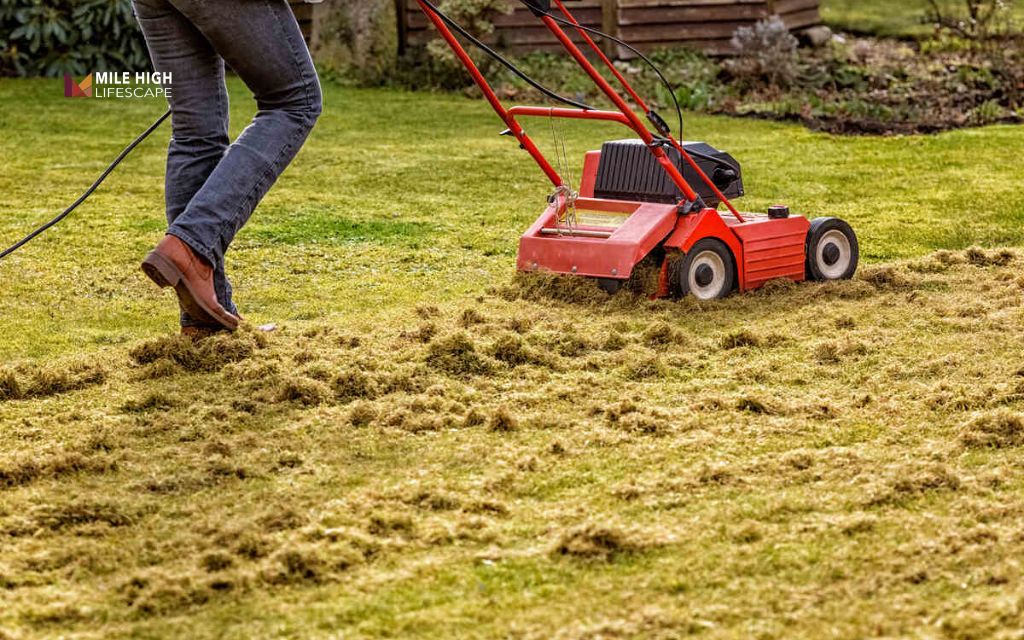
Lawn dethatching removes an excessive layer of dead and living stems, roots, and organic material between the green grass and the soil. A thin thatch layer can protect the lawn, but a buildup around 1/2 inch or more may begin restricting water and nutrients from reaching the root zone.
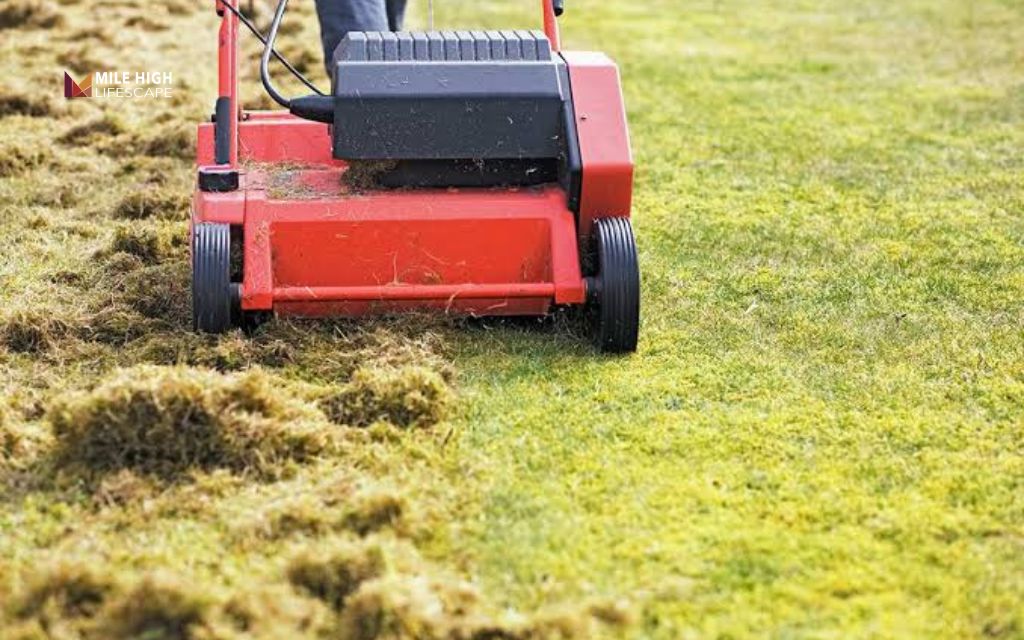
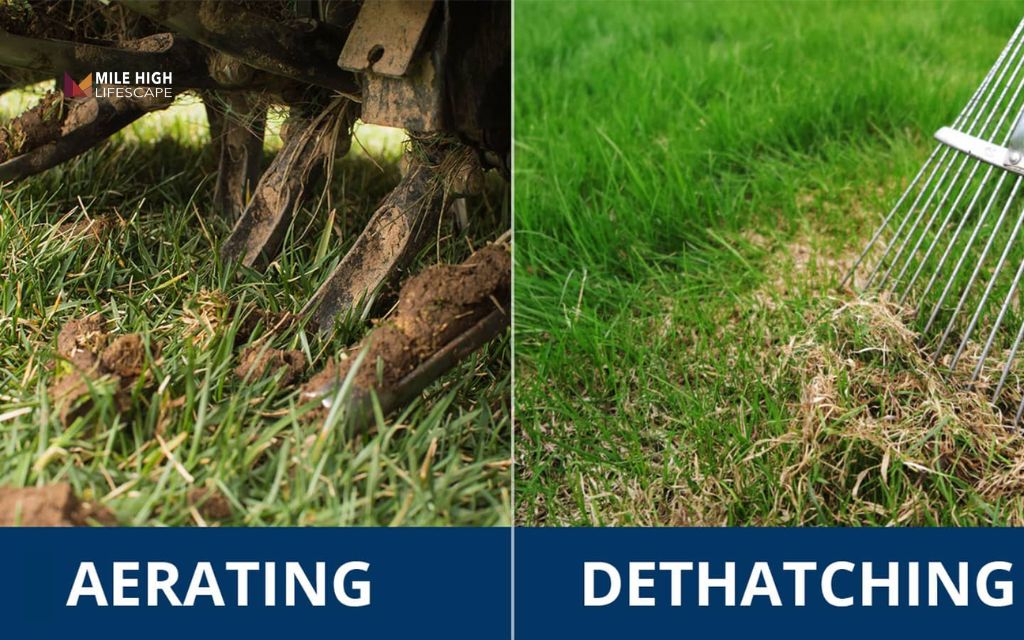
A lawn dethatch usually involves a dethatching rake, power rake, or vertical cutting machine that pulls material from the turf. Understanding what is dethatching a lawn is important in a dethatcher vs aerator decision because dethatching addresses the surface layer rather than compacted soil below it.
What Is Lawn Aeration?
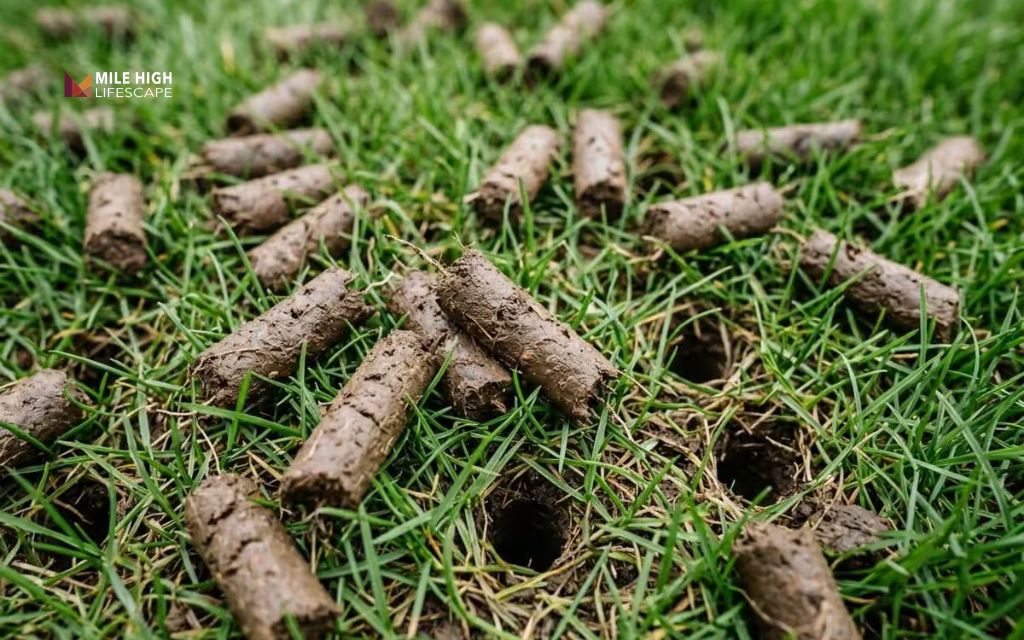
Lawn aeration creates openings in compacted soil so roots receive better access to oxygen, water, and nutrients. Core aerators remove small plugs of soil, while spike aerators simply press holes into the ground. Core aeration generally provides more effective relief where true compaction is present.
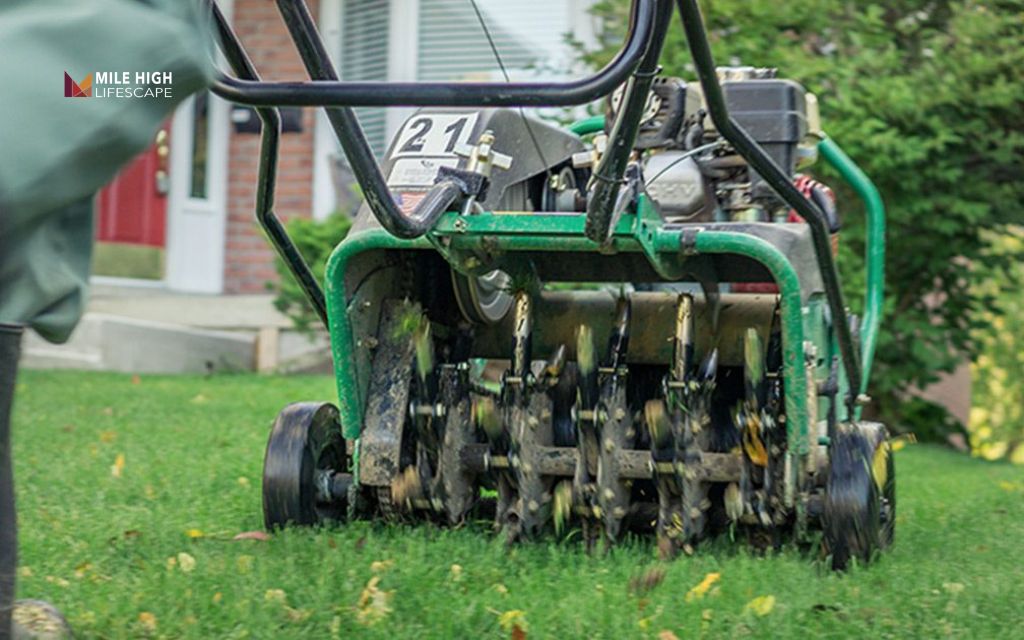
In a dethatcher vs aerator comparison, aeration works deeper in the root zone and does not primarily remove surface thatch. Lawns with hard soil, heavy traffic, shallow roots, or water runoff often benefit more from aeration.
Aeration can also create better seed-to-soil contact before overseeding a lawn.
Dethatcher Vs Aerator: Key Differences
The main difference between a dethatcher vs aerator is the problem each tool is designed to solve. A dethatcher works through excess organic material near the soil surface, while an aerator targets dense soil beneath the turf.
The main difference between a dethatcher vs aerator is the problem each tool is designed to solve. A dethatcher works through excess organic material near the soil surface, while an aerator targets dense soil beneath the turf.
| Factor | Dethatcher | Aerator |
| Main purpose | Removes excess thatch | Relieves soil compaction |
| Working area | Turf surface | Soil and root zone |
| Main action | Pulls or cuts thatch | Removes or opens soil |
| Best for | Thick, spongy lawns | Hard, compacted lawns |
| Water movement | Clears surface obstruction | Improves soil infiltration |
| Frequency | Only when needed | Based on soil and traffic |
| Lawn disturbance | Can be significant | Usually moderate |
Neither treatment is automatically better. The lawn condition should determine which one makes sense.
How To Know Whether You Need Dethatching Or Aeration
Before choosing between dethatcher vs aerator, check both the thatch layer and the soil beneath it. A spongy surface usually points towards excess thatch, while hard soil that resists a screwdriver or garden tool suggests compaction.
Signs Your Lawn Needs Dethatching
A thick thatch layer can interfere with moisture and nutrient movement even when the grass looks reasonably healthy from above.
Look for these signs:
- The lawn feels soft or spongy underfoot.
- A brown layer sits between grass and soil.
- Thatch measures around 1/2 inch or more.
- Water remains near the surface after irrigation.
- Grass roots stay within the thatch layer.
- Turf becomes thin or patchy despite regular care.
Signs Your Lawn Needs Aeration
In a dethatcher vs aerator comparison, compaction points more clearly toward aeration because dense soil reduces pore space and limits deep root growth. High-traffic areas often show the problem first.
Common signs include:
- The soil feels unusually hard.
- Water runs off instead of soaking in.
- Grass becomes thin along walking routes.
- Roots remain shallow.
- Soil dries unevenly after watering.
- Heavy equipment has repeatedly crossed the lawn.
A broader lawn care assessment can help separate soil compaction from irrigation, fertility, or other turf problems.
Benefits And Drawbacks Of These Tools
Benefits & Drawbacks Of Dethatching
Benefits: Dethatching can improve water and nutrient movement by removing an excessive surface layer that blocks access to the soil. It also helps seed reach the ground more easily and can improve recovery in lawns with heavy thatch buildup.
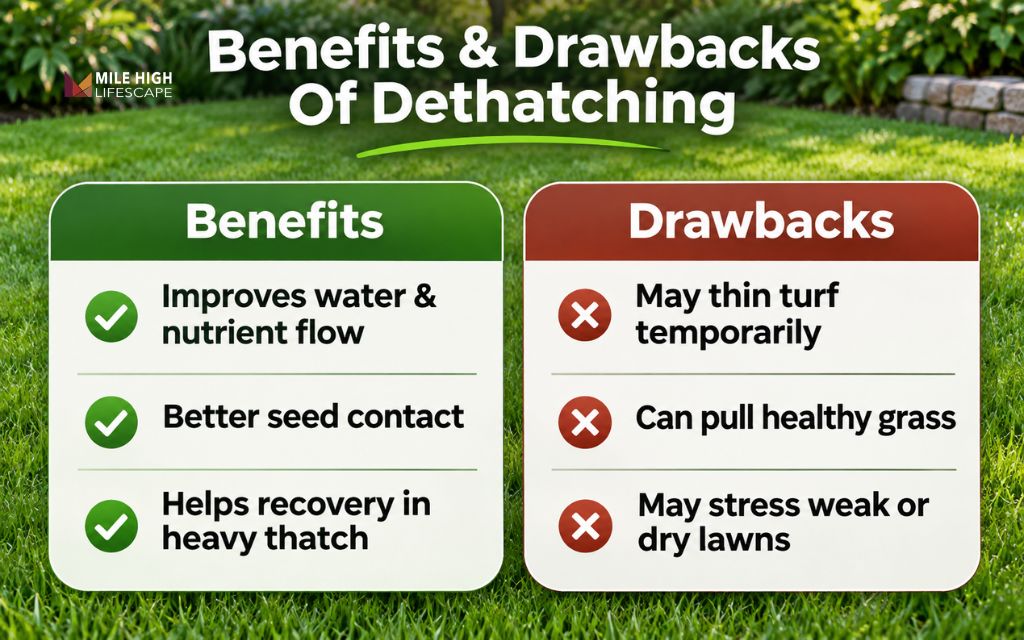
Drawbacks: Dethatching can temporarily thin the lawn and may pull out healthy turf when the machine is set too aggressively. It can also stress weak or dry grass, so timing and thatch depth should be checked first.
Benefits & Drawbacks Of Aeration
Benefits: Aeration relieves soil compaction and creates more space for air, water, and nutrients to reach the root zone. It can also support deeper root growth and improve conditions before overseeding.
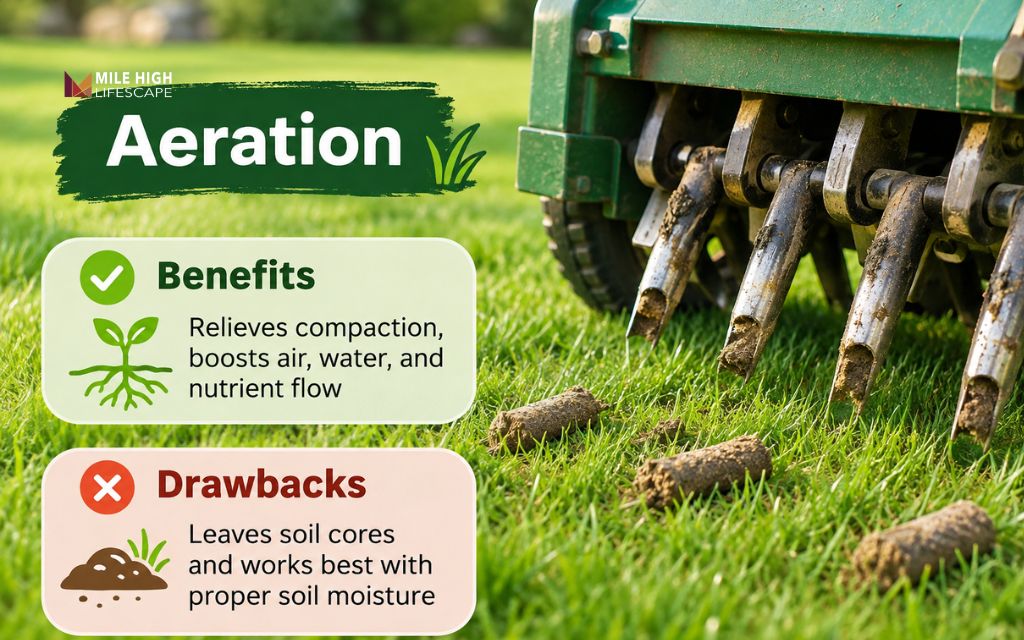
Drawbacks: Aeration leaves visible soil cores on the lawn for a short period and works best when the soil has suitable moisture. It is also less useful when the main problem is a thick thatch layer rather than compaction.
How To Use These Tools Effectively
A dethatcher vs aerator treatment works best when it matches the actual lawn condition. Mow first, avoid periods of extreme heat or drought, and make sure the soil has enough moisture for the equipment to work without causing unnecessary stress.
For dethatching:
- Adjust the machine so it removes thatch without tearing healthy turf.
- Make even passes across the affected areas.
- Rake up and remove loosened debris afterwards.
- Overseed thin sections once the surface is clear.
For aeration:
- Lightly water dry soil before treatment.
- Make enough passes to relieve compacted areas effectively.
- Leave the soil cores on the lawn to break down naturally.
- Follow with seed or fertilizer where the lawn needs additional recovery.
When overseeding follows either treatment, give the new grass time to establish before returning to normal mowing. These post-overseeding mowing practices can help protect young growth during recovery.
Common Mistakes To Avoid
A dethatcher vs aerator treatment can do more harm than good when the wrong tool, timing, or machine setting is used. Most problems come from treating the lawn before checking whether the real issue is excess thatch, compacted soil, or something else entirely.
Avoid these common mistakes:
- Dethatching when the thatch layer is still thin and healthy.
- Aerating soil that is extremely dry, frozen, or waterlogged.
- Setting dethatcher blades too deep into the turf.
- Treating the lawn during severe heat or drought stress.
- Repeating dethatching more often than the lawn requires.
- Removing soil cores immediately after aeration.
- Skipping watering and recovery care after treatment.
- Overseeding without first correcting heavy compaction or surface buildup.
- Applying fertiliser without considering the lawn’s actual nutrient needs.
Mile High Lifescape: The Right Treatment For Your Lawn
The best lawn care decisions start with understanding what is actually holding the turf back. Mile High Lifescape takes the time to assess thatch buildup, soil compaction, drainage, traffic, and overall grass condition before suggesting a treatment. With over 20 years of experience, we aim to solve the underlying issue instead of relying on the same routine for every property.

That may mean dethatching, aeration, overseeding, or a more tailored combination of services. Our lawn care services are designed to support healthier roots, more even growth, and better long-term performance through Colorado’s changing conditions.
Ready to give your lawn the treatment it actually needs? Call Mile High Lifescape at (303) 877-9091 to discuss the next step.
Final Thoughts
The dethatcher vs aerator decision comes down to identifying the real lawn problem. Excess thatch calls for surface removal, while hard, compacted soil is better addressed with aeration. Some lawns may need both treatments, but the best results come from treating only what is necessary and giving the turf enough time to recover afterward.
Frequently Asked Questions
Should You Dethatch Or Aerate First?
When both treatments are needed, dethatch first and remove the loosened debris before aerating. This clears the surface so the aerator can reach the soil more effectively.
Can Aeration Replace Dethatching?
Not when the lawn has a heavy thatch layer. Aeration can help improve soil conditions and gradually reduce moderate thatch, but it does not remove excessive surface buildup as directly as dethatching.
Can Dethatching Damage A Lawn?
Yes. Dethatching can tear healthy grass when the blades are set too deep or the lawn is already stressed. It should be done only when excessive thatch is present and the turf has enough active growth to recover.
Is Aeration Better For Compacted Soil?
Yes. In a dethatcher vs aerator comparison, aeration is the better choice for compacted soil because it creates space within the root zone for air, water, and root growth.