DIY rock fountain ideas offer an easy, water-wise way to add movement, sound, and visual interest to gardens without the hassle of ponds, constant maintenance, or heavy water consumption. Unlike traditional water features that struggle, rock fountains are perfectly suited to Colorado’s unique challenges.
Denver homeowners face specific obstacles when it comes to water features:
- Dry climate where traditional ponds lose water fast: Our low humidity and intense UV exposure mean standing water evaporates quickly, sometimes requiring daily refills.
- Windy conditions that cause splash and evaporation: Those signature Colorado breezes can turn a peaceful fountain into a water-wasting mess.
- Freeze-thaw cycles that damage poorly built features: Our temperature swings, especially in spring and fall, can crack designed fountains or burst water lines.
- The desire for soothing water sound without constant upkeep: You want tranquility, not another weekend chore competing with hiking plans.
This guide walks you through everything you need to create a beautiful, functional rock fountain that thrives in Denver’s climate.
What is a rock water fountain?
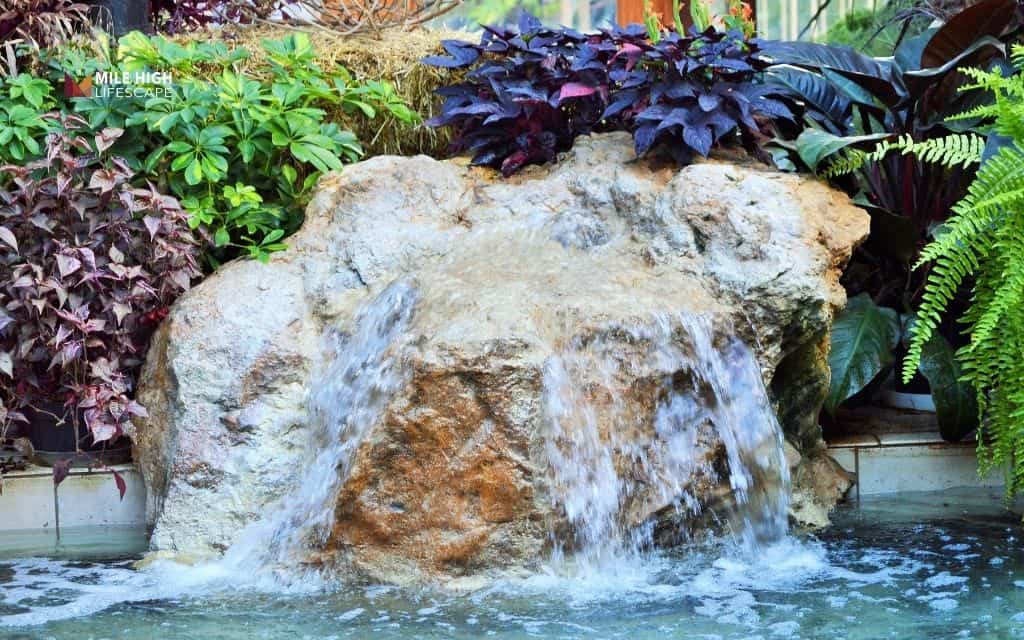
A rock water fountain is a recirculating water feature where water is pumped upward through or around rocks, then flows back down into a hidden basin or reservoir. The pump continuously cycles the same water, creating the soothing sound and movement of flowing water without requiring a visible pond or constant water supply.
For Denver gardens specifically, this closed-loop system offers major advantages:
- Less evaporation: Because water isn’t exposed in a wide, shallow pond, you lose far less water to our dry air and intense UV rays. Most rock fountains only need topping off every week or two during summer, compared to daily refills for traditional ponds.
- Fewer mosquitoes: Standing water breeds mosquitoes, which can be aggressive during Denver’s warm months. Rock fountains don’t provide the stagnant pools mosquitoes need to lay eggs, making them a healthier choice for your family and neighbors.
- Easier winter shutdown: Unlike complex pond systems with fish, filtration, and multiple components, rock fountains are simple to drain and winterize before our first hard freeze. Most can be shut down in under an hour and restarted just as quickly in spring.
Planning a DIY rock fountain for denver conditions
Choosing the right location
Location determines whether your fountain becomes a beloved garden feature or a maintenance headache. Consider these factors when scouting your yard:
- Shelter from strong winds: Look for spots protected by walls, fences, or dense shrubs. Corner locations often provide natural wind breaks from two sides. If your fountain will sit in an open area, plan for heavier rocks and lower water flow to minimize splash.
- Visibility from where you actually spend time: The best fountain location is where you’ll hear and see it regularly. Position it near your patio, visible from kitchen windows, or along pathways you use daily.
- Reasonable distance to power: Most fountain pumps require standard 110V outlets, ideally protected by GFCI (ground fault circuit interrupter) for safety near water.
- Avoid low spots where snowmelt and rain collect: Placing your fountain in standing water creates maintenance nightmares and can damage pumps. Choose slightly elevated or well-draining spots instead.
- Consider sunlight exposure: While rock fountains handle sun better than ponds, excessive heat increases evaporation and promotes algae growth. Partial shade (4-6 hours of sun) is ideal.
Rock selection that works in Colorado
Not all rocks survive Denver’s brutal freeze-thaw cycles. You need dense, non-porous stone that won’t crack when water seeps into tiny fissures and expands during freezing.
Best rock types for Denver rock fountains:
- Granite: Extremely dense and durable, granite handles our temperature swings beautifully. Colorado’s native granite comes in gorgeous earth tones and weathers gracefully.
- Basalt: Another excellent choice, basalt is volcanic rock with naturally interesting textures and colors ranging from charcoal to reddish-brown. It’s harder than granite and nearly indestructible.
- River rock (rounded cobbles): When you need smaller accent stones, river rock provides that smooth, water-worn look. Use 3-6 inch cobbles around the fountain base.
Rocks to avoid or use cautiously:
- Sandstone: Too soft and porous. It absorbs water, then cracks apart during freeze-thaw cycles. Save sandstone for vertical accent walls that stay dry.
- Limestone: Flaky and prone to breaking down, especially in areas that stay damp. Also raises water pH, which can promote algae.
- Shale or slate: Splits and flakes when repeatedly frozen. Fine for vertical applications, risky for water features.
Pump sizing for sound (not splash)
Pump selection is where many DIY projects go wrong. Bigger isn’t better when it comes to fountain pumps. Oversized pumps waste energy, create excessive splash, and lose water faster in our dry climate.
How pumps are rated:
Fountain pumps are measured in gallons per hour (GPH). A typical diy rock fountain for a small to medium garden uses 50-200 GPH. Higher flow rates create more dramatic displays but increase evaporation and splash, especially in wind.
Matching pump size to your design:
- Gentle bubbling or slow trickle (meditation gardens, bedrooms, patios) – 50-100 GPH
- Moderate flow with audible water sound (noise masking, focal points) – 100-200 GPH
- Strong flow over tall features (4+ foot tall fountains) – 200-400 GPH
DIY rock fountain ideas – 10 proven designs for Denver gardens
Now for the fun part: choosing a fountain style that matches your space, skill level, and aesthetic vision. Each design includes practical notes about what makes it work well in Denver’s climate and who it’s best suited for.
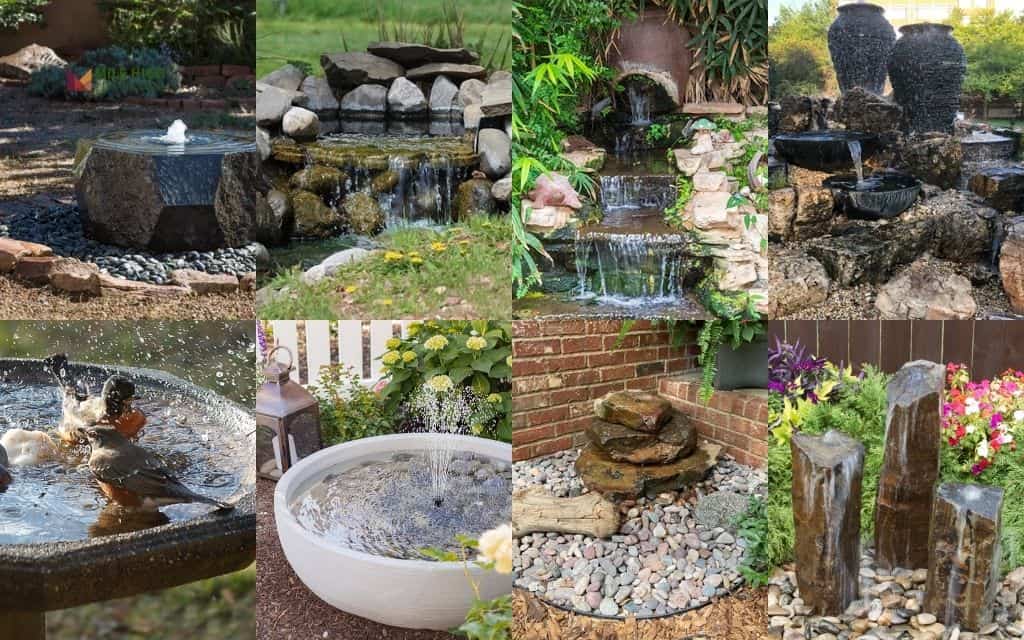
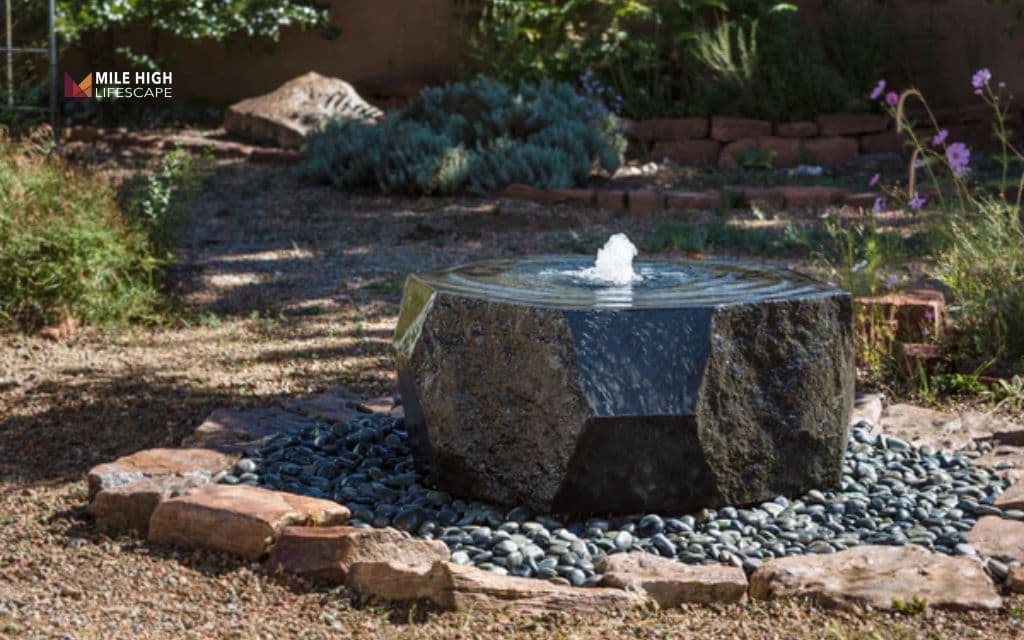
Single boulder bubbling rock fountain
A drilled boulder with water bubbling gently from the top, flowing down the rock’s natural contours before disappearing into gravel or river rock below.
Extremely low evaporation and splash make this perfect for water-conscious landscapes. The rock’s mass provides thermal stability, so it handles temperature swings. Position it where you’ll see water droplets catch Denver’s intense sunlight for extra visual interest.
- Best for: Minimalist xeriscapes, front yard focal points, renters who want a portable feature, first-time fountain builders
- Rock style: One striking boulder (50-300 pounds), surrounded by 2-4 inch river rock to hide the basin
- Difficulty: Easy. This is the most straightforward diy rock fountain design.
Stacked stone column fountain
Vertical stones stacked over a central pipe or rebar support, with water flowing from the top down through natural gaps between rocks.
Tall vertical features catch wind, so keep columns under 4 feet or add guy-wires for stability during spring windstorms. The vertical design creates strong visual height with a minimal footprint – ideal for Denver’s narrow side yards.
Winterizing is simple: disconnect top stones, drain, and store the pump indoors.
- Best for: Modern patios, contemporary gardens, tight spaces that need vertical interest, townhouse courtyards
- Rock style: Flat-ish stacking stones (flagstone, fieldstone) in graduated sizes, 20-80 pounds each
- Difficulty: Moderate.
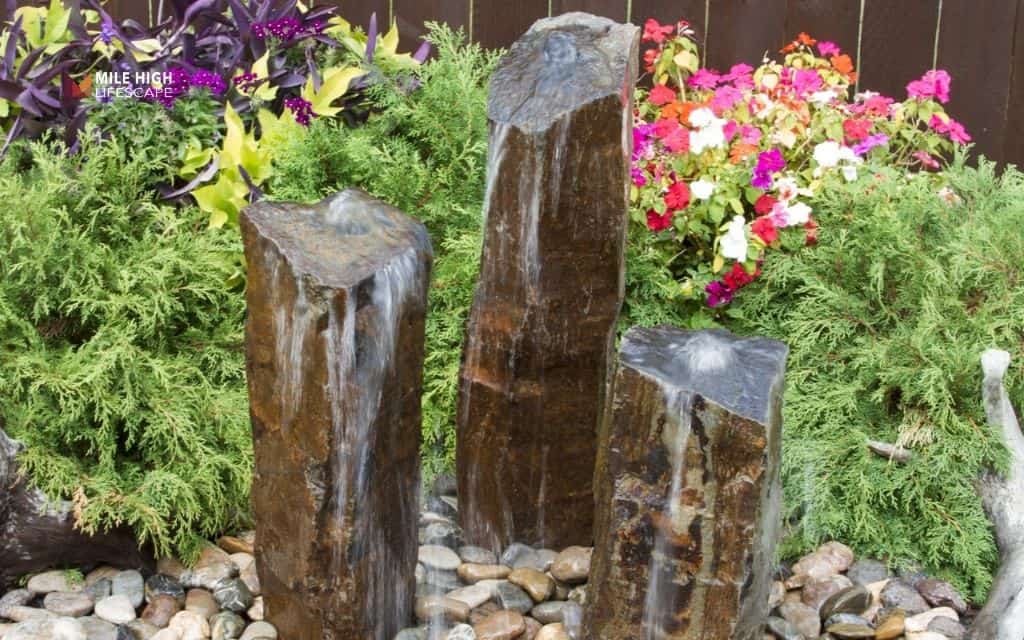
Small rock water feature in a gravel bed
A fountain completely integrated into decorative gravel, with water emerging from hidden stones or a disguised spout, flowing across textured rocks, then vanishing back into the gravel.
This design blends with existing xeriscape features. Use Colorado river rock or decomposed granite as your gravel base to match regional aesthetics. The gravel layer shades the basin below, reducing algae growth in summer sun. Position accent rocks to break wind and reduce splash – crucial during Denver’s gusty spring months.
- Best for: Drought-tolerant landscapes, native plant gardens, areas where you want water sound without obvious “fountain” appearance
- Rock style: Mix of 1-3 inch gravel base with larger accent rocks (10-40 pounds) positioned strategically over the water source
- Difficulty: Easy to moderate.
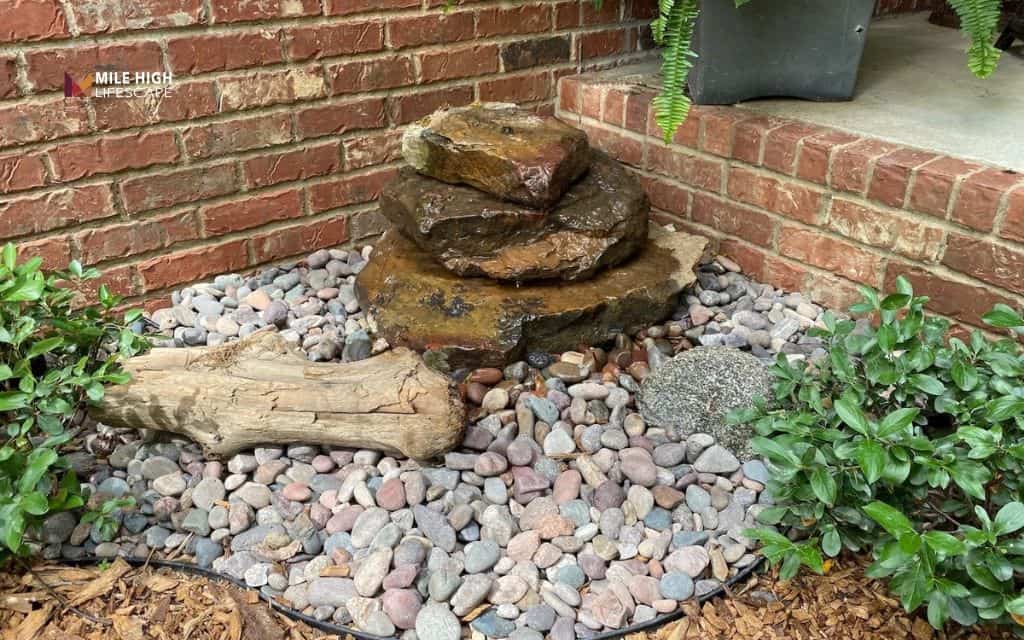
Patio rock fountain in a decorative bowl
Rocks arranged artfully in a shallow, wide basin (ceramic, metal, or stone), with a small pump circulating water over the rocks.
Choose frost-resistant containers (avoid terra cotta that cracks in cold). Metal bowls handle freeze-thaw cycles well but heat up in intense summer sun, increasing evaporation. Stone or concrete bowls (30-100 pounds) provide thermal mass and won’t blow over in the wind.
Easy to drain before Denver’s first hard freeze – just tip it out and store the pump inside.
- Best for: Renters, balconies, people who want a movable feature, testing fountain ideas before committing to in-ground installation
- Difficulty: Very easy.
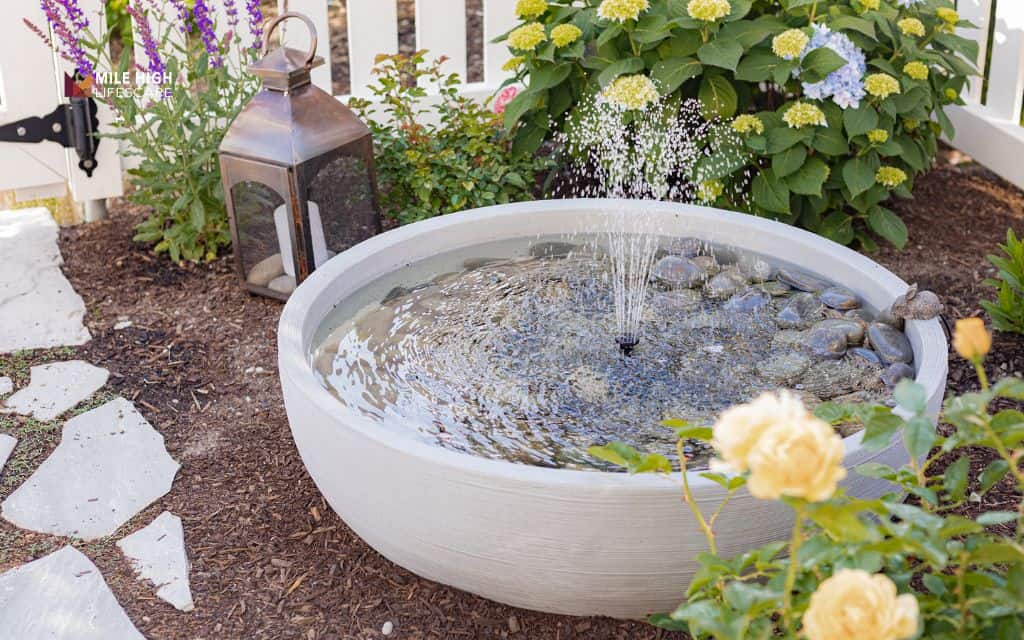
Bird-friendly rock fountain
Shallow water flows over broad, textured stones positioned at ground level or slightly elevated, specifically designed for birds to safely drink and bathe.
Our semi-arid climate means reliable water sources attract incredible birds year-round – finches, chickadees, jays, even migrating warblers in spring and fall.
Include rough-textured basalt or granite chunks for perching. Position near protective shrubs where birds can quickly escape to safety. Clean weekly during peak use (May-September) since bird droppings accumulate faster in shallow water.
This type of fountain with rocks becomes a living feature that changes daily as different species visit.
- Best for: Wildlife-friendly gardens, nature enthusiasts, families who want to attract beneficial birds that control garden pests
- Rock style: Flat stones with rough surfaces (for grip), positioned to create shallow pools no deeper than 1-2 inches
- Difficulty: Easy.

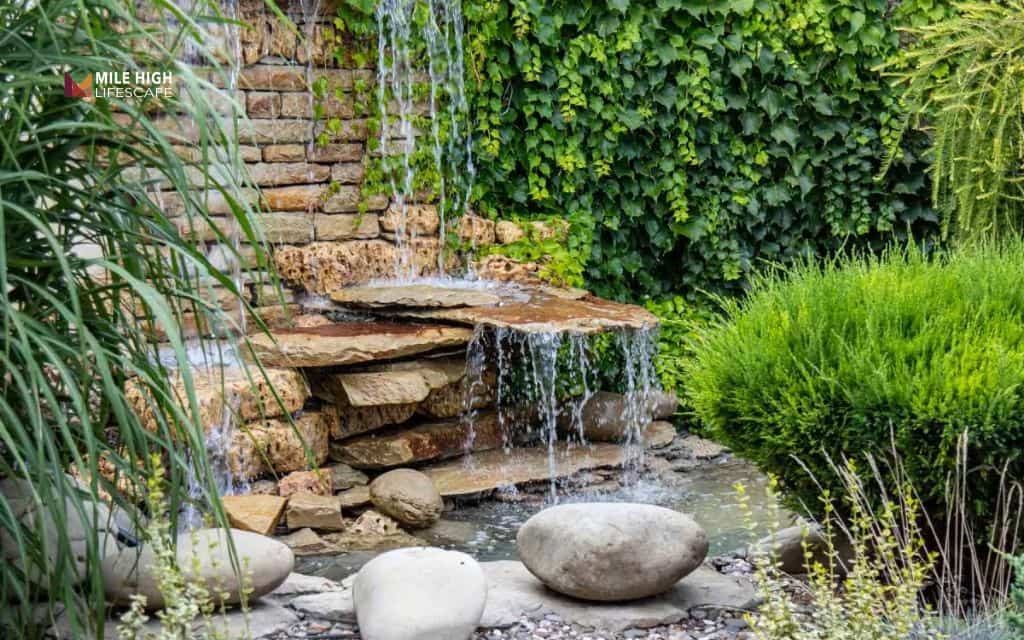
Corner garden rock fountain
Corners often provide natural wind protection from two sides, perfect for reducing splash in our breezy climate. Many Denver homes have narrow side yards where a corner fountain makes much more sense than trying to fit a traditional round design.
Use vertical stacking in the corner itself to maximize visual impact without consuming precious square footage. This layout also simplifies electrical access since corners are often near exterior house walls where outlets exist.
- Best for: Small yards, townhouse gardens, awkward corner spaces that feel wasted, side yards with limited width
- Rock style: Graduated rocks arranged in a fan or quarter-circle, with largest stones at the corner angle
- Difficulty: Easy to moderate.
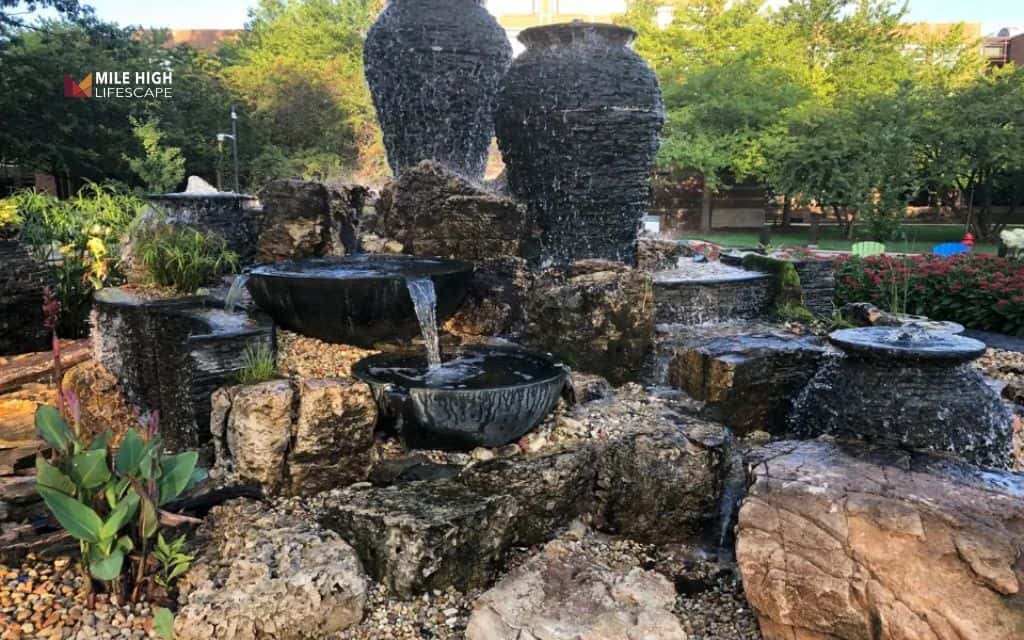
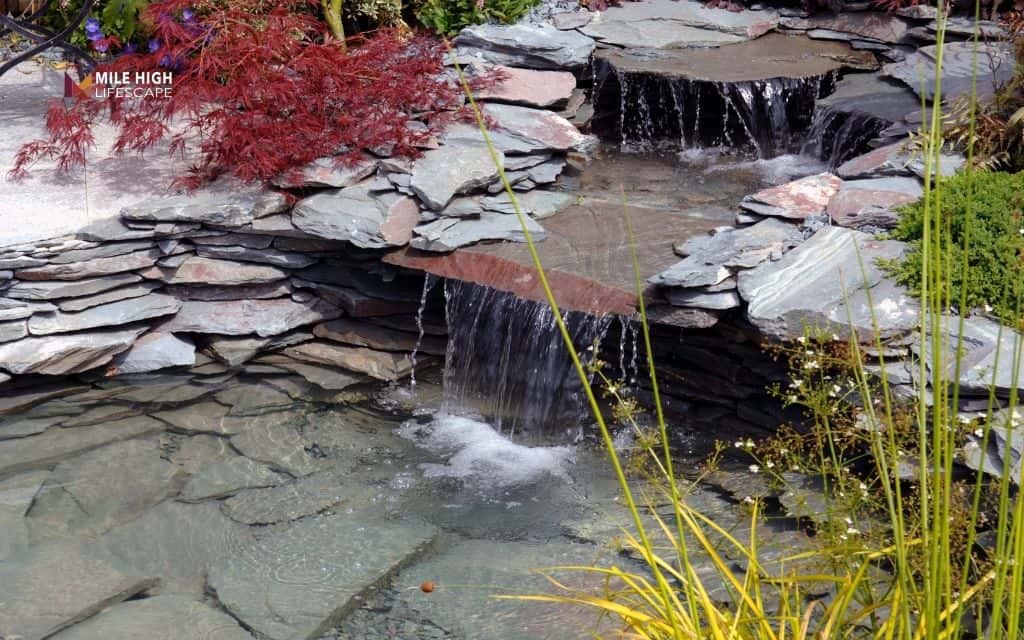
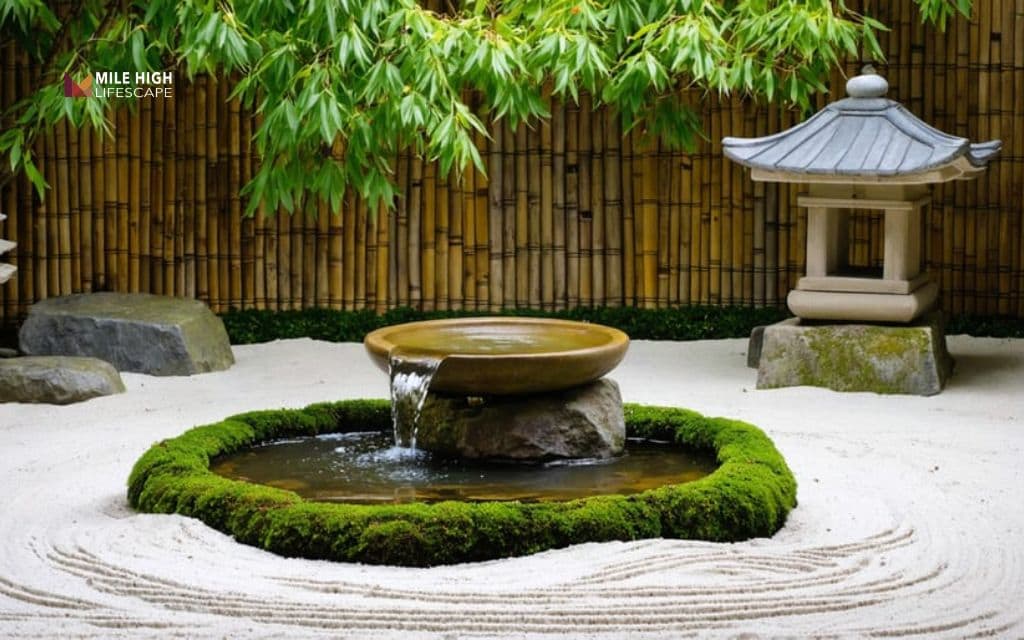
Zen-style rock fountain with slow flow
Low, wide stones arranged horizontally with water trickling slowly across their surfaces, creating contemplative, meditative sound.
Perfect for urban Denver gardens where you want water sound without disturbing neighbors or competing with street noise. Use very small pumps (50-75 GPH) to create whisper-quiet trickles.
The low, horizontal profile stays sheltered from wind naturally. These fountains also use minimal water – you might only need to top off monthly during summer.
The meditative quality pairs beautifully with native ornamental grasses and high-altitude perennials like columbine and Indian paintbrush.
- Best for: Meditation spaces, bedroom window views, Japanese-inspired gardens, noise-sensitive neighborhoods
- Rock style: Broad, flat stones (2-6 inches thick) like flagstone or stepped basalt, arranged in slightly overlapping layers
- Difficulty: Moderate.
Rock fountain with basin hidden under river rock
Hidden basins reduce algae visibility and debris accumulation – both common issues in Denver’s dusty, sunny climate. The gravel layer provides natural filtration and reduces evaporation compared to exposed water surfaces.
Make sure your grating can handle weight if you’re placing heavy boulders on top (most metal grates handle 200+ pounds when properly supported).
This design also simplifies maintenance: just lift the decorative river rock to access the pump and basin for cleaning or winter drainage.
- Best for: Natural, organic aesthetics, modern minimalist designs, people who dislike visible basins or prefer clean lines
- Rock style: 3-6 inch river rock covers the grating, with larger accent boulders (40-150 pounds) positioned on top as the water source
- Difficulty: Moderate.
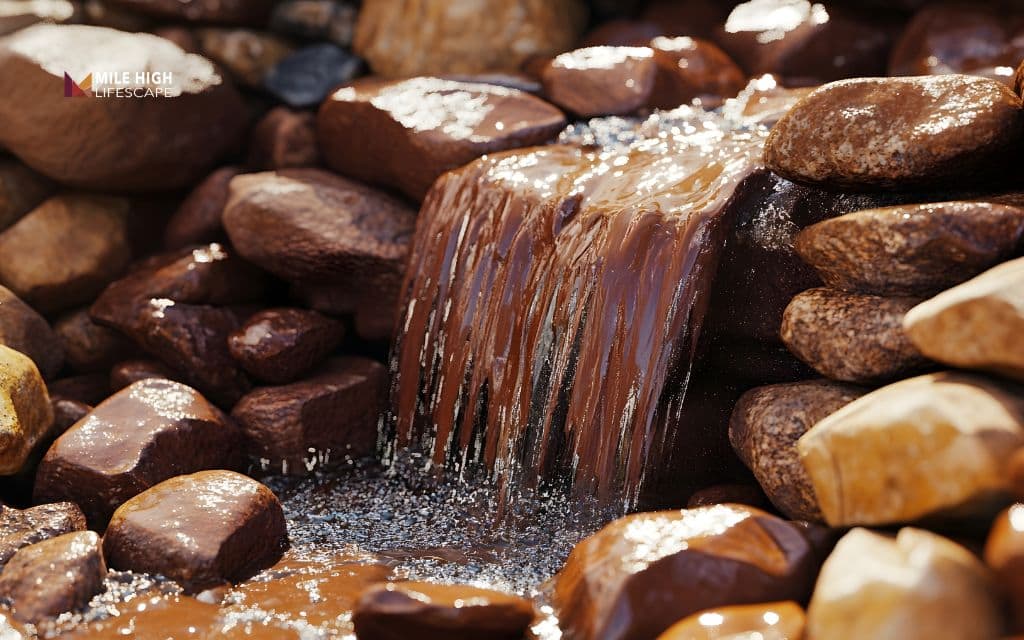
Tall rock fountain for sound masking
This is where how to build a rock water fountain meets acoustic engineering.
In Denver’s typically quiet neighborhoods, you don’t need massive flow rates – even 150-200 GPH over a 4-foot drop creates enough white noise to mask conversation and car sounds.
However, our wind absolutely matters: tall fountains catch more breeze, so shield them with walls, dense evergreens, or position them in naturally protected areas.
Anchor tall features with extra-wide bases (2-3 feet) and consider mortaring lower courses for stability during spring windstorms.
- Best for: Urban gardens near busy streets, homes backing to commercial areas, properties where outdoor privacy matters
- Rock style: Stacked vertical stones or a tall drilled boulder, with water flowing from significant height to generate volume
- Difficulty: Moderate to challenging.
DIY rock fountain kit (customized with local stone)
This approach balances convenience with customization beautifully. Kits ($150-400 at local home improvement stores) include properly-sized pumps and winter-drainable basins, eliminating the most common DIY mistakes.
Then you visit Front Range stone yards to select rocks that match your existing landscape. Many Denver homeowners find this hybrid approach perfect: professional-quality mechanics with personalized aesthetics.
Plus, kit instructions are written for beginners, making do it yourself rock fountain projects far less intimidating.
- Best for: First-time DIY fountain builders, people who want guaranteed functionality with custom aesthetics, those unsure about pump sizing or technical components
- Rock style: Your choice. Use the kit’s mechanics but source authentic Denver-area granite, basalt, or river rock to create a truly regional look
- Difficulty: Easy.
Denver-specific tips for diy rock fountains
Building a fountain that merely works isn’t hard. Building one that thrives specifically in Denver’s semi-arid, high-altitude, wildly variable climate requires understanding our unique challenges.
Designing for wind and evaporation
- Keep water surfaces tight to rock: The more water exposure, the more evaporation. Design your fountain so water flows directly from rock to rock with minimal air contact. Avoid wide spray patterns or fountain heads that throw water upward.
- Avoid wide spray patterns entirely: Decorative spray fountains look beautiful in humid climates but turn into water-wasting disasters in Denver. Our 30-50% average humidity (lower in winter) means airborne water droplets evaporate before landing. Stick with gentle flows, trickles, and bubbles instead.
- Shield with plants or additional boulders: Create natural windbreaks using native shrubs like rabbitbrush, fernbush, or Apache plume positioned on prevailing wind sides. Strategic boulder placement can also deflect wind away from water surfaces.
- Monitor evaporation rates: Most small rock water features lose 1-3 gallons weekly to evaporation – more during heat waves or when afternoon thunderstorms bring wind without much rain. Mark your basin at optimal water level so you can quickly assess whether it needs topping off.
Winterizing your rock fountain
Our freezing temperatures damage fountains through ice expansion, and it happens fast. Plan to winterize your fountain after the first hard freeze (typically late October to early November in Denver metro). Watch for forecasts predicting sustained temps below 25°F. Don’t wait until you notice ice forming.
How to drain the pump and tubing:
- Unplug the pump and remove it from the basin
- Disconnect all tubing and drain it completely (blow through tubes if necessary)
- Remove any water from the basin using a wet-dry vacuum or sump pump
- Clean the pump intake to remove debris and algae
- Store pump indoors in a garage, basement, or shed where it won’t freeze
Storing pumps vs. leaving components in place:
Most Denver fountain owners store pumps indoors during winter (November through March). Submersible pumps can handle cold but shouldn’t sit in ice for months.
Leave basins and rocks in place. They’re designed to handle freeze-thaw cycles.
If you’ve used a decorative ceramic or metal bowl instead of an in-ground basin, bring it inside if possible to avoid potential cracking.
Water quality and maintenance in dry climates
Denver’s water and climate create specific maintenance patterns different from humid regions.
Topping off vs. full refills
During the active season (April-October), you’ll primarily top off evaporated water rather than doing complete refills. Use a hose to add water directly to the basin weekly or biweekly.
Complete basin dumps and refills are only needed 2-3 times per season, typically when algae becomes visible or mineral buildup appears excessive.
Managing mineral buildup
Denver’s water is moderately hard, meaning calcium and other minerals accumulate as water evaporates. You’ll notice white or grayish deposits on rocks and basin walls and this is normal. For how to make a rock water fountain that stays attractive:
- Wipe rocks with a damp cloth monthly to remove surface minerals
- Use white vinegar (diluted 1:1 with water) on stubborn deposits
- Consider a fountain water clarifier ($8-15 at garden centers) added monthly to slow buildup
Simple algae prevention without harsh chemicals
Our intense UV exposure and warm summer temps encourage algae growth, especially in June-August. Combat this naturally:
- Position fountains in partial shade when possible
- Add beneficial bacteria products that consume nutrients algae needs
- Include barley straw extract (natural algae inhibitor used for centuries)
- Avoid using tap water with phosphates or fertilizer runoff which feed algae explosively
- Clean pump intakes monthly to prevent clogs and maintain flow
Conclusion
DIY rock fountain ideas offer Denver homeowners a water-wise way to add sound and movement to outdoor spaces. These features work beautifully in xeriscapes. They require minimal maintenance when designed for Colorado’s climate. They consume far less water than traditional ponds.
Start with one simple fountain. Test the location and sound. Build your skills before tackling larger projects. Each fountain teaches valuable lessons about pumps, water flow, and Denver-specific challenges.
____________
Mile High Lifescape brings nearly 20 years of experience building custom rock fountains across the Denver Metro area.
Our landscape rock service handles everything from design to installation, creating water features that survive Colorado winters and work efficiently in our dry climate.
Call (303) 877-9091 or email hello@milehighlifescape.com to discuss your rock fountain vision.
Frequently asked questions (FAQs)
How do I start a dIY rock water fountain at home?
Select a wind-sheltered location near electricity. Buy a fountain kit with basin, pump, and grate. Dig a hole for the basin, install the pump, and arrange rocks over the grate. Denver’s dry climate simplifies installation because moisture is rarely an issue.
What’s the easiest way to build a small rock water feature?
Use an above-ground bowl with a small pump and stacked river rocks inside. No digging required. The entire project takes under two hours and moves easily for winter storage.
How much water does a rock fountain really use?
Most small rock fountains lose 1 to 3 gallons weekly during Denver summers. Sheltered designs with minimal splash use significantly less water than exposed fountains with spray patterns.
Can I leave a rock fountain running in winter in Denver?
No. Shut down fountains when temperatures consistently drop below 25°F. Drain all water and store the pump indoors to prevent freeze damage.
What’s the best pump size for a dIY rock fountain?
Use 100 gallons per hour for each foot of height. A three-foot fountain needs a 300-GPH pump, reduced slightly for Denver’s elevation. Adjustable pumps let you fine-tune flow after installation.
Are rock fountains safe for birds and pets?
Yes. Use shallow water over textured rocks for secure bird footing. Avoid deep basins. Clean weekly during heavy use to prevent bacteria buildup.