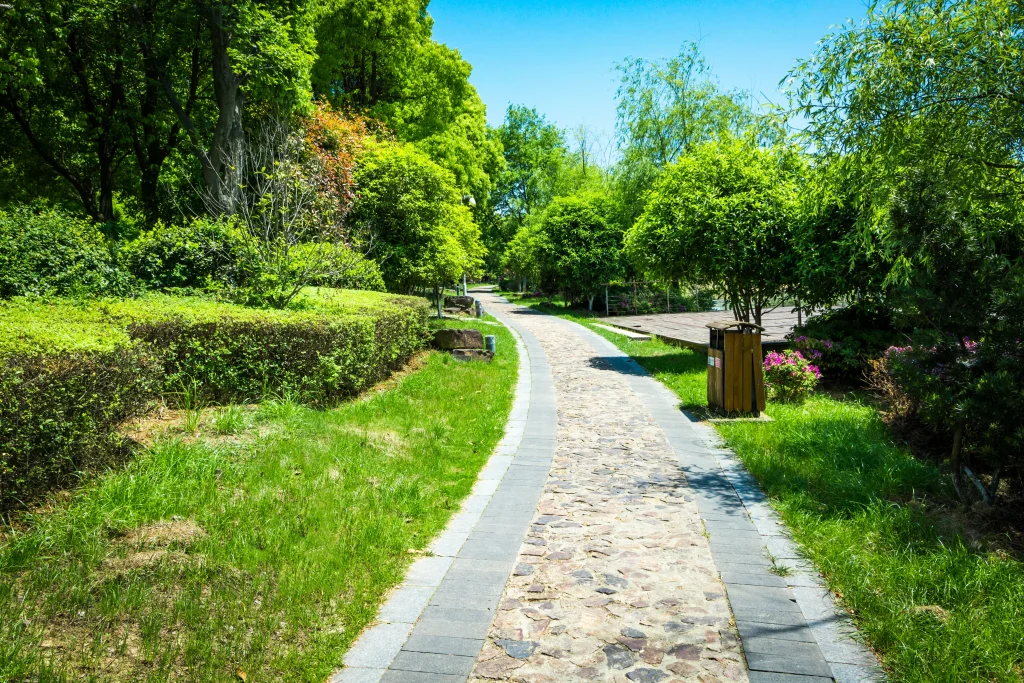
Most homeowners pour effort into backyard gardens, patio spaces, and interior design, yet the driveway often goes overlooked. That’s a missed opportunity. Your driveway is one of the first things visitors, neighbors, and potential buyers notice. The right driveway landscape ideas can shift the entire impression of your home within seconds.
Beyond pure aesthetics, well-planned driveway landscaping serves real functional purposes. It can manage stormwater runoff along the edges, define property boundaries, reduce heat absorption from pavement, and create a seamless transition between your home and the street.
Whether you’re starting from scratch or looking to refresh an existing border, thoughtful landscaped driveways deliver lasting returns. The right driveway landscape ideas turn what might feel like a plain concrete strip into a genuine design feature.
Design principles for a beautiful driveway
Before selecting plants or materials, investing time in a few foundational design principles will save you from costly mistakes and ensure your finished driveway looks polished, intentional, and enduring. These principles apply whether you’re planning a formal estate entrance or a modest suburban landscape along a driveway.
Balance and symmetry
Symmetry is one of the most powerful design tools available for a driveway landscape. When both sides mirror each other in plant choice, spacing, and height, the result is a sense of order and formality that suits traditional and colonial-style homes especially well.
Scale and proportion
A common mistake in driveway landscaping is choosing plants based on how they look in the nursery, not how they’ll behave at maturity. A small ornamental grass that looks charming today can balloon into an overgrown mass that blocks sightlines and crowds your vehicle within a few seasons.
Layering for depth
Layering creates a lush, three-dimensional landscape that looks designed rather than randomly planted. The key is organizing your plants from lowest to tallest as you move from the driveway edge inward toward your lawn or foundation.
Contrast and texture
A landscape that uses only one type of plant or material quickly becomes monotonous. Pairing contrasting textures – soft, feathery foliage against bold, smooth stone; fine ornamental grasses beside broad-leafed shrubs – adds visual interest without overcrowding the space.
Function meets beauty
A beautiful driveway landscape should never compromise the practical usability of your driveway. This is especially true in Denver and Colorado’s Front Range, where heat, hail, and dry summers demand that plant choices be resilient and vehicle access remain fully unobstructed.
22 Driveway landscape ideas (by style & function)
Ready to find your perfect look? Browse these 22 landscape driveway ideas organized by style and function. Each one includes real-world plant suggestions, design notes, and a “Best for” recommendation so you can match the right idea to your home, climate, and lifestyle.
Border & edge planting ideas
A clean, defined border is the simplest upgrade you can make to a plain driveway. These ideas focus on the edge where pavement meets lawn or soil.
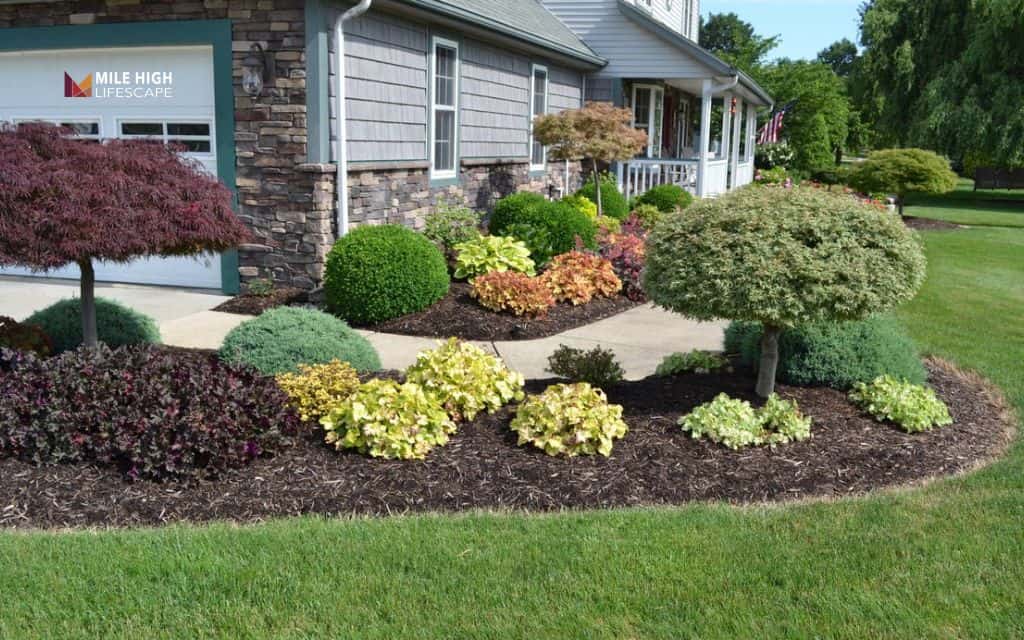
1. Clean mulch border with shrubs
A freshly mulched bed along the driveway paired with a row of low, rounded shrubs is one of the most timeless landscaped driveway looks available.
Choose dark-dyed hardwood mulch to contrast against light pavement, then anchor the bed with compact shrubs like ‘Gro-Low’ fragrant sumac, dwarf spirea, or ‘Tiny Wine’ ninebark. Refresh the mulch layer annually to maintain that clean, polished appearance.
2. Flower bed along driveway
Few driveway landscape ideas deliver as much seasonal color as a well-planted flower bed. Choose a mix of spring bulbs (tulips, alliums) followed by summer perennials like coneflower (Echinacea), black-eyed Susan (Rudbeckia), and catmint (Nepeta) for continuous color from April through September.
3. Low hedge driveway border
A neatly trimmed low hedge creates a formal, architectural frame for your driveway and home. Boxwood (Buxus) is the traditional choice and offers year-round structure, but in hot climates, consider more cold-hardy alternatives like ‘Wintergreen’ boxwood, ‘Sutherland Gold’ elder, or Japanese holly (Ilex crenata). Keep hedges trimmed to a consistent height for the cleanest look.
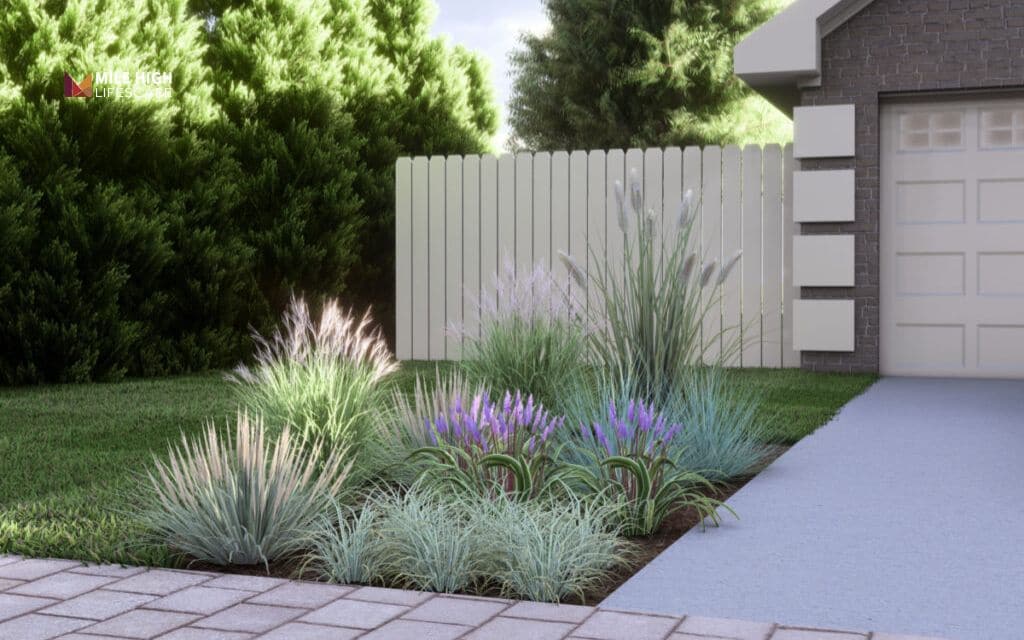
4. Ornamental grass edging
Ornamental grasses are among the most hardworking plants in any landscape side-of-driveway design. They’re drought-tolerant, deer-resistant, heat-tough, and add graceful movement even on still days. Good choices for Colorado driveways include Karl Foerster feather reed grass, blue oat grass (Helictotrichon sempervirens), and ‘Shenandoah’ switchgrass. Cut them back in late winter and they return reliably every spring.
5. Mixed plant border (layered look)
Start with a groundcover like creeping phlox or sedum along the driveway edge, build up through mid-height ornamental grasses or dwarf shrubs, and anchor the back of the bed with a compact flowering shrub or small tree. The result feels lush, natural, and designed, a genuine showcase of landscape ideas for the driveway.
Rock & low-maintenance ideas
For busy households or hot, dry climates, rock-based landscaping provides a durable, attractive, and genuinely low-effort alternative to traditional planted borders.
6. Gravel strip along driveway
A gravel strip between the driveway edge and an adjacent lawn or planting bed accomplishes two things beautifully: it improves drainage and delivers a crisp, modern aesthetic. Use decomposed granite, pea gravel, or angular crushed stone for the cleanest finish. Install a steel or composite edging border to keep the gravel contained and the lines sharp. This is one of the most popular landscape driveway ideas for modern and contemporary homes.
7. River rock border
Smooth river rock installed along the driveway edge softens the hard line of pavement while providing excellent erosion control. Because river rock doesn’t compact, it allows rainwater to filter through naturally rather than running off onto the driveway surface. Use larger cobble-sized stones (3 to 5 inches) as accent anchors and smaller river rock (1 to 2 inches) as the primary fill material for a layered, natural look.
8. Xeriscape driveway edge
Xeriscaping is an ideal strategy for Colorado’s semi-arid climate. A xeriscape driveway landscape combines native grasses, hardy perennials, ornamental rock, and drought-tolerant shrubs to create a beautiful planting that thrives without supplemental irrigation once established. Great plant choices include blue grama grass, Rocky Mountain penstemon, Apache plume, and rabbitbrush.
9. Rock + succulent border
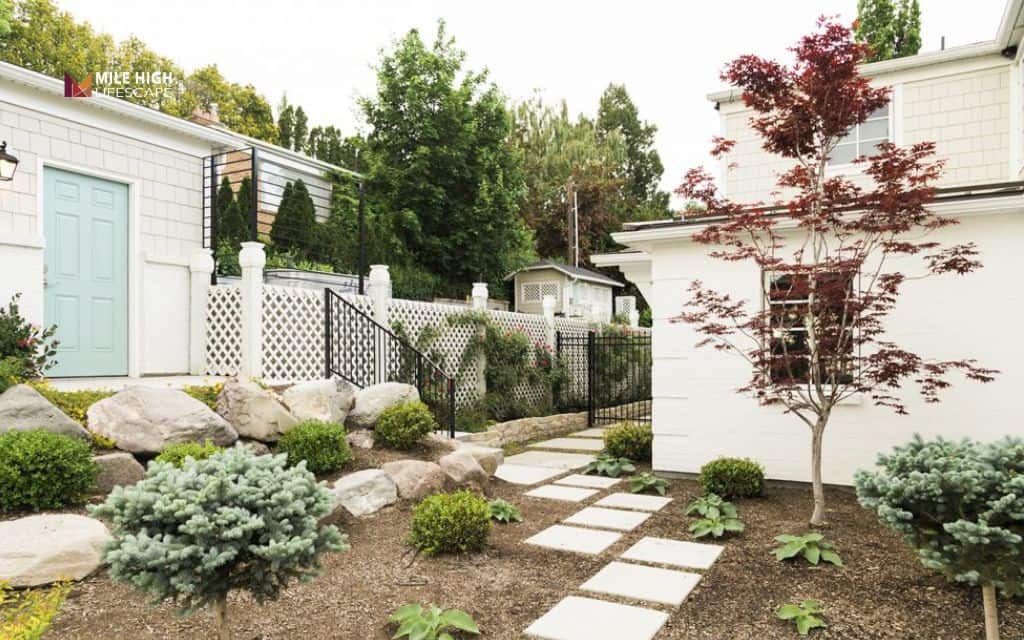
Pairing decorative rock with low-growing succulents and sedums creates a striking, sculptural border. Hens-and-chicks (Sempervivum), stonecrop (Sedum), and hardy agave varieties all perform well in driveway-side conditions where heat, drought, and reflected light are constant factors. Arrange rocks of varying sizes to create natural-looking clusters rather than a uniform spread.
Trees & vertical elements
Vertical elements add height, structure, and seasonal drama to any landscape design for a driveway entrance. Trees and tall shrubs also provide dappled shade that can reduce heat buildup along the paved surface.
10. Small trees along driveway
Flanking a driveway with a matched pair of small ornamental trees is one of the most elegant landscape driveway ideas available. Trees like serviceberry (Amelanchier), ‘Spring Snow’ crabapple, or ‘Prairie Cascades’ golden weeping willow provide multi-season interest: flowers in spring, shade in summer, fall color, and interesting winter structure. Keep mature spread in mind and position trees at least 8 to 10 feet from the driveway surface.
11. Columnar trees for narrow spaces
When driveway width doesn’t allow for spreading canopies, columnar trees are the answer. Varieties like ‘Emerald Green’ arborvitae, Sky Pencil holly, Swedish columnar aspen, or ‘Fastigiata’ ginkgo grow tall without wide spread, making them ideal for tight landscape driveway situations. They provide strong vertical lines that complement modern and transitional home styles while remaining well-behaved in confined planting strips.
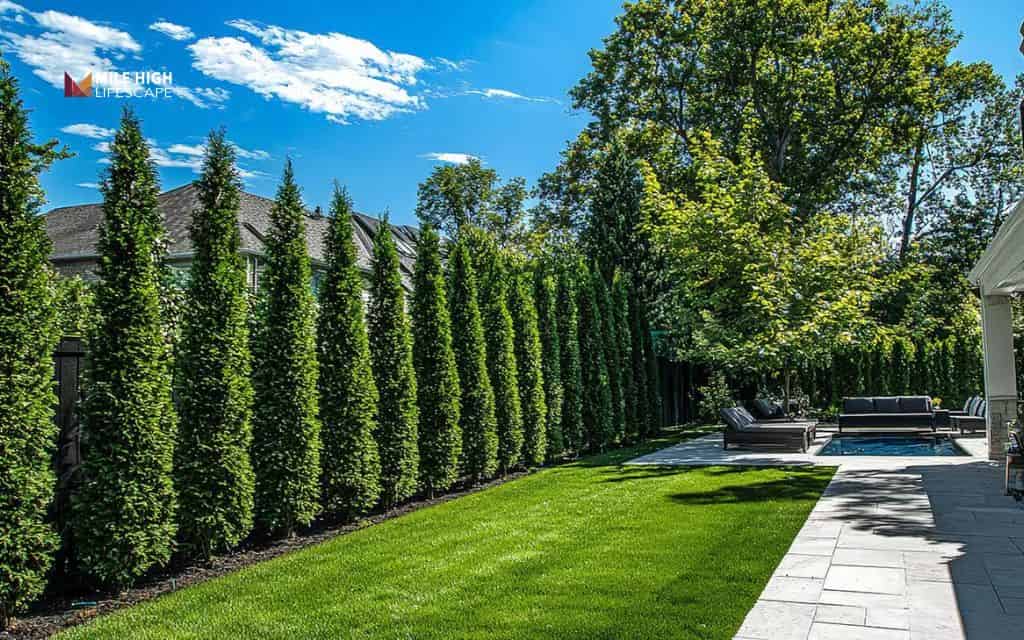
12. Flowering trees for entry impact
A single flowering tree, or a symmetrically placed pair, positioned at the driveway entrance creates a seasonal showpiece that announces your home with flair. Consider ‘Autumn Brilliance’ serviceberry for white spring flowers and orange fall color, or ‘Snowcone’ Japanese tree lilac for fragrant white summer blooms. Redbud (Cercis canadensis) varieties also work beautifully in warmer microclimates along the Front Range.
Hardscape & structure ideas
Hardscape elements bring structure, permanence, and design cohesion to any driveway landscape design. They work well combined with plants to create layered, multi-material borders.
13. Stone or brick edging
Soldier-course brick, natural flagstone, or stacked dry-stone edging all create a clean, permanent line that keeps mulch, gravel, and soil from migrating onto the driveway surface. Choose materials that complement your home’s exterior – brick edging suits traditional homes, while natural stone fits craftsman or contemporary styles.
14. Raised planter beds
If your driveway runs along a slope or grade change, raised planter beds are both a practical solution and a design opportunity. Timber, steel Corten, or natural stone retaining walls can be used to create tiered beds filled with flowers, shrubs, or ornamental grasses. They solve erosion problems, elevate plantings for better visibility, and add architectural interest to what might otherwise be a blank slope.
15. Lighting along driveway
Landscape lighting transforms a driveway from purely daytime curb appeal to an all-hours experience. Low-voltage LED path lights installed along planting beds illuminate plants from below, casting beautiful shadows on paving surfaces. Uplights placed at the base of trees or anchor shrubs add drama after dark. Solar-powered options make installation straightforward without the need for trenching electrical lines.
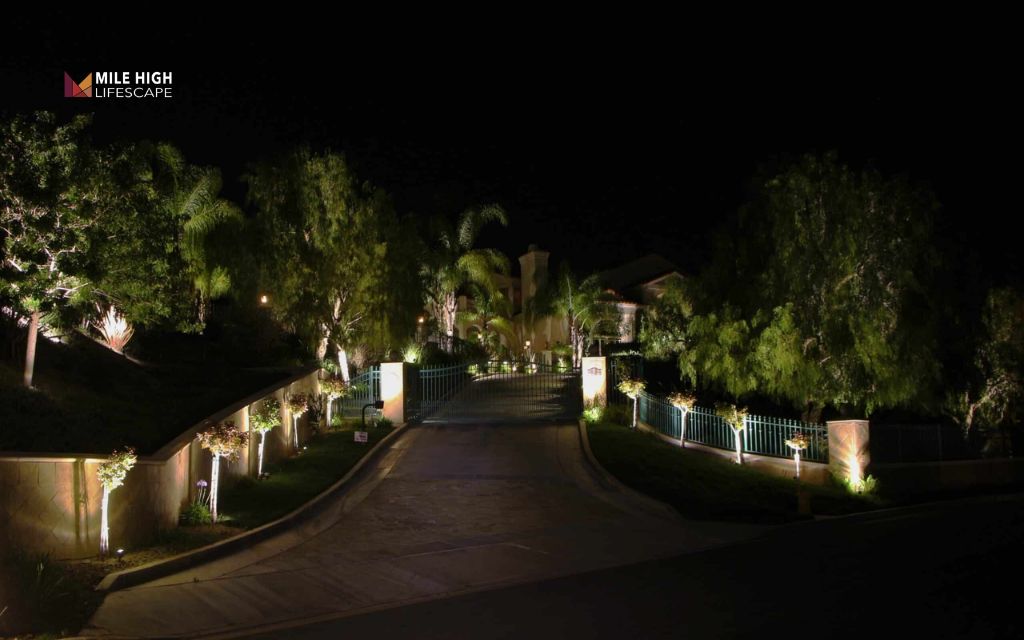
16. Driveway entry columns or markers
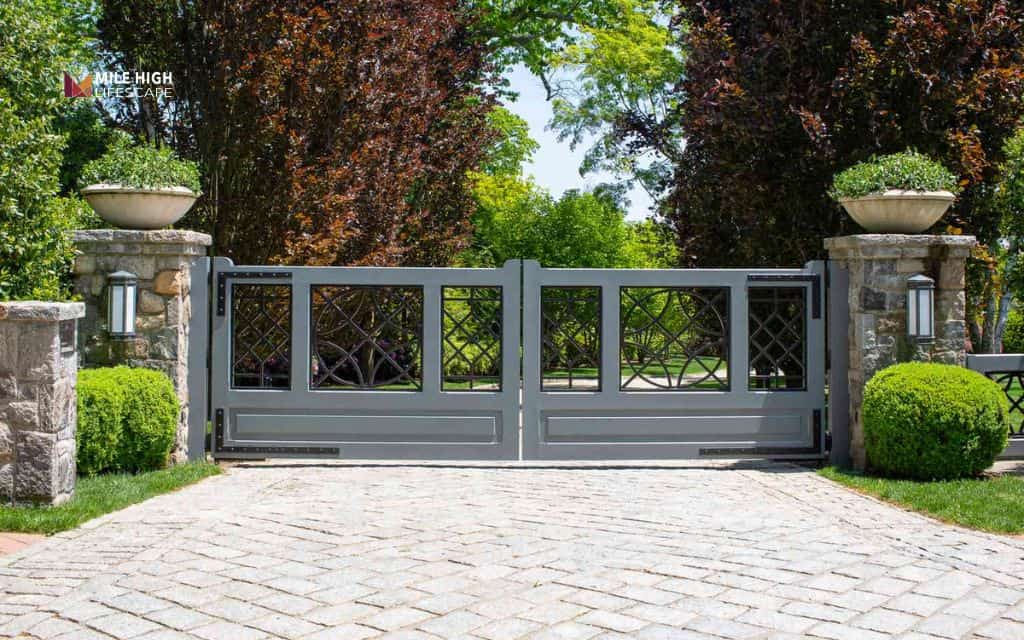
Entry columns, pilasters, or stone markers at the base of your driveway signal arrival with architectural authority. Even simple stacked-stone pillars topped with a solar lantern or urn planter dramatically elevate the perceived value and formality of your property.
Pair entry markers with symmetrical plantings – boxwood spheres, ornamental grasses, or dwarf conifers – for a complete landscape design for the driveway entrance.
Design & layout ideas
Sometimes the most important landscaping decision isn’t what to plant, it’s how to organize the overall layout for the greatest visual impact.
17. Symmetrical driveway design
A fully symmetrical driveway landscape creates a sense of formality and permanence that suits estate-style properties, craftsman bungalows, and traditional colonial homes. The key is rigorous consistency: the same plant varieties, same mulch color, same edging, and the same pruning schedule on both sides. Any deviation breaks the effect.
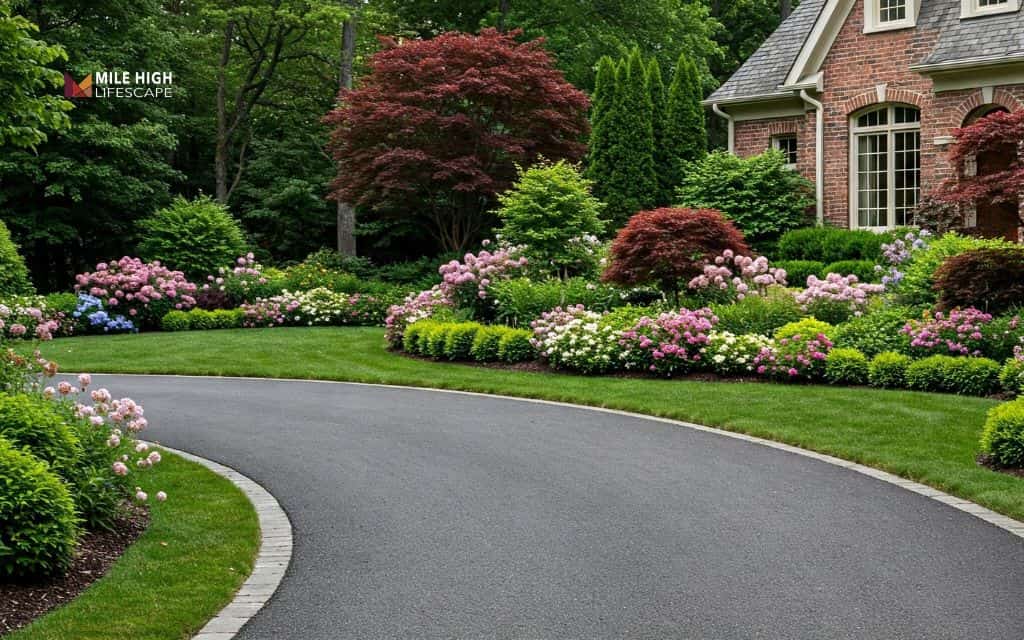
18. Curved driveway planting
Curved driveways offer a wonderful opportunity for a flowing, naturalistic planting style that would feel stiff on a straight drive. Follow the curve of the driveway with beds that swell and contract organically, using soft-edged plants like ornamental grasses, lavender, Russian sage (Perovskia), and low roses. The planting should feel as though it grew naturally into the curve rather than being forced into it.
19. Minimalist modern driveway
Clean lines, restrained plant palettes, and a disciplined use of materials define the minimalist modern driveway landscape. Choose 1 or 2 plant species and let simplicity do the heavy lifting. Concrete edging or Corten steel edging strips maintain crisp borders. This approach photographs beautifully and requires minimal upkeep.
20. Layered entry landscaping
The driveway entry deserves special attention. Create a focal point here using a layered composition: a small flowering tree or entry column, surrounded by mid-height flowering shrubs, edged with low ornamental grasses or perennials, and finished with a clean mulch or gravel border. This layered entry immediately signals a thoughtfully designed home.
Small driveway ideas
Limited space doesn’t mean limited style. These small driveway landscape ideas prove that even the most compact planting strip can be transformed into a genuine design feature.
21. Narrow driveway planting strip
Many urban and suburban homes have only 12 to 18 inches of space between the driveway edge and the property boundary, fence, or sidewalk. In that narrow corridor, low-growing plants with a tidy habit perform best.
Creeping phlox, mondo grass, low-growing sedums, or a single row of ‘Little Spire’ Russian sage can thrive in these conditions while keeping the driveway itself clear and functional. A thin strip of river rock or decomposed granite can substitute for plants entirely while still providing a polished finish.
22. Container plants along driveway
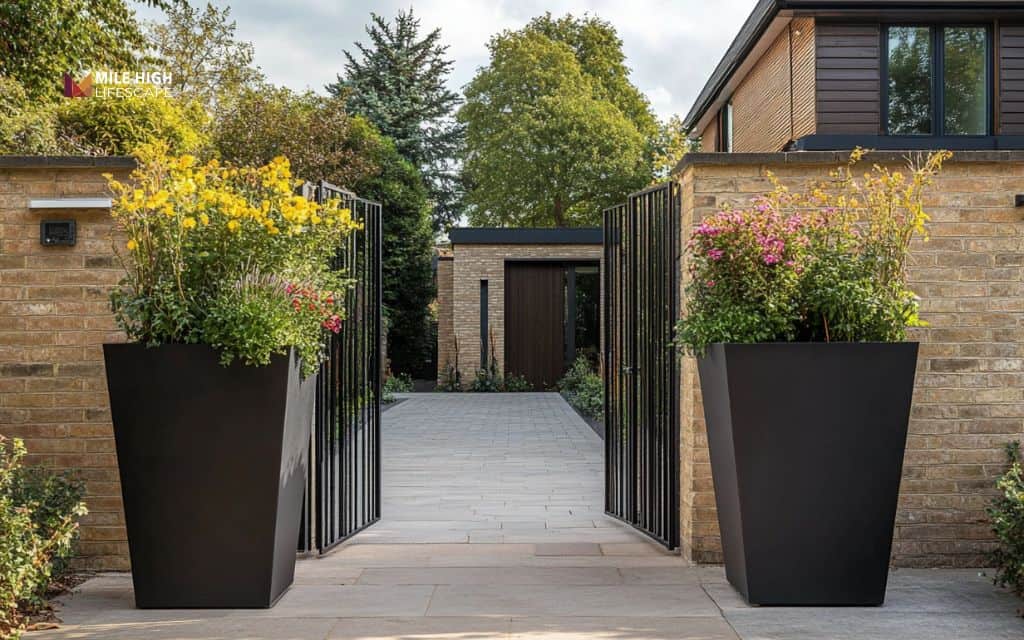
Container plantings are the most flexible of all driveway landscape ideas. Large ceramic or Corten steel planters positioned at the driveway entrance or spaced along its length can be planted with seasonal annuals, ornamental grasses, small evergreen shrubs, or topiary. Containers also allow you to grow plants that wouldn’t otherwise thrive in your soil or sun conditions along the driveway.
How to choose the right driveway landscape design
With so many landscape driveway ideas available, narrowing down the right direction for your specific property comes down to three key filters: sun and heat conditions, available space, and your home’s architectural style.
Consider sun and heat
Driveways are among the hottest microclimates in any residential landscape. Dark pavement absorbs heat throughout the day and radiates it back toward adjacent plantings, creating conditions that can stress or kill plants not selected for heat tolerance.
Before choosing any plants for your driveway border, assess how many hours of direct sun the beds receive daily and whether they face south or west – the hottest orientations.
Think about space and clearance
Practical clearance requirements must shape every driveway landscape design decision. Even the most beautiful planting quickly becomes a problem if it impedes vehicle access, limits door swing, blocks sightlines, or allows branches to scrape paint.
Before planting anything, measure the available width on each side of the driveway and research the mature spread of every plant under consideration.
Match your home style
Your home’s architecture should always guide your driveway landscape design direction. A formal Tudor-style home calls for a different treatment than a modern ranch, and a rustic craftsman bungalow suits a different plant palette than a Mediterranean villa.
When in doubt, look at pictures of landscaped driveways on homes that match your architectural style for the clearest direction.
Conclusion
Great driveway landscaping isn’t about spending the most money or planting the most plants. It’s about making smart, intentional choices that match your home’s style, suit your climate, and fit realistically into your maintenance schedule.
Whether you’re drawn to a formal symmetrical design with clipped hedges, a drought-resilient xeriscape with ornamental rock, or a lush layered border full of seasonal color, the best driveway landscape ideas all share the same 4 qualities:
- Beauty that enhances your home’s architecture rather than competing with it
- Smart plant choices that respect the heat, sun, and scale of the driveway environment
- Functional design that keeps the driveway clear, safe, and fully usable
- A maintenance level that you can realistically commit to long-term
With those principles in place, your driveway can shift from an afterthought to one of the most admired features of your home.
If you’re ready to bring these ideas to life in the Denver metro area, the team at Mile High Lifescape is here to help, from initial design consultation to full installation and ongoing care.
Frequently asked questions (FAQs)
What are the best plants for driveway landscaping?
The best plants for driveway landscaping are heat-tolerant, drought-resistant, and appropriately scaled for the space. Reliable choices include ornamental grasses like Karl Foerster feather reed grass and blue oat grass, flowering perennials like lavender, catmint, and black-eyed Susan, compact shrubs like dwarf spirea or ‘Gro-Low’ sumac, and ground-covering sedums or creeping phlox for edging.
How do I landscape a narrow driveway?
Landscaping a narrow driveway is entirely achievable with the right plant and material selection. The key is restraint: choose low-growing, compact plants or materials that provide visual interest without encroaching on vehicle clearance.
What is the cheapest way to landscape a driveway?
Budget-friendly driveway landscape ideas focus on materials and plants that are low-cost but high-impact. A fresh layer of dark hardwood mulch in a defined bed can improve curb appeal for minimal investment. Gravel or river rock edging is another cost-effective option that requires no replanting. Dividing existing plants from elsewhere in your yard to populate driveway borders is a popular zero-cost strategy among experienced gardeners.
How far should plants be from a driveway?
As a general rule, plants should be positioned so that their mature spread does not encroach on the driveway surface. For most perennials and compact shrubs, planting 1.5 to 3 feet from the driveway edge provides adequate clearance when the plant reaches maturity. For ornamental trees, a minimum distance of 8 to 10 feet from the pavement edge is recommended.
Do I need professional help for driveway landscaping?
Many straightforward driveway landscape projects such as adding a mulch border, planting a row of ornamental grasses, or installing gravel edging, can be completed as DIY projects by motivated homeowners. However, for more complex landscape driveway designs involving drainage corrections, retaining walls, entry columns, irrigation systems, or large-scale planting installations, working with a professional landscaping service like Mile High Lifescape ensures that the design is properly engineered, the plants are selected for your specific site conditions, and the result delivers lasting curb appeal rather than recurring maintenance problems.