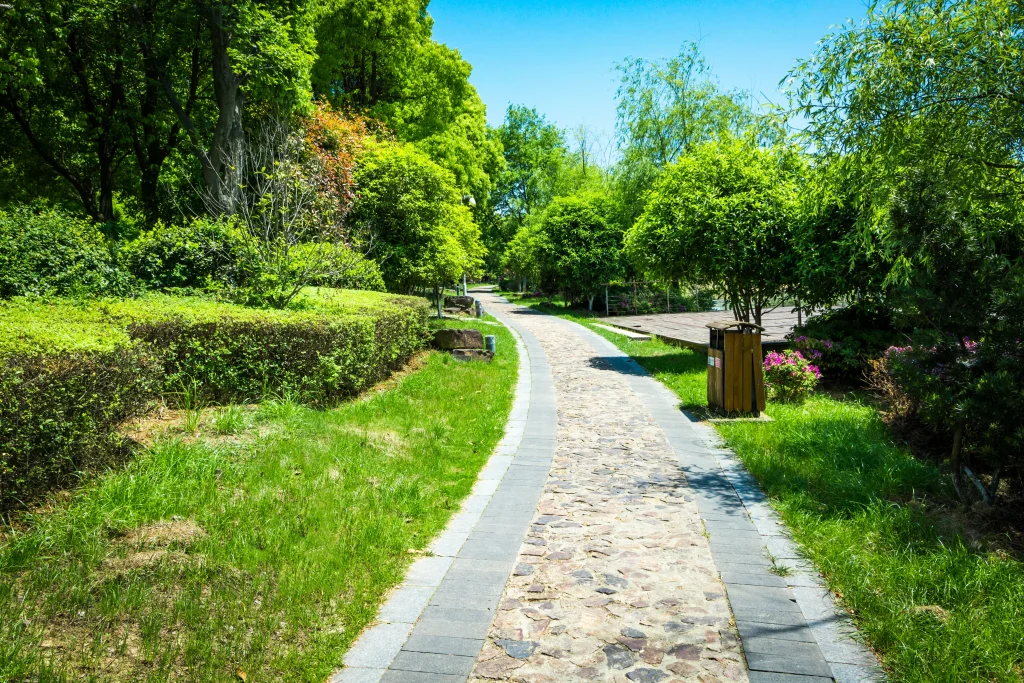
Looking for fence line landscape ideas? You can turn a plain fence into the nicest part of your yard. If your fence looks bare, or the area next to it feels too tight and empty, a few simple plants can fix that. It makes the space feel bigger, softer, and more private.
Let’s look at easy ways to add life right along your fence line and make it a spot you enjoy looking at.
What to consider before designing fence line landscaping
A nice fence line doesn’t start with a plant. It starts with looking closely. The strip of ground along your fence has sunny spots and shady spots. Don’t let that stop you. A few simple tips below will help your fence line planting ideas work out well from the start.
Climate and soil conditions
Good planting along a fence starts with choosing plants that fit your local weather and soil. The ground near a fence often hides old builder’s trash or hard-packed dirt that makes it tough for roots to grow.
Pick plants that belong in your area. Native ones are easier to care for because they already know how to handle local bugs, weather, and soil. That means less work and fewer dead plants to replace.
If your dirt is too heavy or too sandy, mix in some compost. It helps water drain better in clay and holds moisture longer in dry ground. Plus, a row of native plants brings in bees, butterflies, and birds, making your yard feel alive and right at home.
Sunlight and space
A fence often creates shade, which affects how plants grow. Choose shade-loving plants for the side that gets little sun, and sun-tolerant plants for the side that faces full sunlight.
If the strip of ground along the fence is narrow, go for tall plants instead of ones that spread wide. Columnar trees, climbing vines on a trellis, or upright grasses are good choices. They give you greenery and height without using up much space.
Purpose of landscaping
Knowing what you want from your planting makes every decision easier. If you just want a prettier view, pick plants with nice leaves and flowers that bloom in different seasons. For privacy, go with tall and thick plants that block the view from outside. If the fence itself looks bad, use climbing vines or bushy plants to cover it up and draw the eye away.
Sometimes the main goal is not about looks but about keeping the ground in place. If rain washes your soil away, deep-rooted plants can help hold it together. Native plants work especially well for this because their roots grow strong and steady over time.
Maintenance level
Some planting styles need more work than others. It helps to know what you’re signing up for before you start.
Low maintenance means less time watering, weeding, and trimming. Shrubs, mulch, and gravel do the job with very little fuss. These options look tidy and stay neat all year.
High maintenance takes more effort but gives you more color and variety. Flower beds and mixed plantings need regular watering, deadheading, and care. If you enjoy gardening and don’t mind the extra time, this route can be very rewarding.
Best fence line landscape ideas
Now that you know what to consider before planting, it’s time to look at some real ideas. Here are simple and pretty ways to dress up the space along your fence.
Use climbing plants and vertical structures along fence lines
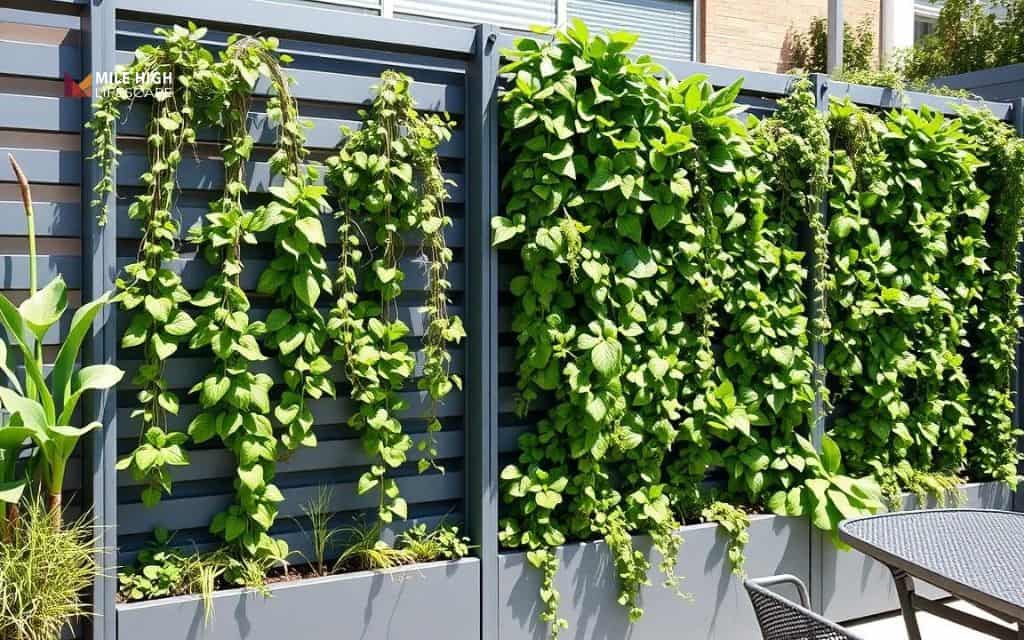
When space is tight, go up instead of out. Climbing plants on a trellis or wire system turn a plain fence into a green wall. Keep the trellis an inch away from the wood so air can flow and keep things dry.
You can also use vertical planters, wall pots, or stacked shelves to add more greenery without using ground space. These structures let you grow herbs, ferns, or small flowers right on the fence itself.
Create layered landscaping for a balanced and structured look
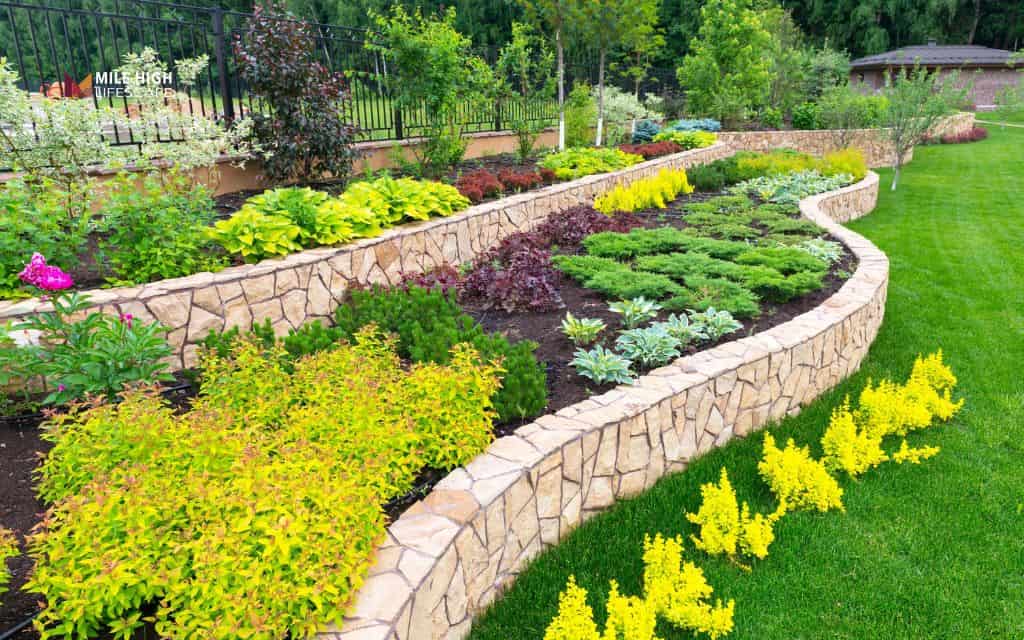
One row of the same shrub can look flat and boring. Layering plants gives the space more depth and makes it feel fuller.
Put tall evergreens or grasses right against the fence. Add medium-height flowers in front of them. Then let low groundcover spill over the edge to soften the line between garden and grass.
This setup also hides the bare bottom stems of taller plants. Group plants in odd numbers along the fence for a natural, pleasing look.
Use hedges and evergreens to add structure and privacy
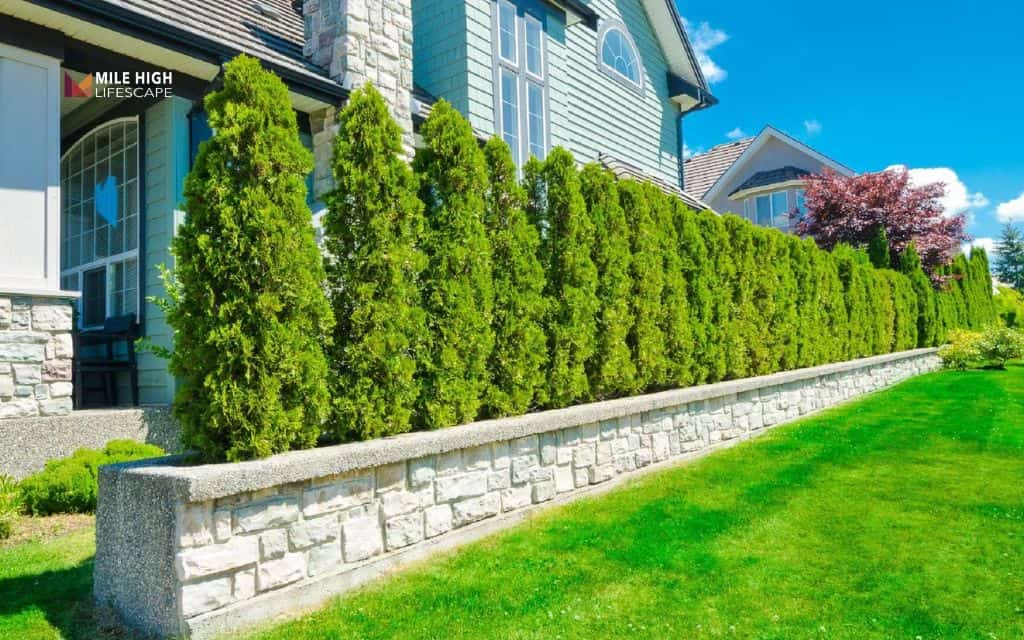
If privacy is what you want, a living hedge is hard to beat. Wood fences age and wear out, but a row of evergreens just keeps getting fuller year after year.
Try arborvitae, yew, or laurel for a thick green screen that blocks unwanted views and quiets outside noise. Just remember to give each plant enough space to spread as it grows.
For even more coverage, plant them in two staggered rows instead of one straight line. A soft green hedge feels warmer and more inviting than any wooden wall.
Enhance fence lines with flowering shrubs
Flowering shrubs bridge the gap between permanent evergreens and ephemeral perennials. They deliver substantial blooms with relatively modest maintenance demands along any fence line landscape.
Forsythia erupts in yellow fountain blooms before most plants break dormancy in the earliest spring. As weather warms, lilacs and viburnums fill the air with fragrance against the fence.
Summer belongs to hydrangeas, whose massive flower heads shift from lime to cream to dusty rose. By autumn, oakleaf hydrangea foliage ignites in burgundy and bronze, extending the show.
Against a dark-stained fence, white blooms like ‘Annabelle’ hydrangeas appear almost luminous at dusk. Group shrubs with overlapping bloom times to ensure the boundary never feels empty.
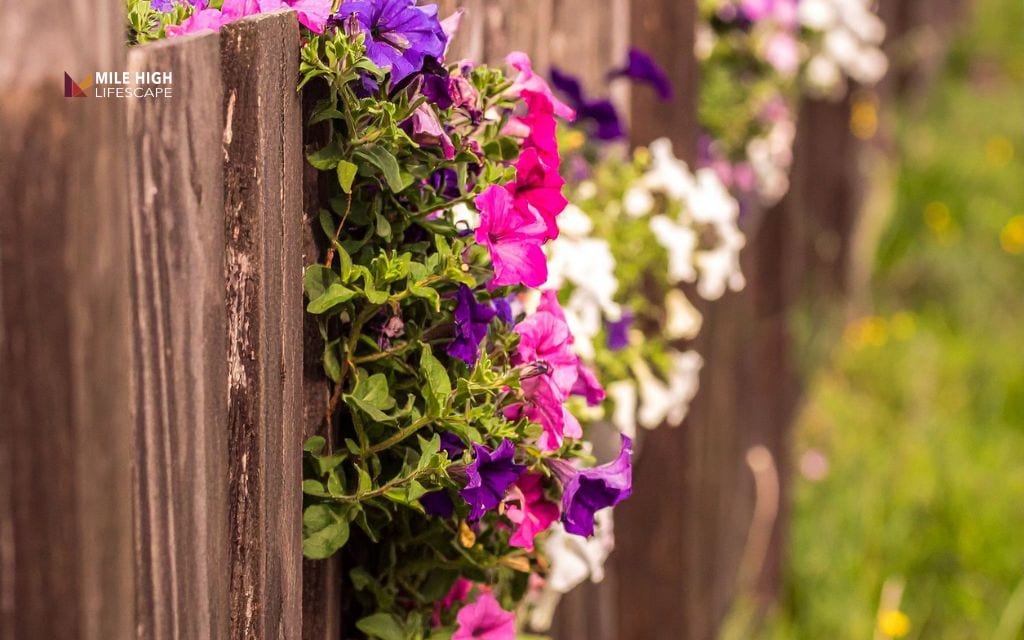
Use color, texture, and shape to add visual interest
A garden doesn’t need flowers to look good. Leaves alone can do the job with their colors, shapes, and textures.
Picture big blue hosta leaves sitting like soft sculptures next to fine, lacy ferns. Tall striped iris blades stand up straight while soft green Hakone grass spills over the edge.
The trick is mixing dark leaves with light ones, rough textures with smooth ones, and tall shapes with low ones. Bright chartreuse leaves really pop when placed against deep burgundy behind them.
Group plants in odd numbers and repeat those groups a few times along the fence. This keeps things interesting all season long, with or without flowers.
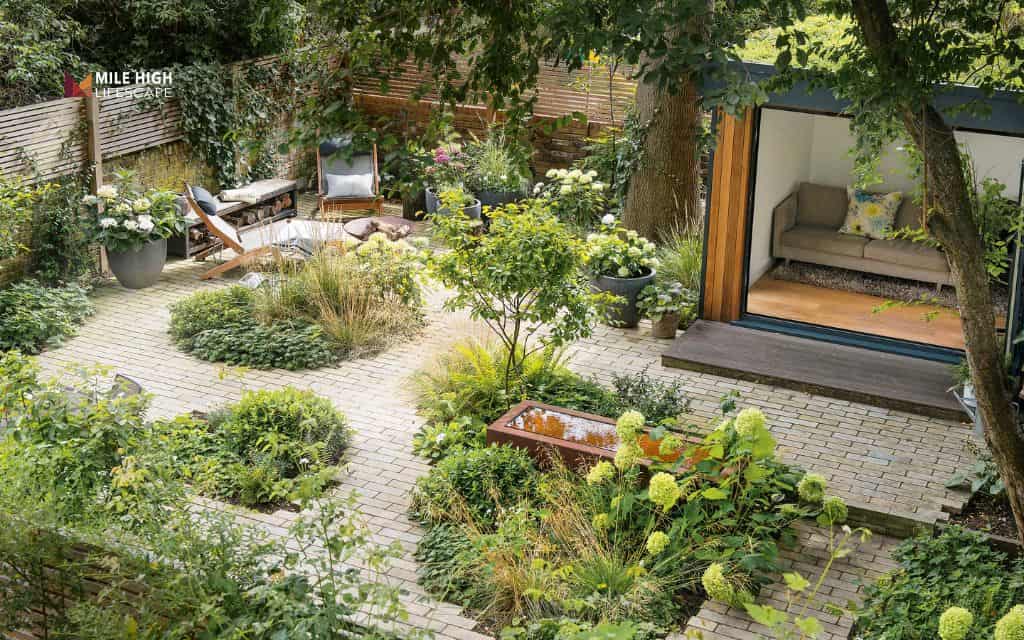
Design a drought – tolerant or xeriscape fence line
If water is scarce or the hose just doesn’t reach that far corner, go with plants that don’t need much. Dry-climate plants have a beauty all their own, with strong shapes and silvery leaves.
Spread a wide band of gravel along the fence. It looks clean and helps bounce heat away from the wood. Then tuck in a few agaves for structure and some Russian sage for soft purple color.
Add clumps of blue fescue grass for texture and low sedums to fill the gaps. The fence still shows through but feels like part of the scene, not just a plain wall.
Water deeply the first season to help roots settle in. After that, rain does the rest. Gravel keeps weeds down and gives these plants the dry footing they love.
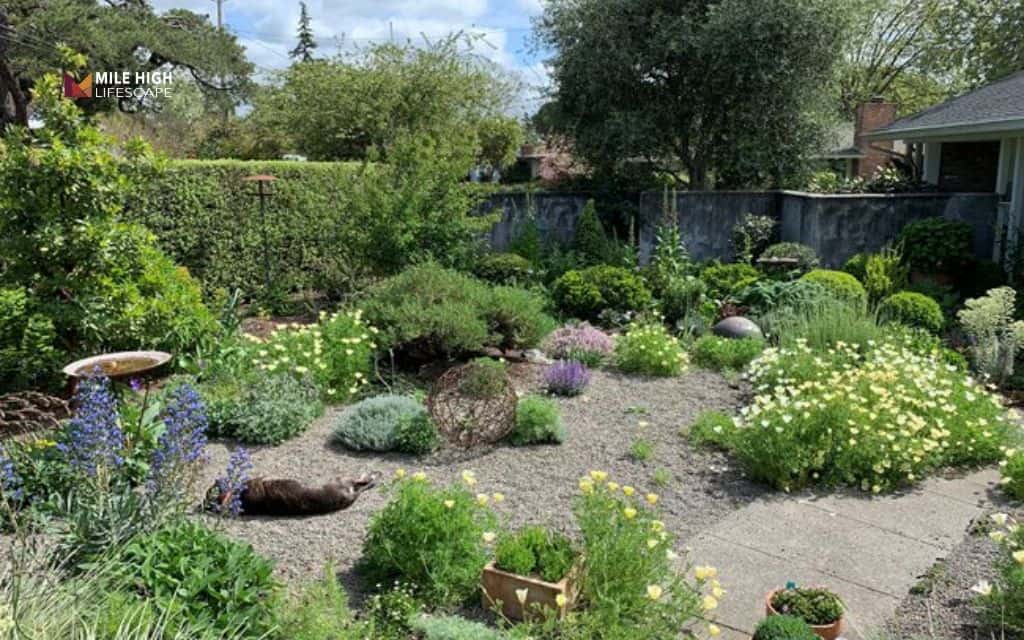
Create an airy pollinator garden along the fence
A fence line can be a busy little spot for bees, butterflies, and hummingbirds. The fence itself blocks the wind so these tiny visitors can feed in peace.
Plant tall verbena for purple flowers that dance in the breeze. Add coneflowers and black-eyed Susans in the middle for bright, easy landing spots. Tuck in some anise hyssop for soft blue spikes and a light licorice scent on warm days.
The whole look stays light and airy, not stiff or formal. And don’t forget a few milkweed plants for Monarch caterpillars to munch on. A few nibbled leaves here and there? That’s a good sign. It means your garden is doing its job.
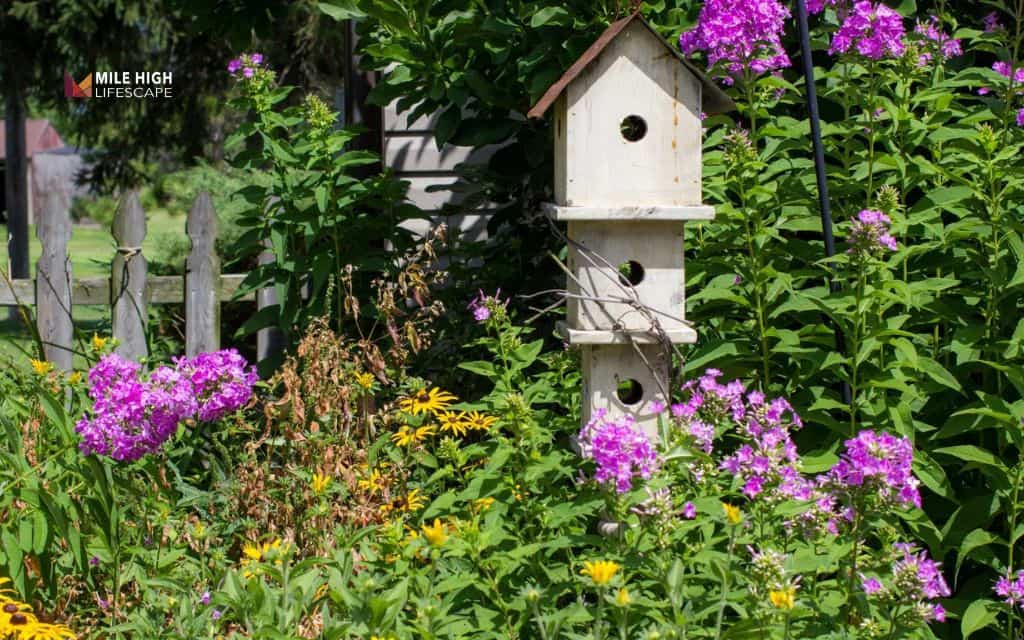
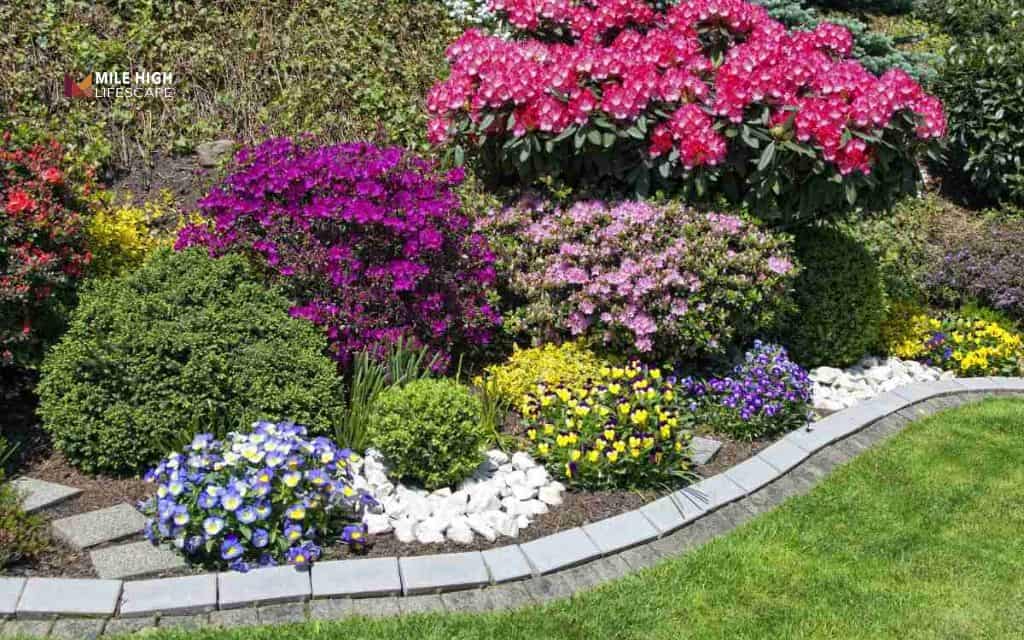
Design a curving flower bed border for a softer look
Most fences run in a stiff, straight line. You don’t have to follow that line with your plants. A gentle curve makes everything feel softer.
Let the edge of your planting bed wiggle like a slow river. The lawn flows in and out, creating deeper spots here and shallower spots there.
Those deeper pockets give you room for bigger shrubs. The shallow sections keep things balanced. Use a garden hose to test the shape before you dig.
The fence feels less harsh and the whole yard looks more natural. This trick works wonders in small spaces where every inch counts.
Build a raised garden bed along your fence
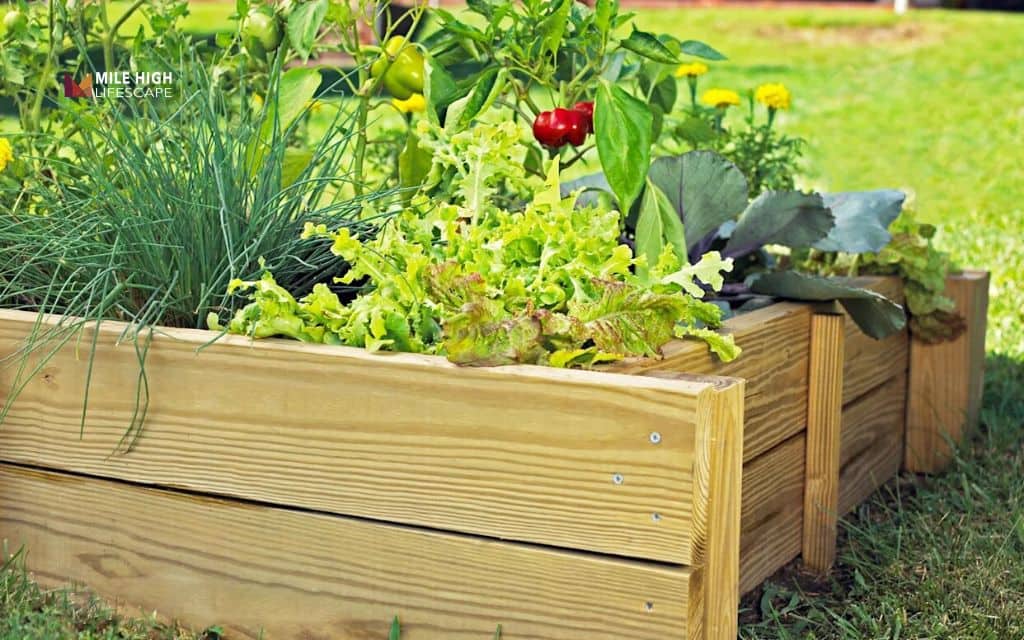
If your ground is hard clay, sandy, or full of tree roots, a raised bed gives you a clean start. You control the soil from day one.
Place the bed right along the fence for a neat, built-in look. Wood or stone edges keep everything tidy and intentional.
Raising the soil also brings plants closer to eye level. You’ll notice the small details more, and the top edge makes a handy spot to rest your tools or take a quick break.
One important tip: line the side that touches the fence with plastic or a waterproof sheet. This keeps wet soil off the wood and helps your fence last longer.
Read more: 25 landscape border ideas that make every garden look neater
Maintain an open view between garden zones
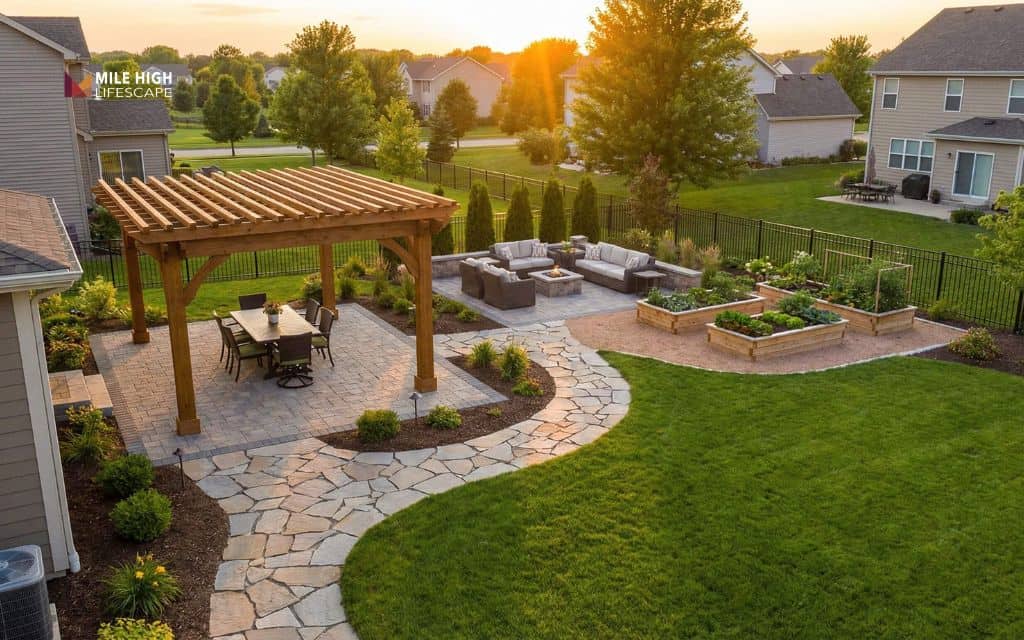
You don’t have to plant every inch along the fence. Leaving some open space often looks better than filling it all up. A solid wall of green can make the yard feel smaller and boxed in.
Break up the planting into separate sections with mulch or gravel in between. These gaps let your eye travel through to what’s beyond, like a bench, a pretty tree, or just open lawn.
Keeping some views open makes a small yard feel bigger. Better airflow between plants also keeps them healthier.
Use those empty spots for a birdbath, a small statue, or just a clean resting place. Vary the size of the gaps so the rhythm feels easy and natural.
Plant a line of standard trees for a clean, orderly look
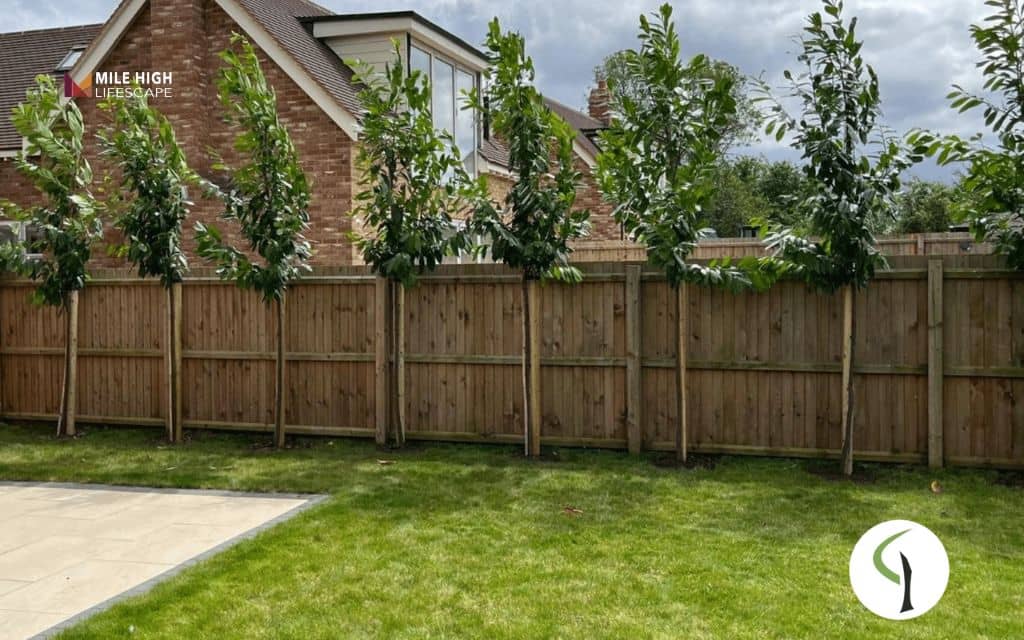
A row of matching trees along the fence has a calm, clean look. These are shrubs trained to grow on a single stem with a round top, like a lollipop shape.
Picture a line of standard lilacs, their bare trunks rising up before the round canopies burst into purple blooms each spring. You can still see the fence through the gaps between them.
The leafy tops form a soft ceiling overhead. Underneath, a neat row of clipped boxwood balls finishes the look.
Give each tree enough room so the canopies just barely touch when full grown. A quick trim each year keeps the shape tidy and shows the space is cared for..
Incorporate wildlife – friendly features into your fence line
Your fence can do more than just hold plants. With a few small touches, it becomes a cozy spot for birds, bees, and tiny garden friends.
Nestle a little pile of twigs behind a bush. Toads will find it and make it home. Hang a simple birdhouse on the fence post, just high enough to feel safe.
Lean a small bee hotel against the fence. Native bees will check in and get to work pollinating your flowers. Set out a shallow dish with pebbles and water so butterflies have a place to sip and rest.
None of this takes much time or money. But sitting outside and hearing baby birds chirp, or spotting a toad blinking from the shade, makes the whole garden feel more alive.
Combine intricate fence designs with bold blooms
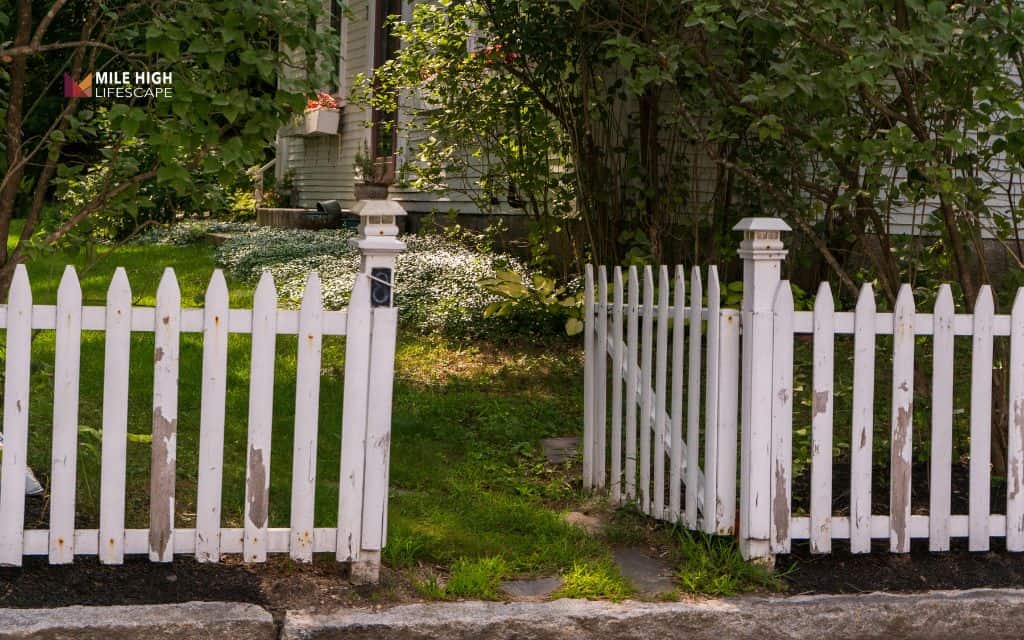
Some fences deserve to be seen. If you have pretty ironwork, custom lattice, or nice wood slats, let your plants show it off instead of hiding it.
Keep things low and soft at the base. Mounding flowers like geraniums or lady’s mantle stay under knee height. They add color at the bottom but leave the fence in full view.
For a lighter touch, try tall airy plants like Verbena bonariensis. Their thin stems and tiny purple flowers float above the ground. You can still see the fence right through them.
The mix of soft blooms and hard lines just works. Pick smaller plants that won’t need constant trimming to keep the fence looking sharp.
Add a water feature as a focal point
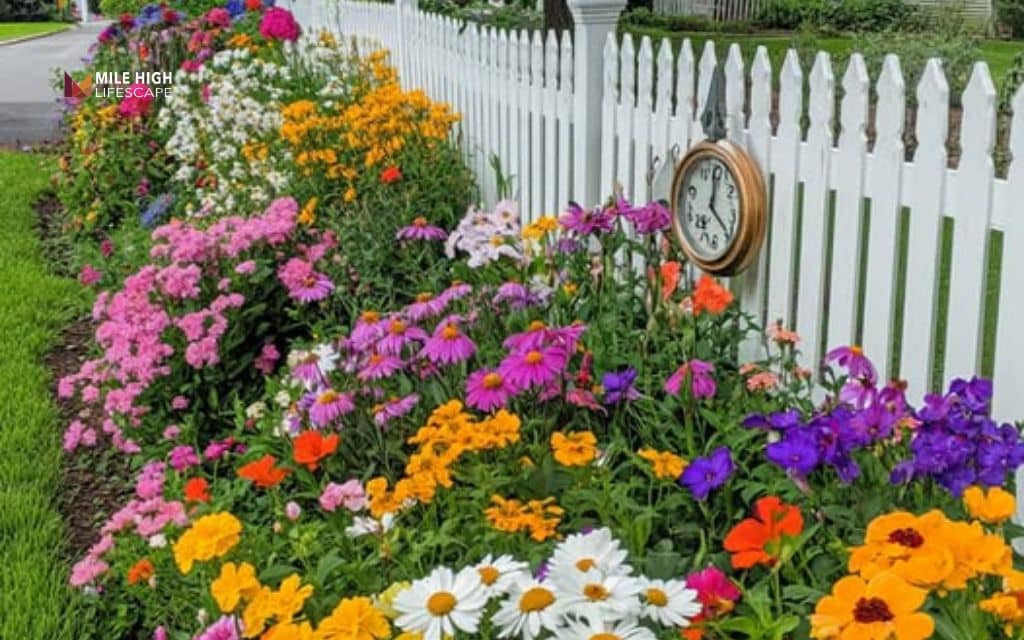
A long fence can start to feel a bit flat after a while. Adding just one water feature gives the eye a place to pause and makes the whole space feel more complete.
Tuck a tall ceramic pot with a small pump into a corner or somewhere along the middle. The soft sound of bubbling water helps cover up street noise and feels instantly calming.
The dark fence behind makes the water and glossy pot stand out even more. Plant a few ferns or hostas around the base. They love the extra moisture and soften the edges nicely.
Go with a solar pump if you can. No wires to worry about. Just make sure the panel gets enough sun and keep the wood fence from staying wet all the time.
Design a wildlife – friendly and pollinator garden
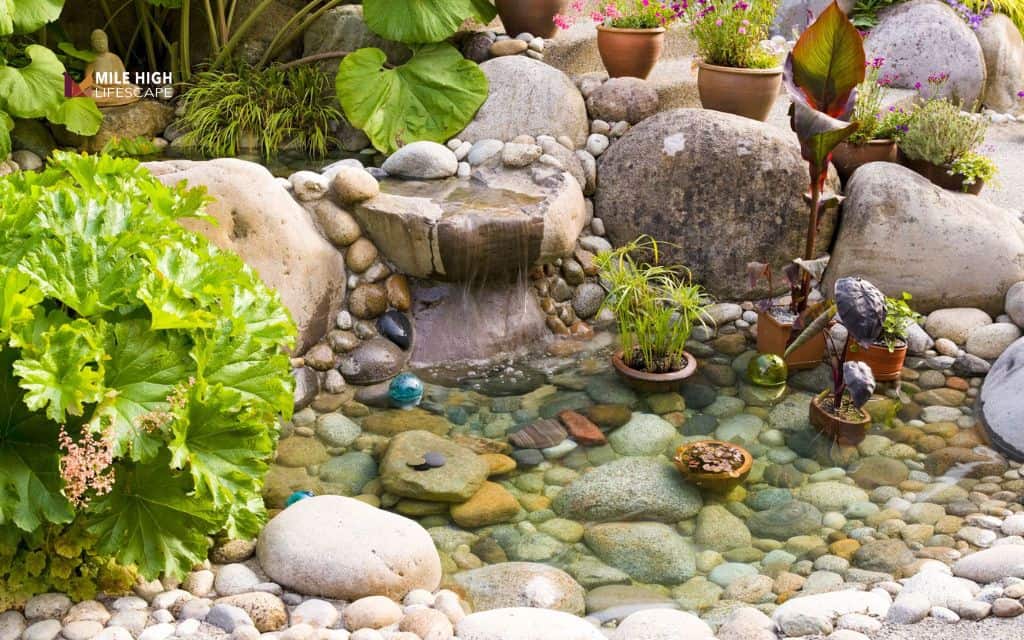
A garden that feeds butterflies is lovely. But a garden that helps them raise their young is even better. That’s what makes a fence line truly wildlife-friendly.
Plant milkweed near the fence for Monarch caterpillars to munch on. Add some bronze fennel with its soft feathery leaves. Swallowtail butterflies will lay their eggs there.
In the shadier spots, let violets spread as groundcover. Fritillary butterflies use them as a nursery. A few chewed leaves here and there aren’t a problem. They’re a sign your garden is doing something right.
Find out which butterflies live in your area and plant what their babies need. Then just watch. A quiet show unfolds right along your fence, season after season.
Wood fence line landscape ideas
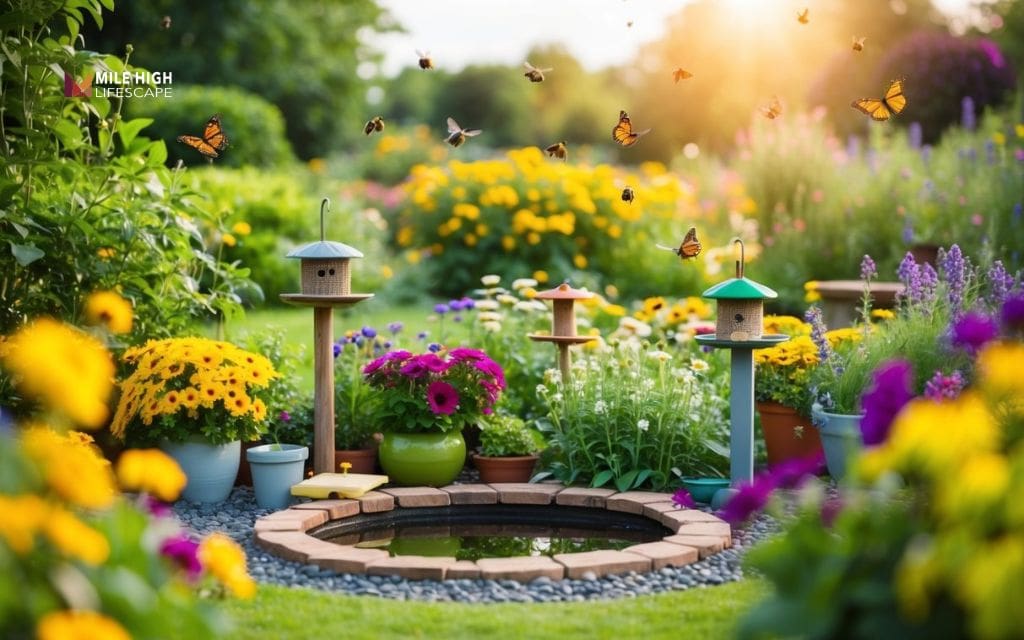
The color of your fence matters more than you might think. Whether it’s warm cedar, dark stain, or weathered gray, it changes how every plant in front of it looks.
Against warm brown wood, cool silvery plants really pop. Lavender, blue fescue grass, and Russian sage look crisp and fresh. Against a dark fence, white flowers like Annabelle hydrangeas seem to glow, especially in the evening.
Deep burgundy leaves from shrubs like ninebark or smokebush add weight and richness to the border.
One simple rule: keep plants about a foot away from the wood once they’re full grown. That little gap lets air move through and helps the fence dry out after rain. It’s an easy way to make your fence last longer.
Read more: 27 easy landscaping ideas to make any garden look amazing
Budget – friendly fence line landscaping ideas
Achieving a polished fence line landscape doesn’t require a landscape architect’s invoice. Strategic patience and smart sourcing yield high-end results for less.
- Phase the project: Start with a 10-15 foot visible section and expand annually. This spreads cost and allows you to propagate successes.
- Propagate and swap: Divide existing perennials like hostas or daylilies. Local garden clubs are goldmines for free divisions.
- Shop off – season: Buy discounted perennials in late summer when nurseries clear inventory. They establish best in cool autumn soil.
- Rethink mulch: Source free arborist wood chips rather than expensive bagged mulch. It suppresses weeds and feeds the soil identically.
- Source creatively: Use livestock panels for affordable, modern trellises. Salvaged brick creates rustic edging for free.
Conclusion
A fence line is an opportunity, not a limitation, it’s the essential frame that completes your garden canvas. Combine plants, structure, and a clear purpose for the best results. Start with these simple ideas and expand over time as your confidence and garden grow.
Call Mile High Lifescape at (303) 877-9091 today to schedule your free fence line consultation.
Frequently asked questions (FAQs)
How to landscape along a fence line?
Clear the area, define a border, add a layer of mulch, then plant in layers — tall plants at the back near the fence, medium shrubs in the middle, and ground covers or flowers at the front.
What should I plant along my fence line?
Climbing vines (like clematis or jasmine), ornamental grasses, shrubs (like boxwood or arborvitae), or flowering perennials (like black-eyed Susan or lavender) — depending on sun exposure and privacy needs.
How to make a fence line look good?
Add plants for softness, use consistent mulch, hang planters or climbing vines, and ensure the fence is clean and in good repair. Layered planting creates the most polished look.
What color fence makes a yard look bigger?
White and light gray reflect light and create an open feel. Dark colors (black, dark brown) recede visually, which can also make a space feel larger by pushing boundaries back — both approaches work depending on the surrounding landscape.
What are common fencing mistakes to avoid?
One of the most common fencing mistakes is planting too close to the fence, which traps moisture and causes rot or structural damage over time. Homeowners also frequently overlook sun and shade conditions before choosing plants, leading to poor growth or plant loss. Relying on a single plant species is another misstep — it creates a flat, uninteresting look with no visual variety. Skipping edging along the fence line makes even well-planted beds look unkempt. Finally, failing to account for a plant’s mature size can result in overcrowding, blocked sightlines, or roots that eventually damage the fence itself.