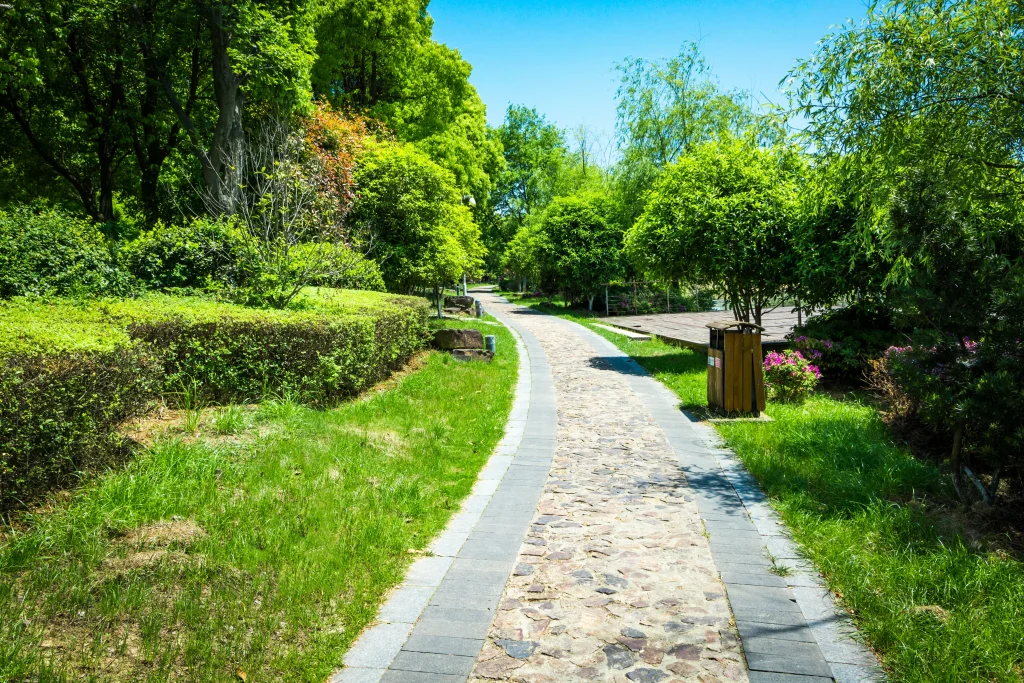
Flagstone landscaping offers exceptional durability in Colorado’s temperature swings, provides natural drainage that works alongside river rock drainage ideas, and fits into xeriscape designs that honor our water-conscious values.
Whether you’re planning a complete backyard transformation or simply looking to add character with a flagstone walkway, this guide provides inspiration and practical guidance tailored specifically to Colorado conditions.
We’ll explore 15 proven flagstone landscaping ideas that thrive in Denver’s climate zones 5b-6a, address common installation mistakes, and show you how to pair flagstone with drought-tolerant plants that actually flourish along the Front Range.
What is flagstone?
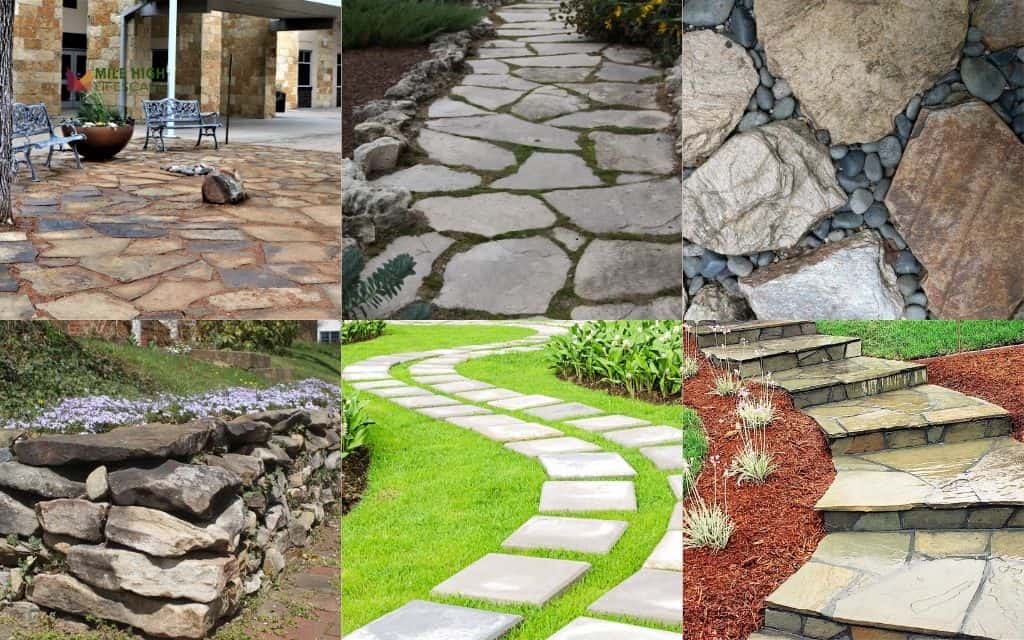
Flagstone is any sedimentary rock that splits naturally into flat, irregular slabs typically 1-3 inches thick. Unlike manufactured pavers or poured concrete, each flagstone piece has unique color variations, textures, and organic shapes that create one-of-a-kind outdoor spaces.
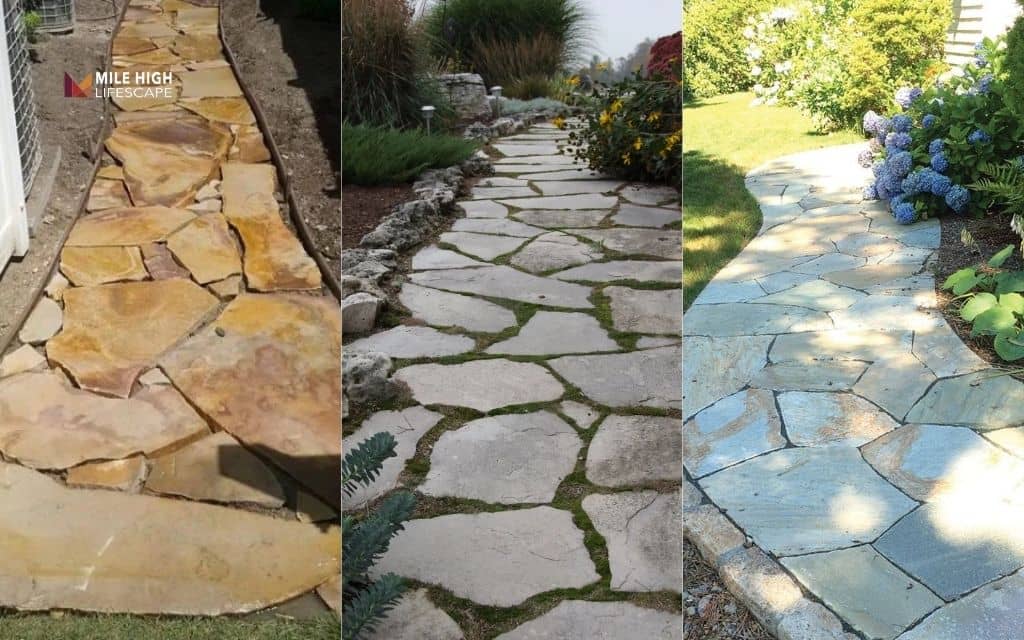
Common flagstone types used in Colorado
Sandstone (most popular in Denver):
- Warm earth tones: buff, tan, rust, and coral
- Excellent slip resistance when wet
- Readily available from local Colorado quarries
Limestone:
- Cooler gray and cream tones
- Slightly more formal appearance
- Can be slippery when polished; choose rough-cut for walkways
Quartzite:
- Hardest and most durable option
- Silver, gray, and gold variations
- Premium pricing but exceptional longevity
Flagstone vs. pavers vs. concrete
| Feature | Flagstone | Pavers | Concrete |
| Appearance | Natural, organic, unique | Uniform, geometric | Solid, industrial |
| Freeze-thaw tolerance | Excellent | Good | Poor (cracks easily) |
| Installation cost | $15-$30/sq ft | $12-$20/sq ft | $8-$15/sq ft |
| Drainage | Excellent | Good | Poor without proper slope |
| DIY-friendly | Moderate difficulty | Easiest | Requires pro for best results |
| Lifespan | 50+ years | 25-40 years | 15-25 years in Denver |
The flexibility of flagstone rocks and their irregular joints allow them to move slightly with Denver’s soil expansion and contraction, making them far more durable than rigid concrete slabs that crack during our 60-degree temperature swings.
Why flagstone thrives in Denver’s Climate
Superior freeze-thaw performance
Denver experiences an average of 80-100 freeze-thaw cycles annually – concrete’s worst enemy. When moisture seeps into concrete’s pores and freezes, it expands and creates cracks that only worsen each winter.
Flagstone landscaping handles this challenge differently:
- Individual stones can shift slightly without catastrophic failure
- Wide, gravel-filled joints allow water to drain before freezing
- Natural stone density resists water absorption better than poured concrete
- Damaged stones can be replaced individually without tearing out entire sections
Natural drainage integration
Colorado’s heavy spring snowmelt and intense summer downpours require thoughtful drainage solutions. Using flagstone in landscaping works exceptionally well because:
- Gaps between stones create permeable surfaces
- Water filters through gravel or decomposed granite joints
- Pairs naturally with drainage rock and dry creek features
- Reduces runoff compared to solid hardscaping
Enhanced safety in winter conditions
The naturally rough texture of sandstone flagstone provides far better traction than smooth concrete or polished pavers when covered with snow or ice. Many Denver homeowners find they need less de-icing salt on flagstone surfaces, which also protects nearby plants from chemical damage.
Perfect match for xeriscape design
According to Denver Water’s xeriscape principles, successful water-wise landscaping requires proper hardscaping that reduces turf areas while maintaining beauty and function. Landscape with flagstone achieves this by:
- Replacing water-hungry grass with functional, beautiful stonework
- Creating defined zones that organize irrigation efficiently
- Providing thermal mass that moderates soil temperature
- Supporting native and adapted plant communities
15 flagstone landscaping ideas for Denver homes
Flagstone patio with gravel or river rock joints
The most popular flagstones patio design in Denver uses decomposed granite or pea gravel joints instead of mortar or polymeric sand. This approach offers critical advantages for Colorado conditions:
- Allows water to drain freely between stones
- Accommodates soil movement from freeze-thaw cycles
- Easier DIY installation, no mixing mortar
- Lower cost than mortared applications
- Simple repairs, just add more joint material
Flagstone walkway with xeriscape plant borders
Create gentle curves rather than straight lines when landscaping with flagstone walkways. It feels more natural and creates planting pockets that soften the hardscape.
Plant pairings for walkway borders:
- Blue grama grass (Bouteloua gracilis)
- Mexican feathergrass (Nassella tenuissima)
- Autumn Joy sedum
- Pussytoes (Antennaria)
Flagstone fire pit zone
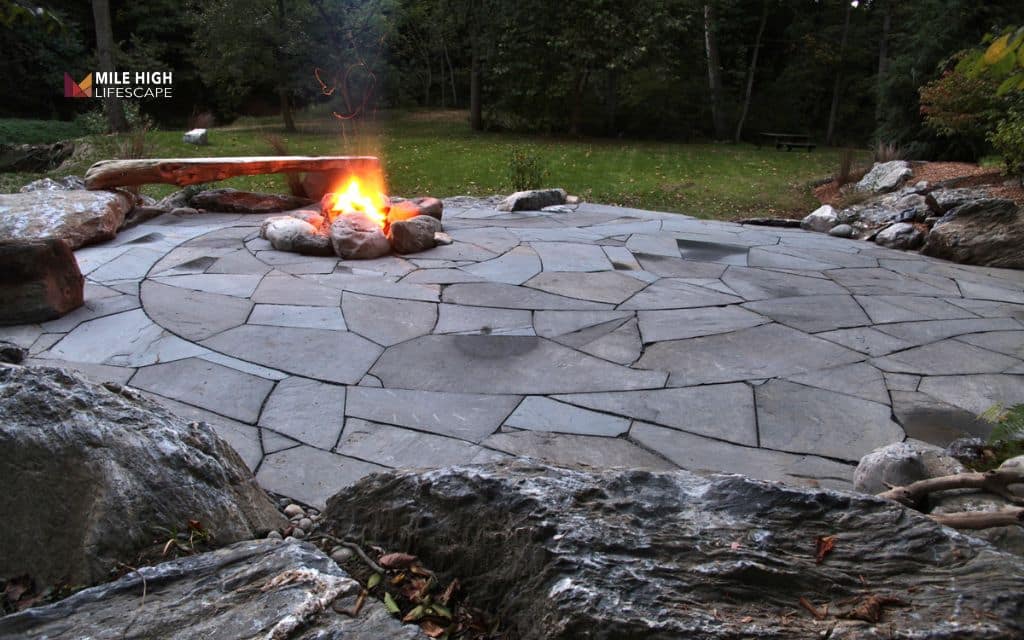
Denver’s low humidity and cool evenings make fire features usable nearly year-round. A flagstone landscape fire pit zone combines function, beauty, and safety.
Design considerations:
- Circular layout: 12-16 feet diameter for 6-8 people
- Organic layout: Free-form shapes for larger gatherings
- Fire pit clearance: Minimum 3 feet from stone edge to fire ring
- Seating: Built-in stone benches or movable chairs on flagstone base
Check with your municipality – many Denver suburbs require 15-foot clearance from structures and overhead tree branches.
Flagstone + xeriscape garden combo
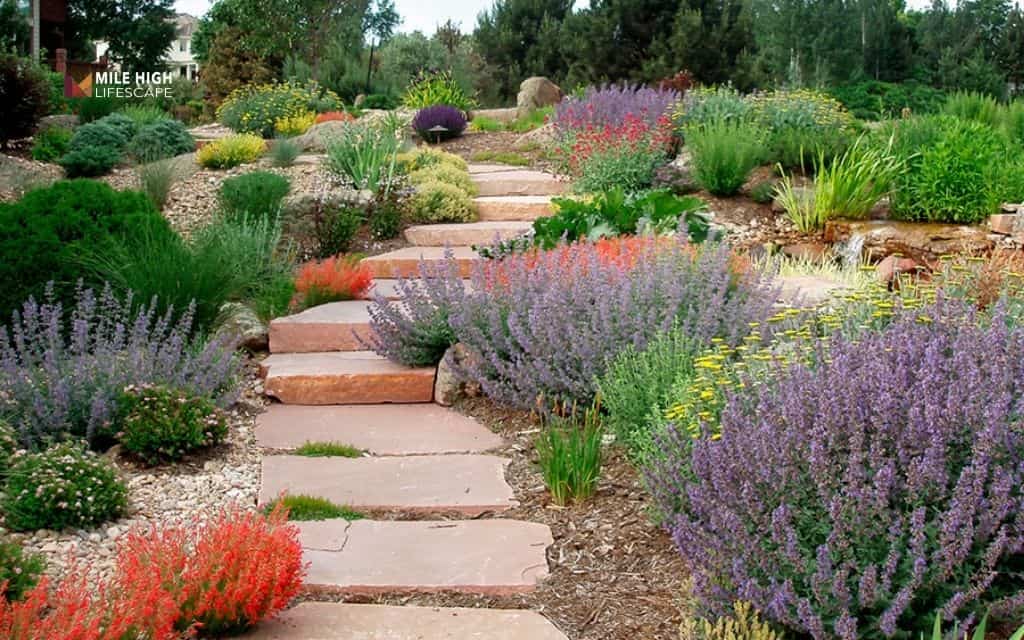
One of the most water-efficient approaches to using flagstone in landscaping involves creating stepping stone paths through mulched xeriscape beds. This design reduces turf area while maintaining accessibility for garden maintenance.
Recommended xeriscape plants:
- Penstemon (Penstemon strictus)
- Blanket flower (Gaillardia)
- Russian sage (Perovskia atriplicifolia)
- Winecups (Callirhoe involucrata)
Flagstone steps on a sloped yard
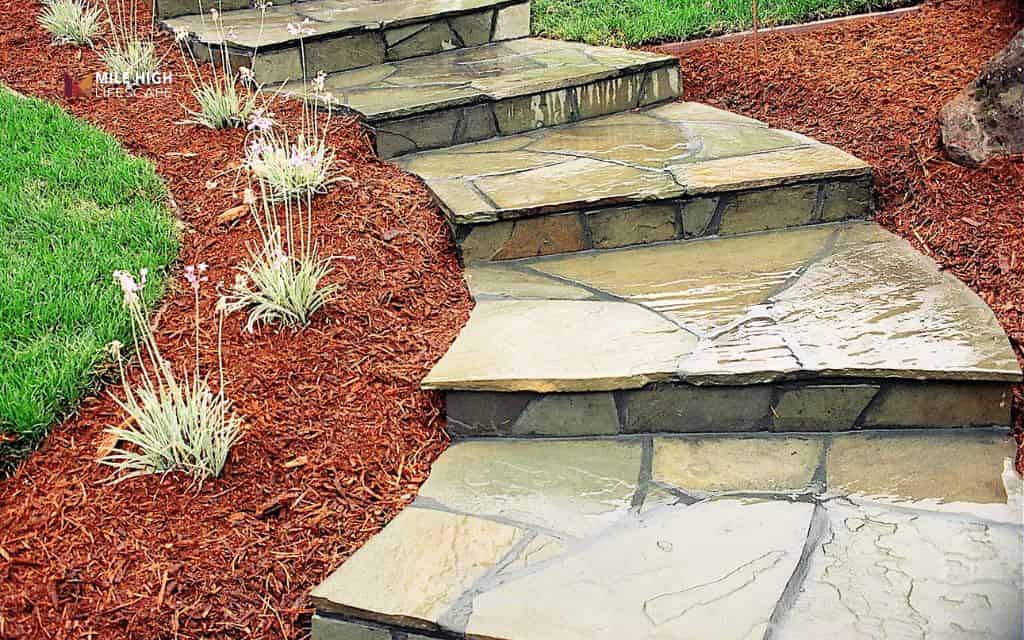
Many Denver properties have significant grade changes requiring steps. Flagstone rocks create beautiful, durable stairways when installed properly.
Proper rise and run ratios:
- Rise: 5-7 inches per step (6 inches is ideal)
- Run: 12-16 inches deep (14 inches comfortable for most people)
- Formula: (2 × rise) + run = 24-27 inches
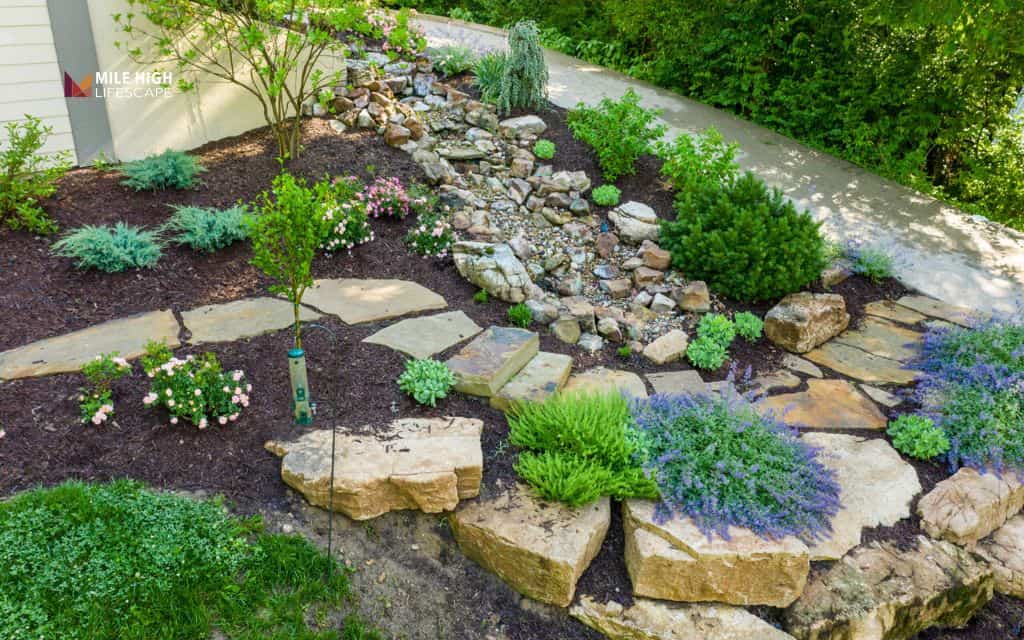
Flagstone with dry creek or drainage swale
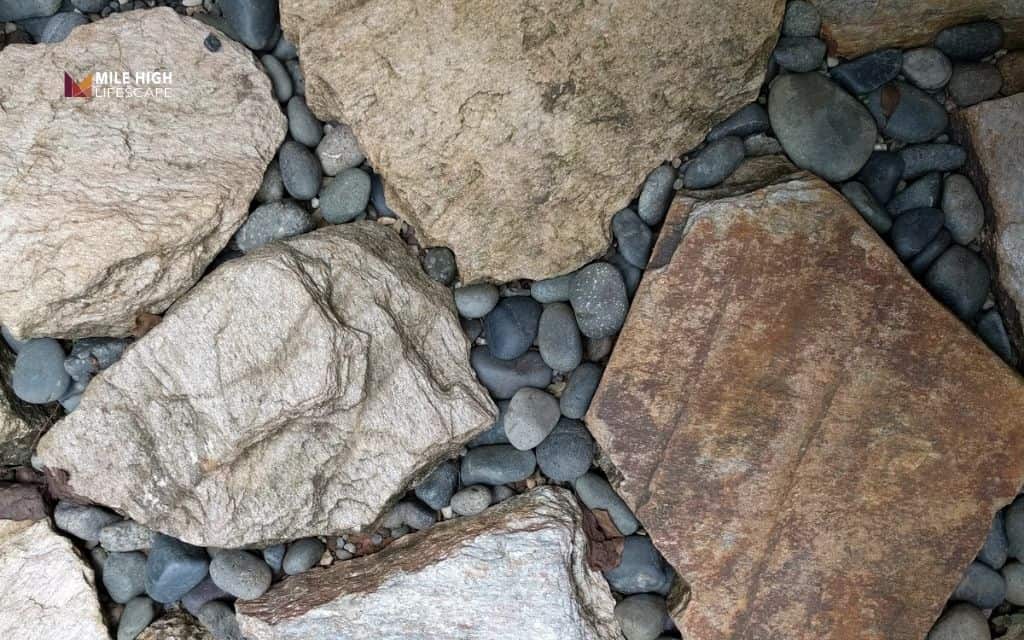
Combine flagstone borders with river rock centers to create functional drainage features that look intentional rather than utilitarian. This popular design solves Denver’s spring runoff challenges while adding visual interest.
Design components:
- Flagstone edges: Define the creek bed and provide occasional stepping points
- River rock center: 2-4 inch smooth stones for water flow
- Landscape fabric: Under river rock only, not under flagstone
- Depth: 6-8 inches for typical residential drainage
Plant placement:
- Position moisture-loving plants like daylilies and irises near the drainage path where they’ll receive occasional deep watering
- Keep xeric plants on higher ground
Connection to downspouts: Direct roof runoff into dry creek features to maximize efficiency—just ensure proper grading away from foundation.
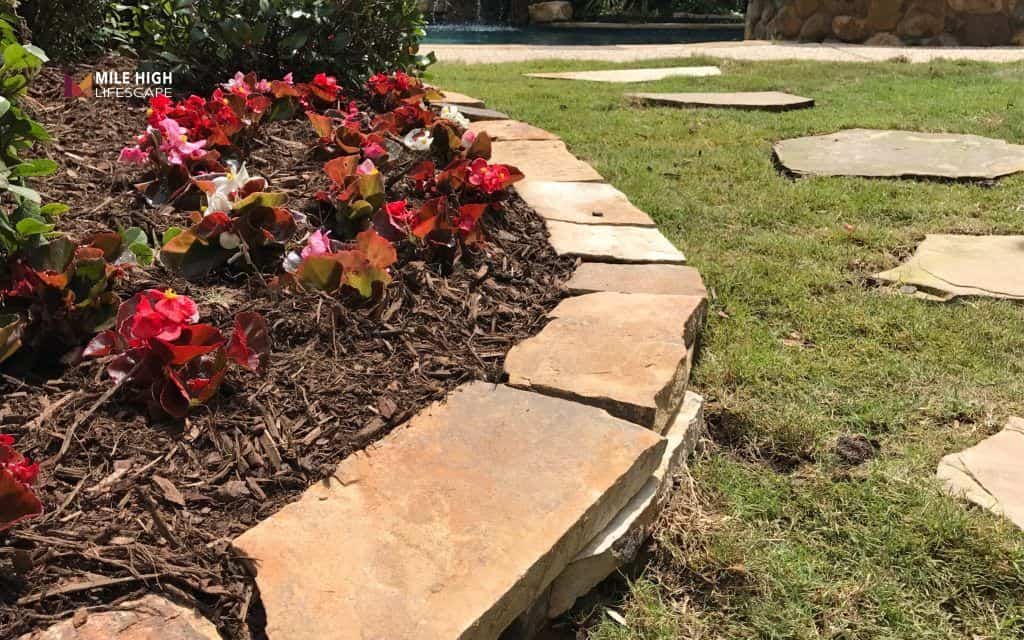
Flagstone border for garden beds
Create cleaner, more permanent edges than metal or plastic with a flagstone border that anchors your landscape design. Unlike temporary metal or plastic edging that looks utilitarian and deteriorates under Denver’s UV exposure, flagstone creates permanent, natural-looking boundaries that complement both formal and cottage-style gardens.
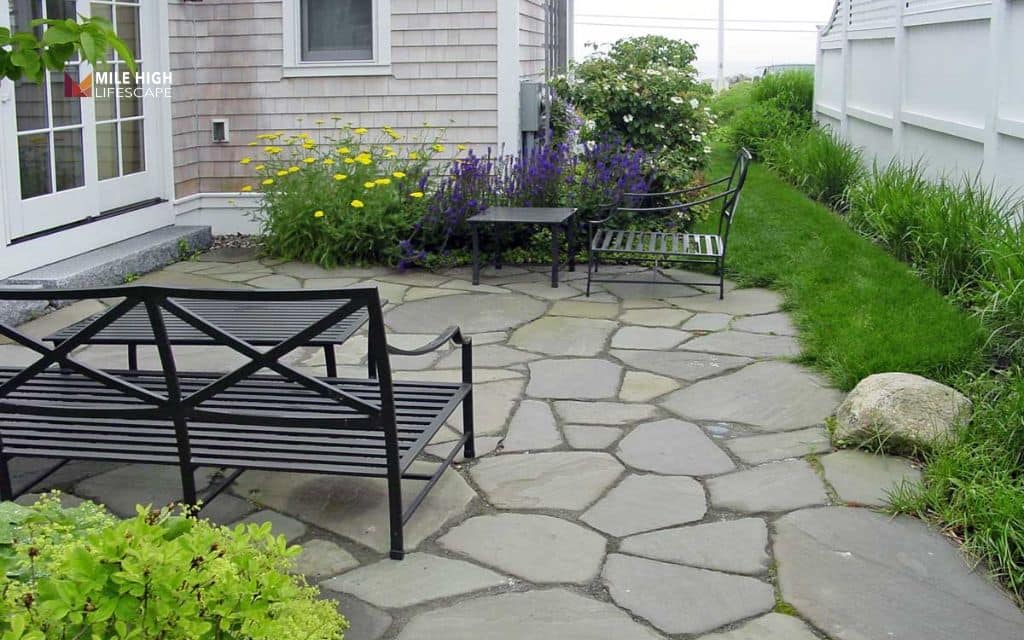
Flagstone courtyard with seating nooks
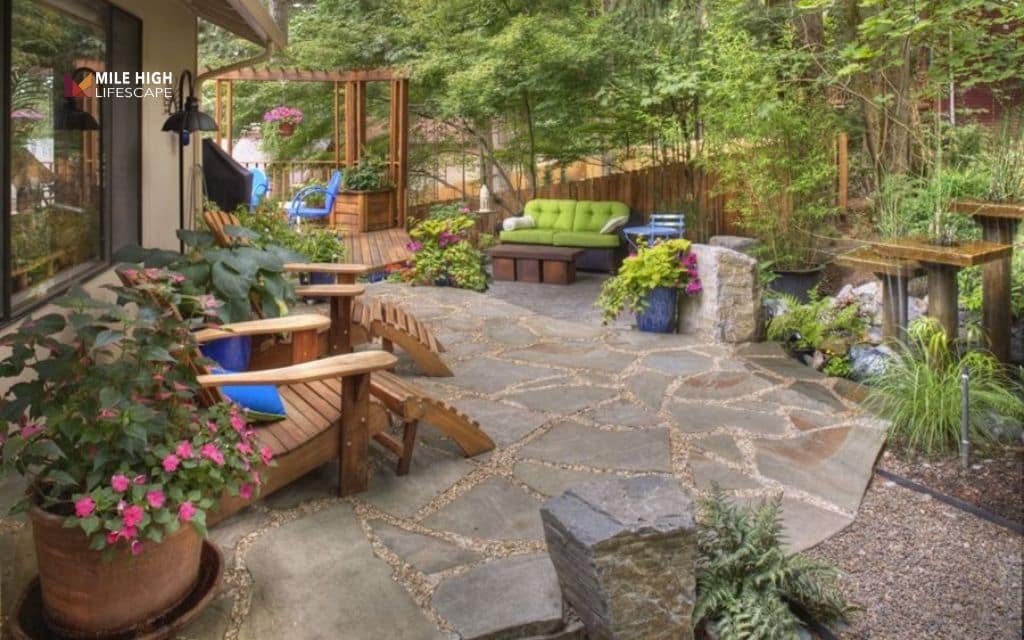
Transform small side yards or underutilized spaces into intimate outdoor rooms. A flagstone patio courtyard works especially well in Denver’s urban neighborhoods with limited square footage.
Design elements:
- 10′ × 12′ minimum for comfortable furniture placement
- Built-in stone benches save space
- Vertical interest: Espaliered fruit trees or climbing roses on fences
- Overhead structure: Pergola provides afternoon shade
Privacy screening:
- Tall ornamental grasses in containers
- Vine-covered lattice panels
- Staggered flagstone columns with plants between
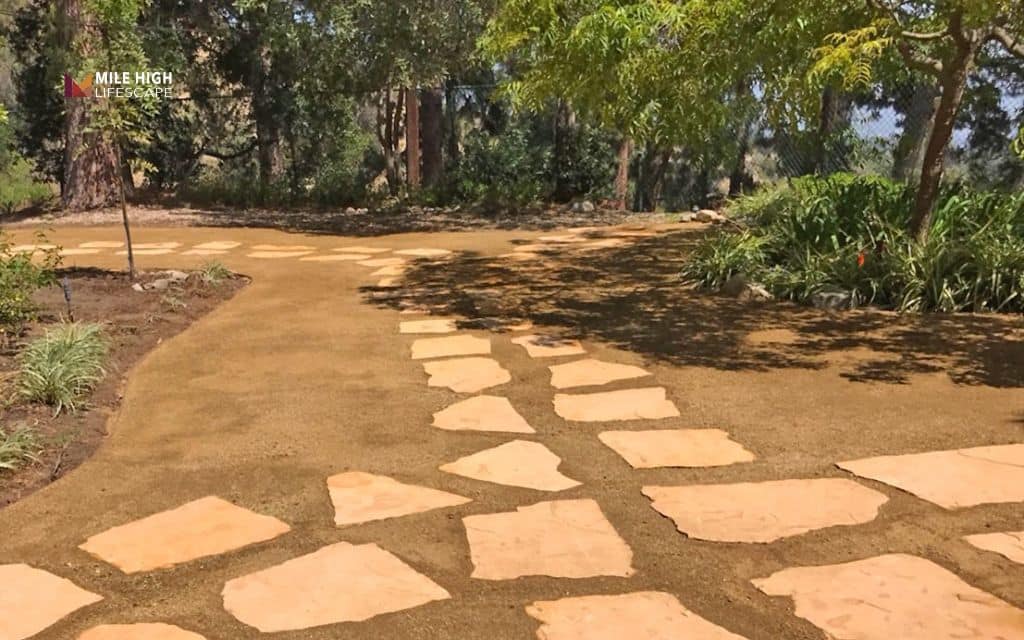
Flagstone set in decomposed granite
The most permeable, lowest-cost approach to landscape flagstone uses decomposed granite (DG) as both base and joint filler.
Why this works in Denver:
- Exceptional drainage—water flows through rather than running off
- Natural appearance blends with Colorado’s high desert aesthetic
- Stabilizes with water and compaction
- Easy repairs and modifications
- Budget-friendly: $4-$7 per square foot DIY
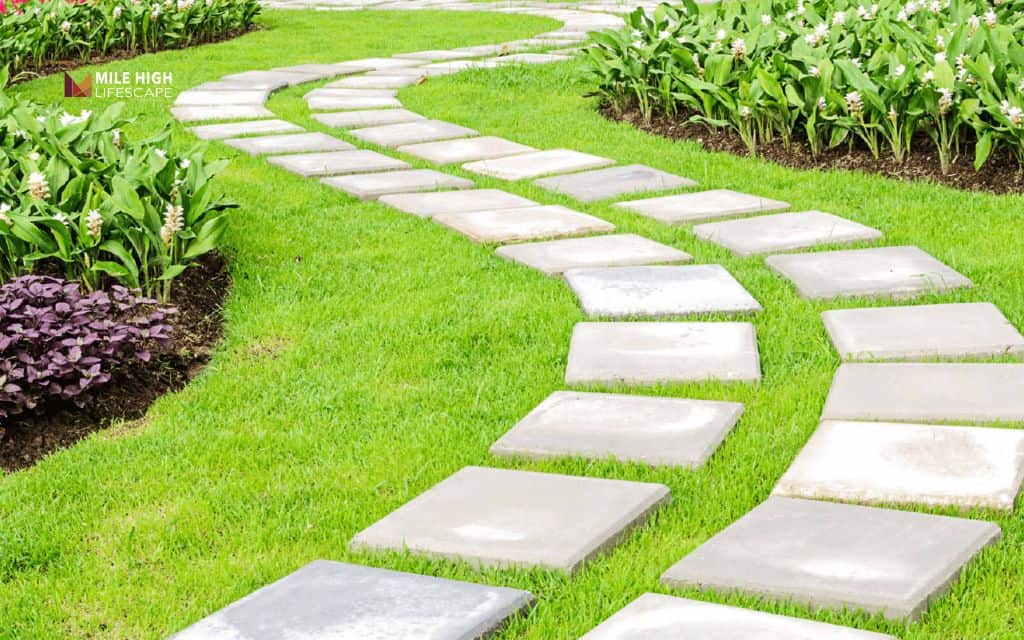
Flagstone stepping stones through lawn alternatives
Replace water-hungry Kentucky bluegrass with low-water ground covers, using flagstone rocks as functional pathways through the new landscape.
Ground cover options:
- Buffalo grass (Bouteloua dactyloides): Native, requires 75% less water than bluegrass
- Creeping thyme (Thymus serpyllum): Aromatic when stepped on, purple flowers
- Blue star creeper (Isotoma fluviatilis): Tiny blue flowers, handles light foot traffic
- Creeping phlox (Phlox subulata): Spring color explosion, evergreen foliage
Flagstone placement:
- Set stones level with ground cover for mowing accessibility
- 18-24 inch spacing for walking paths
- 12-15 inch spacing for frequently traveled routes
- Allow plants to grow over edges for softer appearance
This approach reduces landscape water use by 60-80% compared to traditional turf while maintaining a lush, green appearance.
Flagstone framed by boulder accents
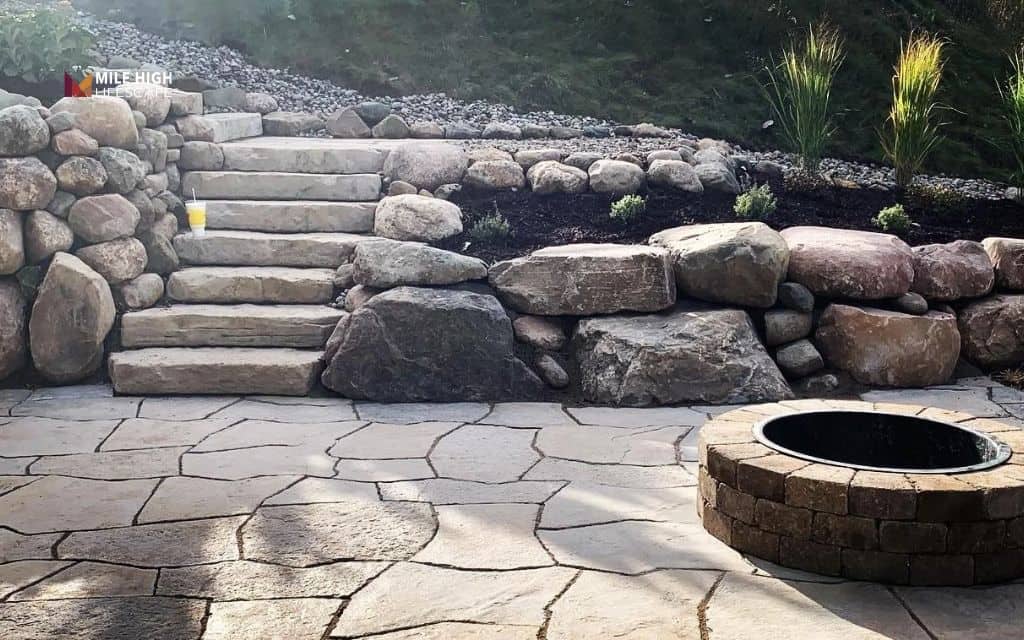
Add elevation changes and dramatic focal points by combining flagstones for landscaping with Colorado moss rock or other native boulders.
Design principles:
- Cluster boulders in groups of 3, 5, or 7 (odd numbers look more natural)
- Bury boulders ⅓ to ½ depth for stability and natural appearance
- Use flagstone to create level platforms between boulder groupings
- Vary boulder sizes: One large anchor stone with smaller companions
Popular Front Range combinations:
- Buff sandstone flagstone + iron-rich red/rust boulders
- Gray limestone flagstone + silvery granite boulders
- Mixed flagstone colors + Colorado moss rock
Flagstone entry path for curb appeal
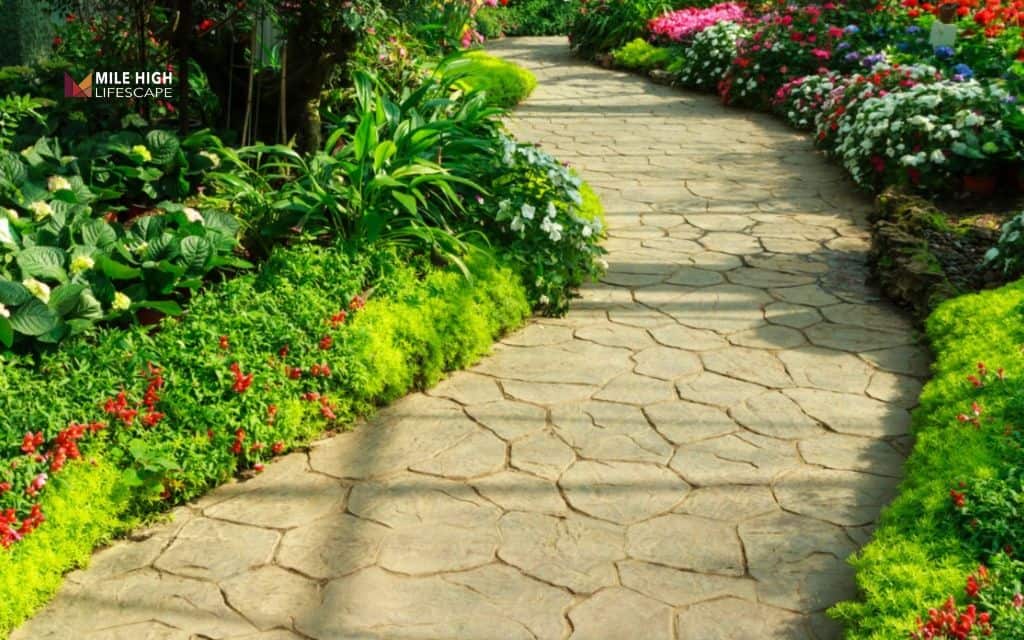
First impressions matter. A well-designed flagstone entry path signals quality craftsmanship and natural elegance without the sterile appearance of concrete slabs.
Design guidelines:
- Width: 4-5 feet for primary entry (comfortable for two people)
- Length: Direct path to door, gentle curves only if space allows
- Lighting: Low-voltage path lights every 8-10 feet
- Edging: Flagstone border with low-growing plants
Entry paths receive heavy use year-round. Choose the most slip-resistant flagstone (rough sandstone) and install proper drainage to prevent ice accumulation.
Flagstone retaining edge with gravel backfill
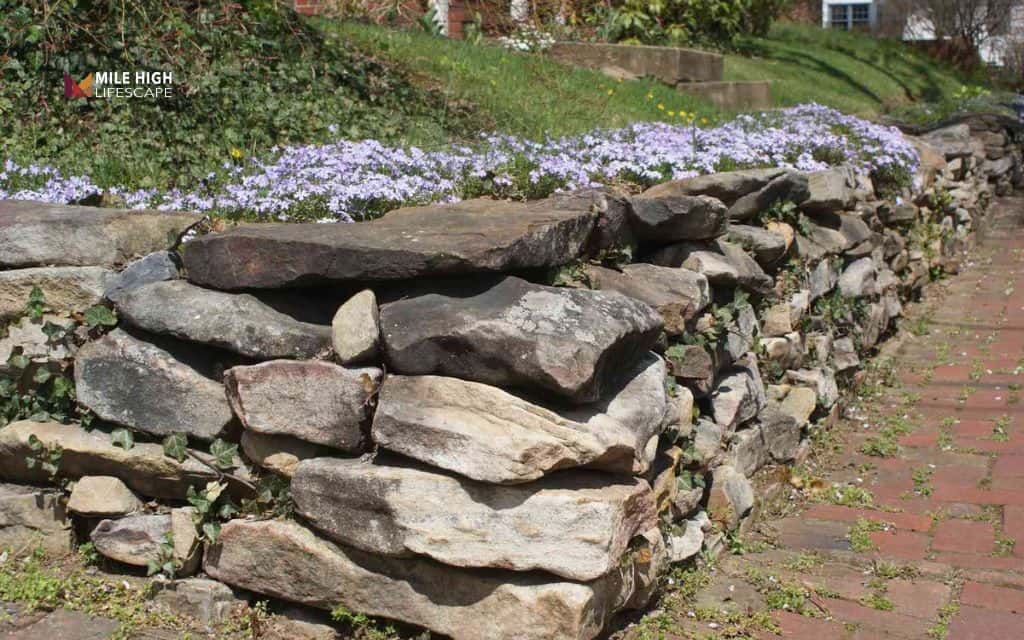
Manage minor grade changes (6-18 inches) without full retaining walls by creating a flagstone landscape retention system.
Appropriate uses:
- Garden bed terracing
- Erosion control on gentle slopes
- Raised planting areas for better drainage
- Transition zones between levels
This approach works for slopes up to 2:1 and heights under 18 inches. Steeper or higher applications require engineered retaining walls.
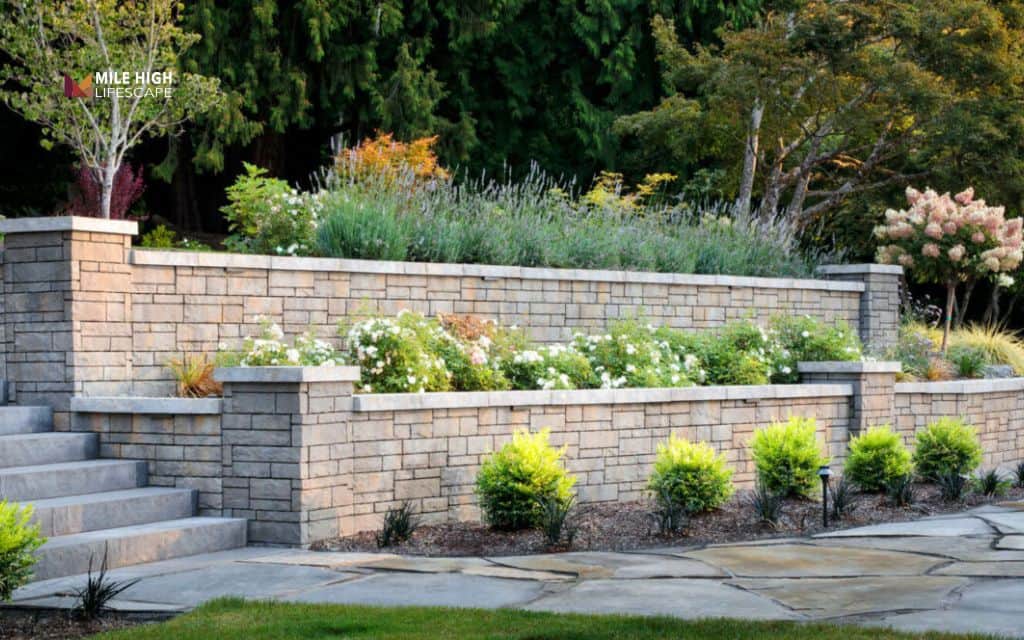
Flagstone patio with raised planters
Combine hardscape and softscape by building raised planter beds directly into your flagstones patio design.
Benefits:
- Eliminates bending for planting and maintenance
- Provides vertical interest to flat patios
- Creates natural seating edges
- Improves drainage for plant health
- Defines separate zones (dining, lounging, cooking)
Plant recommendations for raised beds:
- Herbs: Rosemary, thyme, oregano, sage (all cold-hardy in Denver)
- Perennials: Daylilies, catmint, salvia, coreopsis
- Small shrubs: Dwarf lilac, potentilla, spirea
- Annual color: Petunias, geraniums, calibrachoa
Flagstone lookouts & seating pads
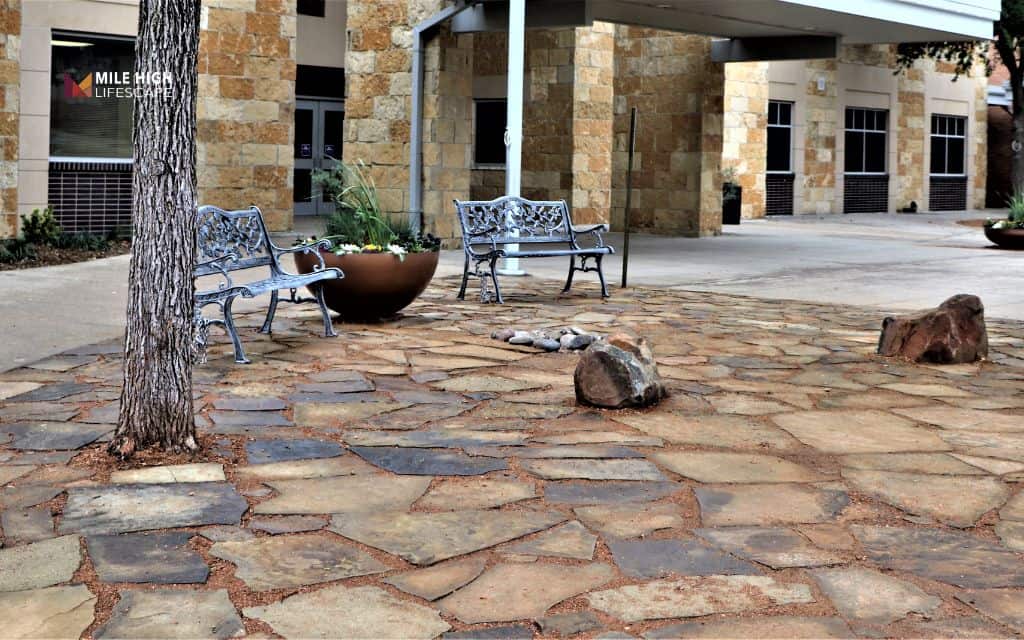
For properties with mountain or city views, create simple flagstone landscaping platforms that maximize your scenery with minimal material investment.
Design concept:
- Single large flagstone (3′ × 4′ or larger) or grouped stones
- Positioned for optimal view orientation
- Minimal grading and excavation
- Can accommodate small chairs or be large enough to sit directly on stone
Strategic placement ideas:
- Hillside overlooks
- Garden path destinations
- Quiet meditation spots
- Wildlife watching positions
- Sunrise/sunset viewing points
Best plants to pair with flagstone in xeriscape landscapes
Successful flagstone landscaping integrates thoughtful plant selection that complements the hardscape while thriving in Colorado’s challenging climate. Choose drought-tolerant species that soften stone edges, fill gaps naturally, and require minimal water once established.
Ground-hugging plants
- Dragon’s Blood sedum
- John Creech sedum
- Elfin thyme
- Woolly thyme
- Blue fescue (Festuca glauca)
- Pussytoes (Antennaria)
- Creeping phlox (Phlox subulata)
Mid-height perennials
- Chocolate flower (Berlandiera lyrata)
- Sunset hyssop (Agastache rupestris)
- Evening primrose (Oenothera speciosa)
- Penstemon (Penstemon strictus)
- Blanket flower (Gaillardia)
- Russian sage (Perovskia atriplicifolia)
- Winecups (Callirhoe involucrata)
- Catmint (Nepeta)
- Salvia
Tall accent plants
- Apache plume (Fallugia paradoxa)
- Rabbitbrush (Chrysothamnus nauseosus)
- Red yucca (Hesperaloe parviflora)
- Mexican feathergrass (Nassella tenuissima)
- Blue grama grass (Bouteloua gracilis)
- Dwarf lilac
- Potentilla
Conclusion
Flagstone landscaping offers Denver homeowners an unbeatable combination of natural beauty, proven durability, and water-wise design perfectly suited to Colorado’s challenging climate.
The 15 ideas we’ve explored demonstrate how versatile landscape flagstone can be when designed for Front Range conditions.
Ready to transform your landscape? Start small with a stepping stone path or garden border to develop your skills. For complex projects involving grading, drainage, or heavy stone placement, consult professionals who understand Denver’s unique soil and climate requirements.
At Mile High Lifescape, we specialize in flagstone landscape design and installation that delivers low-maintenance, water-efficient outdoor spaces. Our comprehensive landscape rock service includes material selection guidance, professional installation, base preparation, and design consultation to ensure your flagstone project thrives for decades.
Call us today to get free consultation!
Frequently asked questions (FAQs)
What are the disadvantages of flagstone?
Flagstone’s main drawbacks include higher upfront cost, irregular surfaces that can wobble patio furniture, and more difficult snow removal than smooth concrete. Installation is labor-intensive since each stone must be individually placed and leveled. Joints require maintenance every 2-4 years as material settles.
Can you just lay flagstone on dirt?
No. Laying flagstone directly on dirt in Denver will cause settling, frost heave, and weed problems within 1-2 seasons. Proper installation requires excavating 6-8 inches, installing 4-6 inches of compacted road base, adding 1-2 inches of leveling sand, then setting flagstone.
Is flagstone cheaper than pavers?
No, flagstone is 15-25% more expensive than pavers. Flagstone costs $350-$600 per ton for materials plus $10-$15 per square foot for installation versus pavers at $250-$400 per pallet and $8-$12 per square foot installation. However, for long-term homeowners, flagstone’s durability justifies the premium cost.
What are some flagstone walkway design ideas?
Popular flagstone walkway landscaping ideas for Denver include:
(1) straight paths with xeriscape borders using ornamental grasses
(2) curved stepping stones set 18-24 inches apart through ground covers like creeping thyme
(3) wide 4-5 foot formal entry paths with tight joints
(4) flagstones set in decomposed granite for desert-inspired aesthetics
(5) mixed-size mosaic patterns combining large and small stones
(6) split-level paths with integrated flagstone steps on slopes