The forestry mulching cost per acre typically ranges from a few hundred dollars to several thousand, depending on vegetation density, tree size, terrain, and property access. Light brush is generally less expensive to clear, while dense growth, rocky ground, or steep slopes can increase the price significantly.
In this guide, Mile High Lifescape breaks down typical 2026 pricing, key cost factors and what to consider when estimating a forestry mulching project.
How Much Does Forestry Mulching Cost Per Acre?
For 2026, a practical planning range for forestry mulching is about $500 to $2,500 per acre for light to moderate clearing. Dense vegetation, larger trees, challenging terrain, or extensive processing can increase the price to $3,000 to $6,000 per acre or more.
| Property Condition | Estimated Cost Per Acre |
| Light brush and undergrowth | 500–1,500 |
| Moderate brush and small trees | 1,500–2,500 |
| Dense vegetation and larger trees | 2,500–4,000 |
| Heavy growth or difficult terrain | 3,000–6,000+ |
Forestry Mulching Cost By Acreage
Total acreage affects both the project price and the effective cost per acre. Using common per-acre planning ranges, a project might look roughly like this:
| Area To Clear | General Planning Range |
| ¼ acre | 500–1,000+ |
| ½ acre | 500–1,500+ |
| 1 acre | 500–2,500+ |
| 2 acres | 1,000–5,000+ |
| 5 acres | 2,500–12,500+ |
Small projects do not always scale directly with acreage. Even a quarter-acre job requires equipment transportation, unloading, setup, operator time, and cleanup, so many contractors use minimum project or mobilization charges.
Larger projects may offer a lower effective cost per acre because those setup expenses are spread across more land. However, acreage alone does not guarantee a lower price. Five acres of dense trees can cost much more than five acres of light brush.
Forestry Mulching Cost Per Hour Vs. Per Acre
Typical forestry mulching prices per hour are around $150 to $300, although heavy vegetation, larger equipment, and more demanding terrain can move rates higher.
Per-acre pricing is usually easier when:
- Property boundaries are clear.
- Vegetation density is relatively consistent.
- The contractor can estimate production accurately.
- Access and terrain are predictable.
Hourly pricing may make more sense when:
- Only selected areas need clearing.
- Vegetation changes significantly across the site.
- There are many obstacles.
- Access is limited.
- The amount of work is difficult to determine in advance.
What Affects Forestry Mulching Prices?
The biggest difference in forestry mulching cost per acre between a low-cost project and an expensive one is usually not acreage. It is the amount of work contained within each acre.
Vegetation Density And Tree Size
Dense brush, vines, and larger trees take longer to process than light grass or scattered saplings, increasing the cost per acre. Larger trunks may also require multiple passes or separate removal. For isolated limbs rather than heavy vegetation, a tree branch removal service may be more appropriate.
Terrain And Ground Conditions
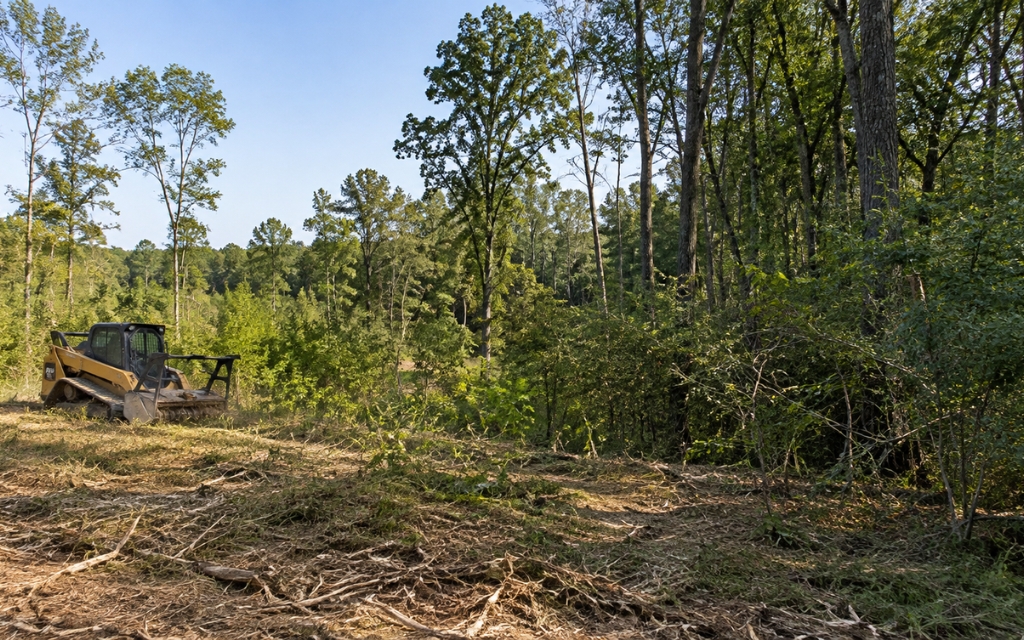
Work tends to move faster on level, firm ground than on steep, rocky, or wet terrain. Difficult surfaces can reduce machine speed and increase operating time. Where slopes also create erosion or drainage concerns, retaining walls may help support the finished landscape.
Property Access And Equipment
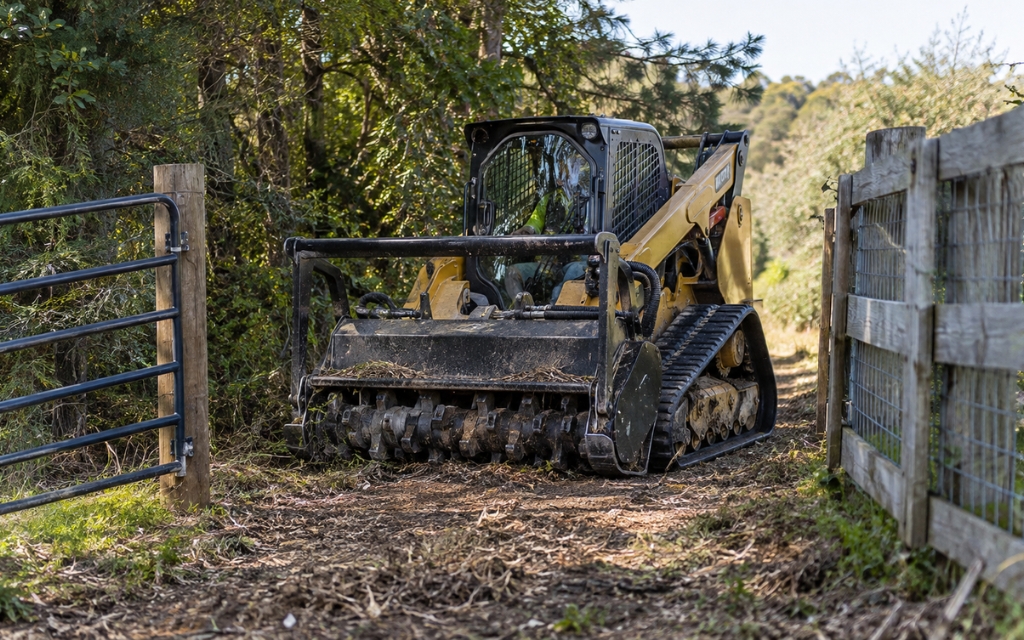
Easy equipment access can keep a project moving efficiently, while narrow entrances, fences, tight spaces, or soft ground may slow setup and operation. Machine size also affects productivity. After clearing, areas with rocky or low-water conditions may be suitable for landscape rock installation.
Project Size And Scope
A simple brush-clearing job usually costs less than work that includes larger trees, repeated passes, stump reduction, grading, or additional site preparation. Defining the final result before requesting quotes makes it easier to compare pricing accurately.
What Is Included In Forestry Mulching Cost?
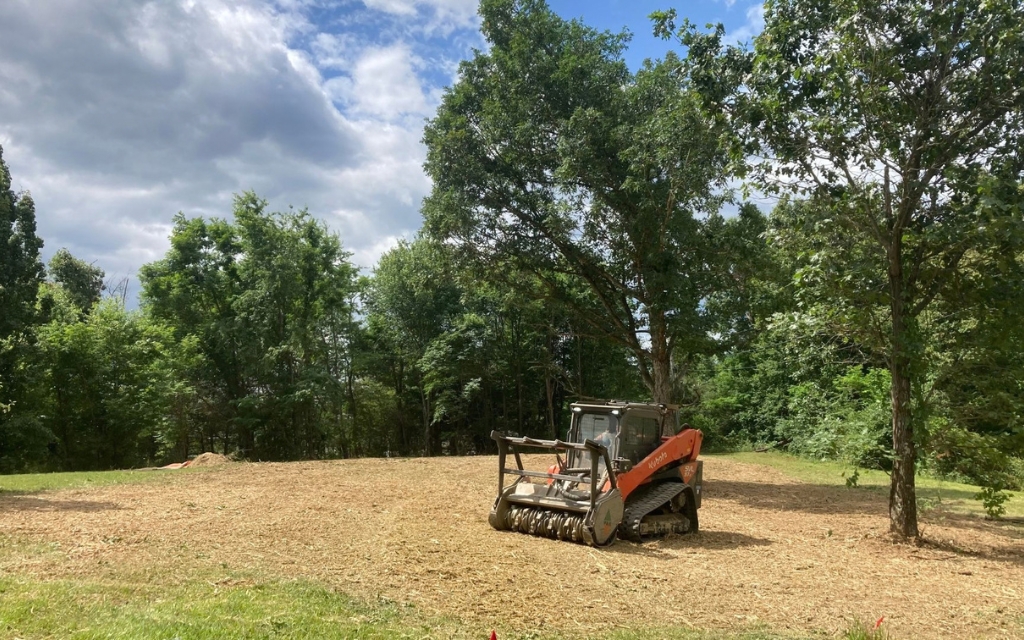
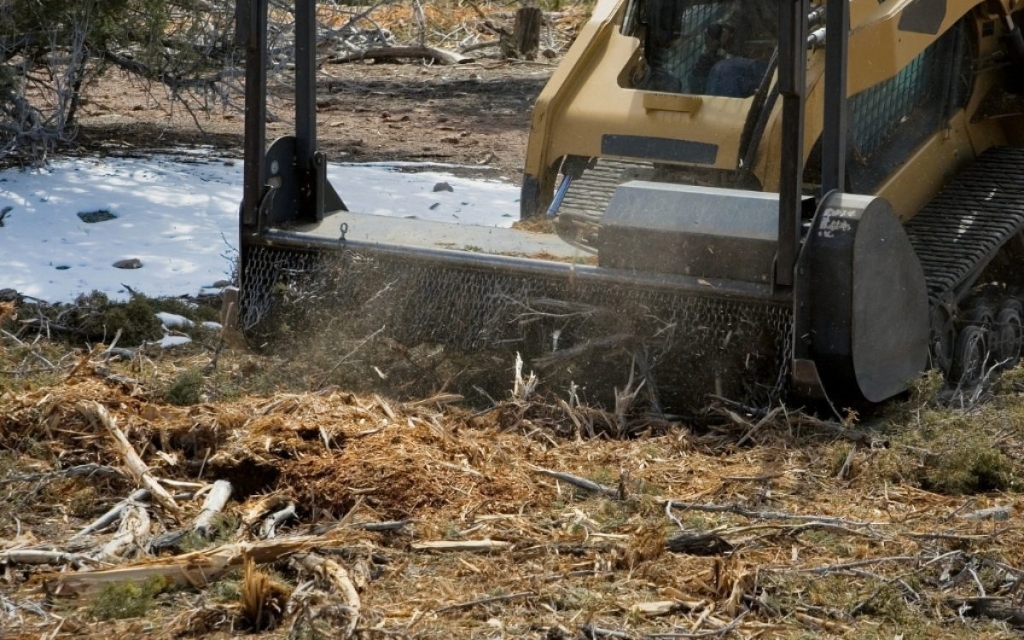
A standard forestry mulching quote usually covers the machine, operator, and processing of suitable vegetation within the agreed work area. Brush, saplings, and smaller woody growth are typically cut and mulched on site, so there is often less material to haul away.
The exact scope can vary, however. Large tree removal, stump extraction, grading, debris hauling, permits, or erosion control may be charged separately and affect the forestry mulching cost per acre. Before comparing quotes, it is worth checking what is included rather than looking at the total price alone.
Forestry Mulching Cost Per Acre In Colorado
The forestry mulching cost per acre in Colorado can vary considerably from one property to another. A relatively open Front Range lot may be straightforward to access, while foothill or mountain properties often involve steeper slopes, rocky ground, tighter access, and denser vegetation.
These conditions can reduce machine productivity and increase the time needed per acre. For this reason, local pricing is usually more accurate when based on an on-site assessment rather than a statewide average.
If clearing is only the first stage of a larger outdoor project, Mile High Lifescape also provides professional landscaping services in Denver for homeowners who want to improve the space after vegetation has been managed.
How To Estimate Your Forestry Mulching Cost
A reliable forestry mulching cost per acre estimate starts with understanding the actual conditions of your property before requesting quotes.
- Measure the actual work area
One acre contains 43,560 square feet. Measure only the section that needs clearing rather than using the total property size.
- Evaluate the vegetation
Consider how dense the growth is and whether the area contains light brush, thick shrubs, saplings, or larger woody vegetation. Tree size and quantity can significantly affect working time.
- Walk the terrain
Look for slopes, rocks, wet ground, ditches, structures, or other obstacles that may slow machinery and increase the overall cost.
- Review equipment access
Check whether machinery can reach the work area easily. Narrow gates, fences, trees, or tight spaces may require smaller equipment or additional setup time.
- Decide what you want afterward
Basic forestry mulching may be enough if the goal is simply to reduce overgrowth. If the area will later become a lawn, garden, patio, or planting bed, include those improvements in the overall budget.
For Colorado homeowners interested in a lower-water landscape after clearing, xeriscape landscaping can be a practical alternative to conventional turf.
- Compare the same scope
Before comparing estimates, check whether each quote includes mobilization, equipment and operator time, stump treatment, debris handling, grading, cleanup, and any additional hourly charges.
Using the same project scope makes it much easier to compare the forestry mulching cost per acre accurately from one estimate to another.
Forestry Mulching Vs. Landscape Mulch Installation
The two services sound similar, but forestry mulching and landscape mulch installation serve completely different purposes.
| Forestry Mulching | Landscape Mulch Installation |
| Clears existing vegetation | Adds material to an existing landscape |
| Uses heavy forestry machinery | Uses bark, wood chips, or other landscape mulch |
| Processes brush and trees | Covers prepared soil and planting beds |
| Usually priced by acre or machine time | Usually priced by material and installation area |
| Used for overgrown or wooded land | Used around plants, trees, and garden beds |
Professional Mulch Installation In Denver
Once a landscape has been cleared or refreshed, properly installed mulch can help protect the soil, retain moisture, reduce weed pressure, and give planting beds a cleaner, more finished appearance.

Mile High Lifescape provides professional Mulch Installation for homeowners across the Denver Metro area, with recommendations based on the condition of the property, planting layout, and long-term maintenance needs.
With over 20 years of experience, the Mile High Lifescape team focuses on practical, well-finished landscaping rather than one-size-fits-all solutions. Whether you are refreshing existing beds or completing a larger outdoor improvement, the team can help determine the right mulch placement and coverage for the space. For a project estimate, call (303) 877-9091 or email hello@milehighlifescape.com.
Final Thoughts
A more accurate forestry mulching cost per acre starts with the conditions on the ground. Brush density, tree size, terrain, machine access, and the level of clearing required all affect production time and overall cost. Evaluating these factors before requesting a quote gives you a much more reliable estimate and helps keep the project scope clear from the start.
Frequently Asked Questions
How Much Does Forestry Mulching Cost Per Acre?
The forestry mulching cost per acre typically ranges from about $500 to $2,500, while dense vegetation or difficult terrain can raise the price to $3,000 to $6,000+ per acre.
How Much Does Forestry Mulching Cost Per Hour?
Hourly rates commonly range from $150 to $300, depending on the machine, operator, vegetation, and site conditions.
How Many Acres Can A Forestry Mulcher Clear In A Day?
A forestry mulcher may clear roughly 1 to 3 acres per day under favorable conditions. Dense trees, rocks, slopes, and limited access can reduce productivity.
Does Forestry Mulching Remove Stumps?
Not completely. Forestry mulching can reduce some stumps near ground level, but full stump and root removal usually requires separate equipment.