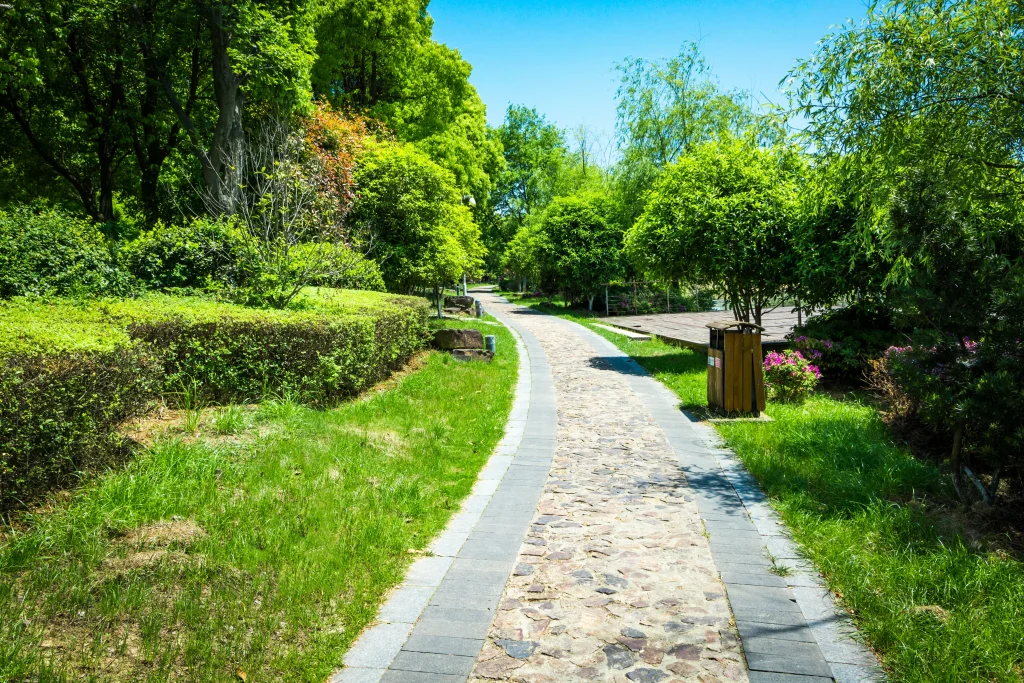
Front yard landscaping with pots and rocks offers a smart, flexible, and water-wise approach to upgrading your home’s curb appeal without committing to high-maintenance lawns or expensive hardscape construction projects.
Why does this approach work so well in Denver specifically? Our unique Front Range climate creates several challenges that make traditional landscaping frustrating:
- Clay soil that’s difficult for in-ground planting and proper drainage
- Intense sun exposure combined with sudden hailstorms and harsh freeze-thaw cycles
- Water restrictions becoming stricter each year, plus rising irrigation costs
- Time constraints for busy homeowners who want beautiful outdoor spaces without spending every weekend on maintenance
Front yard landscaping with pots and rocks addresses all these pain points simultaneously.
Design basics before you start
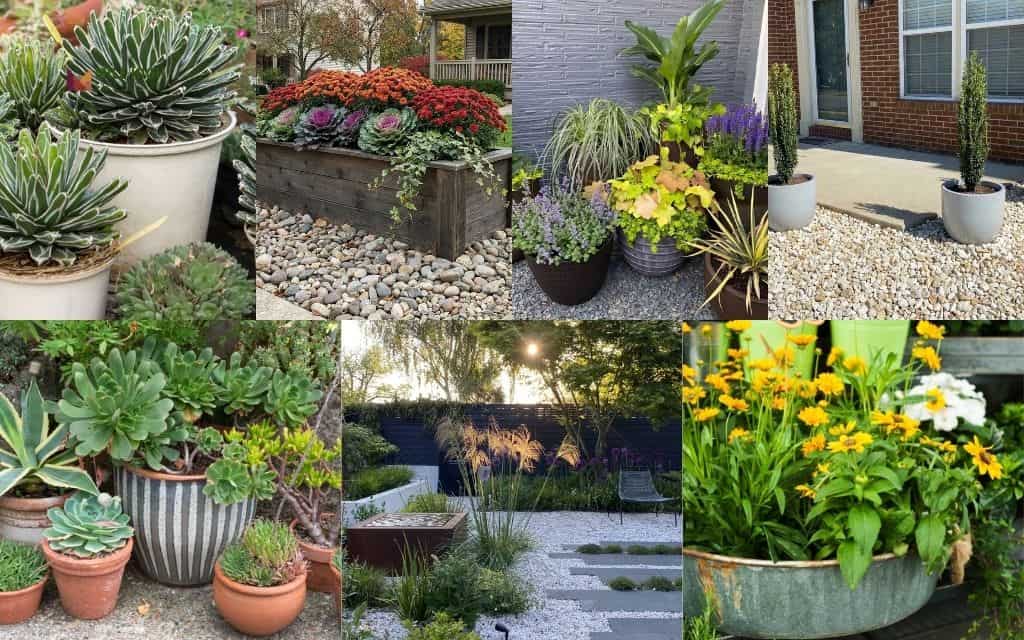
Choosing the right pots for front yard use
Container selection determines success or failure in Denver’s climate. Materials matter more here than in milder regions.
- Concrete planters: They provide weight that resists wind. Modern concrete containers come in numerous finishes that complement any home style. The downside: heavy to move and typically cost more upfront.
- Fiberglass containers: Quality fiberglass resists UV damage and temperature swings. Look for double-walled designs with insulation. These protect plant roots from Denver’s temperature extremes.
- Metal planters: Powder-coated steel or aluminum adds contemporary style. Metal conducts temperature, so roots face more stress during summer heat and winter cold. Use these near entryways or covered areas where temperature swings are moderate.
Drainage holes rank as non-negotiable. Every container needs drainage to prevent root rot. Denver’s clay-heavy soil already challenges drainage. Waterlogged containers compound the problem. Drill additional holes if needed.
Best rocks for front yard landscaping
Rock selection impacts both aesthetics and function. Different rock types serve different purposes in Denver landscapes.
- Pea gravel consists of small, rounded stones about ¼ to ⅜ inch in diameter. This material shifts easily, making it poor for walking surfaces. However, pea gravel excels for drainage applications and creates soft visual texture. It allows water to percolate while suppressing weeds.
- Crushed granite provides a more stable surface than pea gravel. Angular edges lock together, resisting displacement. Decomposed granite (DG) compacts to form firm paths. This material suits high-traffic areas around planters.
- River rock ranges from 1 to 6 inches. Smooth, rounded stones add natural character. Larger river rock works near building foundations to prevent soil splash. Smaller river rock surrounds container plantings. Color options include tan, gray, rust, and mixed earth tones.
Modern homes pair well with black or charcoal rock and sleek containers. Traditional homes benefit from natural tan or brown tones. Mountain-style architecture matches well with mixed river rock in earth tones.
Front yard landscaping with pots & rocks – 18 proven ideas
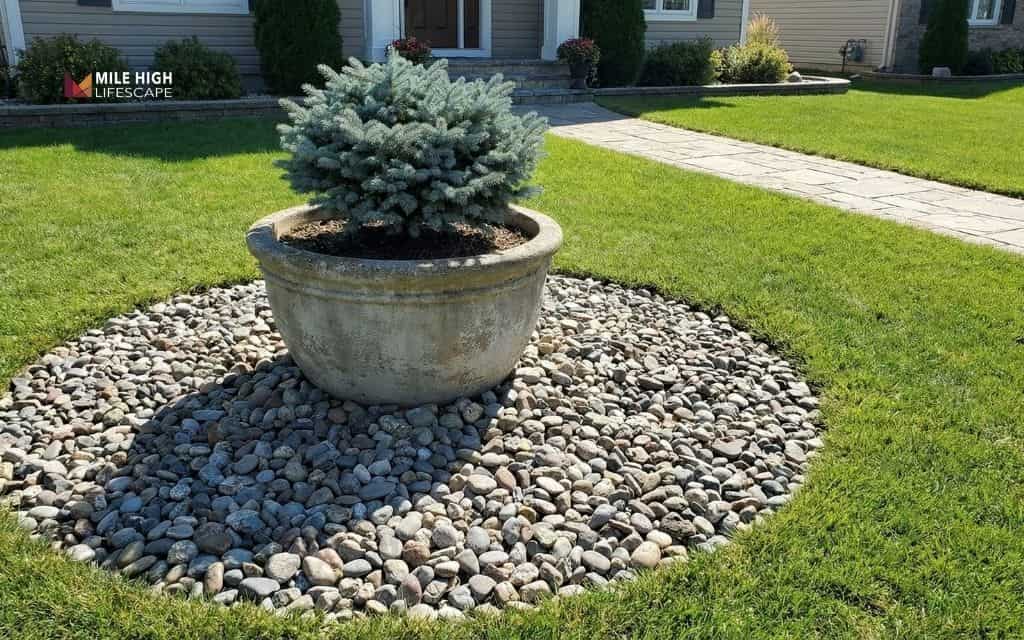
Front yard centerpiece with large pots on a rock base
Materials needed:
- One 24-36″ diameter statement planter (concrete or large fiberglass)
- 2-3 cubic yards decorative rock
- Landscape fabric
- Dwarf evergreen or ornamental grass
Create a circular or oval rock bed 8-10 feet in diameter with your oversized planter slightly off-center. This asymmetry creates visual interest while the rock base unifies the space and eliminates the mud zone that typically surrounds lawn focal points.
Plant with a single architectural specimen like ‘Hameln’ dwarf fountain grass or a compact blue spruce for year-round structure.
Symmetrical planters framing the front door
Materials needed:
- Two matching planters 18-24″ diameter
- Evergreen foundation plants (dwarf boxwood, dwarf Alberta spruce)
- Seasonal accent flowers
- Small decorative rock perimeter (optional)
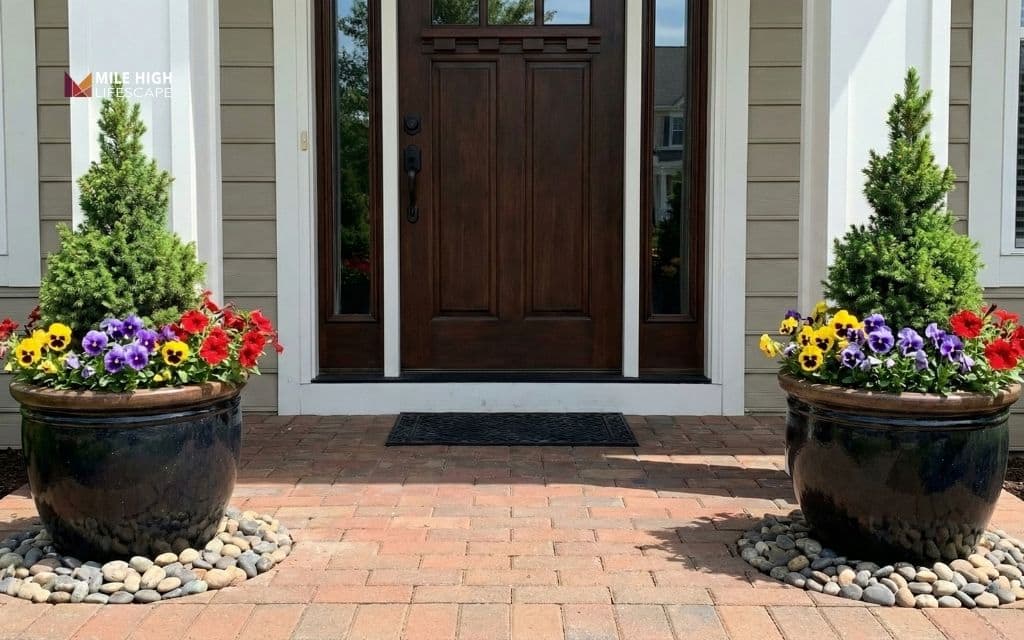
Symmetry creates instant sophistication. Place matching planters equidistant from your front door – typically 3-4 feet on each side. Plant with evergreen anchors that provide structure year-round, then tuck in seasonal color annuals for spring and fall interest.
Consider adding a 12-inch band of river rock around each planter base to define the space and prevent grass encroachment.
Container garden front yard replacing a strip of lawn
Materials needed:
- 5-7 planters in graduated or matching sizes
- 3-4 cubic yards crushed granite or pea gravel
- Landscape fabric
- Mix of evergreen and perennial plants
Line up planters in a rhythmic pattern – alternating sizes or consistent spacing – set into a continuous gravel bed. This approach works for awkward narrow spaces where lawn struggles and maintenance is difficult. Space planters 2-3 feet apart to allow each plant to shine.
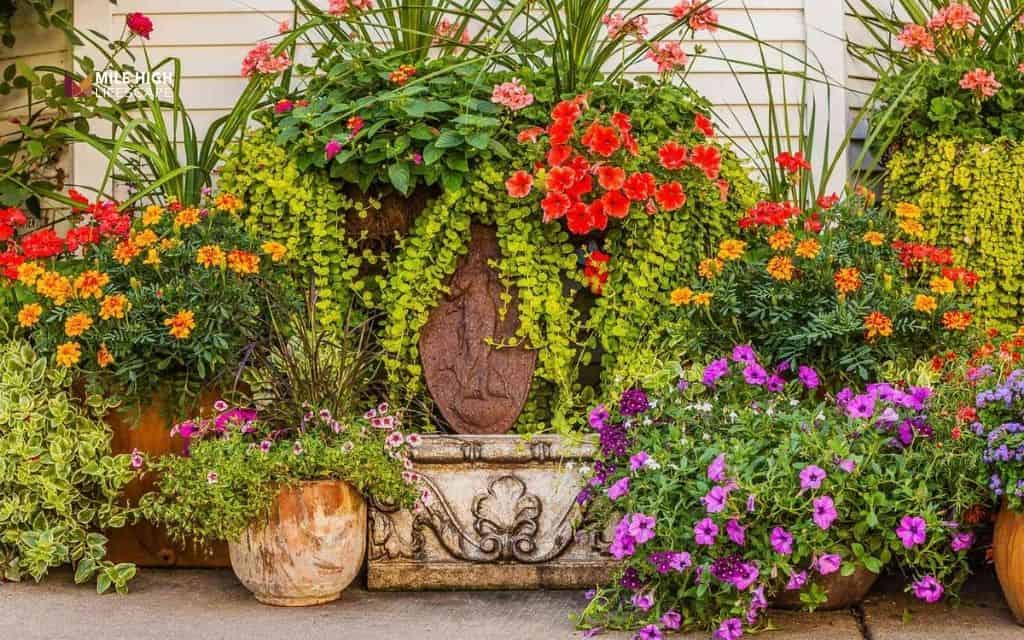
Front yard planter boxes with rock mulch
Materials needed:
- Custom-built or prefab raised planter boxes
- Decorative rock for surrounding area
- Quality container mix soil
- Drought-tolerant plant selection
Raised planter boxes paired with rock groundcover create the cleanest possible aesthetic. The elevation change adds dimension, the boxes contain soil for optimal plant performance, and the surrounding rock eliminates all weeds and maintenance.
Build boxes 18-24 inches tall using composite decking material, cedar, or powder-coated metal to match your home’s style. Fill the space between boxes with crushed granite for a cohesive, professional appearance.
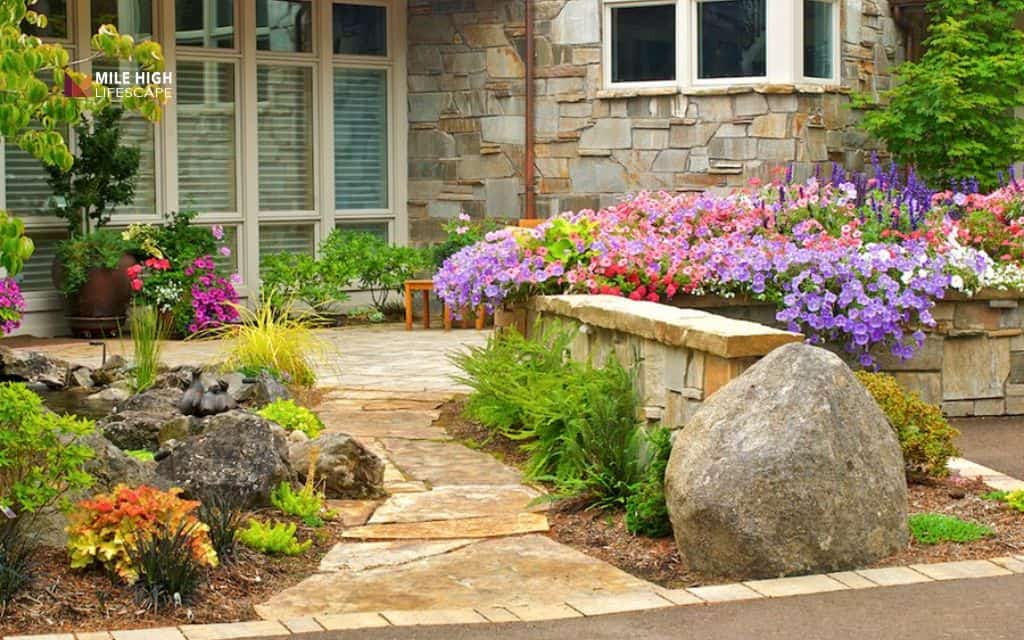
Low-water native plants in decorative pots
Materials needed:
- Mix of 3-5 planters in earth tones
- Native plant selection: penstemon, lavender, Apache plume, blue grama grass
- Buff or tan colored river rock
- Decomposed granite base
Front yard landscaping with pots and rocks reaches peak efficiency when you combine water-wise native plants with stone mulch.
The rocks reflect heat back to sun-loving natives, reduce soil temperature fluctuation, and slow evaporation significantly. Group planters in odd numbers (3, 5, or 7) and vary heights from 12″ to 24″ for natural visual flow.
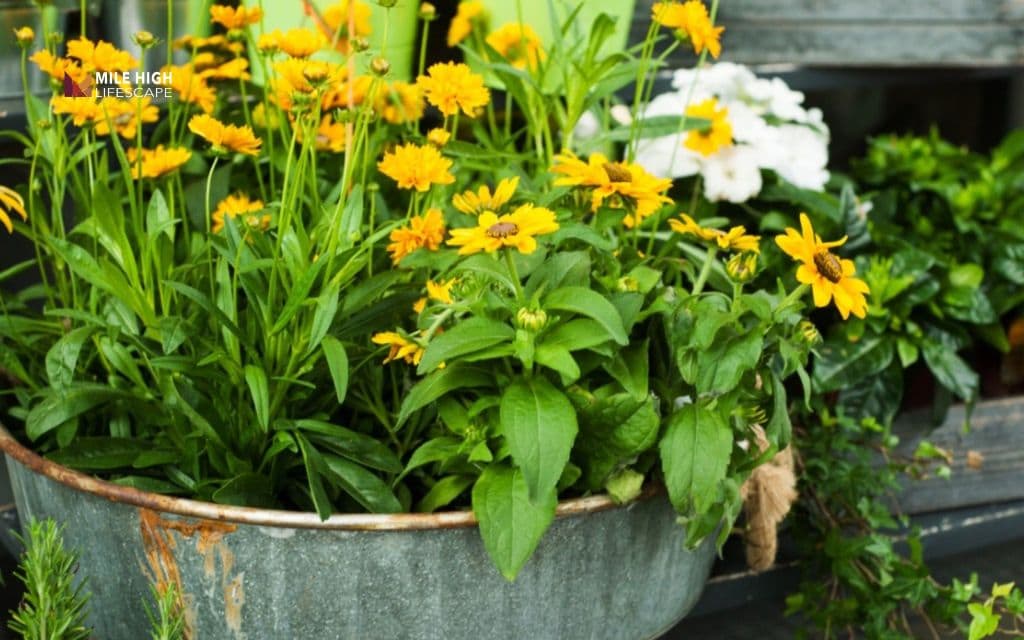
Modern front yard with concrete pots & black rock
Materials needed:
- Sleek concrete planters in geometric shapes
- Black lava rock or polished black stone
- Architectural plants: yucca, agave (cold-hardy varieties), ornamental grasses
- Landscape fabric
Create dramatic contrast with pure black rock and light grey concrete containers. This high-impact combination requires minimal maintenance while delivering maximum curb appeal.
Keep plant selections simple to maintain the clean, uncluttered aesthetic modern design demands. Install LED uplighting beneath key planters for stunning nighttime drama.
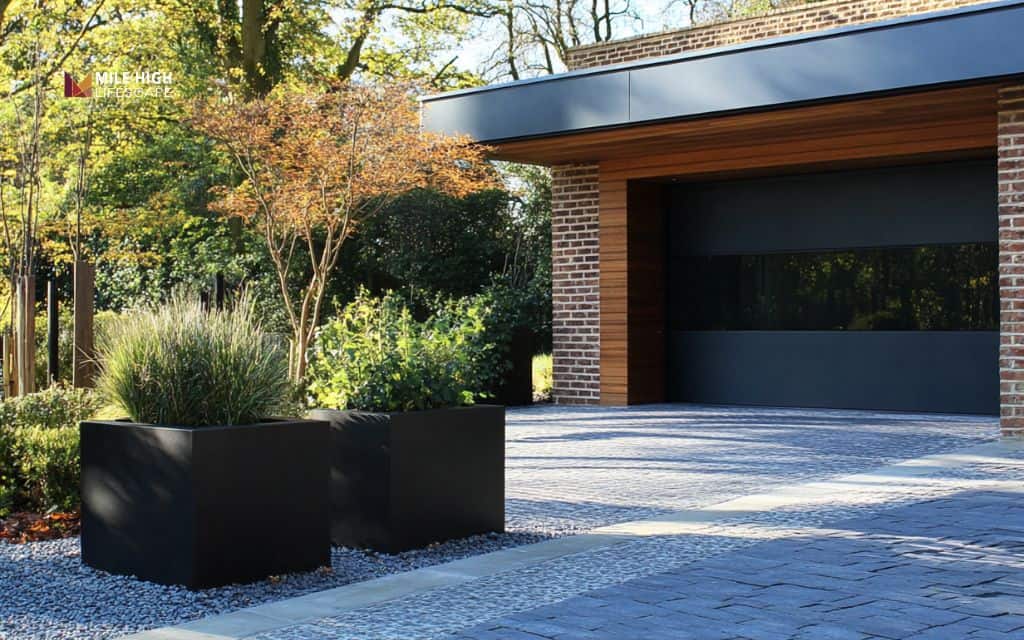
Front lawn planters as “islands” in gravel
Materials needed:
- 4-6 large planters (24″ diameter minimum)
- 8-12 cubic yards crushed granite or decomposed granite
- Plant mix: evergreens, ornamental grasses, seasonal perennials
- Edging material to define gravel area
This strategy lets you eliminate lawn sections gradually without committing to complete xeriscape transformation.
Create “islands” of planters grouped in clusters of 2-3, spaced throughout your front yard and surrounded by flowing gravel beds. This breaks up boring, flat expanses while dramatically reducing water use and mowing time.
The containers add height variation that flat rock beds alone cannot achieve, creating visual interest from the street.
Flower pots in front of house along walkways
Materials needed:
- 6-10 matching medium planters (14-18″ diameter)
- Flowering annuals and compact perennials
- Pea gravel or small river rock
- Linear planting layout
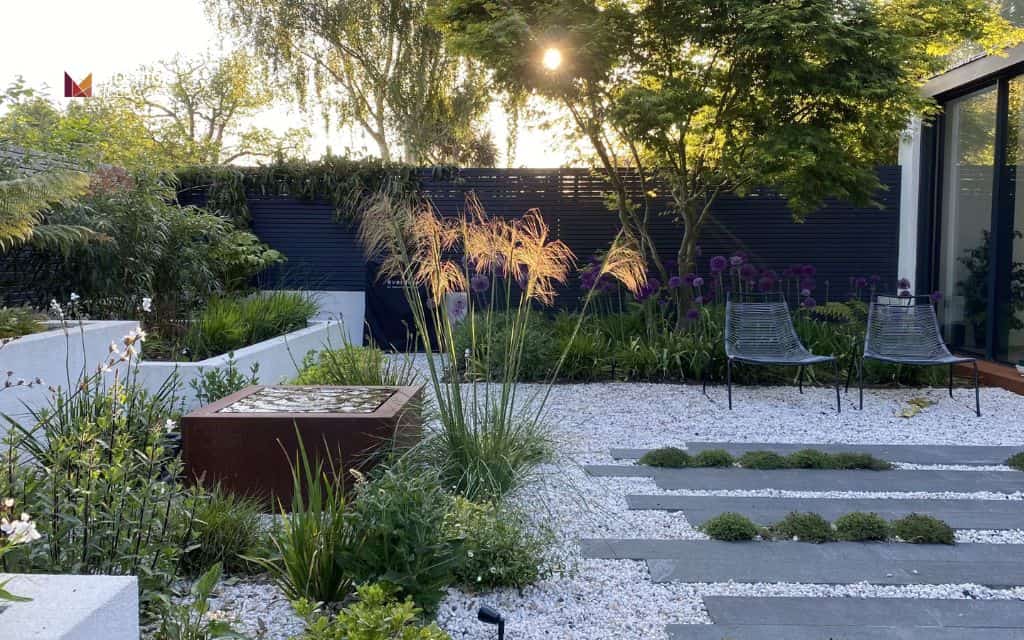
Line your walkway with evenly-spaced planters set into narrow gravel beds. This approach softens hard edges of concrete or pavers while providing clear visual guidance to your entrance.
The surrounding rock eliminates grass trimming nightmares along path edges. Choose pot colors that complement your front door and home exterior.
Mixed-height container garden with river rock
Materials needed:
- 3-5 planters in graduated sizes (12″, 18″, 24″ diameters)
- 2-3″ river rock in complementary colors
- Plant layers: tall grasses (back), mid-height shrubs (middle), low spillers (front)
- Decorative stone accent pieces
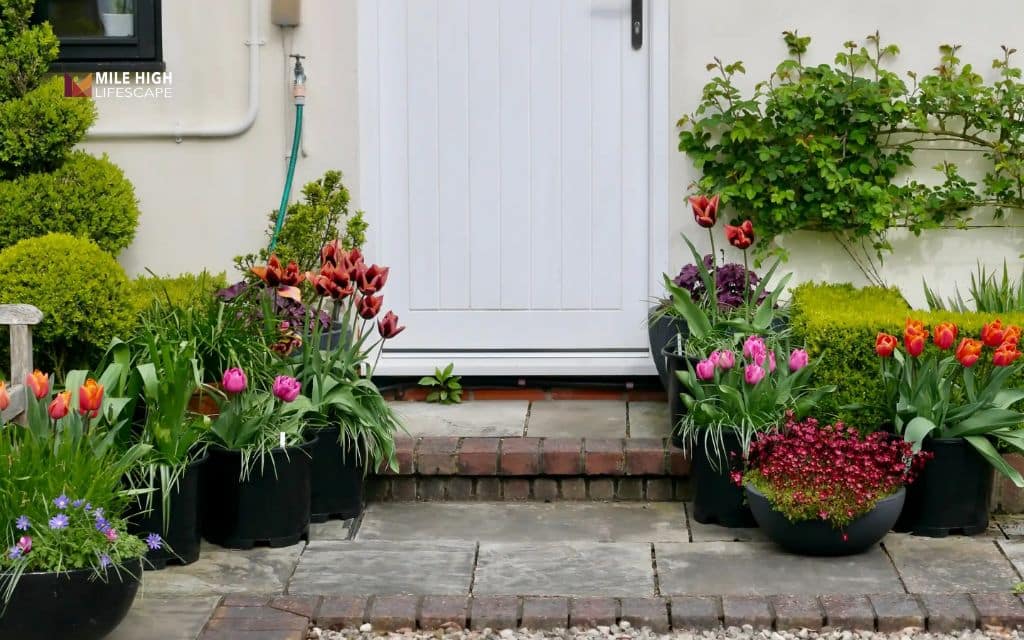
Create professional-quality depth by layering plant heights and planter sizes. Position your tallest planter in the back, medium planters in the middle and smallest containers in front with trailing plants like creeping thyme or sedum. Surround the entire grouping with 2-3 cubic yards of river rock to unify the composition and create defined boundaries.
Front yard planter box as a seasonal feature
Materials needed:
- One substantial planter box (36-48″ length)
- Rotation of seasonal plants (spring bulbs, summer annuals, fall mums, winter evergreen branches)
- Decorative rock base to anchor the display
- Drainage layer in bottom of box
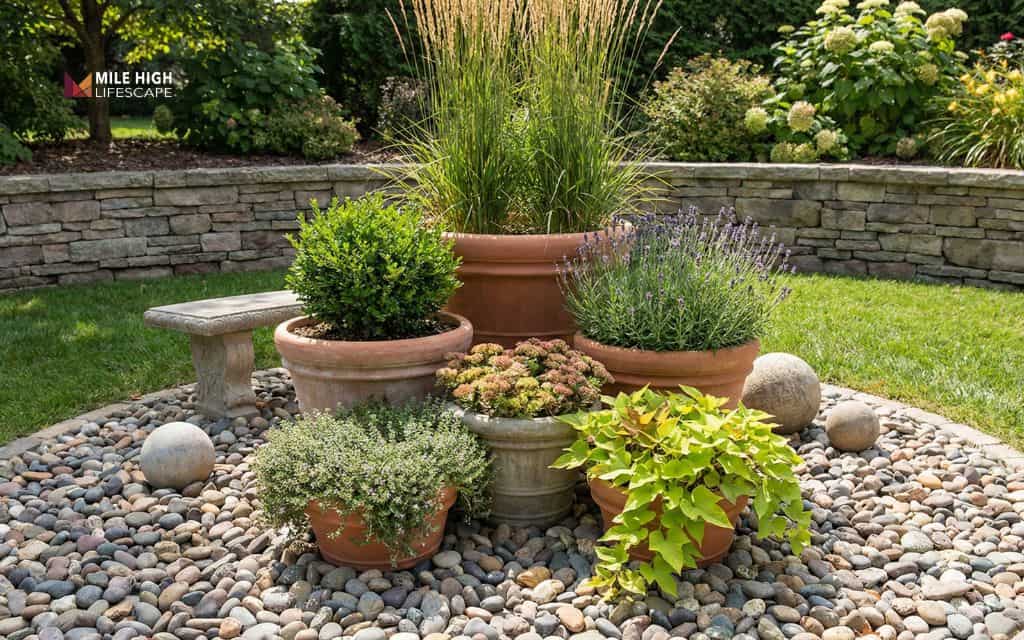
Invest in one high-quality, oversized planter box that becomes your seasonal showcase. Position it where it’s visible from the street and easily accessible for regular plant changes.
The surrounding rock bed keeps mud from splashing during watering and provides year-round structure even when you’re between seasonal plantings.
This single-planter strategy delivers maximum visual impact with minimal investment and maintenance.
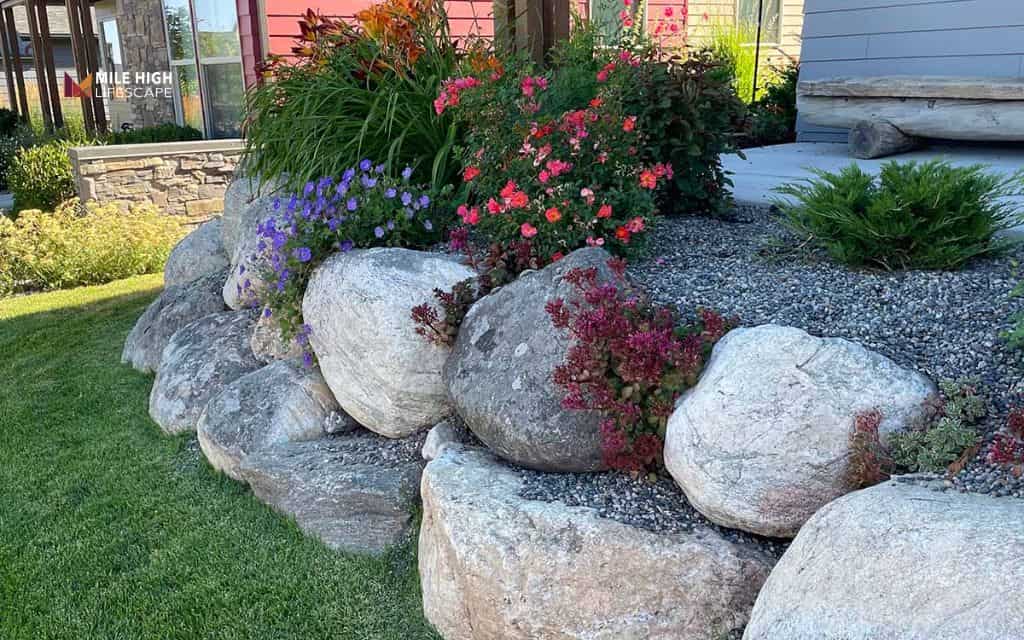
Corner yard pots with boulder accents
Materials needed:
- 2-4 large planters (20-30″ diameter)
- 2-3 accent boulders (18-36″ diameter)
- Crushed granite or decomposed granite
- Native plants suited to slopes
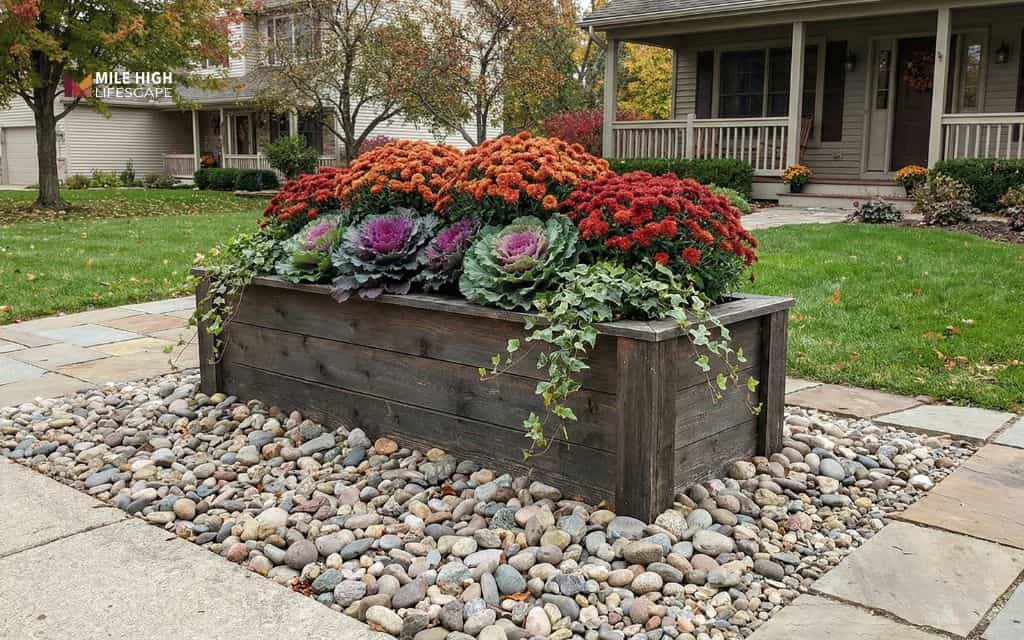
Corner yards often feel disconnected from the main landscape. Anchor these spaces by combining substantial planters with natural boulder accents.
Position boulders first to create visual foundations, then nestle planters between and around them. The rock base (crushed granite works best on slopes) prevents erosion while creating a cohesive design that ties awkward areas into your overall front yard landscaping with pots and rocks strategy.
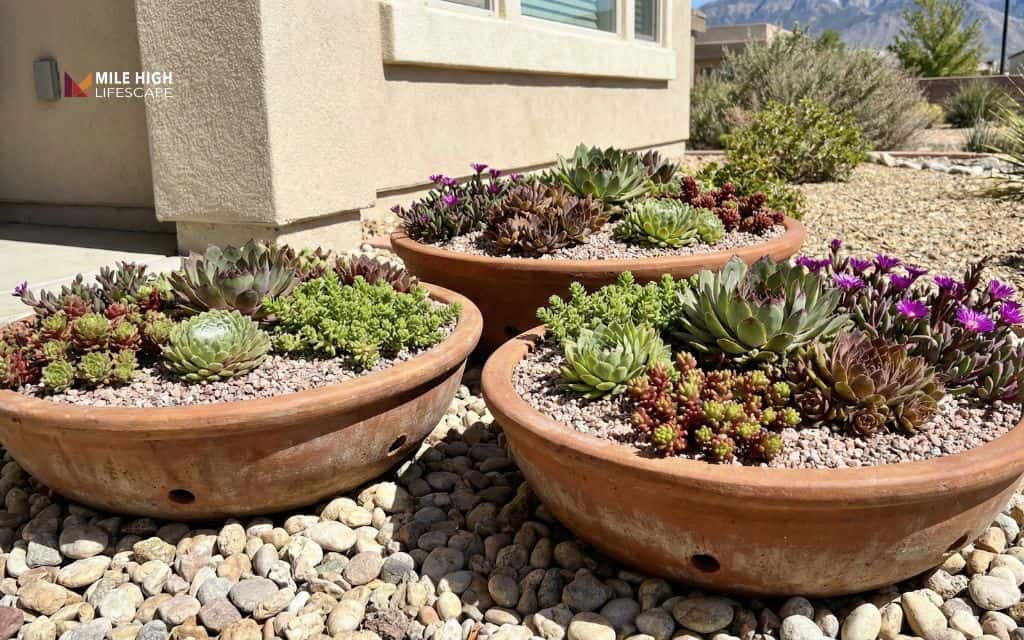
Drought-tolerant succulent containers
Materials needed:
- Wide, shallow containers with excellent drainage
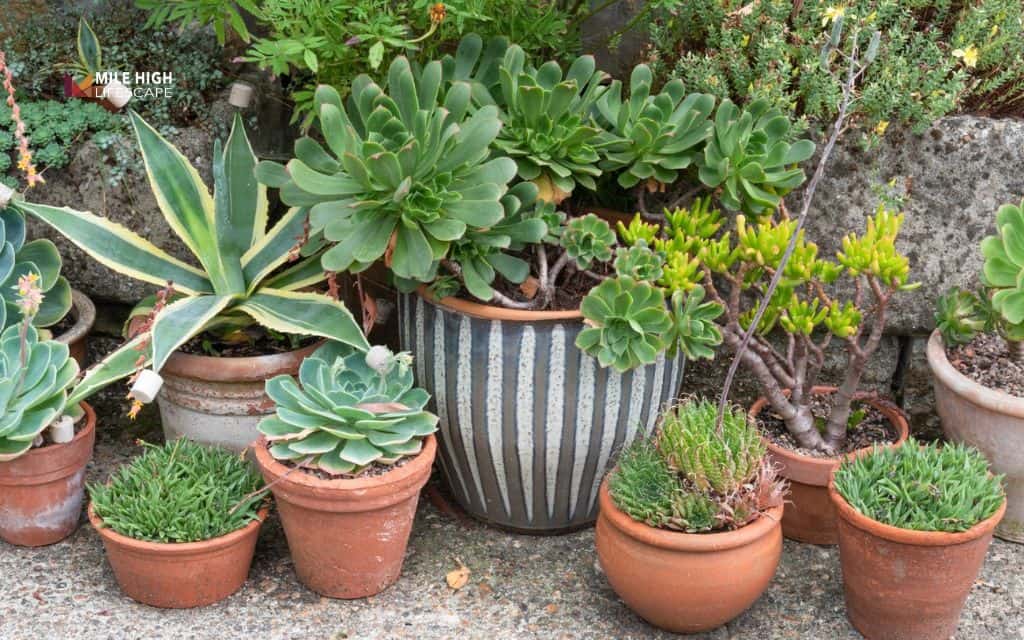
- Cold-hardy succulents: hens and chicks (Sempervivum), sedum varieties, ice plant
- Fine gravel or crushed granite top dressing
- Gritty, well-draining soil mix
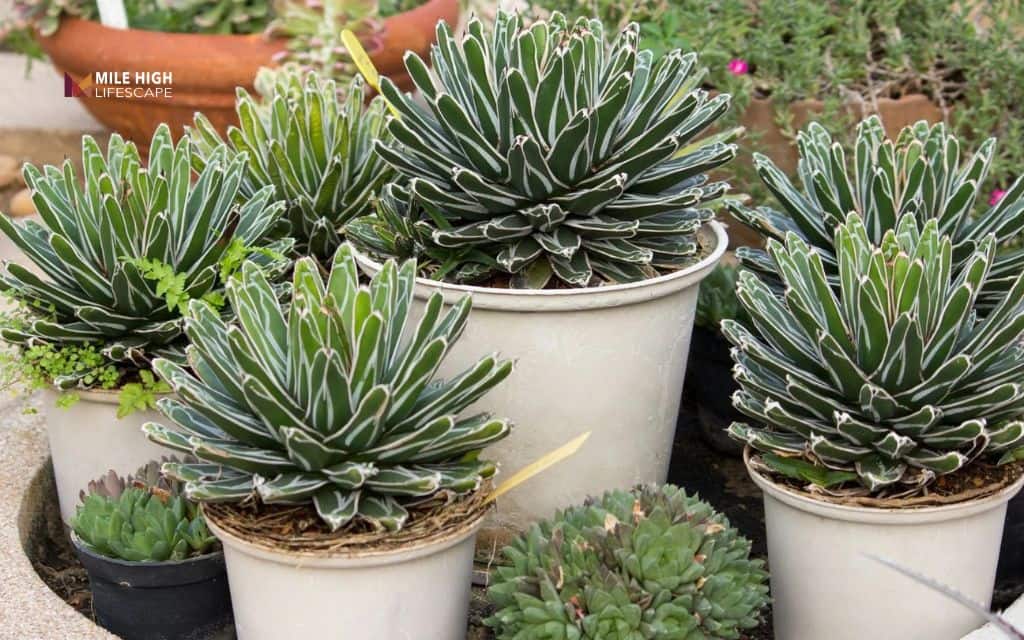
Succulents can survive Denver winters, but only specific cold-hardy varieties in protected locations. Plant and top-dress with 1 inch of fine gravel for finished appearance and moisture regulation.
Surround containers with light-colored rock that reflects additional heat these sun-lovers crave.
Move containers against the house foundation for winter or into an unheated garage if temperatures drop below -10°F for extended periods.
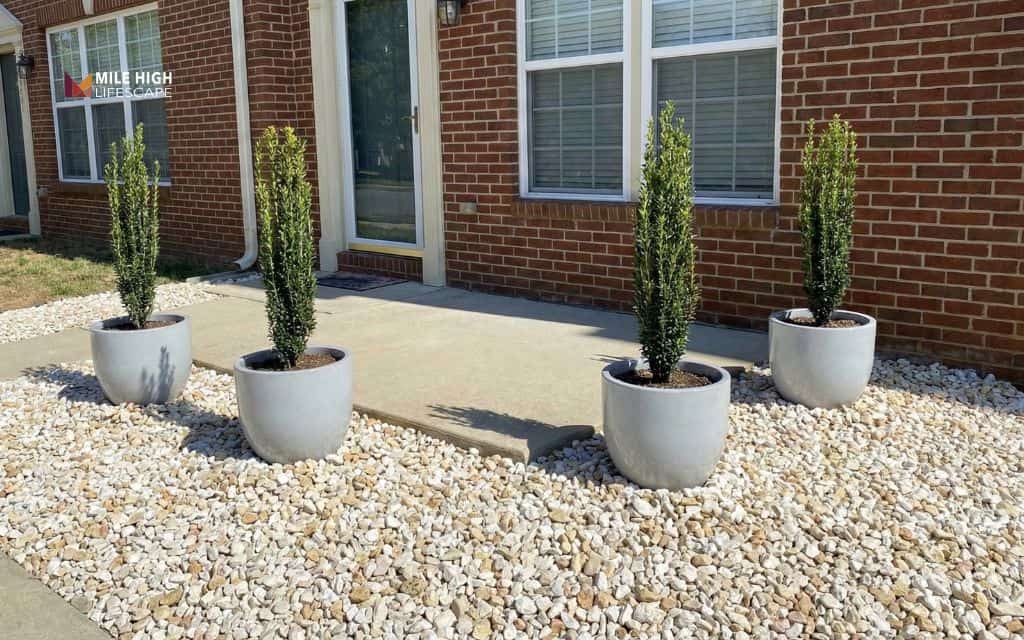
Small front yard container garden for townhomes
Materials needed:
- 3-4 compact planters (12-16″ diameter)
- Light-colored decorative rock (white, light grey, buff)
- Vertical plants that maximize limited ground space
- Minimal furniture-style layout
Small front yard container gardens succeed by embracing restraint.
Choose light-colored rocks to make the space feel larger and brighter. Select compact, vertical plants like ‘Sky Pencil’ holly or narrow columnar junipers that provide presence without consuming precious square footage.
Arrange planters in an L-shape along property edges rather than centering them, which preserves open space and makes the yard feel larger.
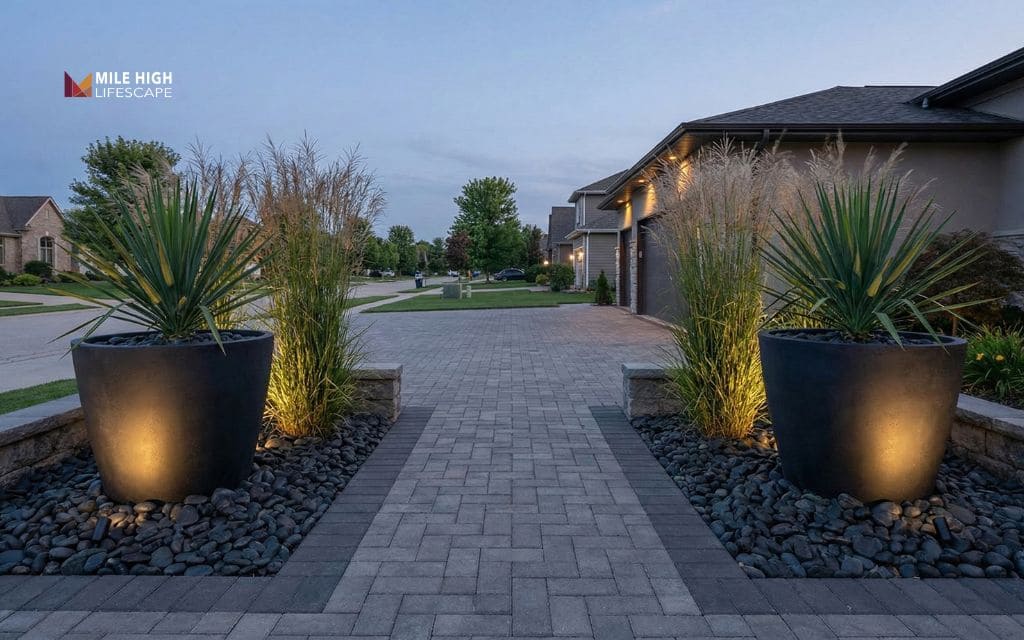
Entry statement with tall architectural plants
Materials needed:
- 1-2 extra-large planters (30-36″ diameter, 24-30″ height)
- Tall architectural plants: yucca, red yucca, tall ornamental grasses (6-8 feet)
- Dark contrasting rock (black, charcoal, deep grey)
- Spotlighting (optional but recommended)
Make a bold statement visible from blocks away.
Plant tall specimens like ‘Color Guard’ yucca or 6-foot miscanthus grasses in oversized containers, then surrounded with dark stone that creates dramatic contrast.
Position these entry statement plantings flanking your driveway or walkway where height makes maximum impact.
Front yard planters with rock borders
Materials needed:
- Multiple planters of consistent style
- Steel, aluminum, or composite edging
- Rock infill between planted areas
- Mix of perennials and evergreens
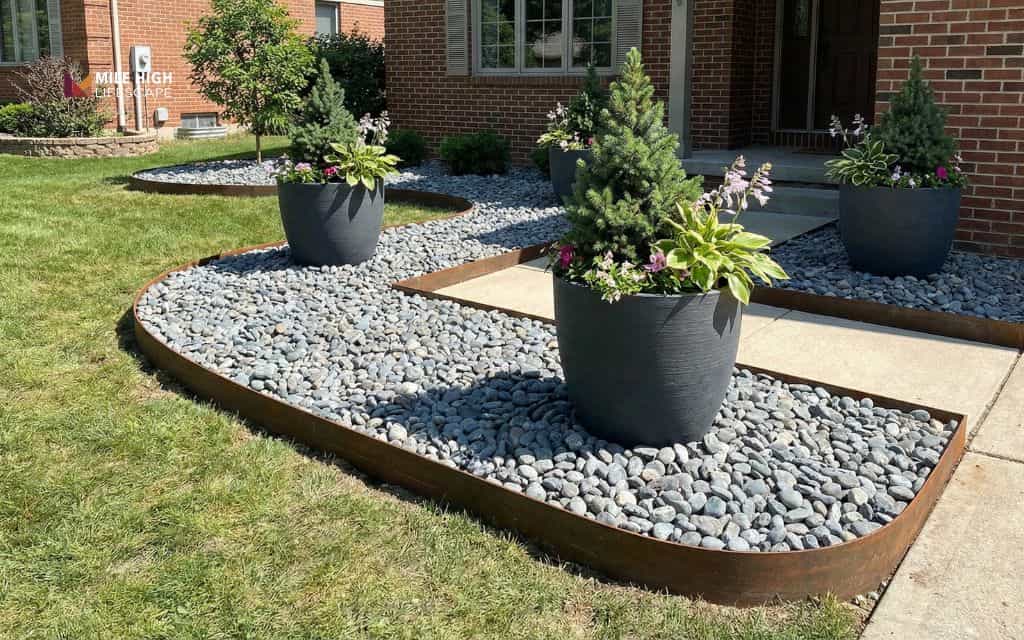
Create defined planting zones using intentional rock borders that separate containers from surrounding lawn or hardscape.
Install professional-grade edging (steel or aluminum) in curved or linear patterns, then infill with 3-4 inches of decorative rock. Nest planters within these defined rock beds at strategic intervals.
This approach prevents grass creep, eliminates string trimming headaches, and elevates the entire design. The borders make your front yard landscaping with pots and rocks look intentionally designed rather than randomly placed.
Budget-friendly grouped pots on pea gravel
Materials needed:
- 6-8 inexpensive planters in mixed sizes (plastic, resin, or budget fiberglass)
- Pea gravel (most affordable rock option)
- Basic landscape fabric
- Perennials that can be divided or relocated
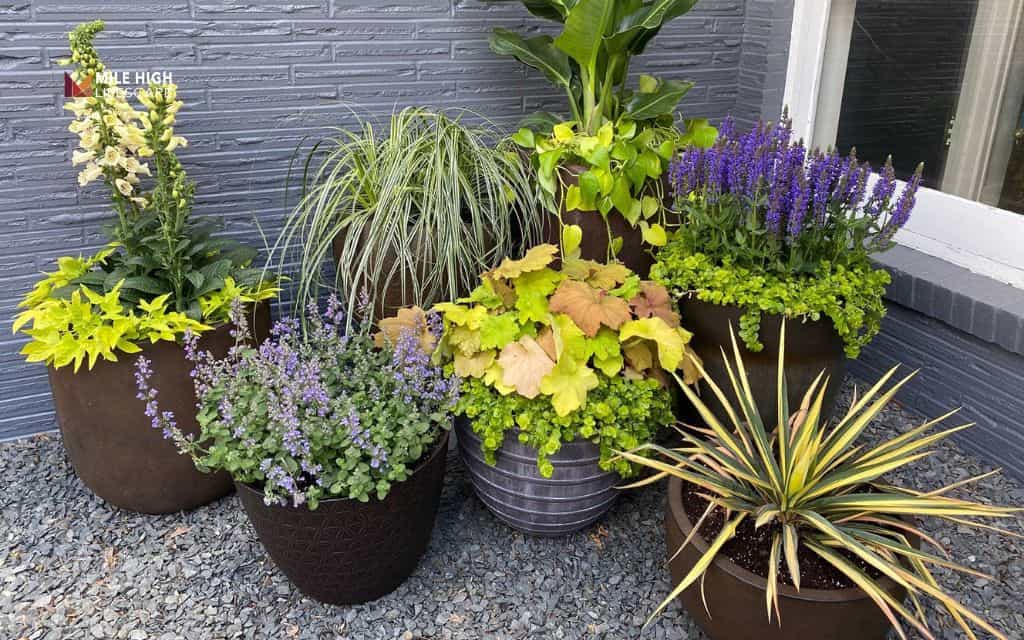
Start by grouping multiple smaller planters on a pea gravel base rather than investing in fewer large containers. This approach lets you experiment with arrangements and plant selections without significant financial commitment.
Front yard landscaping with potted plants + xeriscape base
Materials needed:
- Complete xeriscape base: landscape fabric, decomposed granite, decorative rock layers
- 4-8 planters integrated throughout
- Native plant selection for both containers and in-ground xeriscaping
- Professional-grade edging
The rock garden base provides year-round structure, dramatic texture, and water efficiency, while strategic containers add color flexibility, height variation, and seasonal interest that rocks alone cannot achieve.
Position planters at pathway intersections, design focal points, and transitions between different rock types or colors. This integration creates landscapes that blend hard and soft elements naturally.
Four-season front yard container design
Materials needed:
- Permanent planters with evergreen structure plants
- Rotation of seasonal accent plants
- Rock base that looks finished in all seasons
- Storage area for off-season plant materials
Design for continuous beauty by establishing evergreen anchors (dwarf conifers, boxwood, or broadleaf evergreens) that provide structure through all four seasons:
- Spring: tulips and pansies
- Summer: petunias and calibrachoa
- Fall: mums and ornamental kale
- Winter: cut evergreen branches and red twig dogwood stems
The surrounding rock provides permanent finished appearance regardless of what’s blooming, so your landscape never looks “empty” or neglected during transition periods between seasonal displays.
Best plants for front yard container gardens in Denver
Evergreen anchors
Evergreens provide structure when everything else dies back or goes dormant. These species handle Denver’s altitude and temperature swings:
- Dwarf blue spruce stays compact at 3-4 feet. Blue needles add color without flowering. This plant tolerates cold to -40°F and handles Denver’s intense sun.
- Rocky Mountain juniper offers numerous growth habits from upright to spreading. Native to Colorado, it requires minimal water once established and tolerates alkaline soil.
- Boxwood grows slowly, making it excellent for containers. Choose cold-hardy varieties rated to Zone 4 or 5. These survive Denver winters with minimal damage.
- Mugo pine creates a rounded form with dark green needles. Dwarf varieties stay under 4 feet for years. Pine fragrance releases on warm days.
Drought-tolerant perennials
These perennials thrive in Denver’s climate while tolerating container culture:
- Lavender requires excellent drainage. Use pots that dry quickly between waterings. Lavender survives winter in protected locations but may need replacing every 3-4 years.
- Russian sage blooms late summer with purple-blue flowers. Silver foliage reflects heat. Cut back hard each spring for fresh growth.
- Catmint produces purple-blue flowers spring through fall. It tolerates heat, drought, and poor soil. Shear after first bloom for rebloom.
- Yarrow comes in yellow, white, pink, and red. Flat flower clusters attract butterflies. Fernlike foliage stays attractive when plants aren’t blooming.
- Black-eyed Susan self-sows but not aggressively in containers. Yellow-gold flowers bloom summer into fall. This native tolerates clay soil and drought.
- Salvia offers blue, purple, or pink spikes throughout summer. ‘May Night’ and ‘Caradonna’ perform reliably in Denver.
Annuals for seasonal color
Annuals provide intense color for single seasons. Replace them as needed:
- Spring: Pansies tolerate late frosts and snow. They bloom through cool weather, declining when summer heat arrives. Johnny-jump-ups (Viola tricolor) reseed enthusiastically and return annually.
- Summer: Zinnias handle heat and drought once established. They bloom continuously with deadheading. Petunias spread quickly, filling containers. Wave petunias tolerate heat better than standard types.
- Fall: Ornamental kale and cabbage improve as temperatures drop. Colors intensify after frost. They remain attractive through early winter.
Plants to avoid in outdoor containers
- Impatiens require constant moisture and struggle in Denver’s dry air. They also fail in full sun – the most common front yard condition.
- Hostas need significant shade and moisture. While they tolerate containers, most front yards receive too much sun.
- Tropical hibiscus can’t survive winter outdoors. Moving large containers inside and out seasonally proves impractical for most homeowners.
- Most succulents (except Sempervivum, Sedum, and Delosperma) lack winter hardiness. They’ll die at first hard freeze.
Common mistakes with front yard pots & rocks
- No drainage in pots: Water needs somewhere to go. Containers without drainage holes drown plants. Roots sitting in water rot quickly in Denver’s clay-heavy potting mixes.
- Using the wrong pot material: Denver’s freeze-thaw cycles destroy certain materials. Terracotta and unglazed ceramic crack when absorbed water freezes and expands.
- Overcrowding containers: Beginning gardeners often plant too densely. Plants need room to grow. Overcrowded containers create competition for water, nutrients, and light.
- Ignoring winter protection: Container plants face more temperature stress than in-ground plants. Roots in pots freeze solid during cold snaps. Even hardy plants suffer root damage.
Conclusion
Front yard landscaping with pots and rocks solves Denver’s lawn challenges. You cut water use by 60-80%. Weekend mowing ends. Bare patches disappear. Curb appeal improves immediately.
This approach works with Denver’s climate. Containers bypass clay soil problems. You control what grows where. Rocks suppress weeds and hold moisture. The design adapts as your needs change. Start with one container grouping. Watch how your yard responds. Add more areas over time as the budget allows.
Professional design saves money on mistakes and speeds results. For nearly two decades, Mile High Lifescape has been proudly serving the Denver Metro area as the go-to landscape company. Call (303) 877-9091 or email hello@milehighlifescape.com to learn more about our landscape rock service.
Frequently asked questions (FAQs)
What are the best planters for front yards in Denver?
Concrete, fiberglass, and powder-coated metal resist freeze-thaw damage. Concrete lasts longest but weighs most. Fiberglass offers lighter weight with good durability. Metal works in protected spots. Avoid terracotta – it cracks when water freezes inside the clay. All containers must have drainage holes.
Do pots freeze and crack in winter?
Quality containers resist freeze damage. Concrete, fiberglass, and thick plastic survive Denver winters. Terracotta and ceramic crack because absorbed water expands when frozen. Move containers to protected areas or wrap them for extra protection. Drainage holes reduce freeze risk by letting excess water escape.
How often do container plants need watering?
Summer requires daily watering. Spring and fall need watering 2-3 times weekly. Winter needs monthly watering during dry spells. Large containers hold more water and need less frequent watering. Check soil 2 inches deep – water when it feels dry.
Are front yard container gardens HOA-friendly?
Most HOAs approve containers since they improve appearance. Check your HOA rules first. Some limit container styles or rock colors. Get written approval before removing large lawn areas.
How long does a pots-and-rocks landscape last?
Rock lasts decades. Refresh it every 3-5 years as it settles. Concrete containers last 15-20 years. Plastic needs replacement after 5-8 years. Perennials last 3-5 years in containers. Annuals need yearly replanting. Expect 10-15 years before major updates.