A sloped yard is one of those outdoor spaces that tends to stop homeowners in their tracks. The uneven ground, the runoff after a rainstorm, the patchy grass that never quite takes hold on steep terrain. It can feel more like a problem than a possibility.
But here is the thing: hillside landscaping ideas are some of the most exciting design opportunities. With the right approach, that challenging incline can become a layered garden retreat, a rock feature, a productive vegetable terrace, or an elevated outdoor living space.
The key is knowing which solutions fit your slope, your budget, and your maintenance style. This guide walks through 20 practical, beautiful ideas for landscaping a sloped backyard or front yard, plus planning tips, erosion advice, and answers to the questions homeowners ask most.
Why hillside landscaping can be beautiful
Flat yards offer simplicity, but slopes offer something flat land simply cannot: dimension. A hillside naturally creates visual layers, draws the eye upward, and gives your landscape a sense of depth and drama that no amount of flat-ground planting can replicate.
Well-executed hillside landscaping ideas turn grade changes into design features:
- Terraced beds create distinct planting zones
- Stone retaining walls add structure and texture
- A winding garden path invites exploration
- A waterfall feature converts problematic runoff into a soothing focal point
Even a simple slope covered in low-growing groundcovers can look intentional and lush rather than neglected.
Things to consider before landscaping a hillside
Before committing to any hillside landscaping ideas for your sloping backyard or front yard hill, take time to evaluate the slope itself.
Slope steepness
Slope grade determines which solutions are even possible:
- Gentle grades of less than 15% are generally mowable and easy to plant
- Moderate slopes between 15 and 33% benefit most from groundcovers, shrubs, or low retaining walls
- Steep slopes above 33% almost always require some form of structural intervention: terraces, retaining walls, or professionally designed drainage
Knowing your slope before you plan saves time, money, and a lot of frustration.
Drainage and erosion
Water runoff is the biggest challenge any hillside presents. On bare or sparsely planted slopes, rainfall accelerates downhill, stripping away topsoil, washing out mulch, and depositing sediment where it does not belong.
Good drainage planning means directing runoff away from structures, using terraces to slow the flow, and keeping soil anchored with plant roots, mulch, or stone. Skipping drainage planning early almost always means expensive repairs later.
Sun exposure
The direction your slope faces matters more than many homeowners realize:
- South-facing slopes receive intense sunlight and dry out quickly, making drought-tolerant plants a smart choice
- North-facing slopes stay cooler and hold moisture longer, suiting shade-loving plants like ferns and hostas
- East and west-facing slopes fall somewhere in between
Matching plant selection to sun exposure is one of the most reliable ways to ensure long-term success on a hillside.
Maintenance level
Be honest about how much maintenance you want to take on. A terraced vegetable garden on a slope looks wonderful, but it requires regular watering, weeding, and harvesting. A slope planted with native groundcovers and topped with mulch asks for very little once established.
The best hilly backyard ideas are the ones you will actually maintain. Choose a design level that fits your lifestyle, not just your Pinterest board.
20 hillside landscaping ideas to transform any slope
1. Build terraced garden beds
Terracing is one of the most effective and beautiful approaches to managing a steep slope. By cutting the hillside into a series of level platforms and supporting each step with a retaining wall, you create multiple usable planting zones from what was previously difficult terrain.
Each terrace acts like a small flat bed, which makes planting, watering, and harvesting far easier. Terraced gardens work well for flowers, ornamental shrubs, herbs, or edible crops.
2. Use stone retaining walls for structure
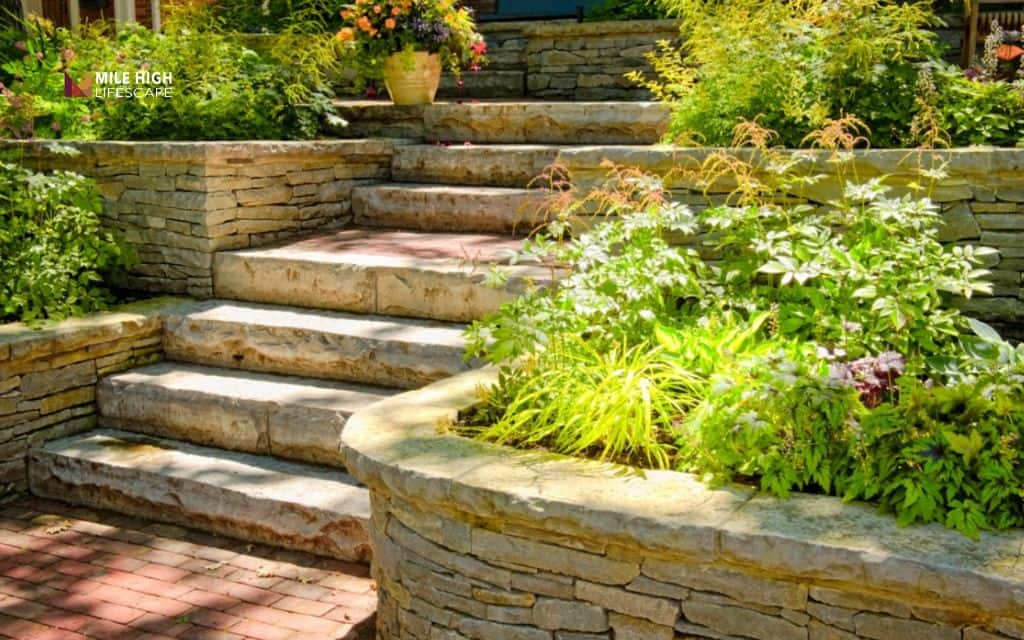
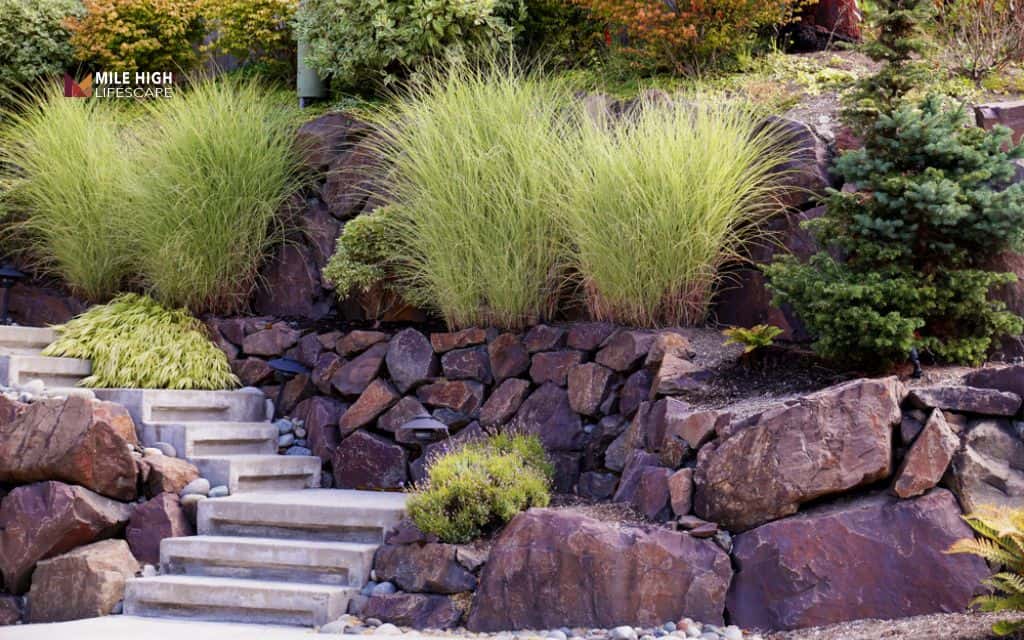
Stone retaining walls are a foundation element of hillside landscaping that serves both practical and aesthetic roles.
- Structurally, they hold back soil, prevent erosion, and allow planting on steep grades
- Visually, they bring natural texture, earthy color, and a sense of permanence to the landscape
Natural fieldstone, limestone, and granite all work well for retaining walls. Dry-stacked walls, where stones are fitted together without mortar, allow water to drain through the gaps, which reduces hydrostatic pressure and extends the life of the wall.
For steeper slopes or taller walls, a professional assessment is worth the investment.
3. Add brick walls and stairways
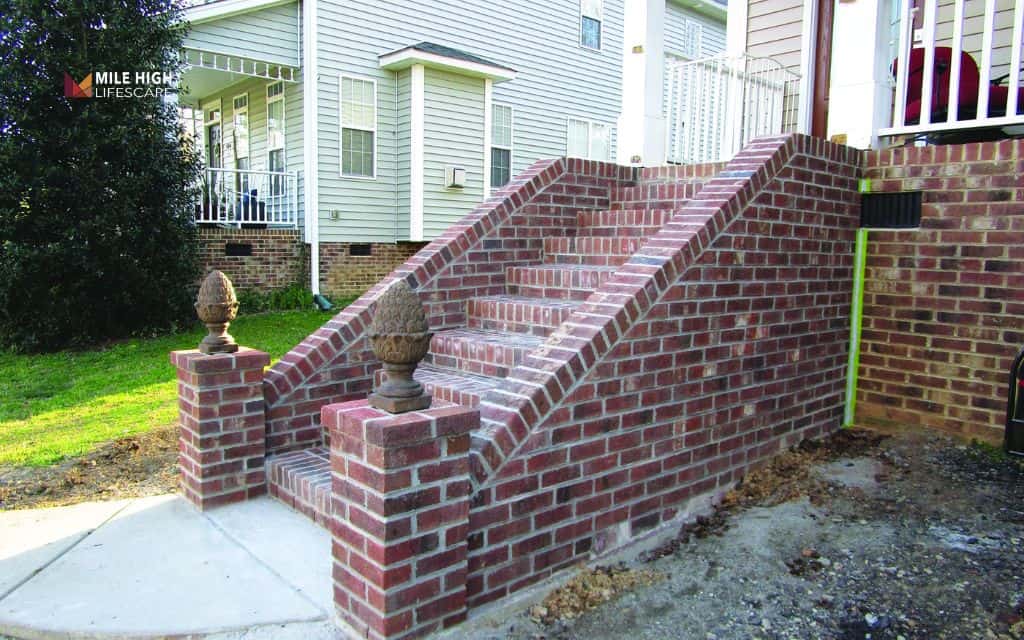
For front yard hill landscaping ideas with a more formal, traditional look, brick walls and stairways bring elegance and accessibility to a sloped landscape.
Brick offers uniform color and clean lines, making it a natural fit for homes with classic architectural styles. Combined with wide stair landings, brick walls create a welcoming entry that guides visitors safely up or down the slope.
The key to making brick stairways feel inviting rather than imposing is proportion. Steps should be wide, with a generous tread depth and a comfortable riser height. Flanking the stairs with low plantings or wall-mounted lights adds warmth and softens the hardscape with living texture.
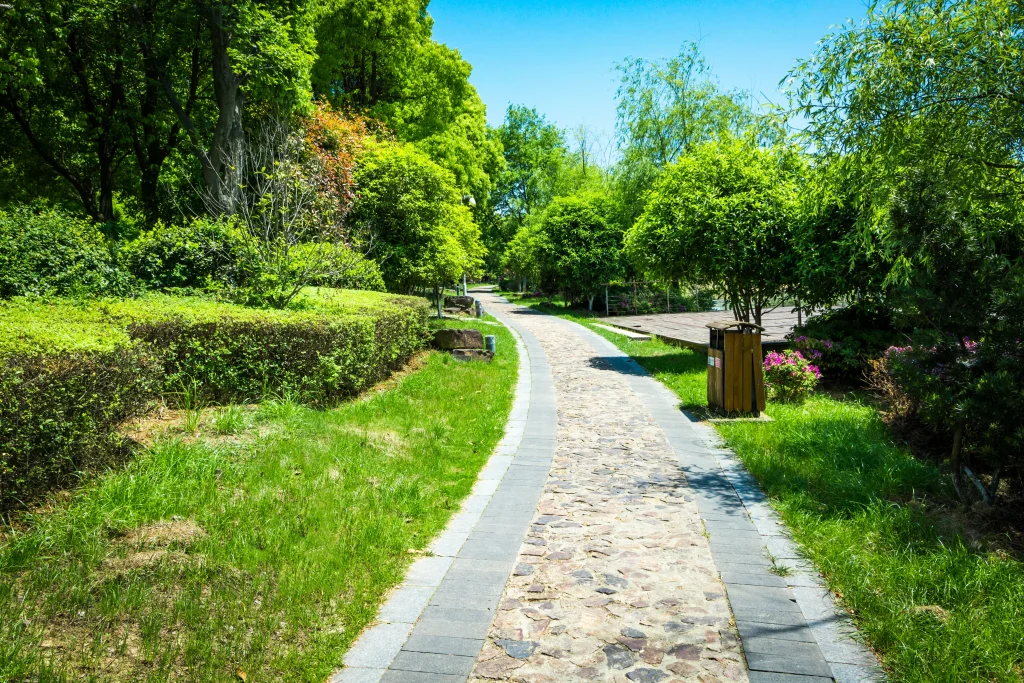
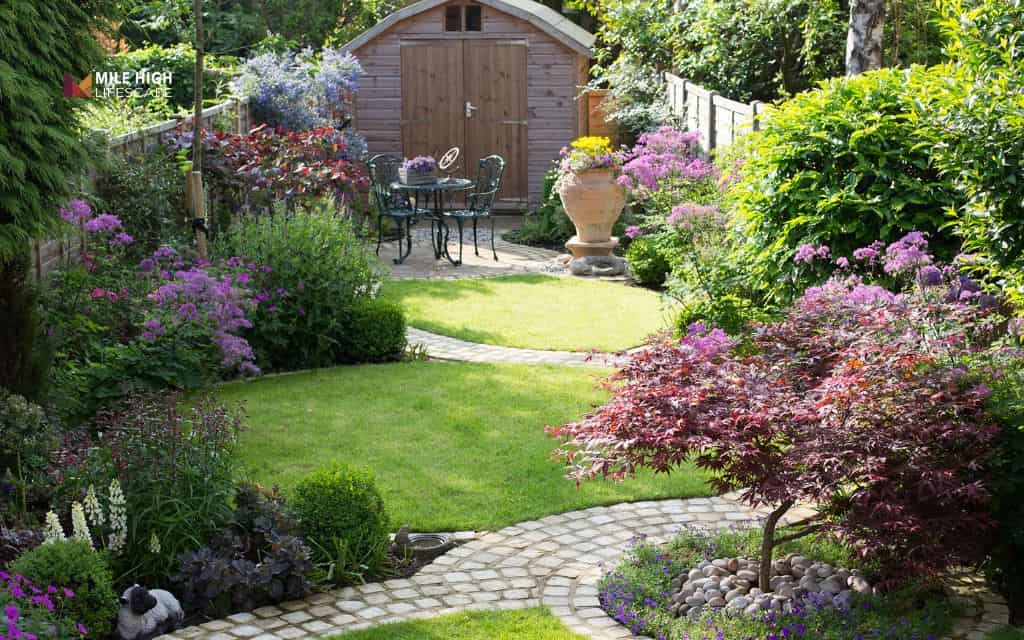
4. Create a garden walk with curved pathways
Straight paths on a hillside can feel harsh and utilitarian. Curved pathways, by contrast, slow the journey, encourage exploration, and make even a modest slope feel like a destination.
Material choices are wide open here. Gravel paths are affordable and drain well on slopes. Natural stone pavers offer durability and texture. Decomposed granite compacts well and suits drought-prone hillsides.
Whatever material you choose, proper edging is essential on slopes to keep the path material in place during rain events.
5. Design a hillside rock garden
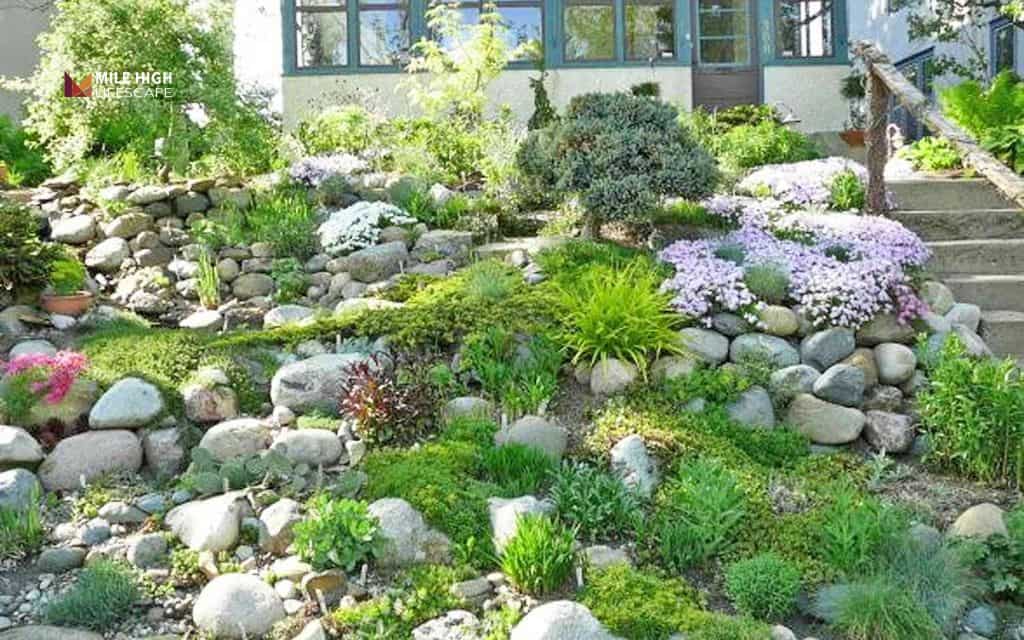
A hillside rock garden is one of those landscape ideas for slopes that actually gets easier as the terrain gets steeper. Rocks and gravel are heavy, which means they stay in place on a slope far better than loose mulch or soil. Combined with drought-tolerant and alpine plants, a rock garden creates a naturalistic, low-maintenance landscape that looks as if it belongs to the hillside itself.
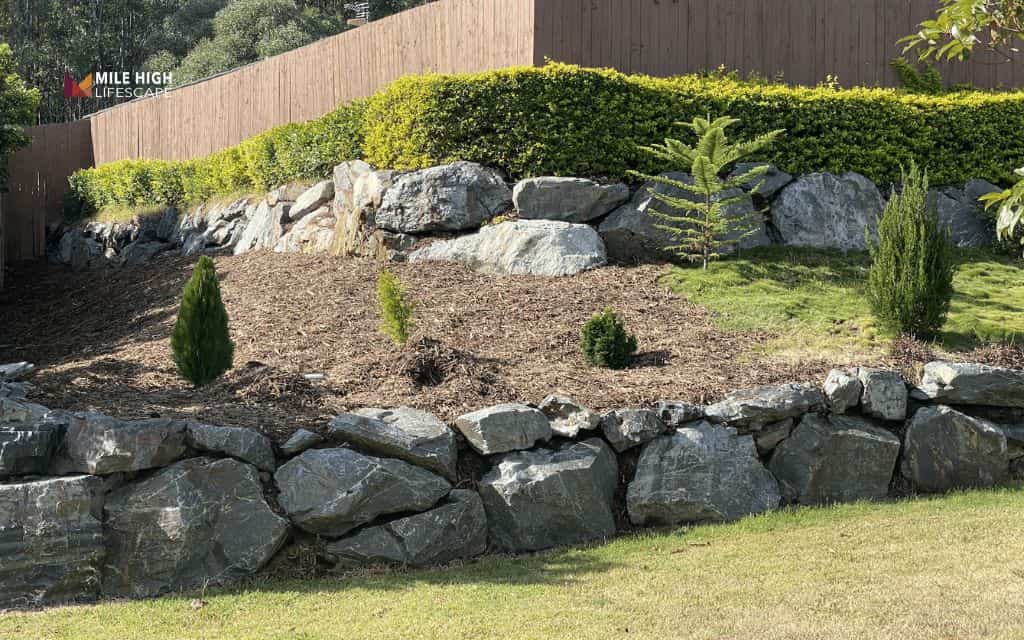
6. Anchor the slope with large boulders
Large boulders placed across a hillside serve multiple purposes at once. They physically anchor the soil, slow surface water runoff, provide planting pockets for groundcovers and perennials, and create focal points that give the slope a sense of permanence and scale.
The most natural-looking boulder placements partially bury the rock so it appears to emerge from the soil rather than sit on top of it. Varying the size and type of boulders adds to the organic, geological quality of the design.
7. Add a waterfall or stream feature
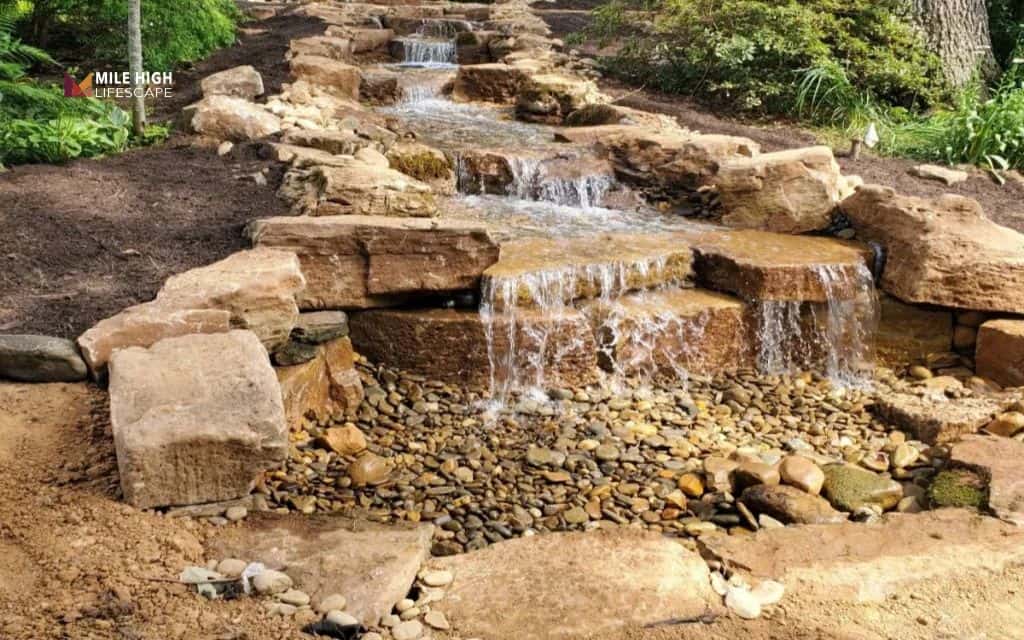
A natural slope is ideally suited to a water feature because gravity does most of the work. Water tumbles naturally downhill, and a well-designed waterfall or recirculating stream can look as though it was always part of the landscape.
A dry creek bed is also a lower-maintenance alternative. Lined with smooth river rock and bordered by ornamental grasses or flowering plants, a dry creek bed adds movement and texture to any hilly backyard design while improving drainage significantly.
8. Use layered planting for depth and texture
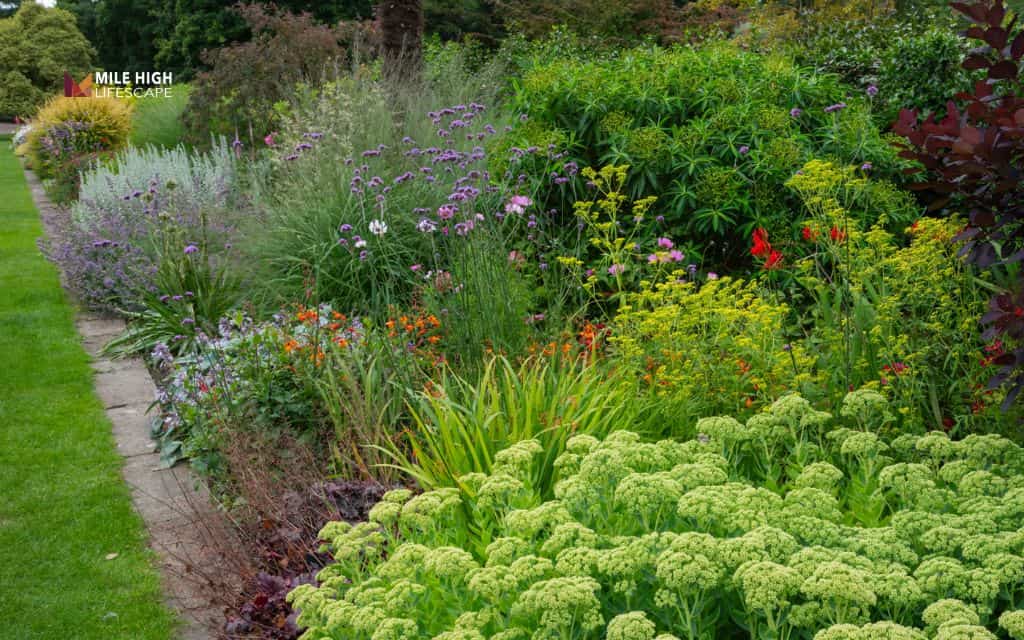
Layered planting is one of the most important strategies in any sloped backyard landscaping plan. The idea is to combine plants of different heights: tall trees or large shrubs at the top of the slope, medium shrubs or ornamental grasses in the middle, and low groundcovers or perennials at the base. This graduated planting structure mimics natural hillside ecosystems and creates visual interest at every level.
9. Create a secluded hillside seating area
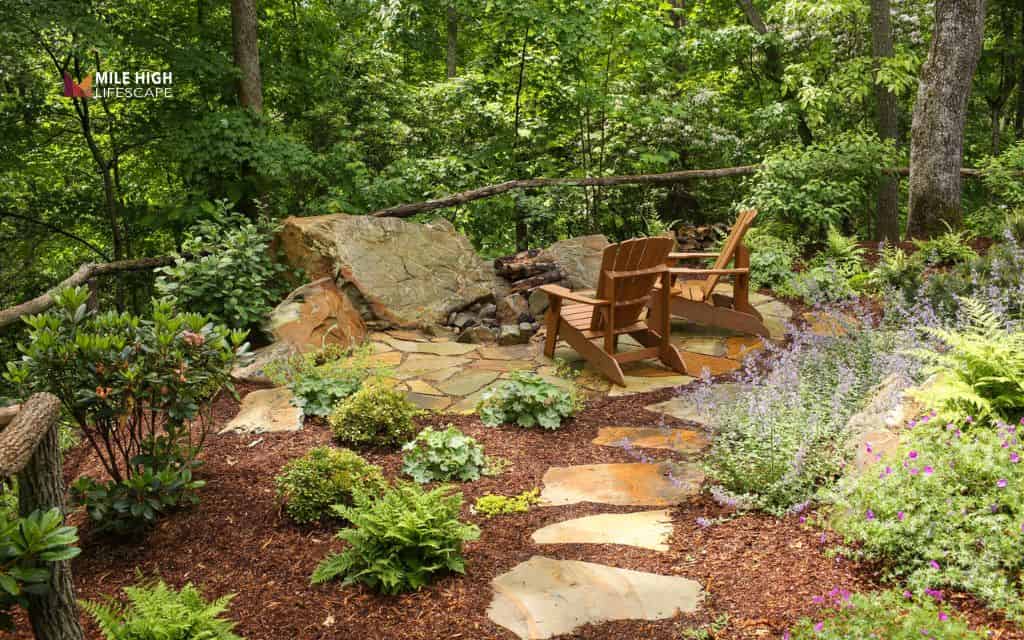
One of the most underused hillside landscaping ideas is turning part of the slope into a private outdoor retreat. An elevated seating area carved into or built onto a hillside takes advantage of the natural grade to create a vantage point that feels separated from the rest of the yard, offering quiet privacy and often a compelling view.
Stone patios, gravel terraces with retaining walls, or even simple wooden decks cantilevered over the slope all work well as seating platforms. Surround the space with taller shrubs or ornamental grasses for a sense of enclosure without blocking the view. Add simple outdoor chairs, a small table, and perimeter lighting to make the space usable after dark.
10. Combine concrete walls with modern planting
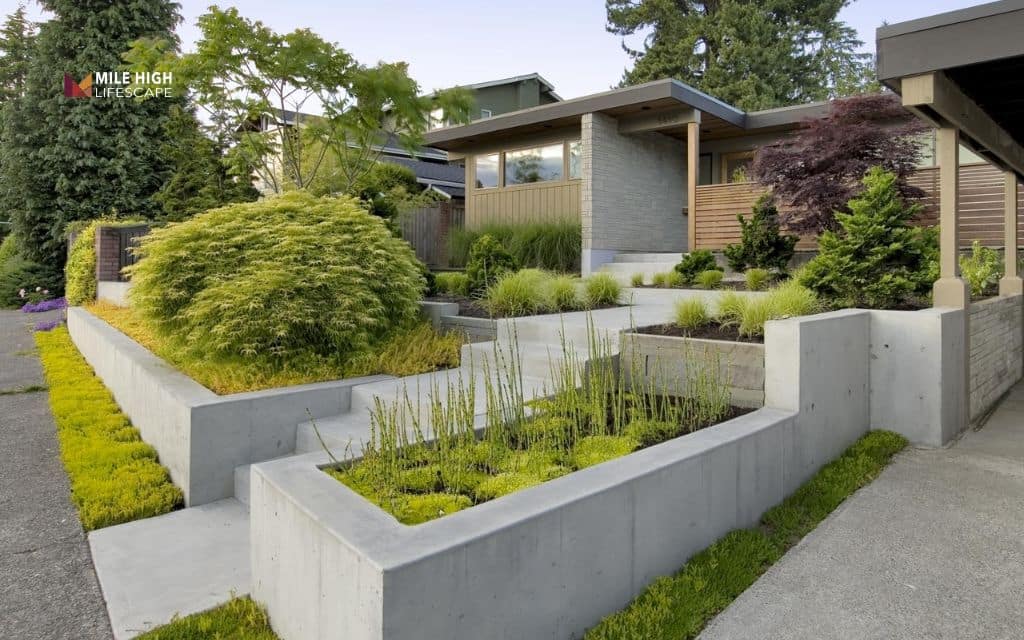
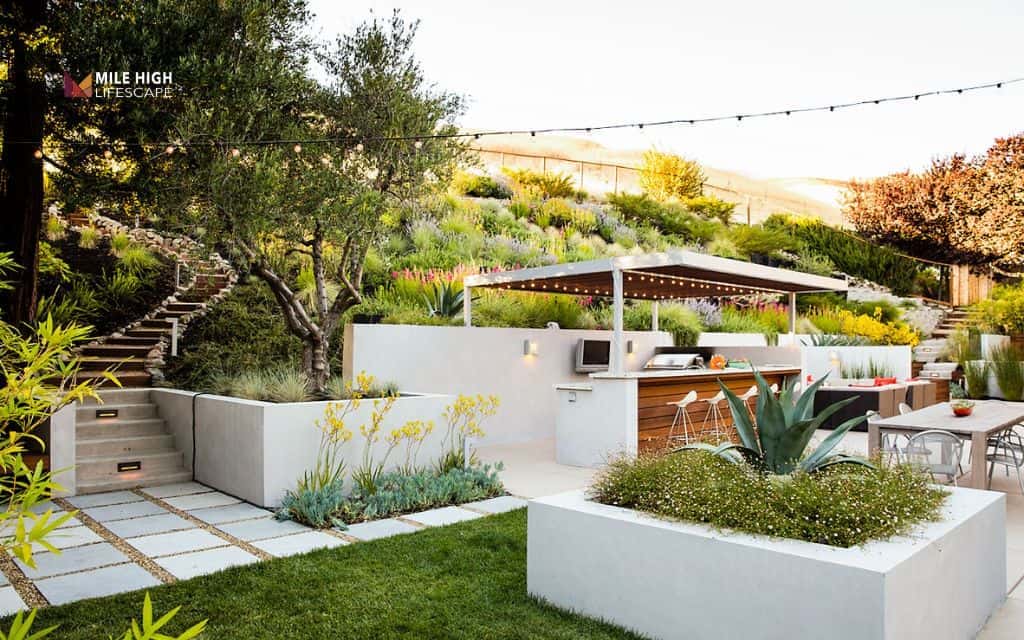
For contemporary homes, poured concrete retaining walls paired with clean-lined modern planting offer a sleek, architectural approach to hillside landscaping. The smooth gray surface of a concrete wall contrasts beautifully with the soft texture of ornamental grasses, the bold form of agaves, or the delicate foliage of Japanese maples.
Read more: 17 stunning mid century modern landscape ideas to transform your yard this year
11. Use groundcovers for easy erosion control
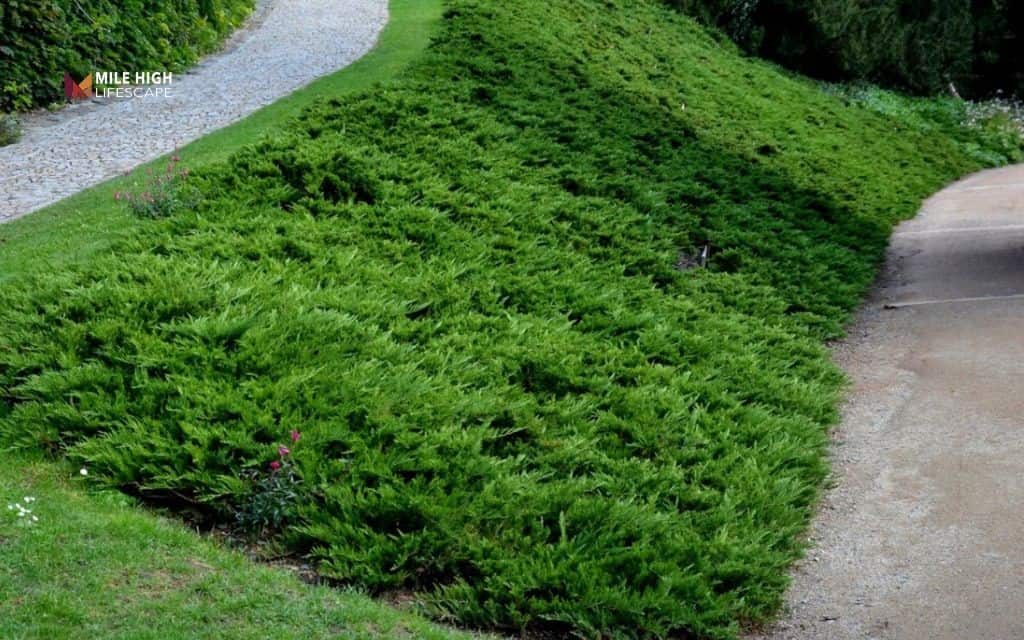
Creeping juniper is one of the most reliable groundcovers for steep slopes, tolerating drought and poor soil while spreading aggressively enough to cover large areas quickly. Creeping thyme works well on sunnier slopes and produces small lavender flowers that attract pollinators. Sedum varieties offer fleshy, colorful foliage in a range of textures. All 3 thrive with minimal maintenance once established.
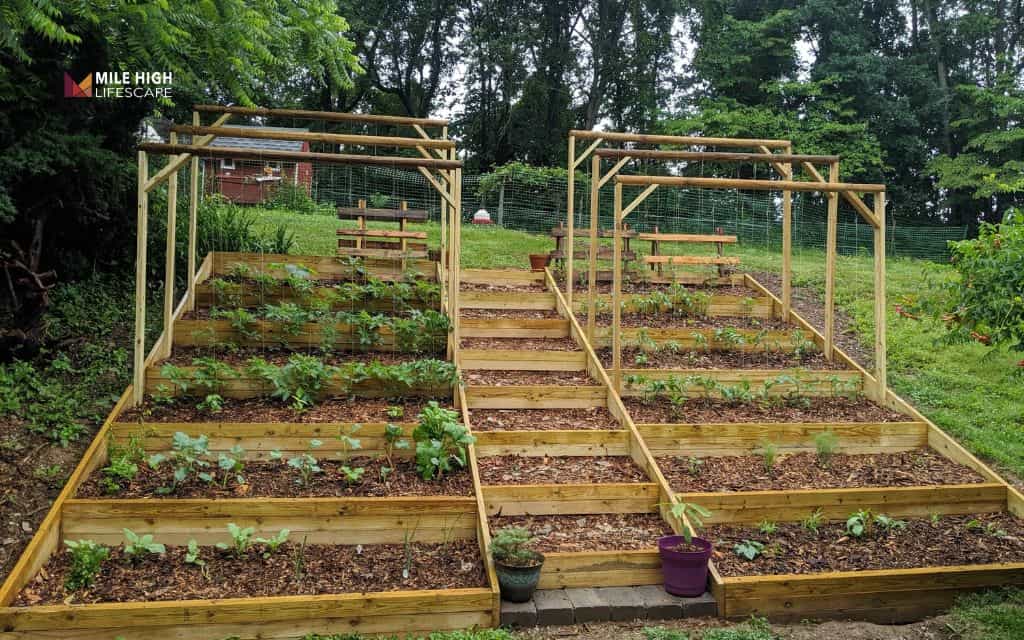
12. Build a hillside vegetable garden
Ideas for landscaping a sloped backyard do not have to stop at ornamental plants. A hillside vegetable garden is a creative way to turn a challenging terrain into productive, edible space.
Terraced beds on a slope actually offer some advantages over flat-ground growing: excellent drainage, good air circulation, and exposure to sunlight from multiple angles throughout the day.
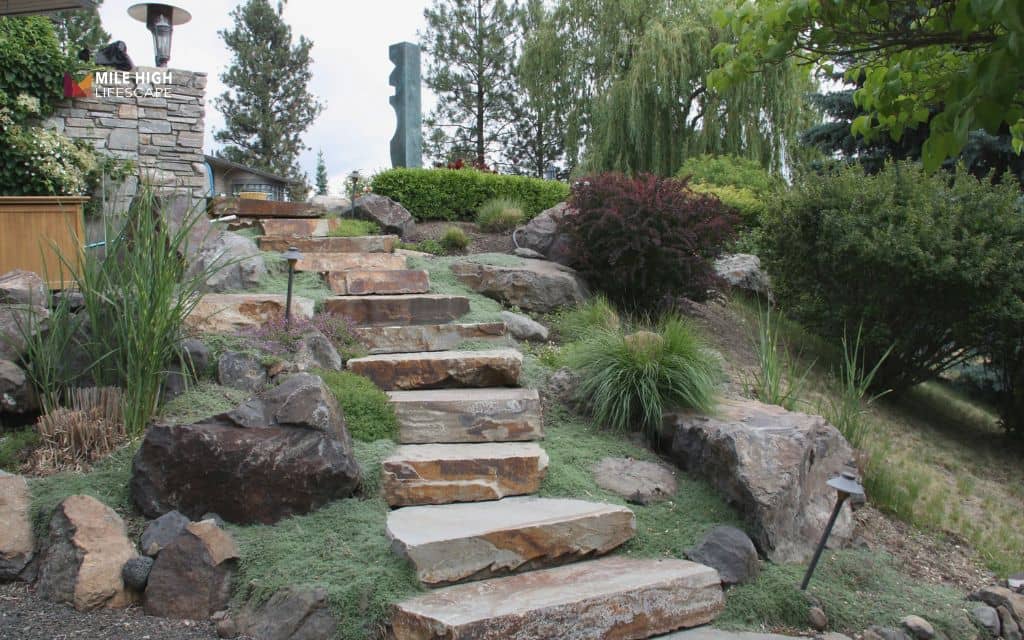
13. Add stone steps through the landscape
Stepping stones set into a groundcover bank give the slope an informal, naturalistic character. Cut stone or large flat pavers create a more refined appearance. Either approach improves the experience of moving through the landscape and invites visitors to slow down and take in the plantings around them.
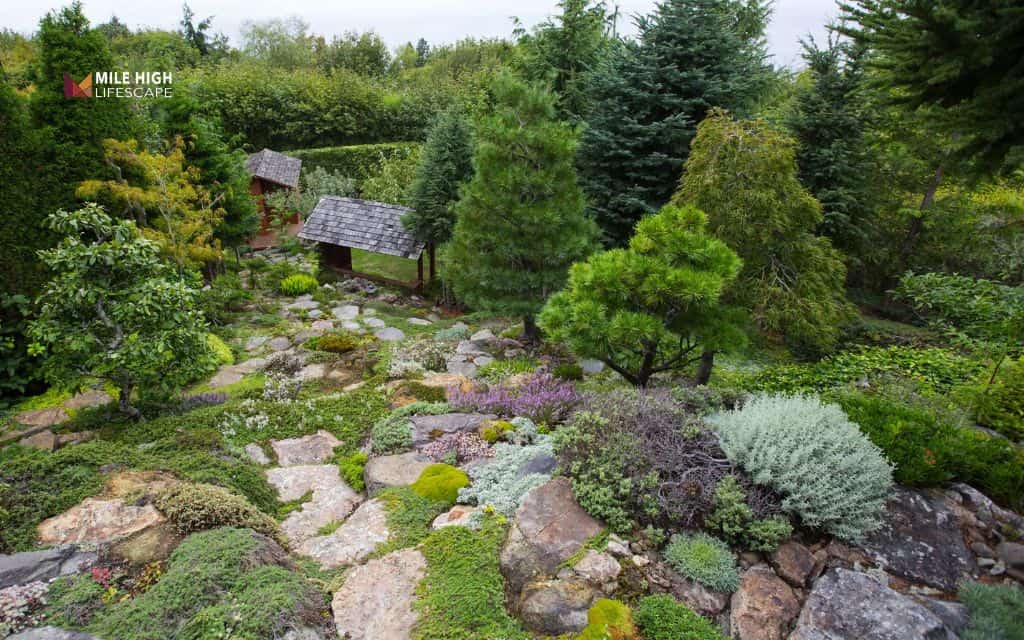
14. Create an alpine-inspired hillside garden
Alpine gardens draw on the rugged beauty of high-altitude plant communities, where low-growing, hardy plants cling to rocky outcrops in conditions that most garden plants would struggle to survive.
On a sunny, well-drained hillside, this aesthetic translates naturally into a landscape of textured stone, spreading perennials, and compact shrubs that require very little water or maintenance once established.
Saxifrage, creeping phlox, alpine aster, stonecrop, and dwarf conifers are all excellent choices for an alpine-inspired hillside planting. Hillside stones serve as both structural elements and visual anchors in this style, mimicking the natural geology of mountain environments.
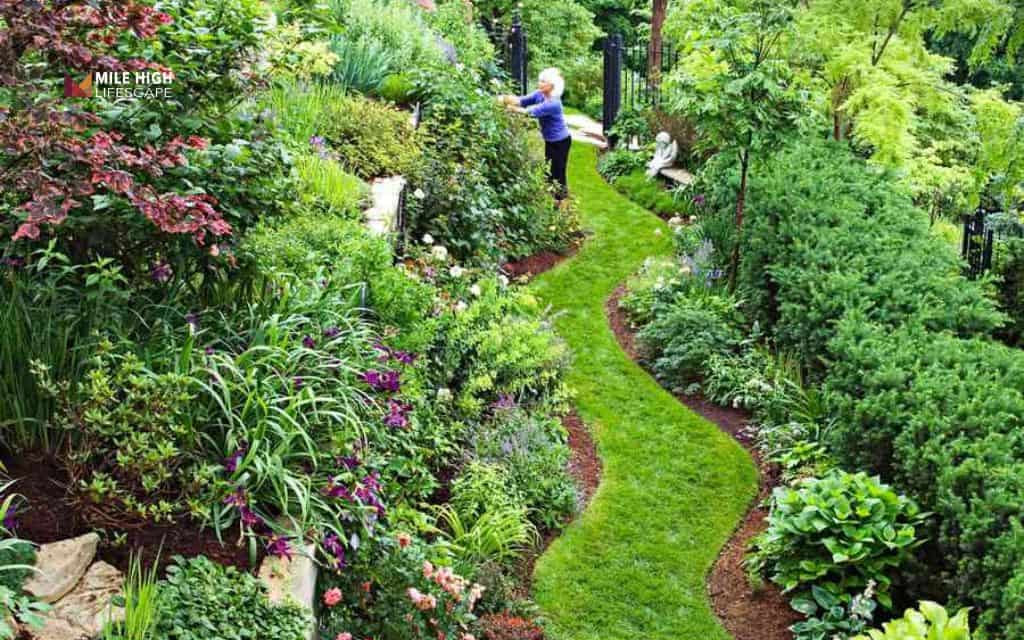
15. Soften the slope with shade plantings
Shade-tolerant plants can turn a dim, difficult slope into a lush, layered garden that stays cool even in the hottest months. The key is selecting plants adapted to low-light conditions that also have root systems strong enough to hold sloped terrain. For example: hostas, ferns, native shrubs like mountain laurel, leucothoe, and sweetshrub,…
16. Install planter boxes on steep areas
On very steep slopes where conventional planting is impractical, tiered planter boxes provide a manageable way to introduce color and greenery without committing to large-scale earthwork. Planter boxes anchored into the slope create self-contained growing environments with defined soil volumes, controlled drainage, and clear visual structure.
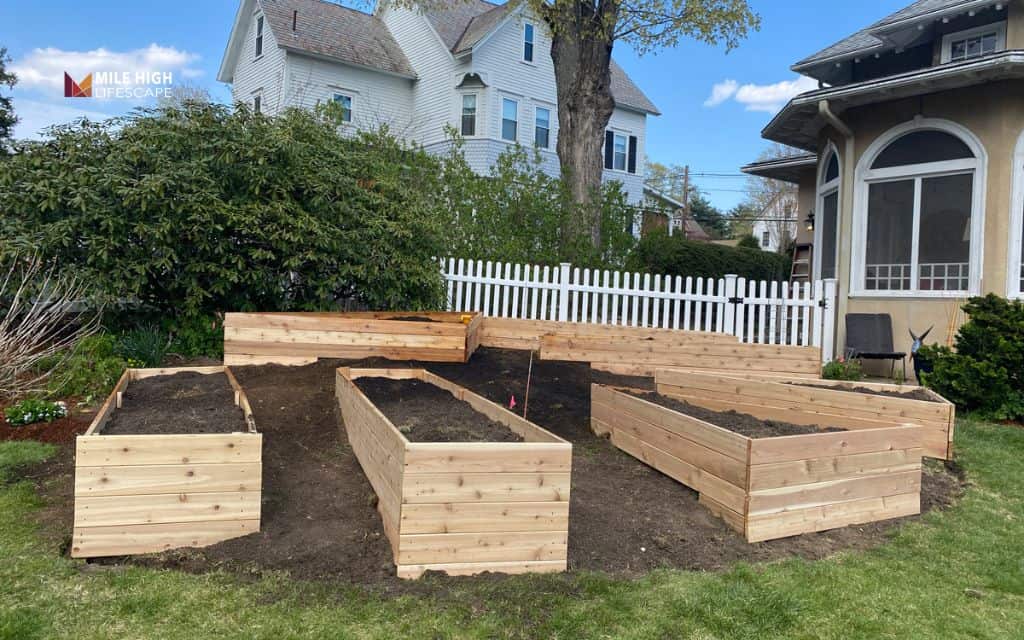
17. Create a four-season hillside garden
A hillside that looks stunning in June but bare and gray in January is a missed opportunity. Planning for four-season interest means deliberately combining plants with different peak seasons.
Mixing deciduous and evergreen plants is the foundation of a four-season planting. Add seasonal bulbs tucked between perennials for early color, and choose shrubs selected as much for their winter bark or berry color as their summer bloom.
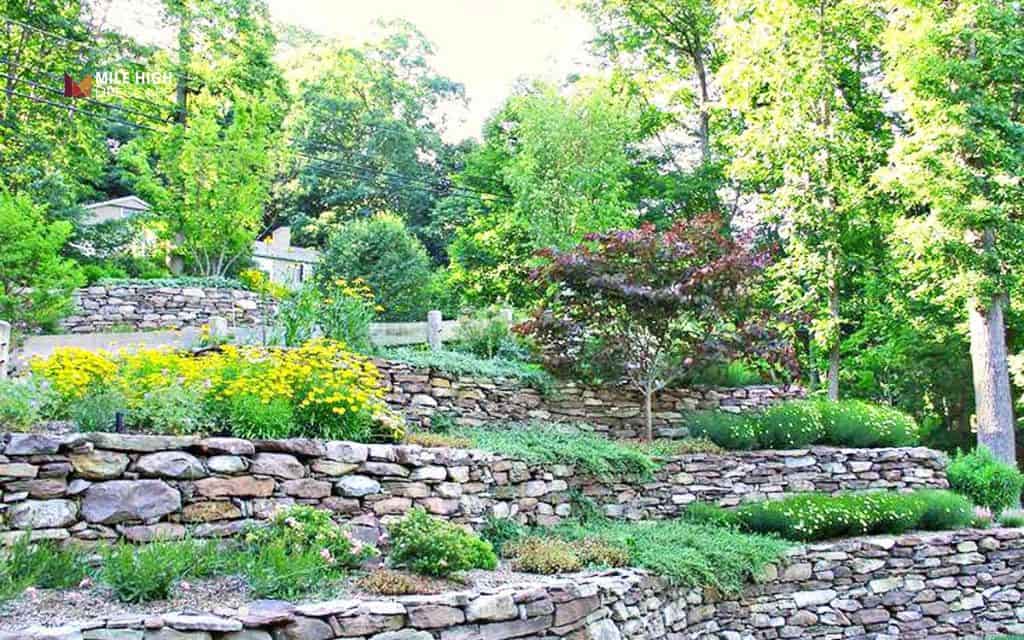
18. Use gravel and mulch for low maintenance
Mulch retains moisture and enriches the soil as it breaks down, while gravel provides permanence and good drainage on slopes where organic mulch tends to wash away in rain.
Coarse wood chip mulch is more resistant to movement than finely ground bark. Pea gravel and decomposed granite both drain well and compact lightly over time.
Using a geotextile landscape fabric beneath gravel or mulch further reduces weed germination, though fabric eventually needs replacement. Either material performs best when combined with some drought-tolerant planting to anchor the surface layer.
19. Borrow the view beyond your yard
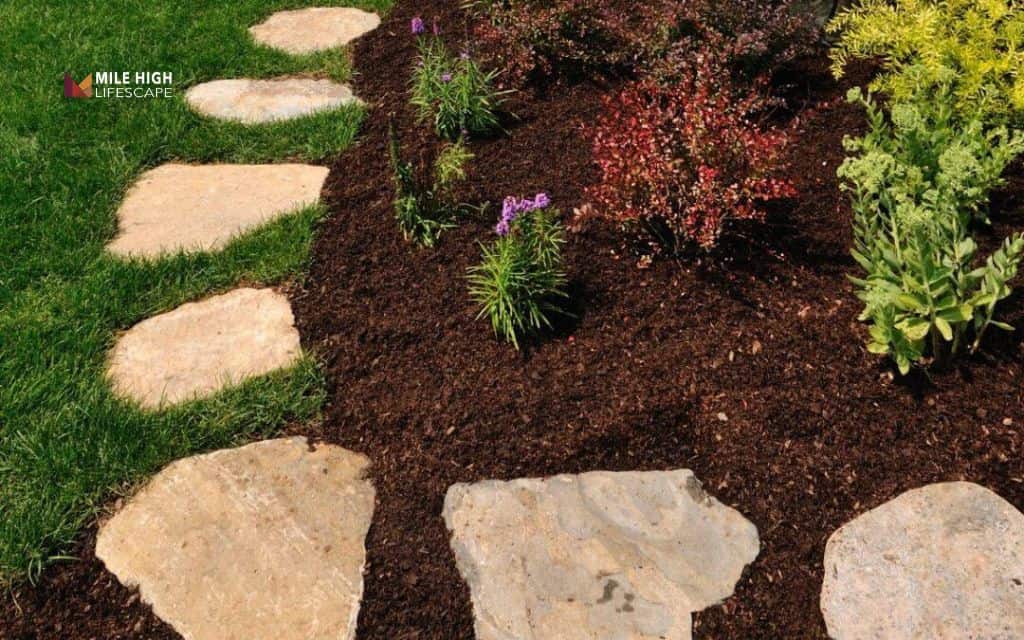
This is a design strategy rather than a physical installation, but it is one of the most powerful front yard hill landscaping ideas available.
Borrowed view, or the art of framing and incorporating the scenery beyond your property line into your landscape composition, is effective on hillsides because the elevation naturally opens sightlines to the surrounding landscape.
To borrow a view intentionally, keep the planting at the edge of your property lower than the view you want to frame. Avoid planting large trees directly in the sightline. This technique makes a modest hillside feel connected to a much larger, more expansive landscape.
20. Design a hillside patio overlook
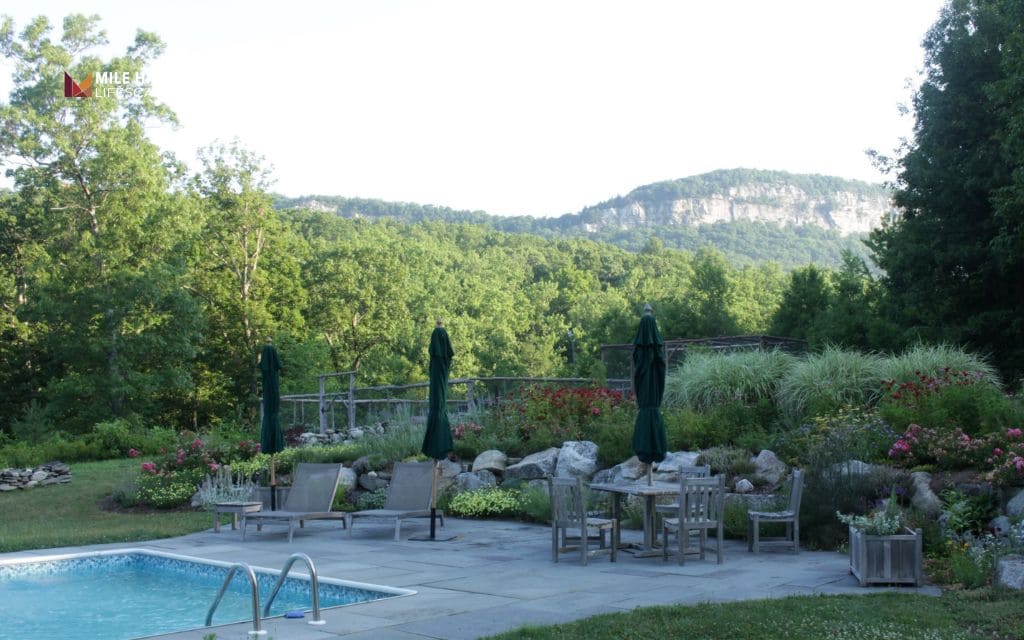
Unlike a ground-level patio, a hillside overlook feels naturally elevated above the surrounding landscape, making it an ideal spot for morning coffee, evening gatherings, or quiet relaxation.
Construction involves a combination of cut-and-fill grading, retaining walls to create a level platform, and a poured concrete or natural stone patio surface. Pair the space with perimeter planting for privacy, ambient lighting for nighttime use, and a clear sightline to whatever view the hillside offers.
This type of feature transforms sloped backyard landscaping ideas pictures on a screen into a real outdoor destination.
Read more: 27 easy landscaping ideas to make any garden look amazing
Hillside drainage and erosion tips
Every hillside landscaping project, regardless of size or budget, should include a drainage strategy. Water runoff is the force most likely to undermine even the most carefully designed slope over time.
A few guiding principles apply to nearly every situation.
- Direct runoff away from the foundation of your home and any outbuildings. Grade the slope so water flows toward a lawn, planted area, or drainage channel rather than pooling against a structure.
- Never leave bare soil exposed on a slope for extended periods. Even temporary erosion protection like erosion-control fabric or straw wattles prevents soil loss while permanent plants establish.
- Use terraces on slopes greater than 15 percent to break the length of the slope into shorter, slower-draining sections. Each terrace level reduces the velocity of runoff and gives water more time to absorb into the soil.
- Combine mulch, plants, and stone rather than relying on any single material. A multi-layered approach is more resilient because if one element fails, the others continue to do their job.
- On very steep slopes or sites with complex drainage patterns, consult a licensed landscape contractor or civil engineer before beginning construction. Professional drainage design is far less expensive than repairing erosion damage after the fact.
Conclusion
A sloped yard is not a landscaping problem waiting to be solved. It is a design opportunity waiting for the right idea. The 20 hillside landscaping ideas in this guide cover the full range of what is possible on a slope: from simple groundcover solutions and gravel mulch to terraced vegetable gardens, alpine rock features, elevated patios, and borrowed views.
Whatever your terrain, your budget, or your style, there is a hillside landscaping approach that will help your slope become the standout feature of your entire outdoor space. Start with one idea, plan carefully, and build from there. The results can be genuinely stunning.
Transform your slope with Mile High Lifescape
Mile High Lifescape is a Denver-based landscaping company specializing in custom outdoor design for residential properties throughout the Front Range. From terraced hillside gardens and stone retaining walls to full-scale drainage solutions and planting design, our experienced team brings creative vision and technical expertise to every sloped landscape we work on.
Ready to turn your hillside into the best feature of your yard?
Contact us today for a free consultation and let us help you design a slope that is as beautiful as it is functional.
Frequently asked questions (FAQs)
How to landscape a hillside cheaply?
Focus on native groundcovers, bulk mulch, and drought-tolerant plants rather than costly engineered structures. Dry-stacked fieldstone is a budget-friendly alternative to poured concrete retaining walls, and many homeowners can install smaller sections themselves. Phasing the project over two or three seasons spreads out costs without sacrificing results.
How do you stop erosion on a slope?
The most reliable long-term solution is dense plant coverage: roots anchor the soil while foliage cushions the impact of rainfall on the surface. In the short term, erosion-control fabric, straw wattles, and mulch protect bare ground while plants establish. Terracing and dry creek beds add further protection by slowing and redirecting water runoff.
What plants grow best on hillsides?
For sunny slopes, creeping juniper, sedum, and creeping thyme are tough, adaptable choices that spread quickly and hold soil well. Shaded hillsides respond well to hostas, ferns, and native shrubs like mountain laurel or leucothoe. Ornamental grasses work across a wide range of slope conditions thanks to their deep, fibrous root systems.
Are retaining walls necessary for hillside landscaping?
Not always. Gentle slopes under 15% can typically be stabilized with groundcovers, shrubs, and mulch alone. Steeper grades above 15 to 20% benefit significantly from terraced retaining walls, and slopes above 33% usually require professionally engineered structures for both safety and long-term stability.
How can I make my sloped yard look good?
Start by adding structure: a low stone wall, a curved pathway, or a series of boulders gives the slope a clear visual logic. Layer plants of varying heights and textures to make the hillside feel full and intentional. Consistent mulching and clean edges do more for curb appeal than almost any other single improvement.