Cedar is a name gardeners use loosely across several evergreen genera, and each one grows at its own pace. How fast do cedar trees grow? The real answer depends on which cedar stands in your yard, since true cedars, red cedars, and arborvitae follow different growth patterns and reach different mature sizes.
This guide breaks down cedar tree growth rate by species, the conditions that speed up or slow down that growth, and what to expect when planting cedar for a privacy screen, windbreak, or ornamental feature.
How fast do cedar trees grow each year
Most cedar trees grow between 1 and 3 feet per year once established. The exact growth rate of cedar trees depends on species, since the word cedar covers three separate plant groups: true cedars in the genus Cedrus, red cedars in the genus Juniperus, and arborvitae in the genus Thuja, often sold as white cedar. Each group carries its own growth pattern, so a single average understates the range homeowners see in real yards.
Fast growing types such as Western red cedar, Deodar cedar, and Green Giant arborvitae add 2 to 4 feet a year in favorable conditions. Slower types such as Northern white cedar and Blue Atlas cedar typically add closer to 1 foot a year. Sunlight, soil drainage, water, and spacing shift these numbers up or down, sometimes by a full foot in either direction.
Cedar tree growth rate by species
The table below compares annual growth and mature height across the cedar species most commonly planted in home landscapes, from fast growing screening varieties to slower, ornamental types.
| Species | Botanical name | Annual growth | Mature height |
| Eastern red cedar | Juniperus virginiana | 1 to 2 feet | 40 to 50 feet |
| Western red cedar | Thuja plicata | 2 to 3 feet | 50 to 70 feet in landscapes, taller in native forests |
| Northern white cedar (arborvitae) | Thuja occidentalis | About 1 foot | 20 to 40 feet |
| Green Giant arborvitae | Thuja standishii x plicata | 3 to 4 feet | 40 to 60 feet |
| Emerald green arborvitae | Thuja occidentalis ‘Smaragd’ | About 1 foot | 12 to 15 feet |
| Deodar cedar | Cedrus deodara | 2 to 3 feet | 40 to 70 feet |
| Blue Atlas cedar | Cedrus atlantica ‘Glauca’ | About 1 foot | 40 to 60 feet |
Factors that affect cedar tree growth
Several conditions shape any cedar tree growth rate, often more than the species label on a nursery tag:
- Soil: Cedars need well drained soil with a slightly acidic pH; standing water suffocates roots and stalls vertical growth within a single season.
- Sunlight: Full sun produces dense foliage and a straight, uniform trunk, while shade thins out growth and slows the tree’s climb toward mature height.
- Water: Deep watering once or twice a week during the first two growing seasons helps roots establish before the tree faces its first drought or hard freeze.
- Climate: Warm summers and steady rainfall push growth toward the upper end of a species’ range, while extended cold or drought pushes it toward the lower end.
- Spacing: Trees planted too close together compete for water and nutrients, so give each cedar the mature width recommended for its species.
- Maintenance: Mulch around the base to hold soil moisture, skip heavy nitrogen fertilizer, and limit pruning to dead or crowded branches to protect the tree’s natural growth rate.
How long cedar trees take to reach mature size
How long does it take for cedar trees to grow into a usable screen depends on species and starting size. Fast growers such as Western red cedar and Green Giant arborvitae typically reach an effective 6 to 8 foot screen within 5 to 8 years. Slower species such as Northern white cedar or Blue Atlas cedar need 10 to 15 years for the same height.
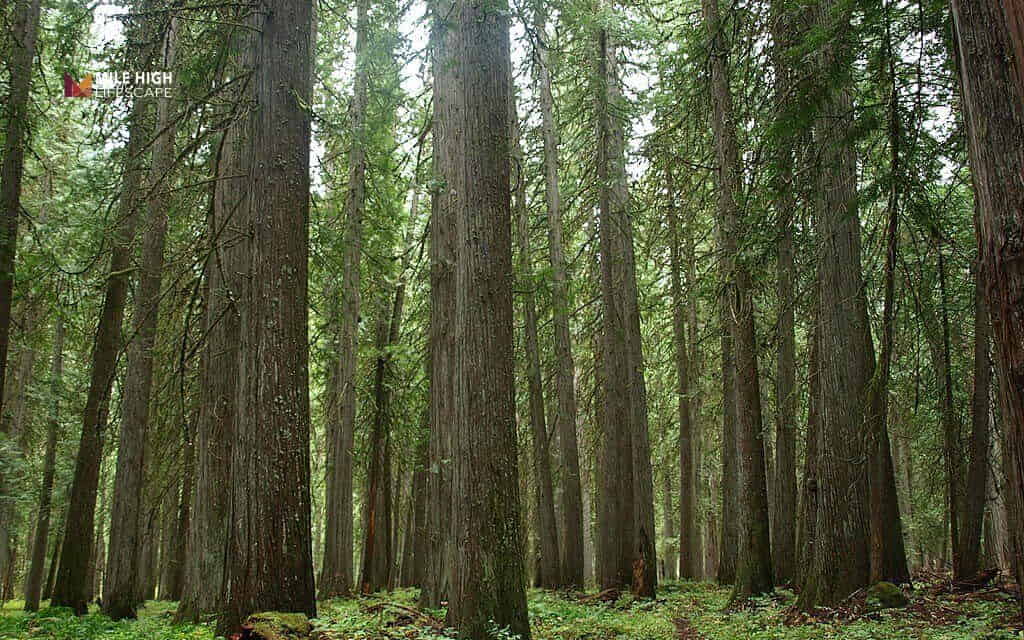
Full maturity takes longer. Most landscape cedars reach mature size in 25 to 50 years, and forest grown Western red cedar can keep adding height for a century or more. Cedar tree lifespan follows the same slow, steady pattern: the lifespan of a cedar tree ranges from about 150 years for ornamental cultivars such as Blue Atlas cedar to several centuries for Western red cedar and Northern white cedar.
Choosing a fast-growing cedar for privacy screens or windbreaks
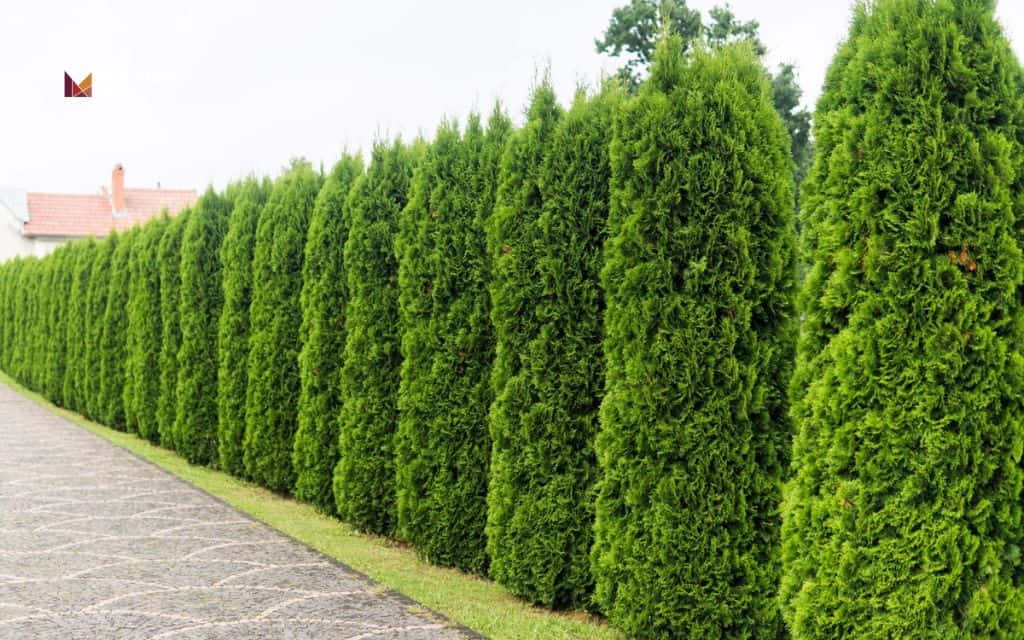
Privacy screening favors fast, dense growers over ornamental specimens. Green Giant arborvitae is the top choice, combining a growth rate of 3 to 4 feet a year with dense foliage that holds its shape without heavy pruning. Western red cedar grows at a similar pace with a more natural look and tolerates regular trimming.
Spacing matters as much as species. Plant fast growing arborvitae 5 to 6 feet apart for a solid screen, or 8 to 10 feet apart to keep each tree’s natural shape. Windbreaks work best with a staggered, double row that blocks wind at multiple heights. Match the species to the site’s sun and soil first, since even a fast grower underperforms its listed growth rate in poor conditions.
Conclusion
Cedar covers a wide range of growth habits, from the steady 1 foot a year pace of Blue Atlas cedar to the 3 to 4 foot annual growth of Green Giant arborvitae. So, how fast do cedar trees grow overall? Fast enough to fill a privacy screen within a decade for the right species, and slow enough to remain a multi generation landscape asset for the rest.
Homeowners in the Denver Metro area who want guidance on selecting and planting the right cedar for their property can rely on Mile High Lifescape‘s tree and shrub care services. Every recommendation starts with an evaluation of soil conditions, sun exposure, and spacing before matching a species to the yard. Call (303) 877-9091 to schedule a consultation.
Frequently asked questions (FAQs)
Which cedar tree grows the fastest
Green Giant arborvitae grows the fastest among commonly planted cedars, adding 3 to 4 feet a year under favorable conditions. Western red cedar and Deodar cedar follow closely behind at 2 to 3 feet a year.
How long does it take a cedar tree to grow to full size
Most landscape cedars need 25 to 50 years to reach full mature height, though a usable privacy screen often forms within 5 to 8 years for fast growing species.
Do cedar trees need full sun to grow quickly
Yes. Full sun supports dense foliage and a straight trunk. Shade slows growth and produces a thinner, less uniform tree.
Can cedar trees grow in poor or dry soil
Eastern red cedar tolerates poor, dry soil better than most cedar species, though well drained soil with consistent moisture produces faster growth across every species.
How long does a cedar tree live
Cedar tree lifespan varies widely by species. Ornamental types such as Blue Atlas cedar typically live 150 to 300 years, while Western red cedar and Northern white cedar can live for several centuries in favorable conditions.