Trees live anywhere from a few decades to several thousand years. So, how long do trees live in any given yard? The answer depends on species, growing conditions, and care. Fast-growing trees tend to mature quickly and decline sooner. Slow-growing trees often outlast generations of the people who plant them. Understanding these differences helps you choose the right tree for your property and recognize when a mature tree needs attention.
How long do trees live, on average
Tree lifespan varies more than most people expect. A gray birch may live 50 years. A bald cypress can survive 600 years or longer. The difference comes down to biology. Fast-growing species invest energy in rapid height and canopy growth, which leaves them more vulnerable to decay, storm damage, and disease. Slow-growing species build denser wood and stronger natural defenses, extending their lifespan even though they take longer to reach full size.
Forestry data compiled by Virginia Tech’s Department of Forest Resources and Environmental Conservation tracks average and maximum lifespans for dozens of common North American tree species. The table below groups a sample of these species by lifespan tier, from short-lived to long-lived, and answers how long do trees live for the species most homeowners plant.
| Lifespan tier | Common name | Average lifespan | Maximum lifespan |
| Short-lived | Gray birch | 50 years | Not established |
| Short-lived | Black willow | 70 years | 85 years |
| Short-lived | Black locust | 60 years | 100 years |
| Medium-lived | Red maple | 130 years | 300 years |
| Medium-lived | American elm | 175 years | 300 years |
| Medium-lived | Eastern red cedar | 150 years | 300 years |
| Long-lived | White oak | 300 years | 600 years |
| Long-lived | Sugar maple | 300 years | 400 years |
| Long-lived | Bald cypress | 600 years | 1,800 years |
Learn more: Can trees die of old age?
Fruit tree lifespan
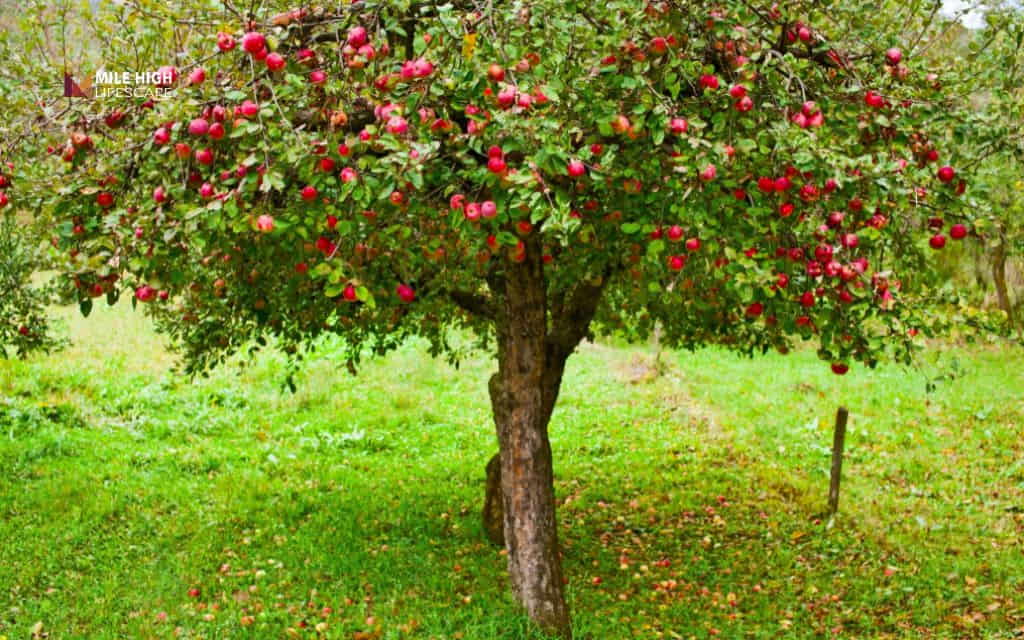
Fruit trees generally live shorter lives than shade or forest trees, since fruit production places heavy demands on a tree’s energy reserves. Apple trees typically live 20 to 40 years under standard growing conditions, though well-tended specimens have been known to bear fruit for a century or more. Peach and nectarine trees have one of the shortest lifespans among common fruit trees, often lasting only 10 to 20 years. Citrus trees fall in between, averaging around 50 years but capable of exceeding 100 years with consistent care in a suitable climate.
The longest-living trees on earth
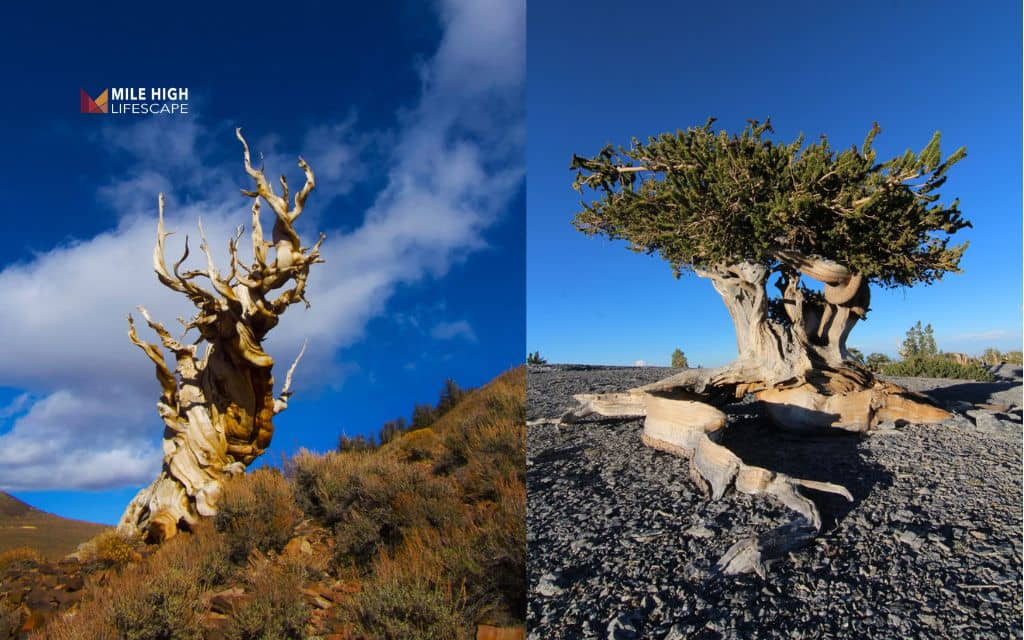
A handful of species push the boundaries of what tree longevity means. The Great Basin bristlecone pine holds the record, with confirmed specimens older than 4,800 years. Giant sequoias can exceed 3,000 years, and certain yew trees in Europe have stood for well over a thousand years.
Some trees complicate the definition of lifespan entirely. Quaking aspen groves, like the Pando colony in Utah, grow from a single root system that has survived for thousands of years, even though each individual trunk lives only 50 to 60 years before a new one sprouts to replace it. A colony like this counts as one living organism, not one long-lived tree.
Learn more: https://milehighlifescape.com/how-fast-do-cedar-trees-grow/
What determines how long a tree lives
Genetics set the baseline for a tree’s potential lifespan, but environment and care determine whether a tree reaches that potential. Trees growing in open, undisturbed land with stable soil and minimal root competition tend to outlive trees planted in compacted urban soil, near pavement, or close to underground utilities. Drought, extreme temperature swings, and repeated storm damage all shorten a tree’s expected lifespan regardless of species.
Care habits matter just as much as location. Trees that receive consistent watering during establishment, regular pruning to remove dead or diseased wood, and prompt treatment for pests or fungal infection routinely outlive neglected trees of the same species by decades. A tree’s lifespan is not fixed at planting. Every decision made afterward shapes it, which is why two neighbors can ask how long do trees live and walk away with two different, equally accurate answers based on how each tree is planted and maintained.
How to choose a tree that will thrive for decades
Selecting a tree that lives a long, healthy life starts with matching the species to your site, not the other way around.
- Check your hardiness zone: Cold tolerance determines whether a species survives winter in your region, so confirm the zone match before choosing.
- Plan for mature size: A species that outgrows its space requires constant, costly pruning or early removal long before it reaches old age. Know the height and spread at maturity, not just at planting.
- Match soil, drainage, and sun exposure: A tree planted in soil it is not suited for struggles from the start, regardless of how long-lived the species is on paper.
- Favor native species: Native trees need the least intervention to thrive, since they are already adapted to local rainfall, soil chemistry, and temperature swings.
- Weigh growth speed against purpose: A fast-growing species delivers shade sooner but declines sooner too, while a slower-growing oak or maple trades a few early years for decades of added stability and rising property value.
Learn more: Deep rooted trees
How to help your tree live longer
Consistent care in the years after planting does more to extend a tree’s life than any single decision made at purchase.
- Water deeply in the early years: A tree’s first one to three years call for deep, infrequent watering that trains roots to grow downward and outward, building the stability it needs against drought and wind later in life.
- Apply mulch correctly: A two to four inch layer around the base retains soil moisture and regulates temperature, but keep it clear of the trunk to avoid rot.
- Prune with purpose: Removing dead, damaged, or crossing branches closes off entry points for decay and pests before they take hold.
- Protect the trunk: Lawn equipment and construction work wound bark easily, and that damage exposes a tree to infection that can spread for years.
- Guard the root zone: Soil compaction from vehicles, foot traffic, or nearby construction damages the underground system a tree depends on for its entire life.
Signs a tree needs a professional inspection
A mature tree does not decline overnight, but the warning signs are easy to miss until they become serious.
- Dead or brittle branches: Branches scattered throughout the canopy that snap easily point to declining health.
- Damaged bark: Bark that is cracked, peeling, or missing in patches exposes the tree to pests and infection.
- Fungal growth at the base: Mushrooms growing from bark or roots often signal internal decay that is not visible from the outside.
- Uneven or thinning canopy: Foliage that thins unevenly suggests the tree can no longer support its full canopy.
- Sudden lean or lifted roots: A trunk that develops a new lean, or roots that lift visibly from the soil, signals a structural problem underway.
Learn more: Different tree bark types
Conclusion
Homeowners who ask how long do trees live are really asking how much time, care, and planning stand between a sapling and a legacy tree. The honest answer ranges from a few decades for fast-growing species to thousands of years for the hardiest conifers, and the factor a homeowner controls most is care, not chance.
Matching the right species to your site, watching for early signs of decline, and following through with consistent maintenance turns a young sapling into decades of shade, privacy, and property value. For nearly two decades, Mile High Lifescape has helped Denver Metro homeowners choose, plant, and care for trees built to last. Contact us at (303) 877-9091 to schedule an assessment today!
Frequently asked questions (FAQs)
What’s the oldest tree alive?
The Great Basin bristlecone pine holds the title. A specimen in California, nicknamed Methuselah, is confirmed to be older than 4,800 years. Its exact location stays undisclosed to protect it from damage.
What is the 3-30-300 rule for trees?
Urban foresters use this rule to measure healthy tree coverage. Every home should have a view of at least 3 trees, every neighborhood should carry at least 30 percent tree canopy, and every resident should live within 300 meters of a park or green space.
Do trees live longer in forests than in yards?
Usually, yes. Forest trees grow in undisturbed soil with less root competition from pavement and utilities. Yard trees face compacted soil, construction damage, and drought stress more often, which shortens their expected lifespan even within the same species.
How can I tell if a tree is dying?
Look for dead branches throughout the canopy, bark that peels or cracks, and mushrooms growing near the base or roots. A canopy that thins unevenly or a trunk that develops a sudden lean also signals trouble. Any of these warrants a call to a certified arborist.
Should I choose a fast-growing or slow-growing tree for my yard?
It depends on your priority. Fast-growing species deliver shade within a few years but tend to have shorter lifespans and weaker wood. Slow-growing species take longer to mature but reward patience with greater strength, stability, and decades of added life.