How thick is sod? Most lawn sod carries ½ to ¾ inch (1.3–1.9 cm) of soil and roots, and a full roll stands about 2–3 inches (5–7.5 cm) tall with the grass. This guide shows homeowners what that number measures, why online answers disagree, and how low to set your soil so new turf sits flush with walkways and driveways.
How thick is sod?
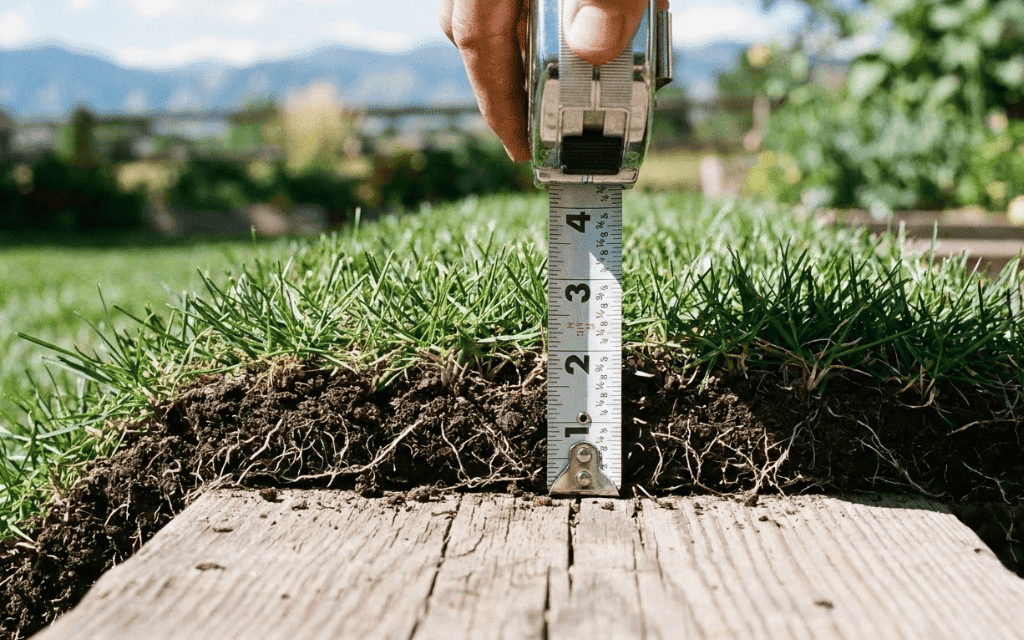
Sod is usually ½ to ¾ inch (1.3 – 1.9 cm) thick when you measure the soil-and-root layer, the only part that raises your grade. The Sports Turf Managers Association puts standard-cut sod at about 0.5 inch (1.3 cm) of soil.
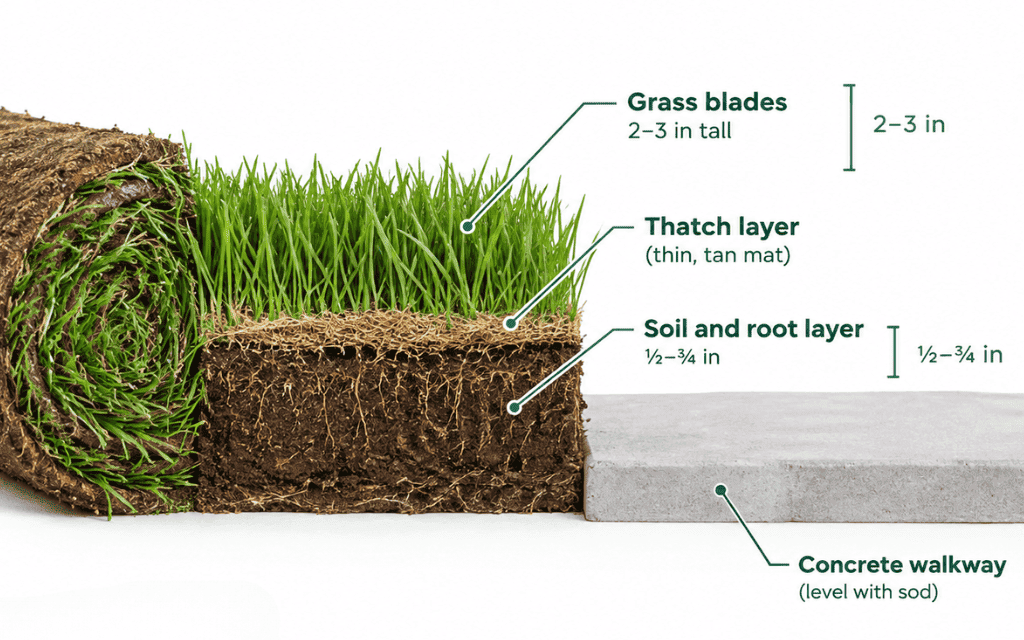
The right number depends on what you measure. A roll of grass sod has 3 stacked layers: grass blades on top, a mat of thatch in the middle, and soil bound by roots at the bottom.
Soil-and-root layer: the number that sets your grade
The soil-and-root layer measures ½ to ¾ inch (1.3–1.9 cm) on most lawn sod. University of Maryland Extension uses this range as a buying guideline for quality turf. Harvesters slice this layer from the field at a set cut depth, and it is the part that adds height where your lawn meets the pavement.
Total roll height with blades and thatch
A delivered roll measures about 2 to 3 inches (5–7.5 cm) from the soil base to the blade tips. Farms mow turf before harvest, so grass makes up most of that height. Blades and thatch compress underfoot and fall to the mower, so they leave your grade unchanged.
Thick-cut sod for sports fields
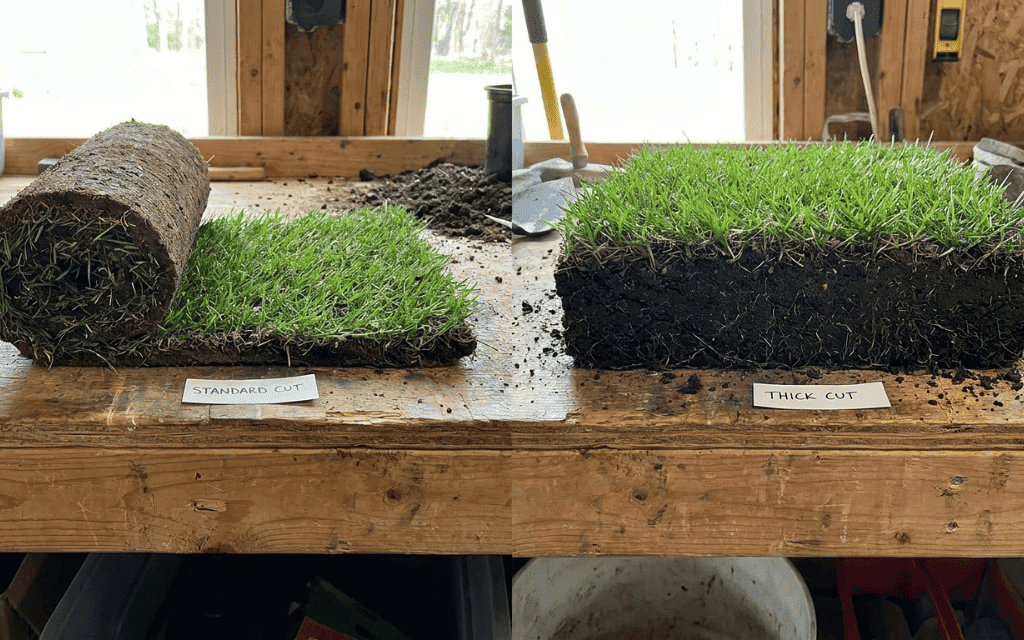
Thick-cut sod carries 1 inch (2.5 cm) or more of soil. STMA notes that thick-cut turf can handle play within about a week when seams sit tight, while standard-cut sod needs 10–14 days to root. Stadiums, golf courses, and school fields buy thick-cut sod; home lawns rarely need it.
Why online answers say sod is 1 to 3 inches thick?
Online answers range from ½ inch to 3 inches (1.3–7.5 cm) because sources measure different things. Some writers count the grass blades, others describe sports turf, and others quote a single farm’s cut. The table below separates the 3 measurements.
| Measurement | Typical figure | What it tells you |
| Soil-and-root layer | ½–¾ in (1.3–1.9 cm) | How low to set your soil |
| Full roll with blades | 2–3 in (5–7.5 cm) | How the lawn looks on delivery day |
| Thick-cut sports sod | 1 in (2.5 cm) or more of soil | Fields that need play right away |
Cut depth also shifts from day to day. Growers adjust harvesters for field moisture, turf age, and soil type, so 2 pallets of the same grass can measure differently. Treat any published sod thickness as a starting point, and trust the tape measure on your own delivery.
Sod thickness by grass type
Grass type shapes cut depth, because root structure decides how much soil a roll needs to hold together. Grasses that spread by rhizomes or stolons knit a dense mat, so farms can cut them thin. Bunch-type grasses need extra soil, netting, or a spreading partner grass to stay in one piece.
- Kentucky bluegrass: Rhizomes weave bluegrass sod into a tight, flexible mat. Bluegrass rolls usually fall in the ½–¾ inch (1.3–1.9 cm) range and need about 12 months in the field before harvest.
- Tall fescue: This bunch-type grass holds together poorly on its own. Purdue Extension notes that tall fescue sod often contains about 10% Kentucky bluegrass or netting to keep rolls intact.
- Warm-season grasses: Bermudagrass, zoysiagrass, and St. Augustinegrass ship mostly as flat slabs in Southern states. Above-ground stolons hold these slabs together, and cut depth varies by species and farm.
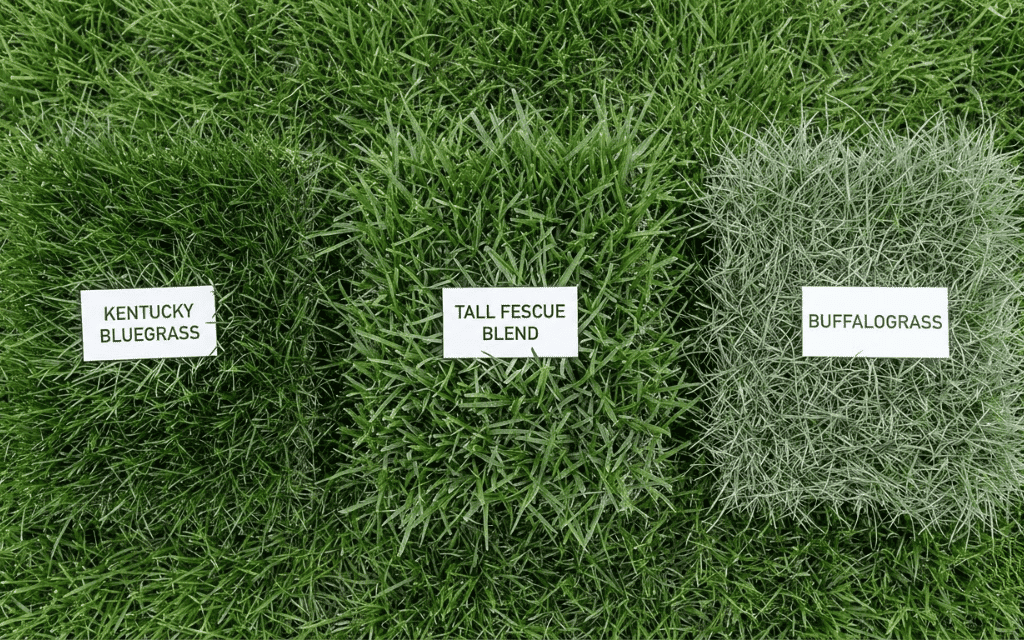
Common sod types in Colorado lawns
Colorado sod growers sell mostly Kentucky bluegrass blends, which tolerate cold Front Range winters and full sun. Tall fescue blends add shade tolerance, and buffalograss sod suits low-water yards. Colorado State University (CSU) Extension notes that buffalograss can start from sod or plugs and needs less irrigation once established.
Is thicker sod better?
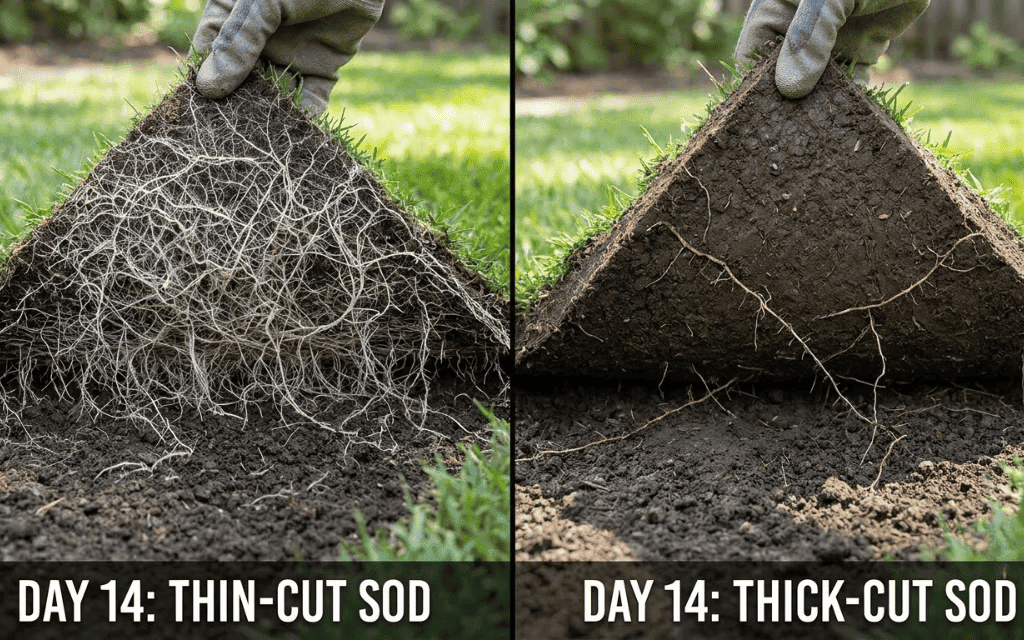
Thicker sod is a poor trade for most home lawns. Thin-cut sod roots faster, weighs less, and costs less to haul. Turf researcher John R. Hall of the University of Maryland found that Kentucky bluegrass cut at ½ inch (1.3 cm) rooted faster and deeper than the same turf cut at 1 inch (2.5 cm) or 1 1⁄2 inches (3.8 cm).
Weight climbs with every extra fraction of an inch. Hall calculated that sod cut 1 1⁄4 inches (3.2 cm) thick weighs about 175 tons per acre (392 t/ha), against 100 tons per acre (224 t/ha) at ¾ inch (1.9 cm). That surplus soil raises trucking costs and makes each roll harder to carry.
Thick-cut sod keeps one edge: it stores more water, which helps where irrigation is limited. Still, soil preparation and steady moisture decide rooting success far more than cut depth.
How low should you set the soil before laying sod?
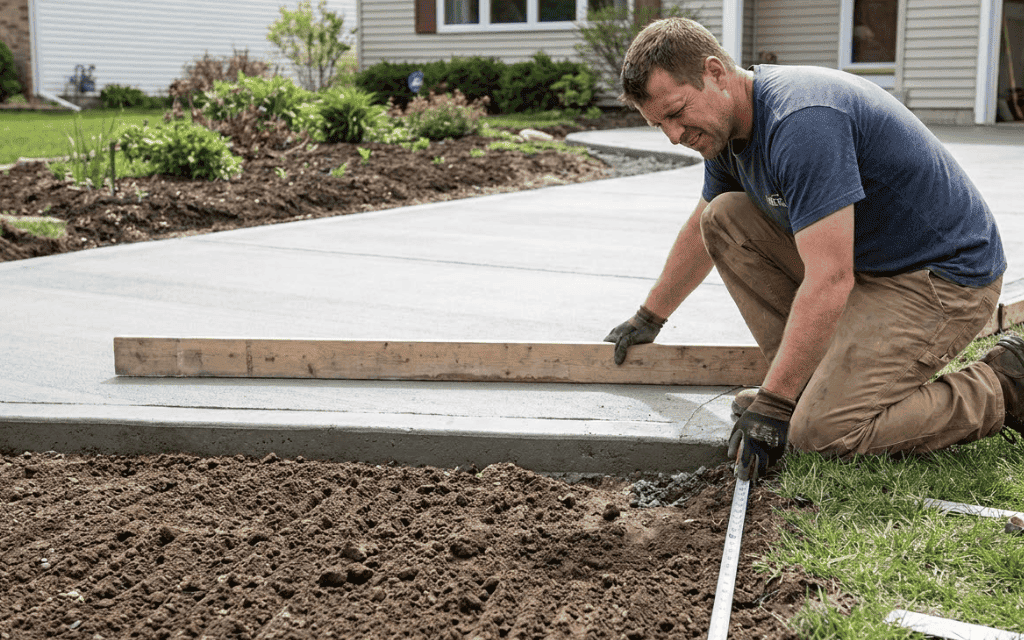
Set the finished soil below every hard edge by the depth of your sod’s soil layer, usually ½ to 1 inch (1.3 – 2.5 cm). Scotts recommends finishing soil about 1 inch (2.5 cm) below paved surfaces, and Zamora Sod Farm suggests ½ to 1½ inches (1.3–3.8 cm) below driveways. The target is a lawn that meets pavement flush, so mowers roll across and water drains away.
Measure the sod you actually receive
Measure 1 roll from your delivery before the final rake pass. Lay the roll flat, trim a clean edge, and check the soil layer at 3 points with a tape measure. Use the average as your grade target along each edge.
Firm the soil before you measure
Firm loose soil before you check the grade. Freshly tilled soil holds air pockets and sinks after the first deep watering. Roll the bed with a water-filled lawn roller, or water it and let it settle, then re-measure from the pavement down.
Treat every hard edge the same way
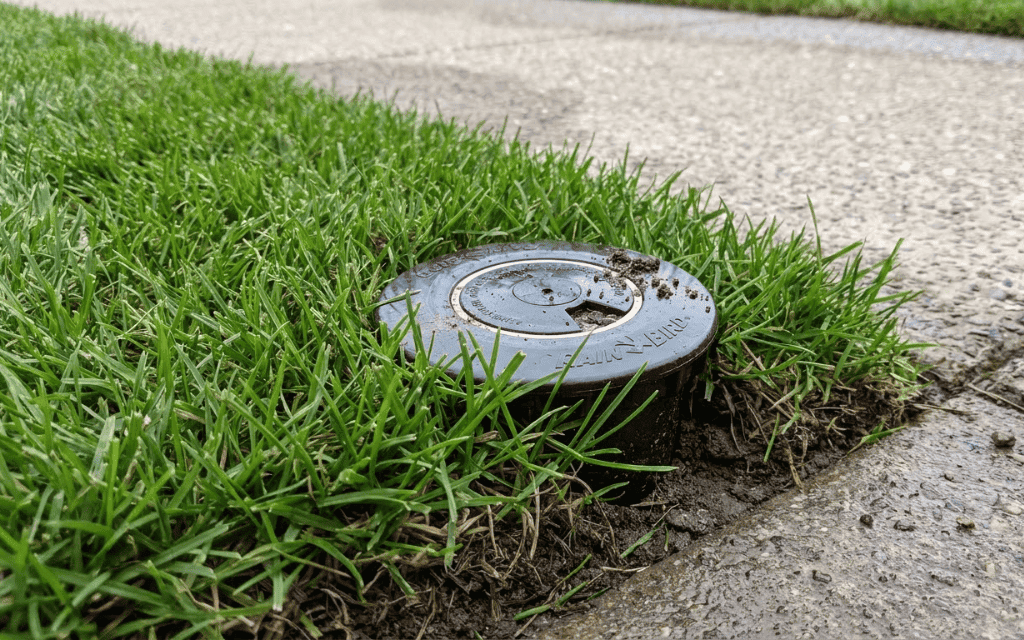
Each fixed surface needs the same drop: walkways, driveways, patios, steps, and paver edging. Sprinkler heads and valve boxes count too. Set the soil below their tops so the sod finishes level and the heads pop up clear of the grass. Our Sprinkler Installation team can raise or adjust low heads before sod goes down.
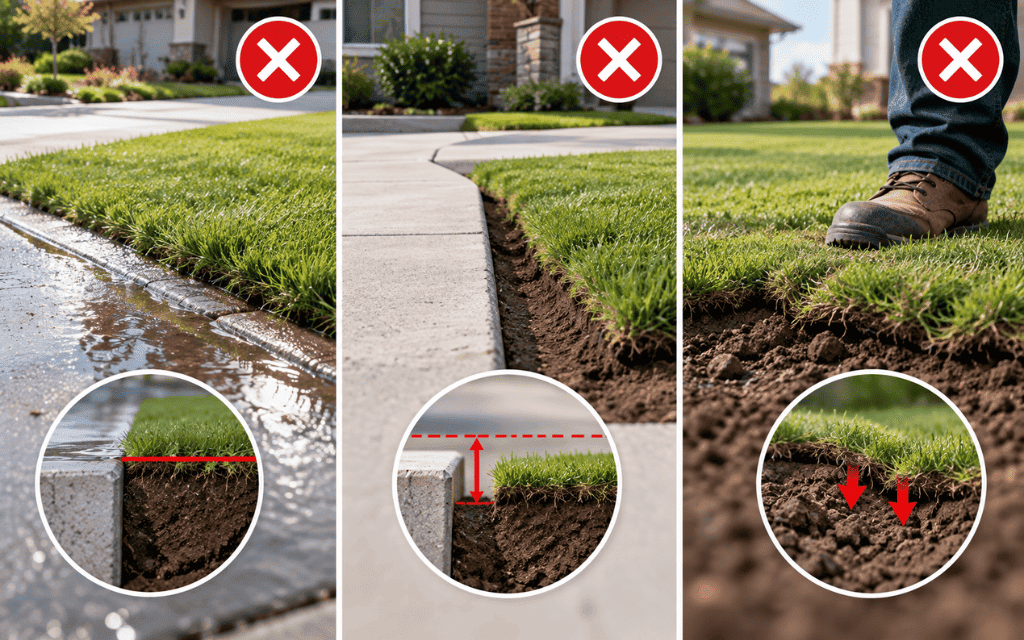
Avoid 3 common grading mistakes
Three grading mistakes cause most edge problems on new sod lawns:
- Soil left flush with pavement: The sod sits ¾ inch (1.9 cm) proud of the walk, its cut edge dries out, and the mower scalps it.
- Soil cut 2 inches (5 cm) too low: The lawn sinks into a trough where water pools against the concrete.
- Grade set on loose soil: The bed measures correctly on install day, then settles after the first soaking.
Preparing Denver clay soil for new sod
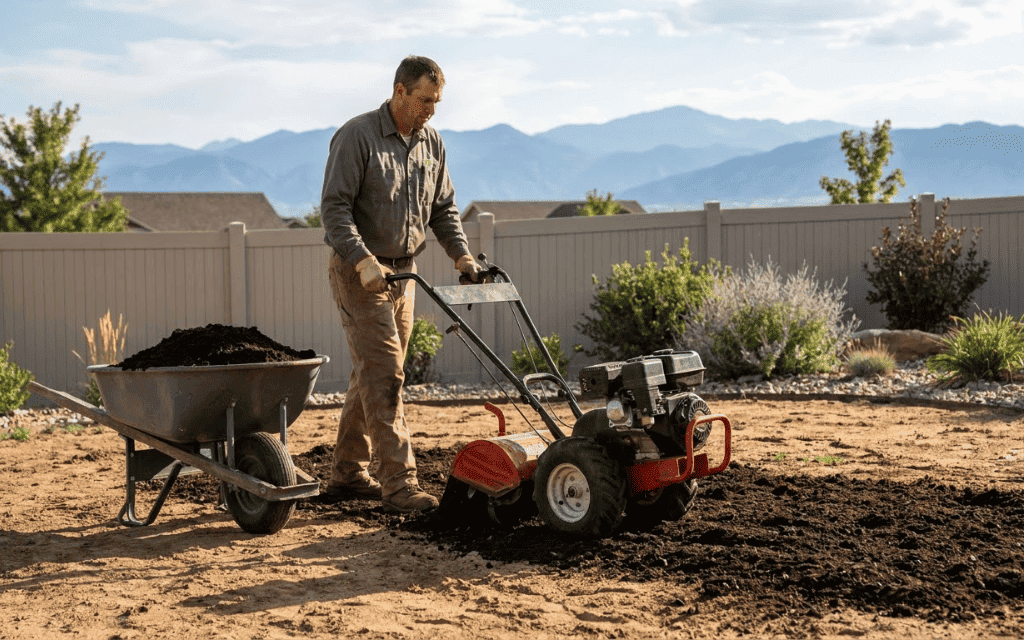
Denver-area clay soil needs amendment before sod goes down, because compacted clay slows water and blocks roots. CSU Extension recommends mixing 3 to 5 cubic yards (2.3 – 3.8 m³) of compost, decomposed manure, or sphagnum peat moss per 1,000 square feet (93 m²) into the top 6 to 8 inches (15–20 cm) of soil. For compacted ground, CSU advises cultivating to 12 inches (30 cm).
Amendment raises the grade. Spreading 3 to 5 cubic yards over 1,000 square feet adds about 1 to 1.6 inches (2.5–4 cm) of material before tilling, so pull soil back along hard edges once the bed settles. CSU also warns against laying sod over old turf, a thatch layer, or heavily compacted soil.
Moisten the bed 6 to 8 inches (15–20 cm) deep a few days before delivery, as CSU recommends. New sod roots into the soil below within 2 to 3 weeks when the bed stays moist, not soggy.
Timing a sod project around Denver Water rules (as of October 2026)
Denver Water banned lawn watering and spray irrigation starting October 1, 2026, under its amended Stage 1 drought resolution. The utility also stopped issuing watering establishment permits for new sod, except for qualifying projects such as the Lead Replacement Program, mainline pipe replacement, and Certificate of Occupancy. Fines for single-family customers start at $500.
The ban holds until the Denver Water board decides when lawn watering can resume, and the utility expects sprinklers to stay off into spring 2027. New sod needs steady moisture for its first 2 to 3 weeks, so a fall install inside Denver Water’s service area is impractical for most homeowners.
Use the wait to prepare: test soil, amend clay, correct grade, and repair sprinklers. Homes served by other utilities, such as those in Thornton, Westminster, or Broomfield, may follow different rules, so check with your provider. For a yard that needs less water long term, compare sod with Xeriscape Landscaping.
Quick reference: sod roll size and weight
Sod size varies by supplier, but most cool-season farms sell rolls of 2 by 5 feet (0.6 × 1.5 m) that cover 10 square feet (0.93 m²). The table below lists 3 common formats.
| Format | Typical size | Coverage | Notes |
| Cool-season roll | 2 × 5 ft (0.6 × 1.5 m) | 10 sq ft (0.93 m²) | Kentucky bluegrass, tall fescue blends |
| Warm-season slab | 16 × 24 in (41 × 61 cm) | About 2.7 sq ft (0.25 m²) | Bermudagrass, zoysiagrass, St. Augustinegrass |
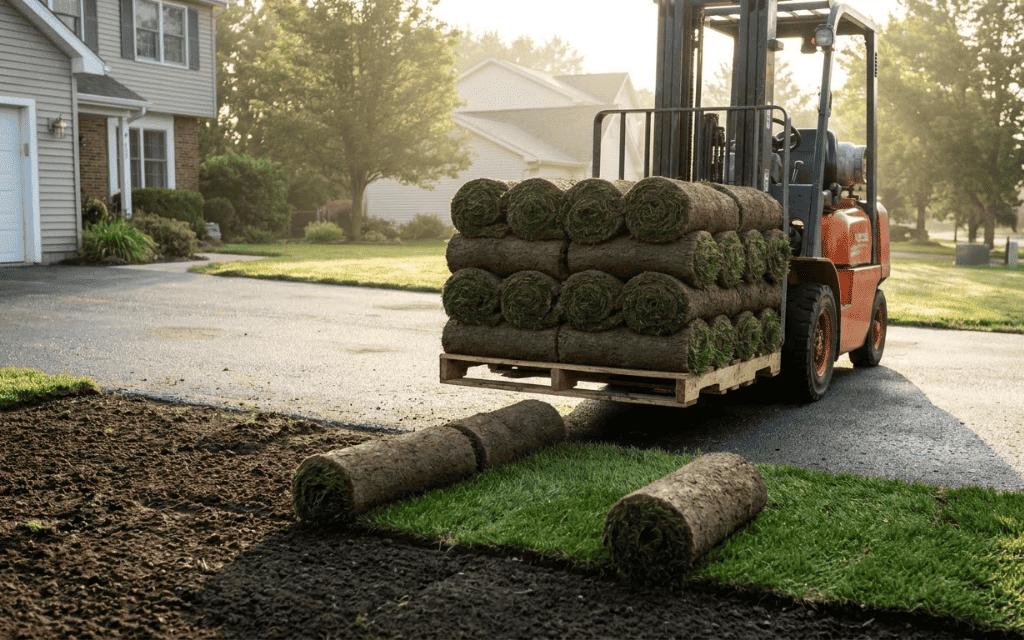
| Pallet | 50–60 rolls | 500–600 sq ft (46–56 m²) | Weight rises with soil moisture |
Order 5% to 10% extra sod to cover trimming around curves, beds, and trees.
Professional sod installation in Denver from Mile High Lifescape
Mile High Lifescape installs sod across the Denver Metro, including Denver, Lakewood, Littleton, Centennial, Broomfield, Thornton, Westminster, and Highlands Ranch. Our team brings over 20 years of experience to every lawn, large or small. On each job, we check how thick is sod on the delivered pallet before we set the final grade.
Our Sod Installation service covers each step this guide describes:
- Site assessment: We check soil, sun, slope, and drainage before recommending a grass type.
- Soil preparation: We clear old turf, amend clay soil, and set the grade below every hard edge.
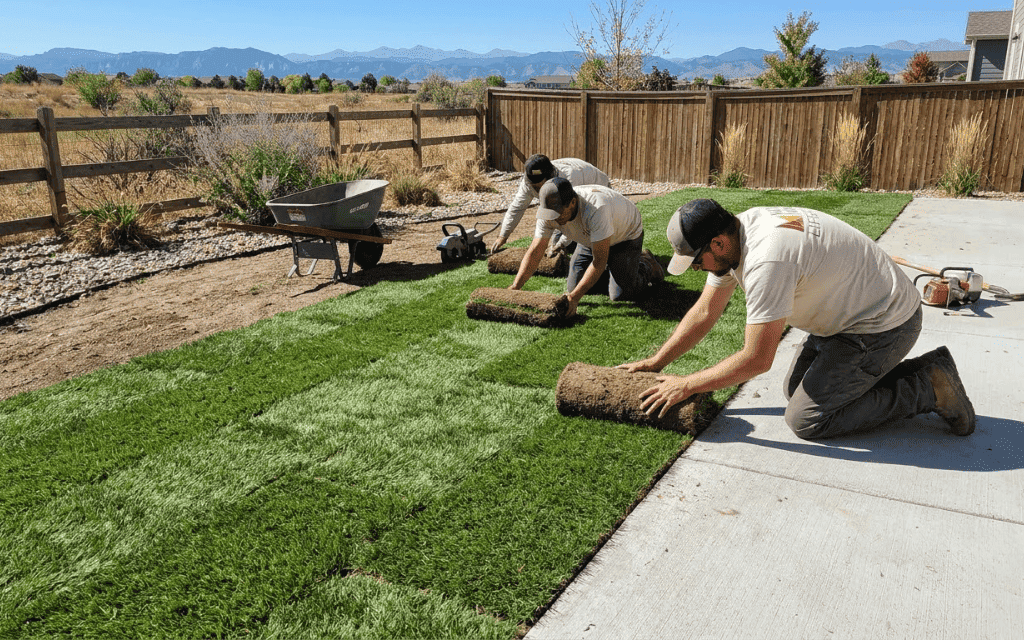
- Sod laying: We lay rolls in a staggered brick pattern with tight seams, then roll for full soil contact.
- Irrigation check: We adjust sprinkler heads and coverage so new sod gets even water.
- Aftercare guidance: We hand you a watering and mowing plan that fits local water rules.
Under current Denver Water restrictions, we can assess your yard and prepare the soil now, then schedule installation when watering rules allow. Call (303) 877-9091, Monday to Saturday, 8am to 5pm, or email hello@milehighlifescape.com.
Frequently asked questions about sod thickness
How thick is a roll of sod including the grass?
A roll measures about 2 to 3 inches (5–7.5 cm) from soil base to blade tips. Only the ½–¾ inch soil layer affects your grade.
How thick is sod grass usually cut at the farm?
Most farms cut lawn sod with ½ to ¾ inch (1.3–1.9 cm) of soil. STMA lists standard cut at about 0.5 inch (1.3 cm).
Does new sod raise the level of my lawn?
Yes, new sod raises the grade by the depth of its soil layer. Stripping old turf with a sod cutter offsets most of that rise.
How far below a sidewalk should soil be for sod?
Set firmed soil about ½ to 1 inch (1.3–2.5 cm) below the sidewalk. Match the exact drop to the soil layer on your delivery.
Is 1-inch-thick sod good quality?
Sod quality comes from density, root health, and freshness rather than soil depth. Thin-cut sod often roots faster than thick-cut sod.
How long does it take sod to root?
New sod roots in about 2 to 3 weeks with steady moisture. Lift a corner to check: gentle resistance and white roots signal rooting.
Can I lay sod in Denver this fall?
Inside Denver Water’s service area, new sod is impractical as of October 2026. Lawn watering is banned and establishment permits are paused, so prepare soil now and install when rules allow.
Sod thickness comes down to the soil layer: about ½ to ¾ inch on most lawns. Measure your delivery, firm the bed, and grade every edge to match. Mile High Lifescape can handle all 3 steps, so call (303) 877-9091 and ask us how thick is sod for your yard.