Mushrooms usually appear when mulch stays damp, shaded, and rich in decaying organic matter. If you want to know how to get rid of mushrooms in mulch, focus on removing visible growth, improving airflow and drainage, and allowing the surface to dry between watering. Mile High Lifescape recommends addressing excess moisture and poor airflow first to keep mulch beds healthier and reduce recurring mushroom growth.
Why Are Mushrooms Growing In My Mulch?
Understanding why they appear makes how to get rid of mushrooms in mulch much easier. Organic mulch naturally decomposes over time, and fungi are part of that process. Mushrooms become more noticeable when moisture, shade, and decaying material line up.
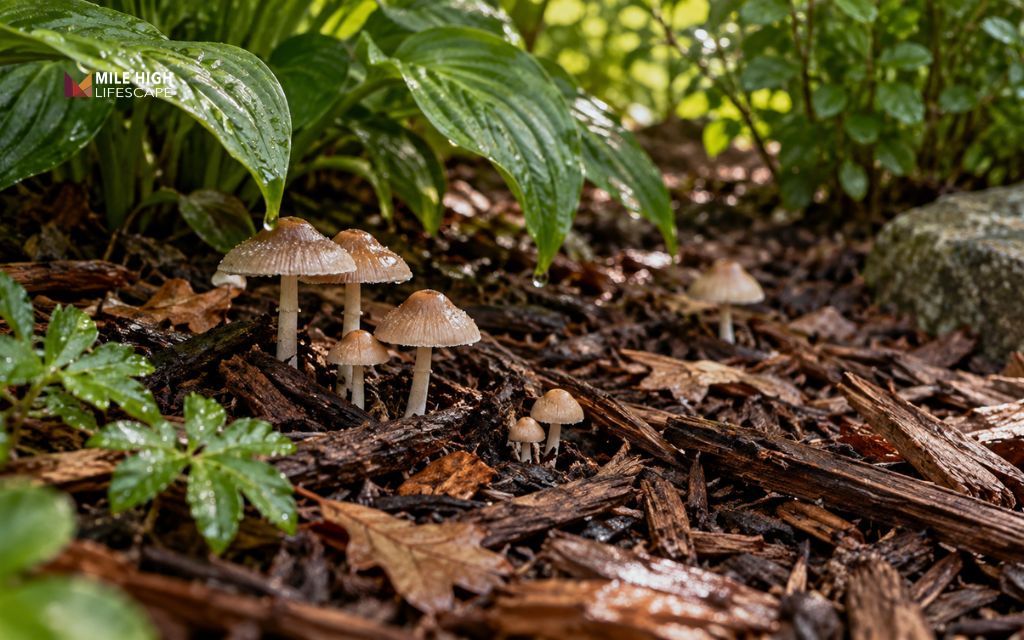
Excess Moisture And Poor Drainage
Long periods of rain, overwatering, or poor drainage can keep mulch wet enough for mushrooms to fruit. Beds that stay damp for several days are especially prone to repeated growth.
Check whether irrigation is running too often or whether water pools around the bed after rain. If runoff is part of the problem, improving drainage may be more effective than repeatedly removing mushrooms. Homeowners dealing with standing water can also review these drainage solutions for ideas on managing excess water around the landscape.
Decomposing Organic Material
Wood chips, bark, old roots, leaves, and buried plant material all provide food for fungi as they break down. That is a normal part of decomposition, not necessarily a sign that the mulch is bad.
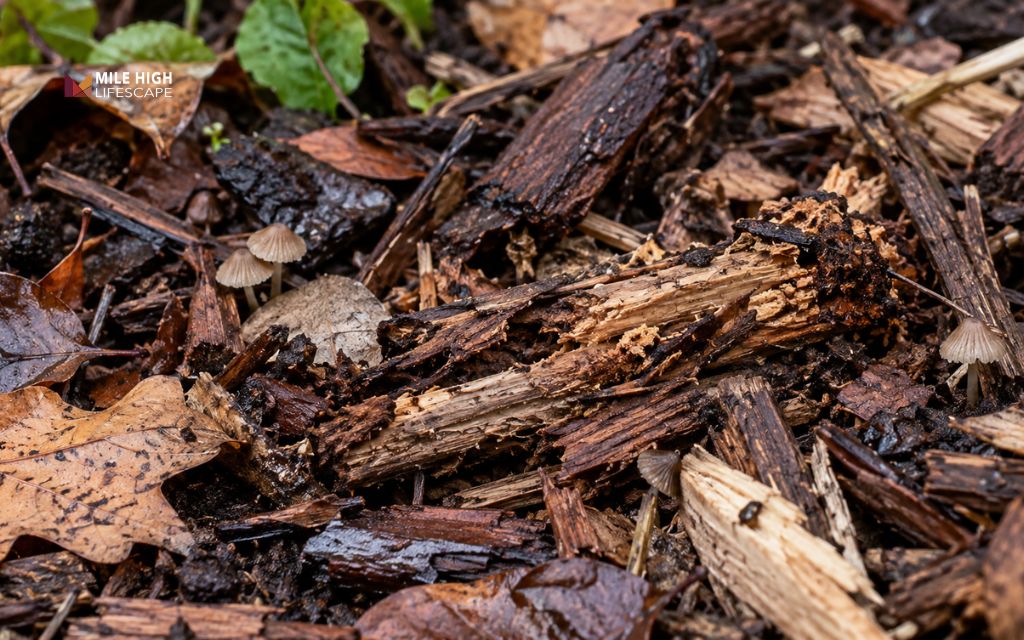
Older beds are more likely to contain partially decomposed material, especially when fresh mulch has been layered on top year after year. Learning how often to replace mulch can help you decide whether the bed needs a light top-up, a refresh, or a more complete reset.
Shade And Limited Airflow
Shaded beds dry more slowly, especially around dense shrubs, fences, walls, or closely spaced plants. Limited airflow can keep the surface damp even when the surrounding yard feels dry.
In these spots, how to get rid of mushrooms in mulch often comes down to helping the bed dry faster rather than adding chemicals.
How To Get Rid Of Mushrooms In Mulch
The best way to handle mushrooms is to combine simple removal with better moisture and mulch management. If you want a practical answer to how to get rid of mushrooms in mulch, work through the steps below rather than relying on a single treatment.
Remove Mushrooms By Hand Or Rake
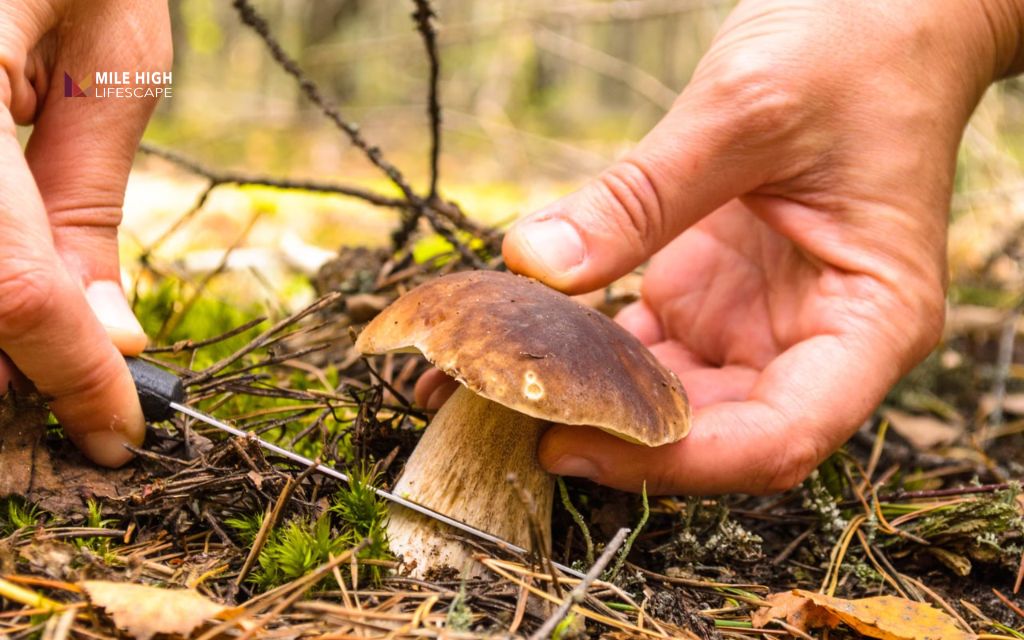
Pull or rake up visible mushrooms as soon as they appear, especially if children or pets use the area. Wear gloves and place the mushrooms in household waste rather than leaving them scattered across the bed.
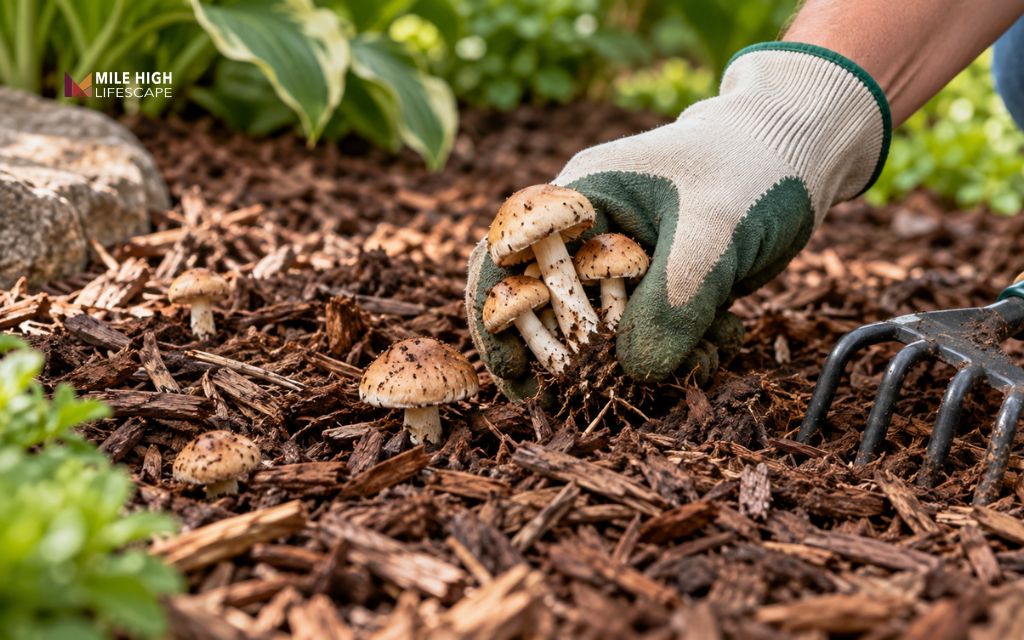
Removing the fruiting bodies will not eliminate all fungal growth below the surface, but it reduces the visible problem and removes mushrooms before they break down in place. Unidentified mushrooms should never be eaten.
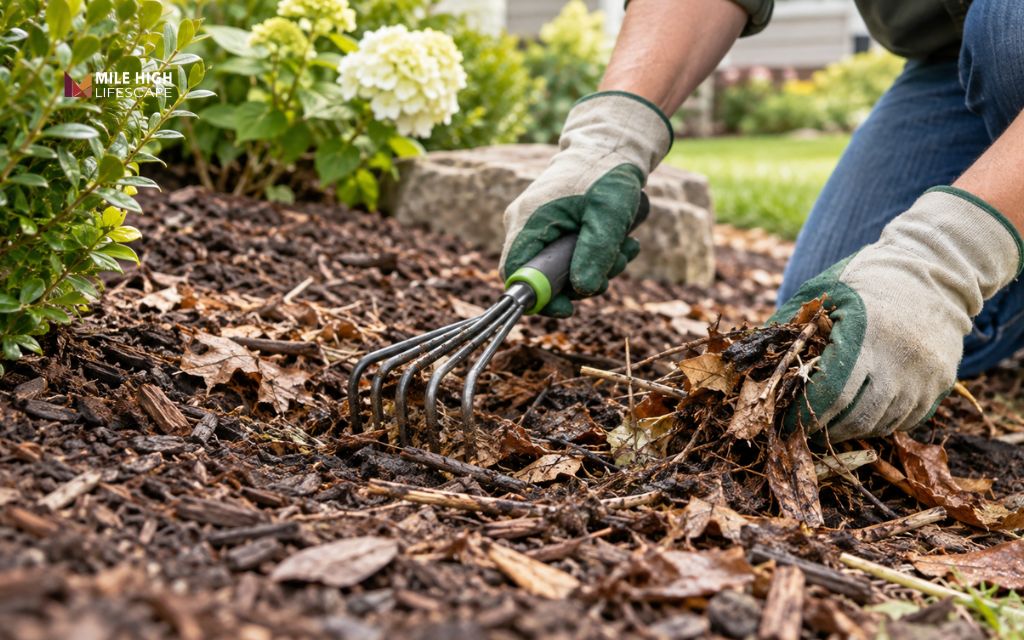
Loosen And Turn The Mulch
Compacted mulch can trap moisture and reduce airflow. Use a rake or hand cultivator to gently loosen the upper layer and expose damp material to air.
This is one of the simplest ways to make the environment less favorable for mushroom growth. It also helps prevent the surface from forming a dense, matted layer. For a broader maintenance approach, see how to mulch flower beds correctly from the start. Loosening mulch to improve drying is also a commonly recommended way to reduce recurring fungal growth.
Let The Mulch Dry Between Watering
If irrigation runs frequently, reduce unnecessary watering and allow the mulch surface to dry between cycles. Plants should still receive the water they need, but the top layer does not need to stay constantly damp.
For homeowners asking how to get rid of mushrooms in mulch without disrupting the entire bed, adjusting the watering schedule is often one of the easiest changes to make.
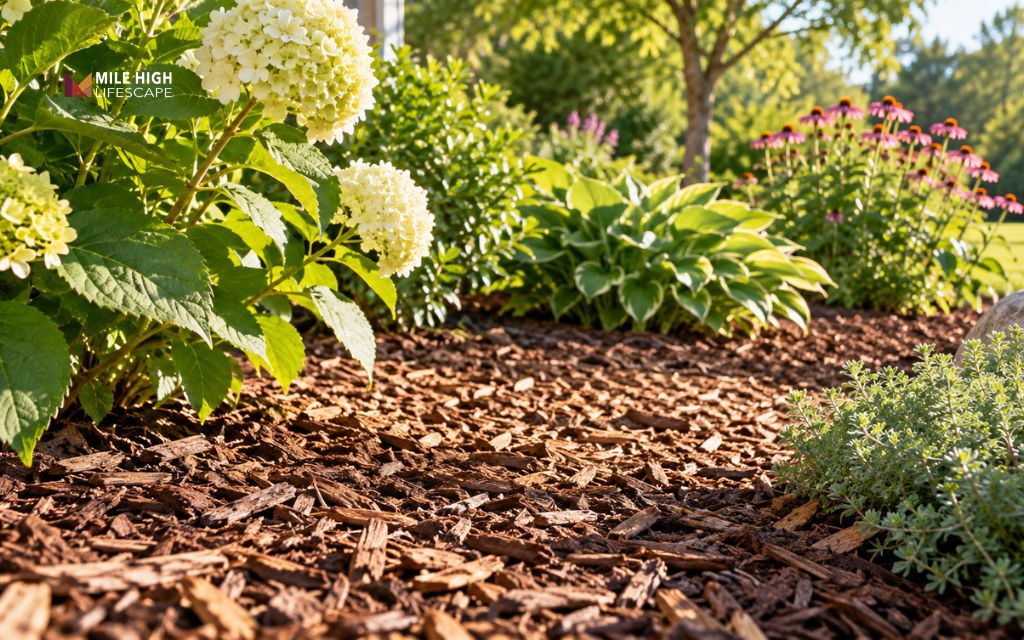
Improve Drainage Around The Bed
Water should move through or away from the bed rather than sitting under the mulch. If the area remains soggy after rain, check grading, downspouts, irrigation overspray, and low spots.
On sloped properties, water movement can create a different problem by washing mulch downhill. This guide to keeping mulch in place covers practical ways to control movement while maintaining a stable mulch layer.
Remove Excess Or Compacted Mulch
More mulch is not always better. A very deep layer can stay wet for longer and restrict airflow near the soil surface.
If the bed has been topped up repeatedly, pull some material back and check its depth. In many flower beds, a moderate layer is enough to suppress weeds and conserve moisture without creating a constantly saturated surface.
Clear Decaying Wood And Organic Debris
When mushrooms keep returning to one area, the cause may be below the mulch rather than on top of it. Buried roots, old wood, fallen leaves, and other decaying material can provide a steady food source for fungi. Removing that material where possible can help reduce repeated growth.
Replace Mulch When It Has Broken Down Too Far
Mulch can stay in place as long as it is still loose and doing its job. Once it becomes compacted, overly fine, or heavily decomposed, it may hold too much moisture and dry too slowly. At that point, refreshing or replacing the layer can improve both bed conditions and appearance.
How To Remove Mushrooms From Mulch Effectively
People often ask, “how do you kill mushrooms in mulch?” In most cases, control works better than trying to eliminate the fungus completely. Focus on removing visible mushrooms, loosening the mulch, reducing excess moisture, and improving drainage.
Since fungal growth can remain below the surface, strong household treatments and fungicides are usually unnecessary. Better moisture management is often the most practical long-term solution.
Refresh Your Landscape With Professional Mulch Installation
Mile High Lifescape offers professional Mulch Installation for homeowners who want a cleaner, healthier, and more finished landscape. With over 20 years of experience, the team takes into account existing bed conditions, plant spacing, drainage, and the overall layout before installation, helping mulch perform well instead of simply adding another surface layer.
- Consistent mulch depth for better moisture retention and soil protection
- Cleaner bed lines that improve the overall look of the landscape
- Better coverage around trees, shrubs, and planting areas
- Professional installation planned around Denver’s climate and property conditions
Contact Mile High Lifescape at (303) 877-9091 to schedule a mulch installation consultation for your Denver-area property.
Final Thoughts
The best way to approach how to get rid of mushrooms in mulch is to focus on moisture, airflow, and the condition of the mulch itself. Removing visible mushrooms may help in the short term, but long-term control comes from keeping the bed well-drained, properly maintained, and free from excess decaying material.
Why Do Mushrooms Keep Growing In My Mulch?
They usually return because the mulch stays damp, shaded, or rich in decaying organic matter.
How Do You Kill Mushrooms In Mulch Naturally?
Remove visible mushrooms, loosen the mulch, reduce excess watering, and improve drainage rather than relying on chemicals.
Will Mushrooms In Mulch Hurt My Plants?
Usually not. Most mushrooms in mulch feed on decaying organic material rather than healthy plants.
Should I Remove Mulch With Mushrooms In It?
Not necessarily. If the mulch is still loose and in good condition, remove the mushrooms and improve airflow instead.
Does Overwatering Cause Mushrooms In Mulch?
Yes. Frequent watering can keep mulch damp long enough to encourage mushroom growth.