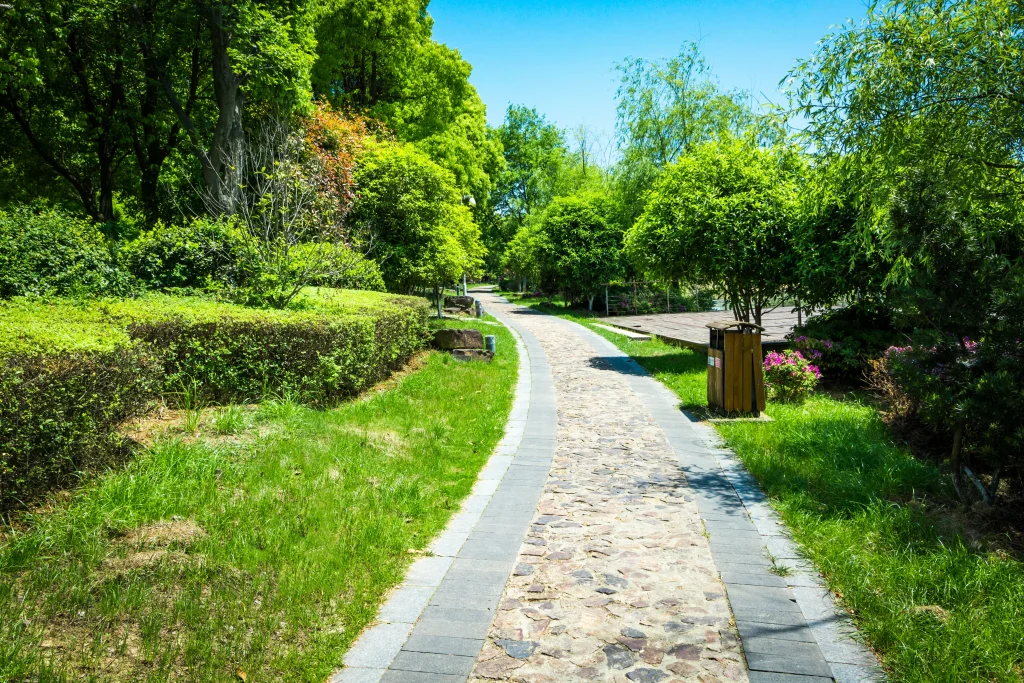
Rock beds and gravel landscapes are popular for a reason. They look clean, require less water, and add texture to any outdoor space. But if you’ve spent time maintaining one, you already know the frustrating truth: weeds still find a way in.
Learning how to prevent weeds from growing in rocks is not about finding a single magic product. It’s about building a system – one that combines proper installation, seasonal prevention, and simple, consistent maintenance.
Whether you’re managing a decorative rock bed, a gravel driveway, a patio edge, or a path through your yard, this guide will walk you through 9 proven tricks that actually work long-term.
Why do weeds grow in rock beds in the first place?
Before you can solve the problem, it helps to understand it.
Rock beds are not naturally weed-proof environments. Wind carries seeds constantly, and those seeds don’t need much to get started. Over time, organic matter – fallen leaves, decomposed debris, airborne dust – accumulates between stones and creates a thin but workable layer of “soil.” Add moisture from rain or irrigation and a bit of sunlight, and you have perfect germination conditions sitting right in your landscape rock.
The good news is that rock and gravel beds can absolutely be made weed-resistant with the right approach. You may never achieve a zero-weed result forever, but you can get remarkably close and keep it that way without spending every weekend pulling sprouts.
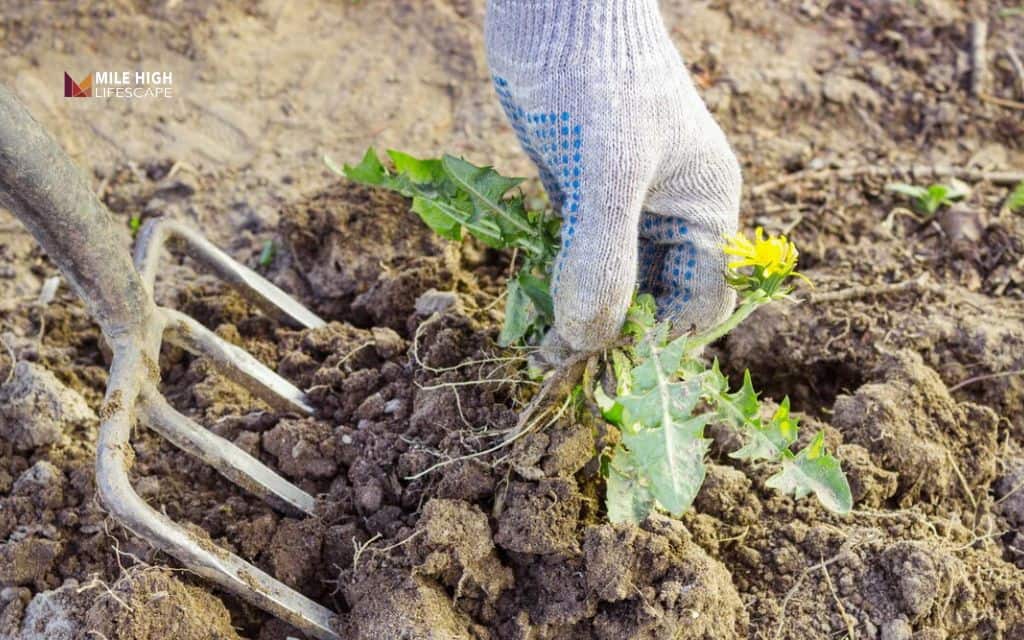
How to prevent weeds from growing in rocks
#1: Install high-quality landscape fabric
The single most important step you can take – especially when installing or renovating a rock bed – is laying a durable woven landscape fabric beneath your rocks. This is the foundation of any effective weed prevention system and the best answer to the question of what to put under rocks to prevent weeds.
Here’s how to do it right:
- Choose heavy-duty woven landscape fabric, not thin plastic sheeting. Woven fabric allows water and air to pass through while blocking light from reaching weed seeds below.
- Overlap seams by 6 to 12 inches wherever two sections of fabric meet. Gaps at seams are one of the most common entry points for weeds.
- Secure the fabric tightly with landscape staples or pins every few feet and along all edges. Loose fabric shifts over time and creates pockets where soil and seeds collect.
- Cut holes only where needed for plants, and seal edges with additional pins.
Important: Landscape fabric slows weed growth significantly, but it is not a permanent, maintenance-free barrier. Over time, organic debris builds up on top of the fabric and creates a surface layer that windblown seeds can root into. Think of it as your first line of defense, not your only one.
#2: Maintain proper rock depth (at least 2–3 inches)
Rock coverage is about more than aesthetics. The thickness of your rock layer directly affects how much sunlight reaches the fabric and soil below and sunlight is what triggers germination.
Use these depth guidelines as a starting point:
- Decorative beds and garden borders: 2 – 3 inches minimum
- Gravel paths and walkways: 2 – 3 inches
- Driveways and high-traffic areas: 3 – 4 inches
Thin rock layers are one of the most overlooked reasons why weeds keep coming back. If you can see gaps or the fabric peeking through in spots, it’s time to top off. Maintaining proper depth is one of the most cost-effective long-term strategies for how to keep weeds from growing in rocks.
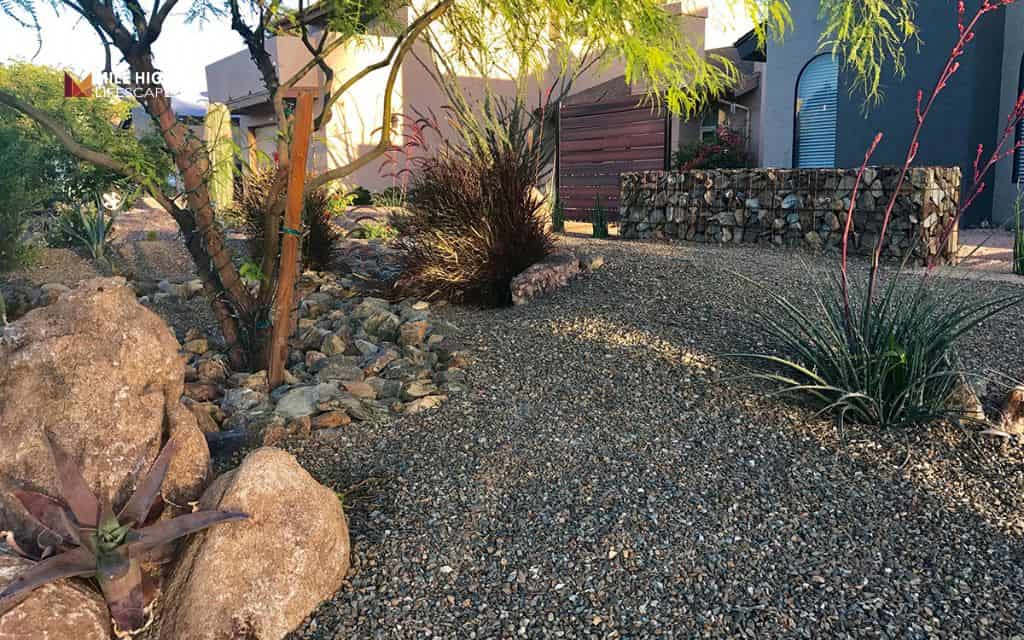
#3: Install solid edging to block grass spread
A clean edge is not just a design detail, it’s a functional barrier. Without solid edging, grass and lawn weeds creep laterally into rock beds, soil migrates inward with rain and foot traffic, and the line between your lawn and your rock landscape gradually blurs.
For effective rock and mulch bed weed control, choose edging materials that create a physical barrier:
- Metal edging (steel or aluminum): durable, long-lasting, and holds a crisp line
- Stone or brick borders: natural-looking and very stable
- Concrete curbing: permanent and low-maintenance once installed
Install edging so that it sits slightly above grade on the lawn side and flush or below on the rock side. This prevents soil and grass runners from simply growing over the top of the barrier.
#4: Remove organic debris regularly
This step is simple but often skipped – and it’s one of the main reasons rock beds develop persistent weed problems over time.
As leaves, twigs, and organic matter decompose on top of your rocks, they create exactly the kind of nutrient-rich surface layer that windblown seeds are looking for. Eliminating that layer is essential to how to keep weeds out of a rock garden year after year.
Make this part of your routine:
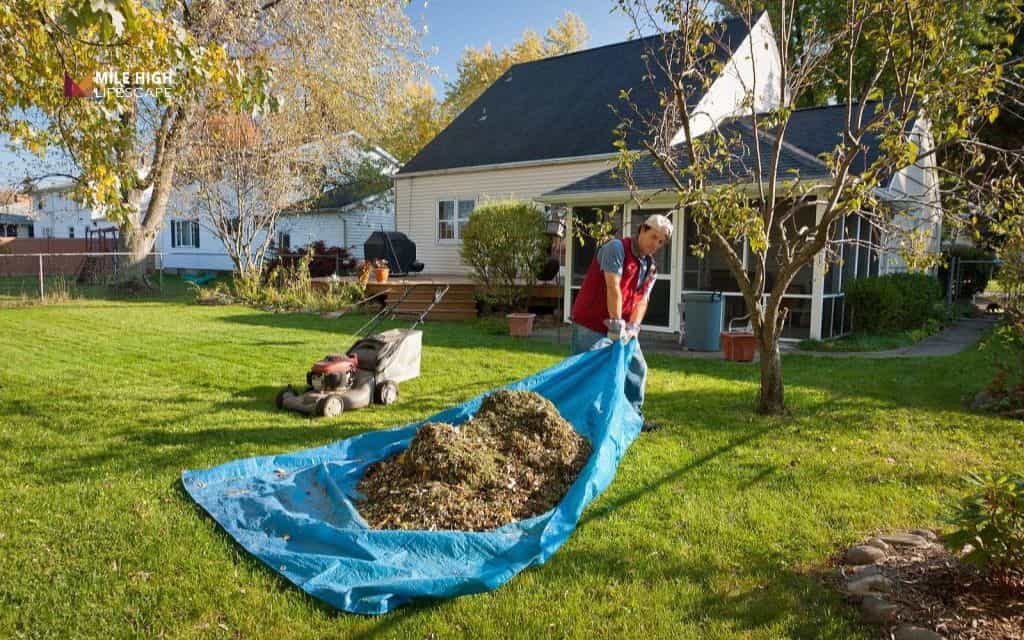
- Blow leaves out of rock beds weekly during fall using a leaf blower on a low setting to avoid disturbing your rocks
- Remove decomposing plant material before it breaks down into the spaces between stones
- Check for dirt buildup along edging and at the base of any plants or structures within the bed
Clean, debris-free rock is significantly harder for weeds to colonize. This one habit alone can cut your weed problems considerably.
#5: Inspect and pull weeds early, especially after rain
Even the best-installed rock bed will occasionally sprout a weed. The key is catching them early before they establish a deep root system, set seed, and multiply.
Rain is the most reliable trigger for germination. After any significant rainfall, make it a habit to walk your rock beds and look for new sprouts. Early removal is one of the most effective strategies for how to get rid of weeds in rock beds long-term, because:
- Small sprouts pull out easily, often with the full root intact
- Established weeds require more effort and often leave root fragments behind that regrow
- Weeds that go to seed can spread dozens to hundreds of new seeds into the surrounding area
When pulling weeds from rocks:
- Work when the ground is still moist from rain – roots release more cleanly
- Grip the weed at the base and pull steadily rather than jerking
- Remove the full root system to prevent regrowth
- Dispose of pulled weeds away from the rock bed, especially if they’ve already flowered
This hands-on approach to rock weeding takes only a few minutes a week when done consistently. Neglect it for a month and the workload compounds quickly.
#6: Apply pre-emergent weed control in early spring
If you’re open to using herbicides, pre-emergent weed control is one of the most effective tools available for weed control in rocks – precisely because it works before you ever see a problem.
Pre-emergent herbicides create a chemical barrier in the top layer of soil that prevents weed seeds from germinating. They do not kill existing weeds or affect established plants.
Here’s how to use them effectively:
- Apply in early spring, before soil temperatures reach the range where weed seeds typically germinate (around 50–55°F for most common weeds)
- Follow label directions carefully for application rate and coverage
- Reapply as directed — most pre-emergents provide protection for 3 to 6 months and require a second application in early fall for year-round coverage
- Water lightly after application (unless the label specifies otherwise) to activate the product
#7: Use spot treatment weed killers carefully
For weeds that have already emerged, spot treatments offer a targeted way to kill them without disturbing your rock layout. When used carefully, they’re an effective component of any strategy for killing weeds in rocks without major disruption.
Your options, depending on your comfort level with chemicals:
Organic and low-chemical options:
- Vinegar-based sprays (acetic acid): effective for killing the visible top growth of young weeds; work best on sunny, dry days; may require repeat applications on established plants since they do not penetrate roots reliably
- Boiling water: a completely chemical-free option for isolated weeds in hard surfaces like pavers
Systemic herbicides:
- Products containing glyphosate or similar active ingredients travel through the plant to the roots, making them more effective for how to kill weeds in rocks when weeds are established
- Apply only on calm, dry days to avoid drift onto desirable plants
- Use a targeted applicator or shield to prevent overspray
Important safety reminders for any spot treatment:
- Always read and follow the full label: rates, timing, and safety precautions vary by product
- Avoid spraying near water features, storm drains, or edible plants unless the label specifically permits it
- Wear appropriate protective equipment as directed

#8: Improve base preparation under rock beds
If you’re installing a new rock bed – or renovating an existing one that has chronic weed issues – the time you invest in base preparation pays dividends for years.
Proper base prep addresses weed problems before they start, which is far more efficient than managing them after the fact.
Here’s a checklist for getting it right:
- Remove all existing vegetation, including grass, weeds, and roots, before laying fabric. Solarizing the area for 4 to 6 weeks in summer can kill persistent root systems and weed seeds near the surface.
- Compact the base soil to reduce voids where seeds can settle
- Consider adding a layer of crushed gravel (¼-inch crushed rock or decomposed granite) as a base beneath your decorative rock. This improves drainage, reduces moisture retention at the surface, and creates an additional physical barrier.
- Lay fabric after compaction and before adding decorative rock
#9: Consider flame weeding for gravel areas
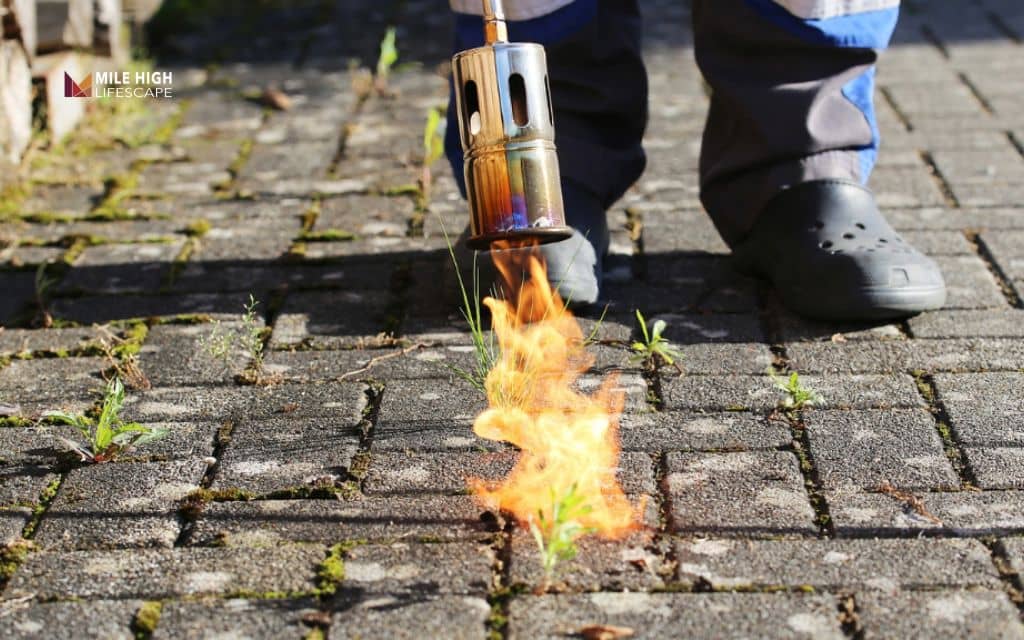
Flame weeding – using a propane torch to briefly heat and kill weeds – is an option worth considering for large gravel areas like driveways, pathways, and open rock zones where precision spot-spraying is impractical. It’s a chemical-free approach that can be effective for surface-level weed control.
Best suited for:
- Gravel driveways
- Wide open rock areas with few or no surrounding plants
- Between pavers where weeds are difficult to pull
How it works: The goal is not to burn the weed but to heat it long enough to destroy the cell structure. A brief pass with the flame is typically sufficient, you don’t need visible burning.
Strict safety practices are required. Do not attempt flame weeding without following these rules:
- Never use it on windy days. Wind can carry flame unpredictably.
- Avoid use near dry grasses, mulch, wood structures, or any flammable materials.
- Wear appropriate protective clothing: long pants, closed-toe shoes, and heat-resistant gloves.
- Keep a water source or fire extinguisher nearby at all times.
- Check local regulations: flame weeding may be restricted or prohibited during fire danger periods or in certain municipalities.
Flame weeding does not kill deep root systems, so it works best as a maintenance tool for young or annual weeds rather than a solution for established perennials.
Simple maintenance routine
Preventing weeds in rock beds does not require a lot of time, it requires consistency. This streamlined routine keeps your rock landscaping clean year-round with minimal effort:
Monthly:
- Quick visual inspection of all rock beds
- Remove any new sprouts immediately before roots establish
Seasonal:
- Reapply pre-emergent in early spring (and again in early fall if using)
- Blow out accumulated debris from all rock areas
- Top off rock depth in areas that have thinned
After heavy rain or storms:
- Check for erosion, especially along edges and low points
- Walk beds and pull any fresh sprouts that have emerged
- Look for spots where debris has washed in and clean accordingly
Can you permanently kill weeds in rocks?
This is one of the most common questions homeowners ask and it deserves an honest answer.
There is no truly permanent, zero-maintenance weed solution for rock beds. Wind does not stop carrying seeds. Organic matter will continue to accumulate over time. Even the best landscape fabric eventually degrades.
However, “permanent” does not have to mean your goal. What you can realistically achieve is a dramatically reduced weed load that requires minimal, manageable maintenance if you build the right system from the start.
The most effective long-term approach combines:
- Proper installation (fabric, depth, edging, base prep)
- Seasonal prevention (pre-emergent, debris removal)
- Consistent early intervention (pulling sprouts after rain, monthly inspection)
Homeowners who follow this system consistently often go from spending hours pulling weeds to spending just a few minutes per month keeping their rock beds tidy. That’s the real goal — not perfection, but a sustainable, low-effort system that actually holds up over time.
Conclusion
The best answer to how to prevent weeds from growing in rocks is not a product, it’s a layered system.
Install quality landscape fabric and maintain adequate rock depth. Protect your edges with solid edging. Keep beds free of organic debris. Inspect after rainfall and pull weeds early. Use pre-emergent in spring. Treat existing weeds carefully and selectively. Prepare your base properly from the start.
Each of these steps contributes something meaningful to the overall result. Together, they create a rock landscape that stays clean, looks great, and requires far less effort to maintain than most homeowners expect.
If you’re in the Denver area and want help designing or renovating a rock bed the right way, Mile High Lifescape is here to help. Our landscape rock service helps you build rock garden that are built to stay weed-resistant from day one.
Frequently asked questions (FAQs)
What is the best way to prevent weeds from growing in rocks?
The best way to prevent weeds in rock beds is to combine proper installation with consistent maintenance. Start with high-quality woven landscape fabric, maintain at least 2 to 3 inches of rock depth, install solid edging, and remove weeds early, especially after rainfall. No single product eliminates weeds permanently, but a layered system dramatically reduces them over time.
What should you put under rocks to prevent weeds?
Heavy-duty woven landscape fabric is the most effective material to place under rocks to block weed growth. Overlap seams by 6 to 12 inches, secure with landscape pins, and avoid thin plastic sheeting, which breaks down quickly and traps moisture. For new installations, consider adding a crushed gravel base layer beneath the fabric for improved drainage and additional weed suppression.
Can you permanently kill weeds in rocks?
No approach is truly permanent. Wind-blown seeds can land and germinate even in well-maintained rock beds over time. However, combining prevention methods (fabric, proper depth, edging, debris removal) with early removal and seasonal pre-emergent treatments can reduce weed growth dramatically and keep maintenance minimal.
What is the best weed killer for rock gardens?
For existing weeds, vinegar-based sprays can handle light, young weed growth, while systemic herbicides are more effective against established or deep-rooted weeds. Pre-emergent herbicides are the best tool for stopping new weeds before they appear. Always follow label instructions carefully and avoid overspray near desirable plants, water features, or storm drains.
How often should you maintain rock beds to prevent weeds?
Inspect rock beds monthly and always after significant rainfall, when new sprouts are easiest to remove. Seasonal maintenance, including debris removal and pre-emergent reapplication, keeps weed pressure low throughout the year. Consistent small efforts prevent the need for large-scale intervention down the road.