
Learning how to trim tall trees starts with understanding why height changes everything about pruning. Tall trees add real shade and value to a home, but a branch that looks simple to remove from a small tree turns into a real safety risk forty feet in the air. This guide covers the technique, timing, and safety judgment needed to trim tall trees correctly, and explains where DIY effort should stop and professional help should start.
Why trimming tall trees carries more risk
A tall tree multiplies every risk factor in pruning. Branches higher in the canopy carry more leverage, so a limb that looks minor from the ground can weigh hundreds of pounds near the trunk. A branch falling from thirty or forty feet builds enough speed to injure a person or damage a roof, fence, or car. This is why trimming tall trees demands more planning than trimming a small ornamental tree or shrub.
Certain signs mean a tall tree needs trimming soon. Dead or broken limbs, cracks near the trunk, branches rubbing the roofline, and limbs hanging over a walkway or driveway all call for pruning before the next scheduled season. Storm damage adds urgency, since a cracked limb can fail without warning even on an otherwise healthy tree. Catching these signs early keeps a routine trim from becoming an emergency removal, and it is often the first step toward learning how to trim tall trees on a schedule instead of in a crisis.
Learn more: Benefits of trimming trees
How to trim tall trees correctly
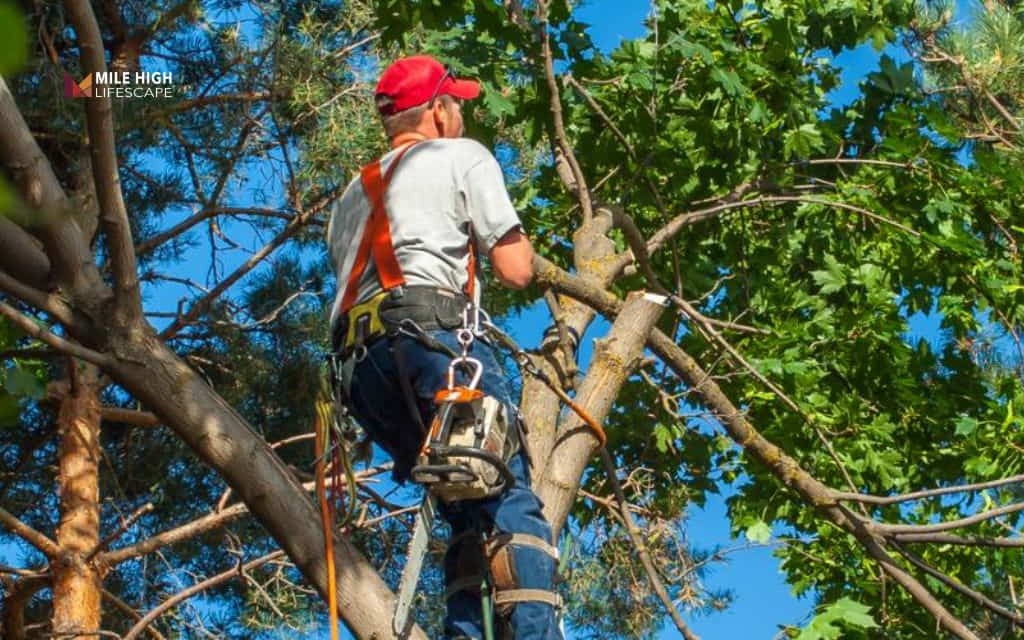
Trimming tall trees starts with the cut itself. Arborists use a three cut method to remove a branch without tearing bark down the trunk.
- Notch cut: A shallow cut on the underside of the branch, a few feet from the trunk, extending about a quarter of the way through.
- Relief cut: A cut just beyond the notch that removes the bulk of the branch’s weight, so the tree does not split during the final cut.
- Final cut: A cut just outside the branch collar, the raised ring where the branch meets the trunk, that lets the wound close cleanly over time.
Professionals also describe three goals when they trim tall trees.
- Crown thinning: Removes selected branches to improve light and airflow through the canopy.
- Crown raising: Removes lower branches to clear space beneath the tree.
- Crown reduction: Lowers a tree’s overall height without leaving stubs.
Choosing the right tool matters as much as technique when you trim tall trees, and it depends on how high the work sits.
- Ground level tools: A pole pruner or pole saw reaches branches up to about twelve to fifteen feet, paired with hand pruners or loppers for smaller stems.
- Professional equipment: A chainsaw, climbing gear, and rigging ropes handle cuts above that height, or any limb too heavy to lower by hand.
Sharp, well maintained blades matter as much as the tool itself. A dull cut tears tissue and slows healing, no matter which tool made it, so choosing the right tool for the height of the work is one of the simplest ways to trim tall trees without taking on unnecessary risk.
Best time of year to prune tall trees
Timing matters as much as technique when learning how to trim tall trees. Most of them respond best to trimming during the dormant season, roughly late fall through early spring, before new growth begins. Cuts made while a tree is dormant close faster once the growing season starts, and the leafless canopy makes it easier to see the tree’s structure and identify which limbs actually need to come out. Trimming during this window also reduces stress on the tree, since it is not actively pushing energy into new leaves and wound tissue at the same time, which makes dormant season the standard answer whenever someone asks how to trim tall trees without setting the tree back.
There is one clear exception to this schedule. A broken, cracked, or dead limb that poses an immediate safety risk should be removed as soon as it is discovered, regardless of season. Waiting for the ideal window to trim tall trees only makes sense when the tree is not actively creating a hazard, and a hazardous limb should never wait for a calendar date.
DIY trimming versus calling a professional
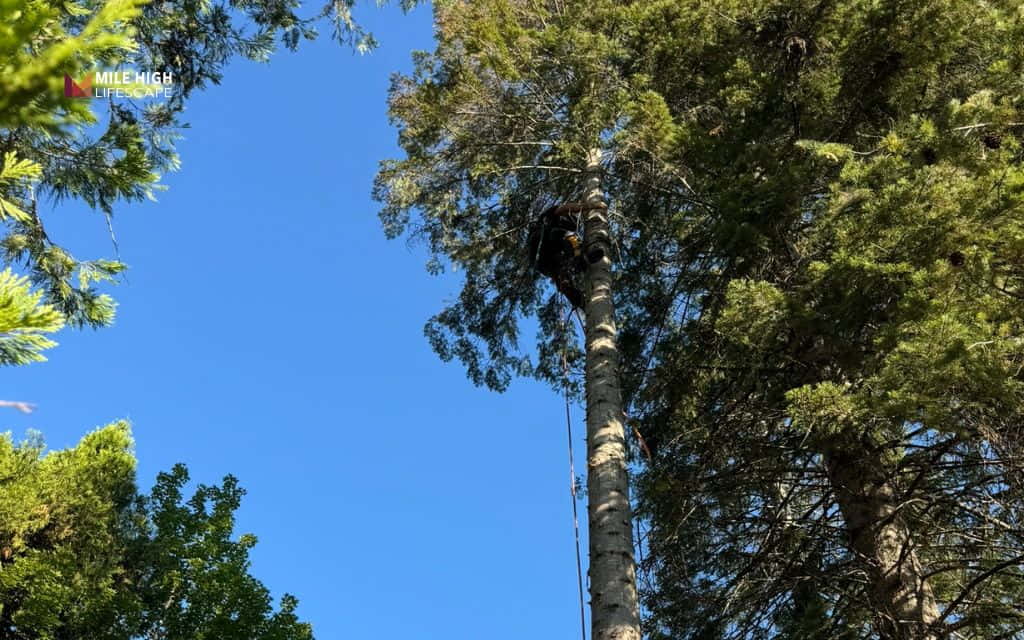
Not every cut on a tall tree needs a climber or heavy equipment, but the line between a manageable DIY task and a job for a professional arborist is narrower than it looks when the goal is to trim tall trees safely. Height, branch diameter, and proximity to power lines are the three factors that matter most when deciding who should make the cut, and getting this judgment right is central to trimming tall trees without turning a routine task into an accident.
| Factor | Safe for DIY from the ground | Call a professional arborist |
| Height of the branch | Reachable with a pole pruner, generally under 12 to 15 feet | Requires a ladder, climbing gear, or a bucket truck to reach |
| Branch diameter | Small stems and twigs under about 2 inches thick | Large limbs that require a chainsaw and controlled lowering |
| Proximity to power lines | No lines anywhere near the work area | Any branch growing into or near overhead power lines |
| Structural complexity | A single, isolated limb with a clear drop zone | Multiple large limbs, a leaning trunk, or storm damaged sections |
Any job that lands in the right hand column carries real risk of electrocution, falls, or property damage, and should go to a certified arborist rather than a homeowner working alone. Mile High Lifescape’s tree and shrub care service handles precise pruning and safe limb removal for trees that have outgrown DIY tools.
Common mistakes that damage tall trees
Two mistakes cause most of the lasting damage when people trim tall trees:
- Topping: Cutting main branches or the trunk down to stubs at a uniform height. Topping strips away the leaves a tree depends on for energy, forces out weak regrowth, and leaves wounds that struggle to close. A topped tree rarely regains its natural shape and often grows more hazardous over time.
- Over pruning: Removing more than about a quarter of a tree’s living canopy in one season. This stresses the tree and limits its ability to produce energy. Spreading heavy pruning across two or more seasons is a safer way to trim tall trees, keeping the tree healthier and lowering the risk of shock or dieback.
Learn more: How to trim cypress trees without ruining them
Conclusion
Trimming tall trees comes down to two goals that work together rather than against each other, protecting the tree’s health and protecting the people working near it. Correct cuts, dormant season timing, and an honest read on when a job has grown too tall, too heavy, or too close to power lines for DIY tools all keep both goals within reach, and together they answer the practical question of how to trim tall trees without regret.
When a tree has outgrown what ground-level tools can safely handle, Mile High Lifescape offers tree and shrub care built around proper pruning technique and long-term tree health, serving homeowners throughout the Denver Metro area. Our Tree Branch Removal service can safely address dead, damaged, overgrown, or hazardous limbs that are difficult to reach from the ground. Professional branch removal can improve clearance, reduce safety risks, and help maintain a stronger tree structure.
Reach out at (303) 877-9091 to schedule an assessment before the next storm or growing season puts a tall tree at risk.
Frequently asked questions (FAQs)
How tall does a tree need to be before I should stop trimming it myself?
Once a branch sits higher than what a pole pruner can safely reach from the ground, generally above 12 to 15 feet, the risk of a fall increases sharply. At that point, hiring a professional with the right climbing or lift equipment is the safer choice for trimming tall trees.
How to trim a tree that is too tall
A ladder is not a stable platform for cutting overhead branches, since the reaction force of a saw can shift your balance mid cut. For a tree that is too tall for ground tools or a ladder to handle safely, a professional arborist with proper rigging and lift equipment can trim the canopy without putting anyone at risk, which is the safest answer to how to trim a tree that is too tall for standard homeowner tools.
Can trimming a tall tree kill it?
Yes, if too much canopy is removed at once, if cuts are made in the wrong place, or if the tree is topped. Following correct cut placement, pruning during the dormant season, and limiting how much foliage comes off in a single visit all protect the tree’s long term health when trimming tall trees.
Do I need a permit to trim a tall tree?
Some municipalities require a permit for pruning certain protected or heritage trees, particularly near property lines or a public right of way. Checking with the local planning or forestry department before major pruning work avoids fines and protects trees that may fall under a protective ordinance, and it is a quick step worth confirming before scheduling anyone to trim tall trees on a property.
How often should tall trees be trimmed?
Most mature shade trees benefit from a structural trim every three to five years, with a yearly inspection for dead or damaged limbs in between. Younger trees may need more frequent shaping to establish strong branch structure early on, which makes it easier to trim tall trees safely as they mature.