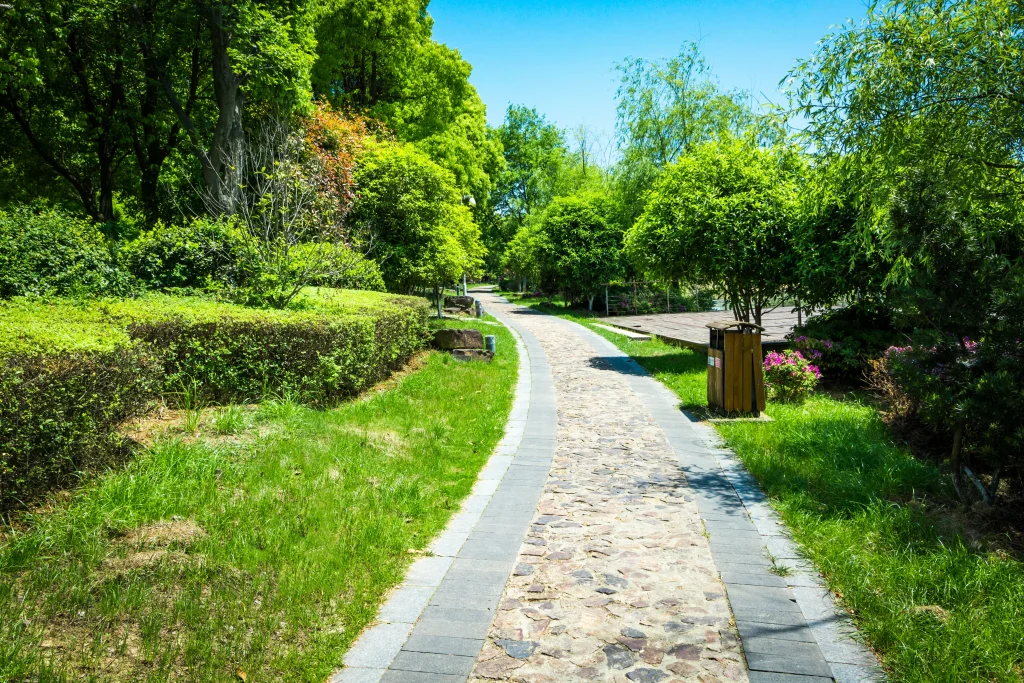
Your garden is an extension of your home and nothing ties it together quite like a stone pathway. Whether you’re navigating a sprawling backyard, a cozy cottage garden, or a sleek modern landscape, ideas for stone pathways are among the most versatile and rewarding improvements a homeowner can make.
Here’s what a great stone pathway can do for your outdoor space:
- Add structure and visual charm to any garden style
- Solve the frustration of muddy or worn-down lawn areas
- Improve curb appeal and overall property value
- Make your garden easier and more enjoyable to navigate in all seasons
- Create defined zones that give your landscape a polished, intentional feel
Whether you’re a weekend DIYer looking for stepping stone path ideas or a homeowner planning a full flagstone walkway, this guide covers everything you need, from stone path ideas and practical material comparisons to simple installation steps and maintenance tips.
Let’s dig in.
15 stone pathway ideas to inspire your garden
Not sure where to start? Browse these garden path ideas and find the look that fits your space, style, and budget. Each stone pathway idea includes the best use case, material highlights, and a quick note on difficulty.
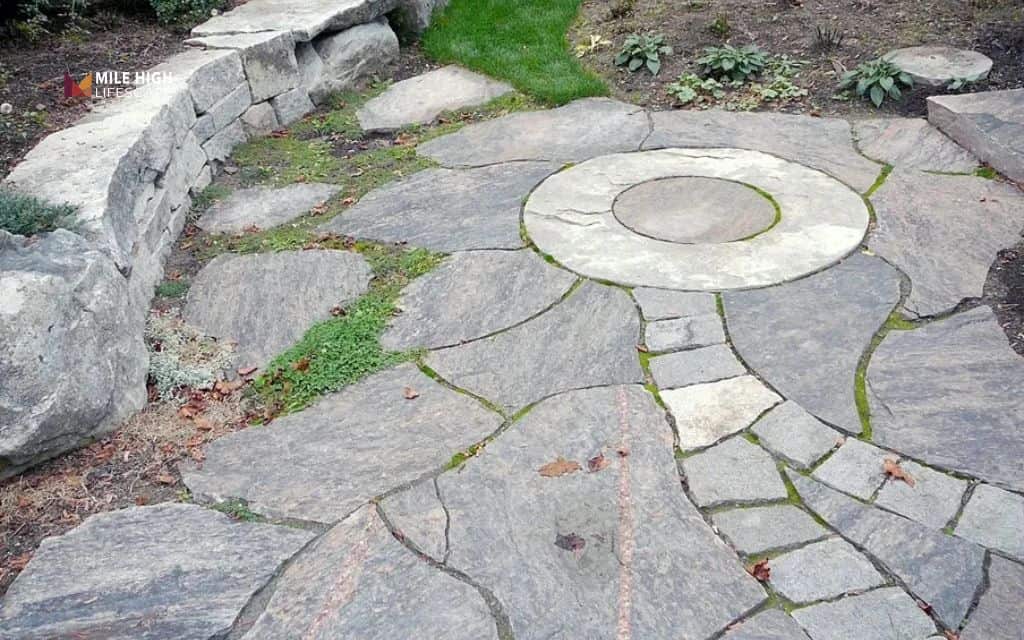
Classic flagstone walkway
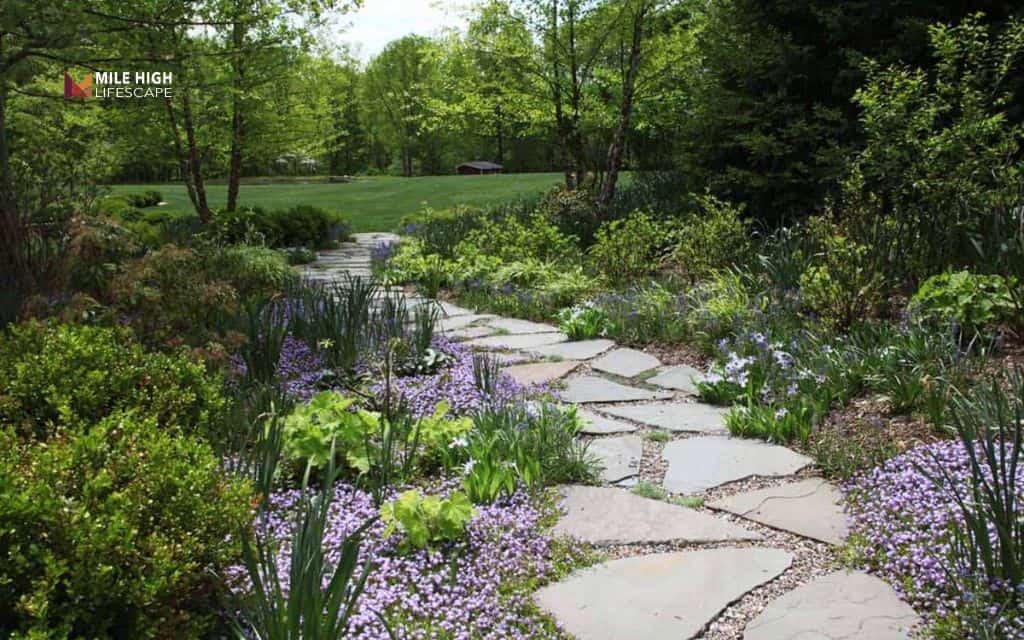
There’s a reason the classic flagstone walkway remains one of the most beloved natural stone walkway ideas across garden styles. Large, irregular slabs of natural stone like bluestone, limestone, or sandstone, are laid with open joints filled with gravel, decomposed granite, or low-growing plants. The result is a path that looks like it grew right out of the earth.
- Best for: Cottage gardens, naturalistic landscapes, front yard curb appeal
- Material: Bluestone, sandstone, limestone, or travertine
- Filler options: Decomposed granite, pea gravel, or creeping thyme
- DIY difficulty: Moderate (requires leveling and a compacted base)
Stepping stones in grass
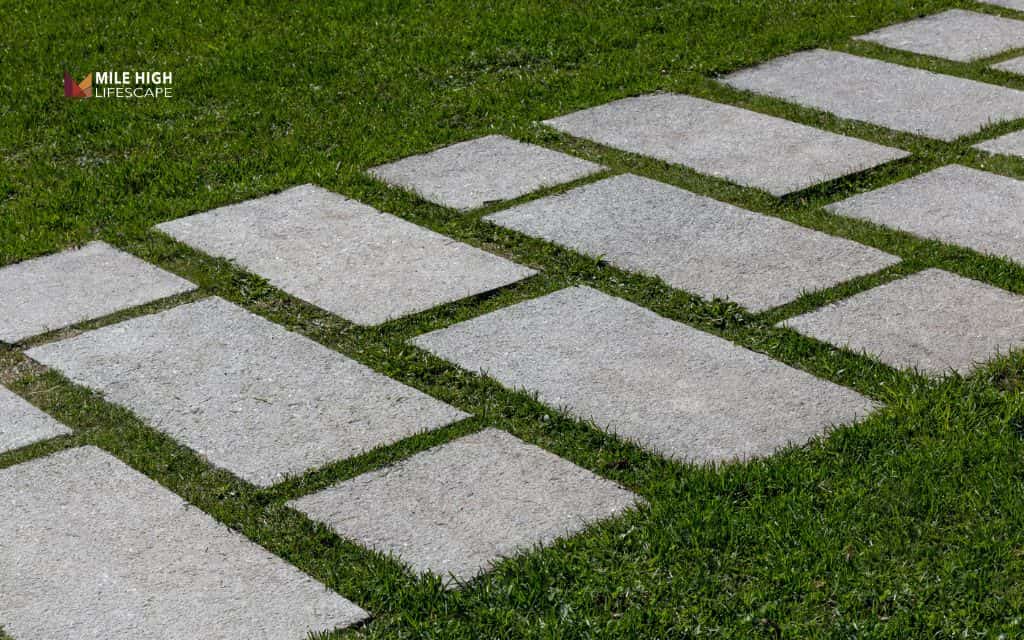
Simple, clean, and approachable – stepping stones set directly into a lawn are among the most popular stone path ideas for beginners. Individual stones are spaced at a comfortable walking stride across the grass, creating a natural path of stones that blends seamlessly into the yard.
- Best for: Low-traffic backyard paths, weekend DIY projects
- Material: Concrete stepping stones, natural slate, or flat river stones
- DIY difficulty: Easy (set stones flush with soil level to allow mowing)
Gravel and stepping stone mix
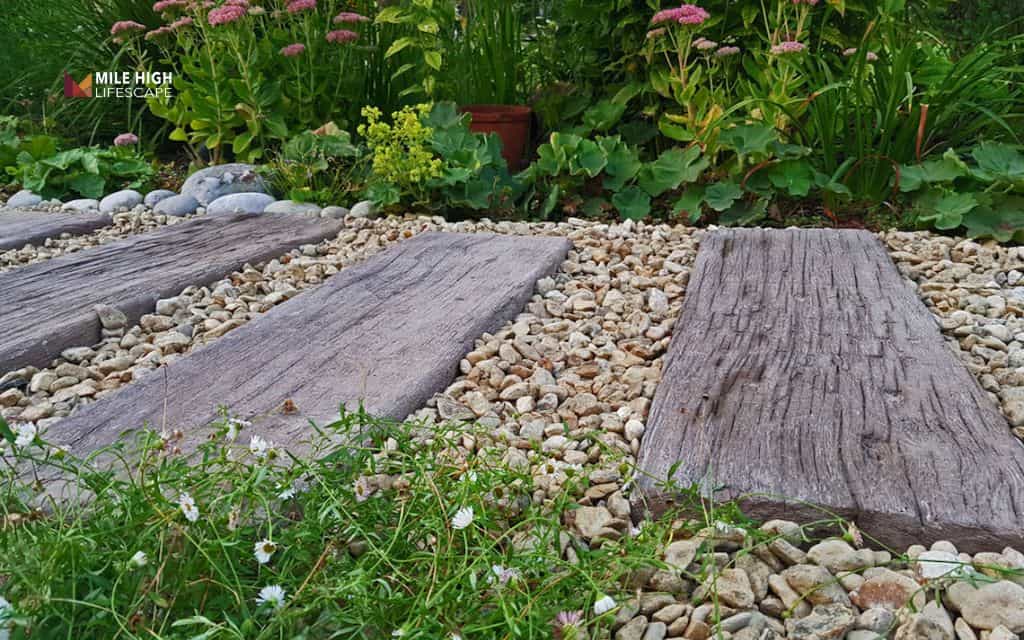
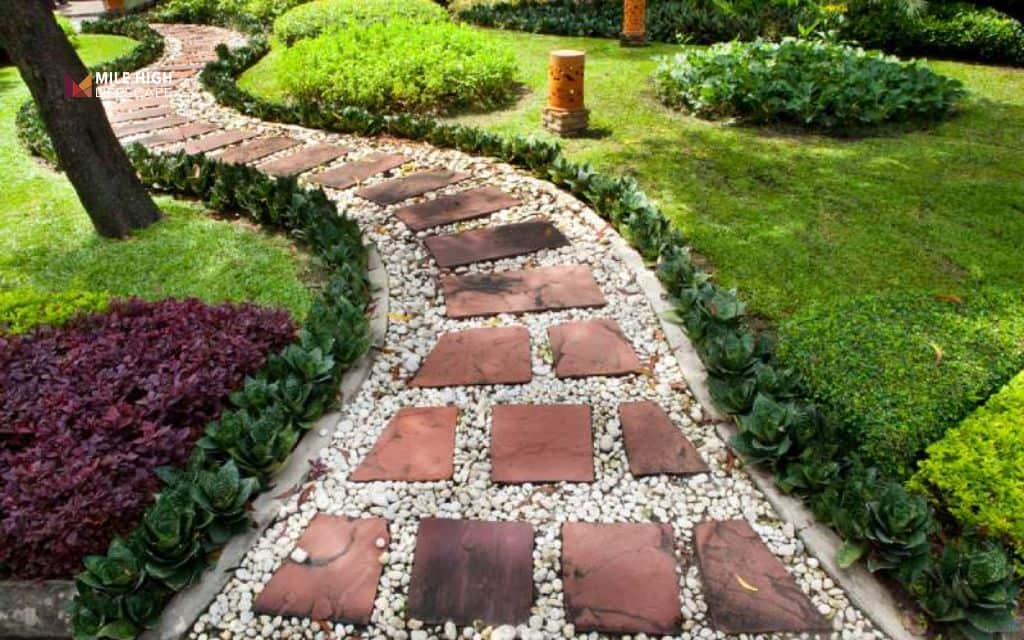
Combine the charm of individual stone path stones with the practicality of a gravel base for a budget-friendly pathway stone idea that also delivers excellent drainage. Flat stones are arranged within a contained gravel bed, offering stable footing while the loose gravel fills the gaps and handles runoff.
- Best for: Backyard paths, garden side yards, drainage-prone areas
- Material: Flagstone or concrete pavers + pea gravel or crushed granite
- DIY difficulty: Easy to moderate
Modern geometric stone walkway
If your home leans contemporary, a modern geometric stone walkway might be the perfect fit. Large, rectangular concrete or natural stone slabs are laid in clean, linear patterns, sometimes with uniform gravel or low ground cover between them. The effect is sleek, minimal, and architectural.
- Best for: Modern and minimalist homes, clean-lined landscapes
- Material: Large-format concrete pavers, bluestone rectangles, or porcelain
- DIY difficulty: Moderate to high (precision cutting may be required)
Rustic cobblestone path
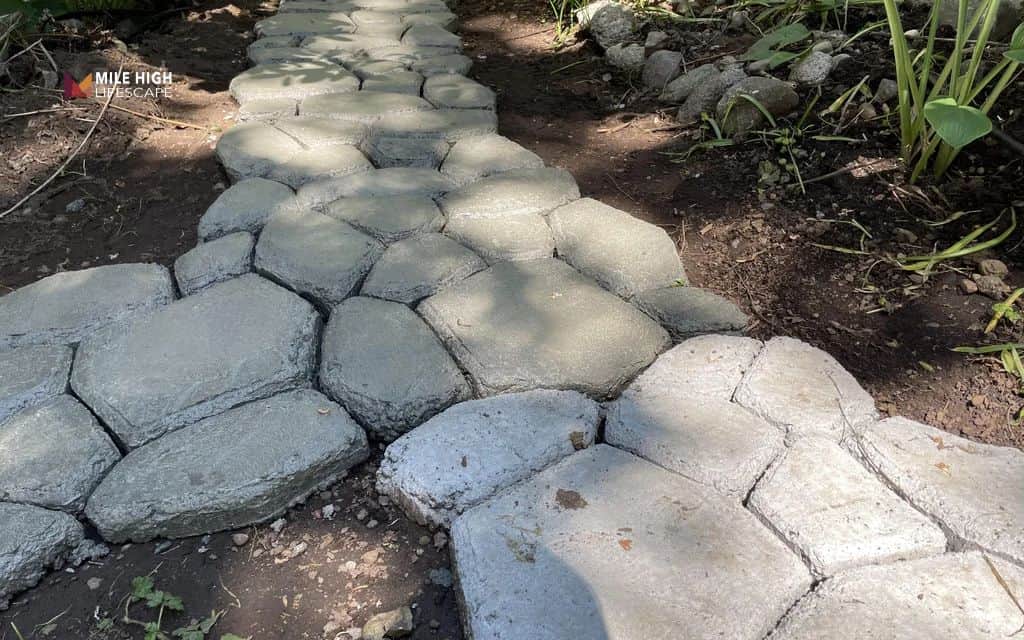
For a look that feels like it belongs in an old European village, a cobblestone path delivers unmatched character. Small, rounded stones are tightly packed together, creating a durable and distinctive surface with old-world texture. This is one of the most unique garden path ideas for homeowners who want to stand out.
- Best for: Traditional, rustic, or farmhouse garden styles
- Material: Granite cobbles, Belgian block, or tumbled concrete
- DIY difficulty: High (requires a sand base and careful setting)
Stone path with groundcover fill
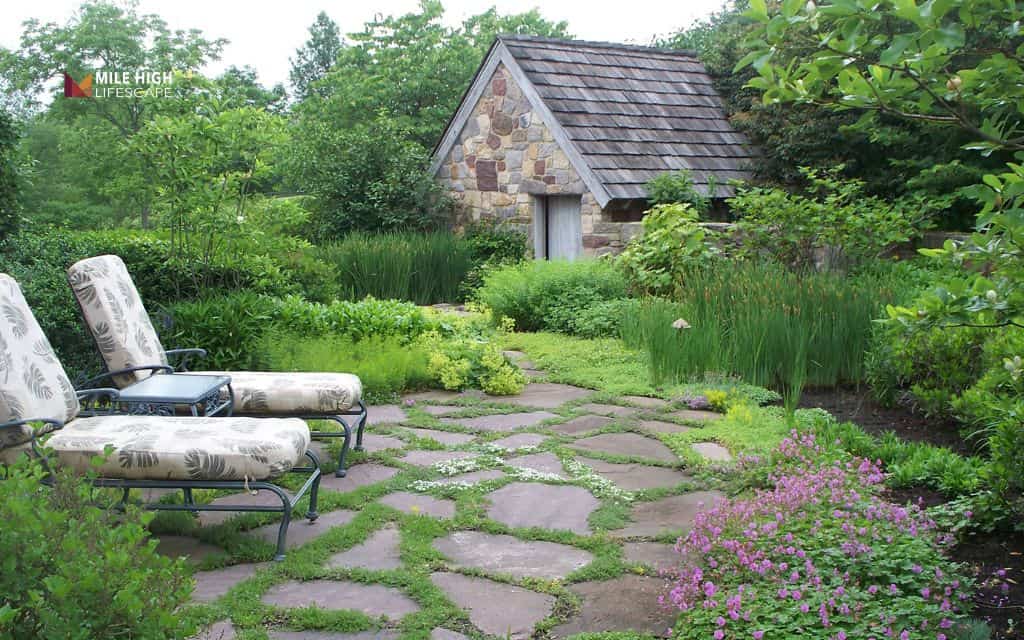
Imagine stepping stones surrounded by a soft carpet of creeping thyme, Irish moss, or baby tears – this is one of the most romantic and visually striking garden path examples available. Low-growing groundcovers fill the joints between stones, softening the look while adding fragrance and texture.
- Best for: Cottage gardens, romantic or English garden styles
- Groundcover options: Creeping thyme, moss, mazus reptans, or dymondia
- DIY difficulty: Moderate (plants need time to establish)
Crushed stone garden path
A crushed stone garden path offers one of the most budget-friendly ways to define garden pathways while maintaining excellent drainage and a natural aesthetic.
Compactable gravel such as decomposed granite or crushed limestone is spread between edging boards or bender boards and raked smooth.
- Best for: Budget-conscious homeowners, large garden areas, cottage or naturalistic styles
- Material: Decomposed granite, crushed limestone, or pea gravel
- DIY difficulty: Easy
Pro tip: Apply a thin layer of compactable gravel and wet it down to create a firm, stable surface that resists shifting.
Natural woodland stone path
For shaded properties with mature trees, a natural walkway of irregular stones set among mulch or moss is both practical and beautiful. Flat stones are partially embedded in mulch-covered soil, creating a path that feels like a discovery – as though it has always been part of the landscape.
- Best for: Shaded landscapes, woodland gardens, natural or wild-style yards
- Material: Fieldstone, slate, or locally sourced flat stones
- DIY difficulty: Easy
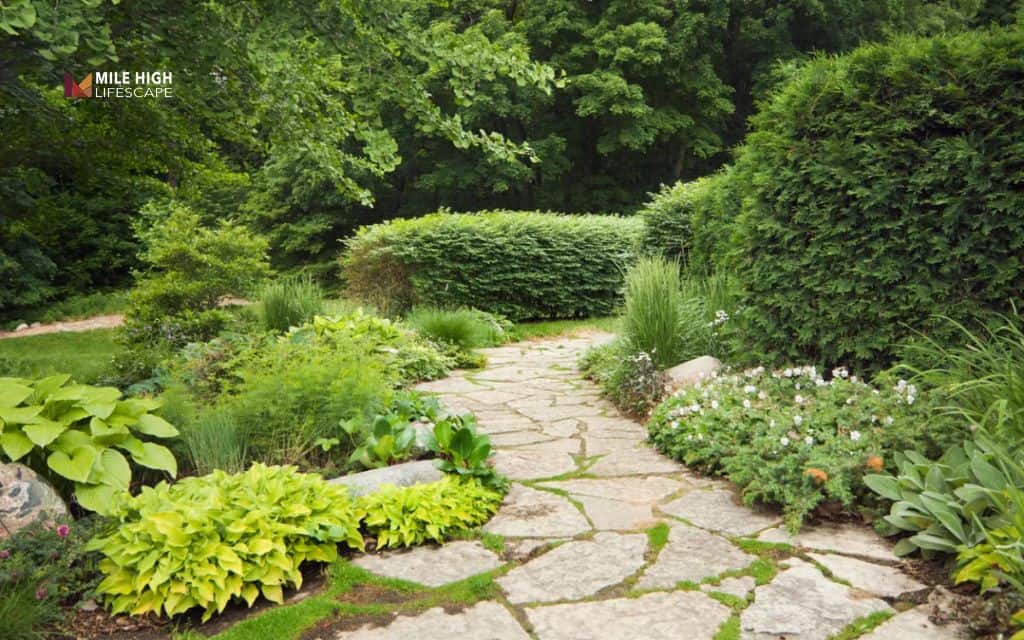
Stone path with brick edging
Mixing materials adds depth and definition to any path. A flagstone or gravel stone path bordered by neat rows of brick creates a clean, structured look that’s especially well-suited to traditional home styles. The brick edging contains the path material, reduces maintenance, and adds an architectural frame to your garden pathway.
- Best for: Traditional, colonial, or transitional home styles
- Material: Flagstone or gravel + clay brick edging
- DIY difficulty: Moderate
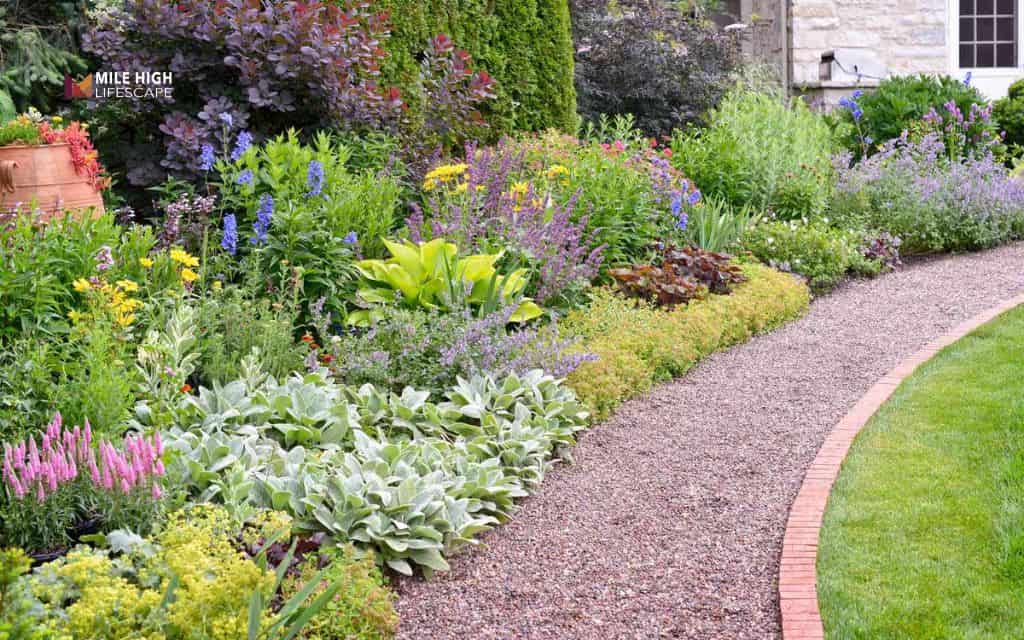
Curved stone garden path
A gently curving stone path adds flow and visual movement to any garden. Rather than cutting straight across a yard, a curved stone path idea guides the eye – and the visitor – on a journey through space. Curves also soften large open areas and work beautifully in both formal and informal gardens.
- Best for: Large yards, formal gardens, spaces needing visual softening
- Material: Flagstone, large concrete pavers, or stepping stones
- DIY difficulty: Moderate (layout requires planning)
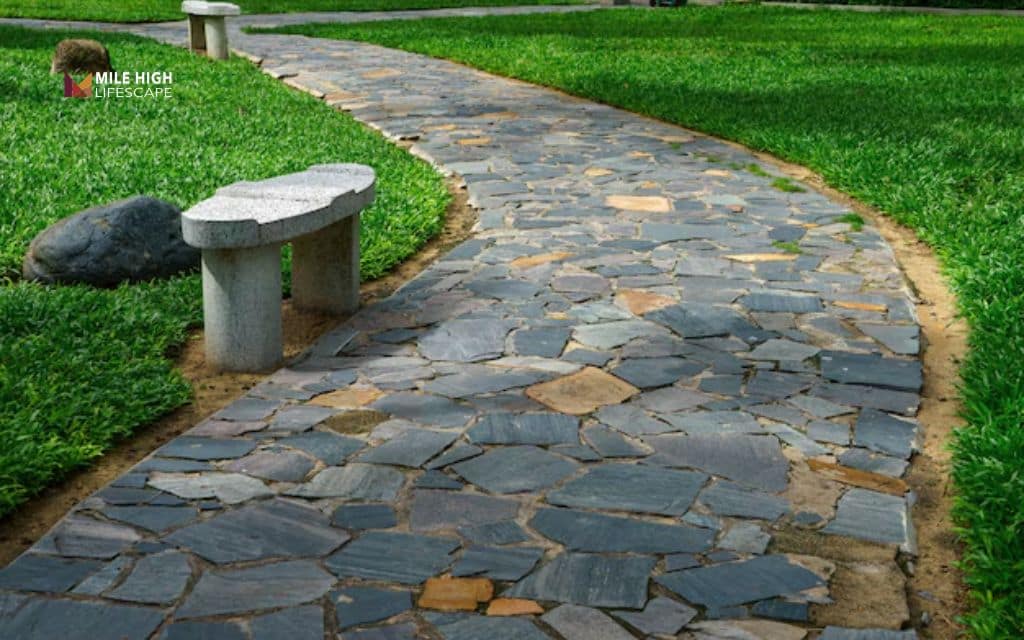
Stone walkway with lighting
A stone walkway with integrated lighting transforms your garden after dark, adding both safety and ambiance. Solar-powered stake lights, low-voltage LED fixtures, or recessed path lights can be placed alongside or between stones to illuminate the route and highlight landscaping features.
- Best for: Front yard walkways, entertaining spaces, safety-focused paths
- Material: Any stone type + solar or low-voltage LED path lights
- DIY difficulty: Easy (solar) to moderate (low-voltage wiring)
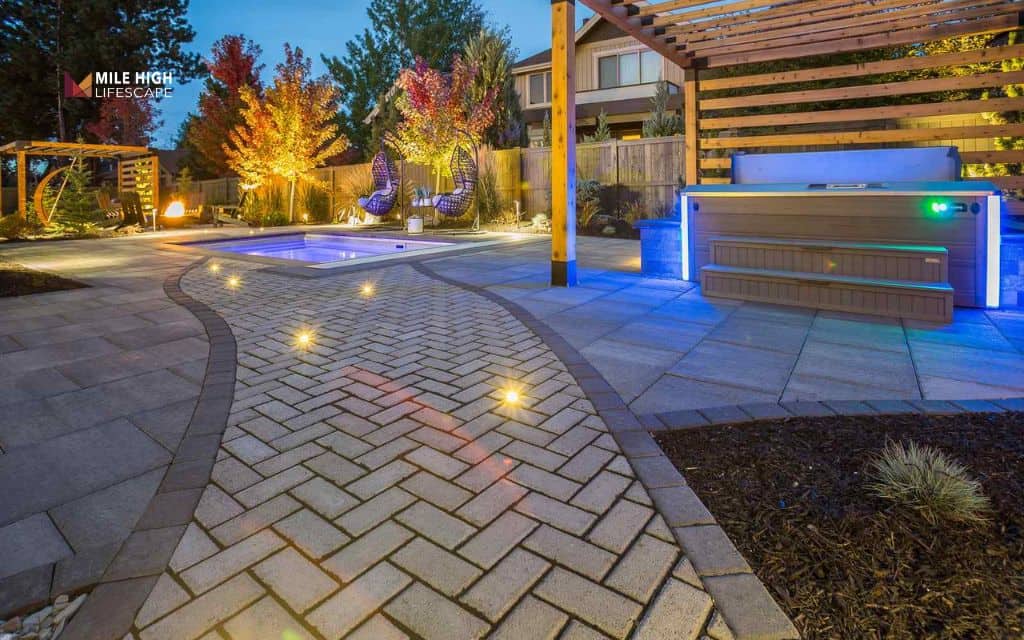
Patio-to-garden stone path
Create a seamless visual transition from your patio or deck to the garden with a connecting stone pathway. Using the same or complementary material as your patio surface, this path extends the outdoor living space into the landscape and makes the garden feel like a natural continuation of your home.
- Best for: Homes with existing patios or decks, entertaining-focused yards
- Material: Match or complement existing patio pavers or flagstone
- DIY difficulty: Moderate
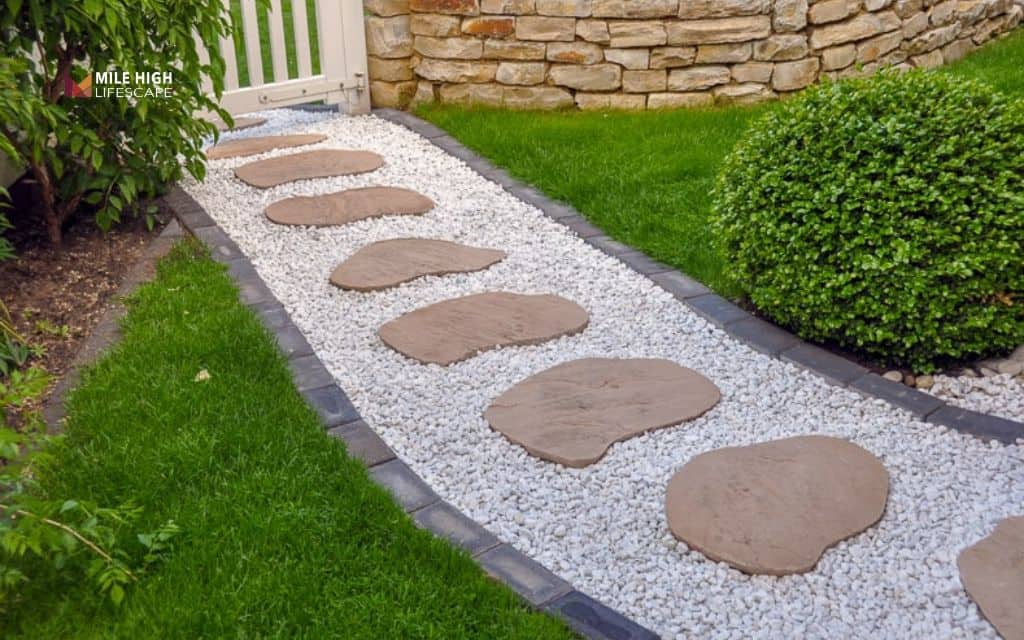
Side yard stepping stone path
Narrow side yards are notoriously underutilized, but a well-placed stepping stone path can make this forgotten space both functional and attractive. These garden sidewalk ideas are especially practical for homes where foot traffic between the front and back yard wears down a strip of grass.
- Best for: Narrow passages, side yards, high foot-traffic areas
- Material: Concrete stepping stones, flat river rock, or cut flagstone
- DIY difficulty: Easy
Pro tip: Add low-growing border plants like mondo grass, liriope, or lavender along the sides to add color and define the passage.
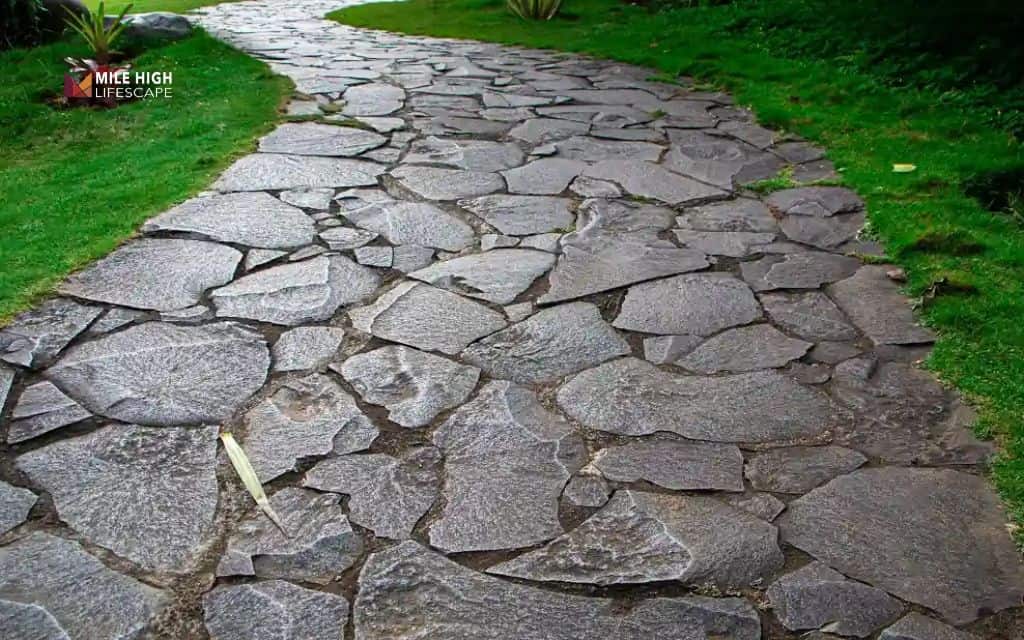
Raised stone border path
A raised stone border path adds dimension and definition to a flat garden. By slightly elevating the path with border stones or a shallow retaining edge, you create a clearly defined garden sidewalk that prevents soil and mulch from encroaching while giving the path a more finished, intentional appearance.
- Best for: Sloped yards, garden beds with spreading mulch, formal garden layouts
- Material: Flagstone + stacked border stone or concrete edging
- DIY difficulty: Moderate
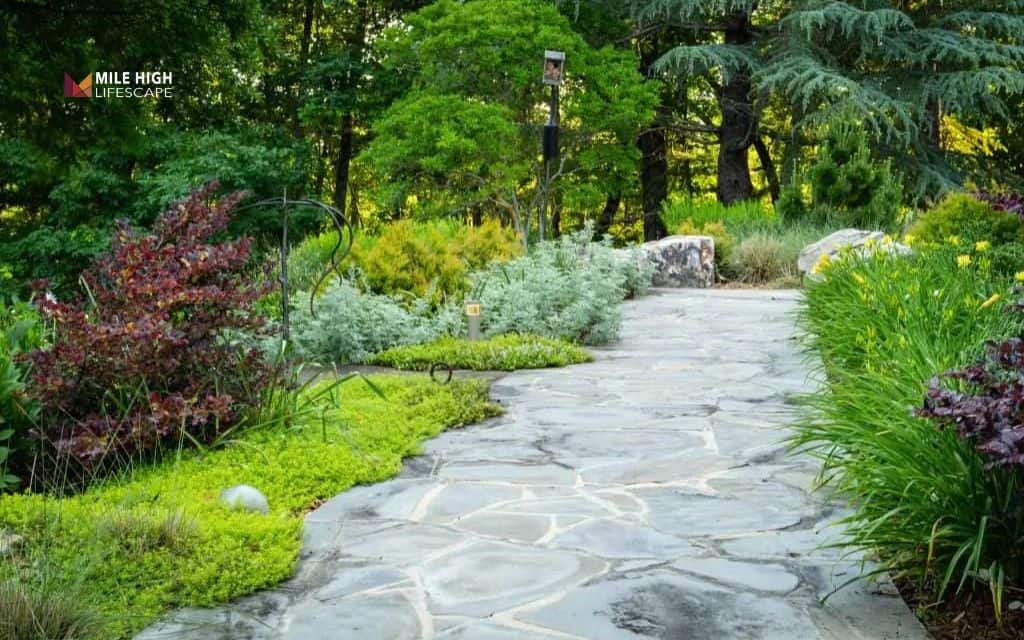
Mixed pavers and gravel path
Can’t decide between structured pavers and loose gravel? Use both. A mixed pavers and gravel path for walkways ideas combines the stability of concrete or stone pavers with the cost savings and drainage benefits of gravel fill. The result is a path that looks custom-designed without the premium price tag.
- Best for: Budget-friendly installs, contemporary or eclectic garden styles
- Material: Concrete or stone pavers + pea gravel or crushed granite
- DIY difficulty: Easy to moderate
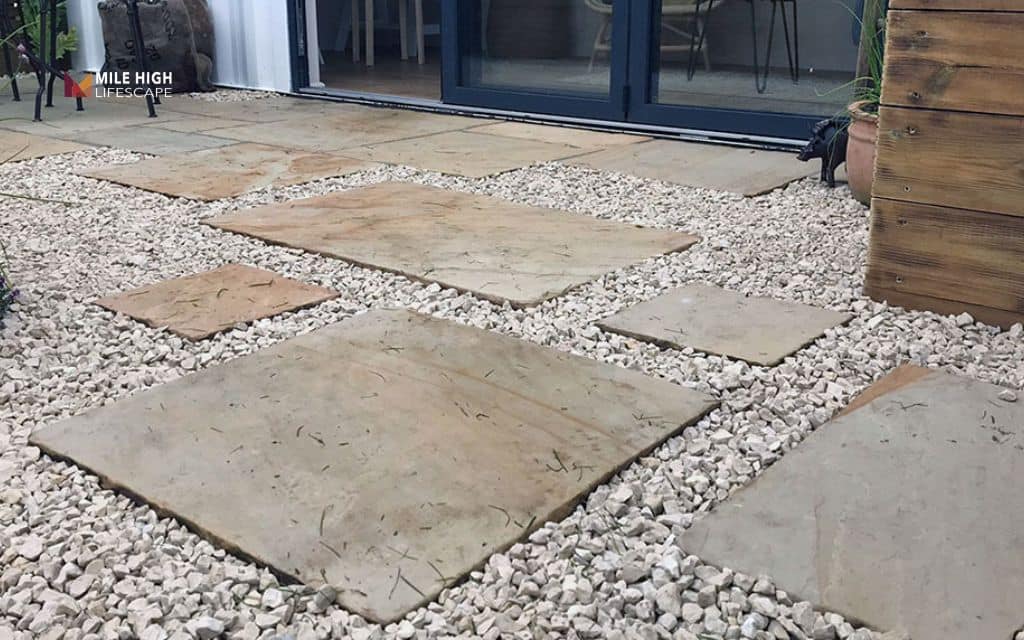
How to choose the right stone path for your garden
With so many stone path ideas to choose from, narrowing it down can feel overwhelming. Use these practical decision guides to find the best fit for your specific space, budget, and lifestyle.
Consider your drainage needs
Poor drainage is one of the most common garden problems – and your stone pathway choice can make it better or worse. Before selecting materials, observe how water moves through your yard after rain.
- Gravel-based paths (decomposed granite, pea gravel) offer the best natural drainage
- Permeable paver systems allow water to pass through while providing firm footing
- Avoid flat, non-porous slabs in low-lying areas where water pools
- Add a slight slope (about 1–2%) away from structures to redirect runoff
- In high-drainage areas, a French drain beneath your path base can prevent long-term heaving
Think about traffic
How a path will be used matters just as much as how it looks. A garden path that’s adorable but impractical quickly becomes a frustration.
- High foot traffic: Choose larger, flatter stones with a stable, compacted base
- Children and pets: Avoid sharp-edged cobblestones; prioritize smooth, flat surfaces
- Outdoor entertaining: Ensure paths are wide enough for guests to walk side-by-side (36–48 inches minimum)
- Occasional-use paths: Stepping stones in gravel or grass are perfectly appropriate
- Wheeled equipment (carts, wheelbarrows): Use a solid, continuous surface rather than stepping stones
Match your garden style
The most beautiful stone pathway is one that feels like it belongs. Use your home’s architecture and existing garden style as a guide.
- Cottage garden: Irregular flagstone with groundcover fill or gravel joints
- Modern/contemporary: Large rectangular pavers in clean linear patterns
- Woodland/naturalistic: Irregular stones in mulch with a winding layout
- Traditional/colonial: Brick-edged flagstone or classic cobblestone
- Farmhouse: Crushed gravel paths with simple board edging
Factor in your budget
Stone pathway costs can vary dramatically depending on material, labor, and path length. Here’s a general breakdown to help you plan.
| Path Type | Estimated Cost (DIY) | Notes |
| Stepping Stones in Grass | $1–$5 per stone | Most beginner-friendly option |
| Gravel + Stepping Stone Mix | $3–$8 per sq. ft. | Budget-friendly with good drainage |
| Crushed Stone/Gravel Path | $2–$5 per sq. ft. | Low cost, easy to install |
| Flagstone Walkway | $8–$15 per sq. ft. | Natural, durable, timeless |
| Cobblestone Path | $10–$20 per sq. ft. | Premium look, labor-intensive |
| Modern Geometric Pavers | $10–$25 per sq. ft. | High-end, professional results |
Note: Costs are estimates for materials only. Professional installation adds labor costs that vary by region and project complexity.
Maintenance tips for long-lasting stone paths
One of the best things about stone pathways is their durability. With the right installation and occasional upkeep, a well-built path can last decades.
Here’s how to keep yours looking its best season after season.
Seasonal maintenance checklist
- Spring: Inspect for shifted or sunken stones after winter frost; reset as needed
- Spring/Summer: Top off gravel or decomposed granite filler that has settled or washed away
- Summer: Pull weeds from joints before they become established; apply pre-emergent herbicide in gravel paths
- Fall: Clear fallen leaves promptly — wet leaves promote moss and staining on stone surfaces
- Year-round: Sweep or blow debris off path surfaces regularly to prevent slippery buildup
Cleaning and stain removal
Stone is naturally durable but can develop staining, moss, or algae, especially in shaded or damp areas. Here’s how to handle common issues:
- General cleaning: Scrub with a stiff brush and a mild solution of dish soap and water
- Moss and algae: Apply a diluted white vinegar solution or a commercial stone-safe moss remover
- Oil or rust stains: Use a stone-specific degreaser or rust remover following product instructions
- Polymeric sand joints: Reseal every 3–5 years to maintain joint stability and weed resistance
When to call a professional
Most stone path maintenance is well within DIY territory, but there are situations where professional help pays off. Consider hiring a landscaping professional if your path shows significant heaving or sinking over a large section, if drainage issues are causing erosion beneath the path, or if you’re dealing with large, heavy slabs that require equipment to lift and reset safely.
Conclusion
The right stone pathway does more than connect two points in your yard, it invites exploration, defines your outdoor space, and adds beauty that lasts for years. Whether you choose the timeless elegance of a classic flagstone walkway, the weekend simplicity of stepping stones in grass, or the modern precision of geometric pavers, the best ideas for stone pathways are the ones that reflect your personal style and meet your practical needs.
From planning and material selection to installation and seasonal care, building a stone path is a deeply rewarding project. And if the scope feels bigger than a weekend DIY, the team at Mile High Lifescape is here to help, from initial design consultation to full landscape rock installation and beyond.
Ready to transform your garden with a stone pathway that’s built to last?
Contact Mile High Lifescape today for expert landscaping guidance tailored to Denver’s unique climate and terrain.
Frequently asked questions (FAQs)
What is the best stone for a garden pathway?
Flagstone is the most popular choice for its durability and versatility across nearly every garden style. For budget-friendly options, stepping stones paired with gravel or decomposed granite offer great value without sacrificing aesthetics.
How much does it cost to build a stone pathway?
Simple gravel paths typically run $2–$5 per square foot, while full flagstone or paver paths range from $8–$20 per square foot for materials. DIY projects can significantly reduce costs compared to professional installation.
Do stone pathways need a base underneath?
Yes, a compacted gravel base is essential to prevent stones from sinking, shifting, or heaving through seasonal freeze-thaw cycles. Skipping this step is the most common reason paths become uneven and hazardous within a season or two.
What is the easiest stone pathway to install for beginners?
Stepping stones placed directly in grass or a gravel bed are the most beginner-friendly option, requiring minimal tools and excavation. Most projects can be completed in a single afternoon or weekend.
How do you maintain a stone pathway?
Regular upkeep includes sweeping off debris, pulling weeds from joints, topping off gravel filler, and resetting any shifted stones. With proper installation, most stone paths require only a few hours of maintenance per season.
Can I install a stone pathway on a slope?
Yes, choose stones with a naturally textured surface for better grip, and on steeper grades, incorporate stone steps or angle the path diagonally to reduce the incline. Always ensure the base is well-compacted and drainage flows away from structures.