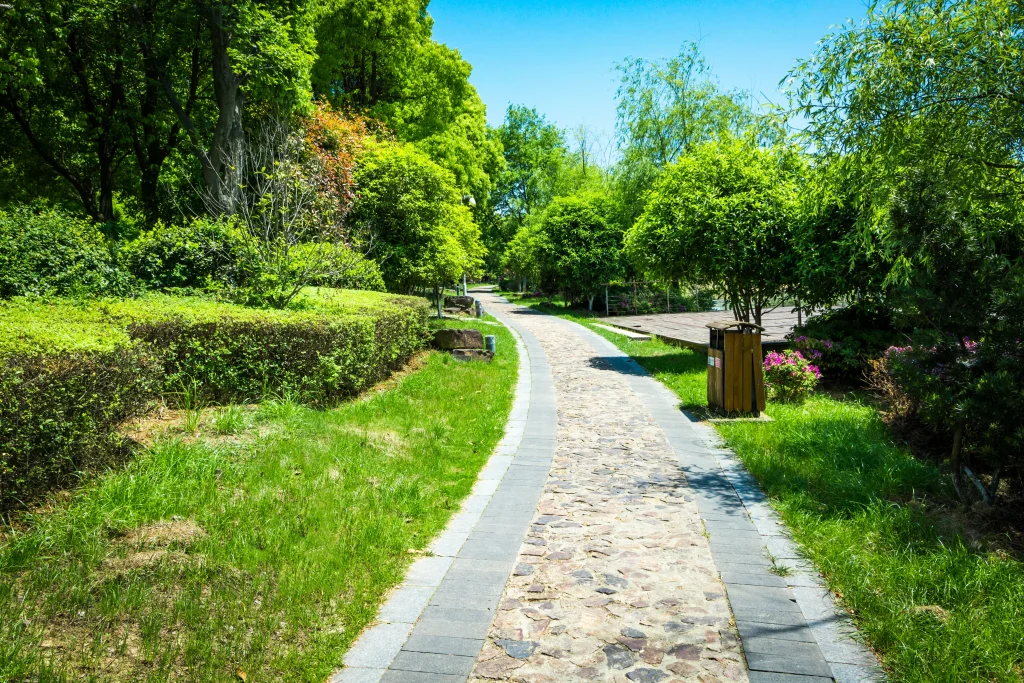
A well-placed border is one of the simplest, most impactful upgrades you can make to any yard. Whether you’re tidying up garden beds, trying to keep mulch where it belongs, or just looking for that extra polish that separates a decent yard from a truly beautiful one.
Adding a border instantly:
- Defines garden beds and lawns with clean, visible lines
- Keeps mulch and soil in place, reducing mess after rain or wind
- Prevents grass from spreading into flower beds and planting areas
- Creates a finished, intentional look that elevates your entire outdoor space
The right landscape border ideas can transform your yard with minimal effort. From natural stone and classic brick to living plant borders and sleek metal edging, there’s an option for every style, budget, and skill level.
Read on to explore 25 of the best ideas and find the one that works for your garden.
25 landscape border ideas (by style & material)
Browse by material and style to find the landscape border ideas that fit your vision, budget, and maintenance preferences.
Stone & natural borders
Stone borders bring timeless beauty and exceptional durability to any garden. They work well with naturalistic planting schemes and require very little upkeep once installed.
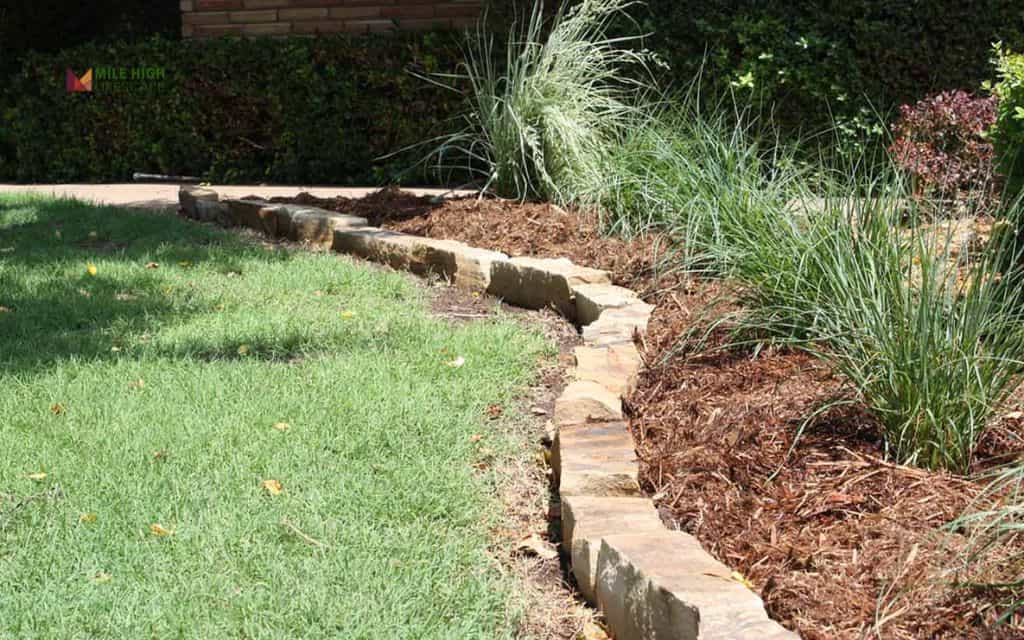
1. Natural stone edging
Natural stone edging uses irregularly shaped rocks to trace the outline of a garden bed, giving the space an earthy, organic character. No two installations look the same, which is exactly the point. Choose stones of varying sizes and nestle them snugly into the soil for stability.
Best for: Rustic, organic gardens
2. Flagstone border
Flagstone’s flat, wide surface makes it ideal for borders that also function as stepping stones or transition zones between lawn and paved areas. The clean, low-profile edge it creates suits both traditional and contemporary garden styles.
Best for: Walkways, patios, and formal paths
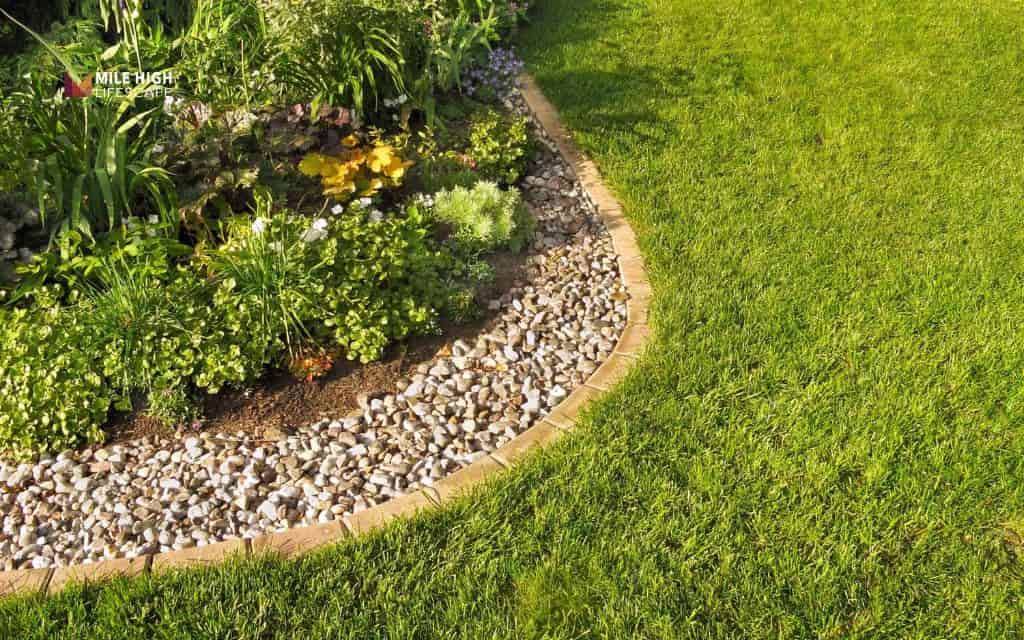
3. River rock border
Smooth, rounded river rocks create a softly textured border that looks especially beautiful alongside water features or in gardens with a zen-inspired aesthetic. River rocks also allow water to move through freely, making them an excellent choice in areas prone to pooling or erosion.
Best for: Drainage-friendly edges, slopes, and dry streambeds
4. Boulder edging
Large boulders create bold, sculptural borders that anchor a garden’s design. This approach works well in yards with generous square footage, where a single line of small stones would look underwhelming. Boulders also double as natural seating and help define distinct garden zones.
Best for: Large yards, focal points, and dramatic transitions
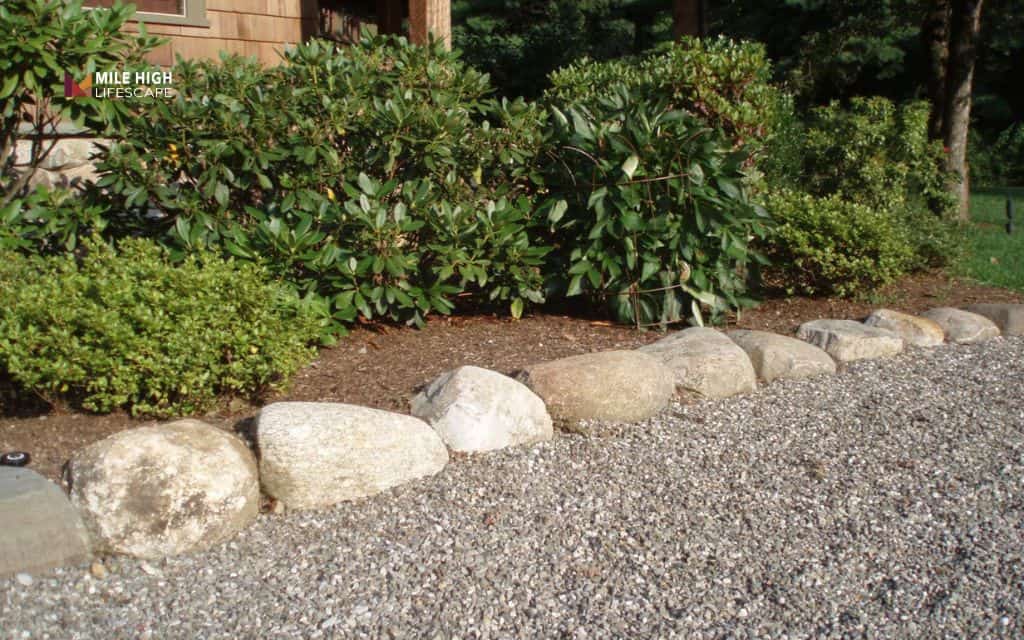
5. Gravel border strip
A narrow strip of gravel running between a lawn and a garden bed creates a clean, contemporary edge that requires almost no upkeep. Gravel drains well, discourages weed growth when paired with landscape fabric, and comes in a range of colors from warm tan to cool gray.
Best for: Modern, low-maintenance, or drought-tolerant yards
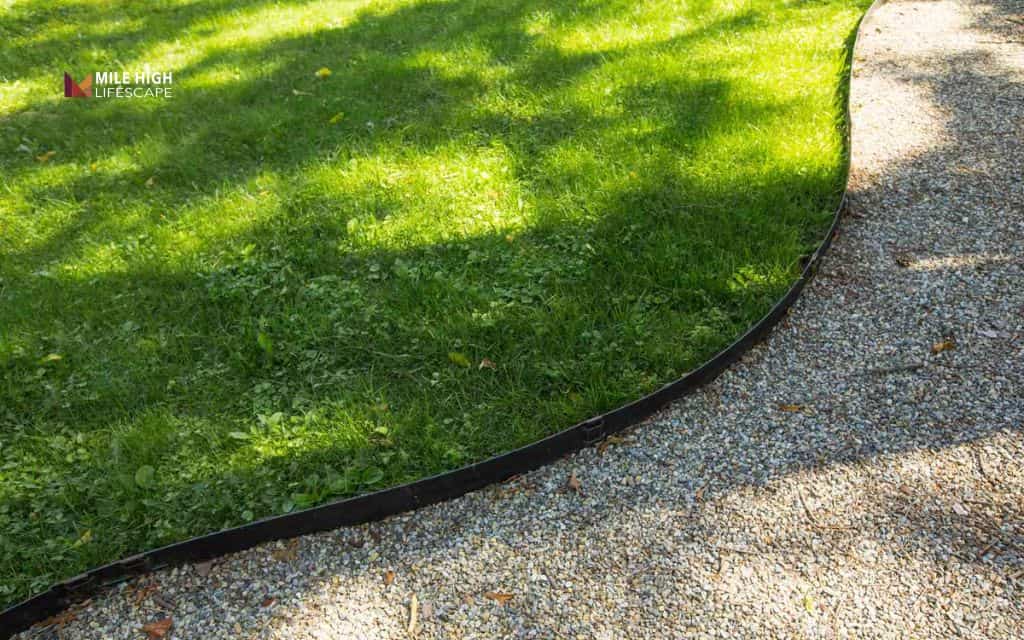
Wood & natural material borders
Wood borders bring warmth and texture to any garden. They’re versatile enough to suit cottage gardens, raised bed setups, and woodland-style landscapes and many options are budget-friendly.
6. Timber edging
Pressure-treated timber or naturally rot-resistant wood like cedar creates sturdy, long-lasting borders that hold their shape well. Timber edging is especially practical for raised bed gardens where height and soil containment matter.
Best for: Raised beds, vegetable gardens, and formal garden borders
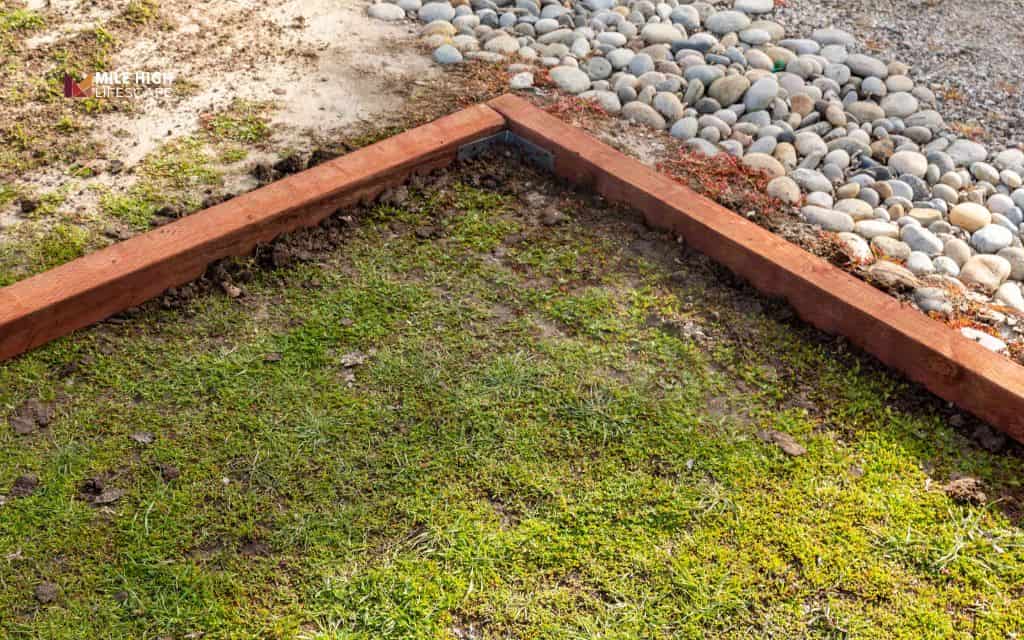
7. Log border
Half-logs or small split logs placed end-to-end (or laid horizontally) create a charming, rustic border that blends effortlessly into informal garden settings. This is a great way to repurpose fallen trees or leftover lumber.
Best for: Cottage gardens, woodland-style landscapes, and naturalistic designs
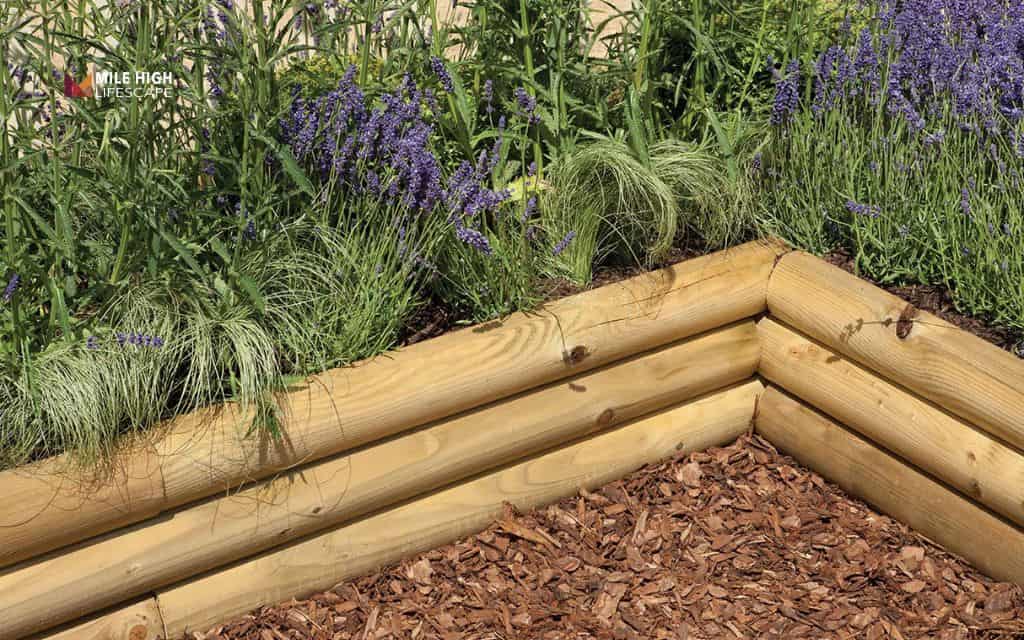
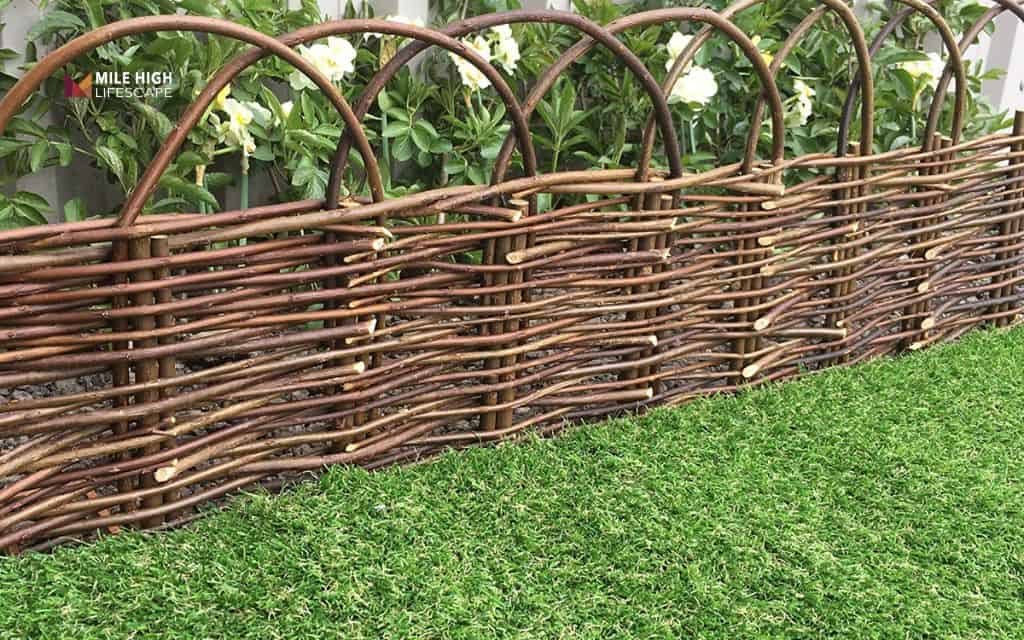
8. Woven willow edging
Woven willow panels (also called hurdle edging) are handcrafted from flexible young branches woven between upright stakes. They add a soft, artisan texture to garden beds and are available in rolls at most garden centers.
Best for: Decorative garden beds, cottage-style borders, and eco-conscious gardens
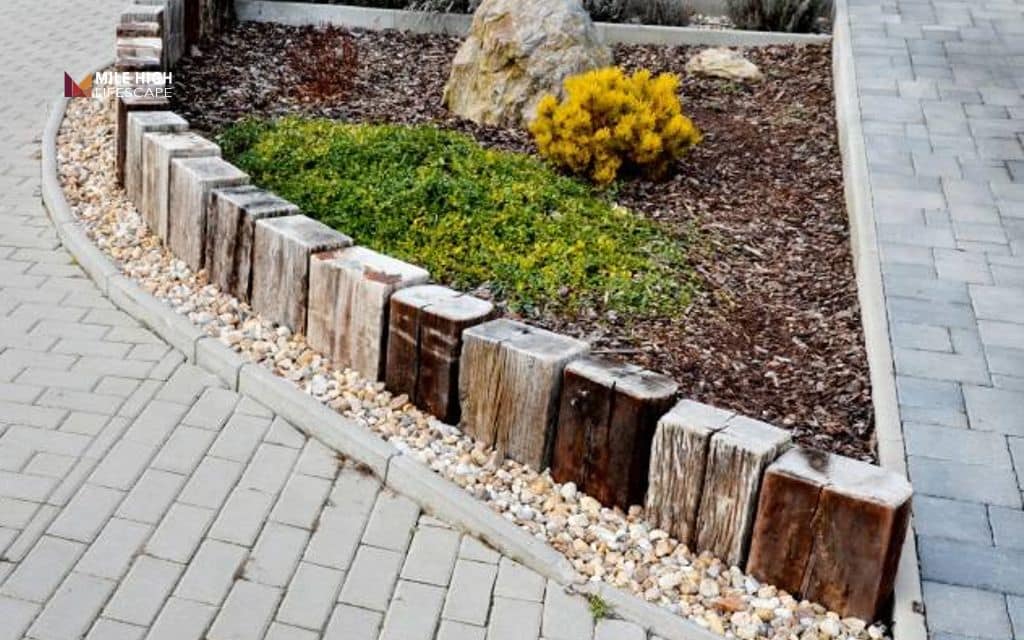
9. Railroad tie border
Railroad ties (also sold as landscape timbers) are thick, heavy beams that create authoritative, highly visible borders. They’re excellent for sloped yards where a strong retaining edge is needed, and they stack easily for multi-level garden beds.
Best for: Bold, structured edges and tiered garden beds
Brick & paver borders
Brick and paver borders have been a garden staple for centuries, and for good reason. They’re durable, versatile, and available in a wide range of sizes, colors, and finishes, making them easy to match to nearly any architectural style.
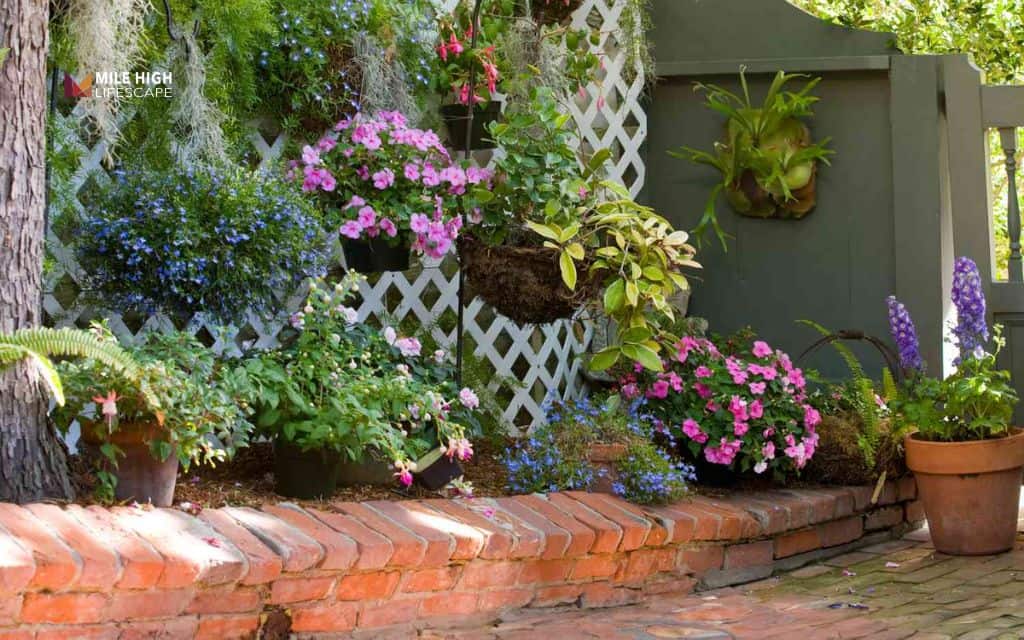
10. Classic brick border
Brick is a classic edging material that pairs beautifully with manicured lawns, rose gardens, and formal flower beds. Standard red clay bricks placed side-by-side create a crisp, clean boundary that weathers gracefully over the years.
Lay bricks in a herringbone or soldier (end-on) pattern for a more refined, traditional look. Soldier-course bricks provide extra height and a slightly more polished finish.
Best for: Traditional, colonial, or formal garden styles
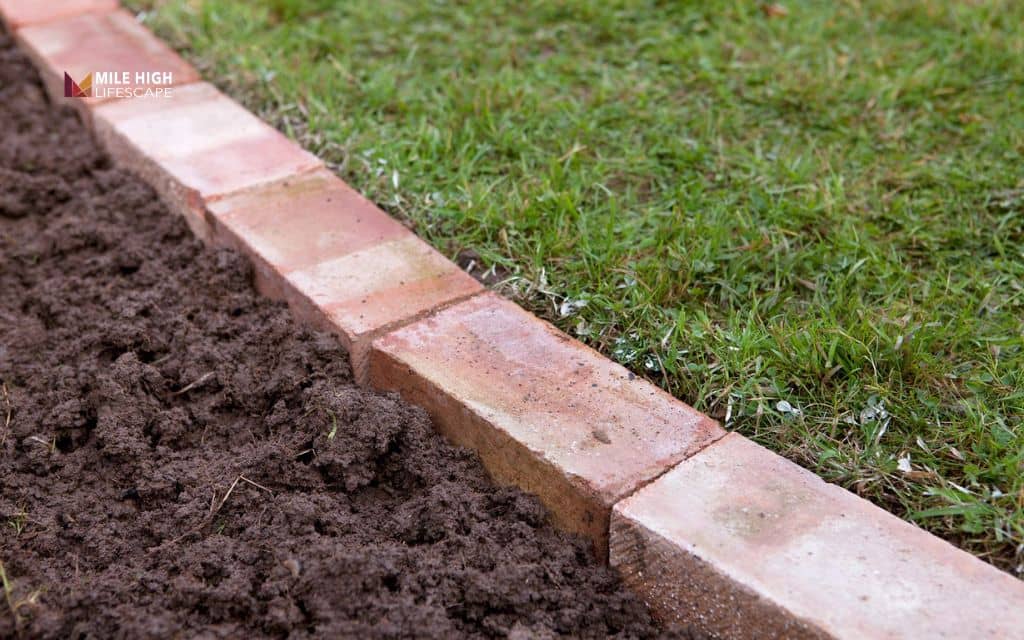
11. Brick-on-edge border
Setting bricks on their long edge (rather than flat) creates a taller, more prominent border that stands up well to foot traffic and soil pressure. This technique is a traditional English garden staple and looks especially sharp alongside straight-edged lawns.
Best for: Strong visual lines, formal gardens, and high-traffic edges
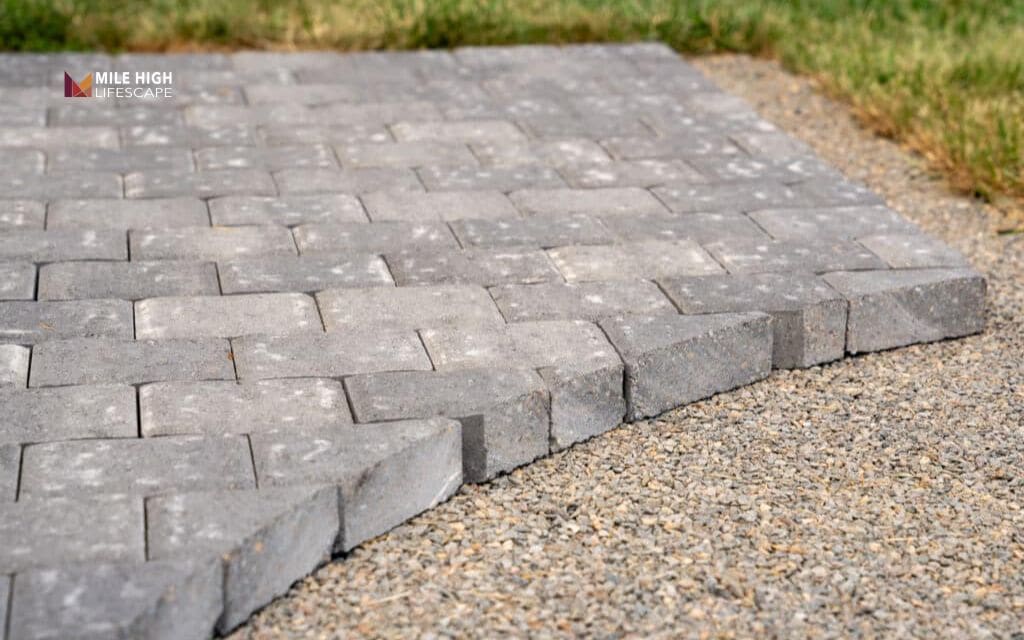
12. Concrete paver edging
Concrete pavers are an affordable, hard-wearing alternative to natural stone or clay brick. They come in a variety of shapes (rectangular, square, and tumbled) and can mimic more expensive materials at a fraction of the cost.
Choose pavers with a tumbled or textured finish rather than polished concrete for a more garden-friendly look that blends with plant life.
Best for: Budget-conscious homeowners who want durability
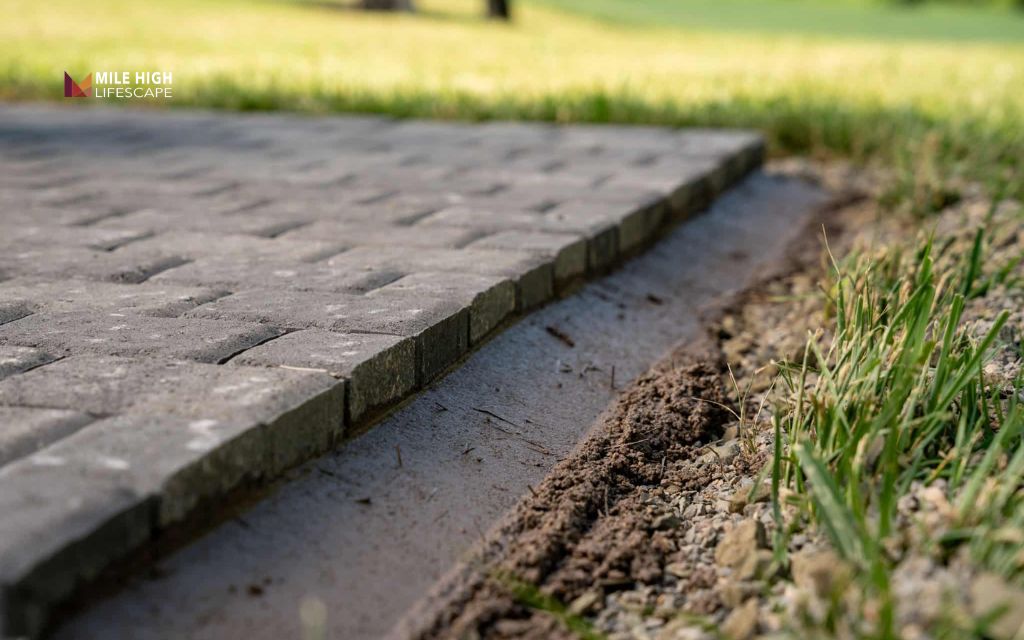
13. Curved paver border
Curved borders break the rigidity of straight-line edging and create a more relaxed, cottage-like feel. Small or narrow pavers are easiest to work with around curves, larger slabs tend to create gaps when bent around a radius.
Use a garden hose laid flat on the ground to map out your curve before digging. Adjust until the shape feels right, then mark the soil and cut along it.
Best for: Soft, flowing garden designs and organic bed shapes
Modern & metal borders
Metal edging has become a go-to choice for homeowners and professional landscapers alike who want clean, precise lines with minimal bulk. It pairs exceptionally well with contemporary architecture and structured planting schemes.
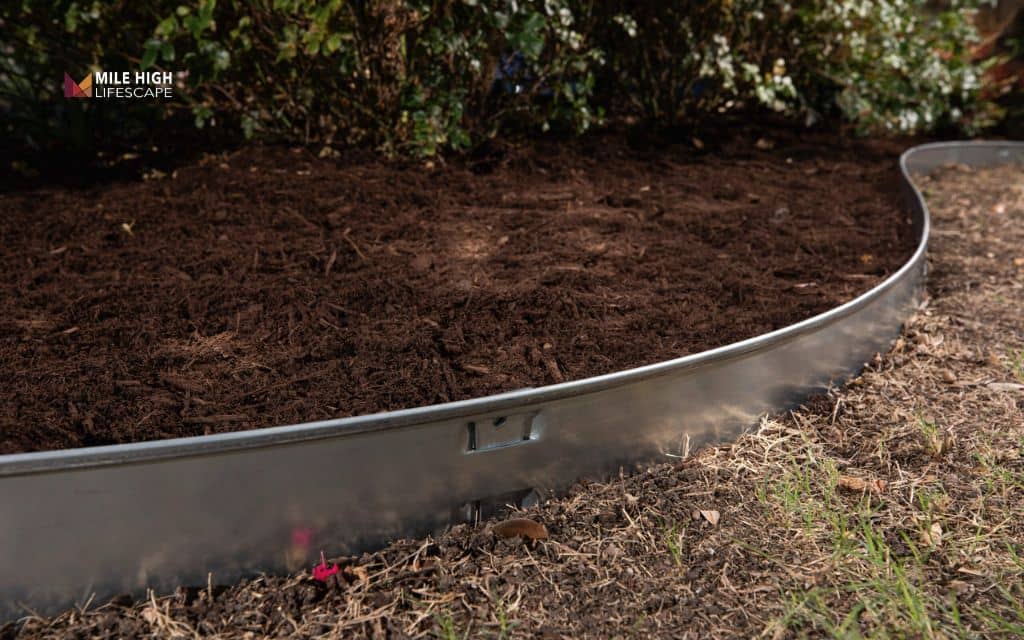
14. Metal edging (steel or aluminum)
Thin-gauge steel or aluminum edging creates razor-sharp lines between lawn and garden bed without adding visual bulk. It sits nearly flush with the ground, keeping the focus on the plants rather than the border itself.
Cor-Ten (weathering) steel develops a warm rust patina over time, adding character without maintenance. Aluminum is lighter and won’t rust, making it a good choice for high-moisture climates.
Best for: Clean, minimalist landscapes and modern garden design
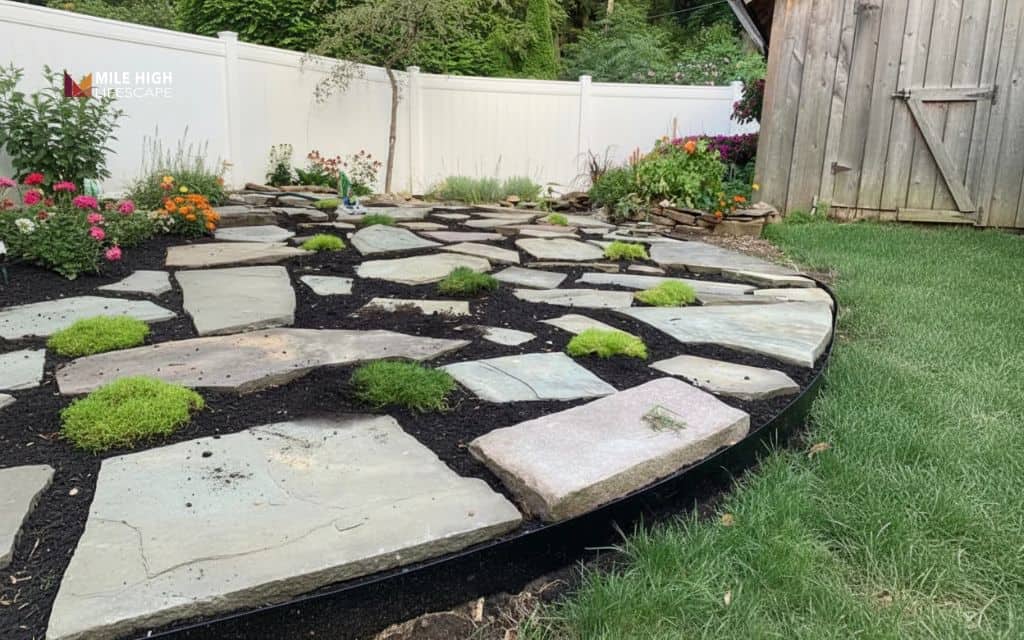
15. Black steel border
Powder-coated black steel edging offers the same sleek profile as standard metal edging but adds a striking visual element. The dark border creates a strong contrast against green lawns and light-colored mulch or gravel.
Best for: High-contrast design, bold garden aesthetics, and modern front yards
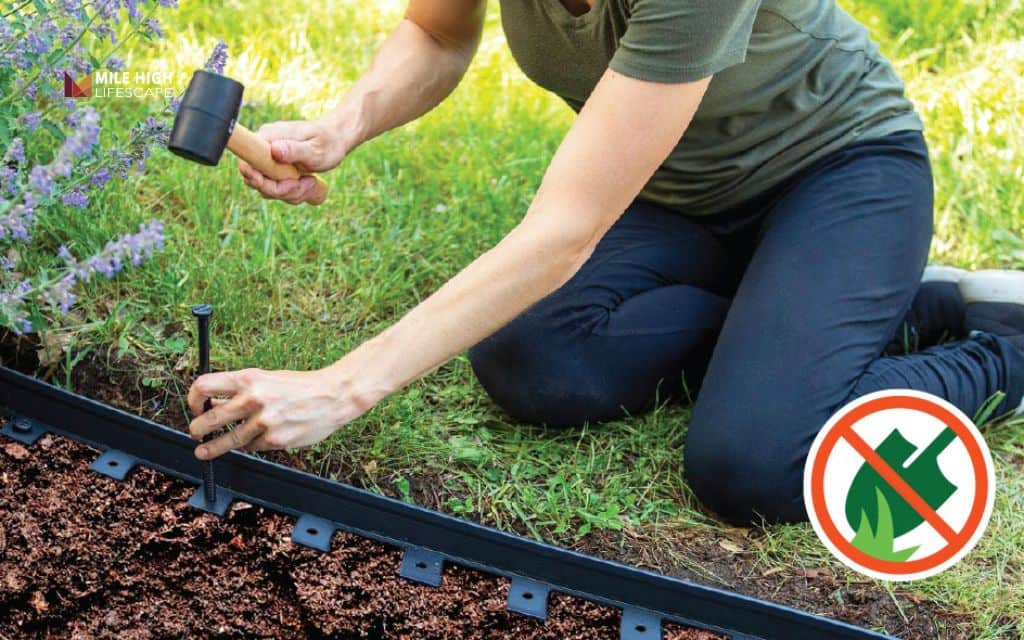
16. Plastic landscape edging
Flexible plastic edging is the most accessible option for beginners. It bends easily around curves, stakes into the ground without special tools, and is available in rolls at virtually every garden center and home improvement store.
Choose thicker, more rigid plastic edging over the flimsy thin-gauge versions because it holds its shape better and lasts significantly longer before warping.
Best for: Easy weekend DIY installation on a tight budget
Living borders (plants & green edges)
Living borders use plants themselves as the defining element. They soften hard edges, add seasonal color and texture, and can attract beneficial wildlife but they do require regular maintenance to stay neat.
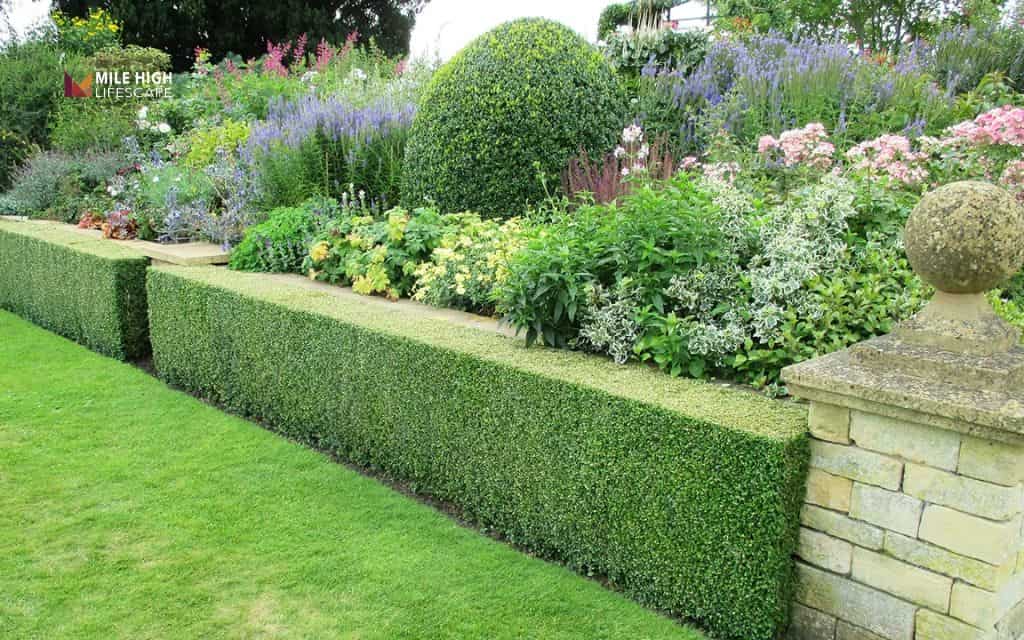
17. Low hedge border
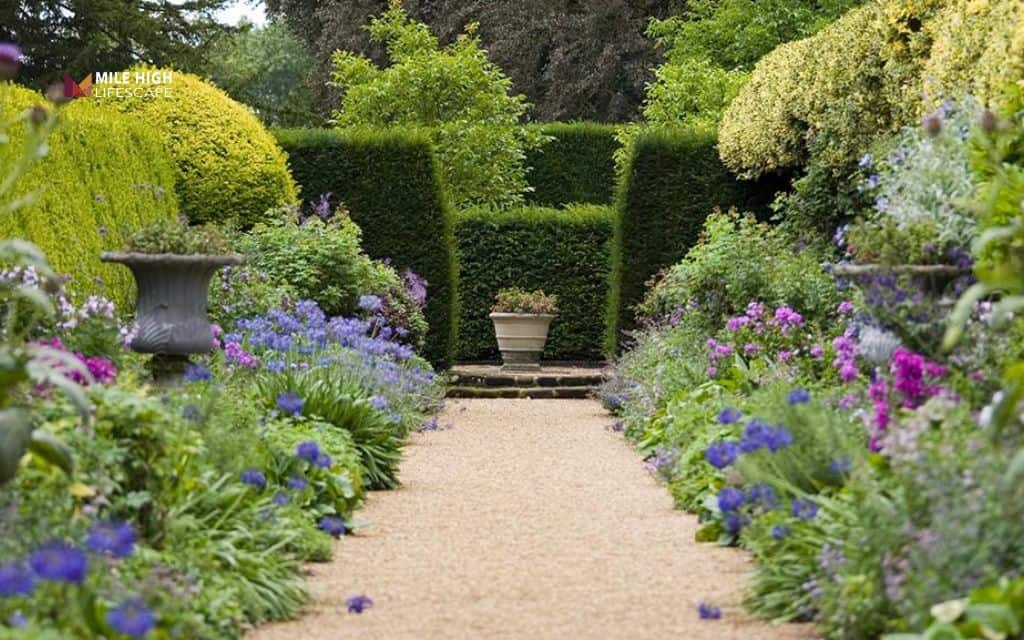
Low-growing shrubs like boxwood, barberry, or lavender planted in a row create a classic hedge border that gives gardens a formal, well-ordered feel. A clipped hedge provides year-round structure even when flowers aren’t in bloom.
Space plants slightly closer than the mature width recommendation for a denser, more uniform hedge effect, this helps eliminate gaps as the plants fill in.
Best for: Formal gardens, front yard definition, and structured layouts
18. Flower border edge
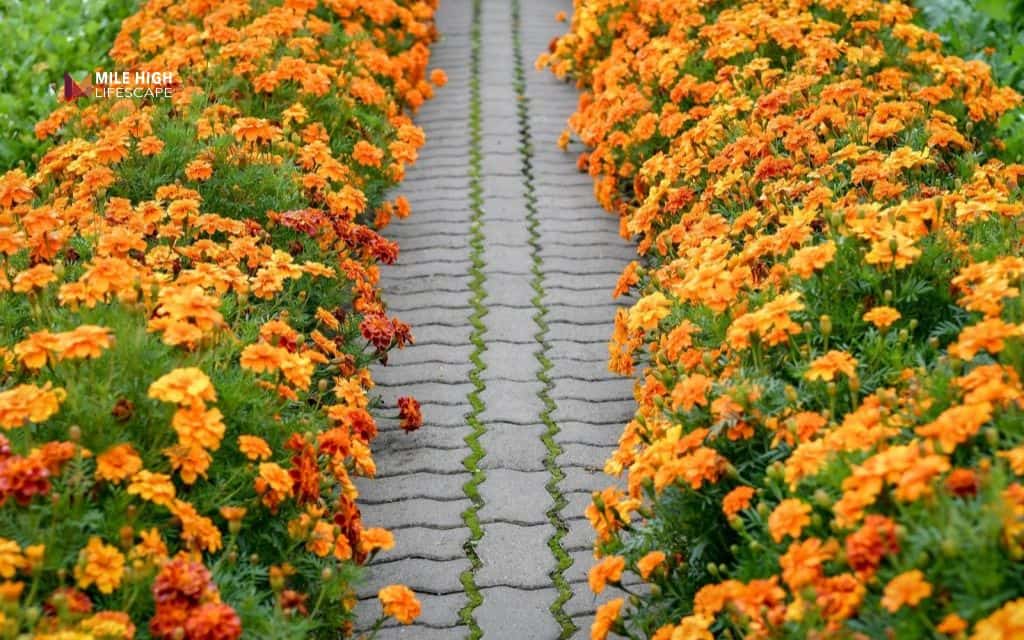
A line of low-growing flowering plants such as marigolds, alyssum, or catmint,… creates a soft, colorful transition between lawn and garden. This approach works well along pathways or between a lawn and a mixed perennial bed.
Choose plants with a long bloom season to keep the border looking full and colorful from spring through fall without constant replanting.
Best for: Colorful garden transitions and cottage or English garden styles
19. Ornamental grass border
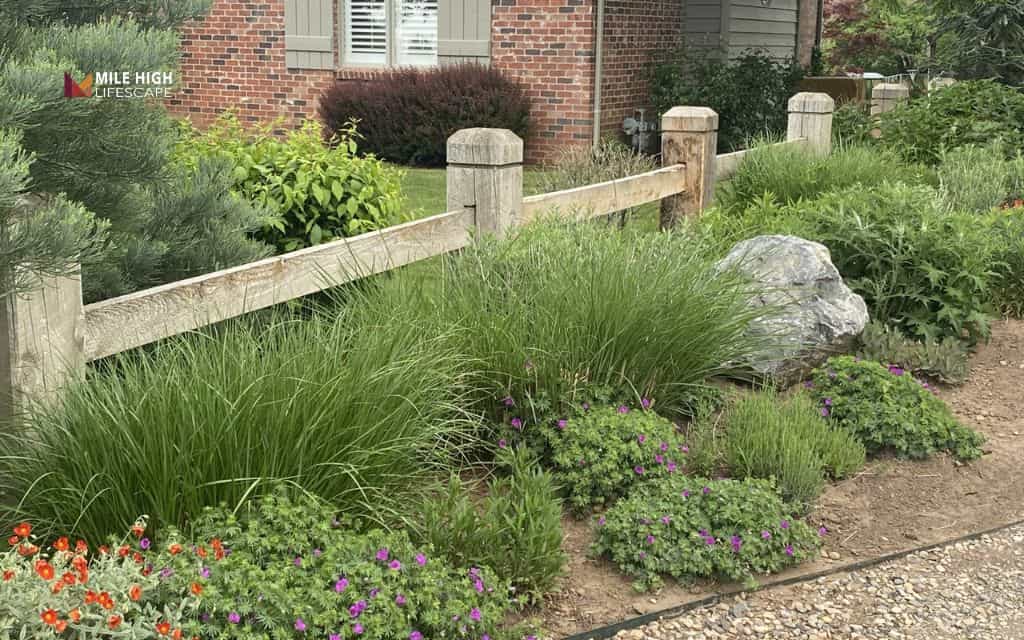
Clumping ornamental grasses like blue fescue, muhly grass, or Karl Foerster feather reed grass create textural, movement-filled borders that sway attractively in the breeze. They look especially beautiful along property boundaries or beside driveways.
Cut ornamental grasses back to about 4 – 6 inches in late winter or early spring before new growth begins.This keeps the clumps looking tidy and healthy.
Best for: Soft, flowing edges and low-maintenance natural gardens
20. Groundcover border
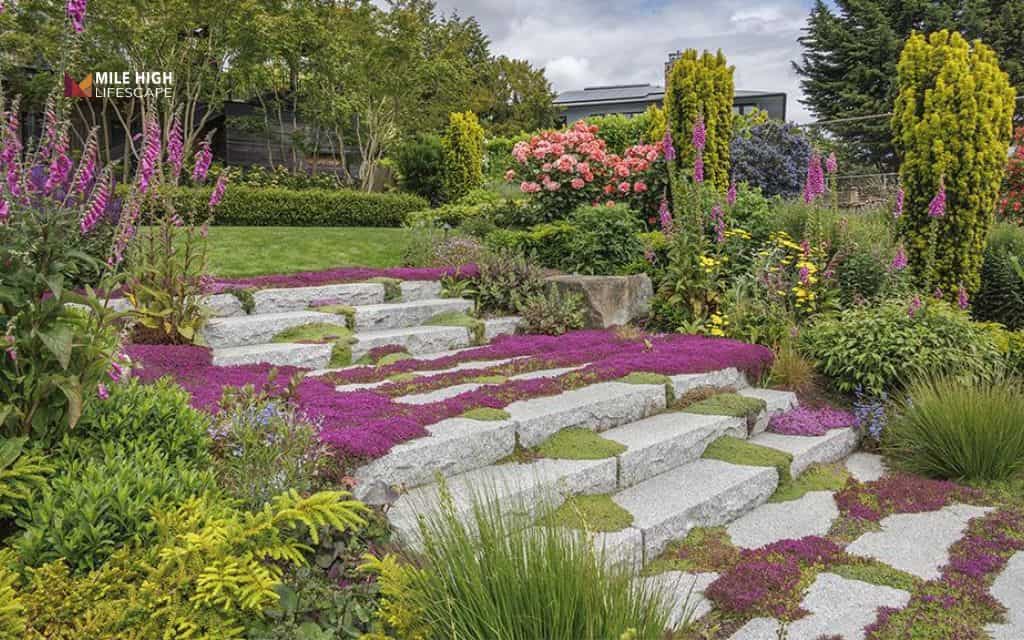
Dense groundcovers like creeping thyme, ajuga, sedum, or liriope naturally crowd out weeds while forming a living carpet along garden edges. They’re particularly useful in spots where mowing is difficult or conventional edging won’t hold.
Creeping thyme is an excellent choice for sunny edges. It handles light foot traffic, smells wonderful when brushed, and produces a flush of purple blooms in summer.
Best for: Low-maintenance edging and difficult areas like slopes or shade
Creative & unique border ideas
Ready to go beyond the basics? These inventive landscape border ideas add personality and originality to your garden while still delivering practical definition.
21. Mixed material border
Combining two materials such as stone and metal, wood and gravel, or brick and planted groundcover,… creates a border that feels truly custom. Mixed material borders allow you to highlight specific areas, create visual transitions, or simply reflect your own design sensibility.
Anchor the combination with one dominant material and use the second as an accent. Too many materials in a single border can start to look busy rather than intentional.
Best for: Eclectic, personalized garden styles
22. Recycled bottle border
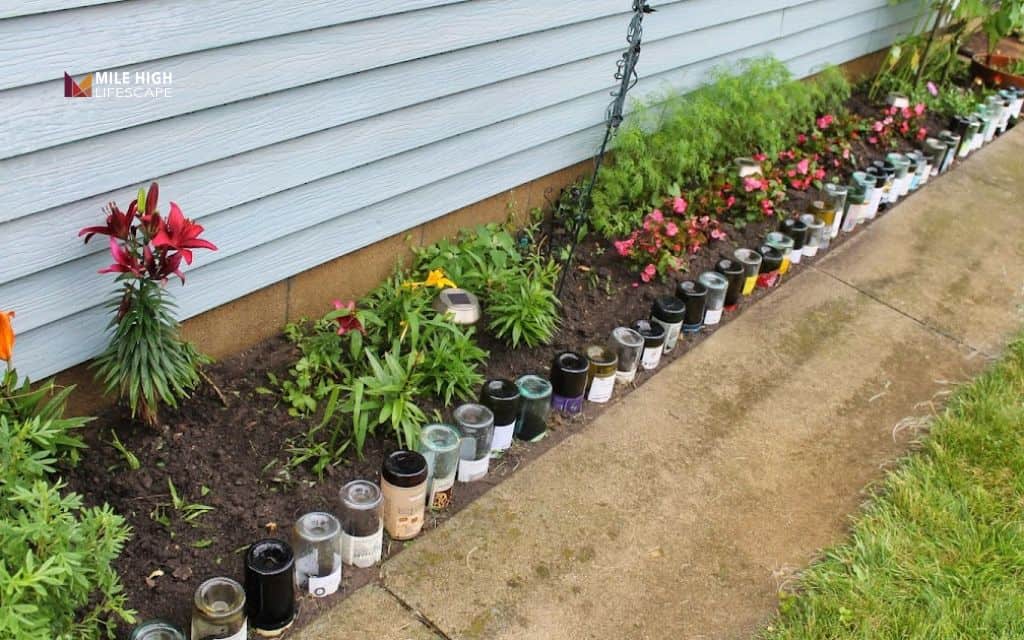
Burying wine, beer, or glass bottles neck-down in a row creates a surprisingly attractive, colorful border with zero material cost. When sunlight hits the glass, it creates a subtle, jewel-toned effect that’s especially charming in cottage or bohemian-style gardens.
Use bottles of the same size for a more uniform look, or mix sizes deliberately for a more whimsical effect. Bury at least half the bottle to ensure stability.
Best for: Eco-friendly DIY projects and playful, colorful garden spaces
23. Concrete curb edging
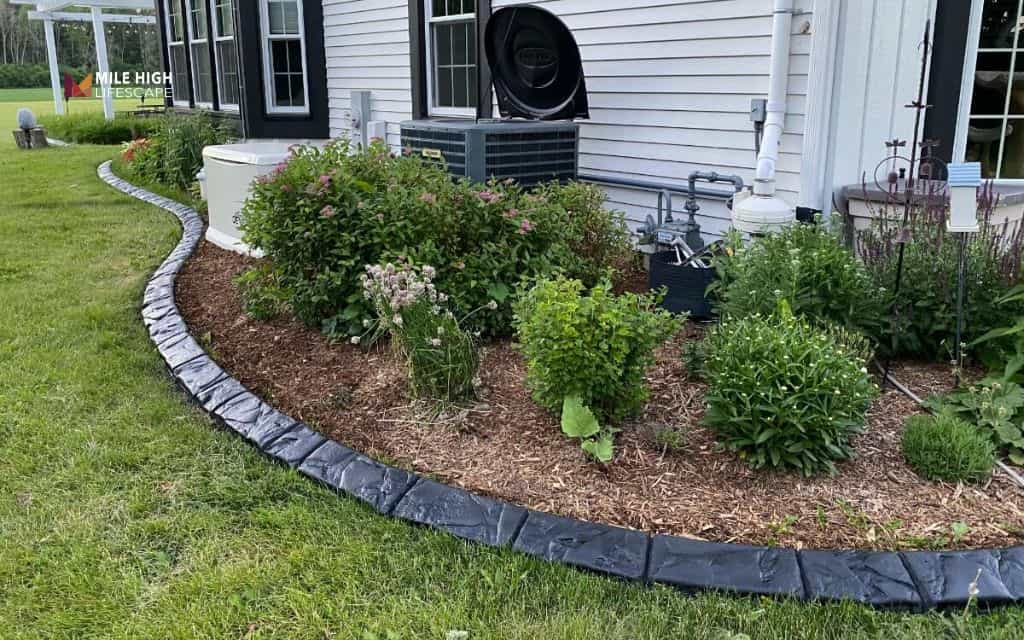
Poured or pre-formed concrete curbing creates the sharpest, most durable border possible. Once installed, it won’t shift, rot, or need annual resetting. It’s the preferred choice for homeowners who want a permanent, zero-maintenance edge.
Work with a landscape professional to pour and finish concrete curbing. Color it to complement your home’s exterior or stamp it with a pattern for added visual interest.
Best for: Permanent, ultra-clean lines and high-traffic areas
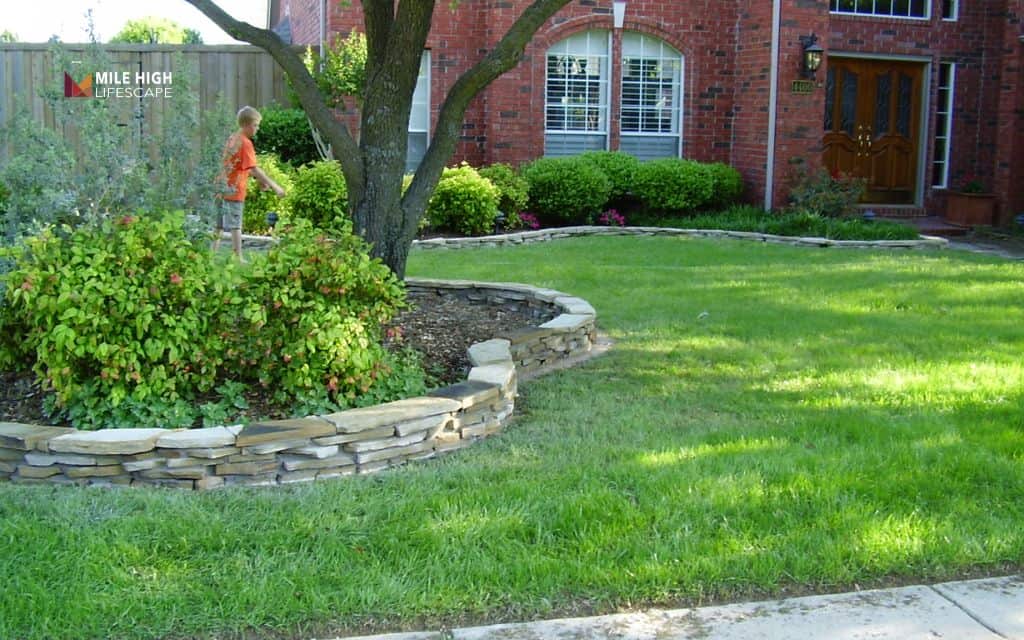
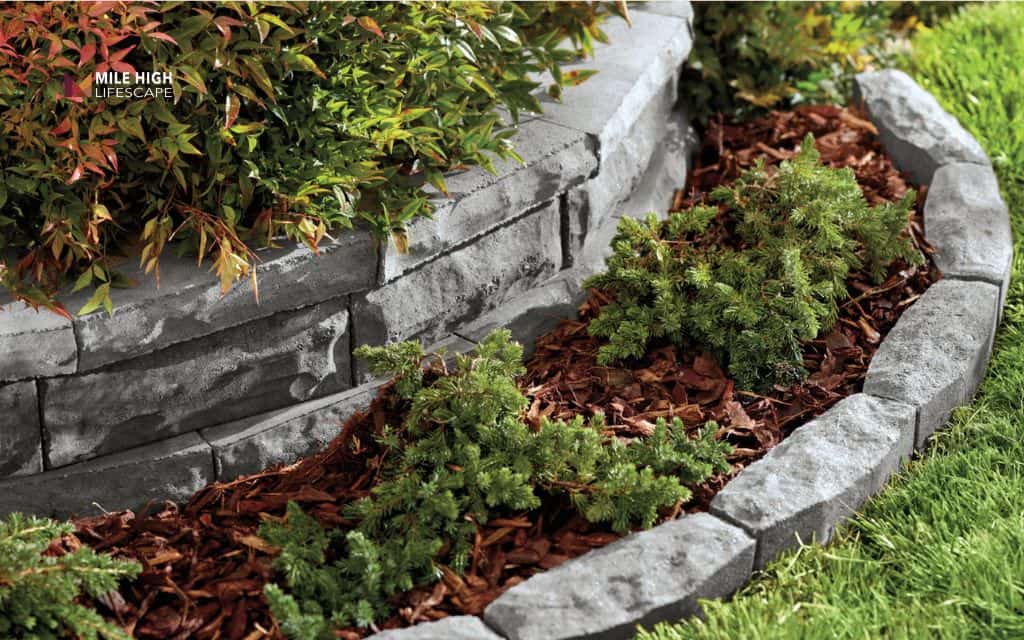
24. Raised stone border
A raised stone border adds height and drama to the edge of a bed, creating a mini retaining wall effect that holds soil back on slopes and adds a three-dimensional quality to flat yards. Stack two or three courses of stone for the most impact.
Backfill behind the raised stones with compacted gravel or crushed rock before adding topsoil. This improves drainage and prevents frost heave from dislodging the stones.
Best for: Sloped areas, retaining edges, and tiered planting beds
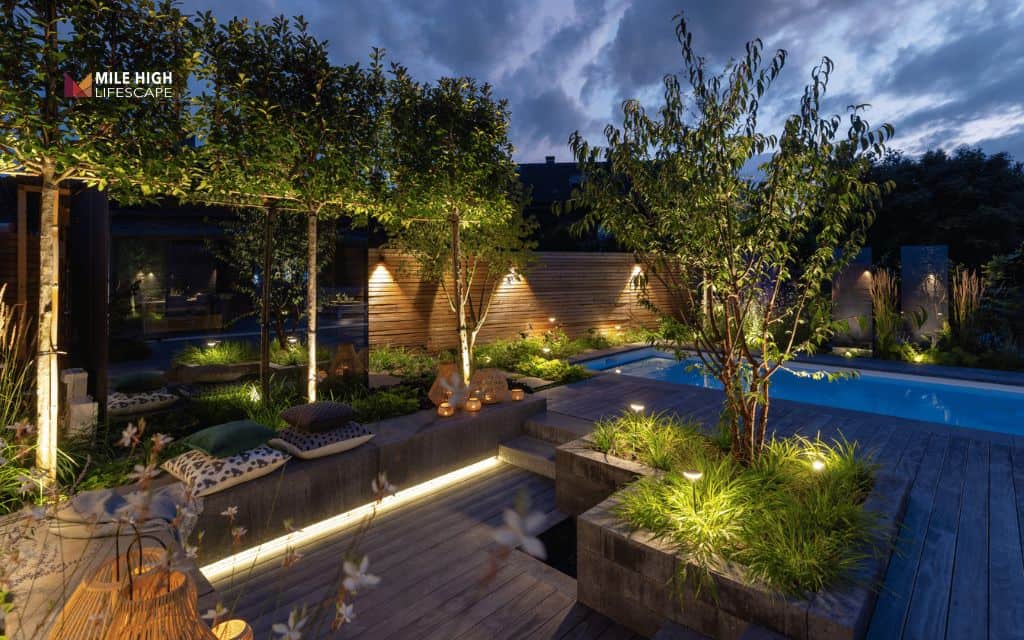
25. Lighting-integrated border
Embedding low-voltage LED path lights into or alongside a stone, brick, or metal border transforms your garden at night. Solar-powered options are particularly easy to install and modern designs are sleek enough to look attractive during the day as well.
Best for: Nighttime curb appeal, pathway safety, and entertaining spaces
How to choose the right landscape border
With 25 options on the table, how do you narrow it down? The best choice depends on 3 key factors: your garden style, your willingness to maintain it, and your budget.
Consider your garden style
- Rustic or natural → natural stone, river rock, log borders, or woven willow
- Modern or minimalist → metal edging, black steel, concrete curb, or gravel strips
- Formal or traditional → brick, flagstone, low hedge, or concrete pavers
- Cottage or woodland → timber edging, flower border, recycled bottle, or mixed materials
Think about maintenance
- Low maintenance → metal edging, natural stone, river rock, groundcover
- Medium maintenance → wood, brick, concrete pavers, ornamental grasses
- Higher maintenance → living hedges, flower borders, woven willow (seasonal replacement)
Budget guide
Use this quick reference to match your budget to your best border options:
| Budget Level | Best Options |
| Low | Plastic edging, gravel border strips |
| Medium | Timber edging, classic brick, woven willow |
| Higher | Natural stone, flagstone, concrete curbing, boulder edging |
How to keep your landscape border looking sharp
Installing a border is only half the job. Consistent upkeep ensures it stays crisp, clean, and purposeful throughout the year.
- Re-edge beds annually: Use a half-moon edger or spade to recut the line between lawn and garden every spring. This one step makes a bigger visual difference than almost anything else.
- Remove creeping grass: Check borders monthly and pull any grass runners that have crossed over. The longer you leave it, the harder it becomes to remove without disturbing the border.
- Clean debris: Leaves, mulch, and soil can pile up against borders and obscure their lines. A quick sweep or rake after windy weather keeps them visible and functional.
- Reset loose materials: Natural stone, bricks, and pavers can shift over time due to frost, rain, or foot traffic. Walk the perimeter each spring and reset any materials that have moved out of place.
Consistency is what keeps borders crisp. A few minutes of attention every month pays off in a garden that looks well-managed all season long.
Conclusion
The best landscape border ideas share three qualities: they look great, they serve a practical purpose, and they hold up over time with reasonable care.
Whether you’re drawn to the permanence of natural stone, the warmth of timber edging, the precision of black steel, or the color of a flower border edge, there’s an option that suits your space and your style. The key is choosing a border that matches your garden’s personality and your realistic commitment to upkeep.
Start simple if you’re new to garden edging: a roll of metal edging or a row of bricks can instantly sharpen even the most casual-looking yard. As you gain confidence, experiment with combinations, curves, and creative materials. Your garden will thank you for it.
___________
At Mile High Lifescape, we bring over 20 years of professional landscaping experience to homeowners across Denver, Aurora, Lakewood, Littleton, Boulder, and the surrounding areas.
From custom landscape design and garden bed installation to mulch, rock borders, flower beds, and full outdoor transformations, our team handles every project with precision and care.
Ready to upgrade your yard? Contact Mile High Lifescape today at (303) 877-9091 for a free estimate.
Frequently asked questions (FAQs)
What is the best landscape border option?
The best option depends on your garden style and maintenance preferences, but metal edging and natural stone are widely favored for their durability, clean lines, and low upkeep, making them excellent all-around choices for most gardens.
What are some DIY landscape edging ideas?
Plastic landscape edging, gravel border strips, recycled bottle borders, and river rock edging are all highly approachable DIY projects that require minimal tools, modest budgets, and can typically be completed in a single weekend.
What is the cheapest way to edge a border?
Flexible plastic edging and gravel strips are the most budget-friendly options, often available for just a few dollars per linear foot at home improvement stores and easily installed without professional help.
What are common mistakes when edging?
The most frequent mistakes include cutting edges too shallow (allowing grass to cross over quickly), skipping landscape fabric beneath loose materials like gravel or rock, and neglecting to re-edge annually which lets borders lose their definition faster than they should.