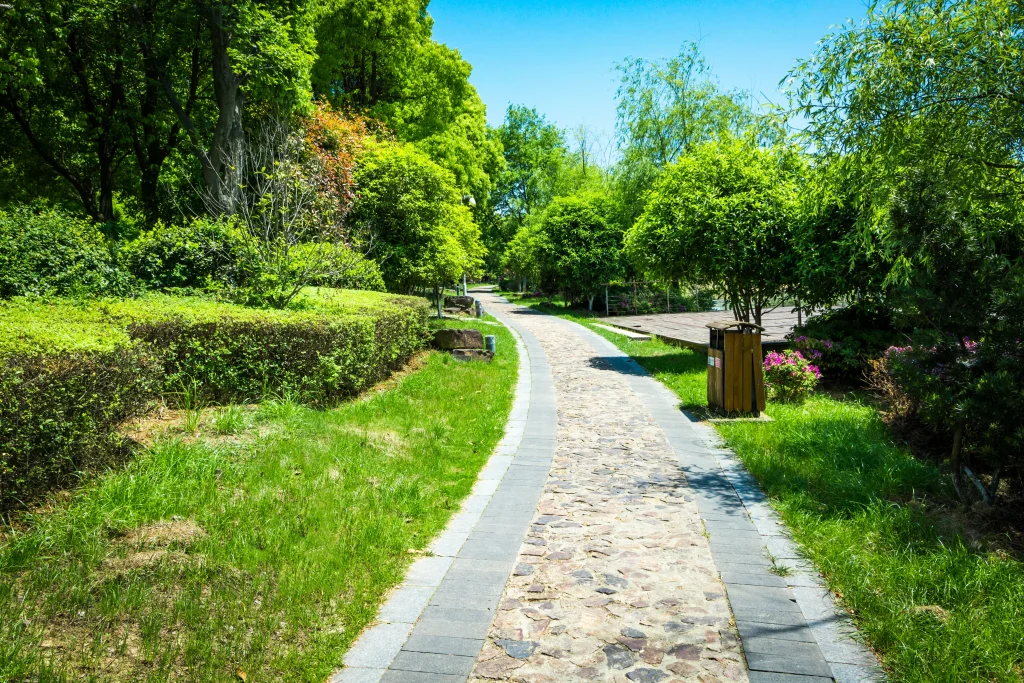
Boulders transform ordinary yards into extraordinary outdoor spaces. Unlike smaller decorative rocks or manufactured hardscaping, landscaping with boulders brings something no other landscape element can match: instant permanence paired with a deeply natural, grounded aesthetic that only improves with time.
Yet despite their appeal, many homeowners hesitate. Common concerns include:
- Will the boulder look “dropped” or staged rather than natural?
- How much do large landscape boulders actually cost, including delivery and installation?
- Can I install boulders myself, or do I need professional equipment and expertise?
This guide addresses all these concerns head-on. You’ll learn how to design and place boulders so they look authentically natural, remain stable for decades, and genuinely improve your landscape’s function and beauty.
Whether you’re considering one anchor boulder for your front yard or planning a complete rock landscape redesign, you’ll gain the confidence to make informed decisions about boulder landscaping.
What counts as a “boulder” in landscaping?
Before diving into design ideas, let’s clarify what we actually mean by “boulder” in a landscaping context. This distinction matters because it affects your design approach, installation method, and budget.
Boulder vs. large rock
In landscaping, a boulder typically refers to any stone that’s too large to move by hand alone. More specifically:
- Boulders: Usually weigh 200+ pounds and require machinery (skid steer, mini excavator, or crane) for safe placement
- Large rocks: Typically 50-200 pounds; may be moved with hand trucks, levers, or 2-3 people
- Accent rocks: Under 50 pounds; easily positioned by hand
This isn’t just semantics. The weight threshold determines whether you’re in DIY territory or need professional installation – a critical factor for planning and budgeting.
Common landscaping boulder sizes
Residential landscape boulders are typically categorized by weight:
- Small boulders: 200-500 lbs (roughly 12-18 inches diameter)
- Medium boulders: 500-1,500 lbs (18-30 inches diameter)
- Large boulders: 1,500-3,000 lbs (30-42 inches diameter)
- Accent/specimen boulders: 3,000+ lbs (42+ inches diameter)
For most residential projects, boulders in the 1-3 ton range (2,000-6,000 lbs) create the most impact as focal points or slope anchors without overwhelming smaller yards.
Natural vs. quarried boulders
Understanding where your boulders come from affects both aesthetics and cost:
- Natural/fieldstone boulders: Collected from fields, riverbeds, or mountainsides; feature weathered surfaces, moss, lichen, and organic shapes; typically more expensive due to collection effort
- Quarried boulders: Freshly cut from quarries; angular with clean faces; more affordable; require time to weather naturally
For the most authentic look in landscape design with rocks, many designers prefer natural boulders that already show weathering and character. However, quarried stone becomes more natural-looking within 1-3 years as it weathers.
Why use boulders in landscape design?
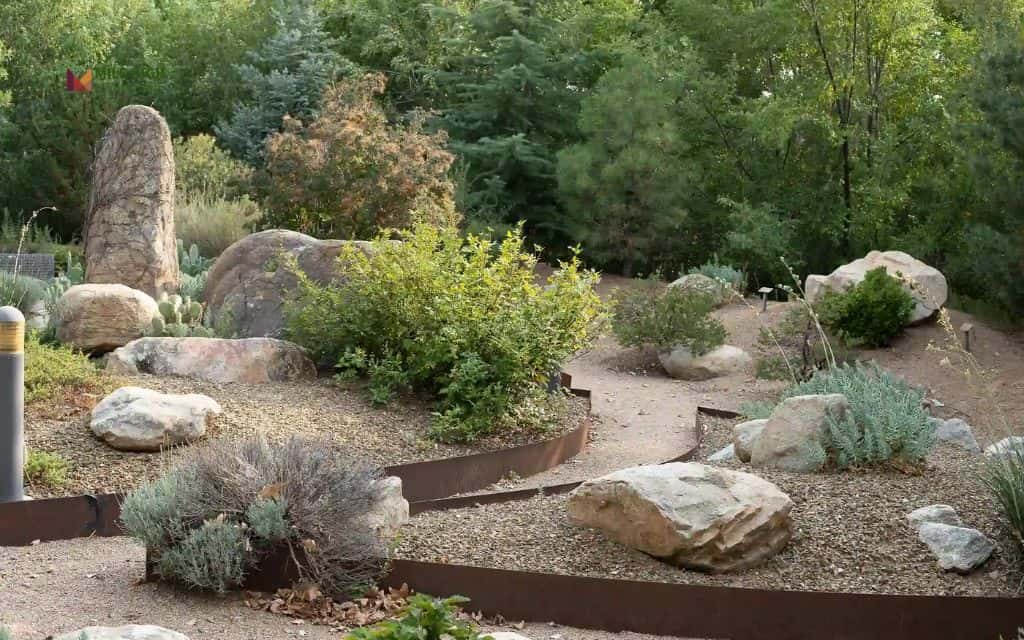
Rock landscape ideas that incorporate boulders serve purposes far beyond simple decoration. When integrated thoughtfully, landscaping with large rocks delivers benefits in two major categories: aesthetic and functional.
Aesthetic benefits
Creates an instant, natural focal point
Unlike plantings that need years to mature, a well-placed boulder provides immediate visual impact. It draws the eye, anchors garden compositions, and serves as the organizational principle around which other landscape elements arrange themselves. In landscape design with boulders, this focal point effect is especially powerful in otherwise flat or featureless yards.
Adds a sense of age and permanence
Boulders convey timelessness. A 2-ton stone that took millennia to form brings geological scale to your garden, creating instant maturity that new construction and young plantings can’t match. This quality makes boulder landscaping particularly valuable in new developments where everything else looks freshly installed.
Complements multiple design styles
Boulder landscape designs are remarkably versatile:
- Modern/contemporary: Clean-lined boulders with minimal plantings create sculptural statements
- Rustic/naturalistic: Weathered stones with native grasses evoke mountain meadows
- Japanese-inspired: Carefully composed boulder groupings with raked gravel or moss
- Xeriscape/drought-tolerant: Boulders pair perfectly with succulents and ornamental grasses
This flexibility makes boulders a smart long-term investment even if your design preferences evolve.
Functional benefits
Stabilizes slopes and prevents soil movement
Landscaping with big boulders on slopes serves an engineering purpose. Large stones set into hillsides:
- Create physical barriers that slow downhill soil creep
- Break up long slopes into more stable terraces
- Provide anchoring points for root systems
- Reduce the need for expensive retaining walls
This makes large boulder landscaping ideas especially practical for properties with grade changes.
Directs water flow and manages drainage
Strategic boulder placement guides water naturally through your landscape:
- Along drainage paths, boulders slow runoff velocity and reduce erosion
- At the base of downspouts, they disperse concentrated water flow
- In swales or dry creek beds, they define channels and prevent washouts
- Near property lines, they redirect water away from structures
Using boulders in landscaping for drainage often proves more cost-effective and natural-looking than installing underground systems or poured concrete channels.
Reduces erosion in vulnerable areas
High-traffic zones, steep banks, and areas with poor ground cover benefit enormously from boulder placement. The stones:
- Shield soil from direct rainfall impact
- Break wind patterns that dry out and destabilize soil
- Create protected pockets where vegetation can establish
- Provide permanent erosion barriers that don’t require maintenance
Defines spaces without vertical walls
Boulders create psychological and visual boundaries while maintaining openness. A line of boulders can:
- Separate lawn from garden beds without hard edges
- Define outdoor “rooms” in larger landscapes
- Mark property lines informally
- Guide foot traffic without fencing
This makes boulders in garden designs particularly valuable for creating structure while preserving flow and sightlines.
Design principles for landscaping with boulders
This section is where most DIY boulder projects either succeed beautifully or end up looking staged and unnatural. The difference comes down to understanding a few core principles that professional landscape designers use instinctively.
Think like nature
The golden rule of using large rocks in landscaping: observe how boulders appear in wild landscapes, then mimic those patterns.
Avoid straight lines and perfect spacing
Nothing screams “installed by humans” like boulders spaced at regular intervals or aligned in rows. Instead:
- Vary distances between stones in a grouping
- Create triangular or loose circular compositions rather than linear arrangements
- Let boulders appear to tumble naturally down slopes rather than march in formation
- Break up any unintentional sight lines that reveal symmetry
Vary size and orientation
Real boulder fields show tremendous variety:
- Mix large anchor stones with smaller supporting boulders
- Rotate each boulder to a different angle—avoid having all “faces” oriented the same direction
- Tip boulders at slight angles rather than sitting them perfectly upright (more on this in the next section)
- Include flat stones, round stones, and angular stones in the same composition if your stone source allows
Scale & proportion
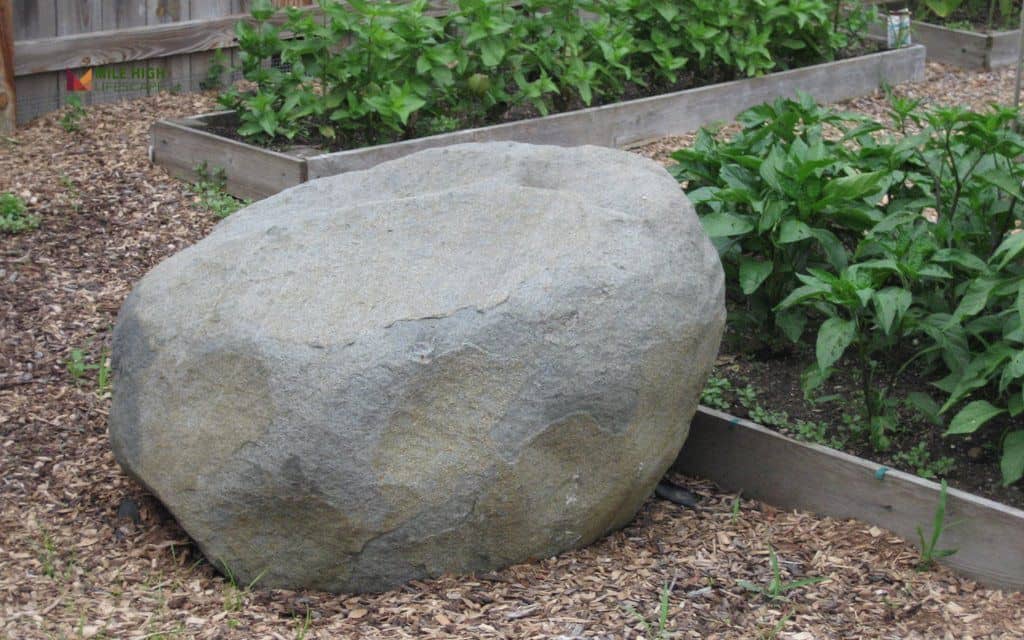
One large anchor boulder > many medium rocks
This might be the single most important principle for achieving professional results with garden design rocks. Amateur installations often use many medium-sized boulders, creating visual clutter. Professional designers know that one or two large boulders create stronger compositions than five medium ones.
Match boulder size to yard size
Scale matters enormously:
- Small yards (under 1,000 sq ft): 1-2 ton boulders work as focal points; 500-1,000 lb stones for supporting roles
- Medium yards (1,000-3,000 sq ft): 2-3 ton anchor boulders; 1-2 ton supporting stones
- Large properties (3,000+ sq ft): 3+ ton statement pieces with varied supporting stones
The boulder should feel substantial but not cramped.
Consider mature plant size
What looks proportional today may feel unbalanced in three years when plants fill in. When planning landscaping with large rocks ideas:
- Account for ornamental grasses at mature height (often 3-5 feet)
- Consider shrub spread (not just initial pot size)
- Visualize how trees will eventually frame or shade your boulders
- Leave more space around boulders than you think you need initially
Set boulders “into” the ground
This single technique separates natural-looking installations from obvious additions.
Bury approximately ⅓ of the boulder
In nature, boulders aren’t sitting on top of the soil—they’re embedded in it, with substantial mass below grade. Replicate this by:
- Excavating a proper setting hole
- Placing the boulder so roughly one-third of its total height is below finished grade
- Backfilling around the stone and compacting well
- Adjusting soil levels so the boulder appears to emerge from the earth rather than rest on top of it
Avoid the “dropped-on-top” look
The most common beginner mistake: setting boulders directly on existing grades without any integration. This creates what designers call the “egg carton effect”—stones look like they were simply placed wherever was convenient.
Tilt for authenticity
Perfectly vertical boulders look artificial. Real stones in natural settings lean, tip, and rest at organic angles. When positioning boulders:
- Tip the stone slightly into the slope if on a grade
- Lean adjacent boulders toward each other slightly in groupings
- Avoid having the largest face of the boulder pointing straight up—angle it for more dynamic presentation
- Make sure the tilt is stable, not precarious
8 landscaping with boulders ideas that look natural
Anchor boulder as a garden focal point
A single large boulder serves as the organizational heart of a garden bed, giving viewers an immediate place to rest their eyes while providing a reference point for arranging plants, pathways, and other landscape elements.
Boulder groupings in planting beds
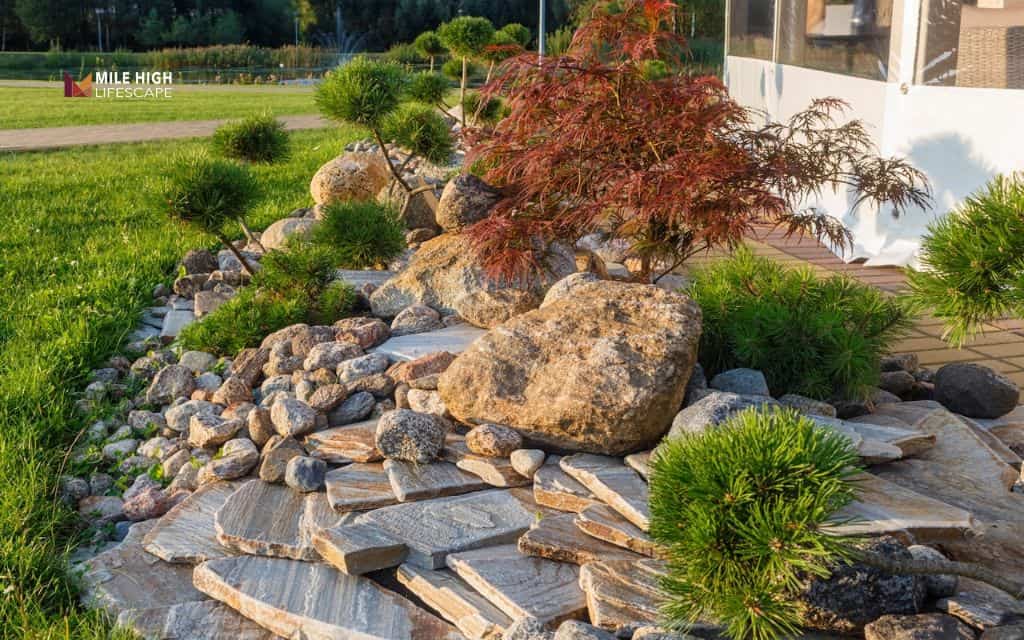
Instead of a single stone, use clusters of boulders in varying sizes to create more complex compositions. This approach mimics natural boulder fields and rockfall areas, where stones of different sizes come to rest together.
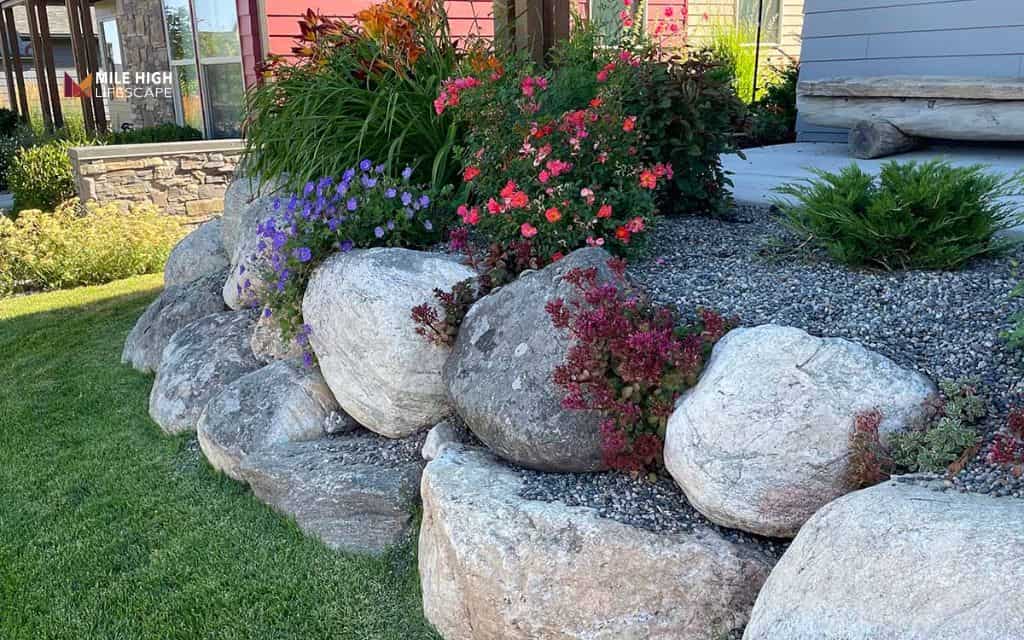
Slope stabilization with large boulders
Using boulders in landscaping addresses both aesthetic and structural needs on slopes. Large stones set into hillsides create visual interest while providing genuine erosion control and stability.
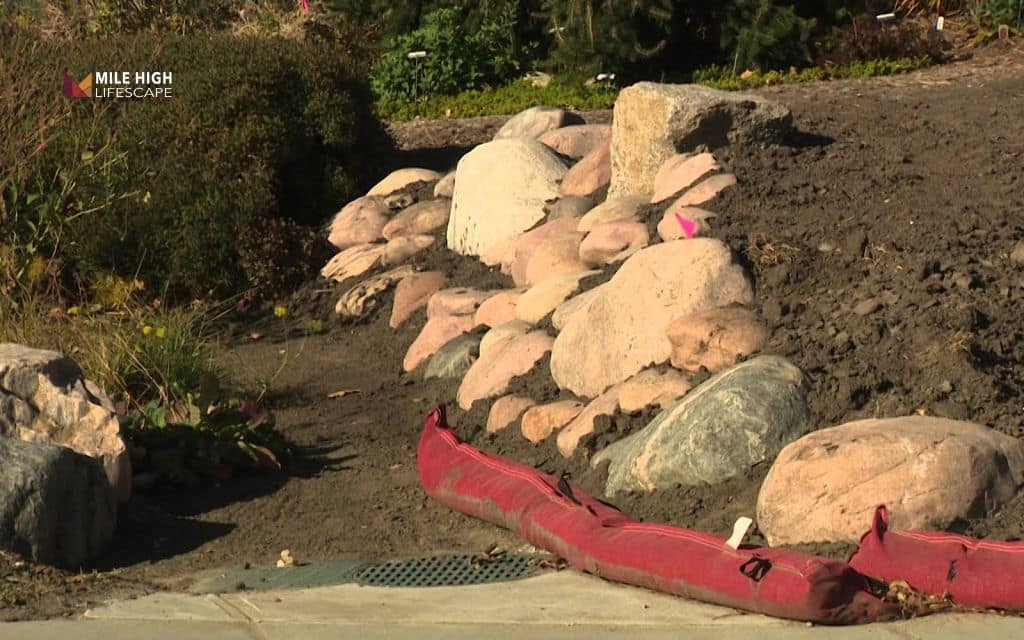
Boulders integrated with native plants
Pair boulders with native plant species to create landscapes that look like they’ve always been there. This approach is especially effective for naturalistic designs and water-wise landscaping.
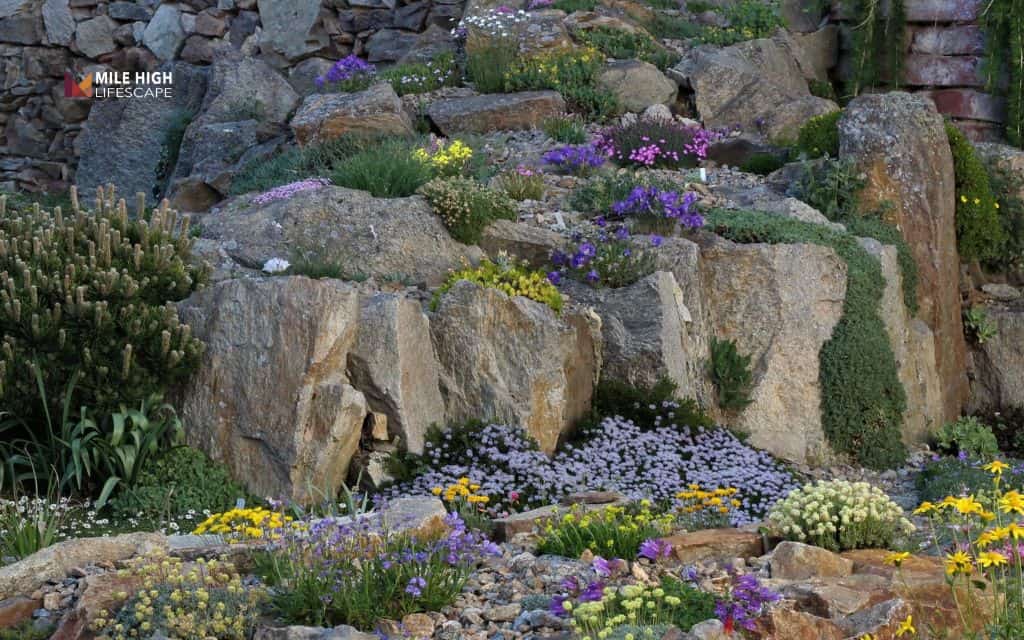
Front yard landscaping with large rocks
Using large rocks in landscaping transforms front yards into low-maintenance, high-impact curb appeal statements. This approach works especially well for homeowners wanting to reduce lawn area and water use while increasing visual interest.
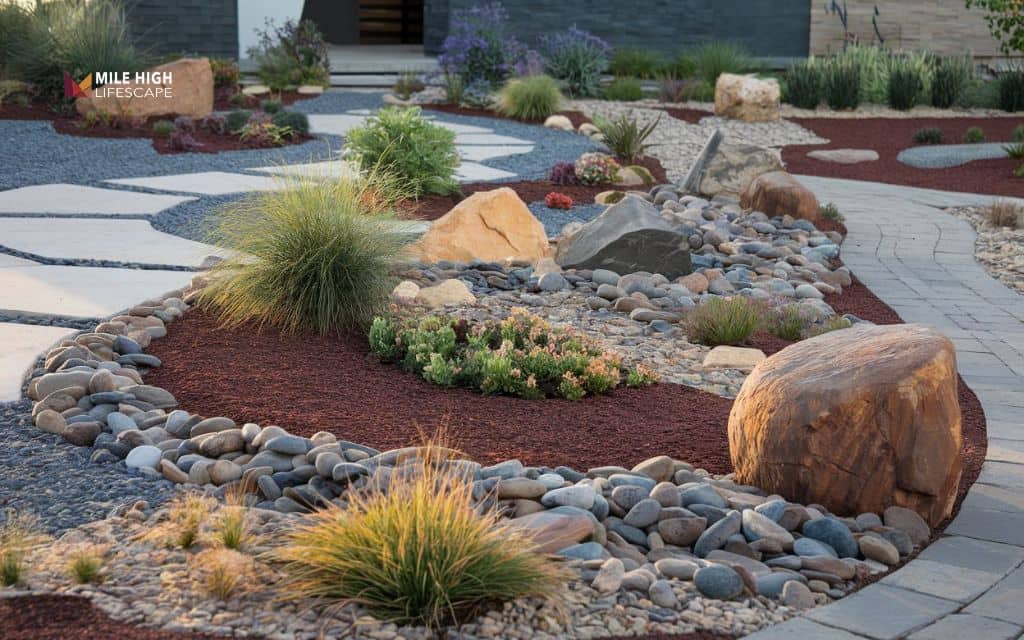
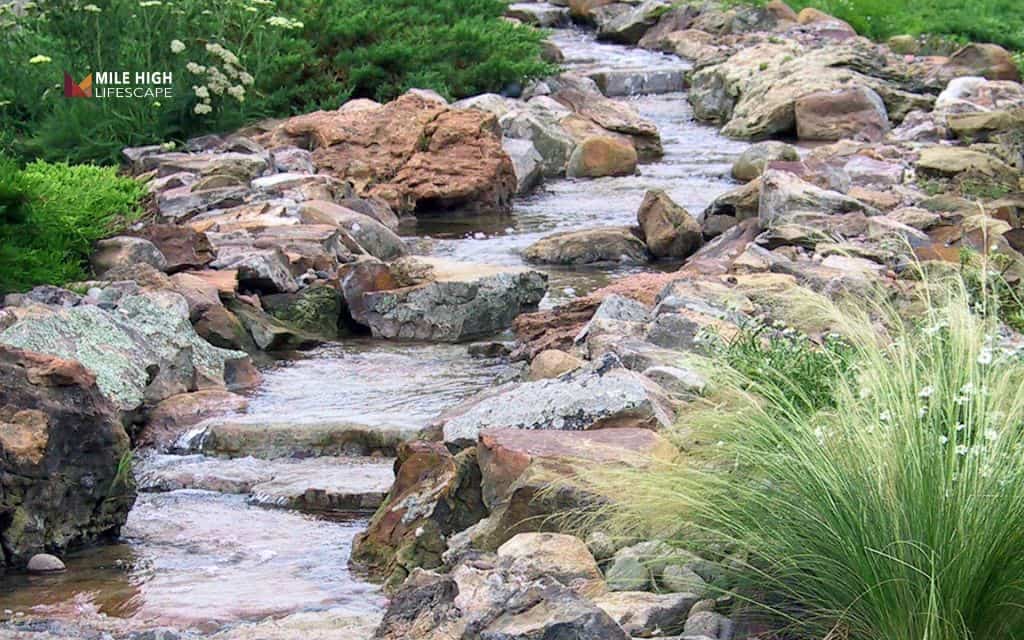
Boulders along drainage paths or dry creeks
Channel water naturally through your landscape while creating beautiful features that address drainage problems. This technique combines function and aesthetics better than nearly any other boulder application.
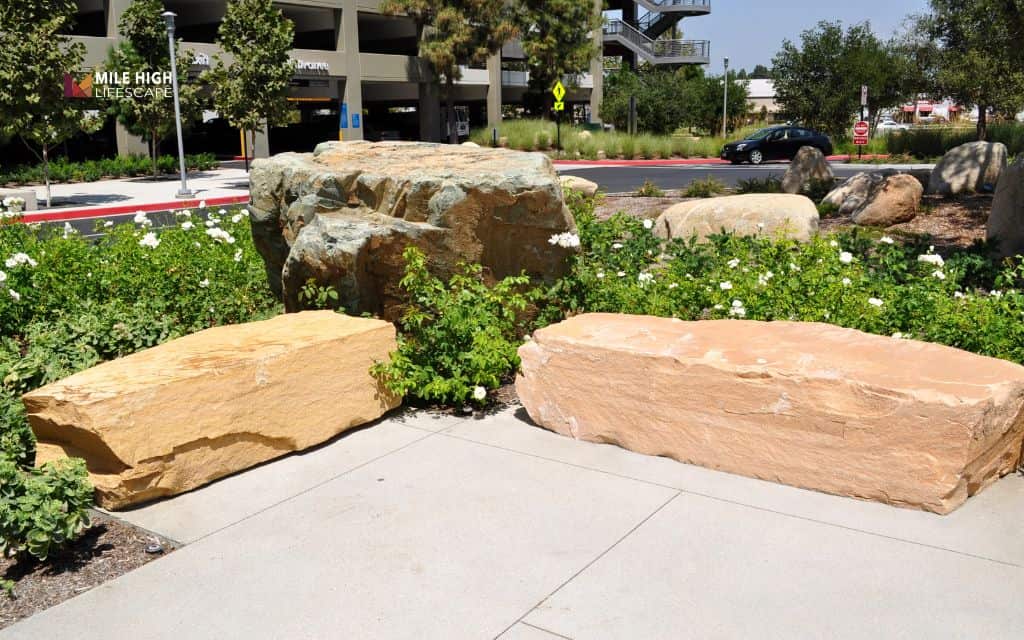
Boulder seating & informal gathering spots
Flat-topped or naturally broad boulders double as informal seating, creating gathering spots that feel spontaneous and organic rather than formally furnished.
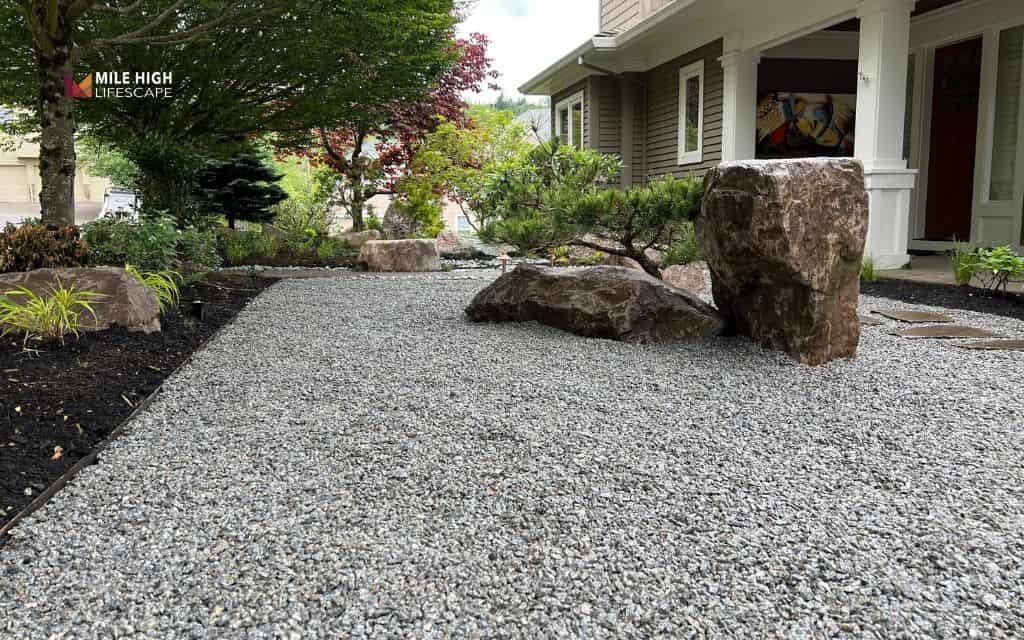
Minimalist boulder landscape (few stones, big impact)
Sometimes the most powerful boulder landscaping uses minimal stones with maximum intention. This approach works especially well in contemporary designs, Asian-inspired gardens, and high-desert landscapes.
Conclusion
The most satisfying aspect of landscaping with boulders is that your investment appreciates rather than depreciates. Unlike decks that weather, pavers that shift, or structures that require maintenance, well-placed boulders genuinely improve over time. With thoughtful design and correct placement, boulder landscaping becomes one of the most durable and rewarding landscape investments you can make.
________________
Ready to transform your landscape with professional boulder installation?
Mile High Lifescape offers comprehensive landscape rock services throughout the Denver area, from single anchor boulders to complete slope stabilization projects. Our experienced team handles everything from stone selection to expert placement that looks natural.
Call us today to discuss your boulder landscaping vision and receive a free consultation.
Frequently asked questions (FAQs)
What size boulder is best for landscaping?
The best boulder size depends on your space and purpose. In most residential landscapes, boulders between 1–3 tons work well as focal points or slope anchors. Smaller yards benefit from fewer, larger boulders rather than many medium rocks, which helps the design look more natural.
How do you place boulders so they look natural in a landscape?
Boulders should be partially buried – typically about one-third of their height – to mimic how stones appear in nature. Group boulders in uneven numbers, vary their size and orientation, and avoid straight lines or perfectly centered placement.
Can boulders help with drainage or erosion control?
Yes. Landscaping with boulders is often used to slow water flow, stabilize slopes, and reduce erosion. When placed correctly, boulders guide runoff naturally and protect soil without the need for retaining walls.
Is it safe to install landscaping boulders as a DIY project?
DIY installation is possible for small to medium boulders (under 1,000 lbs) if access is easy and proper tools are used. However, large boulders, steep slopes, or areas affecting drainage should be handled by professionals to ensure safety and long-term stability.
How much does landscaping with boulders cost?
Costs vary based on boulder size, stone type, delivery access, and whether machinery is required. Smaller decorative boulders are relatively affordable, while large feature boulders and professional installation increase the budget. Many homeowners request quotes before purchasing stone to avoid surprises.