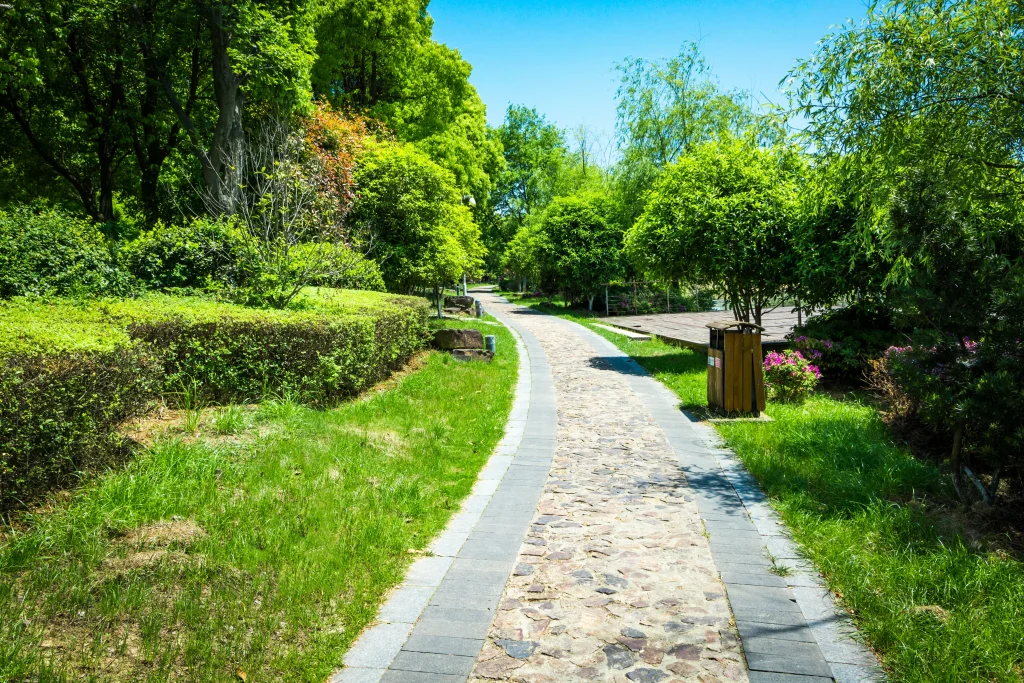
Looking for lavender landscape ideas that are both beautiful and easy to maintain? Lavender brings a calm, simple beauty to any garden. Its soft purple blooms and silvery foliage add color and texture, while its light fragrance makes outdoor spaces more enjoyable. It also attracts bees and butterflies, helping create a lively, natural environment. This is why lavender continues to be a popular choice for both homeowners and landscape designers.
This guide covers 21 of the best lavender landscape ideas to help you get started, whether you have a large front yard, a small patio, or a challenging space like a dry slope. Lavender is a flexible and reliable option for almost any setting
Why lavender is perfect for landscaping
Lavender is drought-tolerant, which means it thrives with minimal watering once established, a real advantage in warm or dry climates and a key reason it tops so many waterwise lavender landscape ideas lists. It is low-maintenance, asking only for good drainage, full sun, and an annual pruning to stay full and tidy. And it is pollinator-friendly, drawing bees, butterflies, and beneficial insects that actively support the health of your whole garden.
Perhaps most importantly, lavender does something few plants can: it engages multiple senses at once. The color soothes the eye, the fragrance lifts the mood, and the soft texture invites touch. That combination is exactly why lavender landscape ideas feel so different from ordinary ornamental shrubs or standard perennials. A well-placed lavender flower bed can transform an average yard into something truly memorable.
Lavender landscape ideas also adapt beautifully across a wide range of garden styles, from cottage romance to Mediterranean minimalism to modern front yard designs, making it one of the most versatile and rewarding plants available to home gardeners at any skill level.
Best lavender varieties for landscaping
Choosing the right variety matters, because not all lavender behaves the same way in the landscape. The variety you select will shape how your lavender landscape ideas look, perform, and last over time.
English lavender (Lavandula angustifolia) is the classic choice for cold-hardy gardens. It produces the most fragrant blooms, tolerates frost well, and forms tidy, compact mounds ideal for borders and hedges. Popular cultivars include Hidcote and Munstead.
French lavender (Lavandula dentata) offers a longer bloom season and tolerates humidity better than English types. Its finely toothed leaves add interesting texture even out of bloom. It works beautifully in mild coastal climates.
Spanish lavender (Lavandula stoechas) is immediately recognizable by its rabbit-ear petals on top of each flower head. It blooms earlier than other varieties and makes a bold statement in rock gardens and containers.
Where lavender works best
Before you plant, set your lavender up for success. Lavender in the landscape thrives when these conditions are met:
- Full sun: Lavender needs 6 to 8 hours of direct sunlight every day. Shade leads to leggy growth and poor flowering.
- Well-drained soil: This is non-negotiable. Lavender roots rot in soggy ground. Sandy or amended soil with good drainage is ideal.
- Airflow: Avoid planting in tight, enclosed spots. Good air circulation prevents fungal issues and keeps plants healthy.
- Low-fertility soil: Unlike many garden plants, lavender actually prefers lean soil. Rich, fertilized beds encourage leafy growth over blooms.
- Best placement options include: borders and pathway edges, front yard flower beds, driveway lines, garden walls, patios, raised beds, rock gardens, and containers.
21 Lavender Landscape Ideas for a Dreamy Garden
1. Design a garden path with lavender borders
One of the most beloved lavender planting ideas is lining a garden path on both sides with rows of lavender. As you walk through, the plants brush against you, releasing fragrance with every step. The effect is soft, romantic, and deeply sensory.
English lavender works beautifully here, its upright flower spikes create a clear visual edge while staying tidy enough not to encroach on the path. Space plants about 18 inches apart, and choose a low-growing cultivar like ‘Hidcote’ or ‘Munstead’ to keep the path clear.
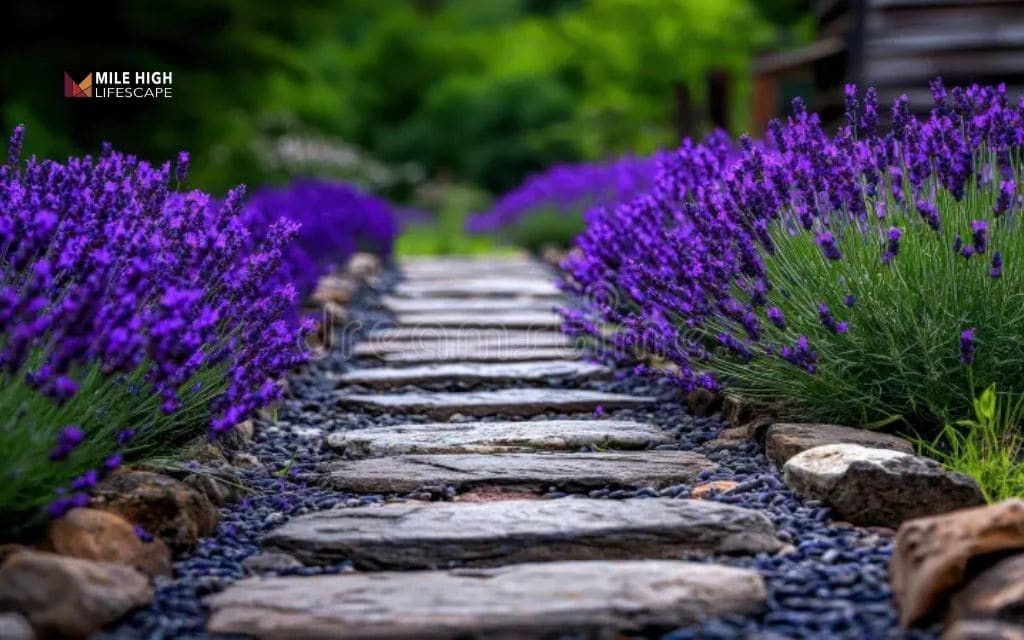
2. Border steps with lavender
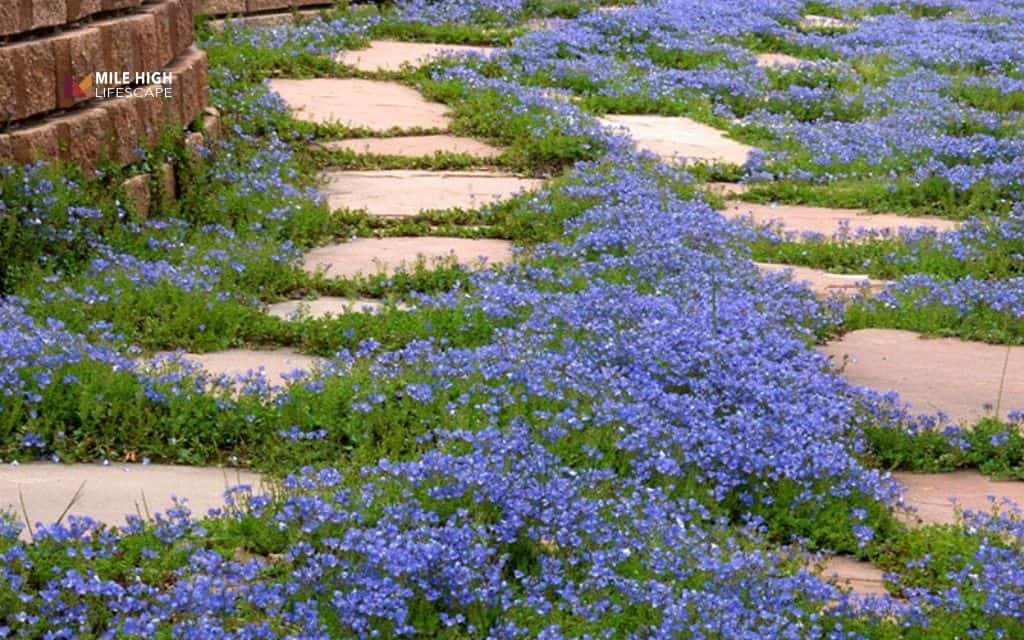
Hard landscaping elements like stone or concrete steps can feel cold and unwelcoming when left bare. Tucking lavender plants into the spaces alongside or between steps immediately softens those edges. The plants spill slightly over the stone, blurring the boundary between built and planted, while adding color and fragrance at ankle and knee height
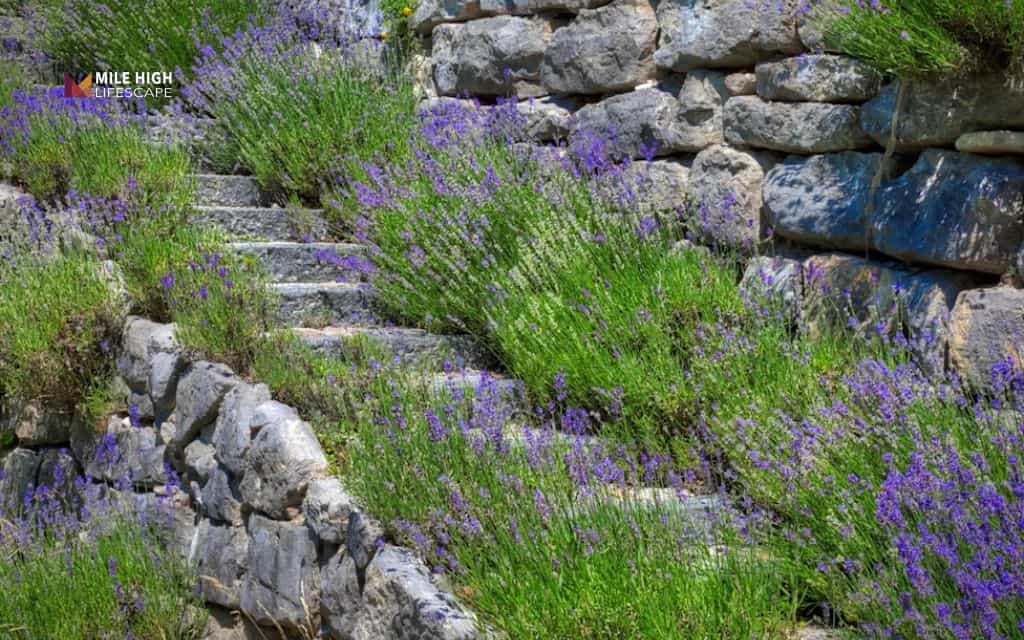
3. Create a smartly clipped lavender border
For a more formal or structured look, lavender can be lightly clipped into clean, low hedges. A row of English lavender sheared to a consistent height and width creates crisp definition along garden beds, driveways, or lawn edges. This is a great approach for modern or traditional formal gardens where structure and neatness matter. Clip lightly after the main bloom flush and the hedge will stay full and dense for years.
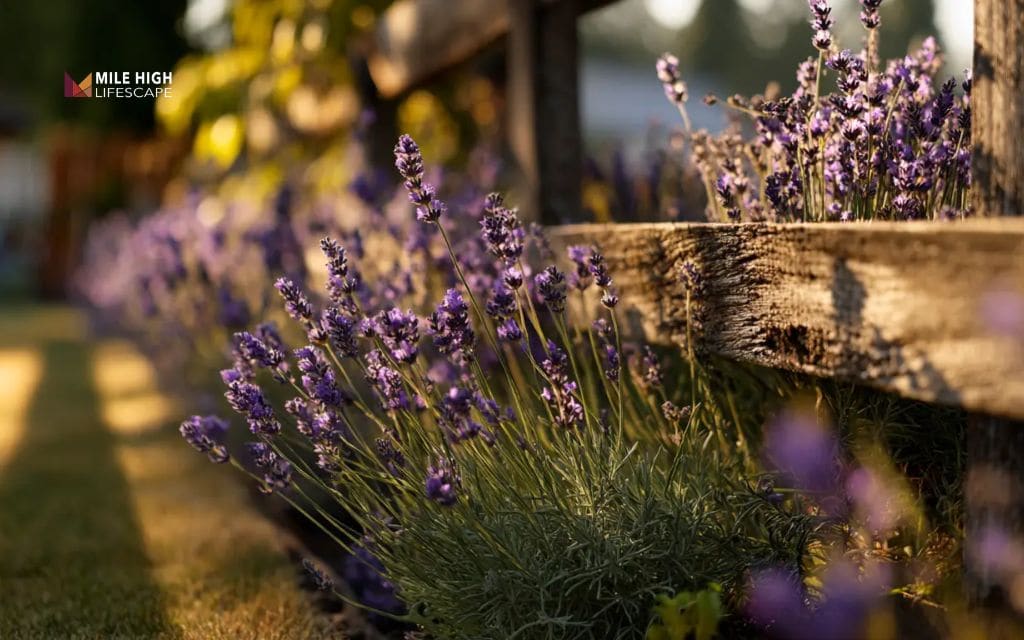
4. Frame a doorway with lavender
Planting matching lavender specimens on either side of a front door or gate creates a symmetrical frame that feels welcoming and designed. Choose slightly larger, rounded lavender plants and allow them to grow into full, generous mounds that frame the entrance without blocking it. The fragrance at nose level when entering or leaving the house is an everyday luxury.
5. Choose partner plants that lavender loves
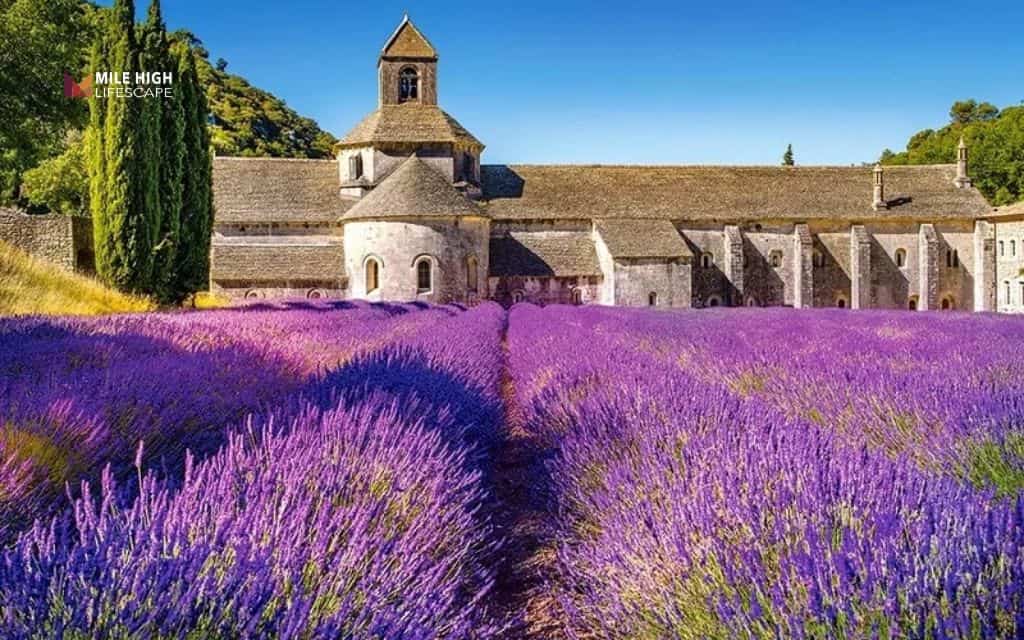
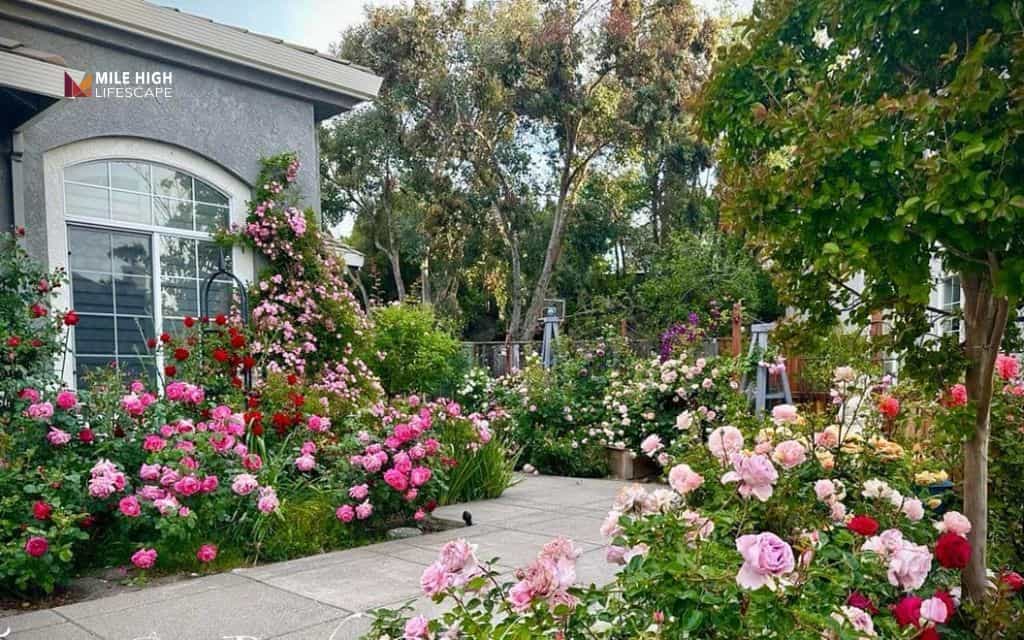
Lavender in the landscape performs best when surrounded by plants that share its preferences: full sun, lean soil, and minimal water. Excellent companions include rosemary, sage, thyme, catmint (Nepeta), echinacea, and Russian sage. These plants not only thrive under the same conditions but also create a cohesive color palette of purples, blues, and silvers that feels naturally harmonious. Roses are a classic pairing too
6. Mix lavender with topiary plants
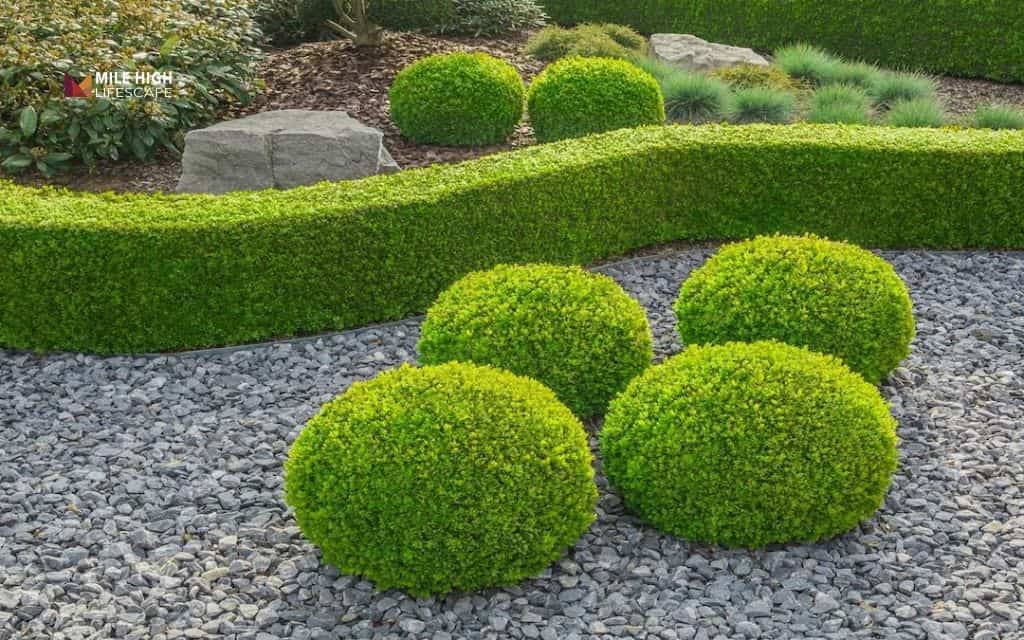
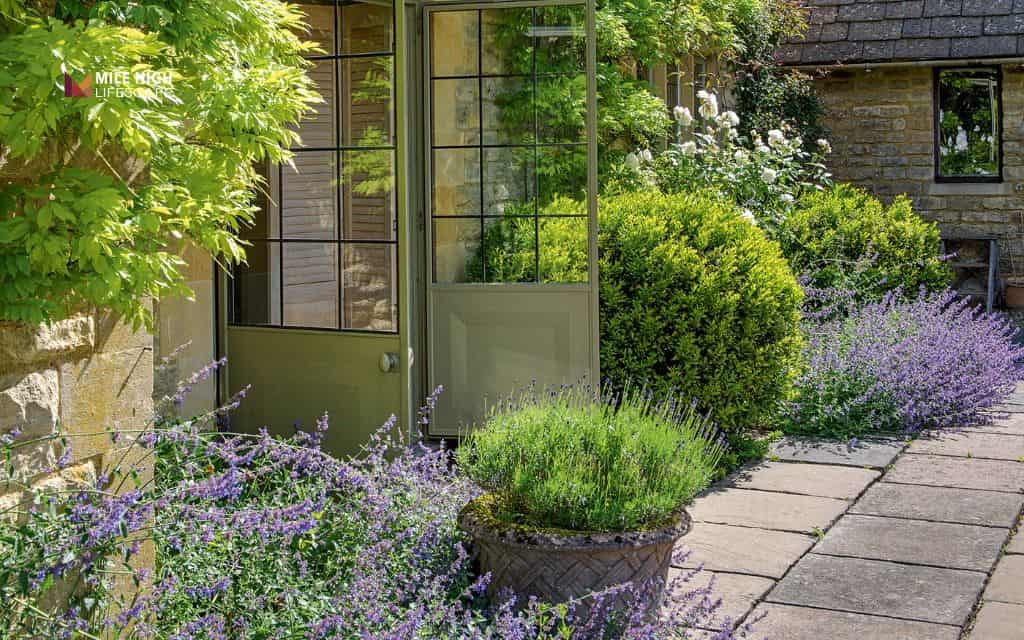
The contrast between tightly clipped topiary forms and the soft, billowing habit of lavender is one of the most elegant combinations in formal garden design. Box balls (Buxus) or clipped rosemary topiaries surrounded by loose lavender plantings create a dynamic interplay of structure and softness. This is a particularly effective approach for Mediterranean-style courtyards and formal entry gardens.
7. Add lavender to a herb garden
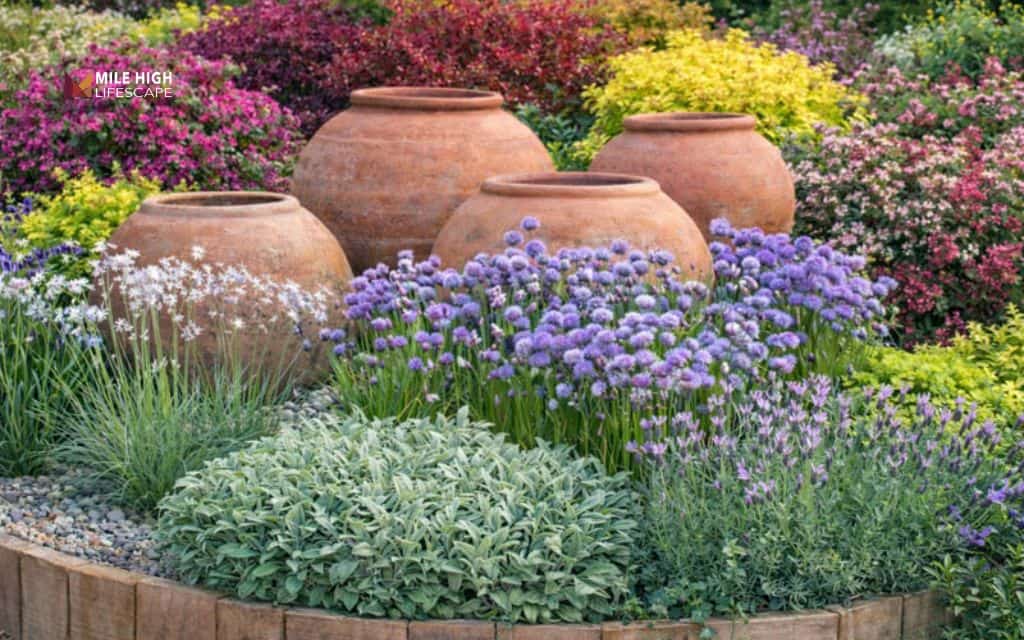
Lavender is technically a herb, and it fits beautifully in a kitchen or culinary garden. Plant it alongside rosemary, thyme, oregano, and sage for a fragrant, drought-tolerant herb bed that is as beautiful as it is useful. English lavender is the best culinary choice, its flowers can be used in cooking, baking, and homemade sachets. Group herbs in clusters of three or five for visual impact, and use a gravel mulch to keep the bed tidy and well-drained.
8. Pair lavender with ornamental grasses
The combination of lavender flower spikes with the flowing movement of ornamental grasses is one of the most dynamic in modern garden design. Blue oat grass, feather reed grass, or Mexican feather grass complement lavender’s purple tones while adding movement and seasonal interest in winter, long after the lavender blooms have faded. This pairing works especially well in naturalistic, prairie-style, or contemporary landscape designs.
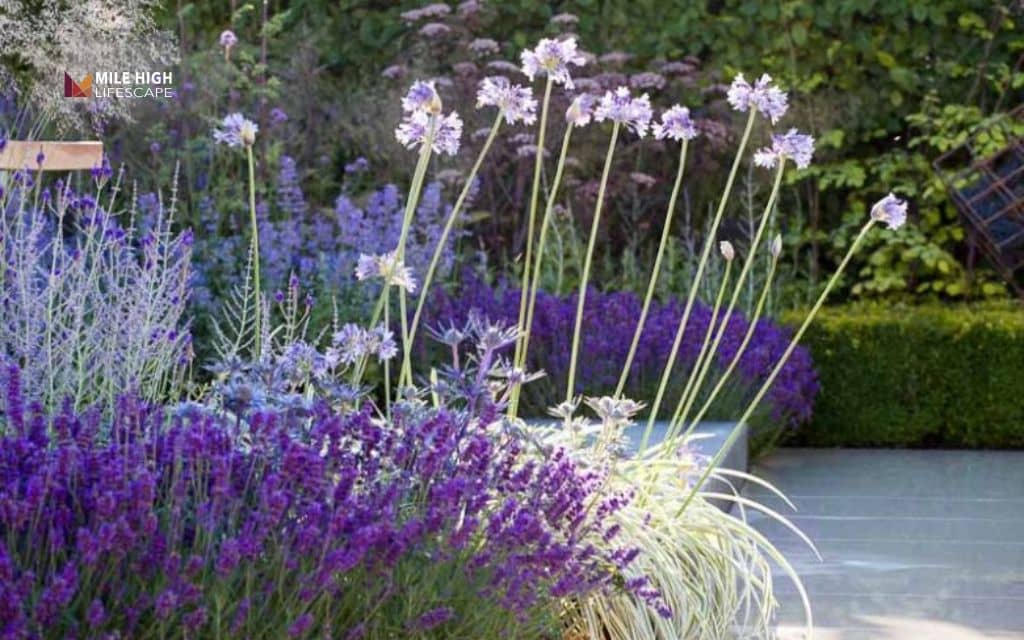
9. Plant lavender around seating areas
There are few things more pleasant than sitting outside surrounded by lavender in full bloom. Position lavender plants at the edges of a patio, around a garden bench, or along a pergola base to create a fragrant outdoor room. As the sun warms the plants through the day, the essential oils in the foliage are gently released, filling the air around your seating area with a natural, calming scent. Bees and butterflies will add to the peaceful ambiance.
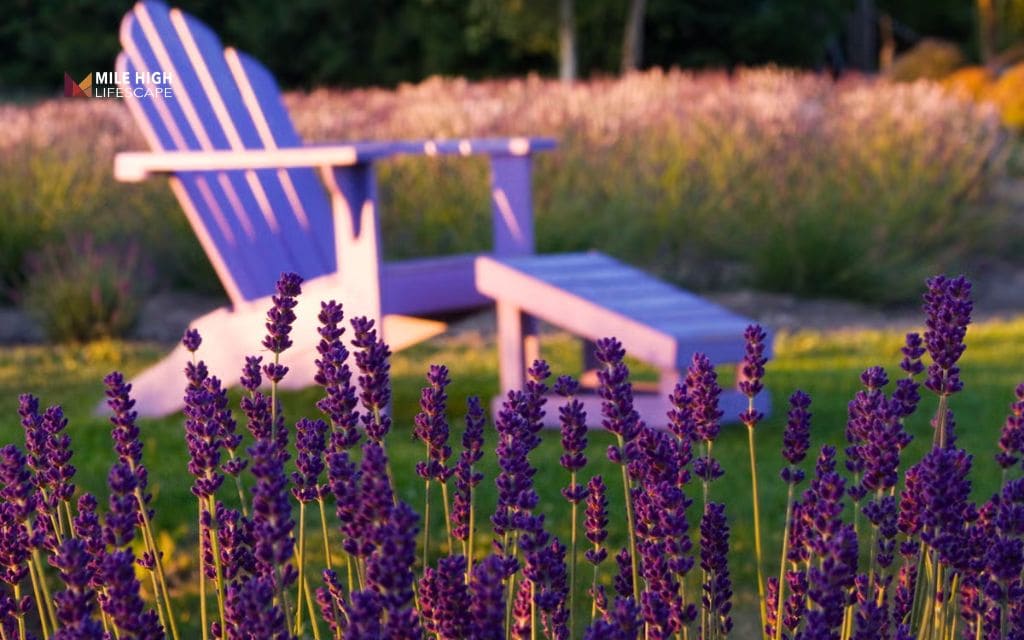
10. Include lavender in a sensory garden
Sensory gardens are designed to engage all 5 senses, and lavender is one of the most sensory-rich plants you can choose. Its scent is proven to reduce anxiety. Its color catches the eye. Its soft, silver-green stems invite touch. And the sound of pollinators buzzing around it in summer completes the full sensory picture. Lavender works well alongside other sensory plants like rosemary, lamb’s ear, and ornamental sage in a dedicated sensory planting zone.
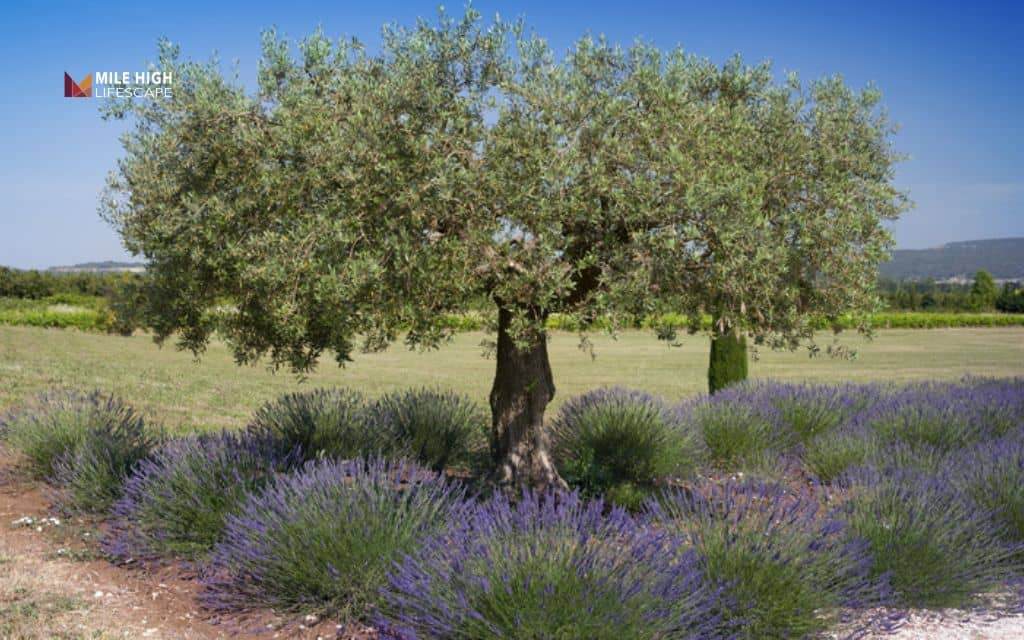
11. Try underplanting trees with lavender
The ground beneath deciduous trees is often challenging. Lavender, with its drought tolerance and deep roots, can manage these conditions better than many plants, provided the spot receives enough sun. Under an olive tree, a small ornamental apple, or an open-canopy fruit tree, lavender creates a beautiful layered planting that looks natural and intentional. Avoid underplanting trees with dense, low canopies that block too much light.
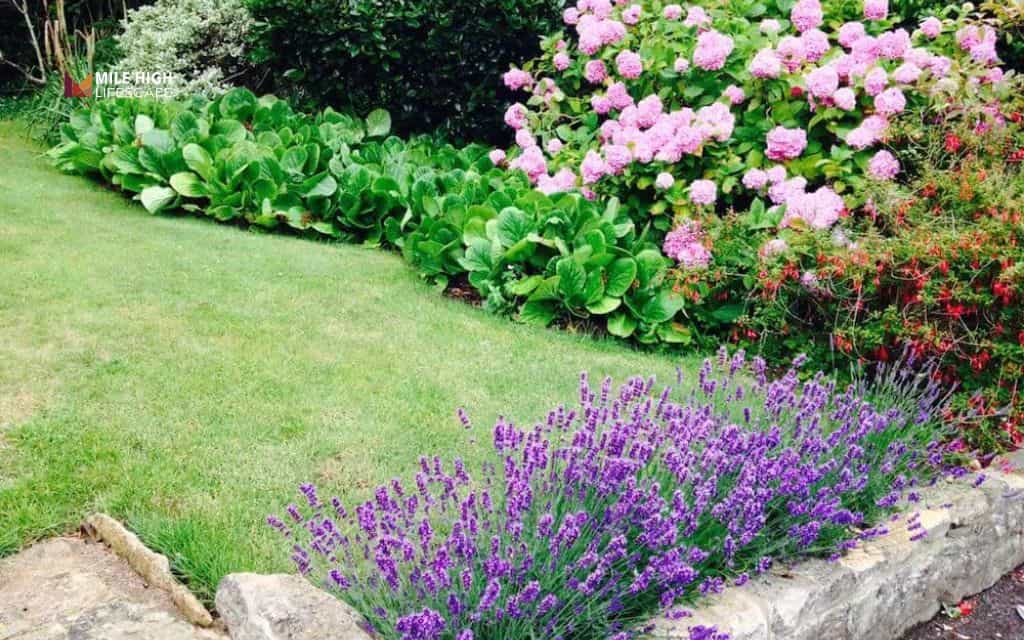
12. Plant lavender next to stone walls
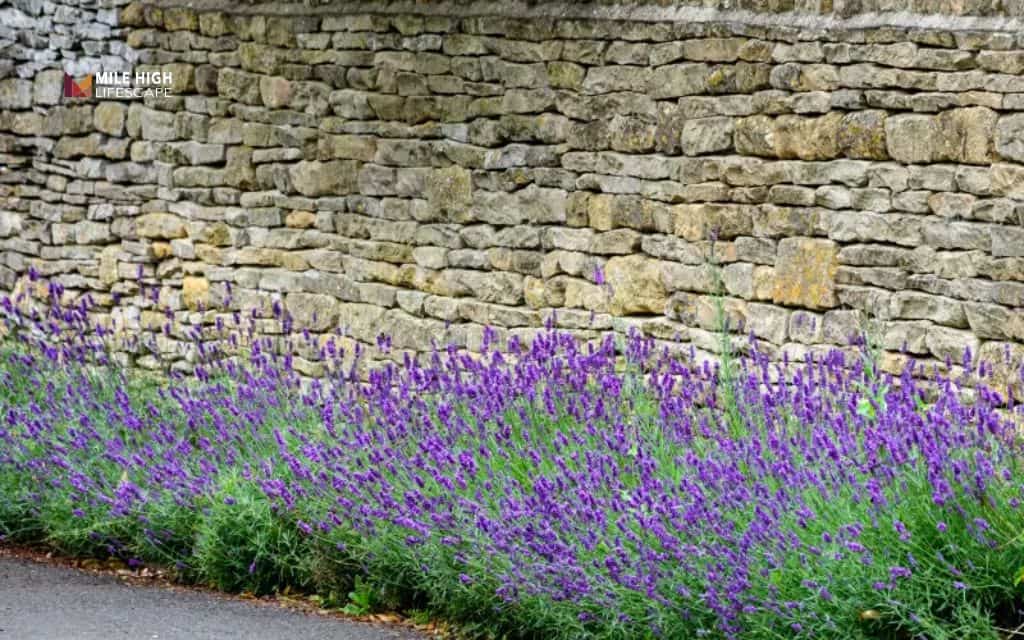
Stone walls absorb heat during the day and release it slowly at night, creating a microclimate that lavender absolutely loves. Planting lavender at the base of a stone wall takes advantage of this radiated warmth while also benefiting from the sharp drainage that walls typically provide at their base. This combination produces the lush, floriferous lavender you see spilling over walls in Provencal farmhouse gardens and across the Mediterranean.
13. Create a Mediterranean-inspired garden
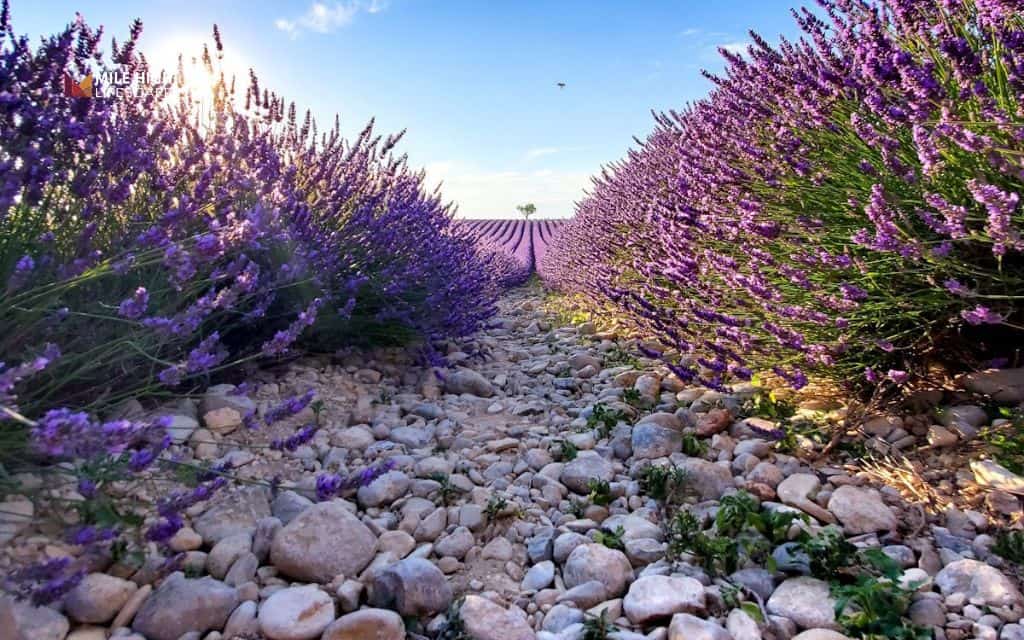
A full Mediterranean garden aesthetic combines lavender with gravel, terracotta pots, olive trees, rosemary, cistus, and drought-tolerant perennials. The overall effect is sunny, airy, and deeply relaxing, a garden that evokes the look and feel of southern France or Tuscany. Use warm-toned gravel as a mulch and ground cover, group lavender in large drifts, and mix in architectural plants like agave or ornamental allium for contrast.
14. Landscape with lavender in a rock garden
Rock gardens provide two things lavender craves: excellent drainage and reflected heat from the stone. Tucking lavender plants into rock garden pockets, alongside other alpine and drought-tolerant plants like sedum, thyme, phlox, and dianthus, creates a stunning naturalistic planting that is almost completely self-sustaining. Spanish lavender is especially effective here.
15. Use lavender for ground cover
In areas where grass is difficult to maintain, compact lavender varieties can serve as an attractive and low-maintenance ground cover. Plant dwarf English lavender cultivars like ‘Thumbelina Leigh’ or ‘Lavender Lady’ in a close grid pattern to cover the soil, suppress weeds, and create a flowing carpet of silver-green foliage and purple bloom. This approach works best on sites with 6 or more hours of full sun.
16. Put lavender front and center in garden design
Rather than using lavender purely as a supporting player, consider making it the star of your garden design. A central bed or island planted entirely with lavender creates a bold, fragrant focal point. Repeat the planting in smaller beds throughout the garden to create cohesion and a sense of intentional, unified design.
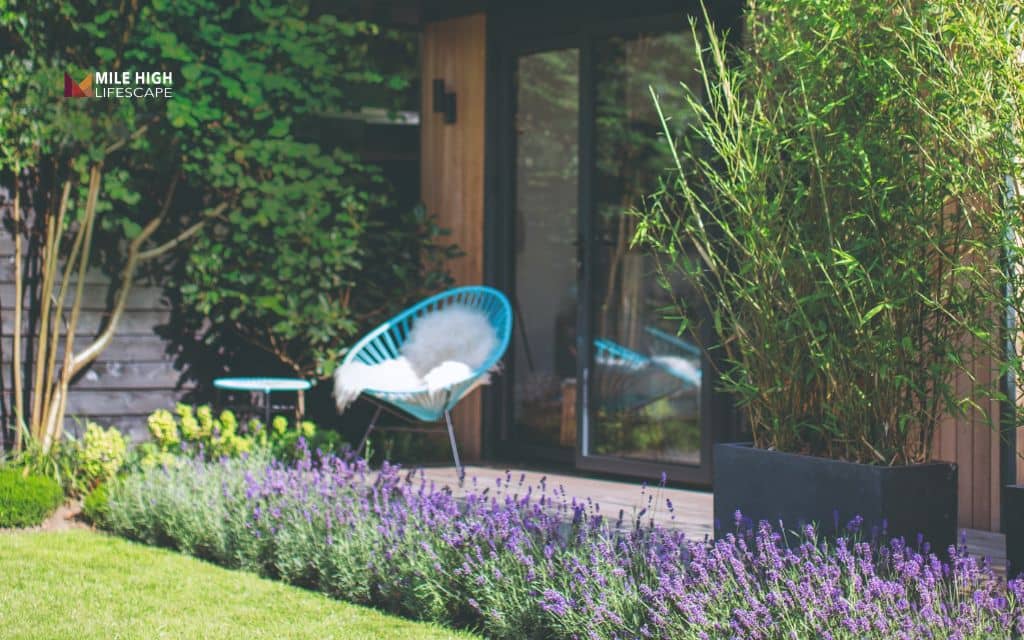
17. Create a wow-factor front yard with lavender
Front yard lavender landscaping is one of the highest-impact changes a homeowner can make. Replacing water-hungry turf with sweeping drifts of lavender, gravel paths, and a few structural plants improves curb appeal while dramatically reducing maintenance. This approach suits both cottage-style homes with informal, romantic plantings and contemporary homes with clean, graphic lavender rows and minimalist design.
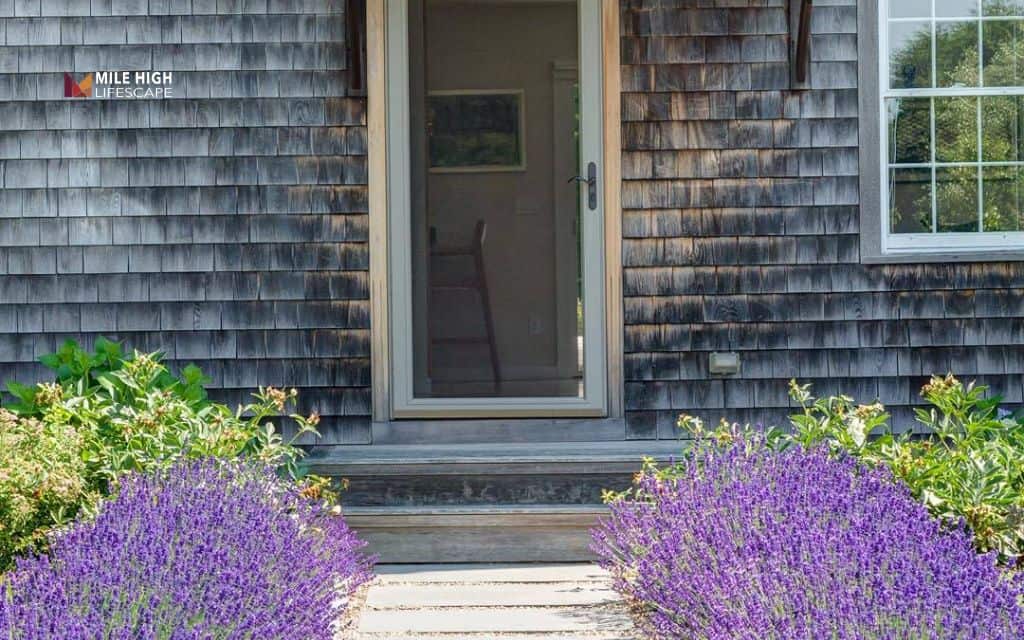
18. Line a driveway with lavender
A driveway lined with lavender on one or both sides is a simple, high-impact lavender landscaping idea. English or French lavender varieties handle the roadside conditions well, tolerating reflected heat from the asphalt and any occasional dust or light pollution. Space plants evenly for a structured, symmetrical look, and allow them to drift slightly for a more informal cottage effect.
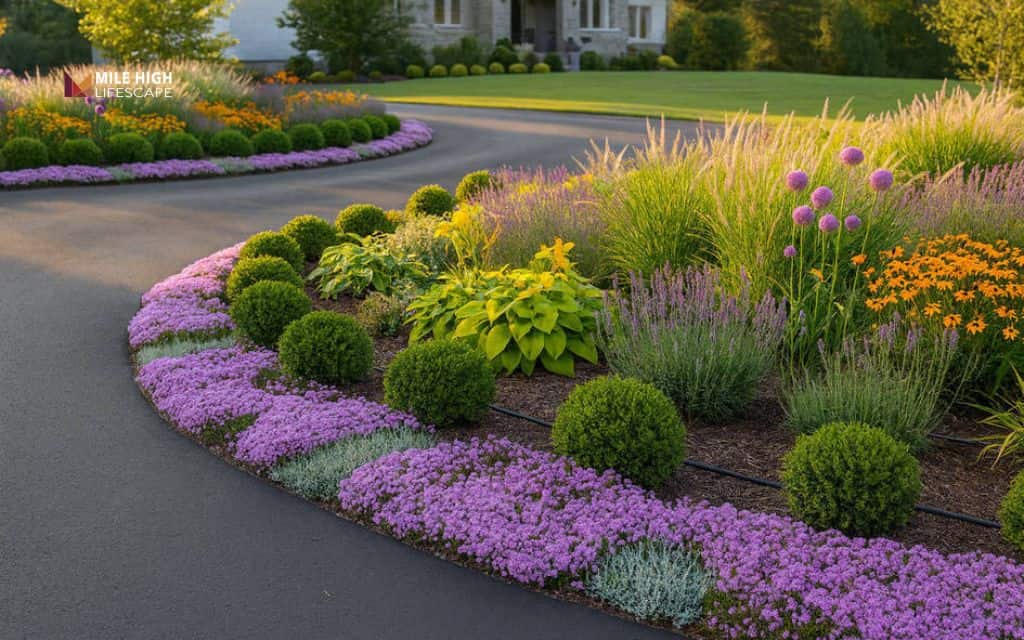
19. Grow lavender in containers
Not everyone has a large yard, but everyone can grow lavender. Containers are an excellent option for patios, balconies, doorsteps, and small urban gardens. Use terracotta pots with good drainage holes, fill them with a free-draining mix of potting soil and perlite, and place them in the sunniest spot available. Spanish lavender is an excellent container choice; its compact size and striking flowers suit pot culture particularly well. Group several pots together for maximum impact.
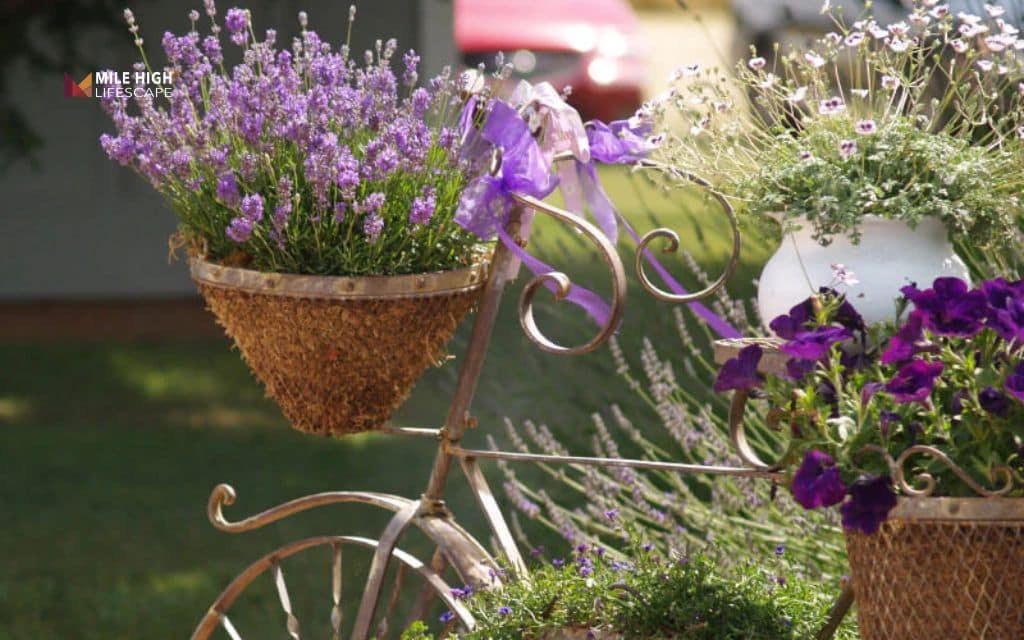
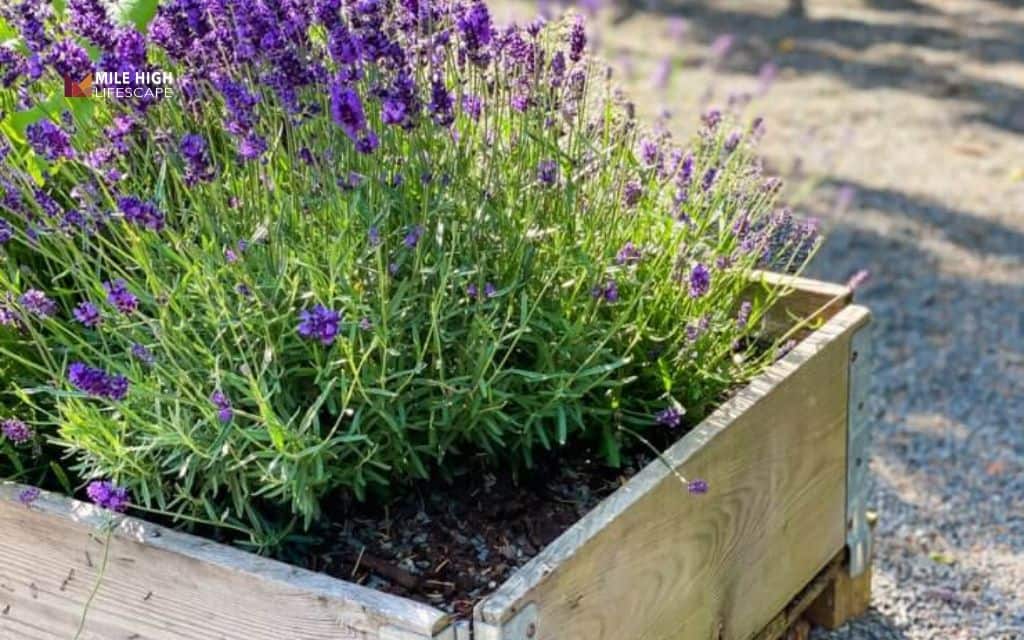
20. Add lavender to raised beds
Raised beds solve the single biggest challenge lavender faces in many gardens: poor drainage. By definition, raised beds drain better than in-ground planting, making them ideal for lavender in areas with heavy clay soil or high rainfall. Use a gritty, free-draining mix and plant lavender alongside other sun-loving herbs and flowers. Raised beds also bring the plants closer to eye and nose level, making the fragrance even more immediate.
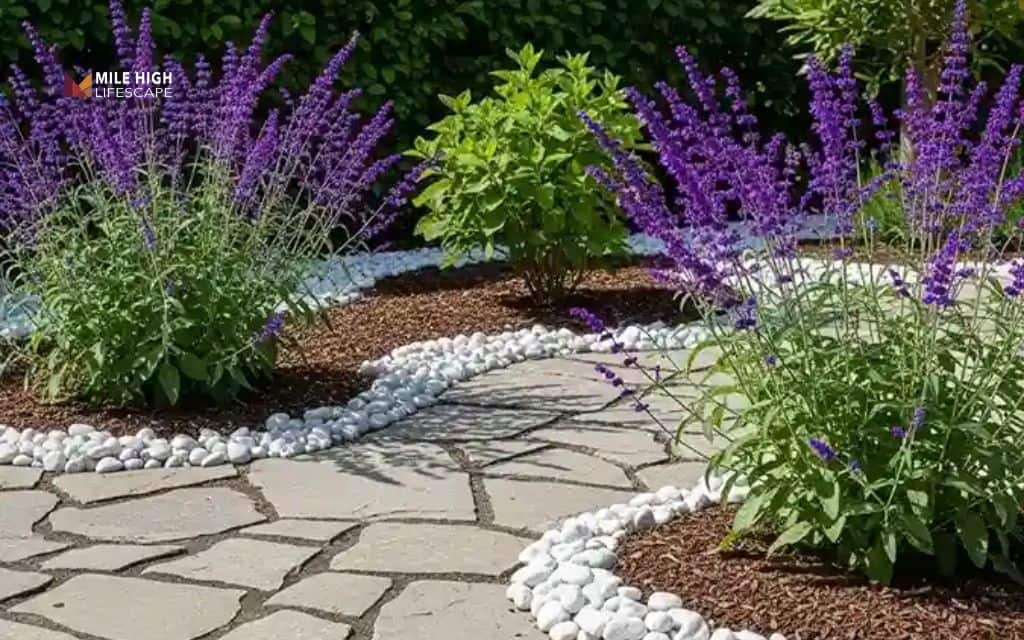
21. Combine lavender with gravel or stone
A gravel mulch around lavender plants is both functional and beautiful. It improves drainage at the crown of the plant, reflects heat upward to warm the stems, and creates a clean, modern aesthetic that highlights the purple flower spikes against the neutral stone. Use pea gravel, crushed granite, or decomposed granite in a tone that complements your home’s exterior. This is a cornerstone technique in Mediterranean and waterwise garden design.
Conclusion
Lavender is one of the most rewarding plants you can add to your landscape. These lavender landscape ideas prove that it requires very little yet gives back months of color, soothing fragrance, and a thriving habitat for pollinators. The result is a garden that feels vibrant, inviting, and naturally beautiful from every angle.
Whether you begin with a simple lavender landscape idea like a border or a few patio containers, or commit to a full Mediterranean-inspired redesign, the most important step is to start. The best lavender landscape ideas work across every yard size, every style, and every skill level. Choose the right variety for your climate, plant it in a sunny spot, and let it grow with confidence. Lavender is resilient and quick to reward your effort.
Ready to transform your outdoor space with timeless beauty and fragrance? Start planning your lavender garden today and bring your vision to life. Mile High Lifescape serves the Denver metro area with profehttps://milehighlifescape.com/ssional landscaping design and installation. Contact us today to get started.
Frequently Asked Questions (FAQs)
Can lavender be used in front yard landscaping?
Absolutely. Lavender landscape ideas for the front yard are among the most impactful upgrades a homeowner can make. Lavender adds curb appeal, fragrance, and structure while dramatically reducing water use and maintenance compared to traditional turf. It suits cottage, Mediterranean, and modern front yard styles equally well.
What plants go well with lavender?
The best companion plants for lavender landscape ideas share its love of full sun, lean soil, and good drainage. Top choices include rosemary, sage, thyme, catmint, echinacea, Russian sage, ornamental grasses, and roses. Avoid pairing lavender with moisture-loving plants like hostas or astilbes, which prefer conditions that would cause lavender to struggle.
Is lavender low maintenance in landscaping?
Yes, and that is one of the biggest reasons lavender landscape ideas continue to be so popular. Once established, lavender needs minimal watering, no fertilizing, and only an annual pruning after flowering to stay full and healthy. The key requirements are full sun and excellent drainage. Get those right and lavender largely takes care of itself.
Can lavender replace grass in landscaping?
In the right climate, yes. Using compact English lavender varieties in a grid pattern is one of the most practical lavender landscape ideas for replacing small lawn areas, particularly in warm, dry climates where turf grass struggles. Lavender ground cover eliminates mowing, dramatically reduces water use, and adds fragrance and pollinator habitat.