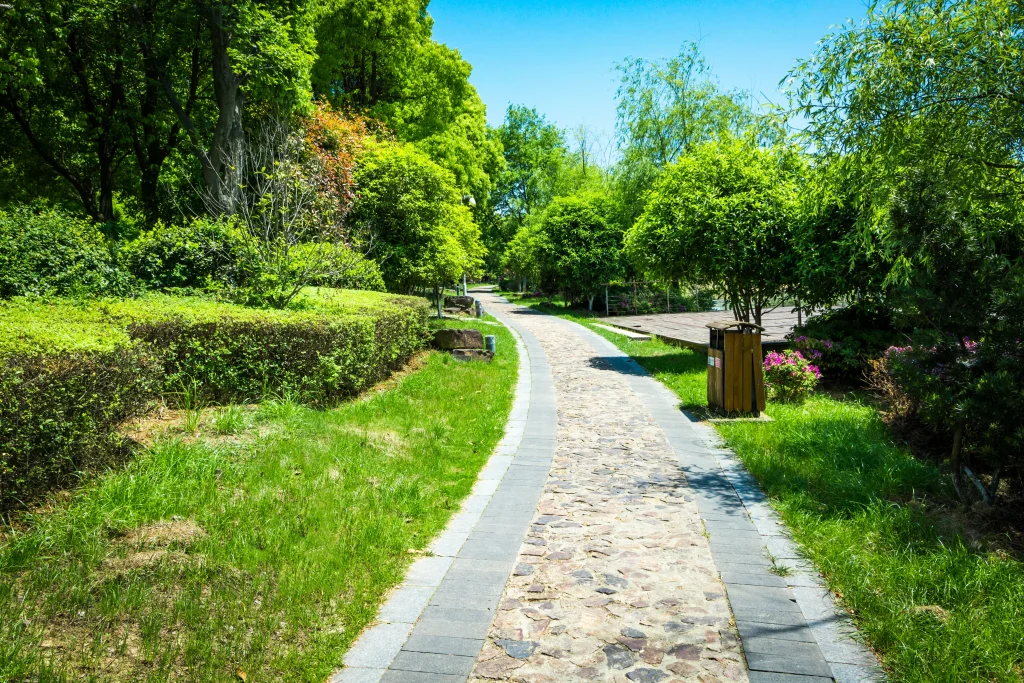
Building a mulch path costs less than most hardscape and goes in with basic hand tools. You lay cardboard over cleared ground, set edging, and spread 3 to 4 inches of wood chips, bark, or pine straw. The result is a soft, permeable walkway that drains water and holds back weeds.
This guide shows when a mulch path fits your yard, which materials work best, and how wide to make the route. It then walks through each build step, from ground prep to edging, and explains how to maintain a mulch path year after year.
Why use mulch for garden paths?
Mulch for garden paths solves three problems at once: bare soil, weeds, and mud. Gardeners pick it because it costs little, goes in without heavy equipment, and changes easily when the garden layout changes:
- Weed control: Three to four inches of mulch block light and slow weed seeds, so a mulch path stays cleaner than bare soil.
- Soil cover: Mulch keeps rain from splashing soil onto your boots or washing it away.
- Comfort underfoot: Walking on mulch feels softer than walking on gravel or stone, and kneeling beside a bed is easier on the knees.
- Water drainage: Rain soaks through a mulch walkway instead of running off the surface, so a mulch path reduces runoff.
- Low cost, easy changes: Mulch ranks among the cheapest path materials, and a rake and shovel are enough to reroute or widen a mulch path.
- Soil health: Organic mulch feeds soil life as it breaks down, including fungi that help move water and nutrients to plant roots.
Drawbacks of mulch for garden paths
Mulch suits many yards, but it has limits. Know them before you buy material:
- Decomposition: Organic mulch breaks down, so each mulch path needs new material to stay at working depth.
- Movement: Wind, running water, and foot traffic push loose mulch into beds and lawn.
- Weeds over time: Weed seeds land on decomposing mulch, so even a barrier below the surface does not end weeding.
- Soft footing: Loose mulch slows wheelbarrows and carts, and a mulch path is harder for wheelchairs and walkers to use.
- Fire risk near buildings: Wood-based mulch burns, and fire-safety guidance advises against combustible mulch within 5 feet of a house.
The best types of mulch for garden paths
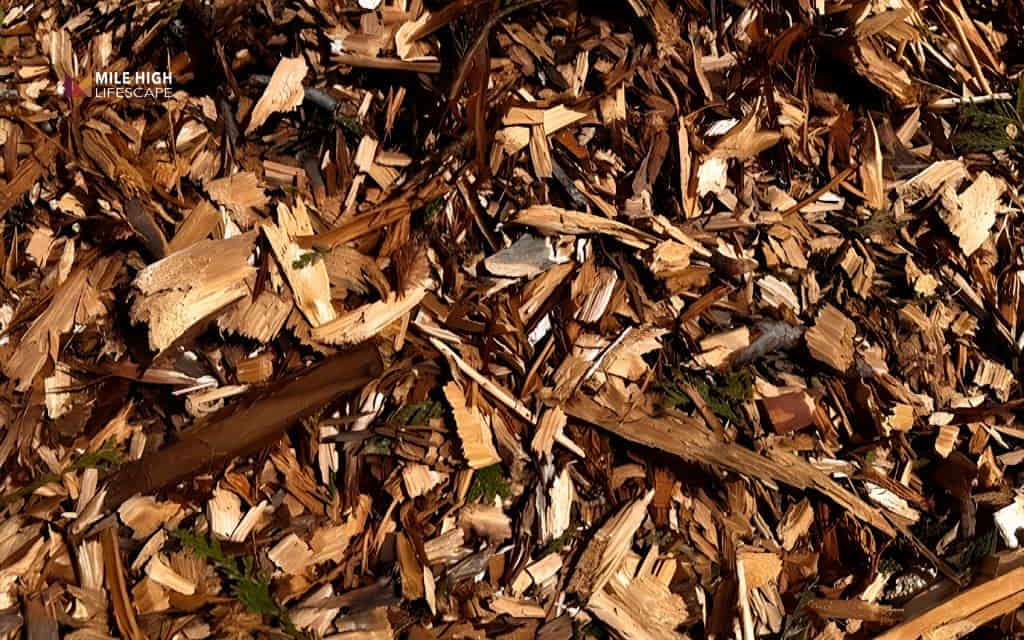
Arborist wood chips
Arborist wood chips are tree trimmings that crews run through a chipper, and they suit most mulch path projects. The chips lock together underfoot and settle into a firm surface. Ask local tree services for clean chips, which they often deliver at little or no cost.
- Best for: Large gardens, vegetable aisles, and informal paths through wooded areas.
- Strength: Chips cost little or nothing, break down slowly, and suppress weeds at 3 to 4 inches deep.
- Trade-off: Mixed sizes and tree species give a rustic look that is less uniform than bagged bark.
Cedar or cypress bark
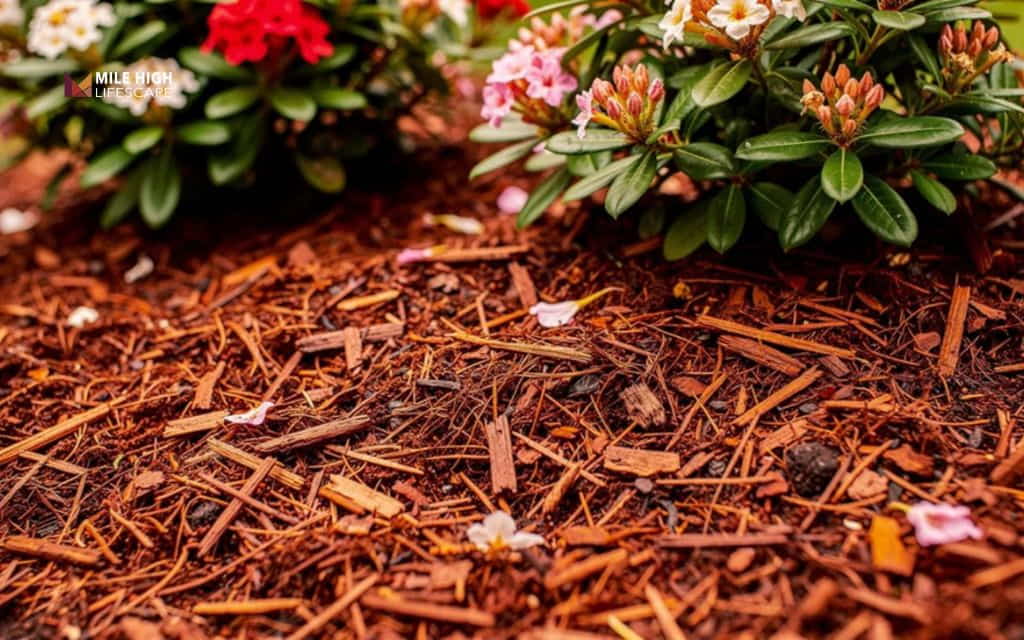
Cedar and cypress bark break down more slowly than most organic mulches, so a mulch path needs fewer refills. The pieces give a tidy edge beside ornamental beds.
- Best for: Main walkways beside ornamental beds and routes with moderate traffic.
- Strength: Slow breakdown keeps the depth steady longer and cuts the number of top-ups.
- Trade-off: Bark costs more than hardwood, and supply varies by region.
Hardwood bark
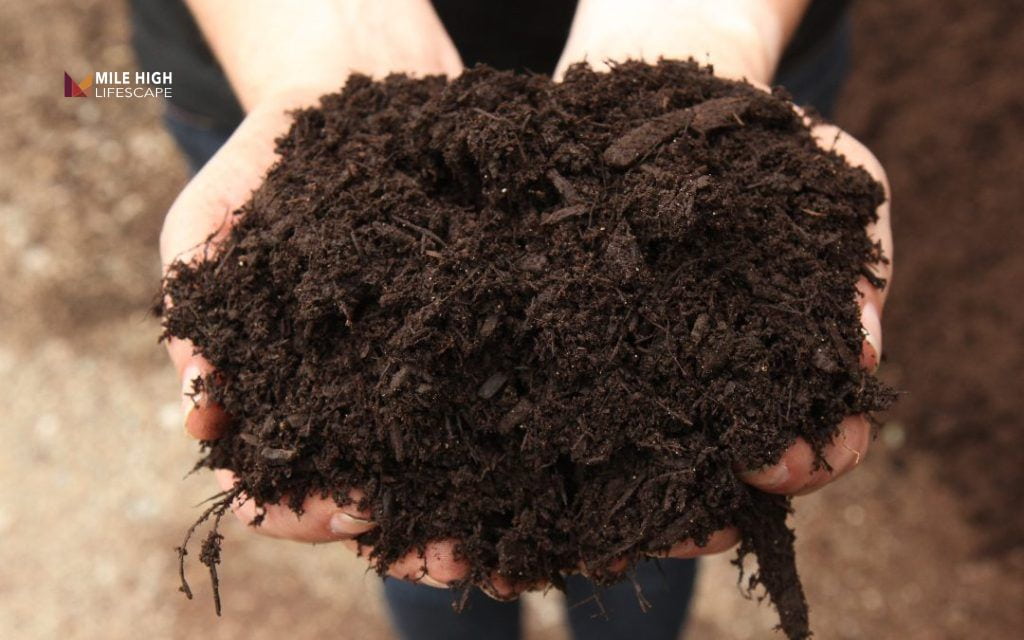
Hardwood bark is the common choice for a long mulch path because garden centers and landscape suppliers carry it. It spreads and rakes easily. Pick natural, undyed bark when possible.
- Best for: Utility paths, long runs, and wide areas on a budget.
- Strength: Bark is easy to find, easy to rake, and moderate in price.
- Trade-off: Hardwood fades faster than cedar and compacts under heavy traffic.
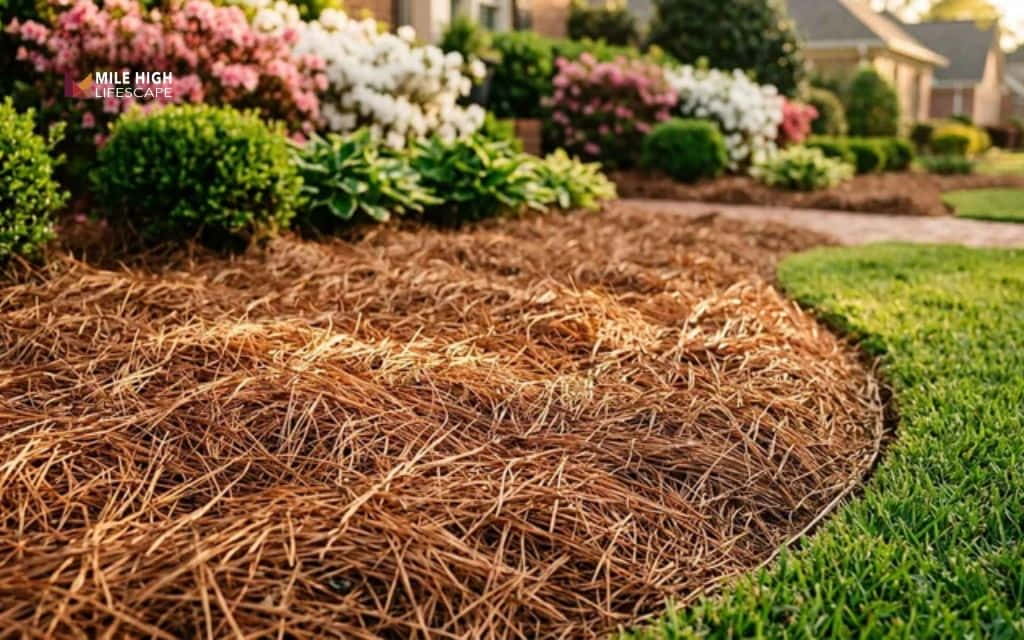
Pine straw
Pine straw is the fallen needles of pine trees, sold in bales. The needles spread fast and feel soft underfoot, which suits a short mulch path with little traffic.
- Best for: Low-traffic footpaths and seasonal refreshes in shaded or wooded areas.
- Strength: Bales cover ground quickly, and the needles give a warm, rustic look.
- Trade-off: Needles drift in wind and rain and can break down within a year on wet sites, so edging matters.
Shredded leaves
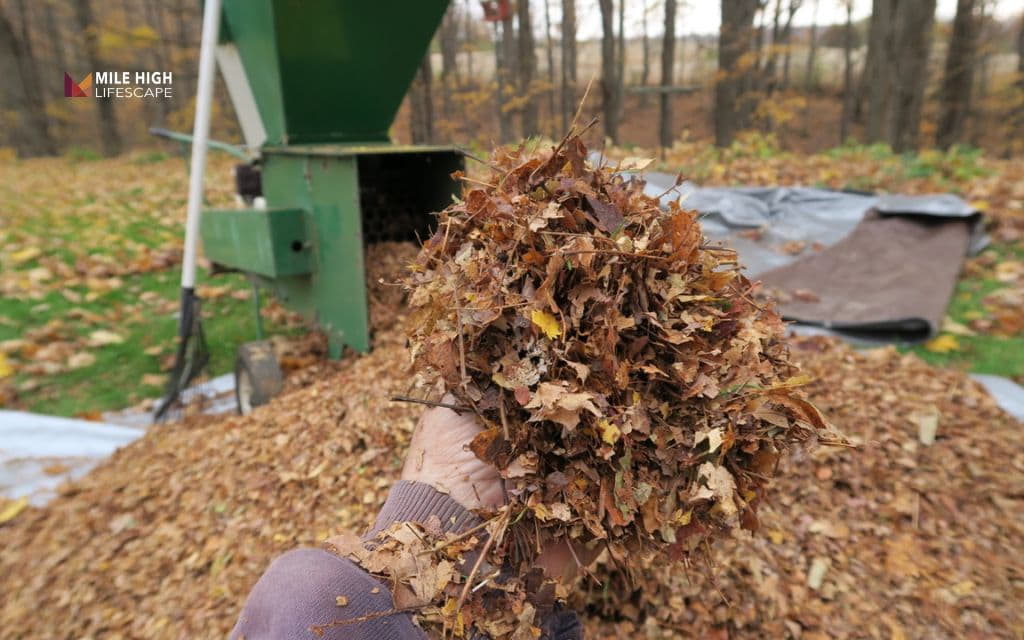
Shredded leaves cost nothing for anyone with trees nearby. Run a mower over fall leaves to chop them, then spread the pieces over the mulch path. Skip black walnut leaves, which extension programs advise against as mulch.
- Best for: Aisles between raised beds and low-traffic paths.
- Strength: Leaves cost nothing and feed soil life as they decompose.
- Trade-off: Leaves break down fast, so the path needs frequent refills.
Straw
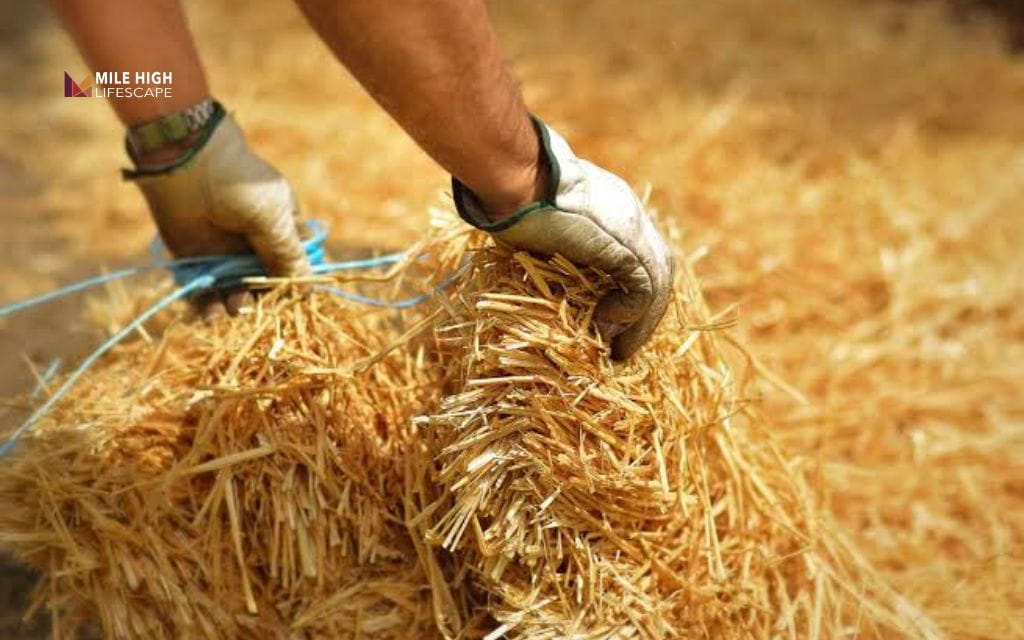
Straw suits a mulch path between vegetable beds because it spreads easily and gives a soft surface. Source matters, since some pasture herbicides persist in hay and straw and can injure tomatoes and other broadleaf plants. Ask the seller about herbicide use and skip straw with an unknown history.
- Best for: Vegetable garden aisles where you can confirm the source.
- Strength: Straw spreads fast and feels soft underfoot.
- Trade-off: Straw breaks down quickly and needs a herbicide-free source.
Rubber mulch
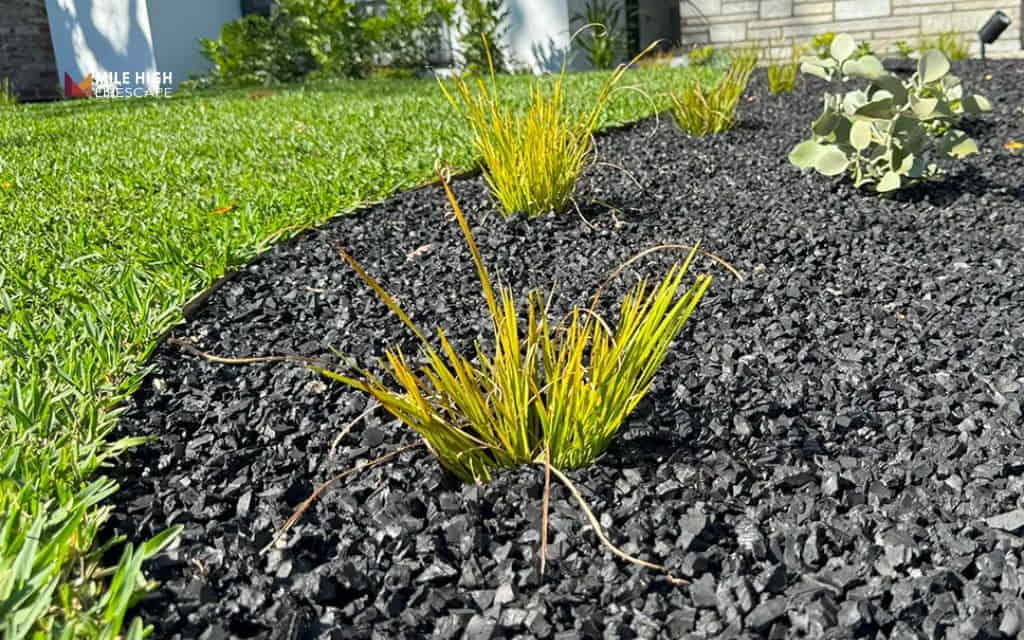
Rubber mulch is shredded recycled rubber that resists decay. Reserve it for a short mulch path where organic mulch will not hold.
- Best for: High-wear spots where organic mulch repeatedly fails.
- Strength: Rubber resists decay and compaction, so it needs few top-ups.
- Trade-off: Rubber holds heat, adds nothing to the soil, and some extension programs advise against it.
How to build a mulch path in 5 steps
Step 1: Plan the route, measure, and calculate mulch
Mark the mulch path route with a garden hose or spray paint, following the line people already walk. Match the width to the use. Make a main path 48 inches wide so two people can walk side by side, and a secondary path for a wheelbarrow or cart 30 to 36 inches wide.
Narrow access paths between beds can run 18 to 24 inches. Then find the volume: length (ft) × width (ft) × depth (in) ÷ 324 = cubic yards. For example, a 100-foot path, 3 feet wide and 3 inches deep, needs about 2.8 cubic yards.
Step 2: Prepare the ground
Ground prep decides how long a mulch path lasts. Remove sod, or cut weeds to the ground, and dig out perennial weeds and roots, which push through barriers. Rake the soil flat, fill low spots, and slope the surface away from buildings so water drains off.
Dig a shallow trench next. Removing about 2 inches of soil lets the mulch sit lower and keeps it from spilling onto the lawn or beds.
Step 3: Add a weed barrier
Barriers hold back weeds while the mulch path settles. Cardboard is the common choice. Remove tape and staples, overlap sheets by 6 to 8 inches, and wet them so they lie flat. Keep cardboard away from building walls, since it can shelter termites. Newspaper also works when layered five or six sheets thick.
Landscape fabric suits this job too. Extension programs name mulched paths as a suitable place for it, since no ornamental plants grow there, though weeds still root in the mulch on top over time. Skip plastic sheeting, because it blocks air and water and does not break down.
Step 4: Set the edging
Edging keeps a mulch garden path in shape and keeps grass and bed soil out. Install it on both sides before you add mulch, and set the top at or slightly above the finished mulch level.
Steel and aluminum edging bends around curves and lasts for years. Brick and stone sit heavy and stable and give a formal line. Timber and logs cost little and look natural, but they rot over time. Plastic edging costs little and bends easily, but it can heave and shift.
Step 5: Spread, rake, and water the mulch
Dump mulch in small piles, then rake it level to 3 to 4 inches deep. This depth blocks light from weed seeds, and weeds sprout more easily once the layer thins below 2 inches. Water lightly to settle the mulch path, and order a little extra, since mulch compacts underfoot.
Keep mulch 2 to 3 inches away from the stems and trunks of nearby plants, and at least 6 inches from foundations and siding. Buy by the yard for a long mulch path, since bulk delivery usually costs less per cubic yard than bags.
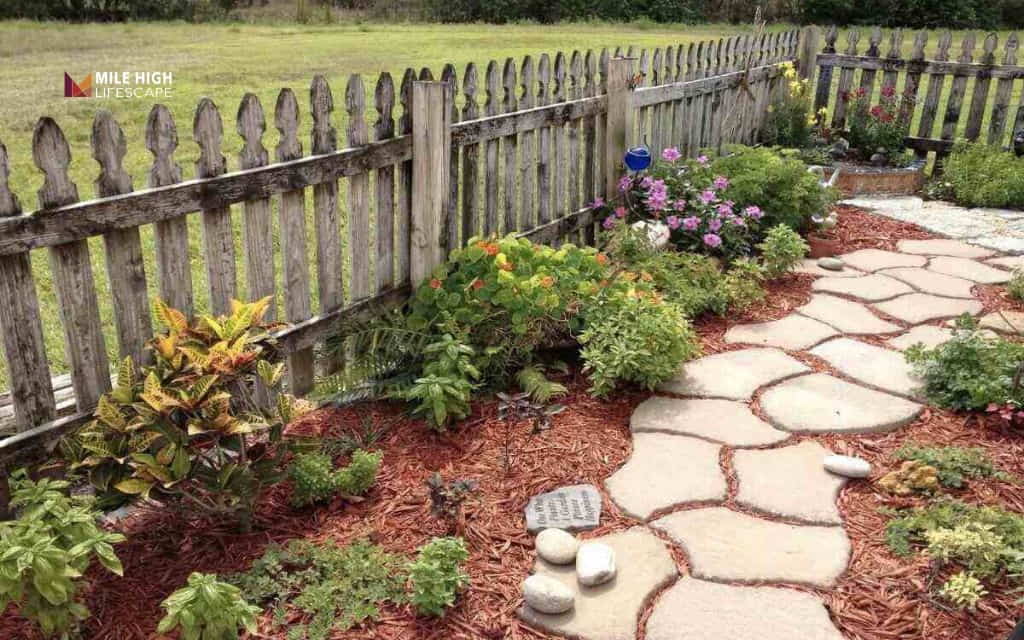
How to maintain a mulch garden path year by year
Year 1: Settle, rake, and weed
Expect the mulch path to settle in the first months as foot traffic presses it down and rain washes fine particles into gaps. Walking on mulch compacts it, so rake matted spots loose every few weeks. Pull weeds from the mulch path while their roots are small.
Year 2: Check the depth and top up
By the second spring, measure the depth. When it falls to 2 or 3 inches, add enough mulch to restore the mulch path to 3 to 4 inches, and water the new layer. Early spring is the best time for mulching garden paths, before weeds start growing. Remove weeds before they set seed.
Year 3: Rebuild with fresh mulch
After a few years, the bottom layer turns into compost-like soil. Rake the surface mulch aside, scoop the decomposed layer, and use it around shrubs or in beds. Then rebuild the mulch path with fresh material. Heavily used paths reach this point sooner.
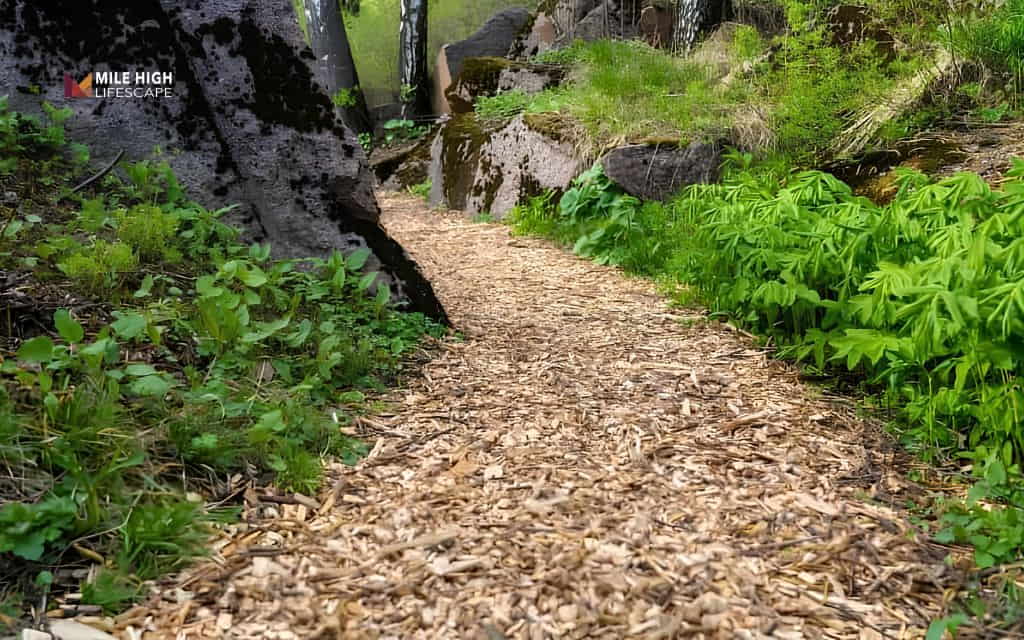
Mulch vs. other garden path materials
Mulch vs. gravel
Gravel outlasts mulch and needs no regular top-up, but it is heavy to install and hard on knees and bare feet. Stones also drift into lawns, which creates a hazard for mowers. Garden paths with mulch feel softer, drain well, and feed the soil, though each mulch path needs replenishing as the mulch breaks down.
Mulch vs. stone or pavers
Pavers and stone last for decades and give an even, formal surface, but they cost many times more than mulch to install and take real labor. Choose a mulch walkway for informal routes, since a mulch path is easy to reroute later. Weeds can still grow through paver joints, so neither material removes upkeep.
Mulch vs. lawn or groundcover
Grass paths feel good underfoot but need regular mowing, water, and nutrients, and the grass can spread into beds. Mulch needs a top-up instead of mowing, so a mulch path trades one chore for another. Low groundcovers tolerate light foot traffic, but they need time to fill in and regular trimming.
Conclusion
Every good mulch path follows the same logic: prepare the ground, block weeds, hold the edges, and keep the layer deep. Those four habits give you a soft, draining walkway that feeds the soil as it ages.
Mile High Lifescape designs and builds garden paths for homeowners across the Denver metro area. If you want help planning a mulch path or choosing between mulch and harder materials, explore our mulch installation services. Call us at (303) 877-9091 to get a free estimate.
Frequently asked questions (FAQs)
Can I use mulch for a path?
Yes. Mulch works well for informal paths through gardens, raised beds, and wooded areas. Lay 3 to 4 inches over cleared ground, add edging, and plan to top up the mulch path as it breaks down.
What kind of mulch is best for a garden?
For a mulch path, coarse wood chips and shredded hardwood bark give the best results. They suppress weeds, break down slowly, and feed the soil. Cedar and cypress bark last longer but cost more.
What is the best material for garden pathways?
It depends on budget, upkeep, and style. Mulch and wood chips make soft, natural, low-cost paths. Gravel lasts longer with less upkeep. Pavers and stone suit formal, high-traffic routes.
Are wood chips good for garden paths?
Yes. Coarse chips settle into a firm, cushioned surface, suppress weeds, and break down slowly, so they make a durable mulch path. Choose clean chips without trash, and add more as the layer thins.
How often should I replace mulch on a garden path?
Check the depth each spring. When it drops below 2 to 3 inches, add enough mulch to restore 3 to 4 inches. Replace the whole mulch path once the lower layer has turned to soil.
Should I use landscape fabric or cardboard under mulch on a garden path?
Both work. Fabric does not decompose, and extension programs name mulched paths as a suitable place for it. Cardboard costs little and breaks down into soil, but weeds can return once it decomposes. Skip plastic sheeting.
Does mulch attract termites and other pests?
Extension research suggests termites feed little on wood mulch, and that the moist conditions beneath it explain why they forage there. Keep mulch at least 6 inches from foundations and siding, and keep any mulch path beside the house thin.