
An oak tree can stand for a century. It survives drought, storms, and decades of changing weather. But oaks are not immune to disease. Diseases of oak trees fall into a few clear categories, and the earlier you catch the signs, the better your chances of saving the tree.
Not every brown leaf means disaster. Many symptoms that look alarming are actually minor, cosmetic, or tied to weather rather than disease. This guide walks through the most common oak tree diseases, what causes them, and how to tell a serious problem from a temporary one. We will also cover what oak tree diseases pictures online often fail to show: the context and pattern behind a symptom, which matters as much as the symptom itself.
What causes oak tree diseases
Oak diseases fall into two real categories: fungal and bacterial. A true oak tree virus is rare. Most conditions homeowners call a virus are actually fungal infections, bacterial disease, or environmental stress, and getting the category right changes how you treat the problem.
- Fungal pathogens: Cause most oak tree illnesses. Fungi spread through wind, rain, soil, insects, or root contact, and often target trees already weakened by drought or compacted soil.
- Bacterial pathogens: Cause fewer oak diseases but more serious ones. Bacteria enter through wounds or get carried in by sap-feeding insects.
- Environmental stress: Not a disease itself, but it sets the stage for one. Drought, poor drainage, and root injury from construction all weaken an oak’s natural defenses.
Learn more: Tree Disease Treatment
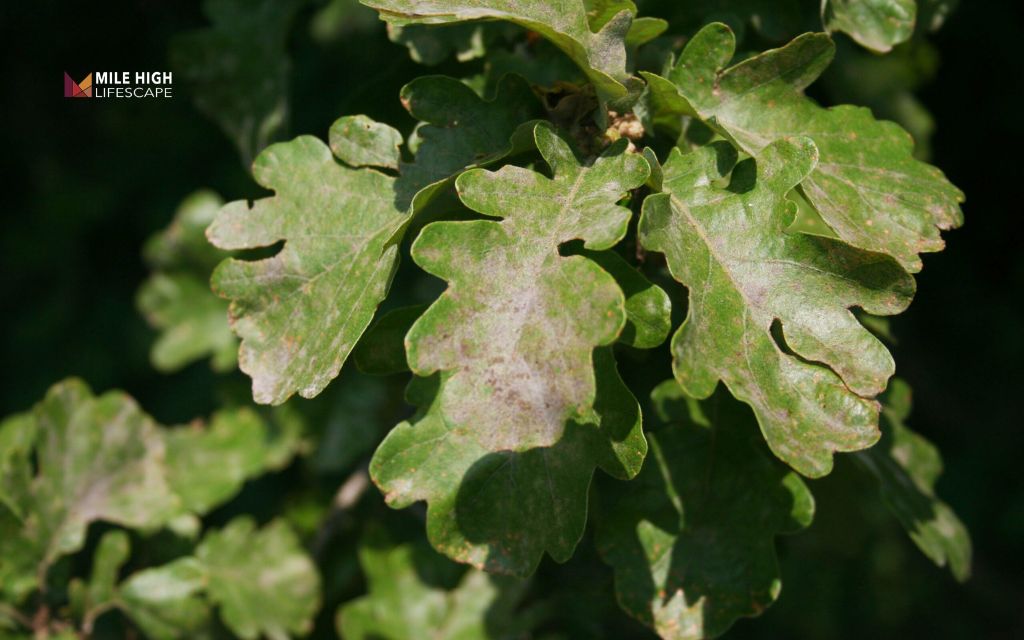
Common signs of a diseased oak tree
Homeowners usually notice oak leaf diseases through a handful of visual cues. Reading these signs accurately, and noting where on the tree they appear, matters more than matching a photo online.
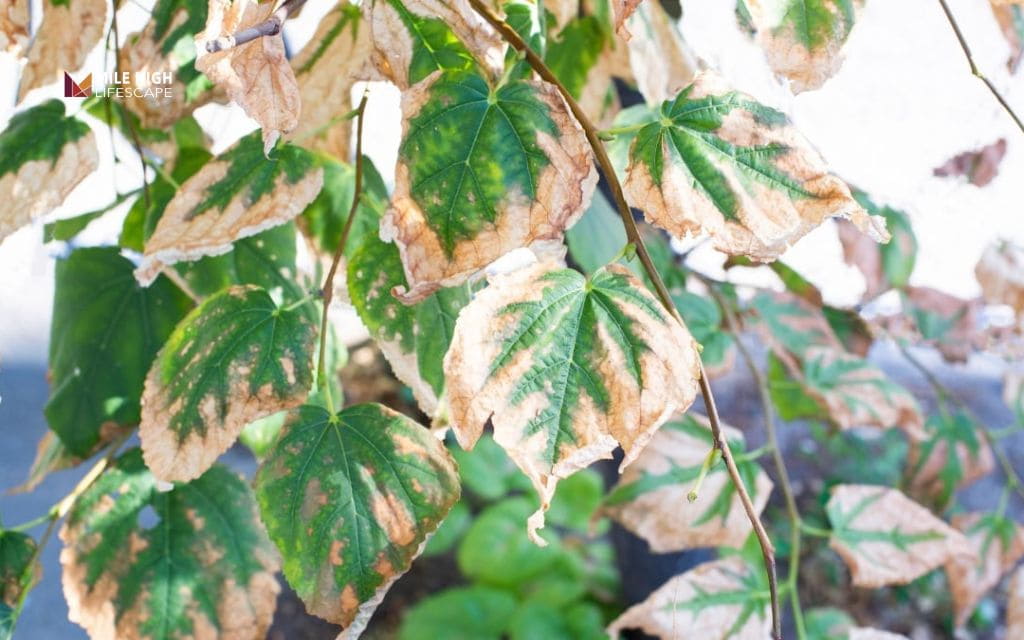
- Leaf discoloration: Yellowing or scorched margins can mean fungal leaf spot, bacterial leaf scorch, or drought stress. Discoloration starting at the leaf edge often signals scorch or wilt, while scattered spots point to a fungal leaf disease.
- Wilting and early leaf drop: Signals the tree cannot move water efficiently, whether from a vascular disease like oak wilt or from unrelated root damage.
- Bark abnormalities: Cracking or bark sloughing away from the trunk often points to canker disease or decay fungi. Oak tree bark damage paired with sap oozing suggests bacterial wetwood rather than a simple wound.
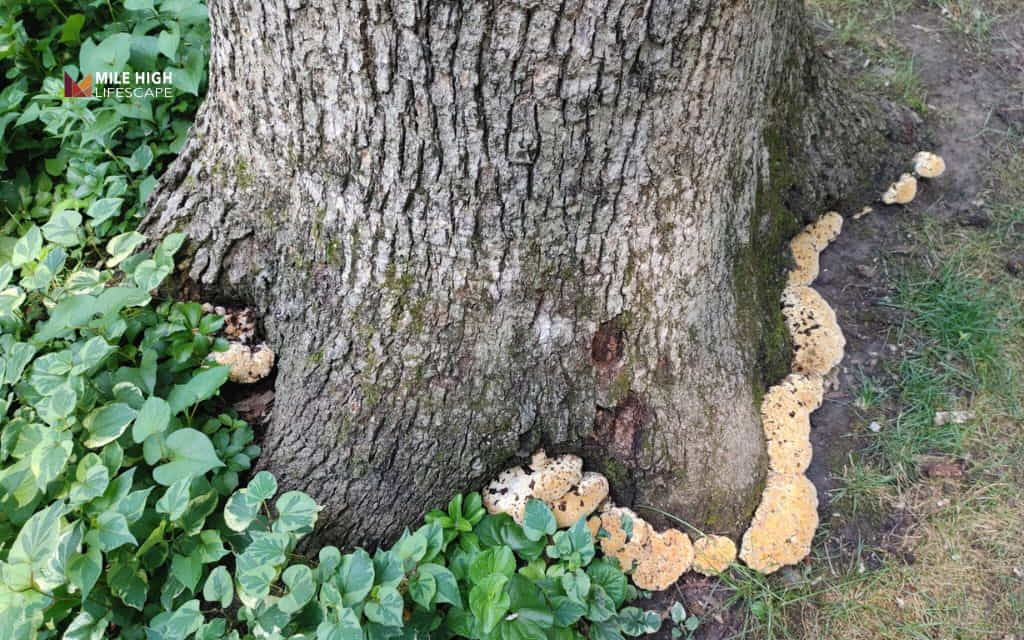
- Fungal mats, conks, or mushrooms: Growth at the trunk base is the visible stage of a fungus already established in the wood, often signaling compromised root health.
- Uneven canopy thinning: Dieback in one section rather than the whole tree usually points to a localized infection still spreading.
Common oak tree diseases
Oak wilt
Oak wilt is one of the most destructive oak tree diseases in North America, and red oaks are especially vulnerable. Symptoms start as leaf discoloration at the margins that moves toward the leaf base, often called bronzing, followed by wilting and rapid leaf drop. Cut vascular tissue may show brown streaking, and fungal mats sometimes form under cracking bark.
A fungus causes oak wilt by invading the tree’s water conducting tissue and blocking nutrient flow. It spreads through root connections between neighboring oaks and through sap-feeding beetles drawn to fresh wounds, which is why pruning oaks during high-risk spring and early summer months invites infection. If a nearby oak tests positive, trenching can sever root grafts to slow the spread, but severely infected trees usually need removal. Because the window for treatment is narrow, professional diagnosis matters more here than with almost any other oak disease.
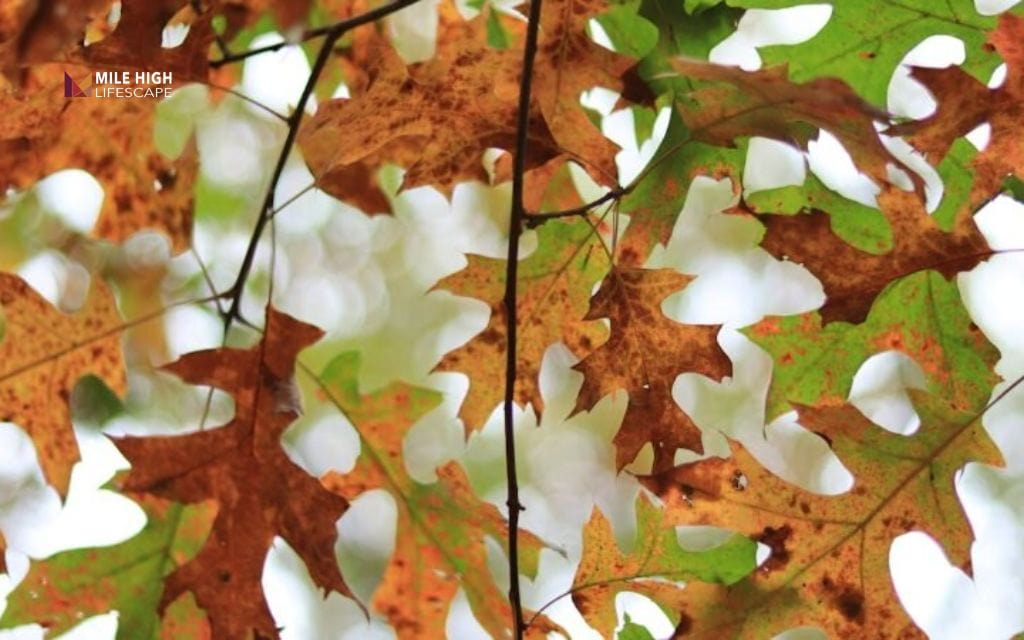
Anthracnose
Anthracnose causes irregular brown blotches and tattered, distorted young leaves, usually appearing in spring after cool, wet weather. Leaves may drop early, and in severe cases, twig dieback follows, though mature leaves resist the disease better than new growth.
The fungus overwinters in fallen leaves and twigs, then spreads by wind and rain each spring. Raking and disposing of fallen leaves every season limits the fungus available to reinfect the tree, and pruning to improve airflow through the canopy helps as well, since wet leaves prolong infection.
Oak leaf blister
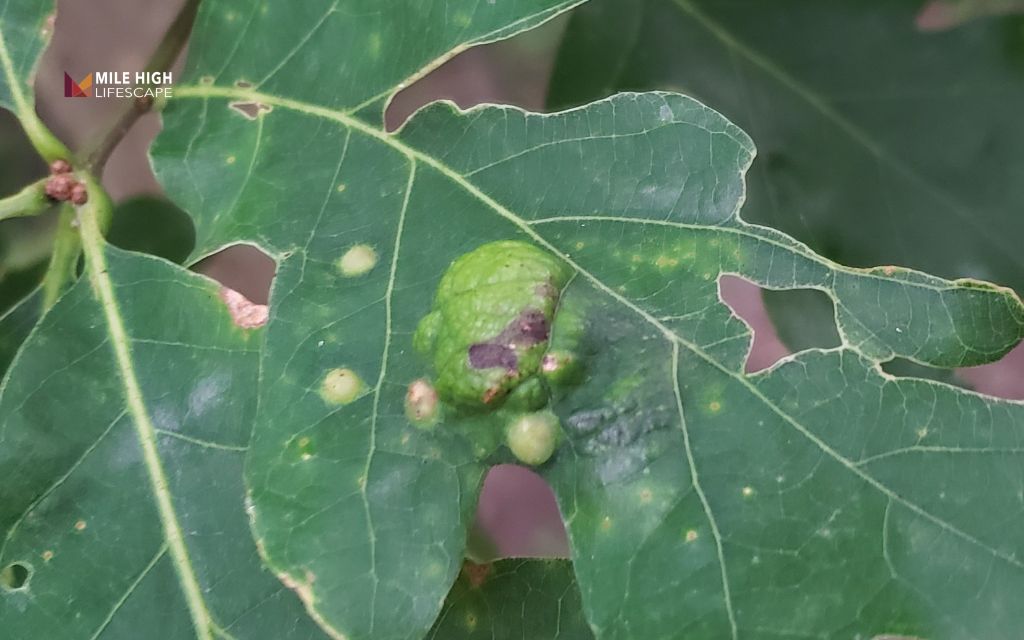
Oak leaf blister produces raised, puckered lesions on the leaf surface in shades of pale green, yellow, or tan. The lesions look alarming but the disease rarely threatens tree health, and leaf drop stays mild and limited to the most affected leaves.
The responsible fungus survives winter on twigs and bud scales, then infects new leaves as they emerge. Like anthracnose, sanitation through leaf removal is the most effective control, and chemical treatment is rarely necessary.
Bacterial leaf scorch
Bacterial leaf scorch causes marginal leaf burn that closely resembles drought damage, but a distinct yellow or reddish border separates the dead tissue from the green tissue behind it. Symptoms typically start on the oldest leaves on one branch and worsen each year as the disease progresses through the canopy.
The bacteria spread through sap-feeding insects and through root contact with infected neighboring trees. There is no cure once a tree is infected, so management focuses on maintaining tree vigor through proper watering and, in severe cases, removing the tree to protect nearby oaks.
Powdery mildew
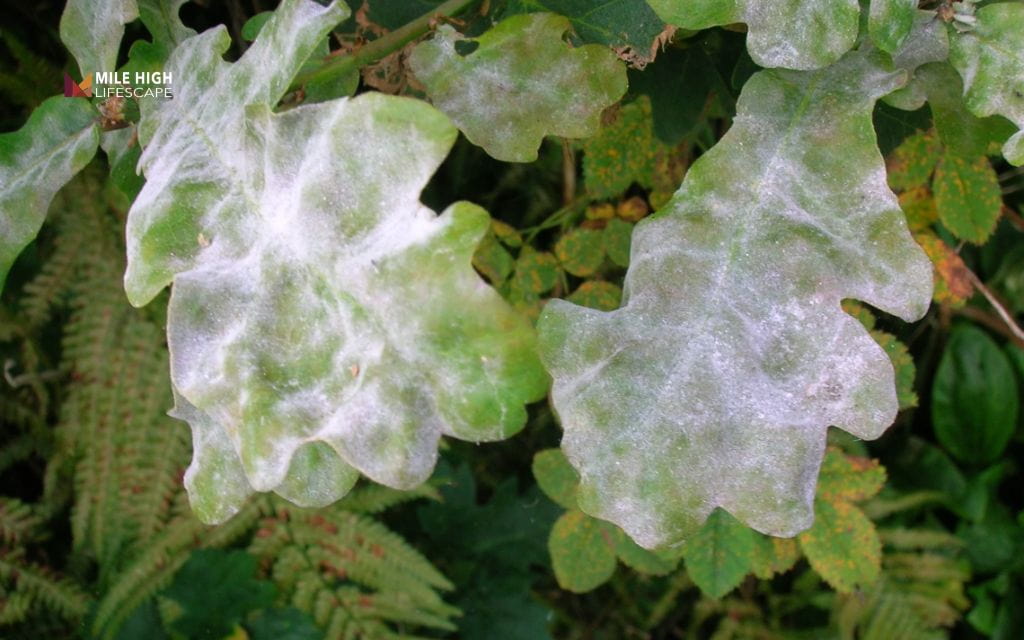
Powdery mildew is easy to identify by the white, powdery coating it leaves on the leaf surface, most visible later in the growing season. The fungus favors canopies with poor air circulation and thrives in humid air but dry leaf surfaces.
Despite its visible presence, powdery mildew rarely causes lasting harm and stays largely cosmetic. Improving air circulation through pruning, combined with removing fallen leaves, usually keeps it in check without chemical treatment.
Learn more: Bugs on tree
Hypoxylon canker
Hypoxylon canker often goes unnoticed until bark begins to slough away, revealing tan to silver gray fungal material beneath. As the disease advances, leaves yellow and wilt because the canker disrupts water movement between the roots and canopy.
The fungus is opportunistic and rarely infects a healthy oak, taking hold instead in trees weakened by drought, soil compaction, or root injury. Prevention depends entirely on tree vigor, so proper watering and protecting roots from construction damage are the most effective defenses, since treatment options narrow to removing affected branches or the tree once a canker develops.
Root rot
Root rot often shows up first as thinning foliage, yellowing leaves, and reduced growth, with fungal growth at the base of the trunk confirming the diagnosis. Honey colored mushrooms clustered near the root collar point to one common cause, while white, thread-like fungal material beneath the bark near the soil line points to another.
Both forms spread through the root system and favor trees stressed by poor drainage or root damage from nearby construction. Because root rot often signals compromised structural stability, a mature tree showing these symptoms near a home or walkway should be evaluated by a professional before the situation worsens.
Disease or stress: What’s really wrong with your oak
Many symptoms tied to diseases of oak trees overlap with conditions that have nothing to do with disease. Drought stress and transplant shock both cause leaf scorch or browning, but tend to affect the whole tree evenly and resolve as roots establish or rain returns. Construction damage and soil compaction near the root zone can also mimic disease, sometimes producing decline that appears months after the original injury.
Treating the wrong problem wastes money and can leave a tree more vulnerable than doing nothing. At Mile High Lifescape, our Tree Care team can assess your oak’s symptoms and recommend the right next step, whether that means monitoring, treatment, or removal.
Learn more: Common pine tree pests and how to stop them
Conclusion
Most oaks live for decades without a serious health crisis, and most symptoms homeowners notice turn out to be minor or unrelated to disease entirely. The diseases covered here range from cosmetic leaf spots that need nothing more than seasonal cleanup to vascular and structural problems that call for fast, professional attention. Knowing which category your tree falls into is the difference between unnecessary worry and a missed window to save it.
When in doubt, an accurate diagnosis beats a guess every time. Mile High Lifescape can identify what is actually affecting your oak and recommend the right next step, so your tree gets the care it needs before a small problem becomes a costly one.
Frequently asked questions (FAQs)
What disease is killing oak trees?
Oak wilt is the disease most often responsible for sudden oak deaths, especially in red oaks, which can die within weeks of the first symptoms. Sudden oak death, caused by a different pathogen, is also a major killer but limited mostly to parts of the West Coast. Beyond these two, advanced root rot and bacterial leaf scorch account for most other cases of serious decline, though both progress more slowly than oak wilt.
What does a diseased oak tree look like?
A diseased oak often shows leaf discoloration that starts at the margins and spreads inward, premature leaf drop, thinning in one section of the canopy rather than the whole tree, and bark that cracks or sloughs away. Fungal mats, conks, or mushrooms at the trunk base are also common visual signs, particularly with root rot or canker disease.
Can a diseased oak tree be saved?
It depends on the disease and how early it is caught. Cosmetic leaf diseases like anthracnose and oak leaf blister rarely threaten the tree’s survival. Vascular diseases like oak wilt and structural issues like advanced root rot are far more serious, and the tree’s chances improve significantly with early professional diagnosis.
How do I know if my oak has oak wilt?
Look for leaves that brown and wilt starting from the margins, often in a pattern that moves inward, combined with rapid leaf drop. Red oaks can die within weeks of the first symptoms, so any oak showing this pattern, particularly during the growing season, should be evaluated quickly.
Is oak tree fungus contagious to other trees?
Many oak fungal diseases spread to nearby oaks, either through root connections, insect activity, or wind dispersed spores. Oak wilt and root rot fungi are particularly capable of spreading from tree to tree, which is why removing severely infected trees promptly matters for the health of the surrounding landscape.
Why does my oak tree have mushrooms growing at the base?
Mushrooms or conks at the trunk base are a sign of fungal decay in the root system or lower trunk, not a separate problem. They indicate the fungus has already been active for some time. This often affects the tree’s structural stability, so it is worth a professional evaluation rather than simply removing the mushrooms.