A rock garden landscape combines rocks, gravel, boulders, and drought-tolerant plants to create a naturalistic, sculptural outdoor space. These gardens mirror the rugged beauty of the Rocky Mountains while solving practical problems that Denver homeowners face every day.
This guide walks you through every aspect of creating a rock garden landscape in Denver. You’ll discover 22 design ideas tailored to Front Range conditions.
You’ll also learn how to plan your garden, choose appropriate rocks and plants, and tackle hillside installations. Whether you plan to build the garden yourself or hire professionals, you’ll finish this guide with the knowledge to make informed decisions.
Planning your rock garden landscape
Step 1: Evaluate your site
Walk your property at different times of day. Note where the sun hits hardest and where shadows linger. Denver’s intense UV radiation affects plant selection. South-facing slopes receive full sun and heat up quickly. North-facing areas stay cooler and hold moisture longer.
Examine existing slopes and drainage patterns. Colorado’s clay soil sheds water during heavy rains, creating runoff that can erode hillsides and flood low spots. Mark areas where water pools after storms. Identify wind corridors where Chinook winds howl through your yard in winter.
Step 2: Decide the garden’s job
Define what you need this space to accomplish.
- A front yard rock garden builds curb appeal and reduces water bills by replacing thirsty turf.
- Side yards present opportunities to solve problems – turning narrow, unused strips into attractive pathways or dry creek beds that manage runoff.
- Rock gardens excel at holding soil on slopes while adding visual interest.
- Some homeowners use rock gardens to create outdoor rooms that extend living space without high maintenance.
Match the garden’s purpose to your budget and timeline.
Step 3: Choose a style
Natural Rocky Mountain outcrop designs mimic the geology visible in nearby foothills.
Large boulders anchor the composition. Smaller rocks fill gaps. Native grasses and wildflowers grow between stones, creating the illusion that the garden has always existed in this spot.
- Japanese-inspired rock gardens emphasize simplicity and contemplation. Raked gravel represents water.
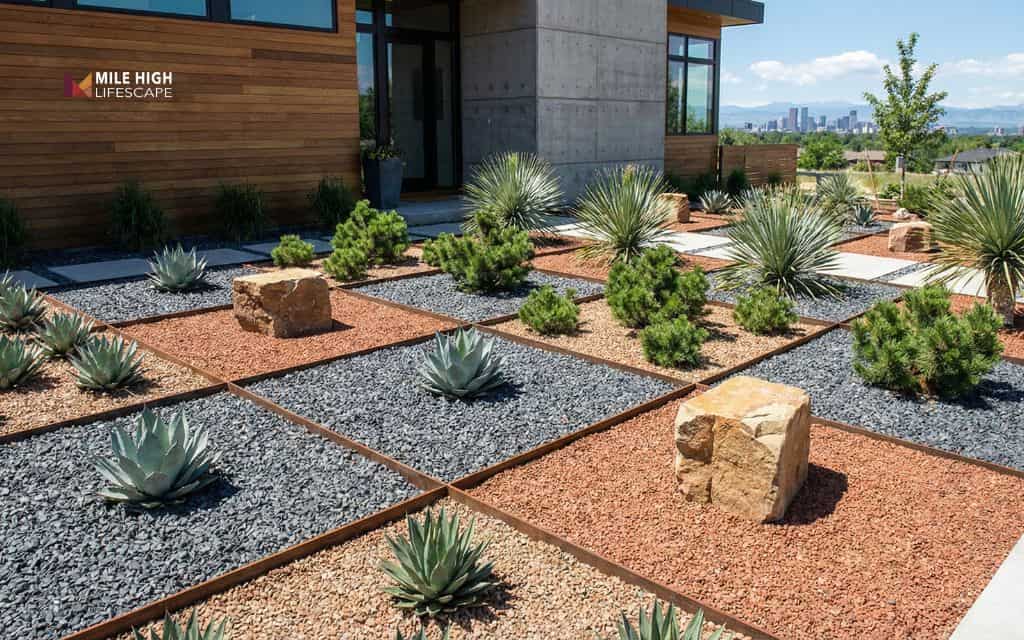
- Contemporary geometric designs use clean lines and repetition. Steel or aluminum edging defines beds filled with uniform gravel.
- Boulders become sculptural elements rather than naturalistic features. Plant choices lean toward architectural specimens that echo the angular hardscape.
- Cottage-style rock borders combine the structure of stone with abundant flowering perennials. Rocks edge informal beds where plants spill over boundaries.
Step 4: Budget & DIY level
- Small rock garden projects suit DIY installation. You can move rocks by hand or with a hand truck. Costs remain manageable when you limit size and use local materials.
- Larger transformations require equipment. These projects stretch budgets and demand skills most homeowners lack.
- Professional installation makes sense when slopes exceed 20 degrees, when you need more than five large boulders, or when the project exceeds 500 square feet.
For nearly two decades, Mile High Lifescape has been proudly serving the Denver Metro area as the go-to landscape company. With a reputation for excellence, we offer a comprehensive range of friendly and professional rock landscape services. Count on us to transform your outdoor space into a beautiful oasis that exceeds your expectations.
Choosing the right rocks for your Denver landscape
- Local granite: It’s durable, handles freeze-thaw cycles without cracking, and ranges from rough-textured boulders to smoother river-rounded pieces. Granite is moderately priced because it’s locally sourced, and it doesn’t absorb excessive heat like darker stones.
- Sandstone: With its layered texture and earthy colors (rust, tan, cream, and red), sandstone creates an authentic Rocky Mountain look. It’s softer than granite, which means it develops character over time as edges weather. Some sandstone types hold moisture in their pores, which benefits nearby plants.
- River rock: Smooth, rounded, and available in multiple sizes, river rock works for dry creek beds, pathways, and as decorative mulch. River rock provides excellent drainage, doesn’t compact, and looks intentionally placed rather than quarried.
- Cobbles: Slightly larger than river rock, cobbles work well for pathway surfaces, edging, and as transition zones between boulders and gravel. They’re large enough to stay put but small enough to work with by hand.
- Breeze (crushed rock): This angular, crushed aggregate compacts well for pathways and patio bases. It’s available in various sizes (¾-inch, ⅜-inch, fines) and colors.
- Decomposed granite (DG): This finely crushed granite packs firm when wet and creates a smooth, natural-looking surface. It’s popular for modern designs and pathways. DG requires edging to prevent migration and may need replenishment every few years.
22 rock garden landscape ideas for Denver yards
These designs range from simple weekend projects to ambitious transformations. Each addresses Denver-specific conditions while providing four-season interest.
Front yard rock garden entry
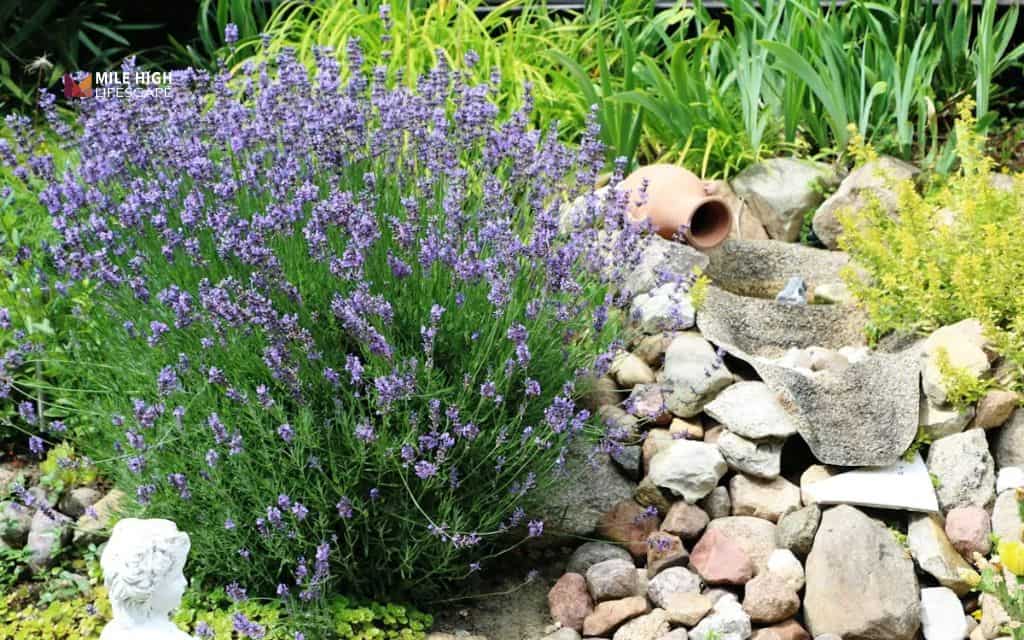
Replace tired foundation shrubs with a thoughtfully arranged collection of boulders (3-5 large specimens), ornamental grasses like Karl Foerster or Blue Avena, and flowering perennials such as Russian sage, lavender, and creeping phlox.
Frame your entryway with a dry-stacked stone pillar or incorporate your house number into a standing boulder. This creates immediate curb appeal and requires minimal water once established.
Rocky mountain meadow strip
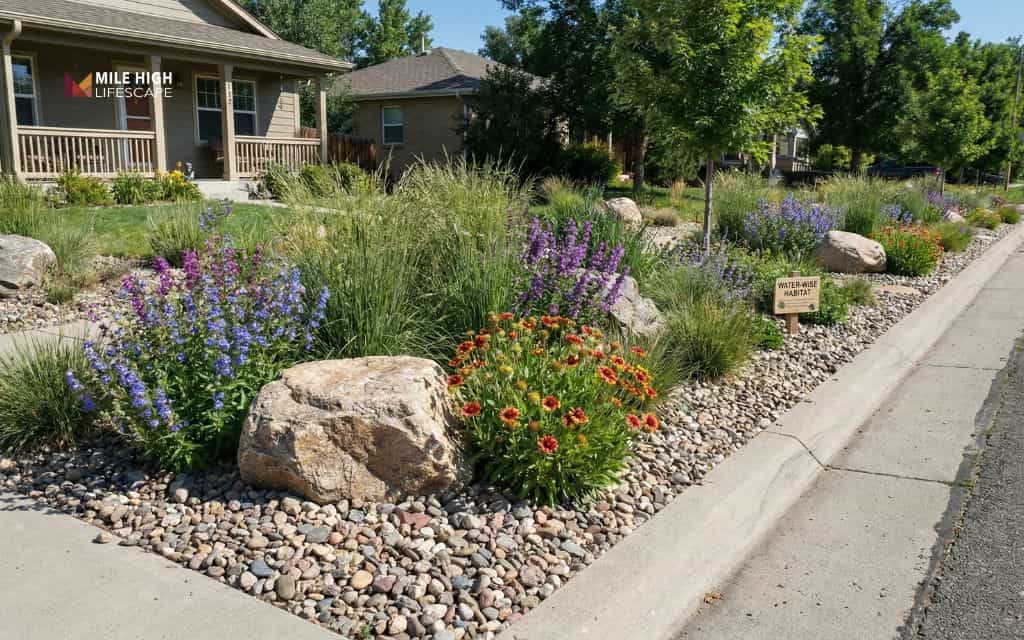
Transform that hellstrip between sidewalk and street into a miniature Front Range meadow. Use 3-5 accent boulders, native grasses (side oats grama, buffalo grass), and tough perennials like penstemon and blanket flower.
Cover soil with 3 inches of river rock mulch to suppress weeds and retain moisture. This thrives with Denver’s neglect – no irrigation needed after year one.
Hillside rock staircase
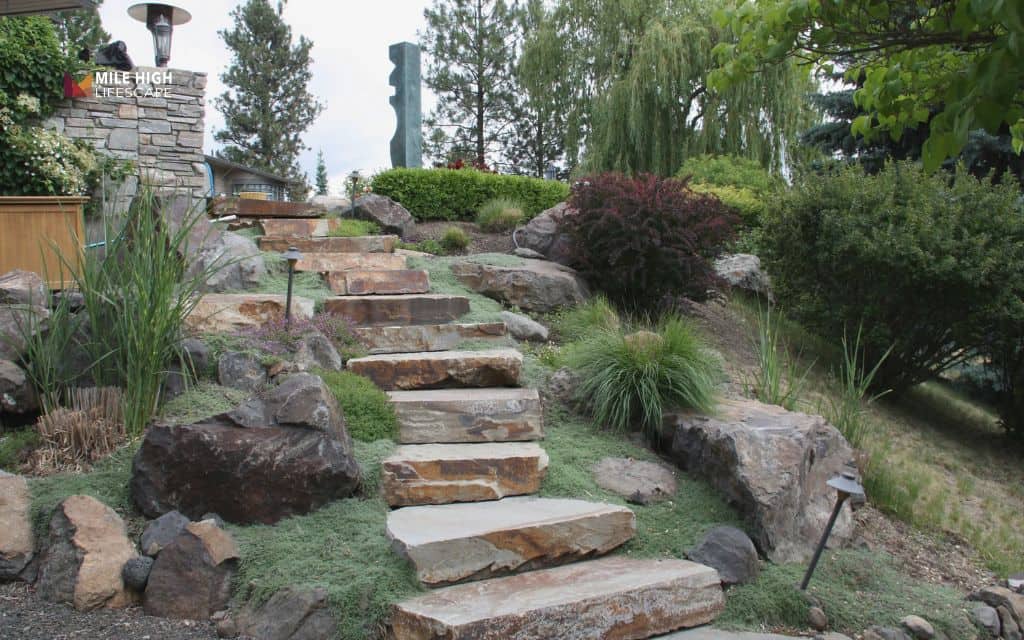
Integrate natural stone steps into a slope by setting large, flat stones as treads and flanking them with boulders. Fill spaces with low groundcovers like creeping thyme, sedum, and kinnikinnick.
Each landing becomes a mini garden with alpine plants tucked into pockets. This turns a dangerous slope into an accessible, beautiful hillside rock landscaping feature.
Dry creek bed for drainage
Channel stormwater away from your foundation with a river rock swale that looks intentional even when dry. Line the “creek” with larger boulders to suggest banks, use 3-6 inch river rock as the streambed, and plant moisture-loving natives like blue flag iris and switchgrass where water flows heaviest.
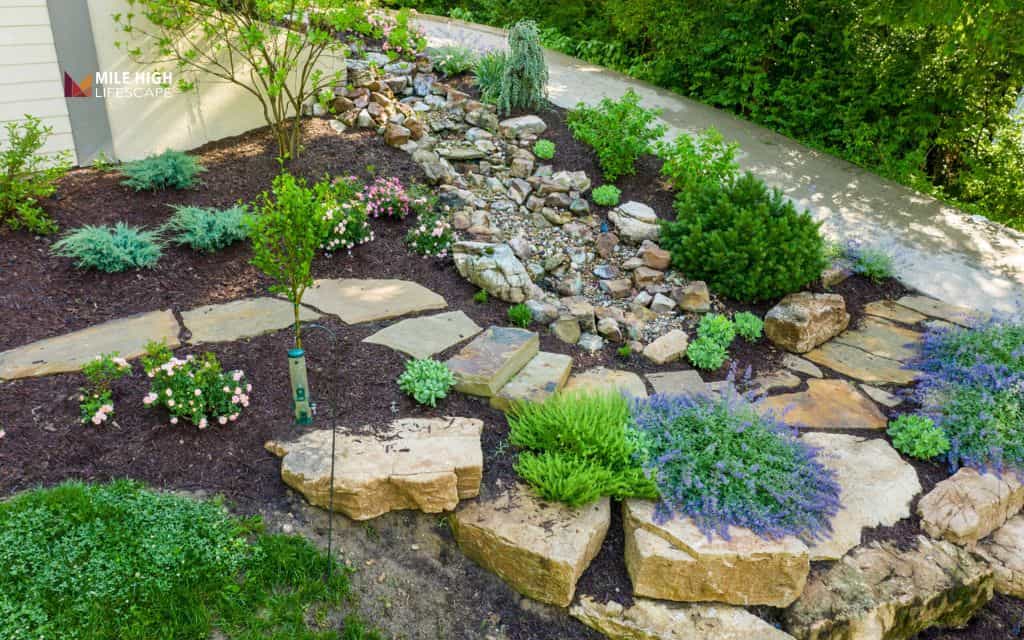
Xeriscape lawn replacement
Remove water-hungry turf and replace it with a tapestry of native shrubs (rabbitbrush, Apache plume), ornamental grasses, 8-12 strategically placed boulders, and pathways of crushed granite. Cover remaining soil with decorative gravel. This reduces water use by 70-80%.
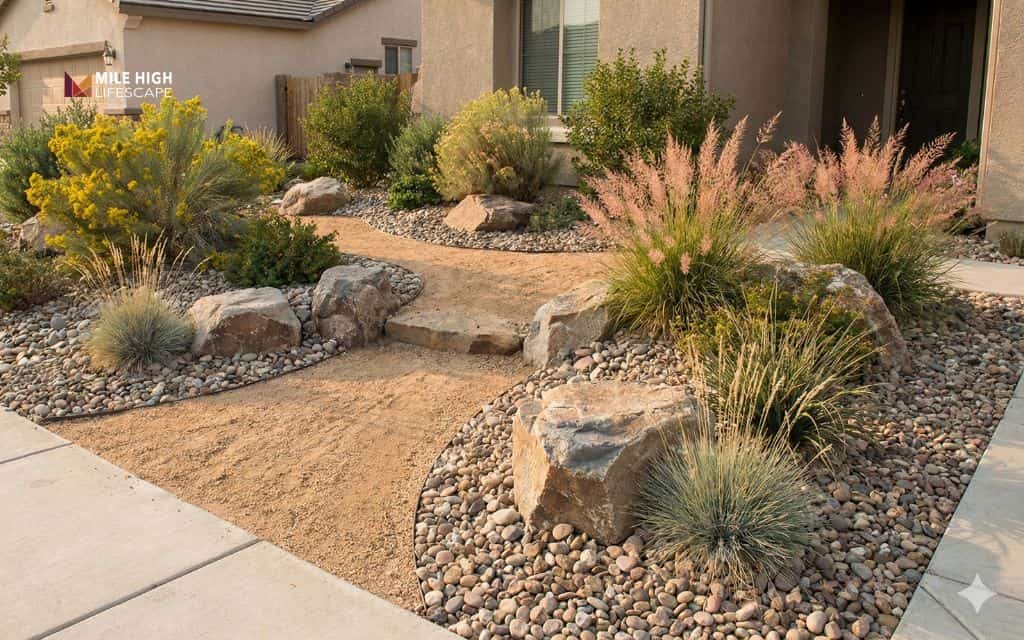
Modern grid rock garden
Create geometric beds with steel or aluminum edging, fill alternating squares with different colored gravels, and plant architectural specimens (agave, yucca, dwarf conifers) in organized patterns. Use boulders sparingly as sculptural focal points. This style reads as intentional and contemporary, perfect for modern Denver homes.
Courtyard zen rock garden
In a small courtyard or enclosed side yard, create a meditative space with raked gravel, three perfectly placed accent stones, and container-grown conifers or Japanese maples.
Edge with low walls or bamboo screening. This brings Japanese garden principles to Denver’s climate by choosing drought-tolerant plants and embracing negative space.
See more: 23 zen rock garden ideas to create your backyard meditation oasis (water-wise & beautiful)

Rocky pollinator haven
Design specifically for bees, butterflies, and hummingbirds by creating a sun-drenched rock outcrop planted with natives: bee balm, desert four o’clock, penstemon, evening primrose, and blanket flower. Arrange rocks with southern exposure to create warm microclimates that extend bloom times. Include a shallow water source (rock-filled saucer) for pollinators.
Alpine troughs & containers
Create miniature rock gardens in hypertufa troughs, stone containers, or raised planters. Perfect for tiny yards or experimenting with alpine plants that need excellent drainage.
Use small stones as hardscape, fine gravel as mulch, and tiny alpines like hens-and-chicks, alpine phlox, and miniature sedums. Group multiple troughs for impact.
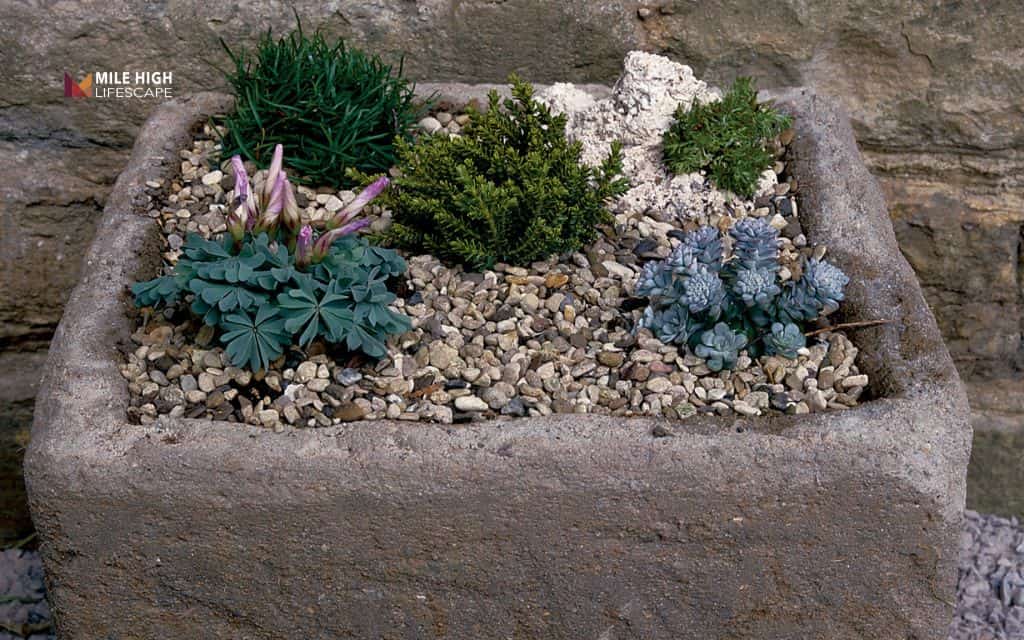
Evergreen winter-interest rock slope
Plant a slope with dwarf conifers (blue spruce, mugo pine, juniper varieties) interspersed with large boulders and ornamental grasses. This creates a dramatic four-season structure, especially beautiful under snow or backlit by winter sunrise.
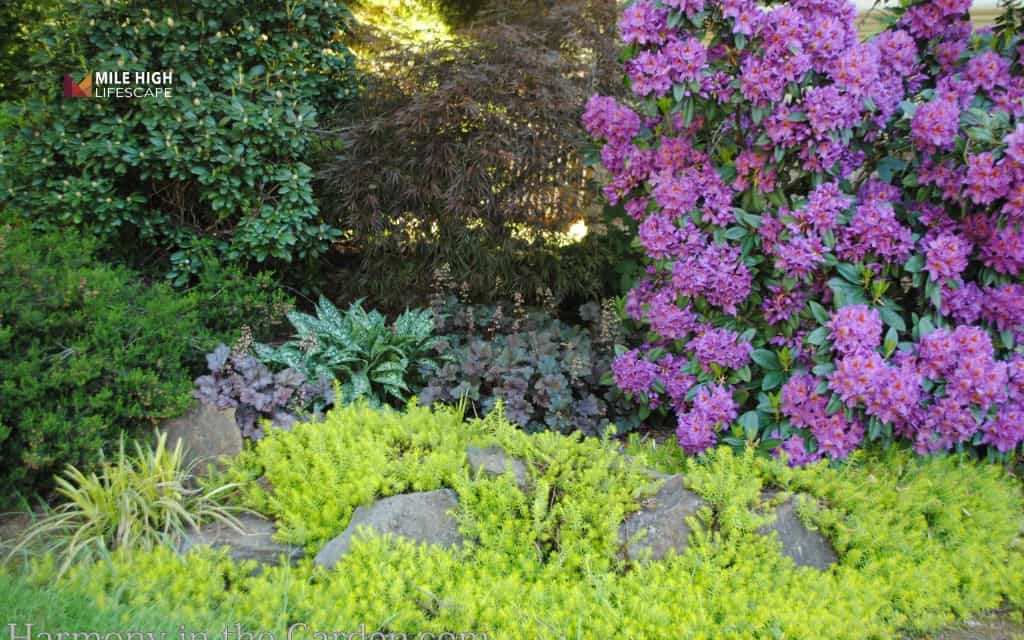
Colorful perennial rock border
Edge existing beds with a low rock wall (12-18 inches) or scattered boulders, then plant intensively with colorful perennials: creeping thyme, sedums, dianthus, catmint, and salvia. Let plants spill over rock edges to soften the hardships. This cottage-garden approach uses rock in landscape design to define spaces while celebrating exuberant planting.
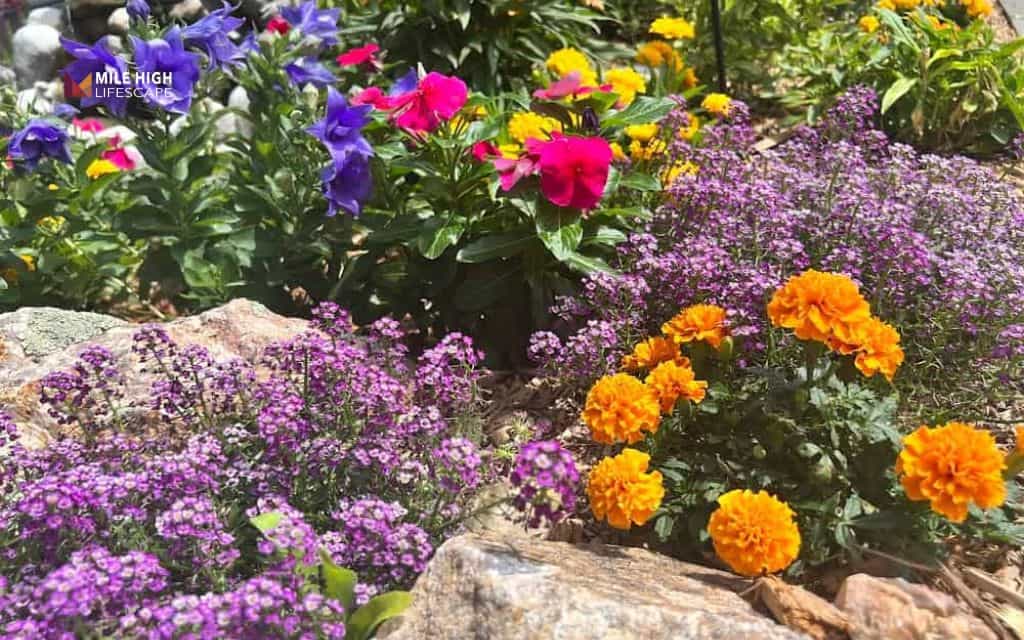
Cottage-style rock pathway
Create an informal path with stepping stones set in creeping thyme or fine gravel, flanked by loose rock borders and flower-filled beds.
Use irregularly shaped flagstones rather than formal pavers, and let plants blur edges. This invites exploration and creates a sense of discovery in even small yards.

Boulder-framed fire pit area
Arrange large boulders as natural seating around a gravel-based fire pit. Plant hardy, fire-tolerant species like penstemon, yucca, and ornamental grasses in pockets between stones.
This creates an outdoor gathering space that feels integrated with the landscape rather than plopped onto it. Ensure 15-foot clearance from structures and check Denver fire codes.
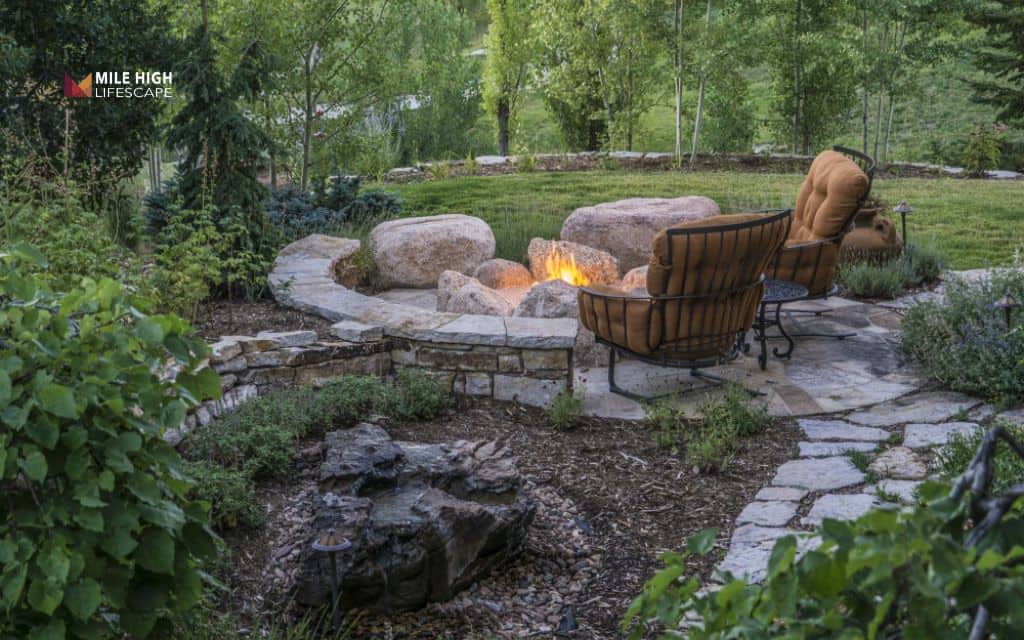
Water-wise pondless waterfall with rocks
Install a small recirculating water feature that tumbles through boulders into a hidden reservoir.
Unlike ponds, pondless features lose less water to evaporation (important in Denver) and don’t require fish care.
Surround with moisture-loving plants and enjoy moving water’s sound without maintenance headaches.
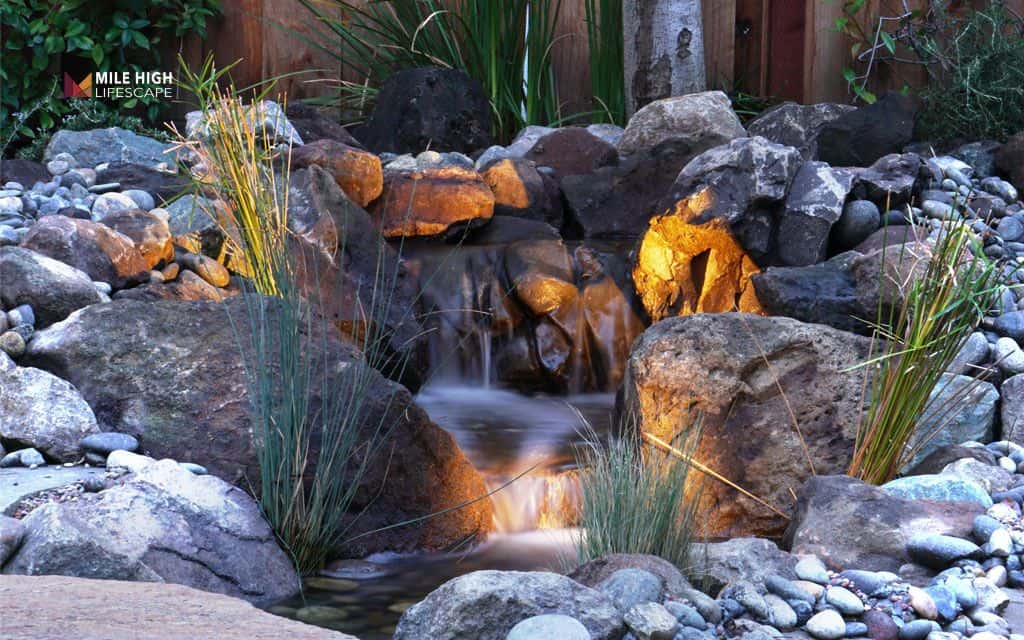
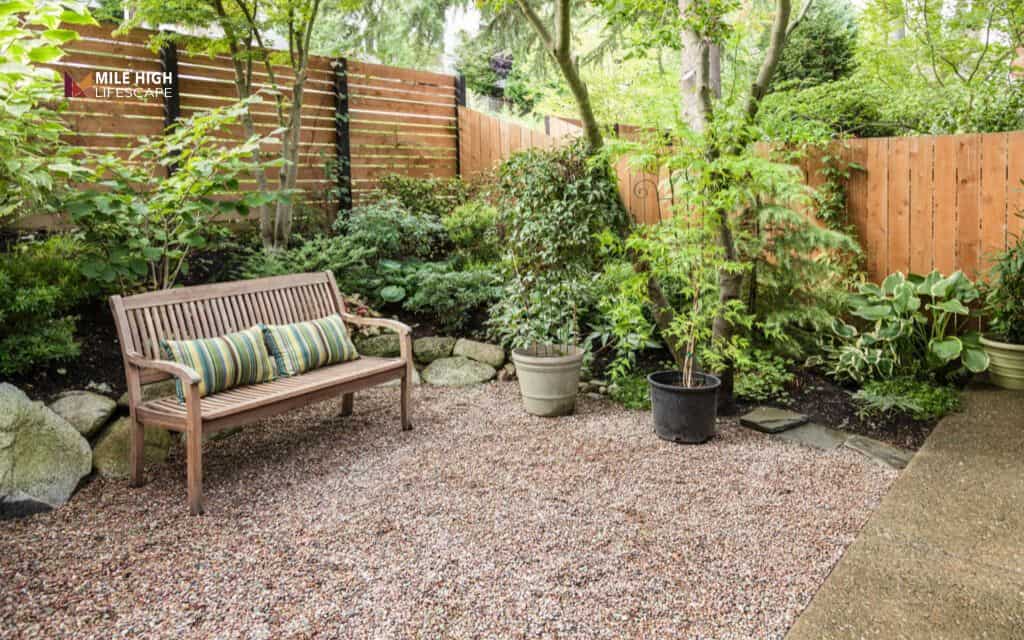
Minimalist gravel courtyard
In a small enclosed space, use 3-5 large statement boulders, clean gravel coverage, and just a few sculptural shrubs (yucca, ornamental grasses). Emphasize negative space, clean lines, and intentional placement. This style works in Denver because simplicity suits our big skies and strong light.
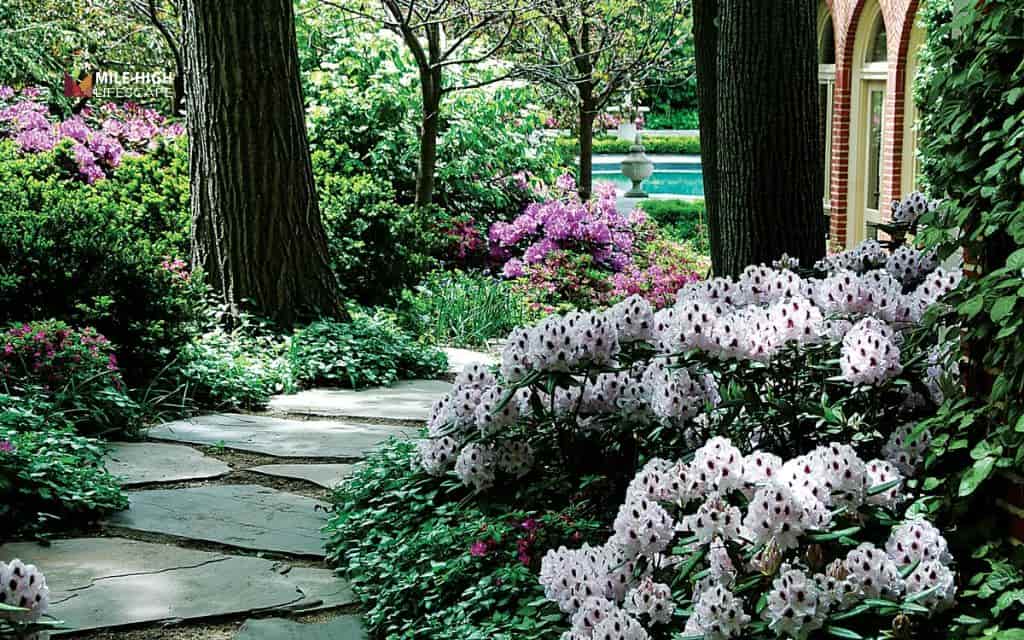
Rocky shade garden
For north-facing areas or under mature trees, use mossy boulders, shade-tolerant groundcovers (ajuga, lamium), ferns, and hellebores. Rock in landscape design works even in shade – stones provide structure when plants go dormant and create microclimates that shelter tender growth.
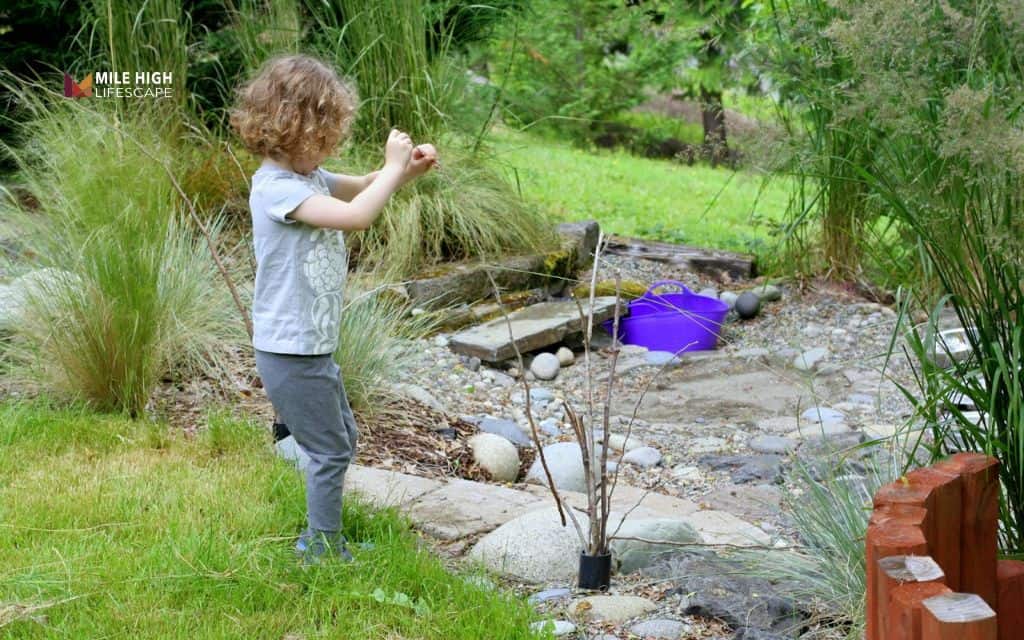
Kids’ exploration rock garden
Design with children in mind: large, flat boulders as stepping stones and climbing spots, logs as balance beams, and tough plants that handle traffic (blue fescue, thyme, sedum).
Create paths that wind and discover pockets where kids can find insects. Choose smooth-edged rocks and avoid sharp gravel in play zones.
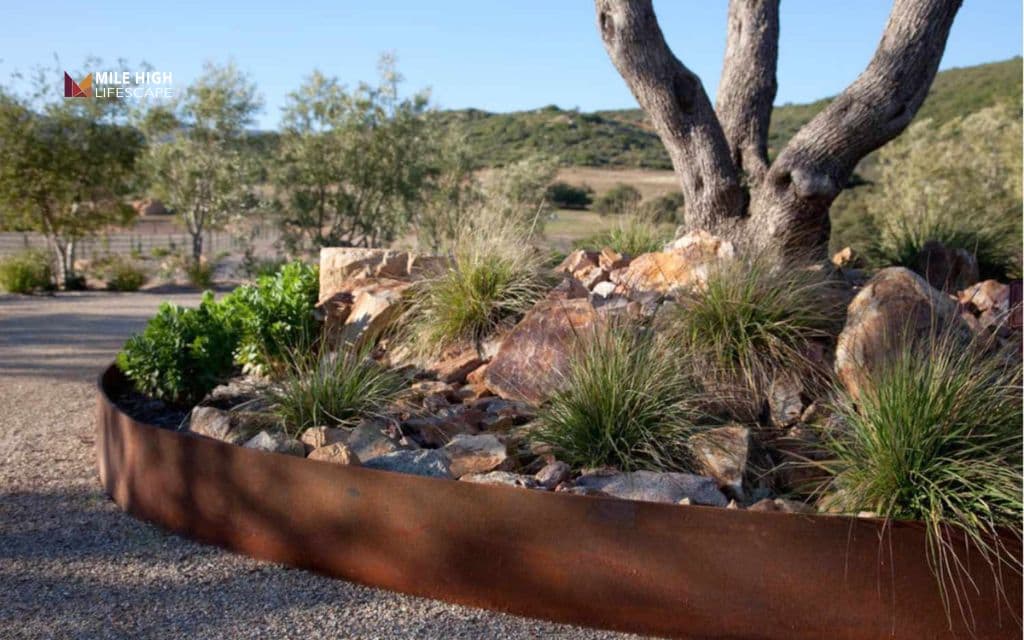
Rock garden around a mature tree
Honor established trees by creating a rock-edged bed beyond the root flare. Use drought-tolerant perennials that don’t compete heavily for water, and add 4-6 boulders for structure.
Don’t pile soil or mulch against the trunk. Rocks should start at least 6-12 inches away from bark.
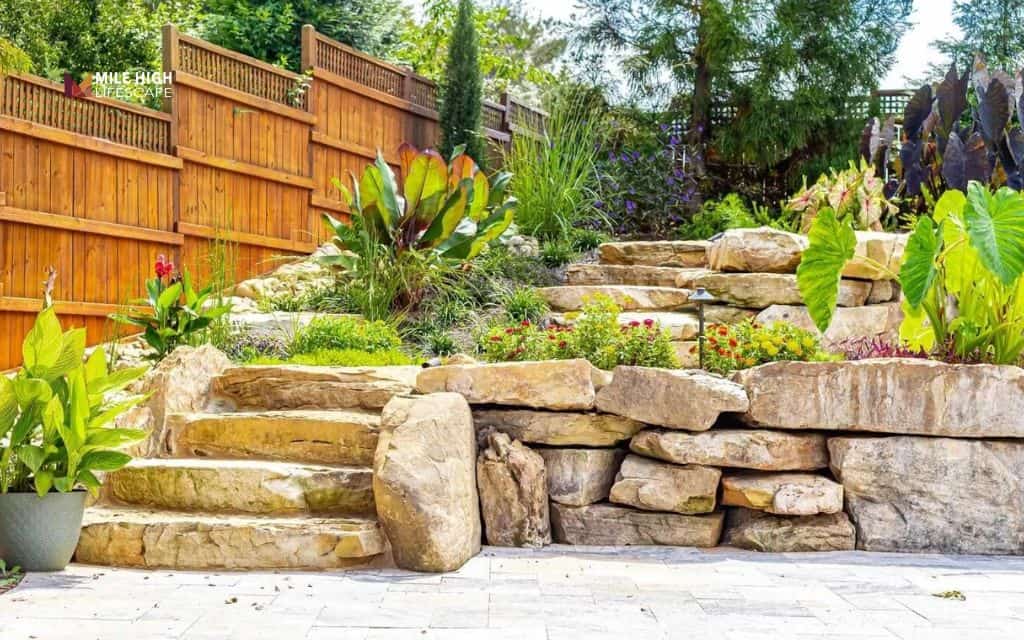
Slope stabilization with terraced rock bands
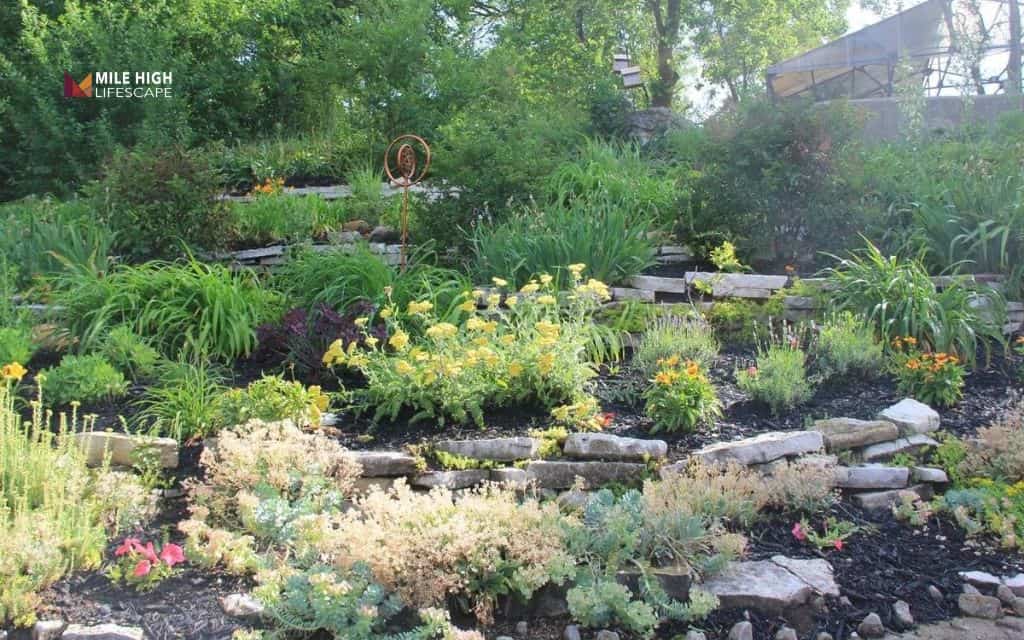
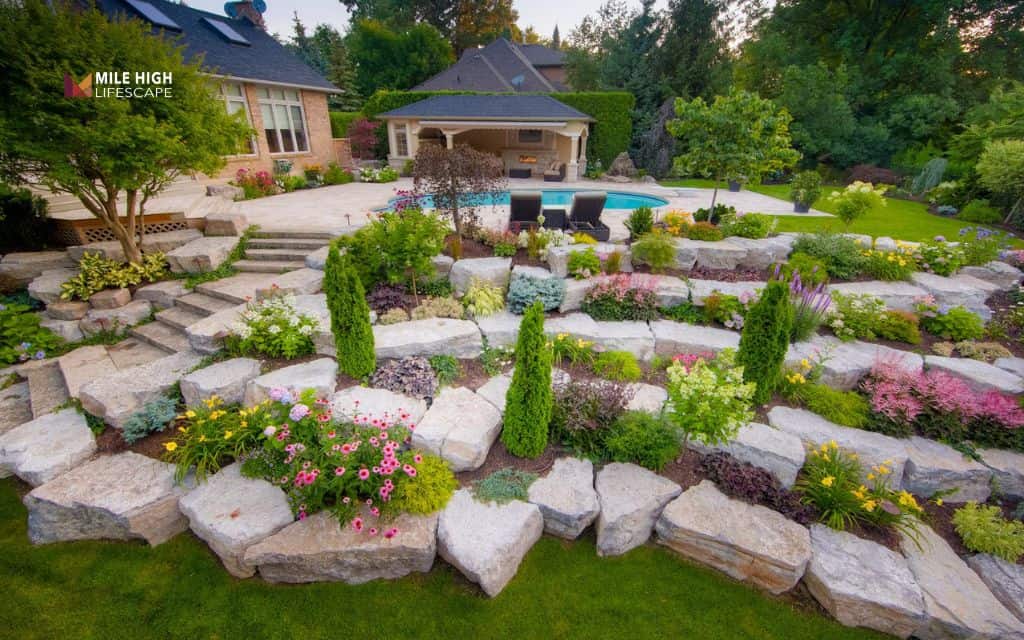
On moderate slopes, create horizontal planting terraces held by dry-stacked stone bands (12-24 inches tall). Each terrace becomes a planting bed for grasses and shrubs with deep roots. This hillside rock landscaping technique prevents erosion while creating visual interest and accessibility.
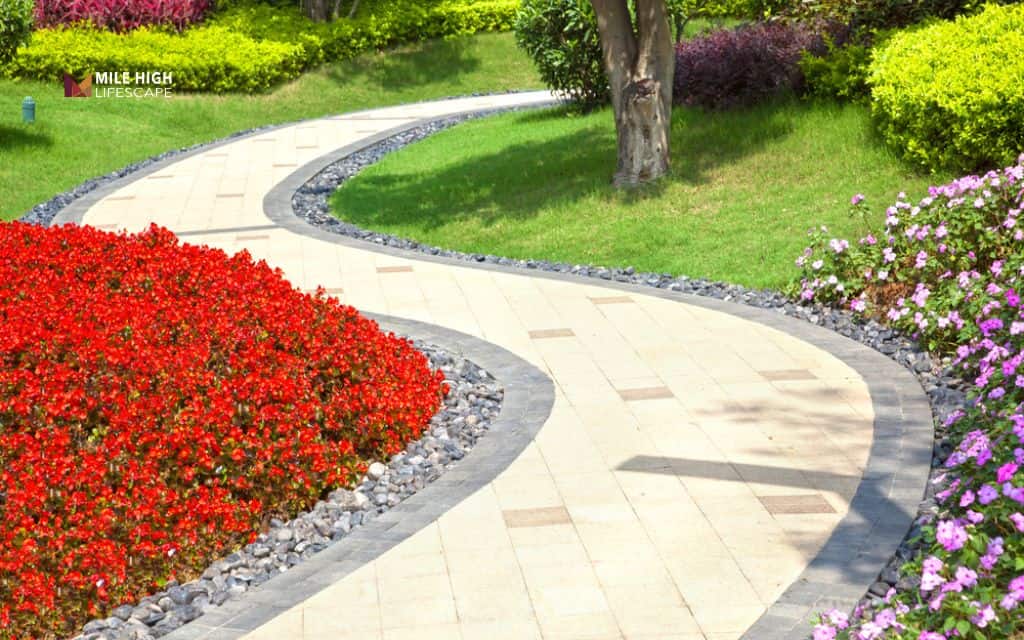
Driveway edge rock garden
Border your driveway with tough plants (lamb’s ear, sedum, creeping thyme) and stone edging that handles heat reflection and occasional foot traffic.
Use darker river rock as mulch to absorb heat and define boundaries. This dresses up a functional area without requiring space or regular watering.
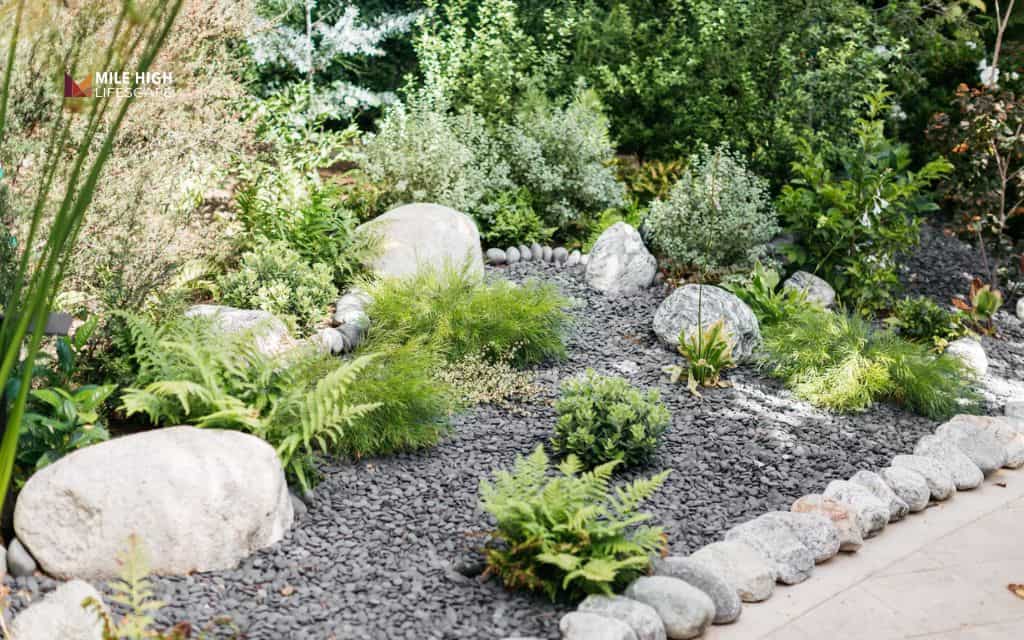
Micro rock garden for tiny yards
Even a 4×6-foot corner can become a rock garden. Use 3-5 well-chosen boulders, intensive planting of small perennials and grasses, and fine gravel mulch. The key is scale – choose smaller rocks and plants proportional to the space. This works perfectly for townhomes and condos with minimal yard space.
Wild-inspired native rock prairie
Scatter boulders through meadow-style planting of native grasses (blue grama, little bluestem) and wildflowers (blanket flower, prairie coneflower, wine cups).
This looks naturalistic, attracts wildlife, and requires essentially zero maintenance after establishment. Perfect for larger lots where a wild aesthetic fits the neighborhood.
Hillside rock landscaping
Why rocks are ideal for slopes
Gravity pulls mulch and lightweight amendments downhill during storms. Rocks stay put. Their mass stabilizes soil and breaks water flow, reducing erosion.
Large boulders act as anchors. Small rocks slow runoff, allowing water to infiltrate rather than sheet across the surface.
Rock in landscape design creates microclimates on slopes. Boulder placement traps moisture on the uphill side and provides shelter from wind. South-facing rock faces heat up in winter sun, extending the growing season for plants nestled against warm stone.
These thermal effects help marginal plants survive Denver’s temperature extremes.
Slope design strategies
- Terraces and “shelves” with short walls: Break a long slope into shorter, flatter sections using dry-stacked stone walls (18-36 inches tall). This creates level planting areas, slows water dramatically, and makes maintenance safer and easier.
- Zig-zag paths and stone steps for access: Never run paths straight up and down slopes – water will turn them into channels. Instead, create switchback paths with stone steps at turns. This provides safe access for maintenance while preventing erosion.
- Use deep-rooted grasses and shrubs to knit soil: Rocks provide surface stability, but plant roots create below-ground structure. Ornamental grasses, native shrubs, and groundcovers develop extensive root systems that literally hold soil together.
Step-by-step hillside rock garden build
This is an overview for moderate slopes (3:1 to 2:1 ratios). Steeper slopes require professional assessment and potentially engineered solutions.
Assess grade and water flow
Walk your slope during heavy rain and note where water concentrates. These are your problem areas that need the most rock intervention.
Take photos from multiple angles and sketch a rough plan. If your slope is over 20 feet long or steeper than 2:1, consider hiring for professional assessment.
Place largest boulders first
Start at the bottom of the slope and work up, setting your largest boulders (3-4 feet diameter or larger) at key points. Bury at least one-third of each boulder to ensure stability.
Use boulders to create broad curves and natural-looking outcrops. This is physically demanding work; equipment rental or professional crews save time and prevent injury.
Create planting pockets with amended soil
Between and above boulders, excavate shallow pockets (12-18 inches deep) and fill with amended soil. Denver’s native clay needs organic matter (compost) and drainage material (coarse sand or fine gravel) mixed 2:1:1 (existing soil: compost: sand). These pockets become homes for plants.
Add mid-sized rocks and gravel, then plant
Fill spaces between large boulders with mid-sized rocks (6-18 inches) to create a natural transition. Cover exposed soil with 3-4 inches of gravel mulch (not wood chips) to prevent erosion.
Finally, plant your deep-rooted grasses and shrubs, giving each plant’s roots direct contact with prepared soil, not just gravel.
Monitor and adjust through one full season
After heavy rains, check for signs of erosion, rock movement, or water pooling.
You’ll likely need to add more gravel in spots where it settles, reposition a few rocks, or add more plants where coverage is thin.
By year two, roots will have established and your slope will be largely self-maintaining.
See more: How to landscape with small rocks: 10 Denver designs that actually last
Conclusion
Rock garden landscapes conserve water, stabilize slopes, and provide year-round interest with minimal maintenance. Start with one area – front entry, side yard, or slope. Choose designs matching your site and aesthetic. Build gradually, positioning major boulders first.
Your rock garden improves with age as plants mature and stones develop patina. The result feels authentically rooted in Colorado’s landscape.
Frequently asked questions (FAQs)
What is a rock garden landscape and how is it different from regular landscaping?
Rock gardens use rocks, boulders, and gravel as primary elements with drought-tolerant plants. They eliminate or minimize lawn and require 50-75% less water than traditional landscaping.
Are rock gardens good for Denver’s dry climate and clay soil?
Yes. Rock gardens thrive in Denver conditions. They need minimal water once established. Raised planting pockets solve clay soil problems. Many native plants evolved in clay and perform well.
How do I use rock in landscape design without it looking messy?
Use odd numbers of major rocks. Bury rocks one-third to one-half their height. Group different sizes together. Select similar color families. Spread uniform gravel mulch between plantings.
What plants work best between rocks in Denver (Zone 5b)?
Native options: blue grama grass, penstemon, blanket flower, Apache plume. Ornamental grasses: blue fescue, prairie dropseed. Groundcovers: creeping thyme, sedum. Dwarf conifers for structure. Choose plants with silver or blue-gray foliage indicating drought adaptation.
How do I design hillside rock landscaping that won’t erode?
Position large boulders perpendicular to slopes to interrupt runoff. Create terraces with rock walls. Use deep-rooted native plants. Install stone steps or zigzag paths. Add gravel mulch. Consider professional help for slopes steeper than 30%.
Can rock gardens replace my front lawn and still look polished?
Yes. Define edges clearly. Use plants in masses. Maintain consistent gravel depth. Trim grasses annually and remove weeds promptly. Well-designed rock gardens boost curb appeal while reducing water bills.