Rock wall landscaping uses natural stone, boulders, or gabion-style rock structures as both retaining walls and decorative garden features. These walls transform problem slopes into stunning terraced gardens while solving real drainage and erosion issues.
Why does this approach work so well in Denver? Several reasons make rock walls the perfect solution for Colorado yards:
- Handles slopes and elevation changes that define so many Denver properties from Highlands Ranch to Parker
- Controls erosion during our intense summer downpours and spring snowmelt events
- Fits Colorado’s natural aesthetic by echoing the Rocky Mountain landscape visible from your yard
- Pairs beautifully with xeriscaping and water-wise plants that thrive in our semi-arid climate
This comprehensive guide gives you 17 design ideas specifically suited to Denver conditions. Whether you’re tackling a small garden border or a major hillside transformation, you’ll find practical solutions here.
Rock wall landscaping basics
What is a landscape rock wall?
Rock walls serve 2 distinct purposes in your yard: holds back soil and creates level ground from a slope.
These engineered structures prevent erosion and allow you to use hillside spaces that would otherwise remain unusable. Building codes require professional engineering for retaining walls over 4 feet tall because they bear significant load.
A freestanding or garden rock wall defines space without holding back soil. These decorative structures create boundaries between planting beds, provide seating around patios, or serve as backdrops for perennial gardens.
Garden walls don’t require the same structural engineering as retaining walls, which makes them more accessible for DIY projects.
Functional benefits
Rock wall landscaping solves several challenges unique to Front Range properties. Our combination of clay soil, intense weather events, and dramatic elevation changes creates specific problems that stone walls address effectively.
Taming sloped yards
Taming sloped yards ranks as the primary reason homeowners install landscape rock walls. Many properties feature significant grade changes that make traditional landscaping difficult.
Rock walls create usable terraces where you can establish flower beds, vegetable gardens, or simply enjoy flat outdoor living space.
Erosion control and improved drainage
Erosion control and improved drainage protect your investment in landscaping and hardscaping. Spring snowmelt and summer thunderstorms can move impressive amounts of soil in unprotected yards.
Natural stone rock walls slow water movement while allowing drainage through gaps between stones. Professional installations include gravel backfill and weep holes that channel water away safely rather than creating hydrostatic pressure that pushes walls outward.
Protecting foundations and walkways
Protecting foundations and walkways from collapsing grades prevents expensive repairs down the line. Clay soil expands when wet and contracts when dry, creating pressure that shifts unprotected slopes.
Properly built landscape rock walls stabilize soil year-round, keeping your home’s foundation, driveway, and pathways safe from undermining.
17 rock wall landscaping ideas for Denver gardens
Terraced front yard rock wall garden
Replace a steep turf front yard with multiple low natural stone walls. Each terrace creates a planting bed for colorful perennials, ornamental grasses, or flowering shrubs.
This design eliminates difficult-to-mow slopes and reduces water use by replacing grass with drought-tolerant plants.
Build walls 18 to 24 inches tall using Colorado moss rock or sandstone. Stack stones without mortar for a traditional dry-stack look. Fill terraces with amended soil and plant low-water natives like penstemon, blanket flower, and blue grama grass.
Rustic boulder retaining wall
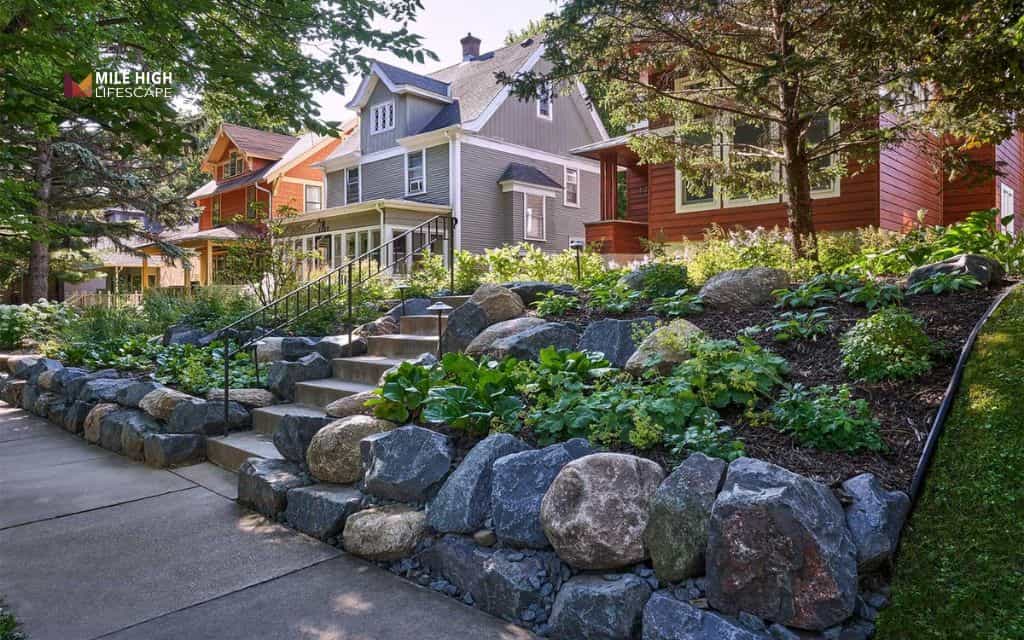
Large, irregular boulders stacked to create a rugged mountain aesthetic.
This approach mimics natural rock formations found in Colorado foothills. Boulders weighing 500 to 2,000 pounds create strong retaining walls that handle significant grade changes.
Select moss-covered or lichen-covered boulders for instant aged character. Position the largest stones at the base with smaller ones on top.
This creates natural-looking transitions and maximizes stability. Professional equipment moves these large stones safely.
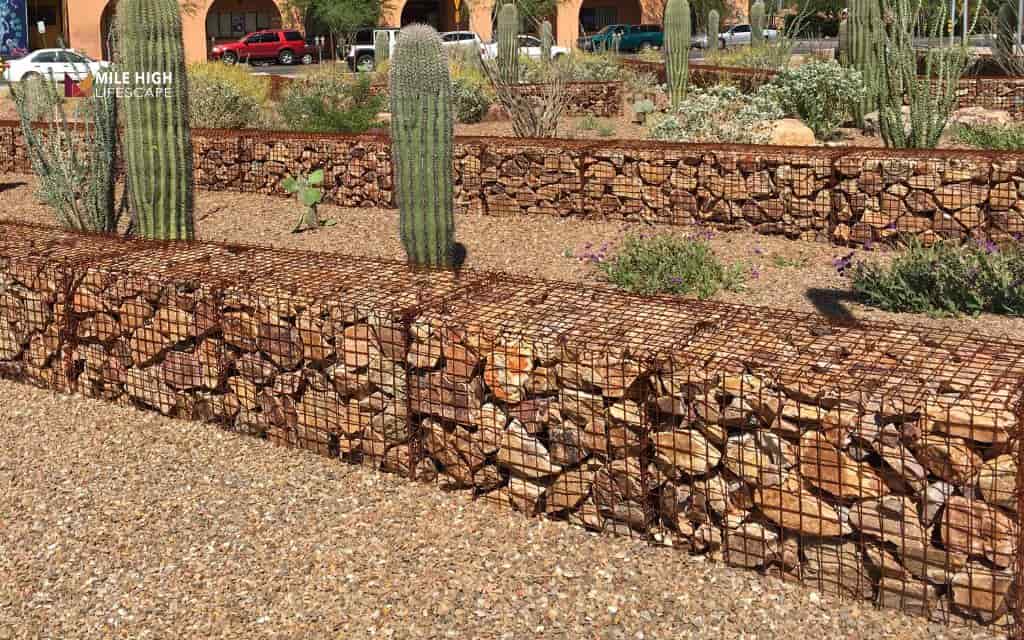
Gabion rock wall with native plantings
Wire mesh baskets filled with local stone create modern, industrial-natural garden walls. Gabions drain freely and allow plants to grow between stones. This combination softens the geometric wire cages while maintaining clean lines.
Fill gabion baskets with Colorado river rock, sandstone fragments, or recycled concrete. Plant pockets with native species like prickly pear cactus, yucca, or sedum. These plants tolerate the hot, dry conditions inside gabion walls.
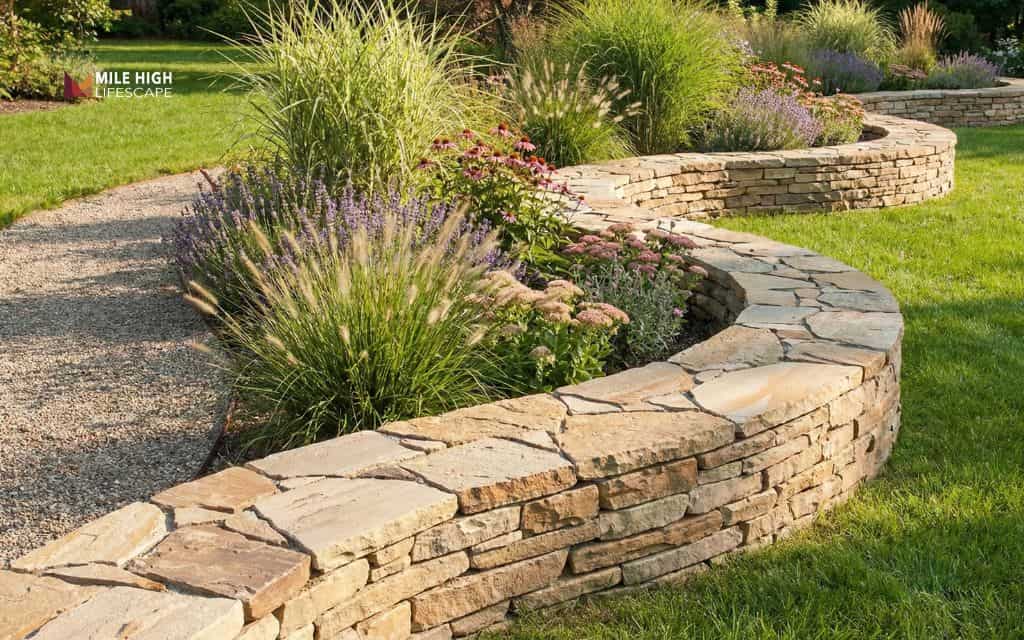
Curved natural stone garden wall
A low, sinuous landscape rock wall wraps planting beds with soft, organic lines. Curves create visual interest and feel more natural than straight walls. This design works well for defining lawn edges or bordering pathways.
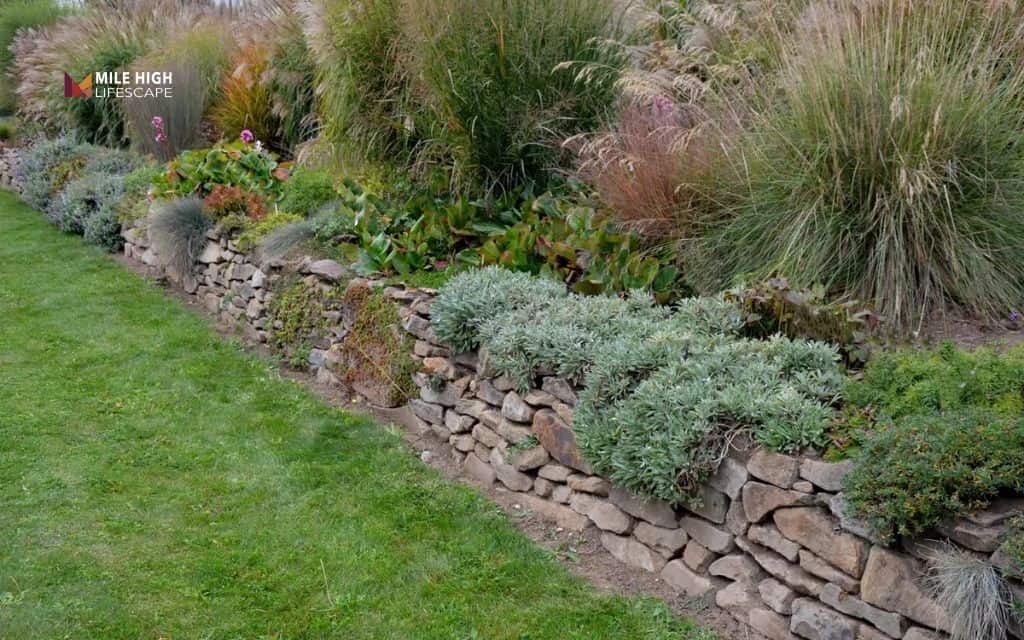
Use flat sandstone or flagstone stacked 12 to 18 inches high. Lay stones without mortar for flexibility in curves. Backfill with gravel for drainage and plant the bed with ornamental grasses and perennials.
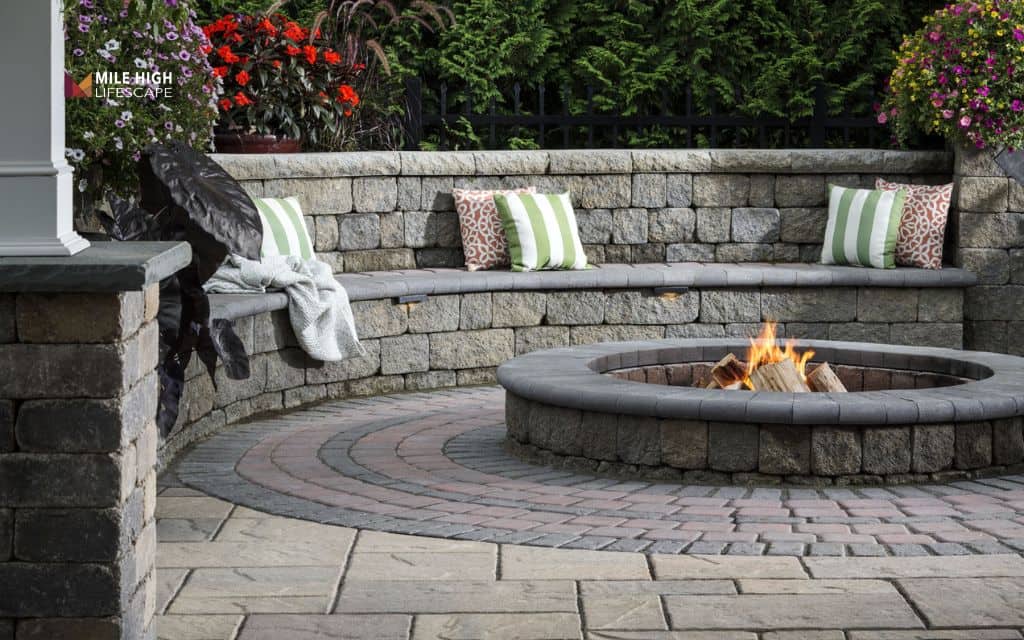
Rock wall with built-in seating
Extra-wide capstones or gabion structures designed as benches around fire pits or patios. This dual-purpose design adds seating without separate furniture. Stone stays cool in summer and provides comfortable perches for evening gatherings.
Build the wall 18 inches tall and 16 to 20 inches deep for comfortable seating height and depth. Use smooth-topped capstones or install cushions on gabion surfaces. Position near fire features or around conversation areas.
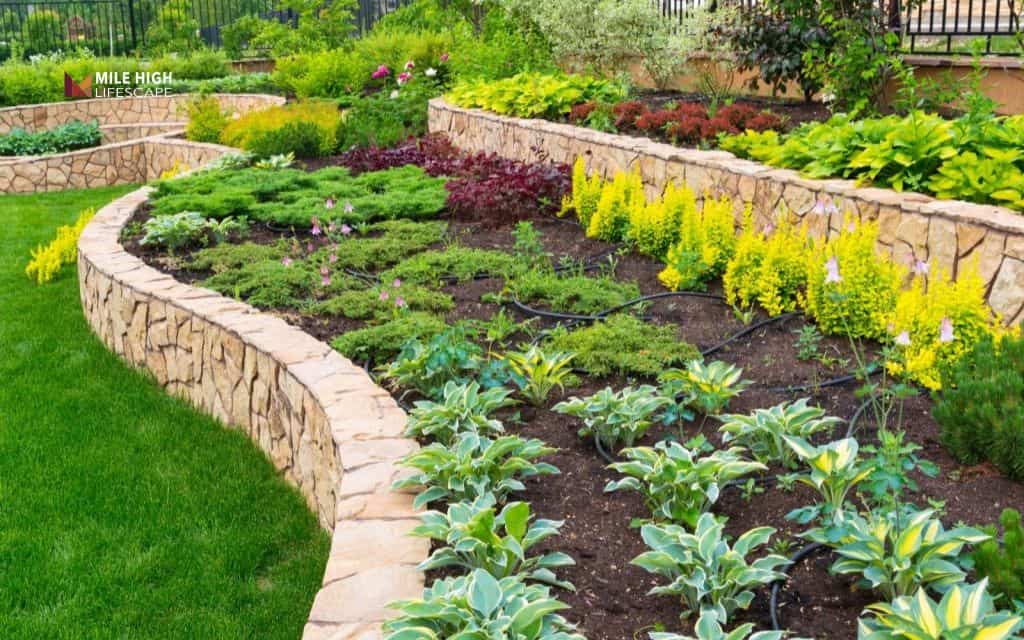
Hillside rock wall terraces for veggies or perennials
Multiple narrow planting shelves on a slope create productive garden space from an unusable hillside. Each terrace captures water and directs it to plant roots. This design maximizes growing area and protects against erosion.
Build walls 18 to 30 inches tall spaced 4 to 8 feet apart vertically. Use Colorado moss rock or stacked sandstone. Fill terraces with quality topsoil mixed with compost. Plant vegetables, cutting flowers, or perennial beds.
Dry-stack fieldstone garden wall
Mortarless stone stacking creates traditional, old-world charm. Dry-stack walls settle naturally over time and allow water to drain between stones. This technique dates back centuries and requires no concrete or specialized tools.
Select fieldstone with flat surfaces for easier stacking. Build walls up to 3 feet tall without mortar. Tilt each stone slightly backward into the hillside for stability. Fill joints with soil and plant low-growing sedums or thyme.
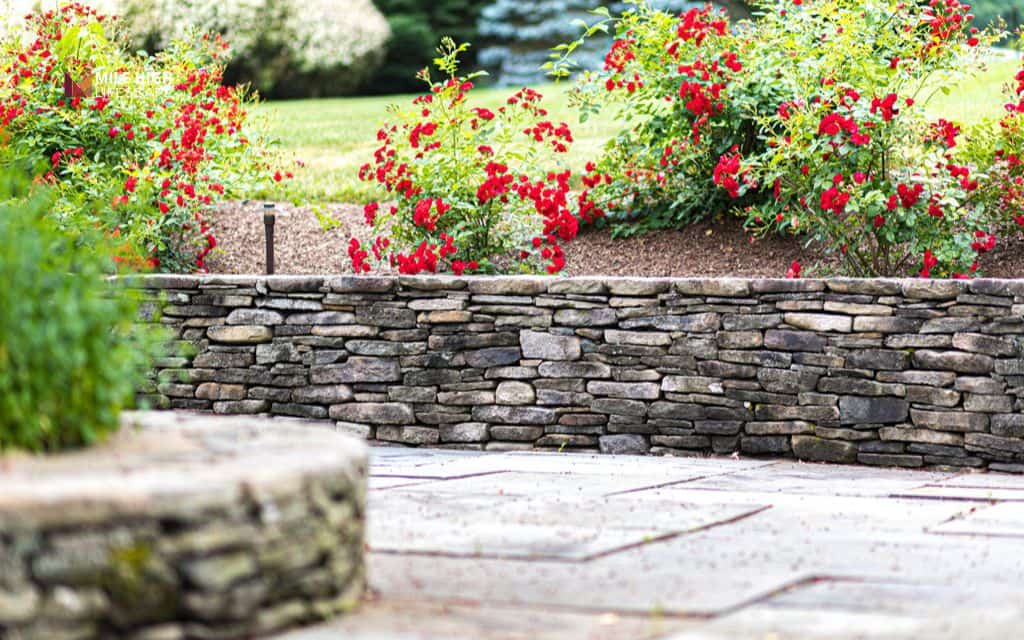
Split-face stone wall with clean lines
Modern, cut stone walls frame contemporary homes with geometric precision.
Split-face blocks show natural stone texture on one side with clean edges all around. This material creates crisp lines while maintaining organic character.
Use split-face blocks in charcoal, tan, or rust colors to match your home’s exterior. Stack with mortar for stability and clean joints. Install landscape lighting at the base to highlight texture.
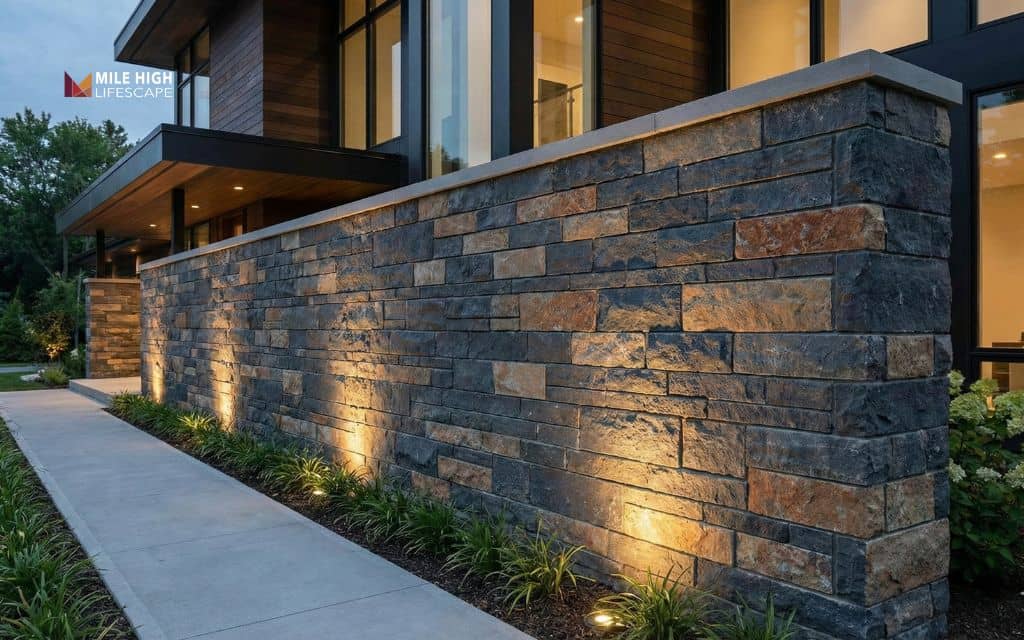
Rock wall with integrated stairs
Steps built into landscape rock walls provide access up and down slopes.
This integrated design looks intentional and saves space compared to separate stairs. Wide treads create comfortable, safe passage.
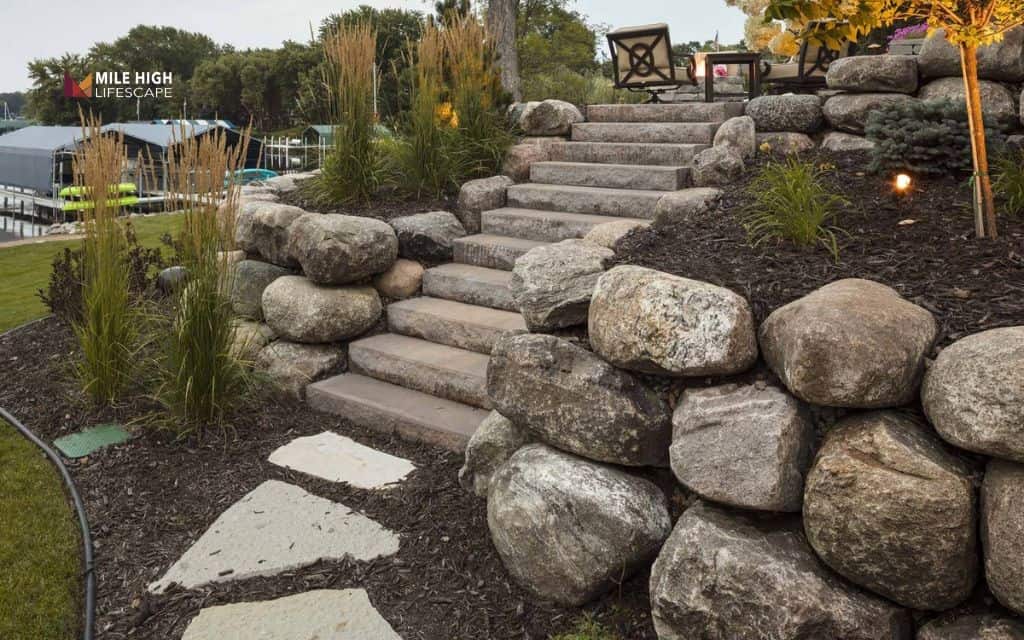
Build stairs 4 to 6 feet wide with 6-inch risers and 14-inch treads. Use large, flat stones for treads supported by the wall structure. Add lighting in risers for nighttime safety.
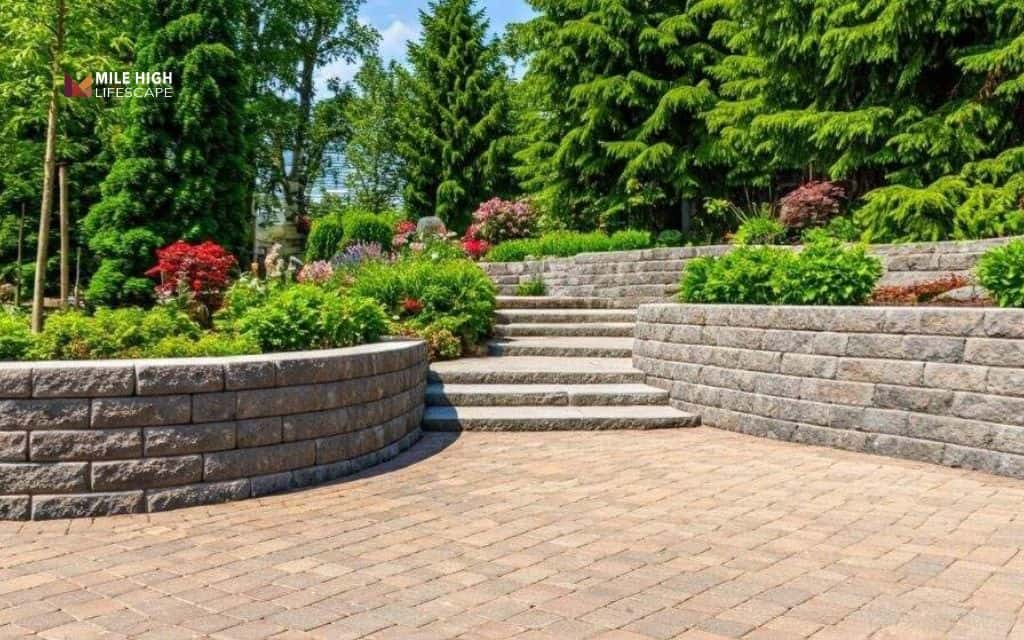
Mixed rock and timber wall
A stone base with timber accents creates rustic Colorado cabin character. This combination provides the stability of stone with the warmth of wood. Use naturally rot-resistant timbers or pressure-treated lumber. This works well for patio edges or garden room dividers.
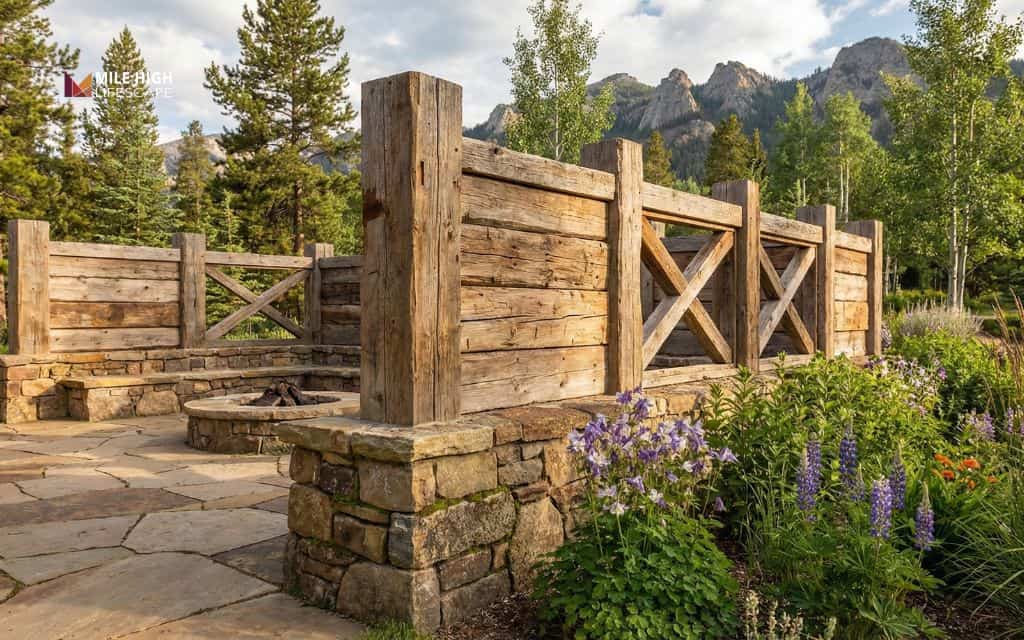
Tiered rock wall planters
Stacked stone or gabion tiers function as raised beds. This design brings planting closer to eye level and creates focal points. Raised planters improve drainage and warm up faster in spring.
Build 2 to 3 tiers with each tier 18 to 24 inches tall. Use natural stone or gabions filled with decorative rock. Plant with herbs, vegetables, or colorful annuals.
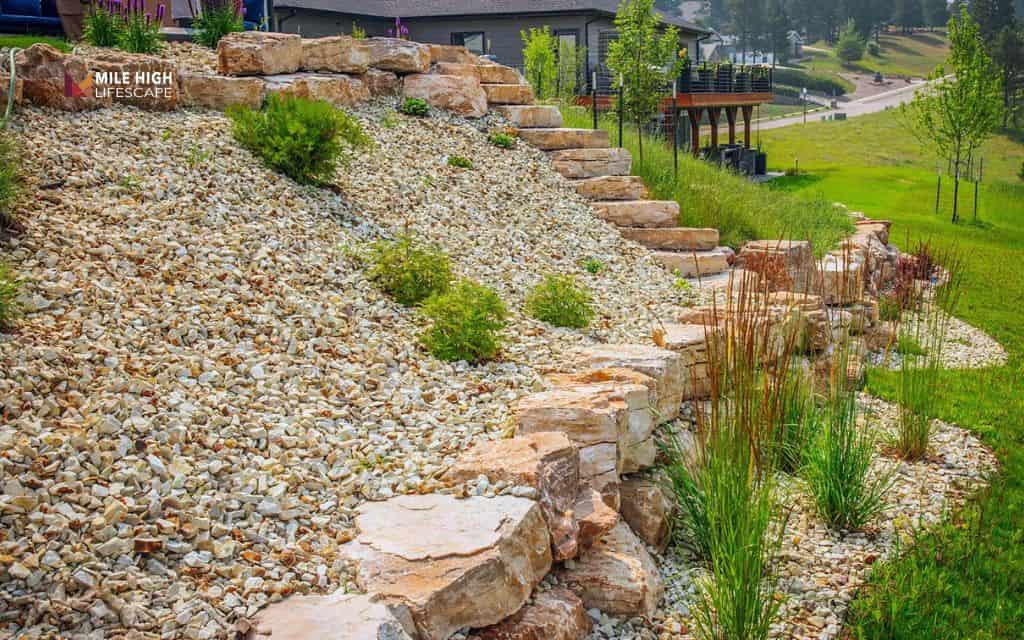
Water feature rock wall
A landscape rock wall that incorporates a spillway, pondless waterfall, or sheer descent adds sound and movement. Water features create focal points and mask street noise. The rock wall provides a natural-looking structure for the water element.
Build the wall 3 to 6 feet tall with a reservoir at the base. Install a pump that recirculates water to the top. Position stones to create interesting water patterns as it falls.
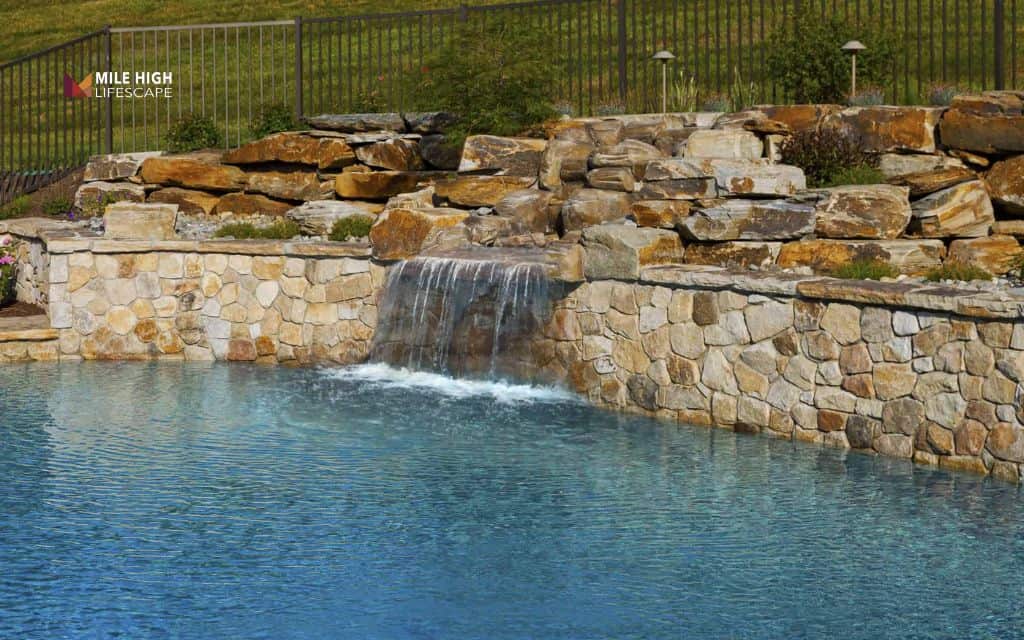
Privacy rock wall with fence topper
A low stone base with wood or metal fence panels above creates privacy without massive masonry work. This combination reduces material costs while achieving desired height. The stone base adds permanence and visual weight.
Build a natural stone wall 2 to 3 feet tall. Mount fence posts in the wall or just behind it. Install fence panels to reach desired privacy height (typically 6 feet total).
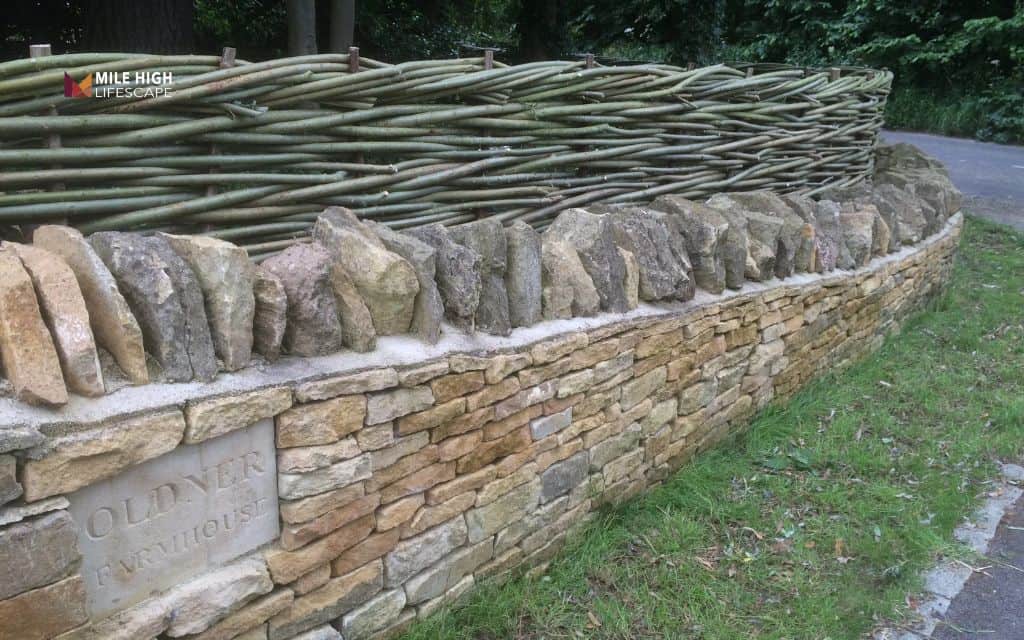
Rock wall fire pit enclosure
A semicircular stone wall creates a cozy nook around fire pits. This design blocks wind and reflects heat back toward seating.
The curved wall defines the gathering space and provides a sense of enclosure.
Build a curved wall 2 to 3 feet tall with a diameter of 10 to 15 feet. Use natural stone or split-face blocks. Include built-in seating or leave space for chairs.
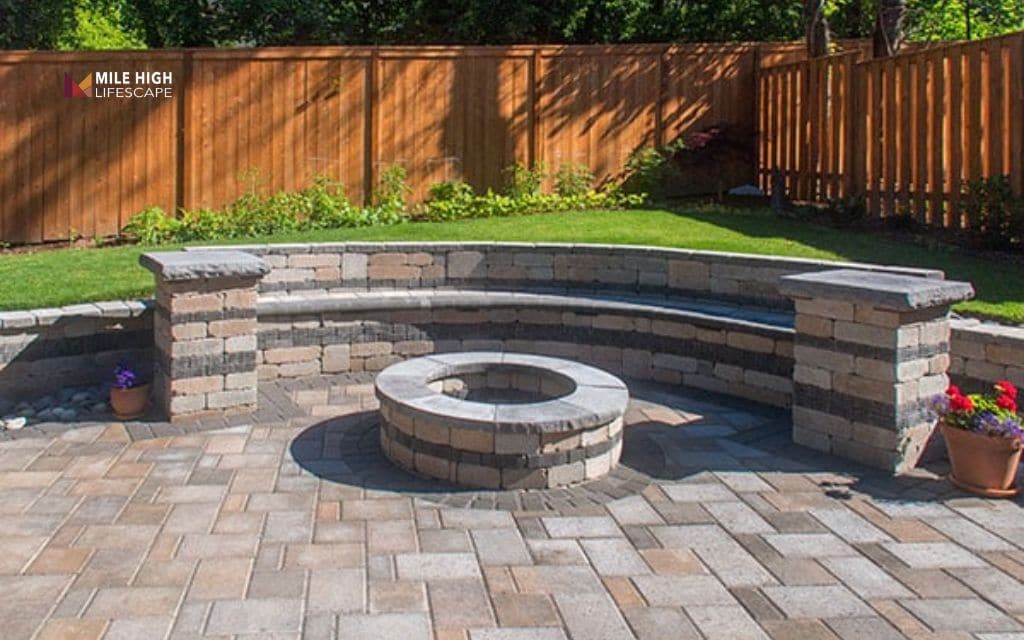
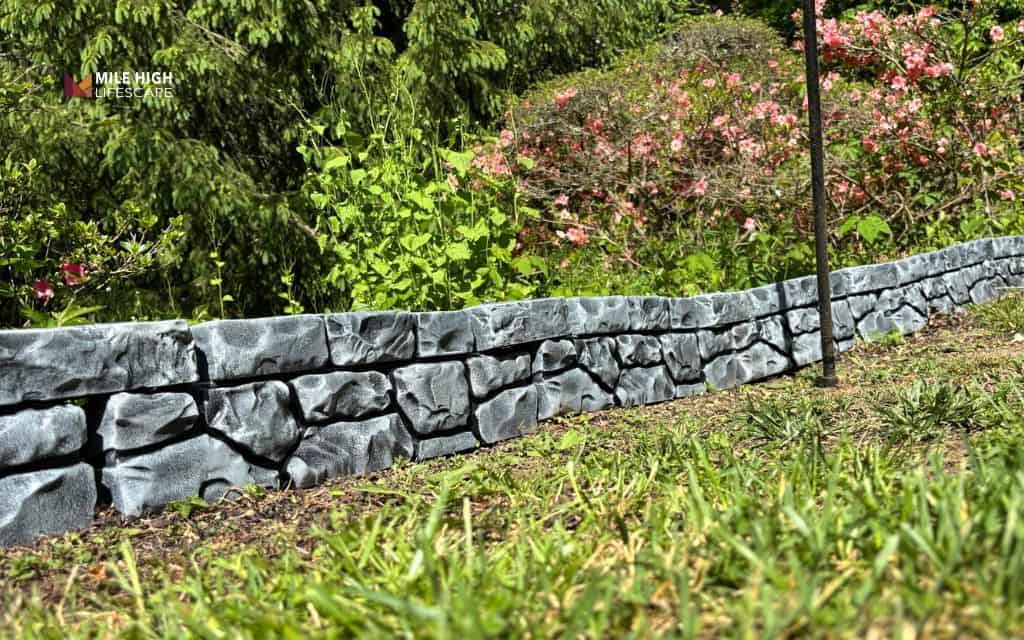
Low garden rock wall border
A 1 to 2-foot high stone wall creates clean edges between lawns and planting beds.
This border prevents grass from invading beds and provides a finished look. The low height makes it an accessible first rock wall project.
Use Colorado moss rock, sandstone, or river rock. Stack dry without mortar for easy DIY construction. Backfill with soil and mulch on the bed side.
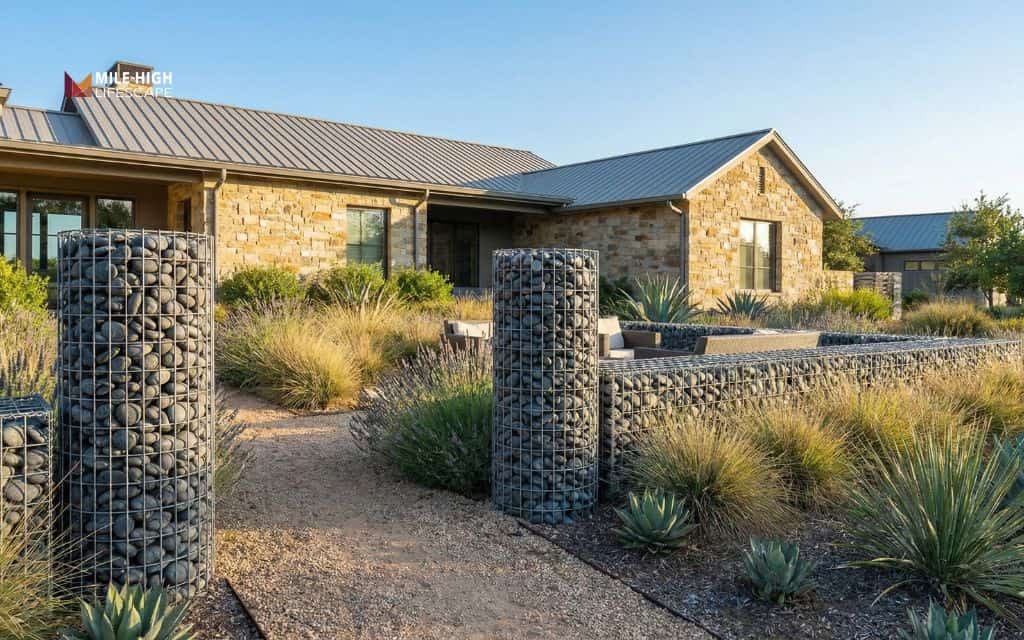
Mini gabion columns and accent walls
Short gabion pillars serve as focal points or transitions between garden spaces. These vertical elements draw the eye upward and create structure. Gabion columns work well at entry points or corner plantings.
Build columns 3 to 5 feet tall using standard gabion baskets. Fill with decorative rock that complements your home’s stone work. Position at corners, flanking gates, or as accents in large planting beds.
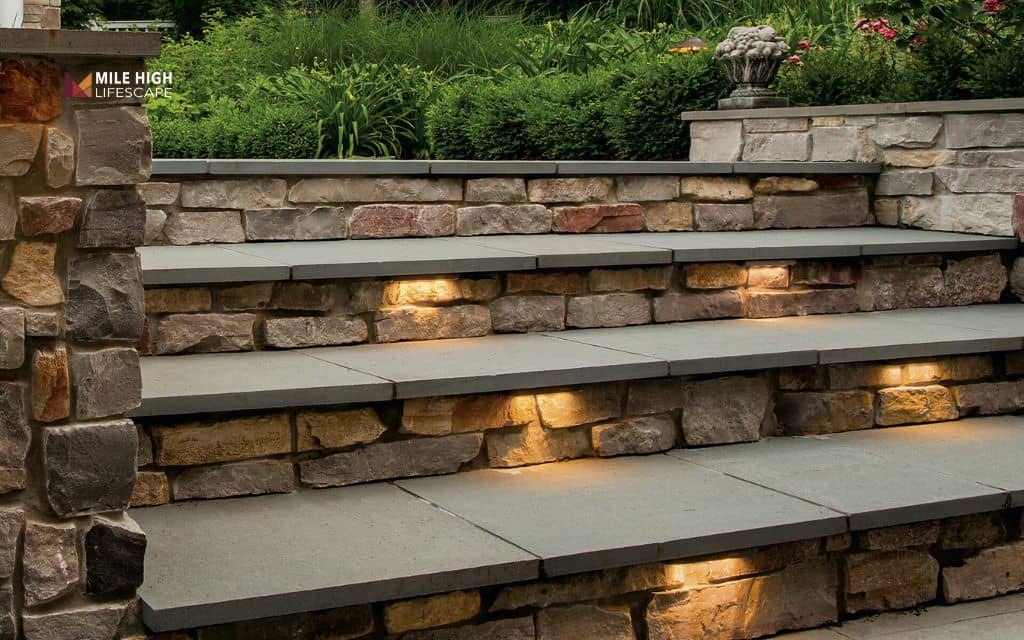
Rock wall + lighting combo
Integrated step lights, wall wash lights, or uplights transform rock walls at night. Lighting adds safety, extends outdoor living hours, and creates dramatic effects. LED fixtures use minimal energy and last years.
Install lights during wall construction for clean wire runs. Place step lights in risers, wall wash lights at the base, or uplights to graze textured stone. Use warm white (2700-3000K) for natural appearance.
Types of rock walls for Denver landscapes
Natural stone (dry-stack & mortared)
Natural stone walls use Colorado moss rock, sandstone, limestone, or fieldstone.
Dry-stack construction places stones without mortar, allowing water to drain freely between them. Mortared walls use concrete between stones for added stability and weather resistance.
Natural stone walls last decades when built correctly. They handle freeze-thaw cycles well because individual stones can move slightly without cracking. The timeless appearance increases property value and never looks dated.
Gabion rock walls
Wire mesh baskets filled with rock or recycled materials create modern gabion walls.
The galvanized or vinyl-coated cages come in standard sizes and stack like building blocks. You fill them with any rock that won’t fit through the mesh – typically 3 to 8-inch stones.
Gabions drain perfectly because water flows freely through the rock fill. This eliminates hydrostatic pressure problems that cause other walls to fail. The modular design makes them DIY-friendly. You can build gabion walls without heavy equipment or specialized masonry skills.
Boulder walls
Large, irregular boulders stacked with minimal cutting create the most natural-looking walls. These walls mimic rock outcroppings found in Colorado canyons and mountain slopes. Boulders resist erosion better than smaller stones and create strong visual impact.
Moss-covered or lichen-covered boulders look like they’ve been in place for decades. The rugged character fits with mountain contemporary and rustic home styles. Boulder walls provide excellent erosion control on steep slopes.
Veneer rock walls
Concrete blocks or poured concrete cores with stone veneer on the face combine engineering strength with natural beauty.
The structural core handles the load while thin stone veneer provides the finished look. This technique works well for tall retaining walls that need maximum strength.
Veneer walls can achieve any appearance – from stacked ledgestone to river rock. The veneer weighs less than solid stone, which reduces foundation requirements. Installation goes faster than full-thickness stone walls.
Conclusion
The 17 design ideas in this guide show what’s possible: terraced vegetable gardens on hillsides, boulder walls create mountain drama, gabion structures,… Each approach handles Denver’s unique challenges – intense sun, freeze-thaw cycles, clay soil, sudden storms.
Decide what you’ll DIY and what needs professional help. Dry-stack walls under 2 feet tall work well for weekend projects. Walls over 4 feet require engineering. Boulder placement needs heavy equipment. Honest assessment prevents frustration and ensures safe, lasting results.
__________
For nearly two decades, Mile High Lifescape has been proudly serving the Denver Metro area as the go-to landscape company. With a reputation for excellence, we offer a comprehensive range of friendly and professional rock landscape services.
Contact Mile High Lifescape at (303) 877-9091 or hello@milehighlifescape.com to discuss your rock wall landscaping project.
We’ll help you choose the perfect plan, customize it to fit your unique needs, and provide a tailored quote based on your property’s size and location.
Frequently asked questions (FAQs)
What is the best type of rock wall landscaping for a sloped Denver yard?
Natural stone retaining walls handle Denver slopes best because they withstand freeze-thaw cycles and match the local landscape. For steep grades, build multiple shorter terraced walls instead of one tall wall. This approach improves drainage and reduces engineering complexity.
How long do natural stone rock walls last in Colorado’s freeze–thaw climate?
Well-built natural rock walls last 50 years or more in Colorado. Dry-stack walls often outlast mortared walls because stones can shift slightly without cracking. Proper drainage behind the wall is critical – walls without adequate drainage may fail within 10 to 20 years.
Can I build a landscape rock wall myself, or do I need an engineer?
Garden walls under 2 feet that don’t hold back soil work well as DIY projects. Retaining walls over 4 feet typically require engineering and permits in most Colorado municipalities. When in doubt, consult your local building department before starting construction.
What plants grow best in a rock wall garden in Zone 5b?
Native perennials like blanket flower, penstemon, sedum, and blue flax thrive in Denver rock wall gardens. For crevices between stones, plant creeping thyme or hens-and-chicks. These plants tolerate Zone 5b winters and need minimal water once established.
Are gabion rock walls durable in Denver’s weather?
Gabion walls last 50+ years when built with galvanized or PVC-coated wire mesh. The rock fill drains freely, which prevents freeze-thaw damage that destroys mortared walls. Gabions actually handle ground movement better than rigid concrete structures in Colorado’s clay soil.