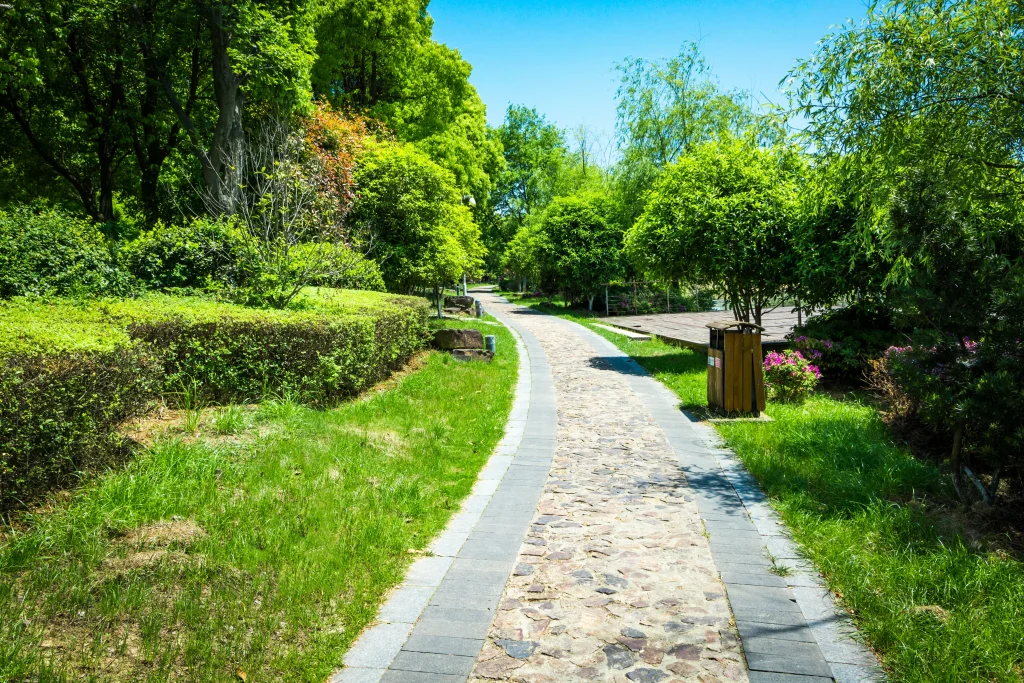
With the right small backyard landscape ideas, even the most compact outdoor space can be transformed into a functional, beautiful retreat that feels far larger than its footprint suggests.
Whether you’re working with a narrow urban lot, a snug suburban yard, or a modest patio-sized space, the principles of thoughtful landscaping remain the same: maximize what you have, add layers of interest, and match every element to how you actually live.
At Mile High Lifescape, we’ve helped countless homeowners turn tight backyards into their favorite spot in the house. Here’s what we’ve learned: smart design always beats square footage.
With the right small backyard landscape ideas, you can:
- Make the space feel visually larger and more open
- Improve day-to-day functionality for relaxing, dining, or playing
- Add privacy and a sense of shelter from neighbors
- Create a personalized outdoor retreat you’ll actually use year-round
27 small backyard landscape ideas
Good design always starts with a plan. Before you buy a single plant or paver, spend time thinking about how you want to use your backyard. The following layout and planning ideas set the foundation for every other choice you’ll make.
1. Consider your priorities first
The single most important step in designing a small backyard is deciding what matters most. Do you want a quiet place to relax after work, a space for weekend entertaining, or a safe outdoor area for kids and pets? Your answer shapes every design decision that follows.
When you’re clear on your priorities, you avoid the trap of trying to cram too many features into a limited space. Think of it as editing before you build. A backyard designed around one or two clear purposes will always outperform one that tries to do everything at once.
2. Create a functional layout
Once you know your priorities, sketch a basic layout. A functional layout divides your yard into clear zones – seating here, planting there, storage in the corner – so that every square foot has a job. Think of it less like a yard and more like an outdoor floor plan.
For small backyards, the layout should guide how you move through the space. A clear path from the back door to a seating area, for example, makes the space feel intentional rather than accidental. Even simple arrangements create structure that makes a small yard feel larger and more polished.
3. Create outdoor rooms or zones
One of the most effective small backyard landscape ideas borrowed from interior design is the concept of “outdoor rooms.” By dividing your yard into distinct zones, you give each part of the space a purpose and a personality.
You don’t need walls to create rooms outdoors. Different flooring materials, a change in level, a row of plants, or even a simple area rug on a patio can signal a shift from one zone to the next.
The result is a backyard that feels layered, thoughtful, and surprisingly spacious because your eye reads multiple spaces instead of one flat expanse.
4. Blend indoor-outdoor living
A small backyard can feel much larger when it reads as a natural extension of your home’s interior. Align your outdoor furniture with your indoor layout, match your outdoor color palette to your interior decor, and consider installing large sliding or French doors to blur the visual boundary between inside and out.
Even simple touches like carrying a rug pattern outdoors, using similar lighting fixtures, or framing the back door with potted plants can create a sense of flow that expands your perceived living space. When indoors and outdoors feel connected, both spaces benefit.
5. Use visual tricks to enhance space
Perception is a powerful design tool. Strategic use of lines, mirrors, lighting, and repetition can make a small backyard appear significantly larger than it really is.
Diagonal pathways draw the eye across the yard and create a sense of depth. A mirror mounted on a fence reflects greenery and sky, doubling the visual space. Repeating the same plant or material throughout the yard creates rhythm that reads as intentional spaciousness.
Long, horizontal lines make a yard feel wider. Vertical elements like tall grasses or a trellis draw the eye up and add height. Understanding these visual dynamics gives you design tools that no amount of square footage can replace.
6. Keep it simple (minimalist design)
When it comes to small backyard landscape ideas, less is almost always more. A minimalist approach reduces visual clutter and makes a compact space feel calm and open. Overcrowded yards, no matter how beautiful each individual element is, tend to feel chaotic and small.
Choose one or two focal points and let everything else support them. A single standout tree, a neat stone patio, a simple water feature – these are more powerful in a small space than a dozen competing elements.
Minimalism also means lower maintenance, which is a practical bonus for busy homeowners.
7. Sneak extra space with smart design
Corners, edges, and awkward transitional areas are often wasted in small backyards. Smart design reclaims these forgotten zones and turns them into productive or attractive features.
A corner bench with built-in storage, a planting bed along the fence line, or a vertical garden mounted on a side wall can add meaningful square footage without expanding your property.
Think of your yard in three dimensions. Every surface is a design opportunity. When you start treating corners as assets rather than afterthoughts, a small yard opens up considerably.
8. Go vertical with your garden
Going vertical is one of the most efficient small backyard landscape ideas available. Trellises, pergolas, arched plant supports, and wall-mounted planters lift greenery off the ground and direct the eye upward – creating the perception of a taller, larger space. Climbing plants like clematis, climbing roses, or jasmine can cover a fence or wall in a single season, turning a bare boundary into a living green backdrop.
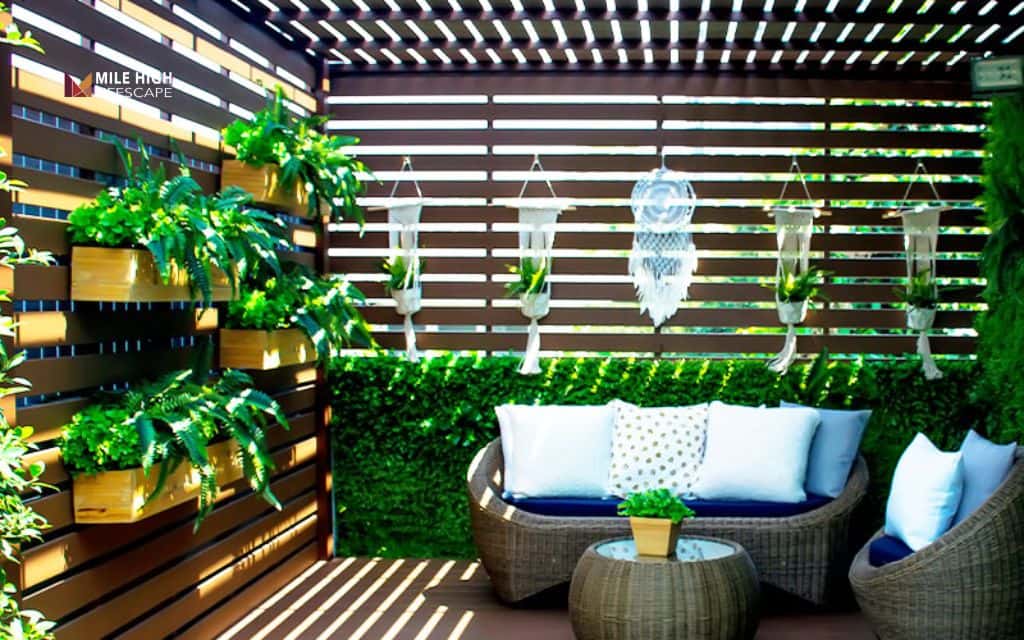
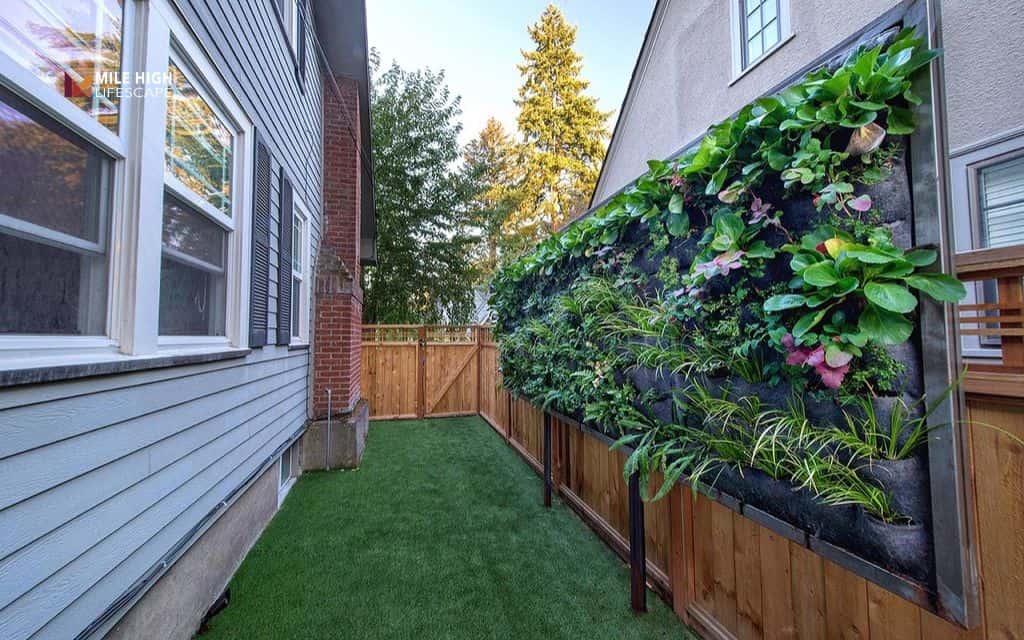
9. Create a vertical garden wall
A vertical garden wall takes the concept of vertical growth a step further by turning an entire wall, fence, or freestanding panel into a dense, living display. Modular pocket planters, wall-mounted frames, or custom built-in systems can host herbs, succulents, ferns, flowers, or edibles in a visually striking arrangement that doubles as a privacy screen.
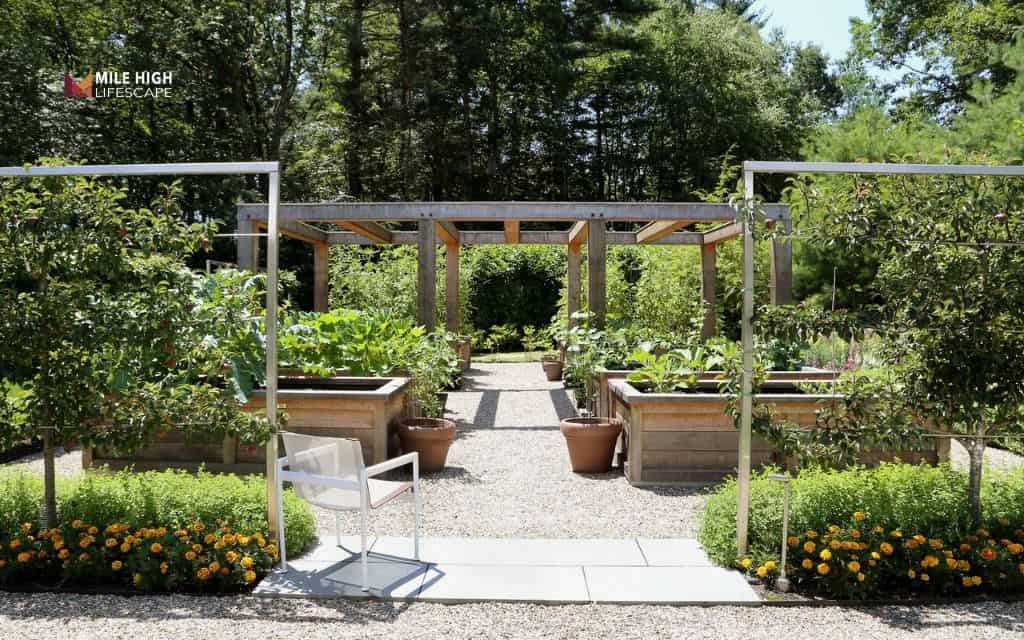
10. Plant in raised garden beds
Raised garden beds bring structure, organization, and beauty to small backyards while keeping planting areas clearly defined and manageable. Because raised beds are contained, they prevent plant sprawl, make maintenance easier, and allow you to tailor the soil mix for whatever you’re growing.
From a design standpoint, raised beds add height variation and visual interest to an otherwise flat yard. They can be built along fences, centered as a garden feature, or arranged in tight geometric clusters to maximize planting in minimal space.
11. Use container gardening
Container gardening is the most flexible of all small backyard landscape ideas. Potted plants can be moved, rearranged, swapped out seasonally, and grouped in different configurations to suit the moment. Containers work on patios, along stairs, in corners, on walls, and even on tables.
A collection of well-chosen pots can create the lushness of a full garden with complete design flexibility. Just be sure to choose containers large enough to support healthy root growth and water consistently.
12. Choose dwarf & low-maintenance plants
Choosing plants that stay compact at maturity (dwarf shrubs, ground-cover perennials, small ornamental grasses) prevents the all-too-common problem of a once-beautiful design being overwhelmed by overgrown plants a few years down the road.
In the Denver area, excellent dwarf and low-maintenance options include Blue Oat Grass, Dwarf Blue Spruce, ‘Incrediball’ Hydrangea, and low-growing native sedums. These plants provide year-round interest, handle Colorado’s climate well, and stay in scale with compact yards.
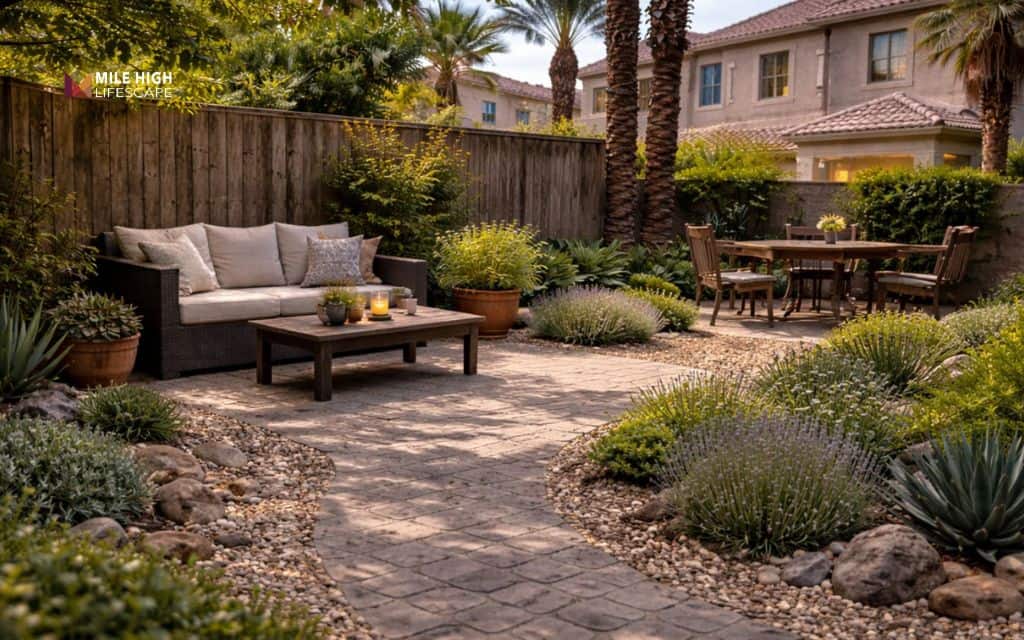
13. Layer the landscape
Professional-looking landscapes are almost always layered: ground covers and low borders in front, medium perennials in the middle, taller shrubs and ornamental trees in the background. This low-to-tall arrangement creates depth and dimension that makes even a small yard feel like a richly designed garden.
14. Choose plants that match the space
Beyond size, plants need to match the specific conditions of your backyard – sun exposure, soil type, drainage,… A sun-loving plant in a shaded yard, or a water-hungry plant in a xeric-style landscape, will struggle regardless of how well it’s planted.
In Denver, that often means favoring drought-tolerant natives and adapted species like Blue Grama Grass, Russian Sage, or Dwarf Mugo Pine that thrive in our semi-arid climate without demanding constant irrigation. When plants are well-matched to their environment, they grow strong, look great, and require far less maintenance.
15. Incorporate hardscaping materials
Adding hardscape elements to a small backyard creates a balance between living plants and solid surfaces that makes the space feel both designed and durable. A flagstone patio, a gravel pathway, a wooden deck, or a concrete stepping stone series all serve the same purpose: they define where people move and sit, creating structure that holds the rest of the design in place.
16. Switch up the hardscape
Using a single hardscaping material throughout a small backyard can make it feel monotonous. Mixing materials – pavers with decomposed granite, concrete with river rock borders, wood decking beside a stone patio – adds visual texture and design interest without requiring additional space.
The key to mixing materials is to choose a cohesive color palette. Two or three materials that share a similar tone or undertone will look intentionally designed rather than mismatched.
For example, warm-toned sandstone pavers pair beautifully with a pine wood deck and a gravel surround.
17. Lay a curved pathway
Straight lines are efficient, but curved pathways are magical. A gently curving path through a small backyard accomplishes several design goals at once: it slows the eye as it moves through the space (making it feel larger), it softens an otherwise geometric layout, and it creates a sense of discovery as the path bends out of view.
Even a modest curve is enough to make a meaningful visual difference. Use natural materials like flagstone, pea gravel, or stepping stones to keep the curved pathway feeling organic and in tune with the surrounding plantings.
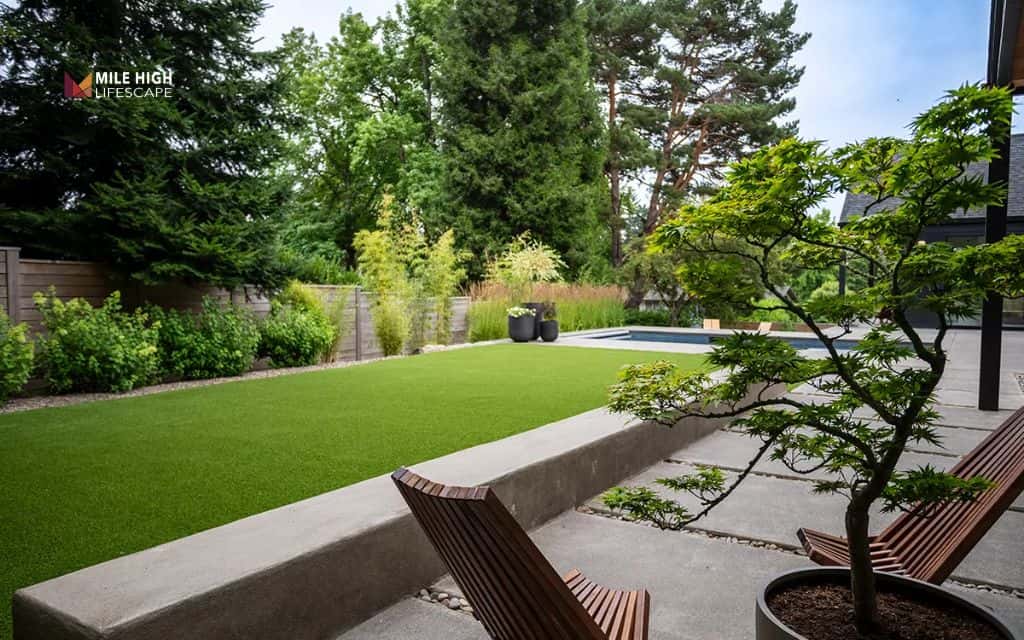
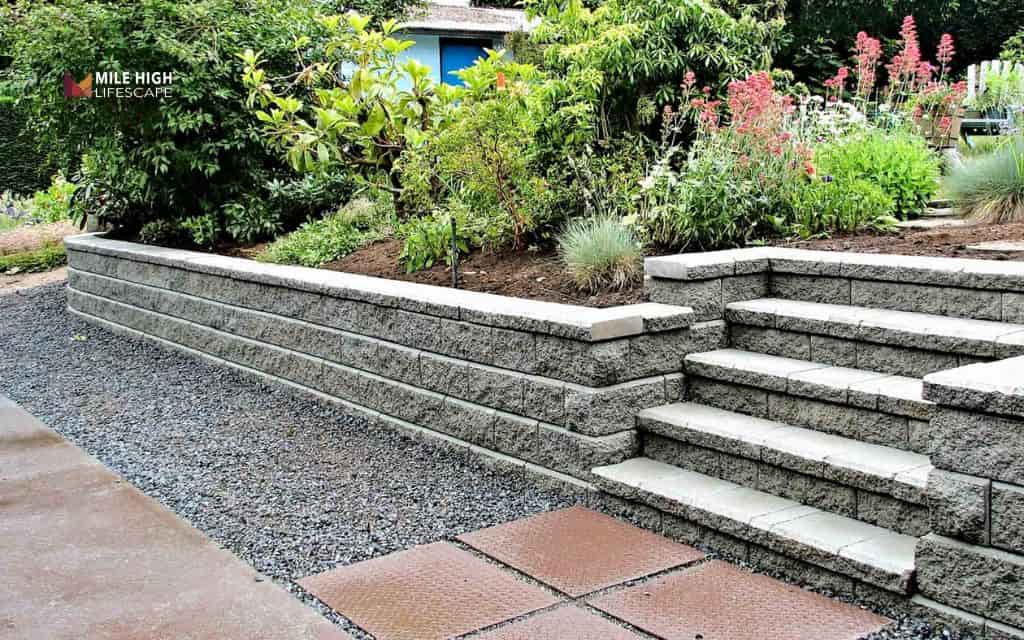
18. Use retaining walls
If your small backyard sits on a slope or has uneven grade changes, retaining walls are both a practical necessity and a design opportunity. A well-built retaining wall stabilizes soil, prevents erosion, and creates flat, usable terraces that would otherwise be impossible on a sloped lot.
From a design perspective, retaining walls add architectural interest and create natural planting ledges that enhance the layered landscape approach. Materials like natural stone, concrete block, or timber can be chosen to complement your home’s style and the surrounding landscape.
19. Add a pergola
A pergola is one of the most versatile structures you can add to a small backyard. It defines a seating or dining area with architecture, provides partial shade, and offers a framework for climbing plants, string lights, or shade fabric – any of which elevates the atmosphere considerably. Even in a compact yard, a modest pergola over a small patio instantly makes the space feel like a designed outdoor room.
20. Provide shade (natural or built)
Shade can come from built structures like pergolas, shade sails, or retractable awnings, or from strategic planting of trees and large shrubs. For natural shade, fast-growing options like a Quaking Aspen or a columnar ornamental tree can provide meaningful canopy without taking over a small yard. Combining built shade with natural shade creates layered, adaptable coverage for any time of day.
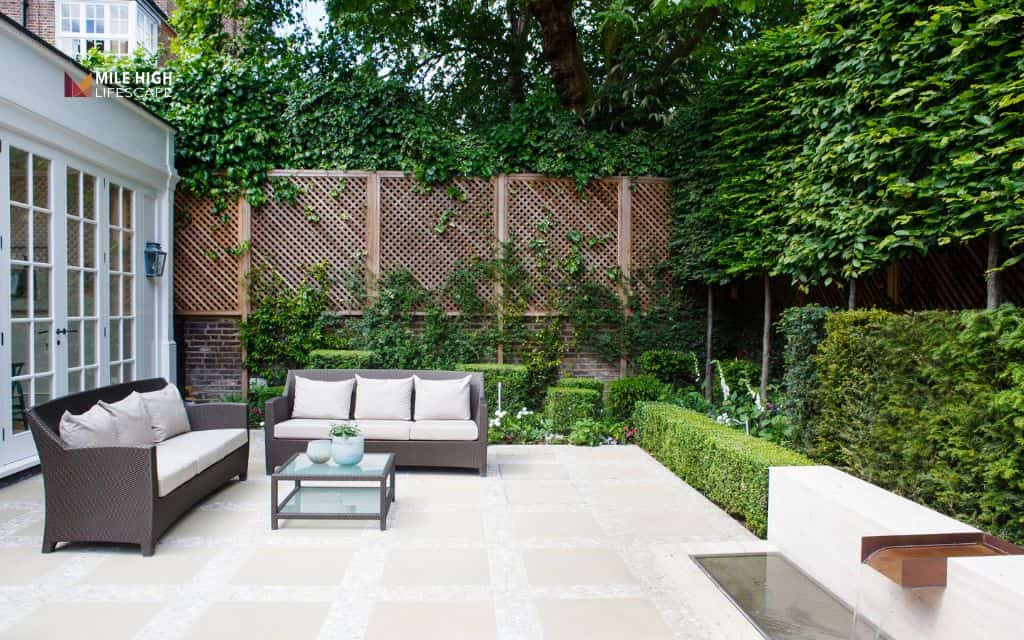
21. Protect privacy with plants or screens
Privacy is one of the top concerns for homeowners with small backyards. Feeling watched by neighbors makes it nearly impossible to truly relax outdoors. The good news is that privacy doesn’t require a six-foot solid fence, there are far more attractive and layered solutions.
Tall ornamental grasses, columnar evergreens, bamboo (clumping varieties for Denver), and dense flowering shrubs all create soft, living privacy screens that look beautiful from both sides. For faster results or smaller spaces, lattice panels with climbing plants, outdoor privacy curtains, or decorative screens offer excellent coverage with a fraction of the footprint.
A combination of planted borders at the fence line and a pergola overhead creates a fully enclosed, private outdoor room without ever feeling closed in.
22. Add landscape lighting
Well-placed lighting extends your outdoor living into the evening hours, creates dramatic shadow and texture on planting beds and hardscape, improves safety along pathways and stairs, and establishes a warm, welcoming atmosphere that daytime alone cannot replicate.
For small backyards, a layered lighting approach works best: low path lights to guide movement, uplights to highlight specimen plants or a tree, and ambient string lights or lanterns for the seating area. Solar-powered fixtures have improved dramatically in quality and are an excellent low-cost starting point. LED landscape lighting is energy-efficient and long-lasting for a more permanent installation.
23. Hang patio string lights
Few upgrades offer as much ambiance per dollar as a set of well-hung patio string lights. Strung overhead between a pergola, fence posts, or simple mounted hooks, warm-white globe lights instantly transform a small backyard into an inviting evening retreat. The soft, overhead glow creates a canopy effect that makes outdoor gatherings feel intimate and special regardless of how modest the space.
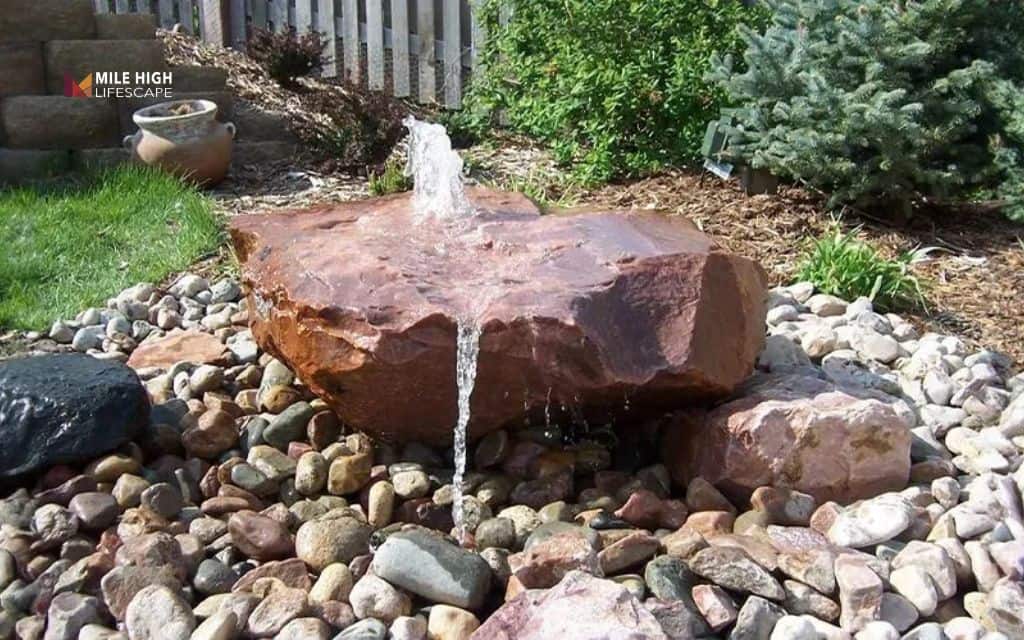
24. Add a water feature
The sound of running water has a proven psychological effect: it reduces stress, masks background noise, and creates a sense of calm that transforms a backyard into a genuine sanctuary. A compact wall-mounted fountain, a small bubbling urn, or a modest recirculating stream can deliver all the benefits of water in a footprint of just a few square feet.
In a small backyard, a water feature positioned near the main seating area maximizes its calming effect. The visual movement of water also adds dynamic life to a static landscape. Paired with surrounding plants and landscape lighting that plays off the water’s surface, even a simple fountain becomes one of the most memorable features in your outdoor design.
25. Install an outdoor fire pit
Fire draws people in, encourages lingering, extends the outdoor season well into autumn and cool evenings, and creates a natural focal point around which any size group can gather.
For small backyards, a compact built-in fire pit surrounded by a curved bench or a tabletop gas fire feature on the patio takes up minimal space while delivering maximum lifestyle impact.
Always follow local fire codes and keep the fire feature positioned away from overhanging branches, structures, and dry plantings.
26. Use built-in or multi-functional seating
Built-in seating is one of the smartest space-saving investments in a small backyard landscape. Unlike freestanding furniture, built-in seating doesn’t need to be stored in winter, can’t blow over in wind, and permanently defines the seating area without consuming additional floor space.
Multi-functional pieces serve double duty in small spaces. Choosing furniture that solves two problems at once keeps the yard from feeling cluttered while ensuring you have everything you need to use the space comfortably.
Look for teak, powder-coated aluminum, or all-weather wicker for materials that hold up well in sun and temperature extremes.
27. Use smart storage solutions
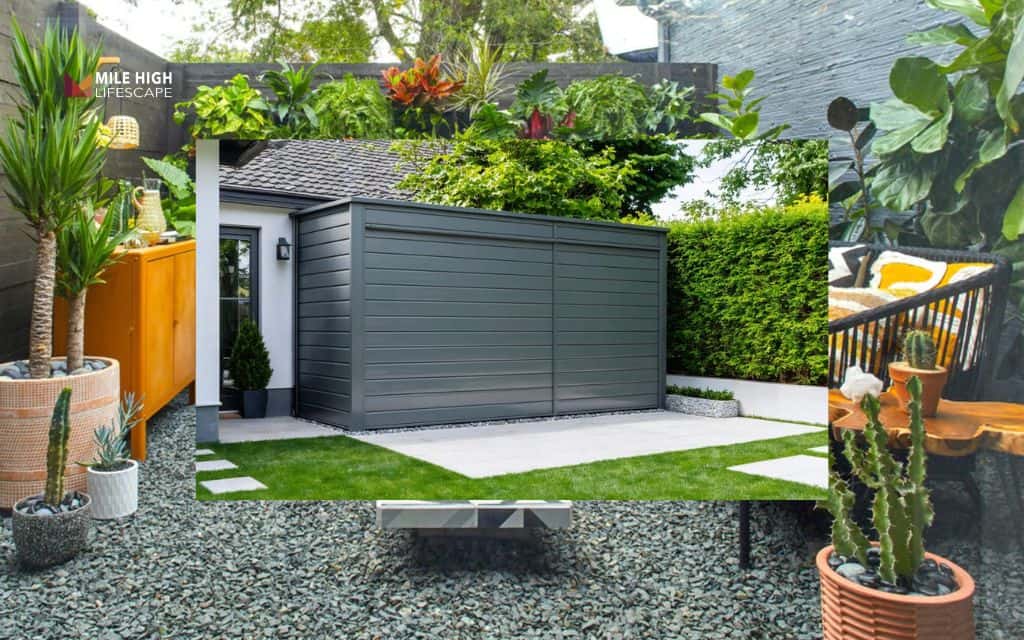
The final and often most overlooked element of a functional small backyard is storage. Garden tools, cushions, toys, potting supplies, and outdoor accessories quickly accumulate and clutter a compact space if there’s no designated place for them. Smart storage solutions keep all of these items out of sight and out of the way.
Effective storage not only keeps your backyard looking clean and intentional, it also makes the space easier and more enjoyable to use. When setup and cleanup are simple, you’re far more likely to spend time outdoors.
Consider your storage needs as part of the initial design phase so that storage is integrated naturally into the layout rather than added as an afterthought.
Read more: 19 small yard landscape design ideas that turn tiny spaces into stunning outdoor retreats
Pro tips to make a small backyard feel bigger
After years of designing compact outdoor spaces, our team has distilled the most effective principles into 4 key strategies:
- Use vertical space aggressively: Walls, fences, and overhead structures are your greatest untapped assets.
- Keep sightlines open: Avoid blocking the far end of the yard with tall features; let the eye travel to the boundary to register the full depth.
- Repeat materials and plants: Consistent repetition creates rhythm that reads as intentional spaciousness rather than crowding.
- Add lighting layers: Overhead ambient light, mid-level path lighting, and low accent uplights together create depth that flat overhead lighting cannot achieve.
Conclusion
A small backyard is not a design limitation, it’s a design challenge that rewards smart thinking. Every idea on this list is designed to give you more: more usability, more beauty, more privacy, more comfort, and more reasons to spend time in your outdoor space.
Whether you’re starting with a blank slate or refining a yard that just isn’t working the way you’d hoped, the principles stay the same: plan intentionally, layer thoughtfully, choose plants that fit the space, balance hardscape with softscape, and always design for how you actually live.
If you’re ready to turn these small backyard landscape ideas into a real project, the team at Mile High Lifescape is here to help. From initial design consultation to full installation, we bring professional expertise and deep local knowledge to every Denver-area backyard we touch, no matter the size.
Frequently asked questions (FAQs)
How do you landscape a small backyard on a budget?
Start with simple hardscaping – gravel, stepping stones, or mulch – to create structure without high costs. Use container gardening and dwarf plants for greenery, and add DIY features like raised beds or string lights for visual impact. Focus your budget on one or two focal points and keep the rest of the design clean and simple.
What makes a small backyard look bigger?
Using vertical elements like trellises and wall planters draws the eye upward and adds perceived space. Keeping sightlines open and repeating the same plant or material throughout creates a sense of intentional spaciousness. Diagonal pathways, curved lines, and layered lighting also add visual depth that makes the yard feel larger.
What are the best low-maintenance small backyard ideas?
The best options combine durable hardscaping with drought-tolerant or native plants that need minimal watering and pruning. Xeriscaping with gravel or decomposed granite works especially well in Denver’s semi-arid climate. Rock gardens, evergreen shrubs, and a minimal plant palette further reduce ongoing upkeep.
Can I design a small backyard myself?
Yes, simple patio layouts, container gardening, raised bed construction, and basic planting are all achievable for motivated homeowners with basic tools. Start with a clear plan, measure carefully, and consult local nurseries for site-specific advice. For complex work like retaining walls or drainage corrections, professional help is recommended.
Should I hire a landscaper for a small backyard?
A professional landscaper is worth hiring for structural projects – retaining walls, pergolas, grading, or full redesigns – where technical expertise prevents costly mistakes. For simpler upgrades like planting, edging, or lighting, DIY is often sufficient. At Mile High Lifescape, we also offer consultations for homeowners who want professional guidance without committing to a full installation.